
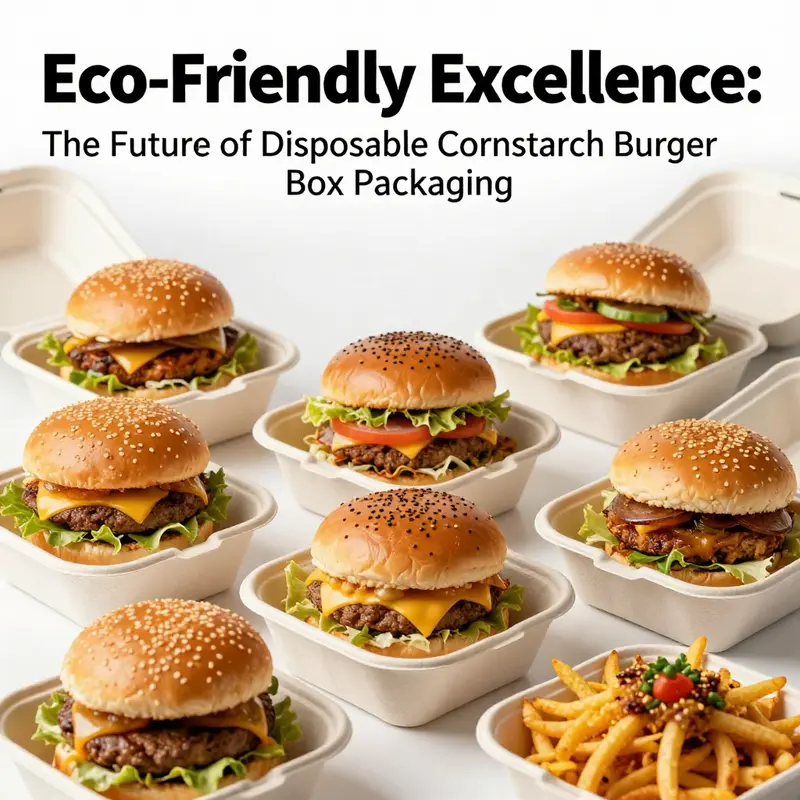
In a world increasingly focused on sustainability and environmental responsibility, businesses in the food service market, including bubble tea shops, beverage chains, restaurants, food trucks, catering services, event planners, and corporate procurement teams are under pressure to reduce their environmental footprint. Disposable cornstarch burger boxes represent a significant innovation in eco-friendly packaging, providing not just a biodegradable solution, but also ensuring functional performance for diverse culinary offerings. This article explores the sustainability, technical performance, and economic viability of these innovative packaging solutions, highlighting how they support businesses in aligning with modern consumer values and regulatory standards.
Closing the Loop: The Sustainability Promise of Disposable Corn Starch Burger Box Packaging
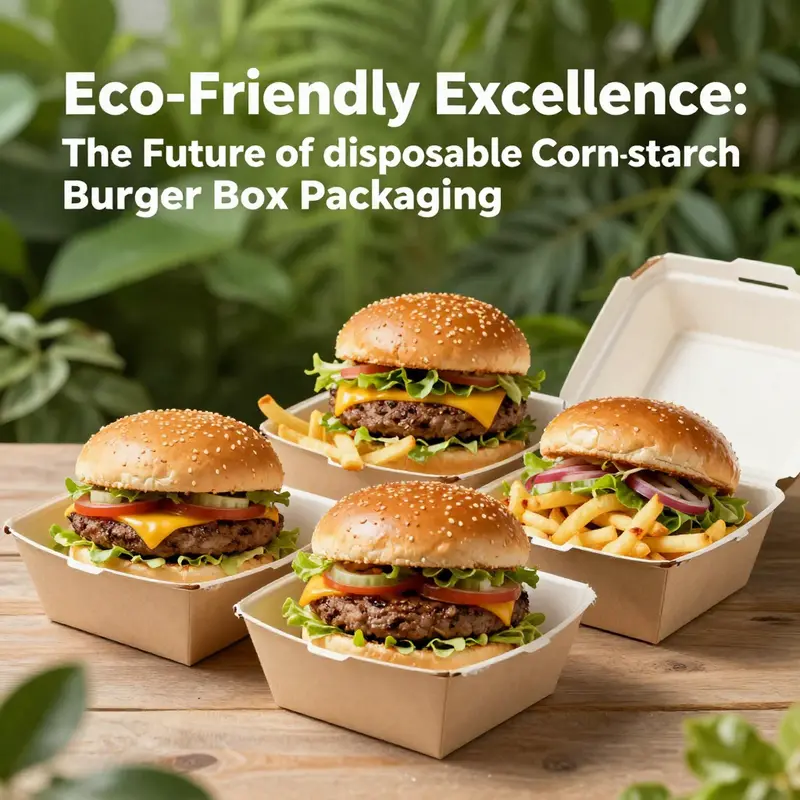
A shift toward sustainability in food packaging is no longer a niche consideration; it has become a core design principle guiding how products are made, used, and finally disposed of. Disposable cornstarch burger boxes sit at the intersection of this shift, offering a viable, renewable alternative to conventional plastic packaging. The material—rooted in cornstarch derived from annual crops—speaks to a broader ambition: to reduce reliance on fossil fuels, lower greenhouse gas emissions, and minimize persistent waste. In practice, this means a packaging solution that not only protects the integrity and safety of the food inside but also aligns with a circular economy where materials are designed to return to the soil or the industrial composting stream after use. The promise is compelling, but the reality rests on a nuanced understanding of how these boxes perform, how they are manufactured, how they are disposed of, and how they fit into the broader regulatory and consumer landscape. When these factors come together, cornstarch-based burger boxes become more than just an eco-friendly alternative; they become a strategic component of responsible brand stewardship and operational excellence.
The core advantage of cornstarch-based packaging begins with its source and end-of-life potential. Made from renewable starches, these bioplastics are designed to break down under industrial composting conditions, substantially reducing the persistence problem that plagues conventional plastics. Unlike petroleum-based plastics, which can linger for centuries in landfills or the environment, properly processed cornstarch containers decompose into carbon dioxide and water within a matter of months. This rapid, predictable degradation helps mitigate long-term pollution and reduces the risk of microplastic contamination, a concern that’s increasingly central to consumer scrutiny and regulatory oversight. It is important to recognize, however, that the end-of-life outcome hinges on appropriate infrastructure. Industrial composting facilities with the right temperature, moisture, and microbial environment are typically required to achieve full decomposition. Home composting, though beneficial for some organic waste streams, does not reliably deliver the same outcome for all cornstarch products. In this sense, the environmental benefit is framed not only by the material’s chemistry but also by the waste management systems that receive it.
From a product design perspective, the material’s inherent properties support both performance and sustainability. The boxes are engineered to resist oil and moisture, a critical attribute given the greasy, sauce-laden nature of many burger meals. Some models offer oil resistance up to 120°C and water resistance up to 100°C, providing a buffer against leaks during transit. This robustness helps maintain the food’s quality and prevents the need for secondary packaging or absorbent inserts, which can add to waste. The boxes also tend to be microwave-safe, freezer-safe, and oven-safe, enabling consumers to reheat meals without transferring to other containers. These capabilities reduce the likelihood of customers repackaging food for reheating, which in turn lowers waste and potential contamination risks. Importantly, the packaging is BPA-free and non-toxic, addressing public health concerns linked to certain plastics and reinforcing confidence in direct contact with food. Such safety assurances are not merely regulatory box-ticking; they influence consumer trust and brand reputation, especially as diners increasingly weigh the environmental and health implications of their takeout choices.
The functional attributes dovetail with a broader design philosophy: the packaging should be adaptable to diverse menu formats while enabling efficient logistics. The market offers configurations from single-compartment to multi-compartment layouts, including 3-, 4-, and 5-compartment options that accommodate burgers with fries, salads, or other sides. This modularity supports brands that emphasize value and convenience without compromising sustainability. Customization is widely available, allowing brand identity to be preserved through logos, colors, and distinctive shapes. Yet customization and scale must be balanced against efficiency. For larger operations, minimum order quantities may demand careful planning and coordination with suppliers, particularly when aligning production with seasonal demand or promotional campaigns. In this context, the cost per unit stabilizes as volumes rise; wholesale pricing for sizable orders can be competitive, reinforcing the economic viability of a green packaging strategy in a sector known for razor-thin margins.
The economic argument strengthens when space efficiency is considered. Many cornstarch-based designs are collapsible, saving significant storage space—up to half in some cases—when not in use. Reduced storage needs translate into lower warehousing costs and, crucially, lower transportation emissions due to more efficient load optimization. In a logistics environment where every mile and every container matters, such efficiency can contribute meaningfully to a lower overall carbon footprint for a food service operation. The sustainability narrative, then, is not solely about end-of-life decomposition; it also encompasses upstream energy use, material sourcing, and downstream distribution, all of which influence a brand’s environmental scorecard and operational resilience.
Sustainability is also about credibility, which is why certifications matter. Recognized standards such as the Biodegradable Products Institute (BPI) and OK Compost provide third-party validation that packaging will biodegrade and compost under defined industrial conditions. These certifications help prevent greenwashing and give restaurant operators, distributors, and consumers confidence that claims of compostability are backed by rigorous testing. Yet certification is not a one-time checkbox; it’s part of an ongoing quality framework that includes supply chain verification, consistent material performance, and clear labeling that communicates appropriate disposal pathways. When consumers understand that a product is compostable in an industrial facility, and when such facilities exist within reasonable reach, the environmental benefits can be realized in practice rather than remaining theoretical.
The social dimension of sustainability in disposable cornstarch boxes should not be overlooked. By avoiding materials that release toxins or leach harmful substances into food, these boxes support public health objectives. The absence of BPA and other toxins aligns with stricter food-contact safety standards and helps address consumer concerns about long-term exposure. At the same time, responsible packaging choices intersect with food safety, hygiene, and the perceived trustworthiness of a foodservice brand. Diners who see a commitment to greener packaging often extend that trust to the business’s broader practices, from sourcing to waste management. In a marketplace where environmental and health considerations are increasingly fused in consumer decision-making, packaging becomes a visible symbol of a brand’s values and a practical touchpoint for sustainability education.
One of the subtler but deeply consequential aspects of adopting cornstarch burger boxes is the interplay with the circular economy. The ideal scenario envisions a cradle-to-cradle loop: raw materials that originate from renewable crops return to compost in a controlled facility, enriching soils and supporting new crop cycles. This loop requires collaboration across actors—from farmers and material suppliers to packaging manufacturers, waste haulers, composting facilities, and retailers. When designed and managed effectively, the loop reduces landfill waste, minimizes leakage of plastics into the environment, and keeps nutrient cycles within the local economy where possible. It also requires clear communication with customers about disposal options. Labels and signage should guide consumers toward appropriate streams, differentiating compostable packaging from noncompostable items to avoid contamination that can undermine the entire waste processing system.
Beyond the technical and logistical realities, there is a strategic dimension to sustainability that often determines whether a business makes the shift in a meaningful way. The decision to adopt cornstarch burger boxes can reflect a broader commitment to environmental stewardship that resonates with employees, investors, and regulatory bodies. It signals a willingness to integrate sustainability into core operational decisions rather than treat it as a peripheral or cosmetic attribute. In markets where regulatory pressures tighten and consumer expectations rise, such alignment can become a competitive differentiator. A brand that communicates transparent sustainability goals—supported by credible certifications, robust end-of-life pathways, and measurable environmental outcomes—can leverage packaging as a lever for brand loyalty, market access, and risk management.
The practical adoption of cornstarch-based packaging, however, is not without challenges. Infrastructure gaps in industrial composting can limit the realized benefits if boxes end up in landfills instead of appropriate facilities. Public awareness about what is compostable, and where to dispose of it, remains uneven. Labeling needs to be precise to prevent misclassification and to ensure that composting streams are not contaminated by non-compostable residues. Suppliers are tasked not only with delivering material that meets performance specs but also with offering reliable continuity of supply, consistent quality, and clear guidance on disposal pathways. Businesses face the task of coordinating procurement with local waste management capabilities, a process that requires data, transparency, and often regional customization based on the available infrastructure. These realities remind us that sustainability is not an isolated material choice; it is a systems problem that demands coordination across the entire product life cycle.
To illustrate how these dynamics play out in practice, consider the design philosophy that supports both consumer convenience and environmental accountability. A well-conceived cornstarch box balances stiffness and weight, ensuring the container can carry a hot, greasy burger without crushing while still being economical to ship. The oil and water resistance features reduce the risk of leaks, enabling customers to transport meals without double-wrapping or employing separate parchment or absorbent components. The possibility of multi-compartment configurations gives restaurants flexibility to offer combos in a single package, reducing plastic films and secondary packaging. And the option to customize—logos, colors, or shapes—allows brands to stay visible and reinforce their green message during delivery or dine-in experiences. In all these aspects, the material choice aligns with a broader strategic objective: minimize environmental impact without compromising the consumer experience.
There is also a historical perspective worth acknowledging. The move toward plant-based, biodegradable packaging represents a continuum of innovation driven by improvements in resin formulations, barrier properties, and manufacturing processes. Each advance narrows the performance gap with traditional plastics while delivering a cleaner end-of-life story. The trajectory suggests that cornstarch and related bioplastics will continue to mature, expanding the range of acceptable end-uses and increasing the resilience of supply chains against shocks in commodity markets. As bioplastics become more prevalent, the market signals a longer-term commitment to sustainable packaging practices that can reshape industry norms. In this context, the burger box is not merely a wrapper; it is a ready-made, scalable vehicle for communicating responsibility to consumers and stakeholders alike.
For operators weighing the economics of sustainability, the numbers can be favorable at scale. Bulk pricing for large orders can be competitive, and the potential savings from reduced storage space due to collapsible designs can compound with lower transportation costs. When you factor in the societal and regulatory benefits of waste reduction and cleaner disposal streams, the financial calculus starts to look more favorable than in the past. Of course, price parity with conventional packaging remains an objective rather than a given, and the total cost of ownership should account for disposal infrastructure, potential facility fees, and the value of a well-executed sustainability narrative in brand differentiation. In markets with strong environmental mandates or consumer appetite for green options, the premium—or, more accurately, the value added—can be justified by reputational benefits, risk mitigation, and the ability to meet evolving regulations that favor compostable and biodegradable packaging.
A practical touchpoint for practitioners is the need to balance performance, sustainability claims, and customer education. Consumers will judge a brand not just on what the packaging is made of, but on how well it communicates its disposal instructions and how effectively it supports a circular pathway. Clear labeling that differentiates compostable from recyclable streams, along with accessible information about local processing facilities, can empower customers to participate in the loop rather than undermine it through misinformed disposal. This educational role is an essential complement to the technical performance of the packaging and highlights the social dimension of sustainability in everyday choices. In turn, such transparency can elevate consumer trust and encourage repeat business, as customers increasingly prefer brands that align with their values even in the moment of purchase or pick-up.
Discourse about sustainability in disposable cornstarch burger boxes is not a static narrative. It evolves with advances in material science, shifts in waste infrastructure, and changing regulatory climates. The ongoing dialogue among manufacturers, foodservice operators, waste managers, and policymakers is critical to turning the environmental promise into demonstrable impact. When a product is designed with a cradle-to-cradle mindset, backed by credible certifications, and supported by a robust waste-management ecosystem, it has a greater chance of delivering net benefits across the supply chain. The result is not merely a greener wrapper but a more resilient, accountable approach to packaging that can withstand the pressures of a rapidly changing world.
For readers who wish to explore a concrete example of the practical, scalable potential of sustainable packaging, a representative case illustrates how a single packaging choice can align food safety, consumer experience, and environmental objectives. The example emphasizes a durable, oil- and water-resistant design, a structure that preserves food integrity in transit, and a care for disposal pathways that minimizes environmental impact. It demonstrates how a seemingly small material decision can ripple across procurement, operations, and customer communications, culminating in a cohesive sustainability story that supports the business’s broader ambitions. The takeaway is clear: when sustainability is embedded in the design and operations of packaging, it becomes a strategic asset rather than an afterthought.
External resource: https://www.alibaba.com/product-detail/Corn-Starch-Biodegradable-Disposable-Dinnerware-Set_1600847394655.html
Internal reference (illustrative example of sustainable packaging design): senang03-disposable-kraft-paper-takeaway-box-clear-lid-custom-print-matt-lamination-for-sushi-salad-wholesale-food-container
Engineering a Greener Takeout: The Technical Performance of Disposable Cornstarch Burger Box Packaging
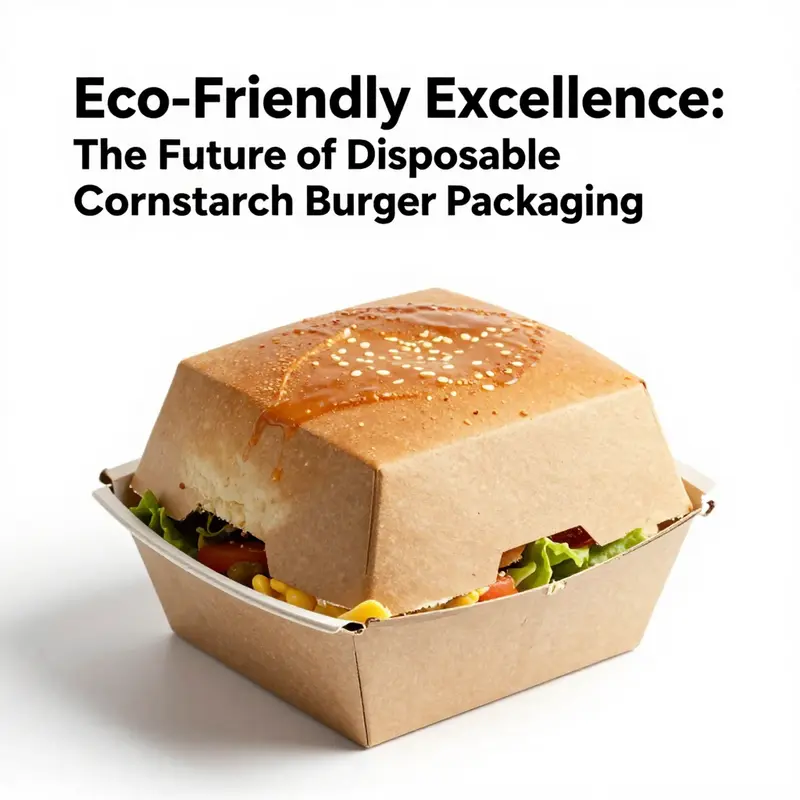
The technical performance of disposable cornstarch burger box packaging sits at the intersection of sustainability and everyday practicality. It is a field where materials science, process engineering, and food safety converge to answer a simple question with high stakes: can a green substitute for traditional plastics perform at the level customers expect during the exacting flow of takeout, delivery, and dining? The answer rests on a careful blend of renewable feedstocks, barrier formulations, and thoughtful design that preserves the integrity of a hot, greasy, or saucy burger as it travels from kitchen to curb. In practice, these boxes are built from 100 percent biodegradable and compostable cornstarch-based materials, often augmented with plant-derived polymers such as polylactic acid to improve strength, stiffness, and resilience. The cornstarch backbone brings a renewable origin, while the PLA layer or coating provides a critical barrier function that helps keep moisture and oil from compromising the box’s form. The synergy between substrate and coating is essential; without a robust barrier, a box can soften, warp, or leak under the weight and heat of its contents. With a well-chosen pairing, however, the container maintains its shape and its grip on the lid, even when a burger releases a little more grease than intended during transit. The most telling performance metric in the field is heat tolerance. For typical burger boxes, heat resistance hovers around 120°C, a threshold that accommodates steam and hot fillings without immediate deformation. This is not accidental: it reflects a design target that aligns with hot meals straight from the grill, wrapped, and handed to a customer who expects comfort rather than caution. Prolonged exposure to high heat, however, can erode structural integrity. In practice, the box is intended for short-term service rather than long-term heat retention. When a meal sits in a car or on a doorstep, the key factor is not just the peak temperature it can withstand but how it behaves under sustained heat—whether the walls remain rigid, the corners stay sealed, and the lid maintains a secure closure that resists accidental opening. The moisture and oil barrier plays an equally vital role. A biodegradable barrier layer—often a thin biodegradable PLA or a natural wax coating—prevents oil from wicking into the paperlike substrate and keeps the exterior surface from becoming slick, which can undermine the pack’s dry grip and handling. This moisture resistance is crucial for burgers and fries, where the combined exposure to hot fats and sauces can otherwise lead to soggy cardboard-like textures or compromised lid seals. It is not unusual to see packaging engineers specify a dual barrier strategy: an inner barrier that faces the food and a surface barrier that protects the exterior from condensation and leaks. The balance between barrier performance and compostability is delicate. Barrier compounds add cost and complexity, and every additive must be chosen with end-of-life in mind. The goal is to preserve functionality at the point of use while ensuring that the entire assembly remains compatible with industrial composting streams, breaking down into water, carbon dioxide, and biomass within a practical window. This is where the environmental performance of the packaging becomes tangible. Fully compostable containers are designed to degrade in industrial facilities within 90 to 180 days. This degradation timeline is a function of material composition, coating selection, thickness, and the presence of any inks or adhesives. A robust cornstarch-based system, when paired with a compatible barrier and sealed with a non-toxic adhesive, can achieve the desired decomposition without leaving microplastics behind. Certifications such as those from biodegradation and compostability authorities provide the assurance that a product will meet specific criteria in the right conditions. BPI and OK Compost certifications, for instance, signal conformity to industrial composting standards, which translates into better waste streams for restaurants and consumers who want their packaging to disappear rather than linger. The material choices also influence regulatory compatibility and consumer safety. These containers are designed to be BPA-free and non-toxic, suitable for direct contact with hot and oily foods. They meet safety expectations for acids, oils, and temperatures encountered in common dining scenarios, and they are built to comply with food-contact regulations such as FDA standards when applicable. Such compliance is essential because it underpins the trust that restaurants place in the packaging and the confidence that consumers place in the safety of what they carry home. The structural integrity of the box—its ability to keep its shape and contents contained during transport—arises from careful geometry and reinforcing features. Most designs employ a rigid, boxlike form with a secure lid that snaps shut or hinges into a sealed configuration. Reinforced edges, rounded corners, and interlocking lid mechanisms help counter the forces exerted by a heavy burger, melted cheese, or a side of fries. The result is a container that remains upright, resists tipping, and minimizes spill risk during loading, stacking, and transit. A key principle in this area is the leak-proof design, which often combines precise tolerances, tight seals, and careful routing of seams. The adhesives and coatings used in such systems must be food-safe, compatible with the cornstarch substrate, and resilient to repeated heating and cooling cycles. In practical terms, a well-engineered box will not only resist leakage but also retain its structural rigidity as moisture migrates and the contents cool. The consumer experience depends on this reliability. A box that deforms or leaks at the slightest tilt undermines trust and undermines operational efficiency in a busy kitchen or delivery hub. That is why the engineering approach emphasizes not only initial performance but long-term durability across a spectrum of handling conditions. The design conversation inevitably touches on compatibility with microwaves and refrigeration. A significant portion of the user base relies on reheating or refrigerating leftovers, so packaging must tolerate safe exposure to microwaves and cold storage. The coatings, barrier layers, and adhesives must be compatible with typical consumer heating environments while remaining non-toxic and compliant with safety standards. Microwave safety is enabled by selecting heat-resistant materials and ensuring the packaging does not produce hazardous emissions or degrade in the microwave. Refrigeration safety hinges on maintaining barrier integrity even when the product experiences condensation and cooling cycles, which can stress seals and edges if the barrier is too fragile. When these conditions are met, customers can reheat or store meals without residue, while packaging retains form and function. The interplay between performance and sustainability also extends to lifecycle considerations and end-of-life outcomes. The packaging is designed to be compostable commercially, but it must also align with the realities of waste streams in different regions. Industrial composting infrastructure varies by geography, which means that some users may encounter composting facilities with differing capabilities. In practice, the packaging industry addresses this by pursuing certifications and providing clear disposal guidance to consumers and businesses. The aim is to ensure that a compostable box graduates from waste into a safe, nutritious end-of-life product rather than contributing to landfill mass. From an operational perspective, manufacturers pursue scalability and cost-efficiency without sacrificing these environmental and safety commitments. The economics of cornstarch-based packaging depend on raw material prices, processing technologies, and the economies of scale achieved through large production runs. Minimum order quantities in the hundreds of thousands can be common for branded or customized packaging, while standard configurations may still benefit from bulk pricing. The ability to offer multi-compartment designs—single, 3-compartment, 4-compartment, and even 5-compartment options—adds versatility for restaurants that want to pair burgers with fries, salads, or dips in a single container. The compartmental approach must preserve barrier integrity and prevent cross-contamination between compartments, while also remaining practical for stacking and transport. Each additional division adds weight and surface area, which can impact heat transfer and the overall performance of the package. For this reason, engineering teams scrutinize the geometry of partitions, the compatibility of internal liners, and the overall mass balance. The packaging must also accommodate branding and customization without compromising performance. Printing inks, surface coatings, and internal liners need to be selected for their compatibility with the cornstarch base and barrier layers, ensuring that branding does not undermine barrier performance or compromise compostability. In this regard, the market often supports a spectrum of customization options, from branded logos and color schemes to unique shapes, with some configurations designed to accommodate loud, high-contrast branding while maintaining the critical structural and barrier properties that define functionality. The result is a product that meets the pragmatic demands of food service while aligning with corporate sustainability goals. An integrated approach to design also considers the supply chain and logistics implications of moving away from traditional plastics. Cornstarch-based packaging can benefit from simpler disposal streams but may require more careful handling in a diverse distribution network. For example, a takeout box that uses a wax or PLA barrier must be composted in an industrial facility to achieve optimal degradation; if disposed of in a general waste stream, the box may persist longer than expected. This nuance underscores the importance of education and clear labeling, so restaurants and customers understand how to dispose of the packaging properly. The broader implications for the sector are significant. As consumer awareness of environmental sustainability grows, so does regulatory scrutiny. Packaging that is fully compostable and free of hazardous additives aligns with policy ambitions aimed at reducing plastic waste and encouraging circular economy practices. The chapter’s focus on technical performance is not an end in itself but a means to unlock sustainable practices across the food service industry. When a box performs at the required level—resisting heat, containing oils and moisture, enabling safe reheating, and breaking down responsibly in composting facilities—it becomes a credible alternative to conventional plastics. The shift is not merely about substituting one material for another; it is about reimagining how a simple, everyday object can fit into a system that values environmental stewardship, food safety, and operational reliability. To illustrate how these principles translate into real-world practice, one can consult supplier documentation that highlights features such as leak-proof design, microwave safety, and suitability for hot and cold foods in the context of cornstarch-based packaging. See the following internal reference for a practical example of how such design principles are implemented in a related packaging format: disposable-kraft-paper-takeaway-box-clear-lid-custom-print-matt-lamination-for-sushi-salad-wholesale-food-container. This reference underscores how industry players communicate technical capabilities while balancing branding and end-of-life considerations. At the same time, the core narrative remains anchored in the technology of cornstarch-based systems, where the tradeoffs between barrier performance, heat resistance, and compostability are not merely theoretical but practical determinants of whether a packaging solution can scale across kitchens, couriers, and households. The chapter thus arrives at a broader conclusion: disposable cornstarch burger boxes can deliver robust technical performance while advancing environmental objectives, provided that material choices, barrier formulations, data on heat and moisture exposure, and end-of-life pathways are carefully integrated from the outset. When these elements are harmonized, the packaging can satisfy the dual imperative of protecting food quality during transit and supporting a more sustainable waste stream after use. Industry teams continue to refine formulations to optimize stiffness without sacrificing compostability, to strengthen seals without introducing toxic components, and to tailor barrier properties to the diverse range of takeout items that a modern burger-focused operation may offer. The ultimate benefit is that a seemingly humble container becomes a pivotal component of a circular economy strategy in which renewable resources replace finite ones, waste streams are redirected toward composting rather than landfills, and customer experience remains smooth, reliable, and safe from first bite to last crumb. External reference: https://www.alibaba.com/product-detail/DECHEN-DCH-Biodegradable-Packaging-Bento_1600533532146.html?spm=a2700.1.x.0&gps=1
Economic Viability and Market Dynamics of Disposable Corn Starch Burger Box Packaging

A shift is underway in the way food service thinks about packaging. It does not rest on mere novelty but on a genuine calculus of costs, risks, and opportunities. Disposable corn starch burger box packaging sits at the intersection of environmental responsibility and operational efficiency, offering a biodegradable and compostable path forward that aligns with customer expectations, regulatory trajectories, and the realities of scaled food delivery. The argument for corn starch-based containers rests not only on their renewable origins but on how they perform under the pressures of a modern kitchen, a bustling takeout counter, and the logistics of last-mile delivery. These boxes are designed to hold up to the grease and sauce that define a burger experience, while resisting the moisture and oil that would degrade a less robust paper or plant-based alternative. They are not merely a green option; they are a practical one, engineered to meet the demands of today’s fast-paced food service ecosystems while minimizing environmental impact at every stage of their life cycle. In a market that rewards reliability as much as responsibility, the economic viability of these boxes is achieved through a combination of demand, design, production scale, and the policy climate that nudges businesses toward sustainable choices.
Market demand for environmentally responsible packaging has grown from a niche concern into a mainstream expectation. Consumers increasingly seek brands that visibly invest in planet-friendly practices, and regulators are tightening the rules around single-use plastics and wasteful disposal. Within this context, biodegradable and compostable packaging derived from renewable corn starch offers a compelling value proposition. The material is sourced from an annually replenishable crop and benefits from established agricultural supply chains, which makes it less vulnerable to price shocks tied to volatile crude oil markets. It also supports a circular economy narrative by enabling composting and eventual return to the soil, rather than long-term accumulation in landfills. For operators, this means a potential reduction in end-of-life costs and an easier path toward regulatory compliance, especially in jurisdictions that provide incentives for green packaging adoption.
From a product-design standpoint, corn starch burger boxes are often engineered to integrate smoothly into existing workflows. They feature rigid structures to preserve integrity during transport, even when a burger is greasy or the box is jostled in transit. Many models are designed with oil and water resistance, with some variants boasting oil resistance at high temperatures and comprehensive moisture barriers. The lids are typically secure, using snap or hinge closures to prevent leaks, thereby protecting both the food and the customer experience. This reliability translates into tangible bottom-line benefits: fewer spill-related complaints, reduced waste associated with compromised packaging, and improved brand trust. The interplay of performance and sustainability is the core of economic viability here. When a box can reliably contain a meal from kitchen to customer without failure, the perceived value justifies the higher upfront material cost, especially when the buyer weighs it against the lifetime costs of petroleum-based plastics and the penalties or fees that can accompany non-compliant packaging.
On the demand side, the culinary and retail sectors are increasingly seeking scalable packaging solutions that can be tailored to brand identity without sacrificing efficiency. The market offers a spectrum of configurations—single-compartment, multi-compartment, and modular designs—that enable operators to segment meals and pair burgers with fries, salads, or other sides within a single container. Customization options are widely available, including branded logos, color schemes, and distinctive shapes. This is not simply about aesthetics; branding on packaging creates a tangible marketing channel and helps drive customer recall in crowded marketplaces. The ability to customize at scale, with consistent quality and predictable lead times, is a decisive factor for large chains and growing independents alike. In the domain of cost, suppliers can offer price breaks at high volumes, which makes this packaging option financially attractive for operators who process hundreds of thousands of meals per day or per week. For instance, bulk pricing in the market can range from modest unit cost reductions to highly aggressive rates once production volumes surpass several hundred thousand units, enabling a compelling total cost of ownership when waste, disposal, and regulatory costs are all factored in.
Economic benefits extend beyond the box itself. Corn starch is a byproduct of agricultural production that, when redirected into packaging, creates value across the supply chain. Regions with abundant corn production—places with mature farming ecosystems and well-established processing industries—stand to gain from diversifying into bioplastics and compostable packaging. For farmers, this diversification offers new revenue streams that can stabilize income amid fluctuations in traditional crop markets. For manufacturers, it broadens the material palette for packaging solutions, supplying a renewable alternative that can be molded into the precise shapes and barrier properties required by food-service operators. The broader economic narrative is one of synergy: agricultural activities feed into packaging, which in turn supports food service supply chains, which in turn stimulates demand for sustainable farming inputs and technologies. The result is a more resilient economic fabric for communities that produce and process corn, while also delivering environmental dividends that align with corporate sustainability goals and consumer expectations.
The cross-cutting insights from recent research illuminate the expansive potential of corn-based materials beyond packaging. Though the most immediate application remains in food-contact packaging, corn starch derivatives have already begun to appear in other high-value domains, including energy storage and electronics, where their versatility and scalability underscore their long-term economic viability. While these applications sit in different markets, the shared thread is the underlying material efficiency and renewable origin. This broader context reinforces the strategic logic of investing in corn starch packaging: investors and managers recognize the opportunity to leverage a renewable feedstock for multiple value streams, creating optionality and diversification that can buffer against single-market shocks.
In practice, cost considerations for corn starch burger boxes hinge on both material costs and the efficiency of the supply chain. The material cost is influenced by feedstock prices, refining processes, and the degree of post-processing needed to achieve desired barrier properties and heat resistance. However, scale economies tend to compress per-unit costs as order quantities rise. The literature and industry discussions consistently highlight bulk pricing advantages at higher volumes, with substantial reductions realized as production surpasses the 200,000-unit threshold and beyond. These economics are especially favorable in high-volume food-service contexts—fast-food franchises, large takeout operations, and meal-kit providers—where the mix of predictable demand and continuous throughput supports a lean, predictable procurement model. In many cases, the total cost of ownership for these boxes—when combined with reduced waste disposal charges and potential regulatory incentives—competes favorably with conventional plastics. The practical implication is straightforward: for operators planning a transition to sustainable packaging, the economic equation improves with scale, and early adoption can translate into both competitive differentiation and long-run cost stability.
An important lever in achieving this balance is the alignment of packaging choice with regulatory frameworks and certification schemes. Biodegradable and compostable packaging that meets recognized standards—such as independent certification for industrial compostability—offers a credible signal to customers and a defensible position for brands facing policy tightening around single-use plastics. When a packaging solution can claim certification and provide a clear end-of-life pathway, it reduces ambiguity around disposal and supports municipal composting programs. This regulatory clarity further strengthens the economic argument: firms can plan procurement and waste management with greater confidence, minimizing the risk of stranded assets or costly material substitutions later in the product life cycle. For operators, the net effect is a more predictable path to compliance and brand integrity, both of which are valuable assets in a market where consumer perception and policy are increasingly intertwined.
To illustrate how this dynamic plays out in practice, consider the design and life-cycle performance of a representative corn starch burger box. The container is engineered to maintain its structural integrity during typical handling and transport, resisting deformation under load and preventing leakage that would otherwise undermine the dining experience. It can be microwaved, frozen, or stored in ovens as needed for reheating or cold-chain management, enabling flexible use across takeout, delivery, and on-site service models. The plastics alternative may offer lower upfront cost or familiar rigidity, but the corn starch option delivers a compelling combination of performance and sustainability that resonates with today’s consumer expectations and regulatory direction. The economic viability, therefore, is not a single-number calculation but a function of multiple interacting variables: material price, production efficiency, brand value, disposal costs, and the strategic importance of sustainability in the buyer’s procurement criteria.
Operators can further enhance the case for corn starch packaging by integrating it with other sustainable practices and supply-chain innovations. For example, adopting corrugated or compostable outer packaging, coordinating with suppliers who can guarantee consistent supply of compostable liners or inserts, and leveraging centralized waste management arrangements can all contribute to a more sustainable and cost-efficient packaging ecosystem. The result is a coherent, end-to-end approach that minimizes environmental impact while preserving or even enhancing customer satisfaction. When customers see consistent quality, convenient reheating options, and a clear compostable pathway at the end of the product’s life, their willingness to pay a premium for sustainability increases, reinforcing the business case for proceeding with corn starch-based burger boxes.
The case for economic viability is not built on a single metric but on the convergence of demand signals, design excellence, agricultural alignment, and supportive policy. This convergence creates a virtuous cycle: growing market demand incentivizes investment in scalable production, which lowers unit costs and improves margins. Those margins, in turn, enable broader adoption across more operators, further stimulating demand and driving even deeper alignment with sustainability goals. The long-run horizon favors packaging solutions that can be produced at scale, integrated into existing logistics infrastructures, and recycled or composted without contaminating the waste stream. In this context, corn starch burger boxes emerge as a practical embodiment of the circular economy in food service—an option that is not only kinder to the planet but also competitive in the marketplace where cost, reliability, and brand reputation matter most.
The practical takeaway for decision-makers is straightforward. If you are evaluating a transition to more sustainable packaging, the questions to ask revolve around scale, end-of-life outcomes, and total cost of ownership. How quickly can you secure supply of consistent quality at the volumes you require? Do you have access to municipal or industrial composting streams that can reliably process the packaging at the end of its life? What are the real disposal costs you would incur if you continued with plastics, and how do those costs compare to the premium you might pay for a compostable corn starch solution? The answers will differ by market and by supplier network, but the underlying economics are favorable for those who can leverage volume, brand differentiation, and regulatory incentives to their advantage. A mature market for compostable packaging is not a luxury; it is a strategic asset that can reduce risk, lower waste, and improve the resilience of the food-service value chain.
To ground this discussion in concrete options without anchoring to any single supplier, consider the design and market feasibility of a typical disposable kraft paper takeaway box with a clear lid. Such a packaging solution illustrates how a compostable material can deliver on both form and function: a sturdy, leak-resistant body paired with a secure lid that travels well through delivery networks and withstands typical reheating workflows. The design is adaptable to a range of meal configurations, enabling operators to maintain consistent portioning and branding across menus. In practice, micro-to-macro strategies that combine scalable production with localized customization can maximize both efficiency and market appeal. For readers seeking to explore supplier options and specifications further, a practical reference point is available through mainstream product catalogs, which provide real-time material compositions, certifications, and pricing for bulk orders. Disposable Kraft Paper Takeaway Box with Clear Lid—a tangible example of how sustainability and practicality can align in a single packaging solution.
In closing, the economic viability of disposable corn starch burger box packaging rests on a solid foundation of market demand, scalable production, and responsible end-of-life outcomes. The appeal lies not only in reduced environmental impact but in the operational reliability and branding benefits these containers confer. As consumer awareness continues to grow and regulatory regimes tighten, the incentive to adopt compostable, renewable packaging will intensify. For operators, the payoff is a more resilient supply chain and a collaborator in the broader effort to reframe packaging from a disposable afterthought into a strategic, value-creating component of the food-service experience. The story, then, is less about a single material and more about the future-proofed ecosystem it helps sustain—one in which corn starch-based packaging supports sustainable growth without demanding compromises on performance or price. External resource: https://www.alibaba.com/product-detail/DECHEN-DCH-Biodegradable-Packaging-Bento_1600985834558.html
Final thoughts
As the food service industry continues to evolve, the demand for sustainable and effective packaging solutions like disposable cornstarch burger boxes will only increase. By offering a biodegradable alternative that meets technical and economic needs, these boxes empower businesses to not only embrace eco-friendly practices but also enhance consumer satisfaction. Transitioning to cornstarch-based packaging is a proactive step towards a greener future that aligns with both consumer preferences and regulatory requirements, paving the way for a sustainable approach to food delivery and takeaway.