
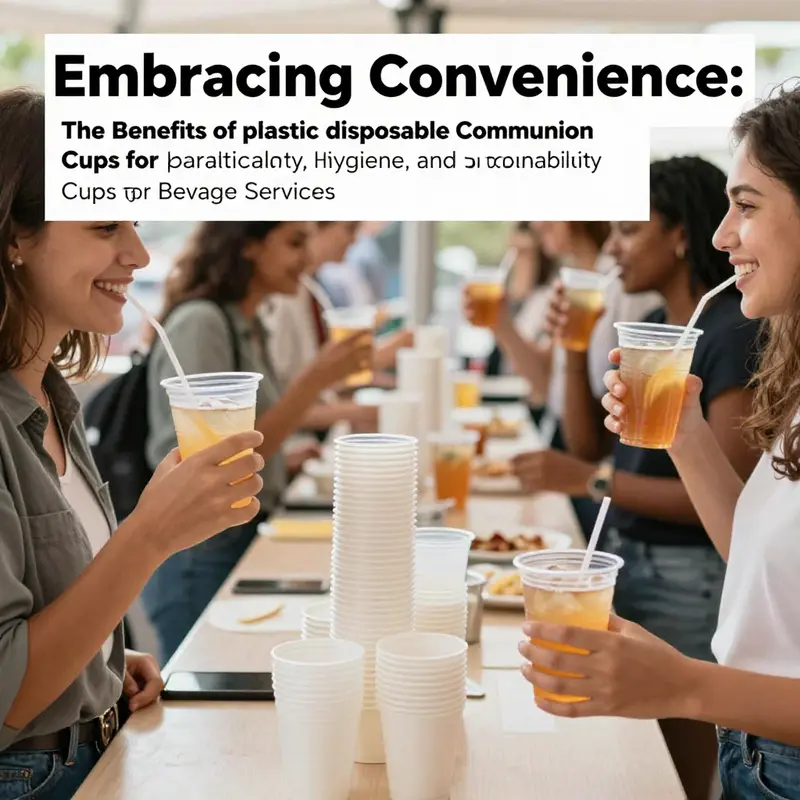
In a world where convenience meets tradition, plastic disposable communion cups have emerged as a staple for various food and beverage sectors, including bubble tea shops, restaurants, and catering services. Designed for seamless service, these cups offer unmatched practicality without compromising on quality or hygiene. As we delve into the three crucial aspects of these cups—practicality, hygiene and sanitation benefits, and economic considerations—we’ll uncover how they can enhance operations across different businesses while remaining aligned with contemporary sustainability practices.
Dignity in a Single Cup: The Practical Rhythm of Plastic Communion Cups
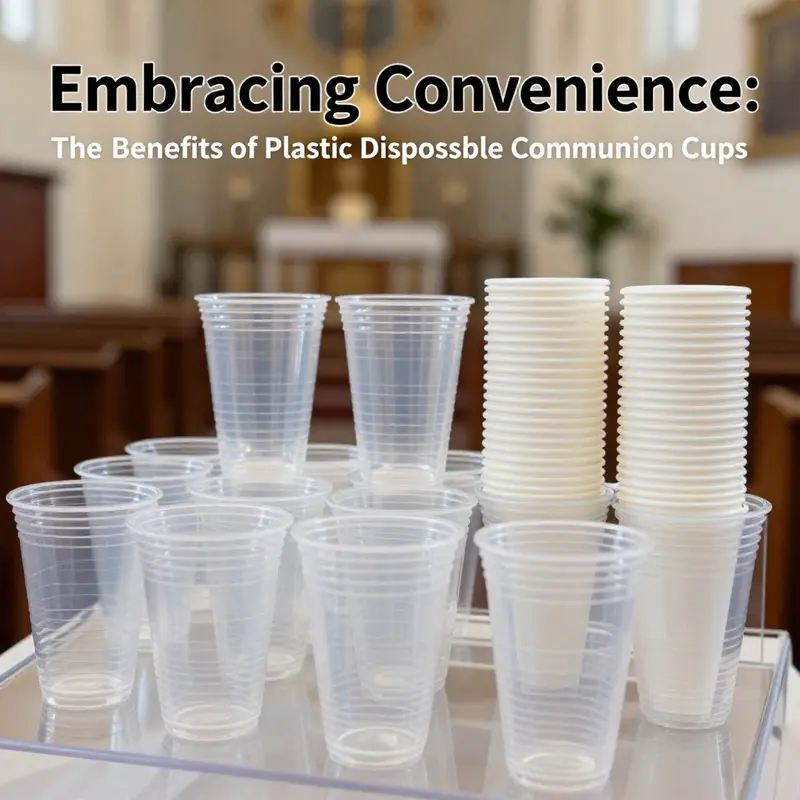
In many worship settings, plastic disposable communion cups are chosen not for novelty but for practical reasons that honor the liturgy. They enable smooth distribution, reduce cleanup time, and help maintain a reverent pace.
Their design supports dignity: lightweight, easy to handle, and compatible with tray systems. They minimize the disruption of flow, even in large congregations or outdoor services. Hygiene and safety are central: single-use cups reduce cross-contamination and reassure communicants.
Material choices (PET, HDPE, PP) provide safety and clarity; biodegradable options exist. Storage and transport advantages matter; packaging, stacking, and liners help logistics. Yet the aim is not to replace reverence with convenience but to empower ministry by keeping the focus on the sacrament.
Ultimately, the cup becomes a tool aligned with the service’s rhythm and the community’s values, supporting a moment that remains central even as operations proceed with quiet efficiency.
Sanctuary Hygiene in Practice: How Disposable Plastic Communion Cups Support Dignity, Safety, and Efficiency
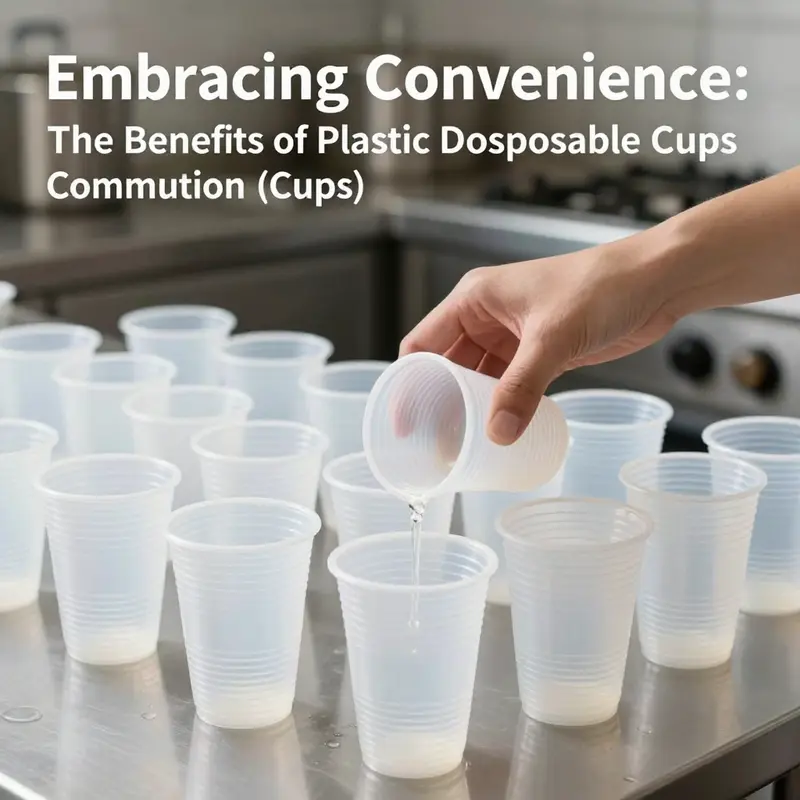
When a congregation gathers for the sacrament, the atmosphere is reverent and focused. In the practical rhythms of a service—the processional, the readings, the prayers, and the distribution—the question of hygiene cannot be sidelined. Disposable plastic communion cups have become a pragmatic solution that honors health without compromising liturgical dignity.
The core idea is simple: one cup, one recipient, one moment of reverence. For large gatherings, disposable cups reduce the need for on-site sanitation, storage, and handling between preparation and reception. This keeps the service moving with fewer interruptions, and it helps worshipers stay centered on the meaning of the moment.
Beyond convenience, the cup’s design supports safety in subtle ways. A smooth finish and rounded edges minimize the risk of catches or nicks during handling. A stable shape helps prevent spills when cups are passed along trays, and the versatility of standard sizes reduces misalignment with serving setups.
Distribution practices matter as much as the cup itself. Churches commonly pre-assemble elements so volunteers can serve with minimal direct contact. In some cases, pre-filled cups—juice and wafer already together—further limit touchpoints from preparation to reception, reinforcing hygienic standards while preserving the reverent pace of the rite.
Environmental and ethical considerations also guide choice. Recyclable plastics, responsibly managed disposal, clear labeling, and dedicated recycling or compost receptacles help align hygiene with stewardship. Training volunteers to handle cups with care and to communicate the rationale for hygiene reinforces reverence and trust in the sacrament.
In sum, disposable cups can support a dignified, safe, and efficient liturgy when chosen and used with thoughtful planning. They offer a practical baseline that respects the sacred act while meeting the realities of modern church life, whether in traditional sanctuaries, outdoor gatherings, or multi-site configurations.
Balancing Cost, Conscience, and Ceremony: The Economic and Environmental Ledger of Plastic Disposable Communion Cups
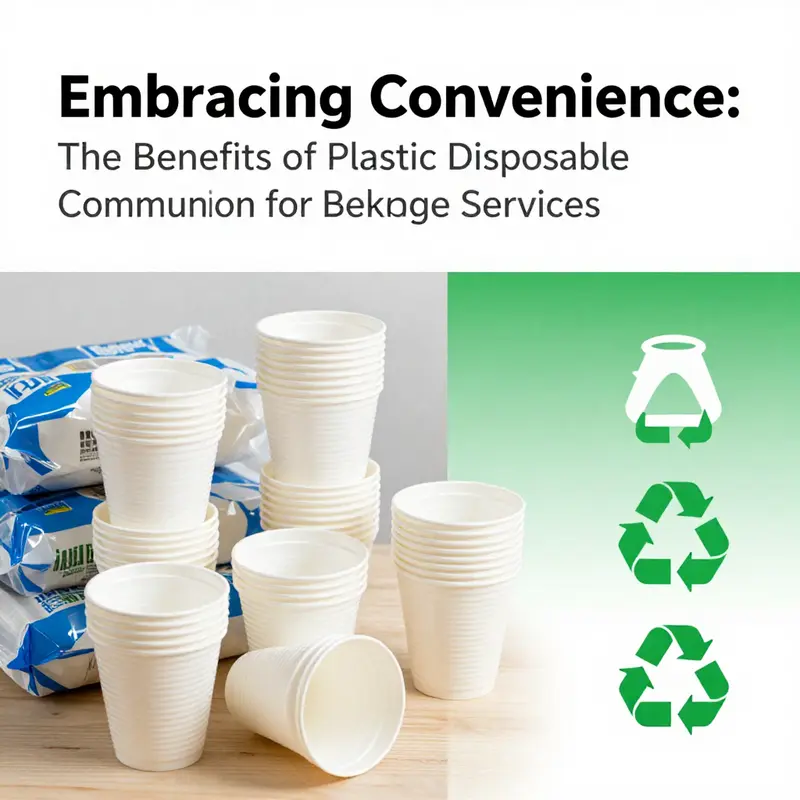
In the quiet ritual space of a congregational gathering, a small object can carry a larger weight than its size suggests. Plastic disposable communion cups, though modest and unassuming, sit at the intersection of devotion and daily logistics. They promise hygiene, speed, and the capacity to serve thousands in a single service or across a busy weekend calendar. They also invite a conversation about resource use, waste, and the moral economy of stewardship within a faith community. This chapter does not merely tally prices or plead for one material over another; it seeks to illuminate a practical, spiritually grounded calculus. It asks how a church can honor the sacredness of the sacrament while navigating budget constraints, supply chain realities, and a growing call to care for creation. The result is a narrative that connects economics to ethics, inventory to reverence, and policy choices to the lived experience of faith communities as they gather to remember, reflect, and renew their commitments to others and to the world they inhabit.
The everyday pragmatics of church life often drive decisions about what tools to use for the communion rite. A standard cup, typically sculpted from recyclable hard plastic and sized to fit most traditional trays, offers a dependable, low-friction solution. Its design priorities—smooth edges to minimize risk of injury, sufficient strength to withstand handling and transport, and a form that stacks efficiently for bulk distribution—address the practical needs of large congregations. From a budgeting perspective, these cups present a compelling case: low unit cost, predictable supply, and a straightforward logistics footprint that scales with the size of the church. In the pews and halls where these cups circulate, the math often looks favorable, especially for communities that gather across multiple services, host outdoor events, or run extensive youth programs. The economics of scale can render even a modest per-unit saving meaningful when multiplied across hundreds or thousands of participants.
Yet, behind the steady arithmetic lies a more nuanced ledger. The materials themselves—polypropylene and polystyrene—are crafted from fossil-fuel feedstocks, and their production is energy-intensive. The environmental footprint is not limited to the moment a cup is filled or discarded; it unfolds through extraction, polymer formation, and the energy used to manufacture, package, and transport the cups to churches around the country. This lifecycle footprint includes greenhouse gas emissions, resource depletion, and the potential for air and water pollution at various stages of manufacturing and end-of-life processing. In communities that measure environmental impact with care, the implication is clear: even a seemingly modest, single-use item can contribute to a larger cumulative effect. The key question becomes not whether single-use plastics can be used, but how to balance that use with a robust, evidence-based approach to stewardship that aligns with a church’s mission and congregational values.
To frame this balance, it is helpful to consider the broader landscape of material choices and the lifecycle implications of each option. Traditional disposable cups, made from polypropylene or polystyrene, deliver cost savings and convenience that are hard to match in the moment of distribution. They are lightweight, durable enough for quick handling, and compatible with standard communion trays and service setups. These qualities have cemented their place in many worship communities, particularly where large crowds are routine and the margin for error in distribution is slim. However, the environmental costs associated with these materials are nontrivial. The production phase is energy-intensive, and the end-of-life path—whether through recycling streams or landfills—varies in effectiveness depending on local infrastructure and consumer behavior. In many places, recycling remains imperfect for lightweight plastics, and contamination from food residue or labeling can undermine the recovery process. The result is a complex picture in which the economic advantages of single-use plastics must be weighed against environmental considerations that increasingly matter to institutions, donors, and congregants alike.
Against this backdrop of cost and consequence, a spectrum of sustainable alternatives has emerged. Biodegradable and compostable options, including plant-based bioplastics derived from cornstarch or sugarcane, promise to reduce reliance on fossil fuels and to improve end-of-life outcomes when properly managed. These materials aim to transform the end-of-life narrative from landfill persistence to a more benign fate that aligns with the circular economy ethos increasingly embraced by faith communities seeking to practice stewardship in tangible ways. When composted in appropriate facilities, such cups can break down into water, carbon dioxide, and organic matter, leaving behind less persistent residues than conventional plastics. But this path is not without its own set of challenges. The effectiveness of compostable or biodegradable options hinges on access to certified composting infrastructure and disciplined waste separation by congregants. The reality on the ground is that many churches do not have in-house composting capabilities or convenient access to municipal facilities, particularly in rural or suburban locales. In such settings, the environmental benefits of compostable cups depend on the reliability of downstream processing and the behavior of volunteers and attendees who manage waste streams after services. The result is a practical reminder that sustainability is not merely a material choice but a systems question: how a faith community structures its supply chains, education, and facilities to realize the intended environmental outcomes.
The economic analysis of these alternatives further complicates the decision matrix. Biodegradable options often carry higher upfront costs than conventional plastics. The price premium reflects newer production technologies, the cost of feedstocks that are more expensive or less abundant, and the certification processes that ensure claims of compostability or biodegradability. Yet the financial calculus does not end with the purchase price. Long-term financial viability must account for the broader fiscal picture: reduced disposal liabilities, potential eligibility for government or regional incentives tied to sustainability goals, and the alignment of ongoing procurement with institutional commitments to environmental stewardship. A church that publicly prioritizes ecological responsibility may, in the long run, find value in these premiums through enhanced donor engagement, volunteer participation, and the strengthening of its public witness as a community that acts on its values. The question, then, becomes not only what a cup costs today but how the choice supports or undermines a church’s broader financial and mission-oriented objectives over time.
When a lifecycle perspective is brought to bear, the comparison between disposable cups and their alternatives grows even more intricate. A growing body of research emphasizes that the environmental cost of a single-use item cannot be fully understood without considering how many times a reusable option must be employed to offset its production burden. While the specifics vary by product and context, studies repeatedly show that reuse generally yields environmental benefits only after a substantial number of cycles, dependent on factors such as washing energy, water use, and the lifespan of the reusable vessel. One widely cited principle is that a reusable option must be used repeatedly to overcome the higher upfront emissions associated with manufacturing disposable products. In some cases, for instance, a reusable polypropylene cup would need dozens of uses before it would achieve lower carbon emissions than a conventional single-use cup, once washing and transportation are accounted for. In other scenarios, particularly where water and energy for washing are efficiently managed, the break-even point can occur more quickly. The overarching message remains clear: the environmental advantage of reusables is highly sensitive to local conditions, including facility efficiency, cleaning protocols, and the material choices at hand.
What does this mean for religious settings where ritual intention and communal gathering are central? It means that the choice of cup cannot be made in a vacuum. Hygiene and practical distribution are non-negotiable in congregational life; a cup that leaks, cracks, or feels uncertain in a child’s hand is not merely a technical hiccup but a disruption of dignity in the sacred moment. Yet the emphasis on hygiene should not automatically translate into a fossil-fuel heavy, single-use default. A thoughtful approach considers whether a church can responsibly integrate certified compostable or biodegradable cups in those contexts where the local waste ecosystem can support such processing. Certification matters here. It helps ensure that what is claimed about a product’s end-of-life performance reflects reality, reducing the risk of greenwashing and fostering trust among stakeholders who fund and participate in worship. The potential to pair compostable options with clear waste-management guidelines and training for volunteers adds a practical dimension to stewardship; it is not just a price tag or a product specification but a system that invites congregants to participate in a shared responsibility.
The economic logic of this pathway is not purely environmental; it is also logistical and reputational. For large congregations or event-driven ministries that require consistent, bulk-ready packaging, supplier reliability and stock consistency are critical. The savings accrued by discounting or bundling in bulk can be substantial, but they must be weighed against the potential cost of failed or delayed deliveries, mis-match of cup size to existing trays, or the time needed to train volunteers to handle new packaging formats. In scenarios where a church already operates at a high level of logistical discipline—carefully choreographing communion distribution among dozens of volunteers, optimizing supply chains for seasonal surges, and coordinating with venue partners—the shift to a compostable or biodegradable option may be smoother and more economically reasonable. Conversely, in settings with frequent service interruptions, limited storage, or inconsistent access to composting infrastructure, the money saved in the short term might be eclipsed by higher ongoing disposal costs and operational complexity.
Within this economic and logistical maze, a practical path forward emerges when churches adopt a deliberate, staged approach. One begins by mapping the current waste stream and identifying feasible end-of-life options. This mapping includes surveying local recycling or composting facilities, understanding their acceptance criteria, and determining whether the chosen cup type aligns with existing municipal programs. It also invites a candid assessment of congregant behavior: will attendees separate compostable cups from other waste, and can volunteers provide clear, consistent guidance at the point of distribution and collection? In many communities, education and signage—paired with straightforward waste streams—can dramatically improve the environmental outcomes of any packaging choice, whether it remains traditional plastic or shifts toward greener alternatives.
Another strategic lever lies in the procurement process itself. Churches can negotiate multi-year contracts with suppliers that offer both cost stability and environmental performance transparency. A contract framework might specify clear life-cycle claims, third-party certifications, and performance benchmarks related to waste diversion rates, contamination rates, and on-time delivery. Transparency in labeling—what the cup is made of, how it should be disposed of, and what fraction of the material is renewable—helps congregants understand the impact of their choices and fosters accountability across the church’s leadership, the volunteers who staff services, and the donors who support the ministry financially. In this sense, the economics of a disposable cup become a reflection of governance as well as taste.
A nuanced discussion about sustainability would be incomplete without acknowledging the role of innovation. Advances in materials science are expanding the palette of options beyond traditional plastics. Bioplastics and plant-based composites, designed to break down more readily under controlled conditions, offer a new set of tools for churches seeking to square the circle of practicality and responsibility. However, these innovations carry their own caveats. Availability varies by region, supply chains can be fragile, and the environmental benefits depend on end-of-life handling. An honest appraisal, therefore, requires a careful weighing of the local context—what infrastructure exists, what behavioral pathways are realistic, and what the congregation is prepared to invest in terms of time, money, and education. The ambition to be good stewards of creation is never merely a matter of choosing a “greener” cup; it is about choosing a path that a church can sustain over years, aligns with its mission, and honors the sacred character of the sacrament.
In contemplating the path forward, churches can also consider how to frame their choices in a way that resonates with congregants and aligns with broader stewardship goals. Sustainability is not only an environmental imperative but a moral and communal one. When a church communicates its packaging choices as part of a coherent, faith-informed stewardship narrative, it invites participation rather than distance. Donors may view sustainability investments as climate leadership and a long-term value proposition that preserves resources for mission work. Members who are motivated by creation care can feel a sense of shared purpose when they see the congregation actively pursuing alternatives that reduce environmental harm. This alignment of values can build trust, encourage volunteer engagement, and strengthen the church’s testimony to the wider community about living out the gospel through practical, daily acts of care.
The conversation about plastic disposable communion cups thus evolves from whether to use them at all to how to use them wisely, responsibly, and in a way that honors both the sacred ritual and the material life of the church. It becomes a narrative of stewardship that recognizes the sacrament’s enduring significance while also acknowledging an ever-changing world where communities are asked to respond with prudence and imagination. The journey toward sustainability is not a single decision but a continuum of choices—material composition, end-of-life strategy, supply-chain resilience, education and engagement, and alignment with the institution’s long-range financial and mission plans. In this sense, the economic considerations and the sustainability discourse are not competing pressures but complementary strands that, when braided together, can yield a resilient path forward for faith communities seeking to honor the sacrament with integrity and care for creation.
For readers who want to explore the broader research landscape that informs these considerations, a peer-reviewed study on the economic-financial viability of eco-friendly cups offers a rigorous framework for evaluating substitution scenarios. This resource helps translate advocacy into evidence, turning questions about ethics into disciplined analysis that churches can apply in budgeting, procurement, and program planning. It is a reminder that the most compelling arguments for sustainable practice are grounded not only in moral clarity but in transparent, data-driven assessment that respects the complexity of supply chains, consumer behavior, and environmental impact.
As churches navigate these decisions, one practical takeaway stands out: the path to responsible use of plastic disposable communion cups is not a binary choice between “plastic good” and “green perfect.” It is a nuanced, context-dependent strategy that weighs immediate needs against long-term commitments to care for creation. It invites an ongoing dialogue among leaders, volunteers, and congregants about what it means to worship with intention in a world that increasingly links liturgy with stewardship. In embracing that dialogue, a church can craft a provisioning approach that serves the moment of sacrament with grace while sustaining a broader vision of repair and renewal for the planet entrusted to its care.
Internal link reference: For a perspective on transitioning toward more environmentally considerate disposable ware within a church setting, see this example of paper-based, lid-equipped options in a similar product category. senang01-hot-sale-customized-disposable-single-wall-paper-ice-cream-cups-with-lid-eco-friendly-food-grade.
External resource: https://www.researchgate.net/publication/375462985EconomicFinancialViabilityofUsingEcoFriendlyCupsasaSubstituteforDisposableCups
Final thoughts
As the demand for efficient and hygienic service tools continues to grow, plastic disposable communion cups stand out as a practical, cost-effective solution for beverage chains, restaurants, and catering services. With their undeniable advantages in convenience, sanitation, and sustainability, these cups cater not only to modern expectations but also to the evolving needs of diverse service environments. By adopting these innovative products, businesses can enhance customer experiences while maintaining a commitment to quality and environmental responsibility.