
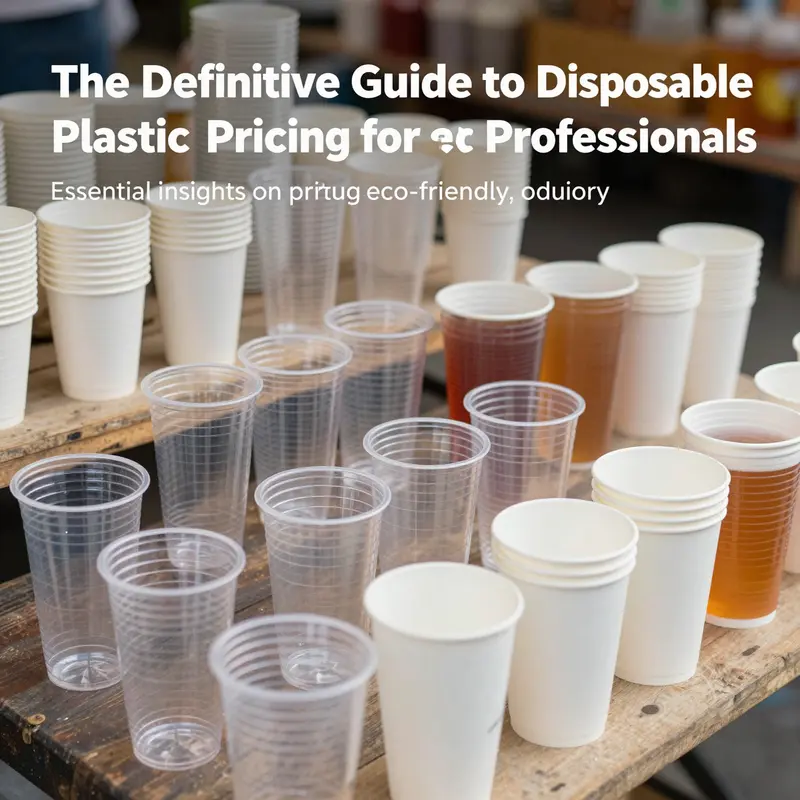
In the beverage and catering industry, selecting the right disposable cups is crucial for both practicality and branding. As businesses look to balance quality, cost, and environmental consciousness, understanding the detailed pricing structures and features of various disposable plastic cups becomes essential. This guide delves into the specific pricing for transparent PP cups, customized PET/PP options for branding, biodegradable PLA cups for eco-friendly marketing, and large-capacity solutions for bulk beverage services. Each section aims to equip bubble tea shops, restaurants, food trucks, event planners, and corporate procurement teams with practical knowledge for their cup selection needs.
The Clear Value: A Deep Dive into Transparent PP Disposable Cup Pricelist and Specifications
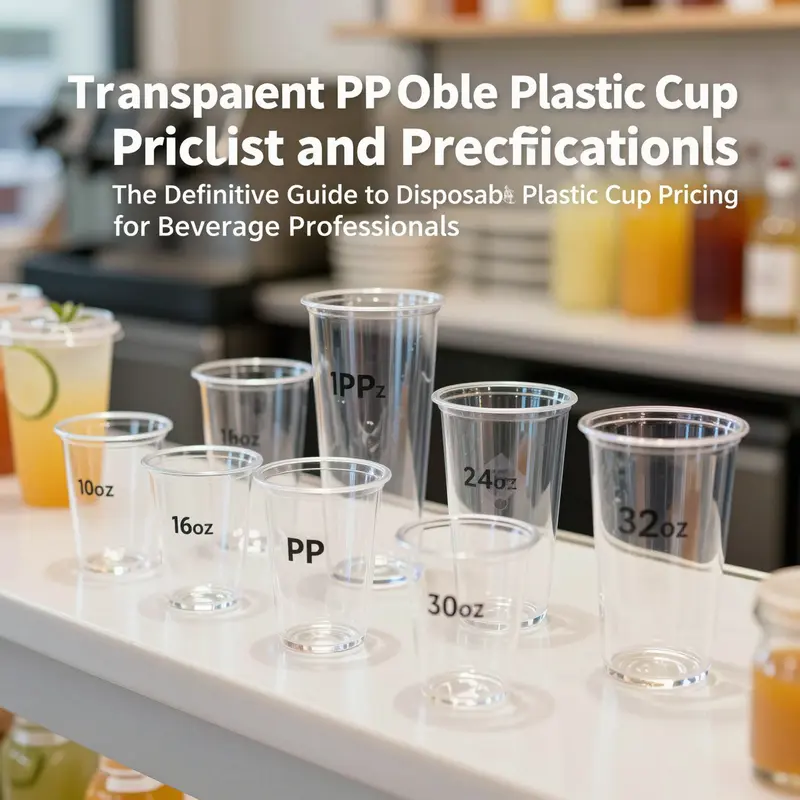
Pricing for transparent PP disposable cups sits at the intersection of practicality and scale. For buyers aiming to stock cafes, juice bars, or take-away counters, understanding the pricelist as of March 2026 means weighing not just the unit price, but how it scales with volume, how customization affects the bottom line, and how the accompanying specifications influence customer experience. The core appeal of these cups lies in simplicity: a clear, food-grade polypropylene container that remains safe for hot and cold beverages, with a design that lets the beverage speak for itself. In the wholesale market, the most common entry point is a price range that starts at a modest per-unit figure when orders are large and grows with smaller batches. The numbers reflect a straightforward logic: the higher the quantity, the lower the cost per piece. Typical wholesalers set a minimum order quantity (MOQ) of around 50,000 to 100,000 units, and several suppliers illustrate tiered pricing that tightens as orders reach higher thresholds. A representative snapshot shows that orders above 50,000 pieces commonly fall into a price band from roughly one to a few cents per unit, while orders around 100,000 pieces often settle nearer the lower end of that band. Some factories even advertise daily production capacities reaching half a million units, underscoring how the price system rewards scale. This isn’t merely a blunt arithmetic exercise; it is a conversation about manufacturing yield, logistics, and the efficiency of containerized shipments. When a buyer contemplates a long-term program—say, a spring promotional run or a regional rollout—the economics of bulk pricing becomes a strategic lever. Free samples are often offered, which helps buyers verify material quality, lid compatibility, and overall fit with existing branding or cup holders. In practice, these samples remove some of the guesswork before committing to larger orders. The pattern is consistent across several sources: the more predictable the demand, the more aggressively a supplier can price the unit, especially when the customer is willing to lock in production terms and a stable port of delivery. The upshot for buyers is clear. If they plan a sustained program, locking in a quantity around the 50,000 to 100,000 range can yield a favorable price, generally in the $0.02–$0.04 per piece zone for standard sizes with no or minimal customization. Enter the world of customization, and the curve shifts. Printing, labeling, and color options add layers of cost, but they also unlock brand equity and promotional impact. The price for standard, non-customized transparent PP cups tends to stay near the lower end of the spectrum for what the market can bear. Customization options, by contrast, move into a different pricing tier. For instance, a shop that wants full-color silk screen printing or a gold-stamped logo on a PET or PP cup can adopt a different cost architecture. Yet even here, the volume effect remains powerful. Large orders—above 50,000 pieces—tend to price down more aggressively than small batches. The buying decision then becomes a balancing act: what is the minimum viable quantity that preserves a competitive per-unit price while meeting the marketing or seasonal demand? A practical way to frame this is to map the decision to the product’s lifecycle. For everyday beverage service, a 16-ounce transparent PP cup with a standard lid often serves as a reliable baseline. It delivers the right capacity for milk teas, juices, and cold coffee while maintaining an affordable unit cost when ordered in bulk. In many cases, the lid pairing—whether domed or flat—is a separate line item or included as part of a bundled offer. The ability to pair a dome lid with the cup is not merely a convenience; it directly impacts payload integrity during transport and the consumer’s drinking experience. The price sensitivity around lids is not negligible. Some buyers find that including domed lids in the same SKU reduces overall procurement complexity and shipping costs, which can further tilt the balance toward larger orders that justify the extra handling. At the heart of the pricing narrative is the material itself: polypropylene, a widely used, food-grade plastic praised for its resistance to heat and clarity. The standard PP cups on the market are BPA-free and designed to tolerate hot and cold beverages, which broadens their usability beyond casual beverage service to scenarios like sample tastings, promotional events, and even pharmaceutical or gift packaging where a clear presentation matters. In terms of production, the capacity figure matters not only for pricing but for reliability. A supplier listing that advertises up to 500,000 units per day signals both scale and operational discipline. For buyers, this translates to potentially shorter lead times and greater assurance that large campaigns will not run into fulfillment bottlenecks. Lead time, shipping origin, and payment terms all color the final price. It is common for wholesale transactions to require a deposit before production begins and the remainder upon completion or prior to shipment. The most typical arrangement involves a 30% deposit with the balance due via telegraphic transfer or another secure payment method. A robust procurement plan also contemplates the logistical footprint: where are the cups manufactured, and from which port will they depart? In the current market, Wuhan and nearby regions have been common departure points for many suppliers, reflecting established logistics corridors to global markets. The practical implications are worth noting. Shipping from a central hub can influence freight rates, container space, and per-unit landed costs. Buyers who coordinate across multiple SKUs or who consolidate orders to simplify customs clearance may find a more favorable overall landed price by embracing a single port of delivery. The price ladder also interacts with sample policies. Many suppliers offer free samples or nominal testing costs, which reduces the barrier to verify that a particular cup’s wall thickness, lid fit, and seal performance match expectations for a given beverage with a specific viscosity. For businesses evaluating a broad portfolio of cup options, those samples serve as a crucial risk-reduction tool before a formal PO is issued. The price differential is not just about the unit; it also reflects the broader procurement package—how many lids, how few, and whether branding elements are included within the same contract. In the realm of printing, flexographic capabilities often appear as a differentiator. The capacity to apply up to six colors on a clear PP cup expands the range of customization, enabling multi-color logos or brand messages without sacrificing the cup’s transparency. This capability matters in promotional contexts where brand visibility can translate into higher returns on marketing spend. It is essential to specify the exact printing requirements up front, including color count, print area, and whether the design includes a back panel or wraparound pattern. The specifications also cover the size spectrum: while 16-ounce cups are a staple, suppliers frequently offer a variety of sizes to accommodate different beverage types and serving styles. The decision to select a 16-ounce cup or an alternative such as 10-ounce or 24-ounce variants should be governed by consumer behavior, cupholder compatibility, and the intended service setting. For businesses with a brand-forward approach, the choice of with-lid versus without-lid configurations can become a driver of consumer perception. Lids designed to fit standard cup diameters ensure compatibility with existing cup holders in cafés and convenience stores, reducing the risk of spill or fit issues during busy periods. The economics of lids, like the cups themselves, benefit from volume. When a customer commits to larger quantities, attaching lid options to the same order can reduce handling complexity and decrease the per-unit cost in practice—even if the nominal price of a lid is a separate line item. Buyers who plan promotions or seasonal campaigns benefit from a pricing structure that accommodates flexible lead times. The market often presents a window where the most favorable rates apply to orders placed with a lead time that aligns with the supplier’s production schedule and shipping calendar. This requires careful forecasting, not only of demand but of the promotional calendar, so that inventory can be secured well in advance of peak periods. The overall value proposition for transparent PP cups is anchored in clarity of presentation, reliability of supply, and scalability of procurement. With the right approach, the unit price can be a stable lever, while customization and branding lift the product from a mere container into a tangible touchpoint for customers. The decision framework for buyers naturally evolves around three pillars: cost, customization, and delivery. Cost concerns begin with the MOQ and the tiered pricing structure. Customization concerns center on printing options, color accuracy, and the impact of branding on the overall package. Delivery concerns revolve around the chosen port of delivery, transit times, and the supplier’s capacity to meet demand during critical windows. In practice, a well-structured procurement plan for transparent PP cups might begin with a baseline of a 16-ounce cup, standard clear, without customization, to establish a baseline landed cost. The buyer would then layer in incremental complexity—adding domed lids, select colors for brand elements, or even a wraparound label—to measure how each factor shifts the price curve. The decision to proceed with a large quantity hinges on the buyer’s forecast accuracy and the willingness to invest in inventory that can be deployed across multiple channels, from in-store service to third-party delivery. The pricing narrative does not exist in a vacuum. It is entwined with the broader market dynamics, including the rising emphasis on sustainability and the balance between single-use convenience and environmental responsibility. While PP cups are widely recyclable where infrastructure allows, the conversation about eco-friendliness often steers buyers toward more sustainable options when the marketing mandate leans toward green positioning. Even within the transparent PP cup family, the environment is a factor that buyers consider as part of a broader procurement strategy. For those who want to align with eco-conscious branding while maintaining cost effectiveness, blending a plastic solution with a sustainable narrative may require more upfront planning and a longer-term procurement horizon. The professional buyer recognizes that price, while crucial, is only part of the total value equation. Quality assurance processes—such as burn tests for heat resistance, visual checks for clarity, and lid fit testing—become essential complements to price negotiation. The best practice is to request a detailed quotation that enumerates item dimensions, wall thickness, lid compatibility, printing options, packaging configuration, and the exact shipping terms and incoterms. A transparent quotation should also specify whether the price includes labels, whether the cups come with or without lids by default, and what the recommended carton count is for optimal packaging efficiency. The challenge for buyers is not merely obtaining a low price but securing a predictable, repeatable supply that can adapt to demand fluctuations. This is where supplier relationships and contract terms play a pivotal role. A robust agreement often includes a service-level commitment for on-time delivery, clear payment terms, reasonable lead times, and a fallback plan if demand spikes unexpectedly. The price, in this sense, becomes a negotiation that reflects reliability, capacity, and responsiveness as much as it does unit cost. For readers who want to anchor their procurement in a practical workflow, the following approach can translate theory into action: begin with a baseline 16-ounce transparent PP cup with standard lids and a modest level of branding; request a formal quote that captures all line items; assess the effect of increasing order quantities on per-unit cost; verify printing feasibility and color fidelity with a sample; evaluate the total landed cost, including freight and duties if applicable; and finally, align the procurement schedule with marketing campaigns or seasonal demand. This structured workflow reduces the risk of mismatches between expectation and delivery. As a closing note, the pricing landscape for transparent PP disposable cups remains heavily influenced by scale and customization. The price ladder is not simply a ladder of numbers; it is a framework that shapes how brands present beverages, how retailers plan promotions, and how supply chains synchronize manufacturing and logistics. Buyers who understand the tiered pricing structure, demand patterns, and the value of consistent, recyclable packaging will be well positioned to optimize both cost efficiency and brand impact. For readers seeking further context on related packaging options that complement or extend the same procurement logic, a related resource on disposable cup ranges and promotional applications can provide additional perspectives. hot-sale customized disposable single-wall paper ice-cream cups with lid offers a sense of how customization is approached in adjacent category segments, underscoring the broader market dynamics that shape decisions for plastic cup purchases as well. In parallel, the external market reference helps frame the real-world pricing behavior across major wholesale channels. External reference: https://www.alibaba.com/product-detail/Disposable-Clear-PP-Plastic-Cup-999_1600148524837.html
null
null
Biodegradable PLA Cups in the Eco-Friendly Market: Pricing, Performance, and Practical Procurement

External resource for broader understanding: https://en.wikipedia.org/wiki/Polylactic_acid
Scale-Ready Sips: Navigating Large-Capacity Disposable Cups in Bulk Beverage Operations
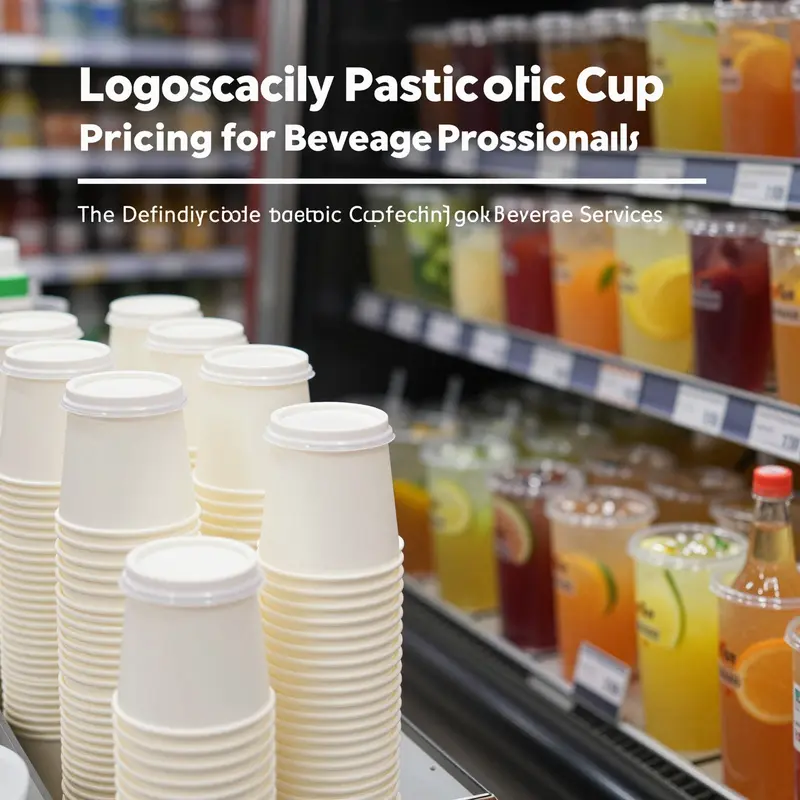
Large-capacity disposable cups form a critical backbone for bulk beverage services, from stadium concourses to corporate events, from campus cafeterias to chain-setups that prioritize rapid service. When the dialogue centers on price lists, these cups reveal a practical truth: even modest shifts in volume, material, or customization can swing the overall cost profile in meaningful ways. As of March 2026, the market for large-capacity cups tends to segment around three core dimensions—volume and capacity, material and performance, and the degree of branding or customization that a buyer requires. In practice, buyers who operate on tight margins learn to read the price list not as a single figure but as a map of choices that align with service context, quality expectations, and the pace of service. The most common sizes in bulk programs are in the 400ml to 1000ml range, roughly 13.5 to 33.8 ounces, designed to accommodate everything from cold juices and smoothies to specialty beverages that customers expect to be served in substantial portions. The material backbone is food-grade polypropylene, a choice celebrated for its durability, heat resistance, and clear, transparent finish that can showcase the beverage while maintaining a lightweight profile for servers and baristas. In many markets this polymer is also prized for its safety credentials, being BPA-free and commonly carrying food-contact approvals that ease compliance in large-volume operations. The practical implication of this combination is straightforward: cups can withstand the rigors of both hot and cold beverages for a reasonable window of time, while remaining translucent enough to present the drink in an appealing way. Lids, often dome-shaped for maximum volume, are a standard pairing with these cups, supporting reliable spill resistance during fast-paced service. Taken together, the cup and lid system becomes a reliable workhorse for venues that process high average daily traffic, where the speed of assembly and the predictability of breakage are as essential as the beverage itself. The price dynamics of these large-capacity cups are anchored in bulk economics. Buyers frequently see price anchors around the mid-to-low single digits per piece, especially when orders run into tens of thousands or more. In practical terms, this means that a typical 32-ounce capacity cup can be priced in a narrow band that tends to tighten as order quantities rise. For orders around 49,999 units and higher, the per-piece cost often settles into a predictable range that reflects the efficiency of scale, manufacturing utilization, and the efficiency of packaging and shipping. The economics become even more favorable when the buyer commits to larger volumes, with unit costs inching downward as production capacity expands and logistics become more predictable. Still, these numbers are not universal constants. They hinge on a constellation of variables that every procurement professional must weigh before placing a PO: the exact capacity, the chosen material grade, whether the cup is offered with a matching lid and whether customization is desired. A supplier’s MOQ offers a quick read on the floor beneath the price. For bulk buyers, the minimum order quantity is often set high enough to encourage long-term commitments, yet flexible enough to accommodate seasonal demand spikes. A typical minimum can hover around the mid-five-figure range, with some suppliers willing to entertain lower MOQs when a buyer shows serious potential for recurring, high-volume orders. The pricing logic also rewards the buyer who can consolidate purchases across multiple beverage formats. In many programs, the same base price tier can apply to a family of large-capacity cups, whether the product is designed for smoothies, cold brew, or fruit-infused beverages. The common thread across these variants is the economics of reuse and the faster turnover rate they enable. For venues that rely on quick service and high throughput, this translates into a virtuous circle: bulk purchases unlock lower unit costs, which in turn support competitive ticketing or value propositions for customers. The practical planning implications become clear when a buyer maps their service model onto the price list. If a café chain runs a hundred locations and emphasizes a standard 32-ounce cup with a dome lid, a centralized procurement plan that orders in high volumes can capture meaningful savings. In environments where customization adds a premium—such as branded cups with logos for marketing campaigns or loyalty program promotions—the price map shifts. Customization options often introduce additional costs, especially when the order size does not meet the lower thresholds that nourish bulk discounts. The price uplift for branding is typically offset by the marketing value of on-cup promotions, particularly in campaigns that rely on white-label or brand-coherent packaging to drive visibility beyond the beverage itself. The decision calculus, then, invites a careful balance between aesthetics and economics. A bulk buyer might consider a strategy that combines a core, non-customized stock cup for everyday operations with a separate run of branded cups for limited campaigns or seasonal launches. This approach preserves the base efficiency of scale while still accommodating the marketing leverage of customization, without forcing a wholesale re-architecture of supply chains for every promotion. In practice, the procurement playbook for large-capacity cups converges around several recurring themes. First, the supplier landscape emphasizes reliability and the ability to sustain multi-month or multi-year supply agreements. A credible supplier profile includes robust production capacity, demonstrated compliance with safety standards, and a logistics framework that can accommodate erratic demand curves without compromising lead times. A bulk buyer should seek quotations that clearly articulate the price tiers by quantity, the exact capacity options, the material specification, and the included accessories such as lids or complimentary interior liners when offered. Second, trial runs and samples hold significant value in this segment. Buyers frequently request samples to confirm fit, stacking efficiency, and the perceived heft of the cup—critical for ensuring consumer confidence when customers are pouring larger portions. It is not uncommon for suppliers to offer free samples for evaluation or to waive the sampling fee for larger orders, as the promise of a larger, ongoing purchase can rationalize the initial expense. Third, the packaging and carton configuration plays a notable role in overall cost, particularly for shipments to distribution centers or regional hubs. The standard export carton often packages cups in bulk-friendly counts that optimize palletization, reduce damage, and lower shipping costs per unit. Understanding the packaging geometry is essential for logistics planning, because a misinterpretation of carton dimensions or stacking limits can quietly erode perceived savings through increased handling or higher freight bills. In the context of large-capacity cups, the packaging count—how many cups fit per carton, and how many cartons per pallet—can translate into substantial differences in warehouse footprint and inbound transportation budgets. The conversation about shipping inevitably turns to transit times and delivery reliability. In regions where express services dominate the logistics landscape, shipments like these can reach their destination in days, not weeks, especially when the goods travel through centralized manufacturing hubs and cross-border routes that optimize for speed. For some buyers, express or expedited shipping becomes a strategic choice when promotional campaigns demand rapid stock replenishment. In other cases, standard freight can deliver the same product with cost savings that accumulate quickly over large quantities, especially when the buyer is managing a year-long supply plan. Sustainability considerations increasingly influence purchase decisions for large-capacity cups. Eco-conscious buyers weigh the trade-offs between traditional PP cups and more sustainable options like biodegradable polymers or plant-based alternatives. PLA-based cups, for instance, present a compelling narrative for brands pursuing compostable packaging or end-of-life recycling programs. The PLA option is typically in a price tier that reflects its material costs, sometimes running higher per piece than standard PP cups at equivalent volumes. Yet the market recognizes the broader environmental benefits, and many buyers justify the premium with consumer perception gains, potential marketing differentiation, and alignment with corporate sustainability goals. Pricing for biodegradable options tends to be more sensitive to order size. For smaller runs, the cost differential relative to standard cups can be pronounced, but for larger runs the per-piece price tends to compress as manufacturing scale and supply chain efficiencies improve. In the long horizon, a blended approach might emerge as optimal for a major bulk program: standard PP cups for everyday operation, with a rotating line of eco-friendly cups for special promotions and sustainability-focused campaigns. The decision framework for this mix is usually anchored in the brand narrative, the target market’s values, and the cost psychology of the consumer. From a buyer’s perspective, the core objective when evaluating large-capacity cup price lists is clarity. The price list should lay out the tiered pricing by quantity, the exact capacitive options, the material specification with any heat tolerance notes, the availability of customization, and the packaging and delivery terms. A well-structured quote will also specify the port of delivery and the incoterms or payment terms that govern the transaction. For buyers planning multi-site adoption, a centralized procurement approach can leverage volume across regions, while local procurement hubs can reduce transit times and mitigate disruption risks. It is worth noting that the most cost-effective path often hinges on committing to a forecast for consumption, rather than reacting to every spike in demand. A reliable forecast allows procurement teams to negotiate long-term discounts, secure priority production slots, and align logistics schedules with promotional calendars. In this chapter’s scope, the focus remains on the practical, day-to-day decision-making that drives cost efficiency in large-capacity cup procurement. A critical takeaway is that the price-list is not a static instrument but a negotiated framework that reflects the interplay of quantity, customization, packaging, and delivery. Buyers who approach the market with a well-articulated demand profile—clear capacity preferences, a defined branding strategy, and a realistic forecast—are positioned to extract the most favorable terms while preserving the quality and reliability their service model requires. For practical guidance on branding considerations and packaging formats, a helpful resource on eco-friendly, printed-logo paper cups is available here. eco-friendly printed-logo paper cup guide. This reference offers a concise look at how branding choices interact with material performance, stackability, and consumer perception, which can inform decisions about whether to pilot branded cups in select locations or roll them out across a broader network. As buyers weigh these choices, they should also consider external market dynamics and supplier benchmarks from global e-commerce platforms that regularly publish wholesale price ranges and MOQs for bulk beverage packaging. For those seeking a broader view of supplier landscapes and price comparables, visiting a well-known wholesale marketplace can provide useful context on how other buyers structure their bids, the typical bundles offered with large-capacity cups, and the range of customization options that emerge at scale. An external resource to consult for market-wide pricing structures is available at a major global marketplace, which maintains updated listings for bulk beverage packaging and related accessories. These external references help buyers triangulate estimates and calibrate expectations against real-world bids that reflect current supply-demand conditions across regions and seasons. In closing, large-capacity disposable cups remain a practical focal point for bulk beverage operations. The price list for these cups embodies a balance between performance, branding potential, and logistics efficiency. By aligning quantity commitments with capacity needs, assessing customization trade-offs, and planning for packaging and delivery, buyers can convert seemingly granular price details into a coherent procurement strategy that supports growth and operational excellence. The chapter above outlines the dominant economic levers and strategic considerations that shape decision-making in this segment, while the linked resource provides a tangible entry point for brands seeking to connect design intent with production realities. External marketplace references complement internal evaluations, offering a broader perspective on price bands, MOQs, and supplier responsiveness that buyers can leverage to negotiate terms that fit their long-term plans. This approach ensures that purchasing large-capacity cups is not merely about acquiring a vessel but about sustaining a service model that consistently delivers reliable performance, clear branding, and efficient cost management across a multi-site beverage operation. External resource: https://www.alibaba.com
Final thoughts
Choosing the right disposable plastic cup is a decision that blends practicality with brand identity and environmental responsibility. As detailed in this guide, the options available in the market from transparent PP cups to custom printed varieties, as well as biodegradable options for the eco-conscious, illustrate the versatility required in today’s beverage industry. By understanding the price relationships and unique specifications of these products, beverage establishments can make informed choices that enhance customer experience while aligning with their operational goals.