
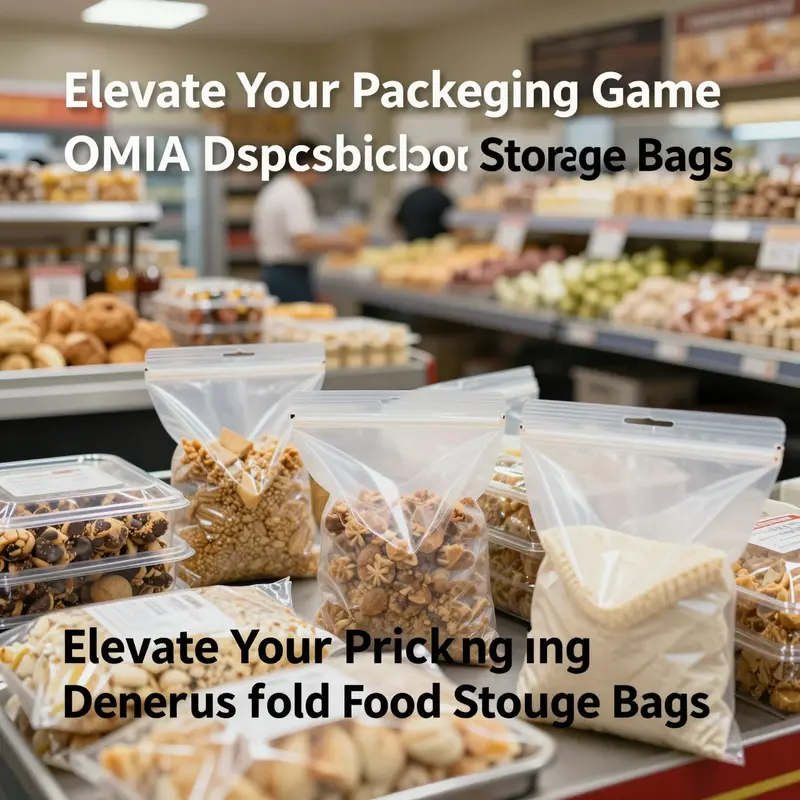
In the food industry, where presentation and freshness are paramount, OEM disposable food storage bags emerge as an indispensable solution for businesses ranging from bubble tea shops to catering services. These bags are not just a utilitarian choice; they offer versatility in design, material, and application, making them ideal for any food service business seeking to enhance customer experience while maintaining quality and safety. This article explores the key features and materials of OEM disposable food storage bags, their applications within the food sector, economic advantages, innovative sustainability practices, and efficient sourcing strategies – providing a comprehensive guide to empower your business decisions.
From Material to Message: How OEM Disposable Food Storage Bags Merge Performance, Branding, and Safety
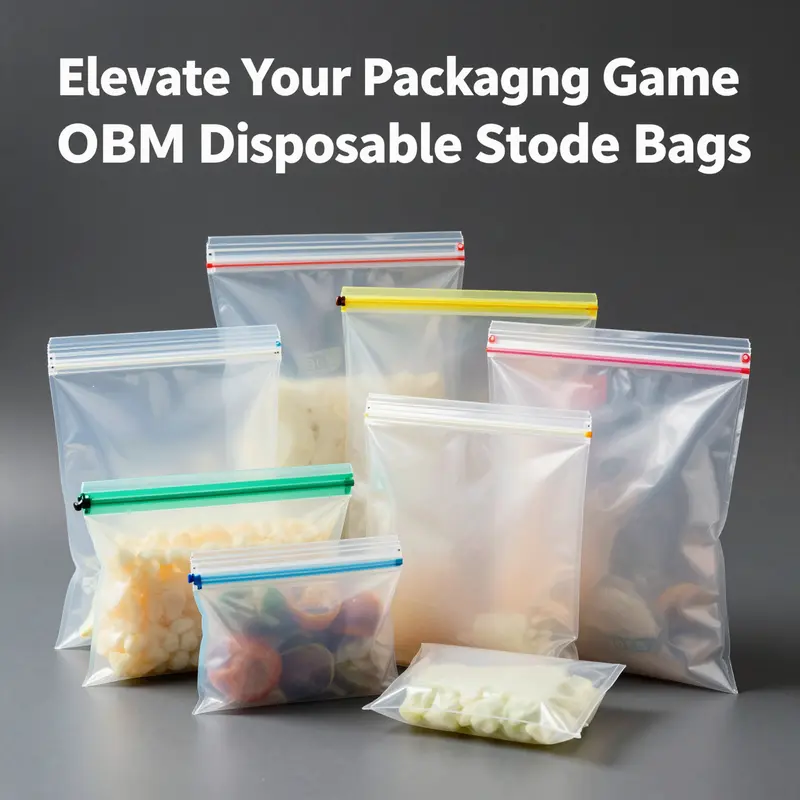
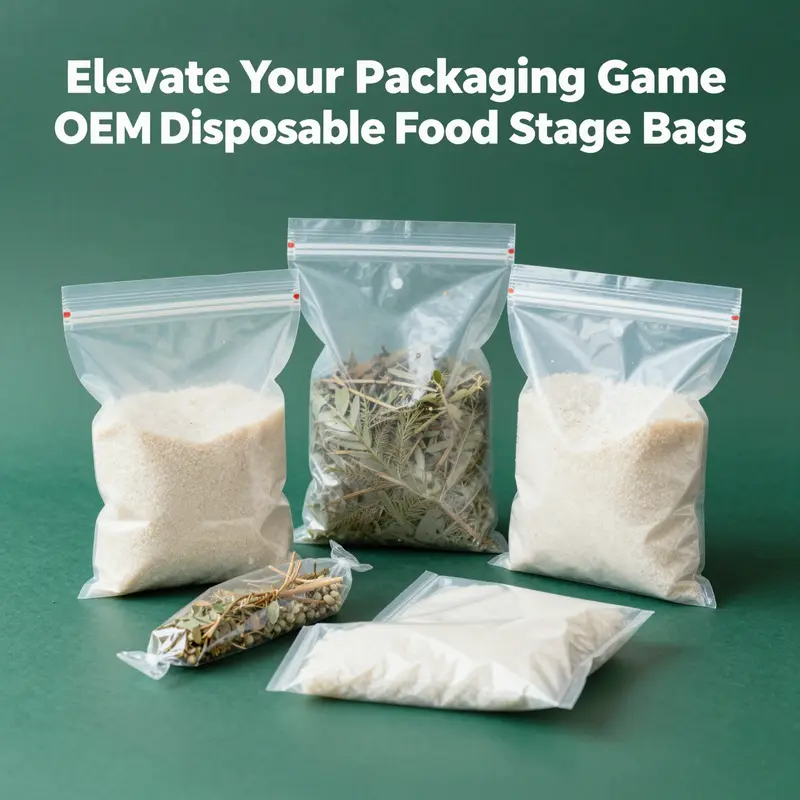
OEM disposable food storage bags are more than containers; they are the intersection of material science, engineering discipline, and brand storytelling that sits at the heart of modern packaging. In an industry where freshness, safety, and presentation translate to trust, the bag must do more than simply hold contents. It must guard moisture and aroma, survive the bumps of transport, and carry a brand’s message to retailers, diners, and delivery couriers alike. The material choice matters most because it sets the baseline for performance and cost. Polyethylene remains the workhorse, with LDPE offering flexibility and moisture resistance and LLDPE providing improved tear resistance for bags that are light yet capable. For heavier use or more demanding environments, HDPE brings stiffness and puncture resistance. Polypropylene enters the conversation when clarity and recyclability are priorities, while PET and PET laminates deliver premium visuals and robust barrier properties that keep contents pristine while presenting an unmistakable product look. In more ambitious packaging schemes, laminated films and metallized layers push oxygen and light barrier performance even further, a benefit that matters for delicate items or products stored across shifting temperatures. Biodegradable and compostable films, often PLA-based, introduce sustainability into the equation, offering brands a route to reduce plastic waste while maintaining safety and performance. All of these options must align with food-grade safety guidelines, ensuring compliant contact with a broad spectrum of foods and processes from refrigeration to reheating, especially where migration and residue concerns arise. If a brand intends to pursue high-volume production, it must balance barrier strength, processability, and end-of-life considerations, making a careful materials selection the keystone of success. The design of OEM bags translates these material choices into practical functionality and brand storytelling. Zipper seals and resealable closures give consumers quick access without sacrificing freshness, while heat-seal finishes provide airtight protection for dry goods, bulk ingredients, or items that demand strict moisture control. The geometry of the bag matters too: flat-bottoms and stand-up pouches optimize shelf visibility and countertop space, which is a crucial advantage for retailers and food-service operators who need to maximize presentation with minimal footprint. Visual language matters as well; the combination of transparency and printing, color choices, and branding graphics communicates quality at a glance. In today’s shopping environment, on-pack information and traceability features—nutrition statements, batch codes, or QR codes for product stories—are increasingly part of the packaging narrative, enabling brands to connect the consumer to provenance and safety assurances without interrupting the user experience. OEM manufacturers are aligned with these goals, offering design freedom across sizes, closures, and barrier structures. This alignment is especially meaningful for businesses seeking a cohesive packaging system that covers multiple product lines yet maintains consistent performance and branding. Because OEM providers operate at scale, they can offer compelling economics that support bulk deployment across restaurants, caterers, and distributors. The pricing dynamic often follows the familiar curve: the higher the volume, the lower the per-unit cost, with some suppliers quoting competitive fractions of a dollar per unit for orders in the hundreds of thousands. Such economics empower operators to standardize packaging, reducing complexity in procurement and inventory management while maintaining margins. Safety and compliance, too, are non-negotiable. Reputable OEM partners design films and closures to meet international food-grade standards, with rigorous testing and documentation that verify safe direct contact with food. The shift toward BPA-free materials has become a standard expectation, particularly for bags intended for reheating or long-term storage. When heat processing is part of the workflow, compatibility between bag materials and processing conditions—whether it’s microwaving, boiling water, or freezer storage—must be validated to ensure stability and safety throughout the lifecycle. Certifications such as ISO 9001, HACCP-based programs, and third-party testing underpin the trust customers place in OEM packaging. These are not decorative badges but evidence of a systematic approach to quality management, risk mitigation, and consistent production results across dynamic supply chains. The practical benefits of these packaging choices are tangible. Moisture-proof and leak-resistant designs protect dry goods, snacks, and liquids during transit and shelf storage, a key factor in minimizing waste and maintaining product quality. Oxygen-barrier features slow oxidative deterioration, extending shelf life and preserving flavor and color in a way that resonates with quality-focused brands. Vacuum compatibility enables long-term storage with reduced degradation from air exposure. For brands seeking convenience, resealable closures, stand-up geometries, and robust seals deliver a user experience that supports portion control, meal prep, and on-the-go consumption, making packaging an enabler of consumer habits rather than a passive container. The sustainability dimension, increasingly central to consumer choices, pushes OEMs to offer recyclable, biodegradable, and low-carbon options. The packaging industry is learning to balance barrier performance with end-of-life realities, ensuring that films and laminates do not impede recycling streams or composting facilities where applicable. In practice, this means selecting coatings and laminates that preserve barrier properties while remaining compatible with recycling or composting infrastructure. Brands facing environmental stewardship goals can thus align packaging strategies with broader sustainability claims, turning packaging into a differentiator rather than merely a compliance requirement. As the spectrum of applications expands—from retail shelf packs to takeout and meal-prep kits—the value of OEM packaging becomes clearer. It supports branding consistency across channels, reduces the logistics friction of managing multiple packaging formats, and enables scale without sacrificing quality. The ability to tailor sizes and closures reduces inventory complexity and helps ensure that whether a product is a small snack bag or a larger bulk pouch, it performs identically under real-world conditions. This reliability is essential for kitchens and distribution centers that depend on predictable performance batch after batch. The sourcing landscape mirrors these needs. Online supplier marketplaces connect buyers with manufacturers offering end-to-end services—from concept and prototyping to sample production, mass manufacturing, and export support. Clients collaborate on precise film structures, seal integrity tests, and printed graphics before the line is cut, ensuring that what ships matches the brand’s intent. The process is iterative but efficient: specifications are defined, a prototype is produced, samples are reviewed, and a full production run is scheduled. For operators managing multiple brands, this setup provides lean agility to respond to seasonal demand, regulatory changes, or shifts in consumer preference while preserving consistency across product families. In a typical scenario, a brand seeking freezer compatibility, strong visibility, and clear messaging would begin with a material choice that balances barrier performance and flexibility. A heat-seal finish would lock in dryness, while a zipper component supports consumer resealability after opening. A stand-up geometry would improve shelf appeal and optimize vertical display space, critical for point-of-sale impact. Logos and product information would be printed with durable inks designed to withstand cold, moisture, and handling throughout the product’s lifecycle. The outcome is a cohesive packaging system in which the bag is not merely functional but a durable, scalable asset for the brand. For readers seeking real-world illustrations of these packaging strategies, supplier listings often highlight laminated PE bags with features such as anti-static properties, moisture-proofing, and shock resistance, suitable for food, household, and promotional uses. The option to embed a custom logo directly on the bag extends brand identity beyond the product itself, turning packaging into a tangible expression of quality. For a concrete example that demonstrates how branding, material choice, and performance converge, you can view a design example of a custom-logo eco-friendly disposable kraft catering box on a supplier page: custom-logo eco-friendly disposable kraft catering box. The bag thus serves as a silent, durable, and scalable asset throughout the product’s life cycle, reinforcing a brand at every touchpoint—from the warehouse dock to the consumer’s table or doorstep. In this light, the OEM model is not merely about producing bags; it is about engineering a packaging ecosystem that preserves safety, supports sustainability goals, and empowers brands to tell a consistent story across channels. When the design, materials, closures, and print are aligned with the end-user experience, the bag becomes a conduit for trust and value, capable of delivering performance under the toughest conditions and enhancing the product’s overall appeal. For readers who want to explore the material science behind these choices further, a widely cited reference in industry discussions highlights the balance between barrier performance and processability in flexible packaging. External resource: https://www.alibaba.com/product-detail/OEM-ODM-L500-Plastic-Food-Container_1637484111171.html
null
null
Economies in Motion: The Economic Benefits of OEM Disposable Food Storage Bags
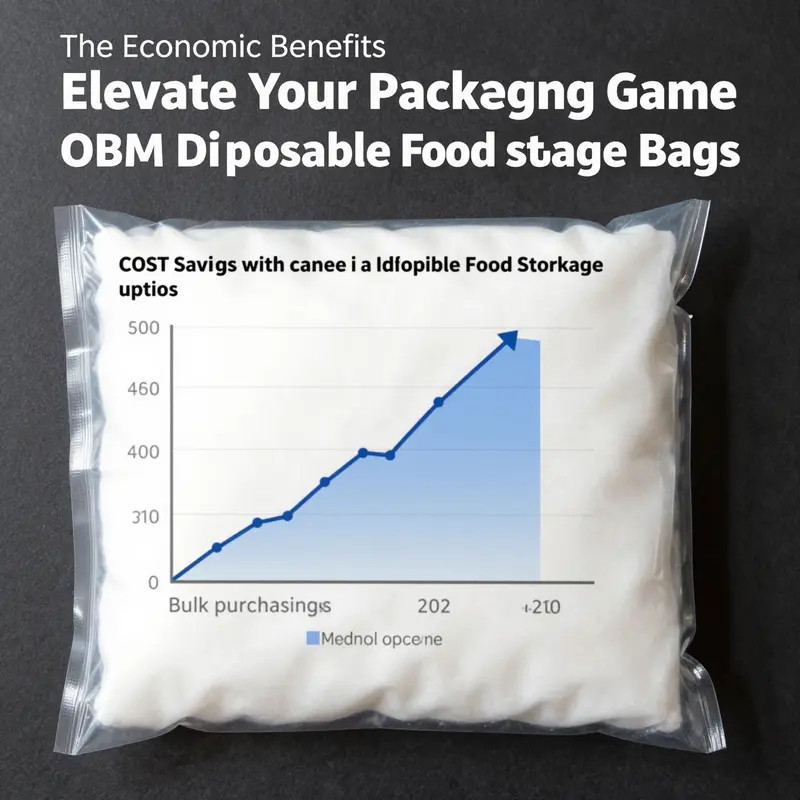
OEM disposable food storage bags are strategic assets that enable brands to operate with agility and confidence in a market that values efficiency and storytelling. When a company partners with an OEM, it buys a platform for design, scale, and continuity. The bags arrive as a finished, branded extension of a product line, engineered for durability, moisture control, and shelf stability, while carrying the brand identity. The economics hinge on three interlocking dynamics: cost efficiency from bulk production, brand differentiation that drives loyalty, and sustainability aligned with regulatory and consumer expectations. Together these factors create a compelling case for manufacturers seeking margins and market presence in a crowded aisle.
The most immediate advantage is reduced per unit cost through bulk production. A production line optimized for the client’s specifications lowers waste, reduces setup times, and improves run efficiency. Volumes lead to a lower unit cost that would be hard to achieve with smaller suppliers. Industry observers note that OEM arrangements can yield up to a substantial savings per unit, thanks to stable demand, long term contracts, and streamlined changeovers. The outcome is a predictable cost structure that improves budgeting and reduces the need for frequent renegotiations. In price sensitive markets, this cost discipline can determine whether a product gains shelf space.
But cost savings are not the whole story. Brand differentiation through customized packaging often translates into stronger customer affinity and higher repeat purchases. Branded packaging acts as a marketing tool on shelf and online, signaling quality, reliability, and stewardship values. A thoughtful design can lift repeat purchases by around 15 to 20 percent, boosting customer lifetime value and making marketing spend more efficient. When design aligns with a brand narrative through clear labeling and secure closures, packaging becomes a trust signal that supports margin growth over time.
Sustainability and regulatory alignment are increasingly central to packaging economics. OEMs offer materials that balance performance with environmental responsibility, including recyclable or compostable options and barrier properties that preserve product integrity. Brands can future proof packaging to meet evolving standards, reducing the risk of redesigns. Plant based polymers and recycled content can align with sustainability goals while preserving necessary mechanical properties. This shift supports incentives in many markets, such as tax credits or premium shelf space, contributing to revenue uplift alongside cost control.
Speed to market and supply chain resilience are additional financial and strategic benefits. Prototyping and testing short runs enable faster launches and better adaptation to demand shifts, while reducing capital expenditure and risk. Experienced OEM partners can cut product launch timelines by a meaningful margin, enabling earlier sales and enhanced promotional windows. Reliable supplier networks also support predictable lead times, lower carrying costs, and fewer disruptions, which reduces returns and customer inquiries. When a brand promises consistent performance across SKUs and regions, quality management costs shrink.
The broader economics include design and testing investments that de risk packaging concepts before scaling. Prototyping with feedback loops speeds up color matching, closure engineering, and labeling compliance, while helping ensure safety and labeling standards. The result is a more confident path to market and a lower financial exposure for product innovation. Retail realities also shape value, as retailers favor packaging that preserves integrity, communicates clearly, and aligns with sustainability commitments. Distinct packaging on the shelf can improve perceived value and sell through, reinforcing margins over time. The design flexibility of OEMs — from closures to print options — is a disciplined investment in differentiation and trust, yielding higher conversion and more efficient inventory turnover.
For brands pursuing sustainable packaging narratives, external research shows that packaging design can influence loyalty and perceived quality, supporting a strategic case for OEM partnerships as part of growth. The practical pathways to sourcing emphasize choosing an OEM that offers design freedom, supply chain reliability, and regulatory risk mitigation. In this view, OEM disposable bags are not only a cost lever, but a scalable, brand led platform that aligns packaging with a product story, delivering durable financial performance and enduring market relevance.
null
null
From Spec to Shelf: Efficiently Sourcing OEM Disposable Food Storage Bags
Sourcing OEM disposable food storage bags is less a simple purchase and more a coordinated enterprise that blends design intent, material science, and supply-chain reliability. The goal is not just a bag that holds product; it is a packaging system that preserves freshness, communicates a brand story, and scales with demand. In practice, this means starting with a clear specification and then navigating a network of verified manufacturers who can translate that specification into consistent, compliant, and cost-efficient production. A well-crafted sourcing approach aligns stakeholders—product developers, procurement, quality teams, and logistics—around a shared view of material performance, closure methods, and regulatory compliance. The result is not only a bag that performs but a supply relationship that reduces risk and accelerates time to market. The journey begins with a framework that prioritizes verified suppliers, accessible testing, and explicit certification, then widens to encompass customization, stewardship, and sustainable choices that resonate with today’s consumers.
At the heart of material choice lies polyethylene, a family of films that has become the standard for many OEM bag applications. LDPE and LLDPE offer the combination of flexibility and resilience that keeps contents protected during short- and mid-term storage. These films can be engineered with moisture barriers to guard against humidity, a feature crucial for snacks, grains, and even liquids when properly heat-sealed. In higher-performance variants, laminations and metallized films extend the barrier against oxygen and light, slowing oxidative processes that can degrade product quality and shelf life. A thoughtful material strategy also considers compatibility with vacuum sealing, which some foods benefit from for long-term storage. Importantly, reputable OEM producers of these bags often maintain food-grade certifications and adhere to safety standards, such as FDA compliance or equivalent EU and HACCP guidelines. These certifications aren’t mere paperwork; they are risk controls that reassure manufacturers and retailers that the packaging will meet safety expectations during transport, storage, and display.
Design versatility is another pillar of the sourcing equation. OEM suppliers typically offer a spectrum of closure systems, including resealable zipper mechanisms that preserve freshness after opening, and various pouch forms like flat-bottom or stand-up configurations that elevate shelf display and consumer interaction. The aesthetic options are expansive: transparent films that showcase product clarity, or printed designs that carry brand graphics, nutritional facts, or usage instructions. Custom sizes and capacities enable clients to tailor packaging to different product lines, from compact snack portions to bulk storage solutions. The ability to adjust printing color counts and line art without incurring unsustainable lead times is a critical factor for marketers who want packaging to align with evolving campaigns. While aesthetics matter, the functional backbone remains seal integrity, barrier performance, and compatibility with labeling and post-print processes. When a supplier can deliver both the technical performance and the creative flexibility, the path from concept to consumer becomes smoother and more predictable.
Beyond material and design, OEM packaging is increasingly evaluated through the lens of applications and sustainability. Retail packaging, food service and takeout, meal-prep, and freezer storage each demand different performance profiles. For example, freezer use often requires robust cold resilience and against freezer burn, while takeout packaging benefits from moisture resistance and leak-proof closures. The conversation is also shifting toward eco-conscious alternatives. Biodegradable or compostable lines, often rooted in plant-based materials like PLA laminates, are gaining traction as brands respond to consumer demand for sustainable options. Even as single-use packaging remains prevalent, the industry is steadily expanding the menu of responsible choices, with suppliers experimenting with recyclable and low-carbon-footprint formulations. The strategic question becomes not only “Can this bag perform?” but also “Can it be disposed of responsibly, or at least integrated into a circular approach that minimizes environmental impact?” For brands, this is as much a market positioning decision as a regulatory or quality one, a factor that increasingly influences supplier selection and contractual terms.
Choosing OEM is a decision about reliability as much as customization. A supplier who can offer full customization—from film composition to closure type and print design—reduces the fragmentation that often accompanies product development. Equally important is the ability to produce in bulk at competitive prices. The economics of scale matter: minimum order quantities, unit prices, and production lead times determine how quickly a business can test a concept, iterate on a design, and scale to meet demand. In practice, you may encounter MOQs that vary by material and finish, with some factories offering more flexible terms for early-stage prototypes and pilot runs, along with transparent cost structures for larger orders. The reliability of the supplier’s quality management is a non-negotiable factor here. Certifications such as ISO 9001 or HACCP, along with third-party verifications like SGS or FDA compliance, provide a formal assurance of process control, traceability, and product safety. When these elements converge, the OEM relationship becomes a durable platform for growth rather than a series of one-off transactions.
To source OEM disposable food storage bags efficiently, a focused five-point framework helps reduce risk and accelerate learning. First, identify verified manufacturers and suppliers through reputable B2B platforms. Look for audited indicators, such as “Audited Supplier” or “Diamond Member,” and assess historical performance, security of trading, and reliability scores. These signals help separate credible manufacturers from less-established players and establish a baseline for trust. Second, leverage the opportunity to obtain free samples and low MOQs. Sampling allows hands-on evaluation of material feel, sealing strength, and overall compatibility with your equipment, from heat sealers to vacuum systems. Paying only for shipping on samples keeps initial exploration economical while providing critical data to inform decisions. Third, prioritize key certifications—FDA for food safety, CE/EU for market access, LFGB for German compliance, and ISO standards for quality and environmental management. Collecting and validating these certifications early reduces downstream risk and builds retailer and consumer confidence. Fourth, define customization needs early and precisely. Communicate size, film type (for example, laminated versus unlaminated), printing requirements (color count, branding complexity), and sealing method (heat sealing, zipper, or resealables). Select suppliers with demonstrable experience in the requested capabilities, ideally with design and prototyping support that can compress development timelines. Fifth, leverage platform security features for payments and trade protection. Secure payment services, partial shipments, and refund policies help manage the financial exposure that often accompanies procurement of new packaging. Together, these pillars create a disciplined, transparent process for selecting a partner who can deliver repeatable results.
Within this framework, it is useful to keep a practical eye on supplier content beyond the core bag product. One actionable route is to explore eco-friendly kraft packaging options, which can illuminate how a supplier handles sustainability across a broader packaging family. The linked resource exemplifies how suppliers articulate materials, finishes, and customization for environmentally conscious markets while maintaining the performance demanded by food applications. This broader perspective can sharpen questions about how a bag supplier approaches barrier properties, print compatibility, and end-of-life considerations. It also frames the conversation around the total packaging system rather than a single bag, encouraging a holistic view of how each component—from primary bags to secondary packaging—fits into a sustainable stack. For readers exploring such options, the practical takeaway is to probe not only the bag’s own attributes but the supplier’s broader capabilities in design, materials, and environmental stewardship. This approach helps ensure alignment with brand values and consumer expectations while preserving the technical integrity required for safe, effective food storage.
The sourcing journey is not a one-off transaction; it is a collaborative process that hinges on clear communication and shared standards. As you engage with suppliers, document your requirements in a way that translates across engineering, procurement, and QA teams. Ask for material data sheets, barrier ratings, sealing strength test results, and proof of certifications. Request samples for real-world testing under your equipment and in your typical storage conditions. If your team uses a supplier portal or a secure payment service, ensure that terms protect intellectual property, allow for non-disruptive renegotiation, and provide clear milestones for sample approval, tooling, and mass production. These steps may seem procedural, but they translate into tangible reductions in time-to-market and a higher level of confidence when a new packaging concept hits shelves. The endgame is a dependable supply chain that can adapt to evolving volumes, regulatory updates, and shifting consumer preferences without compromising quality or safety.
In pursuing this path, remember that the most successful sourcing stories are those that blend disciplined vendor selection with strategic flexibility. A supplier that can offer both standardized parts and bespoke enhancements often becomes a true partner for growth, capable of iterating on materials, closures, and prints as a product line evolves. The outcome is a packaging system that not only protects contents but also elevates brand perception, supports efficient logistics, and aligns with sustainability goals that increasingly influence consumer choice. As you move from specification conversations to prototype approvals and onto mass production, keep returning to the core criteria: material performance, barrier protection, closure reliability, regulatory compliance, and cost efficiency. When these elements converge, the path from spec to shelf becomes a reliable corridor rather than an obstacle course.
External resource for broader supplier ecosystems and design-to-delivery capabilities can be explored here: https://www.alibaba.com/product-detail/OEM-ODM-L500-Plastic-Food-Container_1637484111171.html. This reference provides context on how major suppliers frame capabilities, certifications, and production scale, offering a useful benchmark as you compare quotes, timelines, and service levels. For a practical, brand-aligned route to ecologically focused packaging options that complement disposable bags, consider reviewing internal resources on eco-friendly kraft packaging options. This approach helps ensure that the packaging system you source today remains compatible with future sustainability goals while meeting rigorous safety and performance standards.
Final thoughts
Choosing the right OEM disposable food storage bags is critical for any business concerned with maintaining product quality, enhancing brand visibility, and ensuring customer satisfaction. By understanding the key features, varied applications, economic benefits, and sustainability trends associated with these packaging solutions, you can make informed decisions that not only elevate your service but also contribute to a more sustainable future. The insights you’ve gained provide you with a foundation to confidently explore sources and tailor packaging options that align with your unique business needs.