
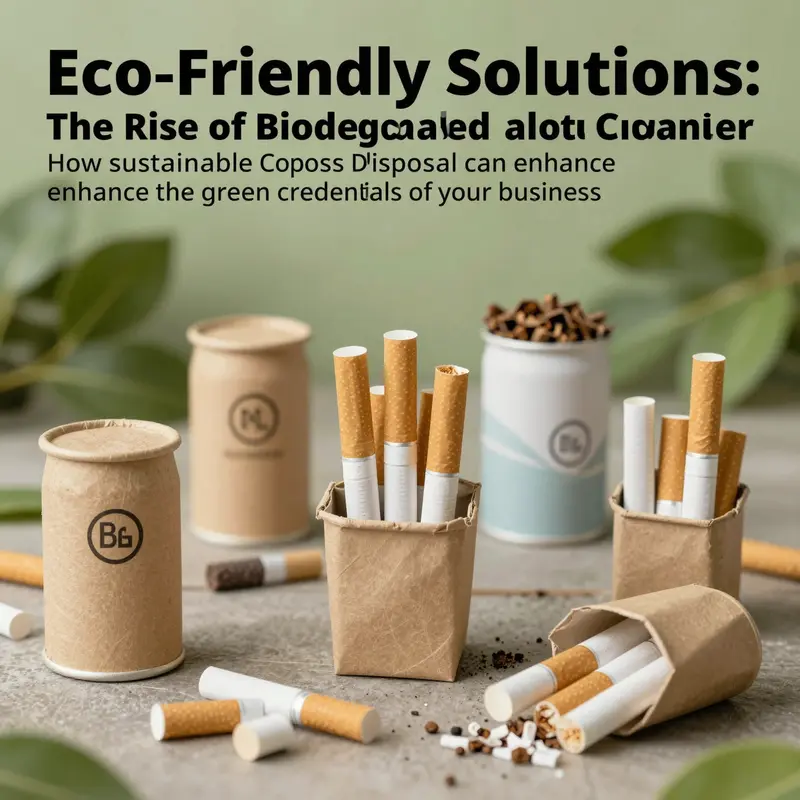
As environmental awareness continues to grow, the impact of cigarette waste is becoming an increasingly pressing issue for businesses across various sectors, particularly in food and beverage venues. Biodegradable disposable cigarette containers represent an eco-conscious alternative that effectively manages the disposal of cigarette butts and ashes while minimizing harm to our planet. These innovative containers, crafted from natural materials like cornstarch and bioplastics, break down naturally and align with corporate sustainability efforts. In the upcoming chapters, we will explore the role of these containers in promoting environmental sustainability, delve into the technical innovations shaping their production, and analyze the market trends and economic implications that accompany this shift towards greener disposal solutions.
Closing the Loop: Biodegradable Disposable Cigarette Containers as Catalysts of Urban Sustainability
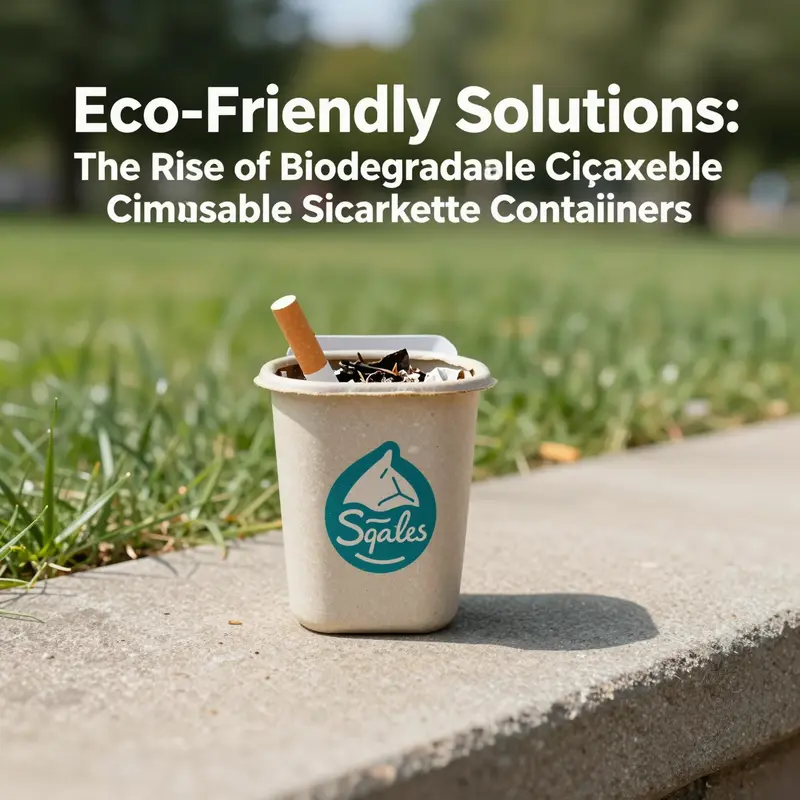
Biodegradable disposable cigarette containers are more than a green novelty. They embody a practical, systemic response to a stubborn urban problem: cigarette butt litter. In many cities, the sight of spent filters, ashes, and damp plugs gathering along sidewalks, in bus shelters, and around transit hubs is a reminder that waste management is as much about behavior as it is about technology. The containers that hold and manage those remnants can influence both the harm done and the harm avoided. When these receptacles are built from renewable, compostable materials, they begin a chain of benefits that extends from the street to the soil. They offer a tangible way to reduce pollution, support circularity, and align with broader climate goals without demanding radical changes in daily routines from most people. The shift toward biodegradable options invites not just cleaner streets but a rethinking of how we design, produce, and dispose of everyday disposables in public spaces.
At the core of this shift is a material story that moves away from fossil-based plastics toward plant-based polymers, paper, and cellulose that can return to the soil as harmless organic matter. Polymers derived from cornstarch or other bio feedstocks, coupled with responsibly engineered coatings, can provide the necessary moisture resistance and containment needed for ashes and butts during use, while still enabling controlled breakdown under industrial composting conditions. The aim is not to obscure the problem with a gimmick but to align disposal behavior with natural cycles. In practical terms, a biodegradable cigarette container is designed to resist humidity and leakage when it sits in a public area, but to decompose within a composting stream once it is placed in the right facility. This dual behavior—robust performance during use and predictable, safe degradation after disposal—defines the engineering challenge and the environmental promise of these containers.
The environmental logic begins with materials. Natural materials such as PLA-like polymers derived from plant sources, paper, or cellulose are favored because they originate from renewable feedstocks and break down into benign organic matter. The transition from non-degradable plastics to compostable alternatives helps curb the long tail of pollution that cigarette waste leaves behind. But this is not a zero-sum game; the production phase of biodegradable containers must be measured, and the resulting carbon footprint must be lower than that of conventional plastics for a real environmental win. Industry analyses suggest that, under the right conditions, manufacturing biodegradable packaging can reduce greenhouse gas emissions by as much as sixty percent. That figure depends on the chosen feedstock, the energy mix used in production, and the efficiency of the process. The broader point is not a single number but a trend: the life cycle of a compostable container can be gentler on the climate when energy sources and raw materials are managed with care.
This shift also intersects with the realities of waste infrastructure. A biodegradable disposal container only achieves its environmental potential if it is disposed of in systems that support its intended end-of-life. Industrial composting facilities, equipped to maintain the higher temperatures and specific humidity ranges required to break down plant-based polymers, offer a realistic route for many municipalities. In places where such facilities are limited or absent, consumer education and collection logistics become pivotal. The container must be designed with the end user and the waste stream in mind. It should minimize the risk of creating a mess or a smell that makes public spaces less inviting while still delivering predictable compostability when it is captured by the right waste stream.
Design considerations also extend into how these containers respond to the unpredictability of outdoor environments. A cigarette containment device must resist moisture from rain, humidity from surrounding vegetation, and the accidental spills common in busy transit areas. The ideal object protects the ashes and butts without becoming a source of odor or a leakage point that would harm the surrounding environment. This requires choices about barrier properties, surface finish, and the use of coatings that remain compatible with composting. The balance between performance in use and harmless degradation afterwards is delicate: too-strong barriers can hinder breakdown; too-weak barriers can compromise use. The best approaches harmonize barrier performance with compostability, drawing on advances in bio-based coatings and innovative fiber composites that favor end-of-life recovery over long-term persistence.
Public spaces increasingly demand practical, scalable solutions that combine hygiene with sustainability. An effective biodegradable container must be a reliable part of a broader system for smoking area management. In many urban settings, the presence of well-marked, accessible disposal options reduces the likelihood of littering and encourages responsible behavior. Containers that are simple to use, clearly labeled as compostable, and produced from renewable materials can help normalize sustainable disposal habits. When a city or campus adopts such containers across multiple smoking zones—near entrances, transit stops, and parks—the cumulative effect can be substantial. It is not only the containers themselves but the signaling effect they provide. They communicate an institutional commitment to waste reduction and environmental stewardship, reinforcing a culture that values cleaner streets as a shared responsibility rather than an afterthought.
This cultural shift also relates to regulatory pressures and the evolving policy landscape. Regions pursuing circular economy principles and zero-waste goals increasingly favor materials and designs that support composting and recovery. Public procurement in sustainability-minded jurisdictions often prioritizes packaging and disposal solutions that demonstrate a cradle-to-cradle philosophy, where a product’s end-of-life feeds back into the production cycle rather than becoming inert waste. In such contexts, biodegradable cigarette containers become more than a niche product; they serve as practical exemplars of how urban waste streams can be redesigned to minimize environmental impact and maximize resource recovery. The regulatory momentum accelerates adoption by reducing the friction between aesthetic, hygienic, and environmental objectives. When a city enforces compliance with compostable disposal options in smoking areas, it also incentivizes businesses and facilities to align their practices with broader sustainability commitments.
The economic calculus behind these containers deserves careful attention too. While the unit cost of biodegradable materials can be higher than conventional plastics, the total cost of ownership can be favorable when accounting for waste management savings, potential reductions in cleanup labor, and the social license that accompanies green choices. In some contexts, subsidies or incentives for compostable products help bridge the gap between upfront expenditure and long-term savings. Moreover, the growing availability of customizable, scalable packaging options means that facilities—whether in transit hubs, office campuses, or public parks—can tailor containers to fit specific volumes, environmental targets, and aesthetic considerations. The capacity to adjust size, shape, and resistance to moisture without sacrificing end-of-life performance is a crucial driver of adoption. It allows managers to align disposal receptacles with space constraints while maintaining the environmental advantages of compostable materials.
Beyond material choices and policy optics, there is a social dimension to consider. Cigarette butt litter is not just an environmental nuisance; it is a public health and urban design issue. The presence of cigarette containers that are both hygienic and sustainable can alter perceived norms around smoking in shared spaces. People are more likely to use designated disposal points when those points are visibly reliable and aligned with a city’s sustainability program. This behavioral effect, while subtle, can contribute to cleaner streets and a perception of a city that treats its public spaces with care. In addition, as communities increasingly demand accountability from product designers and manufacturers, the chain of responsibility expands beyond the point of sale to include end-of-life outcomes. Biodegradable cigarette containers embody this extended responsibility by offering a clear, tangible path from use to composting, thereby reinforcing the idea that waste does not vanish when thrown away; it is returned to the earth with intent and care.
The material science behind these containers continues to evolve, paralleled by advances in the wider field of sustainable packaging. The example drawn from analogous disposable food packaging demonstrates how a material family—cornstarch-derived polymers, plant-based coatings, and biodegradable papers—can be adapted to new functions without losing sight of environmental compatibility. This cross-pollination between sectors—food service and public waste management—provides a valuable blueprint for future innovations. The broader takeaway is that sustainability is not a single product claim but a constellation of design decisions, lifecycle thinking, and infrastructural alignment. When a city or business makes a deliberate, evidence-based choice to deploy biodegradable disposal containers, it sends a signal: sustainable performance is achievable in the real world, not an idealized projection.
One practical implication worth noting concerns how these containers are integrated into existing waste streams. In a well-functioning system, the adoption of compostable cigarette containers should be accompanied by clear labeling, separate collection streams for compostable waste, and a public education campaign to explain why the material breaks down only in specific facilities. Without these supporting measures, even the most advanced material may miss its end-of-life opportunity. The best-case scenario is a networked approach: smoking-area receptacles placed at strategic points, signage that educates users about proper disposal, and municipal or institutional partnerships with composting facilities that can process the waste efficiently. When designed with this systems perspective, the containers contribute not only to cleaner streets but to the resilience and adaptability of urban waste management as a whole.
The potential of biodegradable cigarette containers also invites us to rethink how we measure success. Traditional metrics—volume of litter collected, rate of recycling, or general cleanliness—remain important, but they gain new dimensions when layered with lifecycle analyses and regional composting performance. A city can track reductions in soil and water contaminants linked to cigarette waste, monitor changes in the composition of street litter, and assess the energy and emissions saved through material substitution. This holistic assessment recognizes that sustainability is a moving target shaped by technology, behavior, and policy. It also emphasizes that the true value of biodegradable containers lies not just in the moment of disposal, but in their capacity to support a circular loop: one that returns resources to production streams rather than consigning them to landfills or the environment.
For practitioners considering deployment, there is a practical pathway that respects both complexity and scale. Pilot programs in select smoking zones can test container performance, user acceptance, and the compatibility with existing waste systems. Data collected from these pilots informs decisions about material selection, container sizing, and the logistics of waste collection. If the results show meaningful improvements in litter reduction and a favorable lifecycle footprint, the next step is broader adoption, supported by procurement processes that emphasize compostability, supplier transparency, and auditability of end-of-life outcomes. Importantly, success hinges on collaboration: city authorities, facility managers, waste haulers, and the public all contribute to realizing the environmental promise of biodegradable containers. When these stakeholders communicate clearly and align incentives, the vision of a cleaner urban landscape becomes practical reality rather than a distant goal.
In this sense, the evolution of biodegradable disposable cigarette containers mirrors a larger movement within sustainable packaging. It is about weaving together material science, waste infrastructure, behavioral science, and policy into a coherent fabric. The result is not a single miracle material but a durable approach that reduces harm while keeping the urban experience clean and welcoming. The narrative of these containers is thus a story of cities learning to live lighter on the land without compromising the everyday functions that keep public spaces usable and safe. As designers, engineers, policymakers, and citizens co-create this future, they illuminate a path toward cities where waste is not an inevitable byproduct but a resource that can re-enter the economy with minimal friction and maximal respect for the environment.
For readers seeking a deeper dive into the technical and methodological underpinnings of biodegradable disposable containers, several scholarly and industry-focused sources offer a rigorous overview of materials, standards, and end-of-life pathways. These resources illuminate how the field has arrived at its current capabilities and what kinds of innovations are on the horizon. Moreover, they provide the technical backbone for evaluating specific implementations in real-world contexts, from municipal programs to privately managed smoking areas. The research landscape makes clear that progress depends on transparent data, robust testing, and shared benchmarks that enable apples-to-apples comparisons across different material systems and end-of-life scenarios. In that sense, biodegradable cigarette containers are not just products; they are catalysts for a more disciplined, data-driven approach to sustainability in urban waste management. As cities continue to grapple with litter, pollution, and the climate implications of packaging, these containers offer a concrete, scalable option that aligns everyday behavior with planetary health.
For those who want to explore practical examples and case studies in the broader packaging ecosystem, a closer look at the available options within the disposable packaging landscape can provide useful context. In particular, the diversity of formats—ranging from container-like units to small receptacles designed for ash and butt collection—highlights a shared design philosophy: simplicity, reliability, and end-of-life harmony. The underlying message is clear. When disposal devices in public spaces are engineered with care toward material choice, end-of-life handling, and user experience, they become effective tools for reducing environmental impact while reinforcing a culture of stewardship. The outcome is a public realm that looks and feels cleaner, not because crime has disappeared or because people suddenly become perfect litterers, but because the infrastructure encourages and enables better choices. In short, biodegradable disposable cigarette containers are increasingly seen as practical instruments of sustainability—tools that help cities close the loop on tobacco waste and, in doing so, take meaningful steps toward a more resilient, circular urban ecosystem.
If you are looking for a concrete starting point to examine how these containers fit into a broader sustainability strategy, consider how they interface with related packaging innovations—especially those in food-service and waste-stream design. The same principles that guide the development of compostable clamshells and paper-based packaging can be extended to cigarette disposal. The shared lessons include prioritizing renewable raw materials, ensuring compatibility with composting or anaerobic digestion facilities, and designing for user-friendly handling in high-traffic environments. The convergence of these ideas points to a future where public spaces can be both inviting and environmentally responsible, thanks in part to the humble, well-designed disposable container that holds cigarette remnants and helps keep the urban landscape pristine.
As we continue to illuminate the pathways toward sustainable cigarette disposal, it is valuable to recognize that the journey is iterative. Each new material formulation, each fresh design concept, and each pilot program contributes data, insights, and a clearer picture of what works at scale. The promise of biodegradable containers rests on their ability to perform in the moment—meeting hygienic and practical needs in busy public areas—while also delivering predictable, manageable end-of-life outcomes. When this balance is achieved, the containers become a quiet but powerful ally in the effort to reduce environmental harm and move toward cities that are cleaner, healthier, and more attentive to resource stewardship. It is a vision rooted in science and shaped by collective action, where the simple act of disposing a cigarette butt becomes part of a responsible, circular economy rather than a missed opportunity to give back to the environment.
External resource: https://www.researchgate.net/publication/324516879Biodegradabledisposablecontainersusingeco-friendlynaturalmaterialsandtheirmanufacturing_methods
Internal reference (example): disposable eco-friendly kraft packaging options
Shaping a Circular Future: Technical Innovations Driving Biodegradable Cigarette Containers
Across cities, parks, transit hubs, and the entrances to large buildings, the footprint of cigarette use lingers not only in ash but in waste streams. Littered butts and their residues have long represented a stubborn pollution problem, particularly in outdoor and high-traffic public spaces. The imperative to curb this harm has pushed manufacturers, researchers, and regulators toward solutions that do more than merely contain the product during use. Biodegradable disposable cigarette containers have emerged as a response that rethinks end-of-life management from the outset. This chapter traces how the manufacturing discipline behind these containers has evolved, not as a set of isolated tricks but as a coherent movement toward materials, design, and information that collectively enable a more circular approach. The trajectory is not simply about replacing plastic with a greener substitute; it is about reimagining the entire packaging ecosystem so that every decision—from material choice to disposal guidance—advances environmental performance without compromising function, hygiene, or consumer experience.
The first wave of change lies in material innovation. Traditional packaging in this space has often leaned on plastics for barrier properties, durability, and moisture resistance. Yet plastics carry well-documented end-of-life drawbacks, especially when discarded in public spaces where litter management depends on visible, accessible disposal channels. In response, researchers and product developers are increasingly turning to recyclable paperboard as a primary substrate for cigarette containers. Paperboard offers a familiar, cost-competitive base that aligns with existing recycling streams, while its structural rigidity can be engineered to meet the protective needs of contents in outdoor environments. The shift toward paperboard does not mean a simple card swap; it invites a rethinking of the entire barrier stack. The modern paperboard solution leverages layered architectures where the outer layers are optimized for moisture resistance, while the core remains inherently recyclable. The challenge is to ensure that these layers can tolerate the practical moisture and handling conditions of real-world use without compromising the integrity of the container during use or its performance in recycling facilities later. This balancing act has spurred the development of novel surface treatments, coatings, and barrier chemistries that are compatible with existing paper recycling processes. The result is a container that can hold up during a windy commute or a brief rain shower and then break down into the broader waste system rather than remaining as long-lasting litter.
Alongside paperboard advances, biodegradable films have matured as viable substitution for traditional plastics. These films, derived from natural polymers, can deliver the essential properties of strength, puncture resistance, and a dependable seal, while offering compostability under appropriate conditions. The engineering challenge is to ensure that these films exhibit consistent performance across a spectrum of temperatures and humidity levels, a frequent reality in outdoor environments and in transit routes where these containers may be opened and closed repeatedly. The most successful iterations of biodegradable films are engineered to maintain their barrier properties during use and to initiate degradation only after disposal, thereby avoiding premature breakdown that could compromise hygiene or user experience. In some formulations, multilayer laminates are replaced with single-material designs that simplify end-of-life processing. A single-material approach reduces contamination risk in recycling streams, facilitates more straightforward processing at end of life, and can lower overall lifecycle impact when designed for industrial composting. This emphasis on single-materiality is not a cosmetic preference; it reflects a systems-level understanding that complex multilayered structures can be harder to sort and recover in real-world waste streams.
Single-material designs also couple with advances in plant-based polymers. Plant-derived polymers bring robust mechanical performance and moisture resistance on par with many conventional plastics, yet they typically principal advantages—renewability, lower fossil energy inputs, and lower toxicity profiles—make them attractive from an environmental standpoint. In practice, plant-based polymers are being tailored to deliver the necessary barrier properties against moisture and odors while enabling efficient composting processes. The goal is to reach a point where the packaging can degrade in industrial composting facilities within a defined, short timeframe, and where home compostability considerations align with consumer behavior and municipal infrastructure. The material science frontier here extends to cellulose-derived films, which imitate many of the useful characteristics of plastics such as clarity, toughness, and flexibility while preserving biodegradability. The rise of cellulose-based films signals a convergence of high-performance packaging with responsible end-of-life outcomes, offering an option for premium designs that still meet the sustainability criteria that stakeholders now demand.
These material shifts have practical implications for the design language of cigarette containers. The industry has observed a growing interest in single-material solutions that reduce the risk of material contamination during recycling. By focusing on containers built from a unified material family, manufacturers can streamline processing in municipal facilities and improve the clarity of what can be recovered. This is not a static design move; it shapes how a product looks and feels as well as how it behaves under stress. Aesthetics do not vanish in the pursuit of sustainability. On the contrary, premium packaging strategies are increasingly anchored in durable, cardboard-based boxes that carry texture, embossing, and sustainable inks. These design elements serve a dual purpose: they raise perceived value, influencing consumer acceptance and brand differentiation, while remaining compatible with eco-friendly production and end-of-life goals. The tension between creating a high-end feel and maintaining a low environmental footprint is real, but advances in coatings, inks, and substrate compatibility are helping to bridge the gap. In practice, this balance translates into cardboard-based boxes that convey sophistication through tactile textures and restrained, nature-inspired color palettes, while still ensuring the materials and inks are chosen with recyclability and compostability in mind.
The conversation around materials is not complete without considering the role of advanced coatings and barrier technologies. A key lesson from recent developments is that protective layers can be engineered to perform without locking the product into a single disposal pathway. Biodegradable films can be paired with barrier coatings that degrade under composting conditions but remain intact during ordinary handling. The critical design parameter here is time, not just strength. The packaging must survive storage and transport long enough to fulfill its protective function, then break down at a rate that aligns with waste management realities. In some cases, coatings applied to paperboard are designed to offer moisture and grease resistance during use, while still allowing the substrate to decompose when exposed to composting environments. The broader effect is to reduce the environmental burden of disposal by ensuring that the container does not persist in landfills for extended periods, emitting greenhouse gases or contributing to microplastic pollution as the materials distribute through the environment.
Beyond materials and coatings, the architecture of the container has evolved to support easier recycling and waste separation. A major trend is the move toward single-material packaging designs that simplify sorting at the recycling facility, thereby reducing contamination and increasing the likelihood that the packaging contributes to a circular economy rather than becoming mismanaged waste. This design philosophy extends into the packaging system as a whole, where closures, liners, and inserts are conceived as complementary elements that can be recovered or composted without complicating the separation process. In practice, this means careful selection of adhesives and laminates that do not bind materials in a way that makes separation impractical. It also means rethinking closures and seals to ensure they do not require harsh treatments to detach, which could otherwise hamper recycling efficiency or complicate industrial composting workflows.
The narrative around eco-labeling and smart packaging is equally consequential. As manufacturers pursue greater transparency and user guidance, eco-labels and disposal instructions become essential features rather than optional add-ons. Clear disposal instructions can significantly affect consumer behavior, guiding them toward appropriate disposal streams and reducing misrouting of containers in the waste system. Smart packaging technologies, including QR codes and digital labeling, have started to appear in this sector, enabling consumers to access details about the product’s environmental footprint, recycling or composting guidance, and brand commitments to sustainability. The idea is not to overwhelm the user with information, but to provide actionable, credible guidance that increases disposal compliance and reinforces trust. A well-designed label or code can inform whether the container is suitable for industrial composting, home composting, or recycling, and it can offer data on the product’s lifecycle footprint that resonates with environmentally conscious consumers.
This focus on information and guidance dovetails with regulatory realities and evolving standards. As public policy tightens the permissible use of certain single-use materials and expands green procurement criteria, the industry needs packaging systems that not only meet technical performance targets but also align with compliance frameworks. Standards and certifications become more meaningful when they directly relate to end-of-life outcomes. For instance, packaging solutions that can be clearly directed toward recycling streams reduce the risk of contamination across the supply chain. Meanwhile, the acceptance of compostable packaging depends on the availability of industrial composting infrastructure and consumer behavior. The design challenge, therefore, is to engineer containers that fit the local waste context while remaining viable across a global market with diverse disposal capabilities. This is where the convergence of material science, design engineering, and policy becomes most evident: true progress requires a system-level view that links product performance with waste management realities and consumer engagement.
In practice, industrial collaboration has accelerated the practical deployment of these innovations. Material science teams work closely with packaging engineers to translate laboratory breakthroughs into scalable manufacturing processes. The move toward single-material constructs and plant-based polymers often necessitates process adaptation on the manufacturing floor. Changes in extruders, film-forming equipment, and coating lines may be required to handle new substrates and to maintain consistent quality across large production runs. The production ecosystem must also accommodate supply chain realities, such as sourcing from renewable feedstocks and ensuring that suppliers can meet demand while maintaining traceability and quality standards. Achieving cost parity with traditional packaging remains a core consideration, even as environmental targets become more ambitious. Early-stage cost advantages from material savings may be offset by the need for new equipment or more rigorous quality assurance. Nevertheless, as volumes scale and consumer demand for sustainable options grows, the economics of biodegradable cigarette containers tend to improve, with ongoing R&D promising further gains in efficiency and yield.
From a consumer experience perspective, the transition to biodegradable containers is filtered through hygiene, usability, and aesthetics. The containers must protect contents from moisture and leakage during use, a particular consideration for smoking areas where placement on benches, in trays, or near entrances is common. They must also resist tampering and provide a reliable user experience without compromising safety. These functional requirements intersect with design cues that convey cleanliness, reliability, and environmental responsibility. Premium confection-like packaging, with embossed textures and sustainable inks, can satisfy aesthetic expectations while reinforcing the message that form and function can be aligned with ecological goals. The consumer-facing story matters because the end user is a chooser who influences demand, and their choices determine whether a biodegradable solution remains in the recycling stream or slips into the broader waste circuit. The narrative around these products thus becomes a form of environmental storytelling, communicating not just what the container is but why it matters and how the user’s disposal action connects to a larger environmental outcome.
The broader industry trend toward circular economy principles is the throughline connecting material innovations, design strategies, and consumer engagement. As regulations tighten and market expectations sharpen, the shift from disposable to responsible packaging accelerates. The emphasis on recyclable or compostable substrates, simplified recycling streams, and transparent labeling does more than minimize waste; it reframes packaging as a performance feature that can contribute to waste reduction and resource resilience. In practical terms, this means more packaging that can be recovered in a straightforward manner, fewer mixed-material structures that complicate separation, and more explicit guidance that supports correct disposal. It also means a willingness to invest in R&D and in manufacturing capabilities that can support scalable, cost-effective production of eco-friendly containers. The result is not a single silver bullet but a portfolio of approaches—paperboard foundations, plant-based polymers, biodegradable films, single-material architectures, and smart packaging—that together can transform how cigarette waste is managed in urban ecosystems.
The implications for waste management and public spaces are meaningful. When containers are designed with end-of-life in mind, municipal programs can better collect, separate, and process them, reducing the environmental burden of litter and helping to close the loop on cigarette waste. This requires coordination across stakeholders—manufacturers, waste processors, city officials, and the public—to ensure systems exist to handle the containers in composting or recycling streams. Education and clear disposal directions further empower users to participate in effective waste management. The integration of ecologic signage, accessible disposal infrastructure, and reliable product design is essential to achieving tangible environmental improvements in dense urban environments where cigarette litter is a persistent challenge.
In this evolving landscape, one can find practical examples of the engineering mindset that guides these innovations. While details must remain generalized in this discussion, the underlying themes are clear. Materials are chosen not only for performance during use but for compatibility with post-use processing. Coatings and laminates are formulated to degrade under appropriate conditions while preserving function during the material’s life. Designs favor simplicity and recycling compatibility, with a preference for a single material family that can be traced through the supply chain. Labels and digital elements aid in consumer understanding and corporate accountability, aligning product narratives with verifiable environmental performance data. These threads weave together a coherent approach: biodegradable cigarette containers are not an isolated niche; they are a testbed for how packaging can harmonize safety, usability, aesthetics, and ecological responsibility in a world that increasingly prizes sustainability as a standard practice rather than an optional add-on.
The chapter’s thread of progress is anchored in the future potential of scalable manufacturing. As the field matures, processes will continue to optimize for speed, yield, and material efficiency. The economics of raw materials will shift as bio-based feedstocks become more readily available and as processing technologies reduce energy consumption and waste. The potential for circular loops grows as well, with partnerships that create reliable streams for composting or recycling, supported by strong labeling and consumer engagement. The outcome is not merely a lighter footprint for cigarette disposing containers but a more resilient packaging system overall—one that can adapt to regional waste infrastructures, meet regulatory expectations, and satisfy consumer demand for responsible products.
For readers seeking a concrete glimpse into related packaging innovations that inform these developments, consider the broader body of eco-friendly packaging literature and the practical options that exist in the market today. These references illuminate how manufacturers are translating laboratory breakthroughs into real-world products and how the ecosystem adapts to new materials, new processes, and new consumer expectations. A tangential but relevant line of reading explores how kraft-based, eco-friendly packaging options are evolving, including examples of durable, compostable, and recyclable container designs. For a deeper look at a specific entry point in this domain, see the resource discussing disposable eco-friendly kraft box solutions with boat-shaped, PLA-coated features, which exemplify the kinds of design choices that align with both practical use and end-of-life goals. Such examples provide a tangible sense of how design decisions translate into environmental impact reductions in the field of biodegradable packaging (disposable-eco-friendly-kraft-box-boat-shape-PLA-coated). On a broader scale, the literature converges on a future where packaging becomes a facilitator of waste reduction, not just a container for product delivery.
In closing, the innovations shaping biodegradable disposable cigarette containers reflect a maturation of the packaging industry toward environmental responsibility without sacrificing performance. The movement integrates material science breakthroughs with design pragmatism, labeling clarity, and system-level thinking about waste streams. As the field continues to evolve, the convergence of paperboard-based substrates, biodegradable films, single-material strategies, and intelligent labeling will likely intensify. The outcome will be containers that are not only fit for purpose during use but are also easy to recover or compost in real-world waste systems, a critical step toward reducing the environmental footprint of tobacco-related litter and toward embedding sustainability into the everyday routines of urban life. The chapter now stands at a juncture where ongoing collaboration among researchers, manufacturers, policymakers, and the public can accelerate meaningful change, reinforcing the notion that packaging innovation can be a central driver of environmental progress rather than a peripheral concern.
For readers looking to expand this view into adjacent domains, the broader packaging literature offers a spectrum of related developments—from paperboard-centric solutions to plant-based polymers and from smart labeling to material life cycle assessments. These insights help frame biodegradable cigarette containers not as a niche product category but as a case study in how modern packaging can align with circular economy objectives. They remind us that the quest for sustainability in disposable packaging is both technical and social: it requires material performance, scalable manufacturing, consumer understanding, and supportive waste-management ecosystems working in concert. The path forward demands continued experimentation, transparent reporting, and the willingness to adopt new standards that capture the true environmental benefits of biodegradable solutions. In the end, the most successful innovations will be those that successfully translate laboratory promises into everyday practice, making greener choices the easiest choices for the public, and turning cleaner disposal into a visible, shared accomplishment across communities.
External reference: For a broader industry perspective on the direction of cigarette case and box innovation within sustainable packaging, see What Makes Cigarette Cases & Boxes the Next Big Thing? Discover. https://www.sustainablepackaging.org/insights/cigarette-cases-boxes-innovation-2026
Eco-Forward Ashes: Weighing the Lifecycle, Markets, and Economic Realities of Biodegradable Disposable Cigarette Disposal Containers
Cigarette litter is more than a surface nuisance; it is a persistent environmental challenge that travels from sidewalks to storm drains, from parks to beaches, dragging with it filters laden with toxic residues. In many urban environments, municipalities shoulder the burden of cleanup and the associated costs, while communities increasingly demand products and systems that align with waste reduction goals. Biodegradable disposable cigarette disposal containers enter this conversation as a design and materials challenge wrapped in an economic proposition. They promise to capture ash and butts in a form that minimizes long term pollution, while fitting into existing hygiene and waste management practices. Yet to assess their potential, it helps to step back and view the idea through a lifecycle lens rather than a single moment of use. What makes a container truly biodegradable in the context of cigarette disposal, and what does it cost to make and operate such a solution? How might markets respond, and what policies or infrastructures would enable broad adoption without shifting the burden from one environmental problem to another? The inquiry begins with materials and performance, but it travels through economics, behavior, and governance, because the question is not only what is environmentally better, but what is realistically scalable and institutionally supported across cities and venues that rely on public spaces to be clean and inviting.
At the heart of biodegradable disposable cigarette containers is a straightforward aim: to provide a temporary home for ash and discarded butts that will break down in a managed or natural environment rather than persist as microplastic or stubborn litter. The materials most often cited for these containers come from natural, compostable sources. Cornstarch and other starch-based bioplastics have demonstrated the ability to form rigid or semi-rigid structures that can resist moisture and leakage long enough to perform in outdoor or semi-outdoor settings. Bagasse, the fibrous residue from sugarcane processing, offers another compelling option because it leverages a feedstock that would otherwise be waste. The underlying chemistry favors materials that are robust during use yet susceptible to biodegradation under industrial composting conditions or, in some cases, suitably managed home composting or soil environments. The practical distinction is not merely whether a material will someday disappear, but whether it will disappear in a way that is predictable, timely, and compatible with the local waste processing ecosystem. A key design question then becomes how to balance the desire for durability and resilience in a public space with the imperative that the container can revert to benign components after disposal.
The technical specifications of these materials matter less in isolation than in how they respond to real-world use. An outdoor cigarette disposal container must resist rain, sun, and thermal cycling, while securing ashes and butts from wind or curious hands. It should minimize odor leakage, be easy to clean, and ideally allow for rapid, efficient emptying and replacement. The same material properties that confer strength and moisture resistance can also complicate the end-of-life story if the product is not processed in an appropriate facility. Industrial composting environments, with high heat and defined moisture and aeration, are typically the conditions under which many of these materials can truly degrade in a reasonable time frame. Without such facilities, biodegradability may be significantly slowed, or could be incomplete, leaving behind residue that persists in the environment. This is not a flaw in the concept but a reality of how biodegradability is defined and tested across different waste streams and cultural contexts.
A practical consideration in the design of any disposable container intended for cigarette disposal is the relationship to existing waste streams. For city spaces, the container must integrate with the local refuse and recycling mix, which may include food-contact packaging, compostables, and mixed waste. In some places, segregating compostables from general waste is already part of the municipal system, enabling ash and butt waste to be directed to composting or to specialized waste streams. In others, such segregation does not exist, forcing a trade-off between ease of deployment and the purity of the compostable stream. The best-case scenario aligns with a city that has a robust composting program and a clear pathway for accepting biodegradable packaging. In such settings, a compatibly designed container can contribute to the overall compostable fraction, turning litter cleanup into a waste that, in principle, becomes soil-enhancing material. The broader implication is that the economics of these containers are not determined by their material composition alone, but by how well the entire waste system can absorb and process them.
A material example often cited in the broader category of sustainable disposables involves cornstarch-based formulations. These polymers can be engineered to behave like conventional plastics during use but are engineered to degrade when subjected to the conditions of industrial composting. In practice, this means a container can withstand a day or two of normal outdoor use, but under the right composting regime, the organic matrix breaks down into water, carbon dioxide, and biomass. Another material class, bagasse, is derived from a byproduct of sugar production and has the advantage of using a renewable feedstock with relatively good compostability performance. Both material families have their advantages and caveats. For instance, starch-based materials often require controlled moisture and temperature to degrade effectively, while bagasse can offer a stronger, more rigid structure with potentially different degradation profiles depending on processing and additives. The overarching idea is to lean on materials that perform during service yet leave a minimal environmental footprint after disposal.
In this context, an important lever is the potential for cross-pollination with other sectors that already depend on biodegradable packaging. The general market trend toward compostable and biobased packaging in foodservice, cosmetics, and retail demonstrates a growing demand for materials that can substitute conventional plastics while fitting into circular waste streams. While the specific data on biodegradable cigarette disposal containers remain sparse in the literature, the adjacent market signals are informative. They suggest a trajectory where manufacturers optimize for performance and compostability, while cities and institutions seek solutions that reduce cleanup costs and align with environmental goals. This is where the lifecycle perspective becomes critical: the value proposition of a cigarette disposal container depends not only on its performance in use but also on the end-of-life pathway, the local waste management structure, and the economic balance between initial cost and long-term savings.
The lifecycle analysis of such containers must account for both production impacts and end-of-life benefits. On the production side, materials like cornstarch and bagasse typically rely on agricultural inputs and processing steps that differ from petroleum-based plastics. Energy use, water footprint, and agricultural land implications are relevant, though these factors can be mitigated through supplier practices, waste valorization, and process efficiencies. On the end-of-life side, the question is whether the container will reach a permitted composting facility, and if so, how long it will take to break down under those conditions. If a container ends up in a standard landfill, without the benefit of industrial composting conditions, the material might remain for a longer period, though still potentially less persistently than conventional plastics. This dichotomy underscores the necessity of coupling product design with waste infrastructure planning and consumer behavior. It also highlights a critical market reality: the environmental benefit claim is strongest when a supportive ecosystem exists to handle the material after its use, rather than solely relying on the inherent properties of the polymer or composite.
Beyond the technical and logistical realities lies the economic dimension, which is often the deciding factor for venues that manage high volumes of people and waste, such as transit hubs, parks, stadiums, and large office campuses. The pricing delta between biodegradable containers and conventional plastic alternatives is a central consideration. Suppliers may price these products higher due to material costs, processing complexity, and the need for specialized composting partnerships. Yet the total cost of ownership could be competitive when one includes potential savings from reduced littering, easier waste management, and the possibility of diverting packaging waste into a compostable stream. The economics is not simply a per-unit calculation but a function of the entire waste management system, including pickup frequency, container durability, maintenance requirements, and the cost of composting or waste processing. In some markets, municipal or facility-level incentives and subsidies for compostable or greener waste streams could tip the balance in favor of adoption. Conversely, in places with underdeveloped composting infrastructure, the financial and logistical case becomes more challenging to justify, particularly if the disposal route remains ambiguous or requires additional handling steps.
Market signals in related sectors offer a cautionary and instructive guide. There is a clear consumer and institutional appetite for products that reduce environmental harm while maintaining convenience and safety. Yet the cigarette disposal niche sits at the intersection of litter control, public health, and waste management, which means market uptake is contingent on policy alignment and operational practicality. Policy frameworks that incentivize litter reduction, fund cleanup efforts, or broaden access to composting facilities can significantly influence the speed and breadth of adoption. Where city authorities implement litter fines or cleanup contracts that value waste reduction and recycling, designers and manufacturers of biodegradable cigarette containers can position their products as a practical instrument to achieve measurable improvements. In addition, the prospect of extended producer responsibility for packaging could extend to cigarette disposal solutions, encouraging manufacturers and venue operators to consider end-of-life costs and recycling or composting channels as part of product design and procurement decisions.
Despite these promising avenues, the current research landscape does not provide granular data on the market size, demand dynamics, or economic impact of biodegradable cigarette disposal containers. Much of what is known is extrapolated from adjacent segments in biodegradable packaging for cosmetics, food, and consumer goods. Those segments reveal a growing preference for compostable materials, demonstrated investments in production capacity, and a burgeoning appetite for green certifications and traceability. They also reveal challenges that are transferable to cigarette disposal solutions: the need for reliable supply chains for biobased materials, standardized testing for biodegradability across jurisdictions, and clear, practical guidelines for end-of-life processing. These are not insurmountable gates but rather reality checks that remind practitioners to design with the full lifecycle in view and to engage waste management partners early in the development process.
An explicit lesson from the broader packaging world is the value of material flexibility. Rather than locking a cigarette disposal container into a single material, designers can pursue a modular approach that enables a range of substrates depending on regional availability and end-of-life infrastructure. The choice to incorporate a material that can be processed in industrial composting, that can be composted at home where appropriate, or that can contribute to energy recovery in a waste-to-energy facility creates a spectrum of pathways. In practice, this means exploring coatings, fiber blends, and structural geometries that preserve functional performance during use while maximizing compatibility with composting or waste processing. Such an approach also broadens the potential market by aligning with different municipal capabilities and regulatory climates. A thoughtful product strategy might thus feature multiple variants tailored to specific regions, rather than a one-size-fits-all solution. The tradeoffs are clear: complexity and cost rise with multiple variants, but the payoff is resilience in diverse waste ecosystems and a more robust case to stakeholders who are wary of a new product failing to fit into existing waste streams.
In the spirit of cross-pollination, material science and product design in related disposable packaging can inform cigarette disposal solutions. The domain of eco-friendly natural materials has demonstrated that it is possible to achieve a balance between barrier properties, mechanical strength, and biodegradability. For instance, composites that couple organic fibers with biodegradable matrices can yield rigid forms capable of withstanding the rigors of outdoor use while still enabling timely breakdown in composting environments. The integration of surfactants, antimicrobial additives, or odor-control agents requires careful consideration as these elements can influence both performance and the sensory experience of users. If a disposal container emits a faint scent or remains odor-neutral under damp conditions, it can positively affect user acceptance and table waste discipline, reducing the likelihood of improper disposal. These nuanced material choices, while technical, influence a key behavioral outcome: whether people will trust and reuse the container in real-world settings and whether they will deposit butts and ashes in the intended receptacle rather than flinging them into the environment.
Behavioral dynamics play a pivotal role in the ultimate success of any public-use disposal system. Even the most advanced biodegradable container will fail to deliver environmental gains if designed for a space with inconsistent maintenance, poor signage, or a lack of clear waste separation. The social dimensions intersect with the technical and economic layers. A container that is intuitive to use, discreet in public spaces, and easy to empty can reduce the number of misrouted items and the frequency of maintenance calls. In practice, facilities that deploy such systems must invest in staff training and routine servicing. Clear labeling, visible instructions, and consistent color-coding for waste streams can reinforce correct usage and help keep compostable fractions as pure as possible. The more the container is integrated into a well-supported waste management approach, the greater the chance that the environmental promises translate into tangible outcomes on the ground.
A cross-sector example from adjacent sustainable packaging spaces illustrates a practical design philosophy: create containers that serve multiple purposes and align with broader waste separation efforts. A robust container for cigarette disposal could, in some environments, be paired with a flexible lid system and modular inserts to accommodate varying waste volumes and weather conditions. The objective would be to minimize exposure to rain and wind, prevent spillage of ash, and simplify the process of removing collected material for composting or recycling. In addition, branding strategies that emphasize environmental stewardship can enhance public buy-in, particularly when the messaging is honest about end-of-life pathways and the role of users in achieving positive environmental outcomes. Yet branding should not override usability; the primary goal remains functional performance under real-use conditions and reliable, end-of-life processing.
One way to think about the economic landscape is through a simple lens of cost per protected waste unit and cost per lifecycle of the waste stream. The upfront cost of a biodegradable container will be influenced by material selection, manufacturing scale, and the required performance specifications for outdoor or high-traffic areas. Ongoing costs include maintenance, replacement intervals, and the need for timely waste collection. If the local waste system includes a composting stream with predictable throughput, the container becomes an investment that can justify itself over multiple years, especially when litter costs and cleanup labor are factored in. Conversely, in markets without robust composting or where the regulations around compostable materials are unclear or evolving, the value proposition dims and procurement decisions become riskier. In such contexts, public-private partnerships, pilot programs, and performance-based contracts can help de-risk adoption by tying payments to measurable outcomes like reductions in litter and improvements in park cleanliness. The economic discussion, therefore, cannot be decoupled from governance, infrastructure, and the social contract that underpins the use of public space.
The market trajectory for biodegradable disposable cigarette containers, while not yet clearly quantified in the literature, is likely to be influenced by three converging forces. First, mandatory or voluntary shifts away from conventional plastics in public spaces will push venue operators to seek alternatives that align with sustainability targets. Second, the expansion of composting infrastructure and the creation of clear guidelines for compostable packaging will enable more reliable end-of-life handling. Third, advances in material science that enhance the performance of bio-based containers while reducing production costs will broaden the practical appeal of such products across diverse climates and urban contexts. Together, these forces create a pathway toward adoption that is not simply about new materials, but about an integrated system that includes production, procurement, usage, and waste processing. In the best-case scenario, biodegradable cigarette disposal containers become a standard component of a city’s litter control strategy, reducing cleanup costs and contributing to soil-friendly waste streams without compromising user experience or public health.
To illustrate the potential breadth of this concept within material innovation ecosystems, one can imagine a materials-forward partner network that leverages existing expertise in biodegradable packaging and extends it to cigarette disposal applications. This network would emphasize standardized testing for biodegradability across jurisdictions, compatibility with municipal composting streams, and a transparent supply chain that certifies compostability. It would also explore modular design options that adapt to different environmental conditions, from sheltered transit hubs to open-air parks. The outcome would be a family of disposal solutions that can be deployed at scale, with predictable performance and clear pathways for end-of-life processing. In practice, this means embracing a design philosophy that treats the container as a component of a larger environmental program rather than as a standalone product. It also means recognizing that success depends on collaboration among manufacturers, city authorities, waste haulers, and the public who uses these spaces daily.
In closing, the question is not only whether biodegradable disposable cigarette containers can outperform conventional options in a vacuum of environmental metrics. It is whether they can be integrated into the fabric of urban waste management in a way that makes the entire system cleaner, more transparent, and more financially sustainable over the long term. This requires a holistic view that accounts for the material and mechanical performance during use, the realistic end-of-life pathways available in different cities, and the economic and governance structures that enable or constrain adoption. The path forward will likely be iterative, with pilots testing different materials, container geometries, and end-of-life partnerships to uncover what works best in practice. As cities and venues continue to strive for cleaner, greener spaces, biodegradable cigarette disposal containers can play a meaningful role when designed with an eye to lifecycle thinking, infrastructure compatibility, and shared value across stakeholders. A material choice that is robust during use but responsibly degradable after disposal is not merely a technical preference; it is a statement about how society chooses to value and manage the waste we create in shared spaces. The journey from concept to commonplace will depend on the quality of collaboration among innovators, policymakers, and the public who deserves cleaner streets and healthier environments.
For readers seeking a broader technical and manufacturing perspective on biodegradable disposable containers, a detailed technical guide on eco-friendly natural materials and their manufacturing methods offers foundational context. It provides insights into how material properties relate to performance, processing, and end-of-life outcomes that can inform design choices for cigarette disposal solutions. External researchers and practitioners can use this resource to align material selection with intended waste pathways and to anchor product development in rigorous environmental assessments. External resource.
In addition, the potential for cross-learning with related packaging domains is worth noting. A practical internal reference point within the ecosystem of eco-friendly disposables shows how a bagasse-based system, designed for high-strength, moisture-tolerant performance, can inspire cigarette disposal containers that also must withstand outdoor use and irregular handling. The idea is to ground experimentation in real waste streams and to build a portfolio of materials and designs that can be adapted to local conditions. A concrete example within the broader eco-packaging landscape is the use of bagasse in self-erecting, take-away trays and bowls that demonstrate how renewable feedstocks can be converted into functional, rigid closures and carriers. While these examples target different end uses, they share a common thread: the pursuit of performance paired with responsible end-of-life outcomes. By examining these adjacent cases, designers and policymakers can anticipate challenges and opportunities, and communities can move toward a more integrated approach to waste reduction that includes cigarette disposal in a broader, lifecycle-oriented sustainability strategy. The result is a more coherent narrative about how biodegradable materials can contribute to cleaner public spaces without merely shifting the environmental load from one stage of the lifecycle to another.
Ultimately, the success of biodegradable disposable cigarette containers will hinge on alignment across three dimensions: material science that delivers reliable performance with true biodegradability, waste management infrastructure that can handle compostable streams consistently, and governance that incentivizes adoption and ensures accountability. When these elements come together, the container becomes not only a tool for reducing visible litter but a tangible component of a circular economy in which materials return to value rather than accumulate as pollution. The journey is iterative and context-specific, yet the underlying logic is straightforward: choose materials that perform when used, enable end-of-life processing that yields a positive environmental outcome, and build a procurement and maintenance ecosystem that makes adoption practical and enduring for public spaces. In that sense, biodegradable disposable cigarette containers represent more than a product category. They embody a shift in how communities conceive the lifecycle of waste and how they invest in solutions that honor both cleanliness and ecological responsibility.
Internal link note: for readers interested in material-led pathways that inform this design space, consider how bagasse-based disposable systems demonstrate the feasibility of renewable feedstocks in rigid, climate-resistant formats. See examples of bagasse sugarcane based disposable lunch box solutions here: bagasse sugarcane biodegradable lunch box. This reference underscores how similar material science principles translate into durable, compostable forms that can inspire cigarette disposal containers designed for outdoor use and end-of-life processing.
Final thoughts
Incorporating biodegradable disposable cigarette containers into your business operations not only addresses the environmental impact of cigarette waste but also presents an opportunity to enhance your brand’s sustainability narrative. As the drive for eco-friendly practices strengthens, aligning with these trends can lead to improved consumer loyalty and compliance with regulations. By choosing materials that biodegrade and reduce pollution, businesses can play a pivotal role in fostering a cleaner, greener world. It is essential for Bubble Tea Shops, beverage chains, restaurants, food trucks, catering services, event planners, and corporate teams to embrace these innovative solutions as part of their commitment to environmental responsibility.