
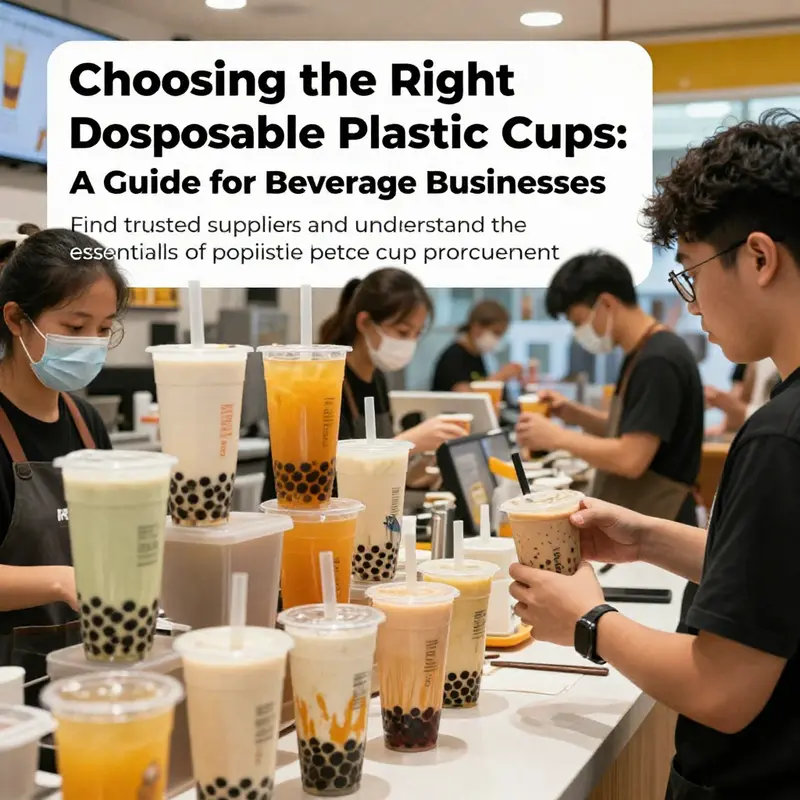
As the beverage industry grows, ensuring the right disposable plastic cups can significantly boost customer experience and operational efficiency. Whether you’re running a bubble tea shop, managing a restaurant, or organizing large-scale events, selecting a reliable supplier for disposable plastic cups is essential. In this article, we will explore key suppliers in the market, various product types and specifications, pricing structures, compliance standards, and production capabilities. Every chapter will shed light on different aspects that will help you make informed decisions tailored to your unique business needs.
Navigating the Platform-to-Factory Pipeline: A Deep Dive into Disposable Plastic Cup Suppliers

The market for disposable cups sits at a crossroads of speed, variety, and regulation. Buyers need cups that perform on taste, texture, and appearance; they also demand assurance that the cups meet safety standards and environmental considerations. In this landscape, platforms that aggregate suppliers—and the factories behind them—play a pivotal role in shaping what’s available, how quickly it can be sourced, and at what cost. The chapter that follows connects the dots between a global procurement ecosystem and the on-the-ground capabilities of manufacturers. It explores how buyers evaluate material options, capacity, and certification, and it hints at how to translate a broad supplier listing into a reliable, scalable supply chain for disposable cups of various kinds. The guiding question remains practical: how does one navigate from a marketplace listing to a finished order that arrives on time, with the right quality, and with predictable lead times? The answer lies in understanding the interplay of three elements—platform dynamics, material choices, and factory capabilities—and then aligning them with the specifics of your project, from volume and customization to regulatory compliance and delivery windows.
At the core of the platform-to-factory dynamic is a simple truth: suppliers on major procurement platforms are not a monolith. They range from small, regionally focused manufacturers to large, cross-border producers that can handle multi-country orders, multilingual communications, and complex logistics. A global procurement hub, for instance, can connect buyers with a spectrum of options for disposable cups in materials like PET, PP, and PS, as well as foam cups made from EPS. The PET cups that blaze clear and bright in a display typically appeal to branding needs that require clarity and a premium feel. PP cups, often used for hot beverages, emphasize food-grade safety and heat resistance, while PS/EPS foam cups have a long-standing place in fast-food and convenience contexts, even as environmental concerns push some markets to reassess their use. Beyond the plastic spectrum, the presence of paper-based and kraft materials on the same platforms highlights a broader consumer-facing trend: customers increasingly seek hybrid solutions—cups, lids, and related packaging—across a continuum of disposability and recyclability.
The procurement journey usually starts with a platform’s search and filter capabilities, letting buyers sort by material, capacity, MOQ, and price. Yet a smart buyer moves beyond price per unit and considers the entire lifecycle of the product. Compliance emerges as a non-negotiable criterion in many markets. Food-contact safety standards, certifications that confirm the absence of BPA and phthalates, and alignment with regional regulations—whether in the EU, North America, or other regions—are the baseline expectations. The biggest gains, however, often come from evaluating a supplier’s production footprint and value chain. Some manufacturers offer end-to-end capabilities: from mold design and injection molding to in-house printing and branding. Others focus on core production and rely on partners for customization or packaging. In either case, the ability to guarantee consistent quality, provide timely samples, and maintain transparent lead times becomes a deciding factor when negotiating terms for large or ongoing orders.
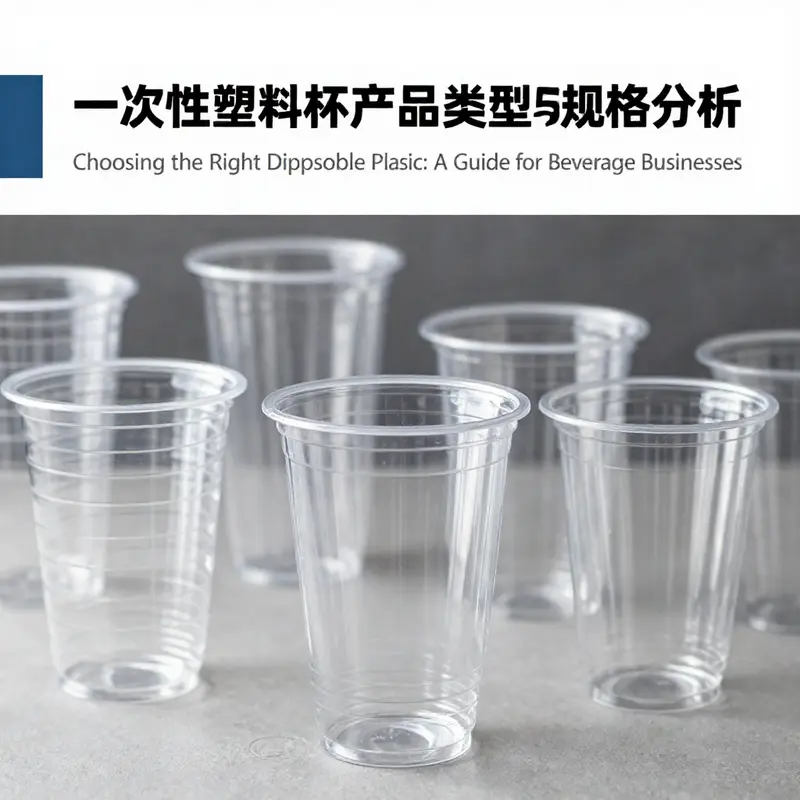
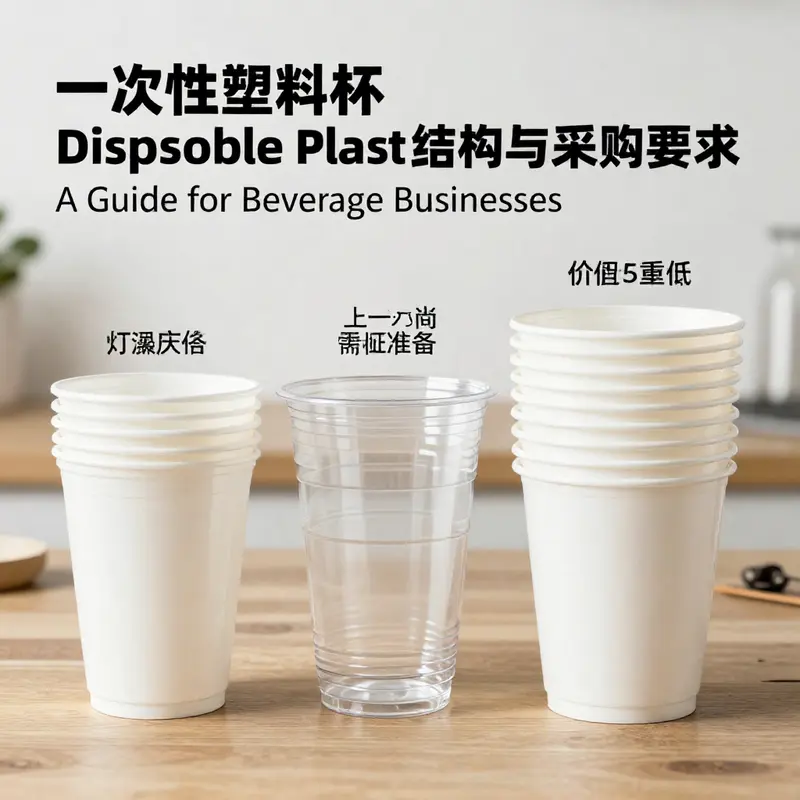
A practical dimension of this landscape is the material and design diversity that buyers encounter. PET cups deliver transparency and a crisp aesthetic that helps showcase beverages or fruit contents. PP cups are widely used for hot drinks and cold beverages alike, prized for their food-grade safety and heat resistance. PS or EPS foam cups continue to serve specific segments, particularly where insulation and cost are critical, even as some markets restrict their use due to environmental concerns. Capacity and shape options further expand decision space: standard 8-ounce to 24-ounce formats cover most beverage needs, while specialized shapes—such as rectangular or uniquely contoured cups—offer branding or functional advantages for certain foods. The spectrum also includes insulated double-wall variants and cup-with-lid configurations, which can influence consumer experience and logistics planning. All of this matters because the final choice of material and design ripples through the rest of the supply chain: from die-mutual compatibility with lids and printing methods to the downstream packaging and shipping strategy.
The procurement numbers buyers encounter—minimum order quantities, unit prices, and total cost of ownership—are shaped by material selection and quantity. A typical, high-volume scenario might present a very low price per unit for tens or hundreds of thousands of units, with a higher price floor for smaller runs and custom features. The economics of scale drive many purchasing decisions: bigger orders often unlock lower unit costs, more favorable lead times, and greater flexibility in customization. Yet price is only one axis of value. The reliability of delivery schedules, consistency of quality across batches, and the supplier’s ability to respond to design changes or urgent reorders are equally critical. In practice, buyers weigh price against total delivery risk—potential delays, quality defects, or changes in regulatory requirements that could complicate shipments to specific markets.
Within this framework, several profiles of suppliers tend to appear on major platforms. On a regional scale, a handful of factories specialize in disposable cup production and related packaging, with a focus on performance, cost effectiveness, and volume. Some operate out of coastal manufacturing hubs and emphasize export readiness, while others concentrate on domestic markets with a shorter supply chain. A few large, integrated packaging companies offer a broader portfolio that includes cups, lids, utensils, and cup holders, enabling buyers to consolidate orders under one roof. Then there are smaller, agile producers that niche themselves around particular materials or applications—such as durable clear PET cups for beverages with branding, or robust PP cups designed for repeated handling in catering environments. Each category has its own risk and reward profile: large, integrated suppliers may offer scale and stability but with more rigid processes; smaller or specialized factories may provide faster responsiveness and customization but require careful management of capacity and quality control.
From the perspective of a buyer seeking to assemble a robust supplier roster, a crucial step is to map the territory of capabilities behind the platforms. The “factory tier” concept is useful here: tier-one suppliers with in-house tooling and printing can execute custom logos and color schemes, ensuring consistent quality across runs; tier-two or tier-three manufacturers may excel at basic cups and standard configurations but rely on third-party services for customization. The decision to lean on one tier or to diversify across tiers depends on risk tolerance, the predictability of demand, and the complexity of the product line. A diversified approach—combining a few reliable, higher-capacity manufacturers with specialized partners for unique formats—can help balance scale with flexibility. In addition, buyers should assess the supplier’s production lead times, raw material sourcing, and ability to accommodate expedited requests, especially when marketing campaigns or seasonal promotions drive sudden demand surges.
To ground these considerations in the real-world ecosystem, it helps to recognize the variety of players actively engaging on mainstream platforms. A set of manufacturers from different Chinese provinces demonstrates the regional breadth of supply: a Quanzhou-based producer known for disposable cups and related items; a Fujian-based facility with a portfolio that includes thicker-walled and larger-capacity PP cups; a Dongguan-based plastics manufacturer that integrates development, production, and sales under one roof; a Zhejiang-based packaging company that has diversified into disposable cups and associated products beyond cups alone; and a Shanghai trading company that also handles utensils and cup accessories. These profiles illustrate how platform dynamics bring together a spectrum of capabilities—from design and molding to printing and packaging—under one purchasing umbrella. Buyers who understand these profiles can better align their supplier selections with product requirements, regulatory expectations, and delivery timelines.
As buyers refine their approach, certain practicalities deserve emphasis. First, sample testing remains indispensable. A single batch of cups must pass food-contact safety tests, exhibit consistent wall thickness, and perform as expected under heat or cold exposure. Second, the importance of clear specifications cannot be overstated. Materials should be defined in terms of polymer type, resin grade, and any additives; closures and lids should be compatible; and printing or branding should conform to agreed color standards and durability under product handling. Third, the logistics phase requires attention. Crytal-clear lead times, incoterms, and packaging configurations (bulk, palletized, or retail-ready) all influence the final cost and the reliability of delivery. Fourth, regulatory readiness should not be treated as a one-time checkbox. As markets evolve, the compliance status of a cup—whether the material is fully permitted for food contact, whether it carries the right certifications, and whether it is compatible with local waste-management streams—must be reassessed periodically to avoid last-minute noncompliance issues that can derail a shipment.
For readers who want a concrete example of supplier presentation and product variety on a platform, a practical reference point is offered by a disposable single-wall cup solution focused on ice cream and confections. This resource demonstrates how a simple product specification can evolve into a curated purchase journey: from the initial search to the confirmation of design, packaging, and delivery details. The link below points to a detailed listing that embodies the kind of product pages buyers encounter when comparing options across materials, capacities, and customization features. senang01-hot-sale-customized-disposable-single-wall-paper-ice-cream-cups-with-lid-eco-friendly-food-grade
The overarching takeaway is that the platform-to-factory pipeline for disposable cups is not a single decision point but a sequence of informed choices. Buyers awake to the reality that a low per-unit price in bulk is meaningful only when matched by delivery reliability, consistent quality, and regulatory peace of mind. A well-structured supplier strategy acknowledges material diversity—PET for clarity, PP for heat tolerance, PS/EPS for insulation where allowed—and aligns production capabilities with demand patterns and project timelines. It also embraces the interdependence of packaging ecosystems—cups, lids, and accessories—so that every element integrates smoothly into the final consumer experience. As markets continue to evolve toward greater environmental accountability, the ability to blend performance with responsible materials and transparent supply chains becomes not just advantageous but essential. This blend of platform reach and factory capability will shape how buyers plan launches, manage seasonal peaks, and sustain long-term supplier relationships in a competitive, regulation-conscious world. The journey from a marketplace listing to a dependable shipment is thus a test of diligence, foresight, and the willingness to engage suppliers as partners in a shared pursuit of reliable, compliant, and satisfying packaging solutions.
null
null
null
null
合规的第一道防线:一次性塑料杯在全球供应链中的认证与监管
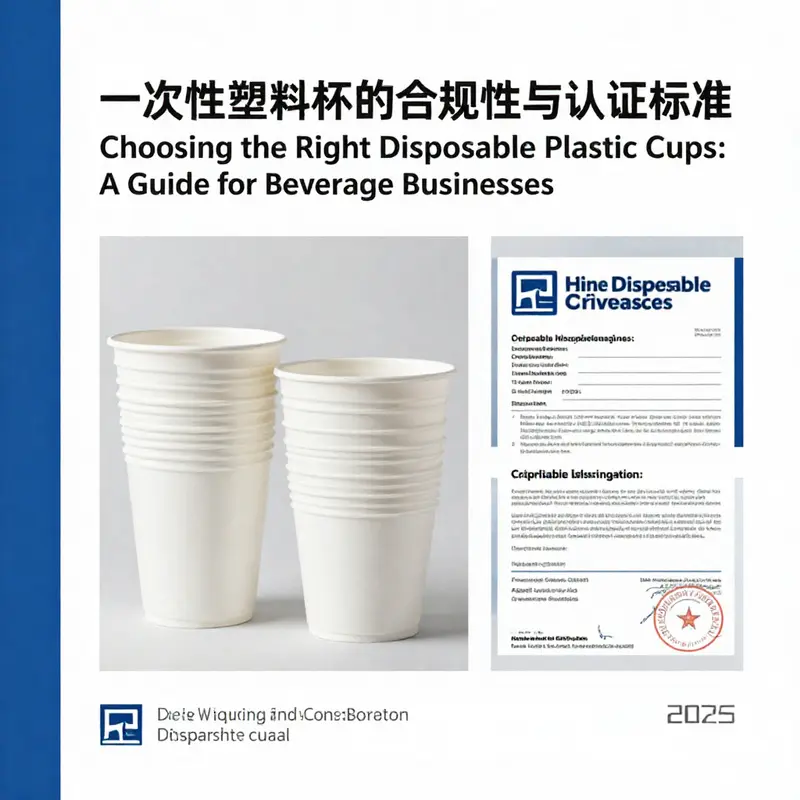
在全球化采购与日益严格的食品安全与环境监管背景下,一次性塑料杯的合规性已从单纯的材料安全扩展为对环境责任、生产过程透明度以及跨境贸易合规性的全面考量。对于供应商而言,建立一套从材料选择、生产过程到成品出库的完整合规管理体系,既是赢得市场信任与稳定供给的基石,也是实现可持续竞争力的关键。对买家而言,理解并系统性地核验这些合规要素,能够显著降低采购风险并提升品牌的市场信誉。一个成熟的合规框架不仅仅关乎“能不能用”,更关乎“能否持续地、合规地提供出厂、进入市场并被消费者信任的杯具”。在这方面,标准与法规像一张网,覆盖材料来源、生产过程、成品性能,以及跨境贸易的责任承担,从而把供应链的每一个环节都置于可追溯、可控的范围之内。
在中国市场,合规性核心来自两类标准:食品接触用塑料材料及制品的国家标准,以及一次性餐具的通用技术要求。这些标准不仅界定了产品应具备的卫生与安全指标,还明确了在日常使用中应具备的物理性能与环境责任。最核心的检验项目包括蒸发残渣与高锰酸钾消耗量,用以评估材料在模拟食品条件下的溶出物和氧化性物质含量是否在允许范围内。重金属迁移,尤其是铅的限量,成为防止微量污染的关键指标。同时,荧光性物质的检测、对特定风险物质如塑化剂与3-MCPD的监控,也被纳入常规合规审查。随着环保意识的增强,微塑料迁移的监测也逐步成为不可忽视的环节。这些测试共同构成了产品从原料到成品全过程的合规基线,确保消费者在日常使用中的安全与健康。
在物理与使用性能方面,标准对容量偏差设定了严格范围,通常要求标称容量的误差控制在±5%内。杯身的耐热与耐油性能需要在规定温度下保持结构完整,防止变形、起皮或渗漏。对于带盖的杯子,密封性测试同样不可忽视,倒置加压测试必须确保无渗漏。这些指标共同保障了日常使用中的安全性与体验感,尤其在商业场景中,客户对口感、温度与卫生条件的敏感性要求更高,任何轻微的泄漏或变形都可能影响品牌声誉。
环保性能方面,对宣称可降解或生物降解的杯子,监管要求更加严格。通常需要在受控堆肥条件下进行生物分解测试,在180天内达到90%以上的降解率,并且降解产物不应对环境造成二次污染。这一类测试不仅考验材料的降解能力,还关注降解过程中的有害物质释放及最终生态毒性。对涂层或添加剂中的总氟含量也有明确上限,以避免持久性环境污染的风险。这些要求提醒企业在材料选择阶段就应采取更透明、可验证的环保路径,而不仅仅是追求“短期外观上的绿色”宣传。
国际层面的法规也在塑料杯的合规性框架中扮演着重要角色。欧盟在2019年推出的《一次性塑料指令》明确禁止在欧盟市场销售由发泡聚苯乙烯(EPS)制成的饮料杯及杯盖,并要求生产者承担回收与再利用的责任(EPR)。自2024年8月起,非德国公司若通过网络向德国消费者销售被禁用材料制成的杯子,将被视为制造商,需完成注册并承担相关费用。标签要求也更强调信息透明,例如标注产品类型、生产商信息以及“请勿随意丢弃”的警示语。到2025年的回收目标则凸显了循环经济的强制性导向。对出口至欧洲市场的企业而言,这些规定意味着在设计、制造与包装阶段就要将法规兼容性嵌入产品开发流程。
随着全球电商的发展,跨境销售平台对合规的要求也越来越高。平台方往往要求卖家在规定时间内完成国内法规的注册与申报,确保销售的杯具符合目标市场的食品安全与环境法规。这种趋势推动供应商在初期就建立严密的合规沟通机制、完善的检测体系以及稳定的跨境物流与仓储解决方案,以便在法规调整时能快速响应并维持市场准入。
对供应商而言,合规不仅是一项单次的合格验证,而是一个持续的、系统性的管理过程。企业需要建立材料来源与加工过程的全面可追溯性,取得必要的合格证书与第三方检测报告,并保存详细的生产记录、配方信息以及对有害物质的控制方案。模具设计、注塑成型、印刷与包装等环节也应纳入合规审计的范畴,以确保整个生产链对法规的统一遵循。此外,供应商还应建立对供应商的合规尽调与监督机制,确保上游材料和辅料也符合目标市场的法规要求。对于出口导向的企业,确保材料对国际法规的友好性,能有效降低贸易阻滞、海关扣留及返工成本,提升全球供给的稳定性与可持续性。
买家在选购时,应将合规性视为核心条件,而不仅仅关注价格、MOQ或交期。除了获取价格与交货时间的对比,买家还应要求全面的第三方检测报告、材料成分清单、稳定的供应能力,以及可证明的容量与密封性测试结果。这些证据不仅帮助企业降低市场合规风险,也为品牌在分销链条中建立信任提供支撑。对标签、包装和运输条件的合规验证同样重要,因为不合规的包装材料、错误的警示语或不当的回收标签,都会成为出口或上架过程中的障碍。
展望未来,合规压力可能来自多源的法规、标签要求与区域性禁令的叠加效应,因此供应商需要以产品生命周期为视角,优化原材料结构、提升再生比例、降低有害物质迁移风险,并提高供应链的可追溯性与透明度。通过与独立检测机构合作、建立可公开的检测报告体系、并在设计阶段就考虑目标市场的法规要求,企业能够在充满变动的国际市场中保持弹性与竞争力。上述分析也为读者在采购阶段的决策提供了一个综合的框架:既关注合规性,又不忽视产品性能与环保承诺的真实可验证性。
要深入了解与本章主题直接相关的内部资源,请参阅以下链接(以便在采购与合规评估中作为参考):
sengan07-eco-friendly-printed-logo-buy-paper-cup-take-away-coffee-cup
此外,关于国家标准与法规的权威外部信息,可以查阅国家卫生健康委员会的食品安全国家标准页面,了解材料迁移、热稳定性与环保指标等方面的具体规定:
外部参考: https://www.nhc.gov.cn/wjwps/gjws/202310/5e7a8c5f3d8d4b1fa3d1b4c3f0b1d2c0.shtml
From Melt to Market: The Hidden Architecture of Disposable Plastic Cup Production and Its Service Backbone
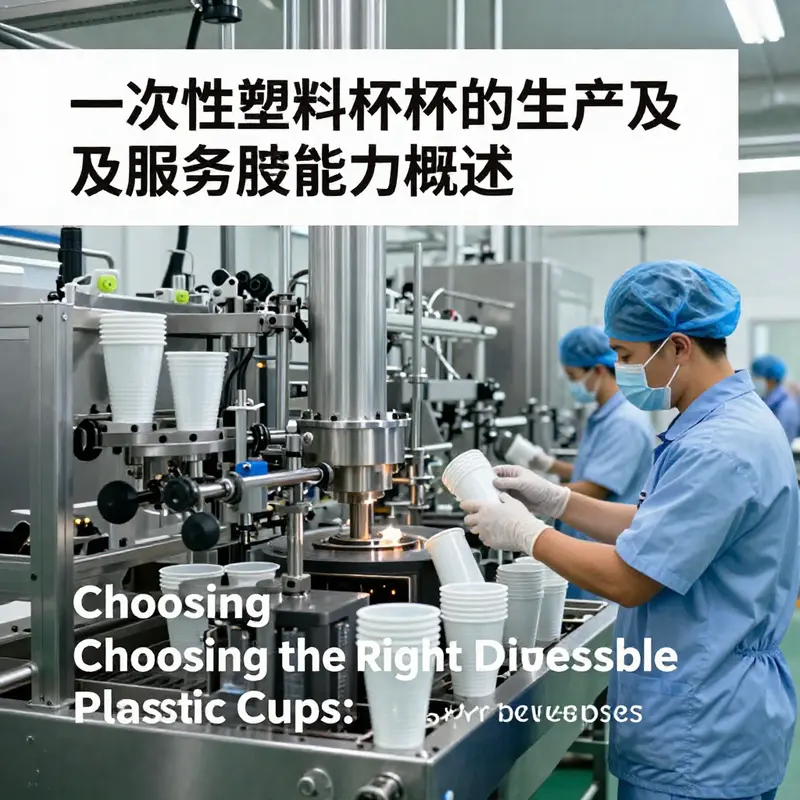
The production and service ecosystem behind disposable plastic cups is a precise, synchronized organism. It begins with raw materials that arrive as polymer pellets, then passes through a carefully choreographed sequence of processing, forming, finishing, and packaging. The goal is not merely to shape a cup, but to deliver a stable, safe, and scalable product that can meet diverse customer needs while fitting into complex supply chains. In this light, a supplier’s true value lies as much in its capability to orchestrate equipment, quality control, and customization as in the basic ability to turn resin into a cup. The modern plant that supplies disposable plastic cups operates as a fully integrated system. It is designed to minimize variation and waste, to keep production running around the clock, and to adapt quickly to changing demand or regulatory requirements. The core of the operation is a loop that converts raw polymer into a finished, stackable item with consistent wall thickness, weight, and physical performance, whether the cup is intended for hot beverages, cold drinks, or highly acidic contents. This loop relies on a combination of material science, mechanical engineering, and intelligent process control that, together, creates what buyers experience as reliability at scale. In practice, the pathway from pellets to pallets is both technical and managerial. The pellets—most commonly polypropylene, polystyrene, or sometimes polyethylene terephthalate—are delivered to a dry system that removes moisture, a crucial step for dimensional stability and clarity in transparent cups. Moisture must be kept to a minimum because residual water can cause surface defects or inconsistent melt flow, which in turn affects lighting, texture, and sealing performance. Once dried, the resin enters shaping equipment. For many cups, the dominant routes are injection molding or blow molding. In injection molding, molten resin is injected under high pressure into precise metal cavities. The mold then cools rapidly, and robotic arms remove the part, which is immediately moved along the line for inspection and sorting. In blow molding, a preform or sheet is heated and stretched into a vessel, a process that balances wall thickness and strength with material efficiency. Both pathways rely on tight temperature control, high-fidelity molds, and robust cooling systems. The speed at which these cycles occur is a hallmark of modern manufacturing. In seconds, a cup takes form, and the next station begins its watch: cooling, de-flashing, trimming, and transfer to a stacking module. Here, automation takes center stage. Robotic grippers pick and pile cups into nests or magazines, preparing them for the next phase. The production line is usually arranged to minimize manual handling, reducing the risk of contamination and damage while increasing throughput. Waste management follows closely behind. The system recycles scrap edges and defective pieces, turning them back into regrind material or feeding them into a reclaim loop. This recycling not only lowers raw material consumption but also helps manufacturers meet tightening environmental expectations and regulatory requirements. The packaging section closes the loop, placing cups into cartons or shrink-wrapped bundles with careful consideration of weight distribution and transport stability. In many facilities, a fully automated packaging line is integrated with the same control platform that monitors melt temperature, molding pressure, cycle time, and cooling rate. The result is a production discipline that is both precise and auditable. It is no exaggeration to say that the modern disposable cup factory is a data-driven factory. Sensors monitor temperatures, pressures, and flow rates in real time, while centralized control software tracks throughput, quality yield, and downtime. This digital layer supports rapid diagnosis when a fault appears and provides a transparent record for customers who demand traceability. The same intelligent systems guide maintenance scheduling, enabling predictive interventions that prevent unplanned shutdowns and extend equipment life. On the materials side, there is a parallel narrative about material choice and the specifications that customers insist upon. PP and PS are the most common in many markets, chosen for their balance of cost, rigidity, and barrier properties. PET, when used, lends clarity and toughness to cups that must resist cracking while remaining visually appealing. Each material offers a different performance envelope: heat tolerance, chemical resistance, and compatibility with printed branding. In recent years, the industry has also seen designers pushing for thinner walls and lighter cups without sacrificing strength. This is where process optimization and material science converge. A small increase in melt flow or a refined gating system can produce noticeable savings in resin usage per unit, while still meeting strength requirements. The service dimension of production is equally robust and emphasizes customization as a core differentiator. A supplier that can align manufacturing precision with brand storytelling achieves more than a commodity outcome. They can design molds with the exact wall thickness profile, venting schemes, and closure compatibility needed for a client’s specific cup family. They can also translate a brand’s visual identity into color-accurate prints or durable labels applied during or after forming. In practice, many producers offer a spectrum of customization: mold design and prototyping; multi-color inline printing or post-make decoration; lid compatibility and straw integration; and specialized packaging formats that suit different retail or food-service contexts. The ability to support brands with scalable printing—often six-color or more—and to manage branding across multiple sizes simultaneously is a meaningful capability. This is where the value proposition moves from “a cup” to “a branded cup family.” Beyond the aesthetics, compliance remains a constant and non-negotiable feature of service. Food-contact safety standards govern every step, from resin selection to final packaging. Suppliers typically validate that materials are intended for intended uses, free of restricted additives, and compliant with local and international regulations. They maintain documentation for traceability, conduct routine quality control checks, and keep certification records that customers can review during audits or regulatory reviews. In a market where trends sway between cost efficiency and sustainability, suppliers are increasingly measured not only by throughput and defect rates but also by their environmental programs. Modern facilities often pursue increased energy efficiency, waste minimization, and more responsible sourcing of materials. Some buyers are prioritizing suppliers who demonstrate clean production practices, closed-loop recycling for process scrap, and transparent environmental reporting. The tension between the appeal of disposable convenience and the urgency of sustainability has shaped the product landscape. While a solid fraction of demand continues to rely on conventional plastic cups for large-scale food-service operations, the industry is gradually embracing alternatives and improvements that reduce overall ecological impact. This includes lighter-weight designs, better end-of-life management, and, in some markets, shifts toward recyclable or biobased options. Even as these shifts unfold, the core competencies of production—precision molding, process control, automation, and brand-focused service—remain the backbone of any supplier’s value proposition. For buyers, selecting a supplier becomes a balancing act among price, capacity, lead times, and the ability to deliver tailored solutions at scale. A capable supplier will not only provide a reliable mass-production pathway but also articulate a clear plan for scalability, contingency, and customization. They will be able to discuss mold design cycles, execution timelines, and the practical realities of changing specifications as a product evolves. They will also offer assurances around food safety, labeling, and packaging integrity, so that every shipment arrives ready for immediate use in stores, restaurants, or catering operations. Within this landscape, it can be instructive to view the broader category of disposable cups as a continuum rather than a silo. The same principles of design-for-manufacture, automated handling, and quality-driven service apply across materials, from paper cups to molded plastic options. For brands seeking to explore adjacent categories—whether for promotional campaigns or multi-format packaging—the ability to navigate a portfolio that includes different cup families becomes an asset. This cross-category fluency helps buyers plan seasonal lines, adjust to regional preferences, and optimize procurement across multiple product families. As discussions with potential suppliers progress, buyers benefit from focusing on core capabilities rather than isolated attributes. The most resilient partners are those who can map out a complete value chain: from resin procurement and material specification to mold design, production scheduling, in-line quality checks, and final packaging. They can also demonstrate how they manage variation, respond to demand shifts, and align with customers’ branding and regulatory requirements. In the end, the chapter of a supplier’s life that most influences outcomes is not merely the speed of a single line or the purity of a batch, but the harmony of the entire system—material science, mechanical engineering, automation, and service excellence converging to produce a disposable cup that reliably fits the moment of use, respects safety standards, and supports a brand’s identity with consistency across thousands of units. For readers who seek concrete examples of how brands and manufacturers navigate this space, consider a representative cross-section of the market where buyers begin with a global procurement platform to identify capable producers, then narrow to facilities with end-to-end capabilities, and finally validate through certifications, traceability records, and pilot runs before committing to large-scale orders. The rhythm of this journey—from raw pellets to branded consumer experience—defines the practical, operational heart of disposable plastic cup supply. The interplay between process precision, automated handling, and value-added services shapes not only what arrives on shelves, but how confidently a business can plan its inventory, branding, and customer satisfaction in a world where every cup represents a small but meaningful moment of engagement. senang-disposable-double-wall-craft-paper-cups-multi-size-6-24-oz-custom-logo-for-coffee-tequila This acknowledgment of adjacent cup formats also underscores why buyers often look for suppliers who can flex across materials and configurations, ensuring continuity of supply even when specific formats shift in demand. For those looking to deepen their understanding of equipment advancements and automation trends that underpin these capacities, a 2024 industry overview provides a detailed context. External reference: https://www.chinamachine.com.cn/industry/20241030/12345.html
Final thoughts
In conclusion, the choice of disposable plastic cups is vital for enhancing the customer experience in your beverage business. From selecting trustworthy suppliers on platforms like Alibaba.com to understanding product specifications and compliance, each factor plays a crucial role in ensuring you choose the right products for your operational needs. By considering price structures, order requirements, and production capabilities, you can streamline your procurement process effectively. Equip your bubble tea shop or catering service with quality disposable cups and elevate your offerings with confidence.