
In an evolving culinary landscape, disposable plastic food container making machines play a crucial role in enhancing efficiency across various sectors including bubble tea shops, restaurants, catering services, and corporate procurement teams. These machines not only automate production but also align with growing demands for eco-friendliness and operational efficiency. This article delves into the technologies behind these machines, their economic impact, key industry players, sustainability challenges, and future trends, offering insights tailored to your specific needs in the ever-competitive food service ecosystem.
How Key Technologies Shape Production, Quality and Sustainability in Disposable Plastic Food Container Making
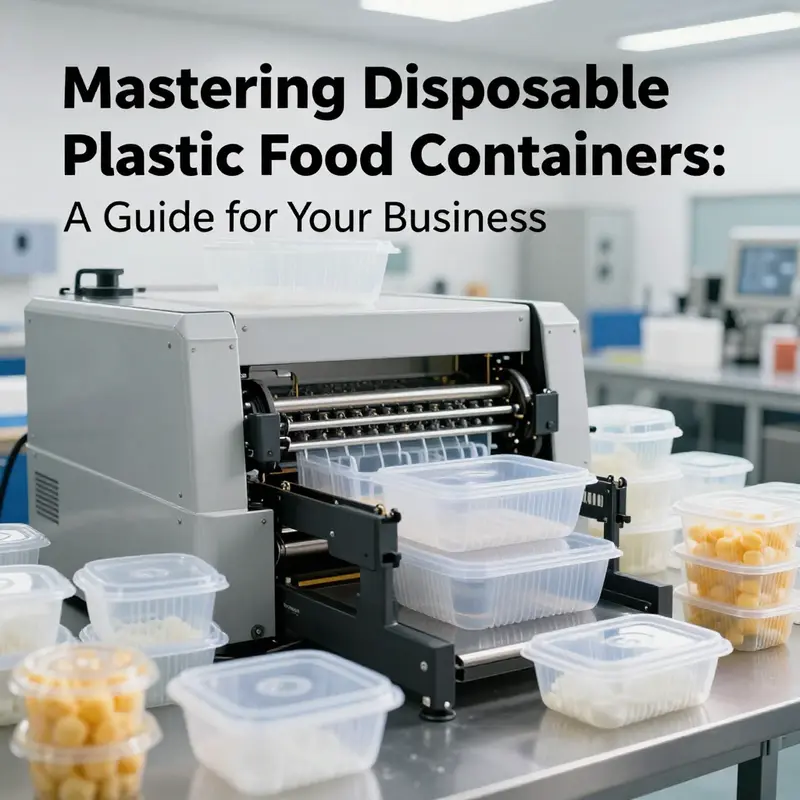
Core Technologies and Their Practical Tradeoffs
The machines that produce disposable plastic food containers are defined by the technologies they use. Each core method—injection molding, thermoforming, and blow molding—establishes a distinct balance of precision, speed, tooling cost, and material flexibility. Understanding those tradeoffs helps manufacturers match machine choice to product design, scale, and sustainability goals.
Injection molding delivers the highest dimensional accuracy and the finest detailing. Molten polymer is injected into a closed cavity under pressure, then cooled and ejected as a finished part. This process excels at producing rigid lids, meal trays, and thin-walled containers where tolerance matters. Modern injection systems use servo-driven injection units, multi-cavity molds, and hot-runner technology to shorten cycles and reduce scrap. The result is predictable part quality and excellent repeatability. The disadvantage lies in tooling and capital cost. Complex molds for multi-cavity production can be expensive and require long lead times. Injection molding is thus ideal when volumes justify upfront investment.
Thermoforming occupies a different niche. It starts with heated plastic sheet that is formed into shape over or into a mold using vacuum, pressure, or both. Thermoforming shines for clamshells, ready-meal trays, and thin-walled disposable boxes. Tooling is simpler and cheaper than injection molds. For short product runs or frequent design changes, thermoforming lowers the barrier to entry. Thermoforming lines often combine forming, trimming, and stacking into a continuous flow, reducing manual handling and contamination risk. Because the process begins with a sheet, recycled or regrind material is easy to incorporate, which supports circular-material strategies. The tradeoffs include less geometric complexity and lower precision compared to injection molding, and variations in wall thickness that matter for some applications.
Blow molding is distinct in purpose. It creates hollow containers by inflating a heated parison inside a mold. Blow molding is the go-to option for bottles, jars, and containers that must be seamless and lightweight. Single-stage and stretch-blow variations allow for different performance and clarity requirements, particularly with PET. Although blow molding is not typically used for flat takeout trays, it remains essential across the food packaging ecosystem for liquids, dressings, and squeezable containers. Designers and production planners pair blow molding with filling and capping lines to create tightly integrated liquid-packaging systems.
Beyond the core processes, machine builders have introduced advanced features that affect choice and performance. Automated control systems provide programmable presets for various part geometries. These presets shorten changeover and cut operator error. Closed-loop monitoring with pressure, temperature, and position sensors improves yield. Servo motors and energy-recovery drives reduce power consumption during repetitive strokes. Robots and manipulators replace manual demolding, stacking, and packing, which boosts throughput and improves hygiene. Integrated trimming, punching, and waste handling systems reclaim scrap and maintain a cleaner production environment.
Material compatibility sits at the heart of decisions. Food-grade polymers such as polypropylene (PP), high-density polyethylene (HDPE), and polyethylene terephthalate (PET) dominate packaging production. Injection molding handles PP and HDPE readily and supports thin-wall, high-speed runs. Thermoforming is versatile with PP, PET, and PS sheets and allows recycled content in the feedstock. Blow molding favors PET and certain grades of HDPE for its material stretch and clarity properties. As demand rises for recyclable or compostable packaging, machine flexibility to run alternative resins becomes a practical priority. Equipment designed with adjustable heating profiles and adaptable molds will accept a broader material range and maintain quality when switching resins.
Energy efficiency and waste reduction now factor into machine selection as much as speed and cost. Machines with servo drives and optimized cycle profiles can cut electricity consumption by a noticeable margin. Thermoforming lines that reclaim trim and reprocess it on-site reduce net material waste. Systems that combine positive and negative pressure molding plus automated waste separation help minimize scrap and contamination. When waste reduction is paired with the ability to run recycled sheet or PCR resin, a facility can lower material costs and its environmental footprint simultaneously.
Automation level strongly influences labor needs and consistency. Fully automatic lines combine forming, trimming, inspection, and stacking. They minimize human contact, lowering contamination risks and enabling continuous, high-volume production. Semi-automatic machines keep capital cost lower and suit smaller operations that need flexibility rather than throughput. The correct automation choice depends on target volume, labor costs, and product complexity. Integrating in-line inspection, such as vision systems for dimensional verification and leak detection, raises product reliability with little operator intervention.
Tooling strategy affects speed of market response. Thermoforming tooling can be produced faster and at lower cost than multi-cavity injection molds. That difference enables quicker product iterations and seasonal SKUs. Conversely, complex injection tooling reduces per-part cost at high volumes and produces parts with consistent wall thickness, essential for stackability and sealing. For companies planning multiple SKUs, modular tooling or quick-change mold systems reduce downtime and preserve production continuity.
Operational resilience and maintenance are practical considerations often overlooked in early purchase decisions. Machines with modular electrical cabinets and standardized PLC interfaces simplify diagnostics. Access to spare parts, local technical support, and the ability to retrofit energy-saving components matter over the equipment’s lifecycle. Predictive maintenance, enabled by condition-monitoring sensors, reduces unplanned downtime and protects production schedules.
Food safety and compliance criteria cannot be separated from manufacturing technology. Machines designed with sanitary stainless-steel surfaces, enclosed transfer systems, and minimal crevices reduce contamination risk. Certifications and compliance to international standards give buyers assurance that materials, processes, and finished parts meet regulatory expectations. When processes reduce manual handling and integrate closed-loop quality checks, both contamination risk and product recalls fall.
Selecting the right technology means weighing current need against future adaptability. Thermoforming gives agility and lower upfront cost, while injection molding provides precision and economies at scale. Blow molding completes the toolset for hollow containers. Overlaid on that choice are considerations for automation, energy use, scrap handling, material compatibility, and maintainability. A well-chosen machine becomes an engine for consistent quality, lower total cost, and a smoother route to more sustainable packaging.
For practical examples of modern turnkey solutions and production configurations, consult detailed product pages that illustrate typical machine layouts and capacities: https://www.alibaba.com/product-detail/Full-Automatic-Disposable-Food-Container-Making_1600471197118.html. For comparisons of plastic containers to paper-based alternatives and mixed-material lids, see resources on disposable eco-friendly salad bowls with PP lids at this supplier site: https://cupbowlpack.com/product/senang-130-disposable-eco-friendly-food-grade-reusable-square-salad-bowls-with-pp-lids-for-pet-food/.
Who Shapes the Market: Manufacturers, Marketplaces and Innovators Behind Disposable Plastic Food Container Machinery

Who shapes the market for disposable plastic food container making machines depends on a mix of equipment builders, system integrators, and global sourcing platforms. These players each influence machine capabilities, compliance, and sustainability outcomes. Manufacturers design and refine core technologies like injection molding, blow molding, and thermoforming. Integrators bring multiple modules into continuous, automated lines. Marketplaces connect buyers with specialized suppliers and certified exporters. Together, they define what makes a machine practical, profitable, and future-ready for food-packaging manufacturers.
A manufacturer’s reputation rests on reliable mechanics, quality control, and ongoing engineering support. Leading machine builders focus on automation, energy efficiency, and repeatable precision. Their machines handle thin-walled containers, multi-cavity molds, or high-speed roll-fed thermoforming, depending on customer need. They invest in control systems that reduce cycle times, minimize scrap, and support food-safe materials like polypropylene and PET. Certification practices and documented compliance with safety and hygiene standards are integral to their value proposition. Buyers choose manufacturers based on uptime guarantees, spare-parts availability, and the ease of integrating new resins or tooling.
Marketplaces and trading platforms serve a different but essential role. They broaden access to diverse suppliers and allow buyers to compare machine specifications, warranties, and certifications. This marketplace function accelerates procurement cycles for small and medium enterprises. It also enables businesses to find turnkey solutions—fully automated thermoforming lines or semi-automatic molding machines—without lengthy direct negotiations. Platforms often vet suppliers for certificates and provide buyer protection, which reduces the risk associated with cross-border purchases. For many buyers, marketplaces are the fastest route to source machine lines that match production targets and budget limits.
System integrators and specialized engineering groups translate individual machines into production lines. They combine forming, trimming, punching, and stacking modules into one continuous process. Their expertise matters most when a customer needs synchronized automation to avoid manual handling and contamination risks. Integrators also add vision systems, robotic pick-and-place, and in-line quality inspection. These features boost yield and enable traceability, which is increasingly crucial for food safety audits and contract manufacturing. A strong integrator will map the plant floor, calculate throughput, and specify utilities before proposing a complete line.
Sustainability and material compatibility are driving recent shifts in industry leadership. Companies that invest in machines capable of processing recycled content or biodegradable resins gain an edge. Thermoforming lines, for example, can run reclaimed PET or PP sheets, lowering feedstock costs and reducing waste. Innovations to reduce energy per cycle and to recover process scrap for regrind are becoming standard. Buyers now ask whether a machine can run thinner gauges without yielding defects and whether it supports downstream recycling steps. The manufacturers that anticipate these needs win long-term contracts and lead in enterprise accounts.
Beyond technology, after-sales services determine a supplier’s stickiness. Rapid spare-part delivery, remote diagnostics, and overseas engineer support shorten downtime. Many leading suppliers offer training programs and preventive maintenance contracts. They also provide tooling design services, helping customers optimize cavity counts and cycle times. For buyers scaling capacity, modular machines with clear upgrade paths reduce future capital expenditure. Vendors that provide transparent lifecycle cost models make it easier for purchasers to compare total cost of ownership rather than just the purchase price.
Regional strengths shape market dynamics. Some manufacturers concentrate on low-cost, high-volume solutions suitable for emerging markets. Others specialize in premium systems for regulated markets where traceability and certification are mandatory. Geographic presence matters for localization of support, spare parts, and compliance advice. Export hubs often pair machinery with local installation crews and bilingual documentation. Strategic partnerships between equipment makers and large packaging companies also speed adoption of efficient designs and accelerate the roll-out of new materials.
Collaboration between packaging companies and machine builders is another key trend. Packaging firms provide market insights about consumer preferences, while equipment suppliers translate that knowledge into faster, more flexible machines. This feedback loop helps evolve tooling standards, reduce changeover times, and create machines that handle multiple formats with minimal downtime. It also promotes cross-industry initiatives to lower plastic intensity per container, whether through geometry changes or new polymer blends.
Certification and standardization shape buyer confidence. Suppliers that maintain international certifications establish trust quickly. Buyers evaluate machine safety standards, electrical certifications, and documented food-contact compliance. Machines that comply with recognized norms simplify audits and help manufacturers enter regulated markets. Clear documentation also aids in financing and insurance processes, making certified suppliers more attractive to investors and banks.
Choosing between suppliers requires balancing several variables. Buyers weigh initial tooling and machine cost against projected throughput and quality needs. They consider whether a supplier can provide full-line automation or only discrete equipment. They test whether machines can use recycled or biodegradable feedstocks. They examine service networks and spare-parts logistics. Finally, buyers look for partners who can customize solutions and deliver predictable uptime.
As demand shifts toward environmentally informed packaging, the players that combine production efficiency, material flexibility, and strong service networks will shape the market. Marketplaces will continue to ease discovery and procurement. System integrators will turn individual machines into contamination-free, automated lines. Progressive manufacturers will invest in energy savings, modularity, and material compatibility. For buyers seeking machines today, a practical step is to compare certified supplier listings on major platforms and to review sustainability capabilities directly with prospective vendors. For a representative source of real-time machine listings and supplier details, consult the dedicated product listing on Alibaba: https://www.alibaba.com/showroom/disposable-food-container-making-machine.html
For buyers also evaluating alternatives and biodegradable options, the eco-friendly 950ml bagasse food container product page offers context on non-plastic packaging trends and material choices: https://cupbowlpack.com/product/senang-950ml-eco-friendly-biodegradable-bagasse-food-container-with-matt-lamination-for-sushi-and-restaurant-use/
How Production Choices and Machines Shape the Economy of Disposable Plastic Food Containers
The manufacture of disposable plastic food containers sits at the intersection of industrial engineering, global trade, and environmental policy. Demand for lightweight, heat-resistant, and moisture-barrier containers maintains strong market momentum. That demand drives investment in machines and infrastructure. The machines chosen determine unit costs, production flexibility, and the environmental footprint of entire value chains.
Capital flows into production lines as manufacturers scale. Injection molding, blow molding, and thermoforming each require different levels of upfront investment. Injection molding needs expensive tooling and presses. Blow molding requires specialized extruders and molds. Thermoforming relies on sheet production and forming stations. These differences matter. A plant that invests heavily in injection molds expects long runs of high-precision parts to amortize tooling costs. Another that selects thermoforming can iterate designs faster and accept shorter runs. The machine selection therefore dictates the business model: high-volume, low-mix versus low-volume, high-mix.
Machine automation changes the economic calculus. Fully automated lines reduce labor costs and boost throughput. They also require greater capital expenditure and stronger maintenance capabilities. Semi-automatic or modular systems lower the initial barrier to entry. They allow small and mid-sized firms to enter regional markets without massive debt. However, semi-automated setups carry higher per-piece labor costs over time. A clear trade-off appears between agility and scale economies. Firms targeting large institutional buyers often favor automated, multi-cavity systems to meet volume and repeatability demands. Niche producers lean toward flexible machines that accommodate frequent design or material changes.
Material choice amplifies cost and regulatory effects. Polypropylene and polystyrene have long dominated because of low raw material prices and favorable processing characteristics. They permit thin walls and rapid cycle times, reducing per-unit energy and material costs. Yet regulatory trends and consumer preferences are shifting the ecosystem. Regions introducing taxes or bans on single-use plastics raise the cost of market entry and compliance. Manufacturers must factor in potential tariffs, environmental fees, and recycling mandates. These costs can erode margins, especially for exporters operating across regulatory regimes.
The push toward sustainable alternatives brings new engineering and financial challenges. Compostable polymers, recyclate blends, and polymer coatings designed to improve barrier properties demand different machine tuning. Some materials require higher forming pressures, different temperature profiles, or more precise mold venting. This often means retrofitting equipment or buying new lines. The capital outlay increases, but so can market access and price premiums. Restaurants, retailers, and food services increasingly demand certified biodegradable or widely recyclable packaging. Producers who adapt can capture those segments, but the transition requires careful cost modeling.
Operational costs extend beyond machines and raw materials. Energy consumption, maintenance schedules, and tooling turnover determine long-term competitiveness. Thin-wall, high-speed production minimizes material usage, but raises sensitivity to energy price volatility. Predictable cycle times and reduced scrap rates lower lifecycle costs. Investing in energy-efficient drives, predictive maintenance platforms, and process monitoring pays off over the medium term. These investments also appeal to buyers who evaluate suppliers on sustainability metrics and total cost of ownership rather than upfront price alone.
Regional economic impacts are uneven. Countries with low-cost energy and skilled labor often become hubs for high-volume production. Proximity to feedstock suppliers and ports reduces logistics spend. Conversely, markets with stringent environmental regulations tend to incubate innovation. They push producers to adopt recycled content and closed-loop systems. Local policy shapes demand too. Urban centers with large food-service industries create continuous orders. Meanwhile, rising e-commerce and meal delivery trends boost demand for single-use items in many economies.
Supply chains feel the ripple effects. Machine vendors and material suppliers establish long-term relationships with producers. These partnerships influence who can rapidly scale. A manufacturer with access to multiple machine configurations can switch production lines to meet seasonal demands. Those locked into a single technology face delays and higher costs when pivoting. Diversifying machine capabilities thus becomes a strategic lever. It reduces risk from feedstock shortages and regulatory shocks.
Employment patterns shift as automation rises. Skilled operators, maintenance technicians, and process engineers grow in importance. Routine manual tasks decline. Local economies experience a mix of job contraction and transformation. Training programs focused on machine operation and polymer science help regions retain employment levels. For firms, investing in worker upskilling reduces downtime and improves product quality. That produces a second-order economic benefit: enhanced local expertise attracts more industrial investment.
Trade dynamics and market valuation are tightly linked. With an estimated global market valuation in the tens of billions, the sector supports a broad supplier ecosystem. Machine manufacturers, raw material producers, converters, and logistics companies each capture value. Export markets can be lucrative but expose producers to exchange rate risks and changing import regulations. Countries with competitive machine-making industries often export both equipment and finished containers. This multiplies local economic impact through manufacturing clusters and supply chain development.
Regulatory costs deserve repeated attention. Compliance extends beyond product design to include labeling, waste management, and end-of-life stewardship. Extended producer responsibility schemes place financial responsibility on manufacturers for disposal and recycling. These programs can raise product prices or force firms to internalize recycling costs. In response, some producers form coalitions to fund recycling infrastructure. Others invest in design-for-recycling principles to lower long-term fees. The result is a reshaped industry where upfront machine and material choices have long-term financial consequences.
Market opportunities arise in offering hybrid solutions. Many buyers now prefer packaging that combines a renewable outer shell with a small, recyclable plastic window. Small operators that can integrate different substrates into a single line find new niches. Similarly, companies that offer post-sale services, such as take-back programs or labeling for composting, create additional revenue streams. These services increase lifetime customer value and build resilience against regulatory headwinds.
Finally, economic resilience depends on how well producers balance cost, compliance, and innovation. Machine selection, degree of automation, and material strategy must align with customer needs and regulatory forecasts. Firms that foresee shifts and invest in adaptable equipment stand a better chance of maintaining margins. Those that treat sustainability as a competitive cost rather than a compliance burden can secure premium markets. For manufacturers and policy makers alike, understanding how machines and materials influence lifecycle costs is essential to shaping a sustainable, profitable future for disposable food container production.
For deeper market metrics and forecasted trends, consult the detailed industry report here: https://www.marketsandmarkets.com/Market-Reports/disposable-plastic-food-packaging-container-market-197493552.html. For a practical example of alternative material options and packaging formats, see this recyclable kraft paper takeaway salad bowl: recyclable kraft paper takeaway salad bowl.
Toward a Greener Machine Age: Sustainability Challenges and Innovations in Disposable Plastic Food Container Making

The environmental footprint of traditional disposable containers is a focal concern for both policymakers and brands aiming to minimize harm without sacrificing food safety and shelf stability. Plastic packaging represents a substantial portion of municipal waste, and its persistence in ecosystems has spurred calls for redesign at every stage of the value chain. In response, the industry is exploring how machine concepts can drive reductions in energy intensity, raw material use, and waste streams. The core issue is not just the volume of output but the quality of the resource loop. If a machine can produce thinner-walled, yet structurally sound containers without increasing failure rates, it contributes to material efficiency. If a line can be retooled to process recycled feedstocks with consistently high clarity and strength, it reduces the need for virgin resins. If automation reduces scrap and rework, it lowers energy per unit produced. Taken together, these factors redefine what “sustainable manufacturing” means for disposable container production.
Innovation in energy efficiency has become a central lever. In the realm of injection molding, advances in nozzle design, valve gating, and mold temperature control have enabled the production of thinner walls with preserved rigidity. The research surrounding these improvements suggests that energy consumption can drop by a meaningful margin—estimates range from thirty to fifty percent in some modern configurations when walls are thinned and cycle times are optimized. This is not a trivial gain; it translates directly into lower greenhouse gas emissions per container and a smaller plant-wide energy footprint. Yet the move toward lighter walls must be coupled with robust materials science to ensure the containers still withstand hot-filling temperatures, stacking pressures, and mechanical handling during distribution. The design challenge becomes a dialogue between resin selection, wall thickness, and the mechanical precision of the forming system. When done well, it yields a product that is fewer grams per unit but equally fit for purpose, with a cumulative impact that scales across millions of units.
Recycling and the use of recycled materials have emerged as essential elements of sustainable packaging strategy for this industry. The adoption of post-consumer recycled materials, such as rPET and other recycled resins, aligns with the circular economy by diverting plastic waste from landfills and reducing reliance on virgin petrochemicals. However, integrating recycled content into food-contact containers introduces a suite of challenges. Impurities, color variation, and the need for strict regulatory compliance can complicate processing and product performance. The machines themselves must handle feedstocks that may differ in melt behavior, viscosity, and polymer compatibility. Process control systems need to be more adaptive, with sensors and closed-loop controls that monitor melt homogeneity, mold filling, and cycle consistency. The ability to maintain dimensional accuracy and surface finish when using recycled materials is a testament to the maturity of both material science and forming technologies, and it directly affects downstream recycling compatibility and consumer perception. In practice, successful adoption of recycled resins rests on tight integration across material supply, machine capability, and quality assurance systems.
Material innovations extend beyond recycled resins to include alternative feedstocks and end-of-life pathways. Thermoforming, historically favored for its low tooling costs and high-speed production for thin-walled items, is now finding traction with recycled plastic sheets and even biodegradable composites in some applications. The economics of using recycled sheets—lower raw material cost and reduced energy for sheet formation—can be advantageous, provided the sheet quality remains consistent and the downstream forming process can achieve uniform thinning and venting. In addition, some lines are exploring the feasibility of incorporating biodegradable or paperboard-based substrates for specific product families, balancing consumer expectations for recyclability with the performance requirements of a given product. The result is a spectrum of options rather than a single path forward, with thermoforming serving as a bridge between conventional plastics and newer, more sustainable materials when appropriate.
At scale, the lifecycle thinking embedded in modern production lines matters as much as the chemistry of resins. Fully automatic lines that integrate forming, punching, trimming, and stacking in a single continuous flow reduce labor, minimize handling losses, and limit secondary pollution. The incremental benefits to sustainability include lower incidental waste, more precise material utilization, and reduced energy use per piece through optimized cycle timing. When these lines are designed with modularity and adaptability in mind, they can shift quickly in response to evolving regulatory or market demands. For instance, a line capable of accommodating multiple container geometries using a common tool platform can switch between products with minimal downtime, reducing energy and material waste associated with retooling and scrap. In this sense, the machine becomes a strategic asset in achieving leaner, less wasteful production, not merely a vendor of volume.
Beyond the factory floor, systemic considerations reshape how we evaluate sustainability in disposable container manufacturing. A growing body of research from environmental and sustainability institutes emphasizes the importance of looking at the full lifecycle of packaging—from resin creation through end-of-life management. The University of Michigan’s School for Environment and Sustainability has highlighted that shifting toward reusable take-out containers could substantially reduce plastic waste and emissions when combined with consumer behavior changes and appropriate collection systems. This insight invites manufacturers to think about their machines not in isolation but as part of a larger ecosystem that includes material sourcing, product design for recyclability, and end-of-life infrastructure. In this light, a line optimized for renewability must be designed to accept recycled content, support reuse or refillable formats where feasible, and interface with take-back or composting programs where available. The objective is not to squeeze the last gram out of a single-use part but to enable a durable, circulatory system for packaging that still meets safety and performance standards.
Regulatory compliance and consumer expectations now hinge on evidence-based performance. Machinery used for food-contact applications must meet stringent safety and quality standards, including widely recognized certifications that ensure reliability, cleanliness, and process control. Energy efficiency is no longer a nice-to-have feature but a standard criterion for supplier selection. The most forward-looking equipment families provide real-time monitoring, predictive maintenance, and data analytics that trace energy use, scrap rates, and cycle consistency. This data-driven capability supports root-cause analysis when defects or variability appear and enables continuous improvement across the production line. In practice, it means that a modern plant can demonstrate progress toward sustainability goals with measurable metrics, from kilowatt-hours per hour of operation to pounds of plastic waste diverted from landfills. As the regulatory landscape tightens and stakeholders demand transparency, the capacity of forming machines to produce consistently with varied feedstocks while maintaining traceability becomes a competitive differentiator.
Looking ahead, the industry’s sustainability trajectory will likely depend on a coordinated blend of material science advances, machine technology, and consumer behavior. The most impactful solutions may combine lightweight designs with recycled content, while ensuring that end-of-life options remain practical and accessible. Standards for recyclability, compatibility with recycled streams, and robust damage-tolerance criteria will shape the evolution of both machines and resins. The ultimate objective is to deliver packaging that protects food and preserves quality, while minimizing environmental footprint from cradle to grave. This requires engineers and operators to think beyond the current cycle time and unit cost, toward a vision of packaging systems that harmonize performance with planetary health. The synergy between machine design and material options will define the pace and direction of this progress, with each incremental improvement compounding across millions of units.
In the interim, industry players are increasingly showcasing practical, accessible pathways to sustainability that do not demand an overhaul of existing lines. For instance, some manufacturers are integrating take-away solutions that emphasize compatibility with recycled resins and simple end-of-life processing, including user-friendly disposal or reuse options. The move toward eco-friendly formats is also mirrored in packaging components that minimize separate waste streams, such as lids and trays designed for easy separation in recycling streams. To illustrate the link between material choice and machine capability, consider the growing availability of lines that can handle both thinner-walled designs and recycled content with stable process windows. Such capabilities expand the designer’s toolbox when addressing regulatory expectations and market demand. This convergence of practical feasibility and environmental responsibility helps explain why sustainability is increasingly embedded in the procurement criteria for disposable container making equipment. A broader, more resilient manufacturing approach emerges when machines are viewed as enablers of sustainable systems rather than isolated producers of products.
For readers seeking deeper context on external perspectives regarding market dynamics and sustainability, see external resources such as the LinkedIn article on disposable plastic container making market trends, which discusses broader industry shifts and regulatory considerations. Meanwhile, a relevant internal reference to ongoing developments in eco-friendly packaging formats can be found at the following internal link: eco-friendly Kraft paper take-away bowls. This resource illustrates how some lines are adapting to recycled content and compatible packaging architectures while maintaining mass-production capabilities. The evolving story of sustainability in disposable container manufacture is not only about reducing harm but about expanding the toolkit for designers, operators, and policymakers to create more responsible, adaptable systems. As markets evolve, the conversation will increasingly center on how machine architecture, materials, and end-of-life infrastructure can be harmonized to deliver packaging that protects food, respects communities, and preserves resources for future generations. External resources and ongoing research underscore the importance of a holistic approach that treats sustainability as an integral parameter of design, testing, and operation rather than as an afterthought grafted onto existing processes.
Smarter, Greener, and More Flexible: Future Trends in Disposable Plastic Food Container Making Machines

The chapter of tomorrow’s production floor is being written today, not in a single breakthrough but in a continuous tightening of the relationship between material science, automation, and sustainability. As demand for disposable plastic food containers persists, the machines that shape these products are poised to evolve along three intertwined axes: intelligence, efficiency, and adaptability. This evolution is not merely about faster cycles; it is about rethinking how containers are made from the ground up—how they are fed, heated, formed, inspected, and traced. In practice, that means machines that can handle a broader family of materials, run with less energy, adjust in real time to process variations, and reconfigure quickly to different sizes and shapes without sacrificing consistency or compliance. The result will be lines that feel almost anticipatory, predicting problems before they arise and delivering products that meet rising expectations for safety, performance, and environmental responsibility.
Sustainability-driven innovation is the most transformative trend. Traditional plastics remain cost-effective and proven for many applications, but the pressure to reduce waste, improve recyclability, and lower the carbon footprint has sharpened the focus on how containers are produced. Machinery manufacturers are increasingly designing systems that can process recycled resins such as post-consumer PET and PS streams with the same precision once reserved for virgin materials. They are also exploring bio-based alternatives like polylactic acid (PLA) and other compostable or compost-recyclable resins, while maintaining strict food-contact compliance. This demand reshapes equipment at several levels. Heaters, extruders, and sheet handling modules must accommodate variations in melt flow, crystallinity, and moisture content, ensuring consistent forming even when the input material is heterogeneous. Feeding systems are becoming more sophisticated, with real-time resin characterization guiding feed rate, temperature profiles, and cycle timing. In practice, this reduces scrap and improves quality across a range of shapes—from thin-walled clamshells to sturdy ready-meal trays—without forcing manufacturers to switch to entirely new lines.
At the same time, the rapid development of bio-based and recycled materials highlights the value of modular, adaptable tooling. Machines are increasingly designed so that the same line can switch between container formats with minimal downtime. This flexibility is crucial in markets that demand rapid responses to shifting consumer preferences or regulatory requirements. A line that can retool from a single-serve cup to a compact rectangular take-away tray, for instance, without major refurbishments, translates directly into reduced capital expenditure and shorter time-to-market. Modularity also supports life-cycle thinking: equipment can be upgraded piece by piece to handle new resins or to incorporate enhanced clean-in-place processes, extending the useful life of a line and preserving capital efficiency in a changing regulatory environment.
Automation and smart manufacturing drive a second pillar of future capability. The factory floor will be defined by connected machinery, real-time data, and intelligent decision-making. IoT sensors will monitor temperature uniformity, cycle times, platen forces, and energy draw across critical subsystems. This data feeds predictive maintenance algorithms that anticipate bearing wear, mold misalignment, or cooling circuit fatigue before faults interrupt production. In this setting, downtime becomes a manageably small fraction of many hours of operation, and maintenance can be scheduled to align with natural lulls in demand. Beyond reliability, AI-enabled optimization can squeeze more yield from existing lines. By analyzing historical data and live sensor streams, software can adjust heating zones, cooling cycles, and forming pressures to maximize material distribution uniformity and minimize flash or warp. Operators gain a more intuitive user experience as interfaces evolve to present actionable insights, trend visuals, and remote diagnostic capabilities. Some manufacturers are even exploring augmented reality (AR) support for technicians, enabling expert guidance in the field without the cost and delays of dispatching specialists.
All this sophistication must be tethered to practicality: energy efficiency and cost reduction are non-negotiable in an industry that faces fluctuating raw material costs and intense global competition. The future machines will rely on more efficient servo motor architectures, advanced insulation, and smarter drive systems to convert more of the electrical energy into productive work rather than heat losses. Cycle-time optimization will continue to play a central role, but the optimization will be more nuanced. It will balance forming speed with material conditioning, mold heating, cooling efficiency, and quality checks, all while considering the environmental footprint of the overall process. Industry evidence already points to energy savings of substantial percentages as servo-driven platforms mature and insulation quality improves; the ongoing work is to push these gains from pilot-scale trials into broad, routine practice. For manufacturers, the payoff is not just lower electricity bills. It translates into lower total cost of ownership, shorter payback periods for new lines, and the freedom to pursue more sustainable resin choices without sacrificing competitiveness.
Food safety and compliance remain a constant, expanding frontier. As regulations tighten around food-contact materials and traceability, future lines will embed compliance into the operating system. This goes beyond using food-grade input materials to integrating digital batch tracing, automated quality documentation, and audit-ready manufacturing records into the line architecture. Consider a scenario where an entire production run is tracked from resin lot to finished container, with key process parameters logged and readily auditable. In such environments, customers capture confidence along with product, and regulators gain visibility into manufacturing history. Cleanliness and contamination control are elevated through design choices that minimize crevices, simplify cleaning, and enable rapid sanitization without compromising cycle times. Certifications will continue to matter, but the way a machine maintains and proves compliance will become a feature rather than a requirement in the procurement conversation.
A third thread is the growing emphasis on flexibility and configurability. The market’s heterogeneity demands equipment that gracefully accommodates a spectrum of container sizes, shapes, and wall thicknesses. This is especially important as producers blend thin-walled, high-volume formats with sturdier, multi-functional trays that require different forming, sealing, and lid-attachment sequences. In practice, modular architectures enable producers to swap cavity sets, change mold geometries, or retool the line for a different use-case with as little downtime as possible. The result is a more resilient supply chain, capable of reconfiguring for niche markets or seasonal demand without building an entirely new facility. It also opens the door to regionalization strategies, where a single configurable line can be tailored to local preferences and waste-management capabilities, including compatibility with recycled-content inputs and oxidant-free sterilization methods.
The interaction among injection molding, blow molding, and thermoforming remains central to how future lines will be designed. Each process has unique synergies with sustainability and automation. Injection molding will continue to excel at rigid, high-precision parts that require tight tolerances and durable surface finishes, especially as tools for composite or multi-material assemblies evolve. Blow molding will scale with hollow or semi-hollow shapes where wall thickness uniformity and cycle speed are paramount, and where lightweight constructions can maximize material efficiency. Thermoforming will act as a versatile platform for thin-walled trays and clamshells, particularly when paired with recycled sheet stock and energy-conscious forming strategies. Hybrid configurations—where, for example, a thermoforming line feeds into a secondary sealing or lid-forming stage powered by automation and AI-guided quality control—will become more commonplace. In all cases, the objective is not simply to maximize throughput but to harmonize form, material behavior, and process stability within a sustainability-aware framework.
From a buyer’s perspective, the decision calculus will increasingly privilege lines that demonstrate three capabilities: material versatility with minimal performance trade-offs, demonstrable energy efficiency with measurable impact on operating costs, and a proven track record of compliance support and digital traceability. Assessing automation maturity will involve looking beyond cycle times to consider data interoperability, remote monitoring, and the supplier’s roadmap for AI-driven optimization. The best partners will offer modularity not as a temporary feature but as a core design principle, enabling customers to migrate gradually toward greener inputs and smarter maintenance without sacrificing reliability or output. The focus on recyclable and biodegradable inputs will be supported by supplier ecosystems that provide technical guidance on material compatibility, process windows, and end-of-life stewardship. A practical step for teams planning new investments is to adopt a holistic view of the packaging value chain: how the container’s life cycle interacts with material sourcing, energy consumption, waste management, and post-consumer recycling streams. When lines are designed with this broader context, the choice becomes less about chasing the latest gadget and more about delivering responsible, cost-effective, high-quality packaging at scale.
The broader ecosystem—suppliers, customers, and regulators—will increasingly drive transparency and collaboration on standards. Standards bodies, certification agencies, and consortia will push for harmonized specifications that enable easier cross-border production and supply chain visibility. Digital record-keeping and batch-tracking capabilities will become standard features in many machines, not add-on options, enabling auditable footprints that reassure customers and enable regulators to validate compliance without slowing line performance. In short, future disposable container manufacturing will be defined by intelligent systems that are both greener and more capable, without demanding unsustainable increases in capital expenditure or operational complexity. The path forward lies in designing equipment that respects environmental boundaries while delivering the throughput and reliability modern packaging demands.
For readers seeking a concrete example of the direction described, the industry is gradually moving toward platforms that embrace recycled content, tight process control, and modularity. These themes converge in practical design choices: heating zones calibrated to the specific heat transfer characteristics of recycled sheets, feed systems that compensate for variability in resin moisture, and automated inspection that can distinguish subtle defects arising from non-virgin inputs. Acknowledging these realities helps explain why buyers are increasingly prioritizing systems that can do more with less—less energy, less scrap, less downtime—while expanding the palette of materials that can legally and safely touch food. The future is not a single breakthrough but a coordinated evolution where material science, machine intelligence, and sustainability policy converge to redefine what a disposable plastic food container making machine can achieve on the factory floor.
Internal link: For an example of how sustainable packaging options are presented in the broader product ecosystem, see eco-friendly Kraft food packaging bowls. eco-friendly Kraft food packaging bowls
External resource: For a market-oriented overview of current and projected trends in this space, refer to the global market insights report. https://www.marketresearchfuture.com/reports/disposable-plastic-food-container-making-machine-market-2986
Final thoughts
Understanding the dynamics of disposable plastic food container making machines is essential for businesses that hinge on efficient food service and sustainable practices. As various sectors embrace these technologies, the potential for cost savings, enhanced productivity, and commitment to sustainability becomes clearer. Engaging with trusted suppliers and keeping abreast of the latest trends ensures that your business remains competitive in the market. Investing in the right machinery is not just a move towards operational excellence but also a statement of your commitment to sustainability.