
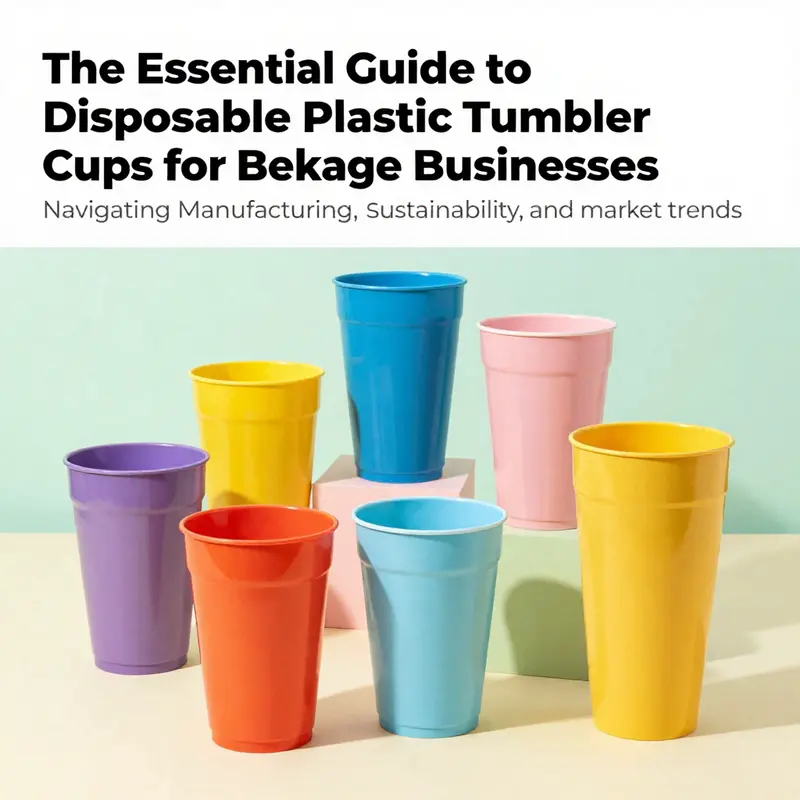
As disposable plastic tumbler cups become a staple in the beverage industry, from bubble tea shops to catering services, understanding their manufacturing processes, environmental impact, and market trends is crucial. This guide delves into the intricacies of these essential containers, shedding light on how they are made, the sustainability challenges they face, and the innovations that are shaping their future. Each chapter focuses on a critical aspect of disposable plastic tumbler cups, ensuring that businesses can make informed decisions that align with environmental considerations and consumer preferences.
Molded for On-The-Go Convenience: The Manufacturing Pathways of Disposable Plastic Tumbler Cups

Across the spectrum of single-use beverage containers, disposable plastic tumbler cups are engineered for speed, consistency, and cost efficiency. The mass production of these cups relies on two principal molding technologies: injection molding and blow molding. The choice between them hinges on the cup’s design complexity, its intended capacity, the resin selected, and the required performance in real-world use. In practice, the marketplace uses injection molding when features like handles, reinforced bases, or integrated rims must be exact and repeatable. Blow molding, by contrast, dominates for straightforward, cylindrical shapes that emphasize rapid throughput and low unit cost. The cups themselves are typically made from lightweight, food-grade plastics such as polypropylene and polystyrene. These materials deliver a clean appearance, adequate clarity in some variants, and the rigidity needed to endure the bump-and-grind of transport and daily handling. Common sizes—10 oz, 12 oz, and 22 oz—align with consumer expectations and event needs, while the straight-sided design preserves a uniform diameter from base to rim, lending stability and a visually neat profile that readers easily recognize in a crowded dispenser or a car cup holder.
In the broader context of packaging culture, the production line for disposable cups is a carefully choreographed sequence. Pellets are the starting point, chosen for safety, regulatory compliance, and processing behavior. PP and PS each bring distinct advantages. Polypropylene offers superior heat resistance relative to many other plastics, good chemical compatibility, and robust stiffness at modest thicknesses. Polystyrene often boasts excellent clarity and a smooth surface that takes branding well when transparency is a design goal. When designers want lids that snap on securely or bases that resist tipping, those features are factored into the mold geometry from the outset. The injection molding route excels at this level of precision because the mold cavity shapes become part of the product geometry, and the tooling can be reconfigured to alter thickness distribution or to add structural ribs without changing the fundamental process.
For the simple, cylindrical cups that do not require complex features, extrusion blow molding offers a complementary path. Here a parison—an extrusion of molten plastic—is shaped inside a cooled, hollow mold. Compressed air inflates the parison so it presses against the mold walls, forming the inner and outer surfaces that define the cup. Blow molding is particularly efficient for large volumes of basic cup shapes, where wall thickness distribution is less critical than overall uniformity and speed. The trade-off is that blow-molded cups yield less tight control over wall thickness compared with injection-molded parts, which can influence performance in heat retention and stacking. Yet for everyday coffee, cold beverages, or water, the economics of blow molding make it a staple in factories cranking out millions of units per day.
The material science behind these processes matters as much as the machinery. PP and PS are chosen not only for safety and cost but also for how they respond to heat, how well they hold their shape after demolding, and how they interact with downstream processes such as labeling and lid attachment. In many facilities, the same resin can feed multiple lines, with injection molding handling cups that carry integrated handles or molded-in features and blow molding producing the more economical, column-like cups. The design intent drives the tool design, and the tool, in turn, dictates cycle time and the efficiency of the line. Precision in wall thickness is critical when a cup must withstand hot beverages and repeated handling, yet the line must avoid excessive weight that raises material costs and waste. In practice, engineers balance wall thickness, cooling rates, and rib placement to achieve a product that is both sturdy and economical at scale.
The manufacturing footprint extends beyond the core molding step. A symbolic but important part of the equation is the lid. In many cases, lids are produced in a separate process or even on a parallel line, then paired with the cup later in assembly. The resulting combination must provide a leak-resistant seal, maintain temperature to a practical degree, and fit into common car cup holders and bag compartments. The interaction between cup geometry and lid design becomes a live parameter during tooling development. When a lid must snap on with a minimal chance of leakage, the rim profile of the cup must be crafted to exact tolerances. The same logic applies to features like reinforced bases or subtle tapering near the rim, which can improve stability while also enhancing press-fit lid compatibility.
In terms of production planning, automation is the more visible driver of efficiency. Modern lines rely on multi-cavity molds that excuse slow cycles by pressing a higher number of parts per hour. Robotics handle ejection, stack, and packaging with remarkable speed, while sensors monitor temperature, pressure, and cooling times in real time. The net effect is a predictable cadence: cups emerge from the mold, are cooled to a safe handling temperature, are inspected for obvious defects, and move into ready-to-pack streams. The controls must be robust to avoid fluctuations in wall thickness or warpage that would ripple through to lid fit or stacking stability. This level of control is precisely what makes the injection-molded route viable for features that demand tight tolerances and repeatable performance, even when the production runs run into the hundreds of millions of units.
Process parameters matter just as much as the machinery. Injection molding requires careful temperature profiling in the barrel, precise injection pressures, and correct packing pressures to offset any shrinkage as the part cools. The melt temperature is tuned to the resin and the mold design, ensuring that the plastic flows evenly into all cavities without flashing or sink marks. Cycle times must be balanced against quality goals; too rapid a cycle can lead to internal stresses, while too slow a cycle undermines throughput. Blow molding emphasizes controlling parison wall thickness, cooling rates, and air pressure to ensure a uniform, defect-free surface. For simple cups, cycle times are shorter but the design must still account for temperature and material distribution so that even horizontal stacking remains stable. Designers who understand these constraints can push efficiency without sacrificing product integrity.
The environmental conversation often sweeps in at this juncture, reminding us that every process has a footprint. While injection molding can deliver high-precision parts with minimal material waste when properly tuned, the overall life cycle of disposable cups depends heavily on the recycling stream, contamination risk, and the presence of coatings or multilayer structures that hinder end-of-life processing. The reality is that even the most sophisticated molding cell cannot fully negate the consequences of single-use consumption if disposal behavior and recycling infrastructure are not aligned. In the manufacturing planning room, those realities push engineers to consider alternatives, such as coatings, recycled-content resins, or even exploration of bio-based or recycled formulations. Yet even with these advances, the core manufacturing story remains one of efficiency, accuracy, and continual improvement in process control.
Within this landscape, one can glimpse the broader ecosystem of disposable cups. While plastic tumblers form a dominant segment for their speed and reliability, other formats—such as paper or biodegradable options—illustrate the market’s diverse approaches to single-use servingware. In contexts where branding and customization drive demand, manufacturers can customize surface finishes, colors, and logos through in-mold labeling or secondary processing, turning a simple consumer item into a recognizable event or brand touchpoint. A representative facet of this sector is the availability of paper cup variants that emphasize eco-friendly branding and take-away convenience; see the linked example of a paper cup with a printed logo designed for take-away coffee needs. eco-friendly printed logo paper cup take-away coffee cup 8-oz/12-oz.
For readers seeking a deeper technical audit of the injection-molding side—where temperature, pressure, and cycle time converge to determine part quality—resources from leading plastics technology publishers offer detailed process windows and troubleshooting guidance. The injection-molding process is a complex blend of chemistry and mechanics, and practitioners continually refine their understanding of how rheology, cooling, and mold design interplay to yield consistent cups across thousands of cycles. External practitioners can consult a dedicated technical resource that dissects these parameters in depth, including practical examples of how to optimize melt temperature and packing strategies for curved rims, thick bases, or grasp-ready handles. External resource: https://www.plasticstech.com/technical-resources/injection-molding-process
Beyond Convenience: Tracing the Lifecycle and Environmental Toll of Disposable Plastic Tumbler Cups

Disposable plastic tumbler cups are woven into the fabric of modern life, offering a promise of speed, ease, and hygienic service at events, workplaces, and on the go. Yet the same qualities that make them so appealing also tether them to a broader environmental story. To understand the true footprint of these cups, we must follow them from the moment the resin is heated into a mold to the uncertain fate they face after a single use. This is not a tale of simple binaries, disposable versus reusable; it is a narrative about materials, energy, and systems that either cradle or frustrate our efforts to reduce waste and emissions. The lifecycle begins with the choice of material. Many disposable tumblers are formed from polypropylene or polystyrene, plastics derived from fossil fuels. When producers seek rapid, scalable manufacturing, these polymers are favored for their light weight, clarity, and ability to take printed branding. In some corners of the market, bioplastics such as polylactic acid appear as an alternative. Each material carries its own set of environmental signals, from the energy required to extract and process the raw feedstock to the emissions produced during polymer formation. Even within the same family, the production chain can differ markedly depending on refinery practices, energy sources, and processing aids used to shape, color, and finish the cups. These production choices set the baseline for the cup’s lifetime emissions, a baseline that will be tested anew as the cup moves through its short existence. The immediate impact of production is not limited to greenhouse gases alone. Air pollutants, water use, and the generation of solid byproducts can accompany the creation of a batch of cups. In broader terms, the upstream phase mirrors the same pattern that underpins many single-use plastics: a high upfront cost in energy and materials, followed by a per-unit marginal cost that declines only with scale and efficiency.
Once the cups leave the factory, the usage phase begins. Here the story takes on the most familiar shape: a single-serving container designed for quick, disposable use. The environmental calculus during usage hinges on how many times a given cup is used and how it is disposed of afterward. A reusable tumbler, by contrast, would require many uses before its per-use impact becomes lower than that of disposables. The literature consistently highlights this breakeven point: the more a durable cup is used, the more it offsets its higher initial production impact. In practical terms, a durable cup made from plastic or metal must replace hundreds, sometimes thousands, of single-use cups over its lifetime to deliver a net environmental benefit. In the context of disposable cups, the opportunity cost is clear. Every time a cup is used once and then discarded, it enters a stream that is designed for one life cycle. The convenience comes at the expense of disposal infrastructure and waste management systems, which must handle large volumes of plastics with varied additives, inks, and coatings. The design itself matters: many cups carry coatings or seals to enable liquid containment or to facilitate branding. These layers, while practical, can complicate recycling because they require separation at end of life and may contaminate otherwise recyclable streams. The ergonomic lids and secure-fit seals that prevent leaks during travel are part of what makes these cups so appealing, especially for events and mobile service. Yet the same features can create challenges for sorted recycling streams if residues remain or if the lids become detached and misclassified at material recovery facilities. In other words, convenience and waste management are deeply interwoven in the everyday use of disposable tumblers.
The disposal phase is where the environmental story often takes its starkest turn. Even when cups are marketed as biodegradable or compostable, their fate is not guaranteed to translate into reduced environmental harm. In landfills, many of these plastics degrade slowly, and the conditions necessary for efficient composting are not ubiquitous. Compostable materials like polylactic acid or PLA promise lower carbon footprints in ideal facilities, but their environmental advantages depend on the presence of properly equipped industrial composting infrastructure. Without access to such facilities, the compostable label can be more aspirational than real, while landfilling catalyzes methane production, a potent greenhouse gas that traps heat far more effectively than carbon dioxide over shorter timescales. Recycling presents its own set of complications. Some cups include coatings, sealants, or print layers that resist separation or contaminate the recycling stream when mixed with other plastics. Contamination and the separation challenges mean many cups destined for recycling end up in landfills or are downcycled into lower-grade products, reducing the overall efficiency of material recovery. These realities underscore a central challenge: the recyclability of disposable cups is not solely a function of the material type but also of the end-of-life system in place, including consumer sorting behavior, municipal policies, and the availability of advanced facilities capable of handling mixed plastics.
A broader look at the environmental signal from disposable cups also invites reflection on greenhouse gas emissions and resource use beyond the primary plastic itself. Even if a specific cup seems small, the aggregate impact of millions of cups across events, offices, and public spaces scales quickly. The production, transport, and eventual disposal of these cups are energy-intensive processes that rely on fossil fuels for both feedstock and logistics. Substitution away from disposable cups to reusable ones promises meaningful climate benefits, but only when the adoption is accompanied by frequent use and careful washing or maintenance that preserves the cup’s integrity and longevity. In other words, the promise of reducing waste is tied not just to choosing a reusable alternative, but to a consistent pattern of reuse that outweighs the higher upfront inputs required to produce a durable vessel.
What does this mean for individual choices and organizational practices? It means recognizing that the simplest answer is not the most sustainable one. If a community or a company discards disposable cups without a robust waste-management framework, the ecological advantages of any single solution diminish. The path forward, then, blends several strategies. First, reduce overall consumption by relying on durable, reusable options whenever feasible, especially in daily routines and lower-volume settings. Second, strengthen end-of-life management by ensuring access to recycling streams that can accommodate mixed plastics or by aligning with proper composting where industrial facilities exist for PLA or other certified compostables. Third, when disposables are unavoidable, prioritize materials and designs that minimize coatings and additives that hinder recycling. And fourth, recognize the power of branding and consumer expectations. The convenience of disposables is deeply tied to event logistics, hospitality service, and rapid turnover. Any move toward sustainability must also address how cups are used, stored, cleaned, and disposed of in real-world settings.
For readers exploring safer, more sustainable options beyond plastic, consider the eco-friendly-printed-logo-paper-ice-cream-cups-with-lid as a model of how alternatives are marketed and positioned in the broader discourse on single-use items. The link below points to a product family that emphasizes composition and branding while illustrating the kinds of trade-offs often discussed in lifecycle discussions. eco-friendly-printed-logo-paper-ice-cream-cups-with-lid. This kind of alternative invites ongoing evaluation in terms of structural performance, user experience, and, crucially, end-of-life behavior, reminding us that sustainability is as much about how a product is used and disposed of as it is about what it is made from.
The core takeaway is not a simple verdict on disposable versus reusable cups. It is a call to acknowledge lifecycle dynamics and to align purchasing, usage, and disposal practices with real-world capabilities. If a community can ensure that disposables are used sparingly, that materials can be efficiently recovered or composted where appropriate, and that durable options are embraced for high-frequency use, the overall environmental burden can be meaningfully reduced. In settings with high turnover and limited washing capacity, reusable systems still require design attention to maintenance and lifecycle monitoring; otherwise, the anticipated reductions may never materialize. As researchers and policymakers continue to map the path toward lower-impact consumption, the message remains clear: reduce, reuse, and dispose thoughtfully. The most sustainable choice, in practice, often hinges on behavior—how often a cup is reused, how well it is cleaned, and how reliably it is diverted from the waste stream at the end of its life.
External resource for a broader, data-driven perspective on this topic can be found in the study on the environmental and littering impacts of disposable cups made of polypropylene and polylactic acid. This work offers a rigorous look at the trade-offs between conventional plastics and bioplastics in real-world waste management landscapes: https://www.sciencedirect.com/science/article/pii/S095605322400785X
Between Convenience and Conscience: Navigating Market Trends in Disposable Plastic Tumbler Cups
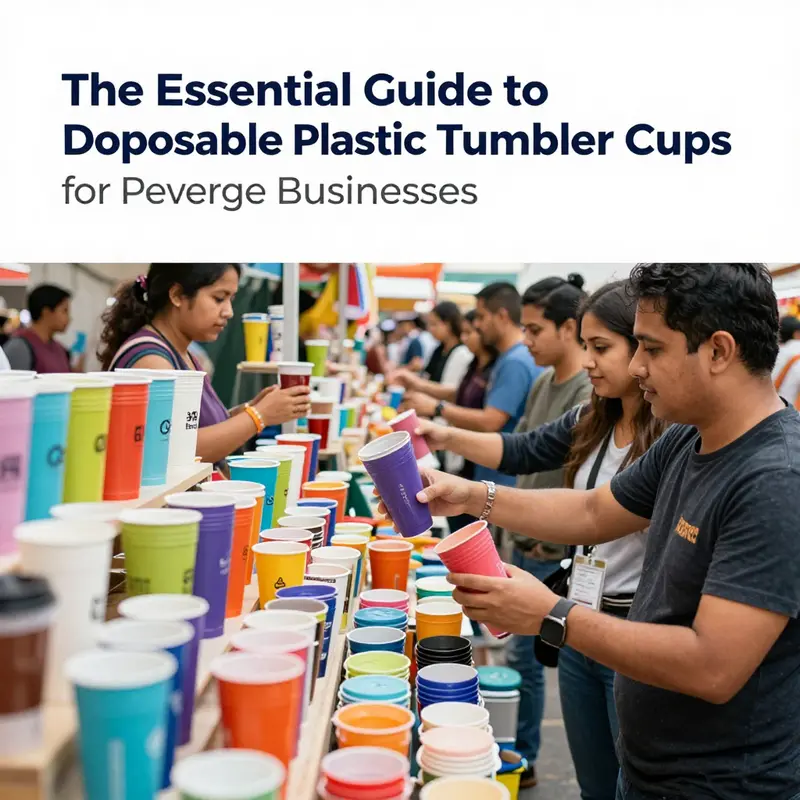
External resource for further context: MarketsandMarkets notes the growth dynamics and the push toward eco-friendly solutions in disposable cups, providing a framework for understanding how consumer preference, regulation, and innovation interact to shape demand across sectors. https://www.marketsandmarkets.com/Market-Reports/disposable-cups-market-1487.html
Disposable Plastic Tumblers: Where Convenience Meets a Fragile Environmental Balance
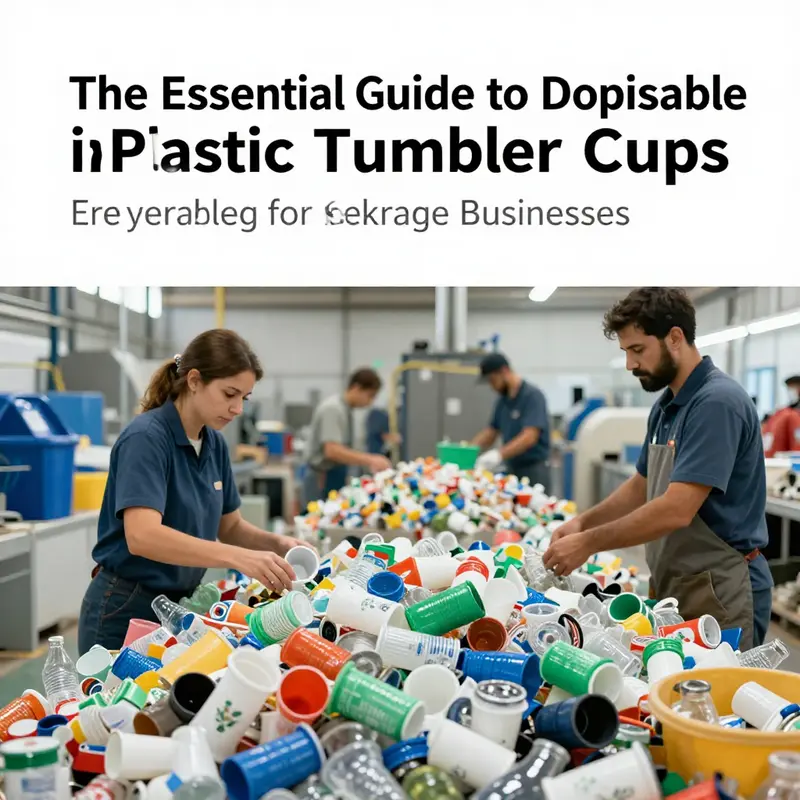
Disposable plastic tumblers are a staple at many events, offices, and retail settings because they combine low cost with immediate convenience. That convenience, however, comes at a cost that rarely shows up on price tags. This chapter explores the material realities, lifecycle consequences, and practical trade-offs that make disposable plastic tumblers an environmental challenge rather than a simple disposable solution.
Plastic tumblers are most commonly made from petroleum-derived polymers such as polypropylene (PP) and polystyrene (PS). These polymers offer desirable properties: they are lightweight, shatter-resistant, and cheap to mass-produce. The same properties that make them practical also make them persistent in the environment. Plastics resist biological degradation. When disposed of improperly, they can remain in landfills or natural habitats for centuries. Over time, exposure to sunlight, heat, and mechanical abrasion breaks large pieces into microplastics. Those microscopic fragments can then move through ecosystems and human systems alike, with unclear long-term consequences.
The production phase is the first major source of environmental impact. Extracting and refining fossil fuels consumes energy and emits greenhouse gases. Manufacturing processes for plastic cups add further emissions, use water, and generate industrial waste. Even when a tumbler is labeled as recyclable, the initial carbon and resource footprint is already committed. Scaling production to meet high-volume, single-use demand multiplies these impacts quickly.
End-of-life outcomes reveal more complexity. A surprising share of disposable plastics never reaches a recycling facility. Contamination with food and drink residues makes many cups ineligible for standard recycling streams. Complexity compounds the problem: lids, seals, labels, and coated interiors often combine different materials or apply thin polymer layers that interfere with recycling machinery. Equipment designed to sort and process single polymer types struggles when items are multi-material. As a result, many items that appear recyclable end up as waste.
Recycling rates for consumer plastics remain low in many regions. The barriers are practical and systemic: inadequate collection systems, inconsistent local guidelines, and limited markets for recycled material. Even where polypropylene recycling exists, the economics can be weak. Recycled resin often competes against virgin plastic priced by global oil markets. Without stable demand for recycled material, recycling programs struggle to cover costs.
Another dimension is durability versus degradation. Reusable plastic tumblers are sometimes touted as greener than single-use cups because they reduce immediate waste. Yet repeated use and washing gradually degrade polymer integrity. Microplastics and chemical additives can migrate under heat or repeated abrasion. Over time, consumers inevitably retire these tumblers and replace them, generating eventual waste. The lifecycle benefit depends heavily on how many times a reusable item is actually used and whether it is disposed of responsibly.
Alternatives such as stainless steel, glass, or plant-based bioplastics each offer advantages and trade-offs. Metal and glass excel at longevity and don’t shed microplastics, but they are heavier and often have higher upfront manufacturing emissions. Plant-based bioplastics can reduce reliance on fossil carbon, yet they commonly require industrial composting facilities to break down. If those facilities are absent, bioplastics behave like petrochemical plastics in landfills. Each substitute therefore shifts rather than eliminates environmental burdens.
Design decisions at the manufacturing level can mitigate some issues. Simplifying materials—using a single polymer type throughout a cup and its lid—improves recyclability. Avoiding mixed-material coatings and minimizing additives also helps. Clear labeling that states polymer type and local recycling guidance reduces user confusion and contamination. Business buyers and event planners can demand these design improvements by specifying recyclability requirements in procurement contracts.
Policy and infrastructure matter more than individual choices alone. Extended producer responsibility schemes can push manufacturers to design for circularity and to fund collection and recycling. Investment in sorting and reprocessing facilities creates markets for recyclate and stabilizes demand. Public education campaigns that explain what can and cannot be recycled reduce contamination. In regions where such systems are weak, even well-intentioned recycling efforts fall short.
For organizations that must serve many people, pragmatic strategies reduce environmental impact without sacrificing hygiene or efficiency. Choosing cups that are single-polymer and clearly labeled helps. Providing centralized collection points and partnering with waste managers to establish proper streams improves end-of-life handling. Offering incentives for customers to return cups or switching to durable, refillable programs for frequent-use settings cuts demand for disposables.
Event planners and businesses looking for lower-impact alternatives should weigh both operational needs and lifecycle science. For example, double-walled paper cups with a recyclable or compostable coating can work for hot beverages while reducing reliance on fossil plastics. A practical starting point is to pilot alternatives, measure actual reuse rates, and track waste streams. Data-driven choices reveal the real-world trade-offs and help justify changes to stakeholders.
Consumers also play a role. Judicious use of disposables—reserving them for occasions where alternatives are infeasible—and choosing correctly labeled products reduces contamination in recycling streams. When possible, opting for reusable tumblers or participating in return-and-reuse programs will deliver the largest per-person reductions in waste and emissions.
Overall, the sustainability problems of disposable plastic tumblers are solvable in part, but only through coordinated action. Manufacturers can redesign for recyclability. Policymakers can build systems that capture and reprocess material. Organizations can adjust procurement and on-the-ground handling practices. Consumers can align use with available recycling and reuse options. Alone, any single step has limited effect. Together, these changes can move the balance from a throwaway culture toward measured resource stewardship.
For readers looking into practical, lower-impact cup options, exploring eco-friendly paper cup designs offers an immediate pathway to reduce fossil-plastic use; see this reference on eco-friendly double-wall craft paper cup options for context. For a broader look at global plastic pollution and policy directions, consult the World Economic Forum analysis on the global plastic pollution crisis: https://www.weforum.org/agenda/2025/09/global-plastic-pollution-crisis/.
null

null
Final thoughts
Disposable plastic tumbler cups serve a vital role in the beverage industry, combining convenience with a pressing need for sustainability. As we explored the manufacturing processes, environmental impacts, market trends, and innovations shaping this product, it’s clear that businesses face both significant opportunities and challenges. Embracing sustainability and innovative practices will not only align with consumer preferences but also promote a healthier planet. Armed with this knowledge, businesses can make impactful choices that drive their success.