

Heating food in plastic containers often seems like a convenient choice, but the hidden dangers cannot be overstated, especially for businesses in the food industry. As health awareness increases among consumers, it is crucial for Bubble Tea Shops, Restaurants, Food Trucks, and Catering Services to recognize the risks associated with plastic. The potential release of harmful chemicals and microplastics into your food can have serious implications for health, compliance, and reputation. This article will delve into understanding the risks of heating food in plastic containers, explore the science behind chemical leaching, highlight the issue of microplastic contamination, review regulatory standards, and present safer alternatives that can ensure the well-being of both your customers and your business.
Heat and Plastics: Heating Food in Plastic Containers

Many people heat meals in plastic containers for convenience, but heat can cause plasticizers and other additives to migrate into food. The substances of concern include phthalates and bisphenols such as BPA, which may interfere with hormonal signaling and metabolic processes over time. While occasional exposure is unlikely to cause immediate harm, repeated heating in plastic can raise the body burden of these chemicals. The risk is amplified when heating fatty or oil-rich foods, since fats can help dissolve lipophilic compounds. Microplastics are another concern; heat, abrasion, or wear can release tiny particles from containers. The health implications are still being studied, but the precautionary principle suggests favoring glass or ceramic when reheating hot foods, and avoiding reheating in damaged or non-food-grade plastics. Practical steps: transfer leftovers to a non-plastic container, check for cracks, avoid tight-fitting films that touch hot foods, and never rely on microwave-safe labels as a guarantee of safety. In short, minimize plastic heat exposure to reduce cumulative chemical load.
Heat, Leach, and Lunch: The Science Behind Not Heating Food in Plastic Containers
When you warm leftovers in a plastic container, you are not simply reheating a meal—you are engaging in a subtle chemical experiment conducted inside your kitchen. Heat increases the mobility of certain substances embedded in plastic, turning a passive container into a source of potential exposure. The phenomenon is known as chemical leaching, and it can involve a suite of chemicals from the plastic itself: BPA, various phthalates, and a range of stabilizers, colorants, and flame retardants that plastics carry to meet performance and safety standards. Over recent decades, researchers have shown that these chemicals do not remain inert when heated. They migrate into the food matrix, particularly when the food is warm enough to dissolve or loosen these compounds from the polymer’s surface and bulk. This is not a theoretical concern for the few extreme cases; it is a measurable, practical reality that many households encounter in routine microwaving or in hot meals served directly from a container designed for cold storage or light usage. The implications extend beyond taste or texture. Some of the leached substances act as endocrine disruptors, meaning they can interfere with hormonal signaling in ways that affect development, reproduction, and metabolism across life stages. The most discussed chemical in this conversation is Bisphenol A, or BPA, a molecule that has been linked to altered reproductive function, metabolic changes, and cancer risk in animal models and human studies alike. Yet the story does not end with BPA. Phthalates—the plasticizers used to increase flexibility—also migrate under heat, and their breakdown products can carry similar risks. The spectrum of chemicals involved broadens further when you consider the substitutes used to replace BPA, such as BPS and BPF. A comprehensive review in a leading endocrine journal highlighted a disquieting pattern: even containers labeled BPA-free can release structurally similar substitutes when heated, and those substitutes can mimic BPA in how they interact with the body’s hormonal receptors. This means that a simple claim of “BPA-free” does not necessarily translate into a safe heating experience. A voice often cited by environmental health researchers captures this nuance: “Just because a product is BPA-free doesn’t mean it’s safe. Some alternatives like BPS and BPF behave similarly in the body and could carry comparable risks.” Such cautions are not mere demonstrations of complex chemistry; they reflect real concerns about everyday decisions that accumulate over years of meals and snacks. The leaching process is not uniform. Temperature is a crucial driver, but so is the nature of the food itself. High-fat meals, sauces, and creamy soups tend to draw more of these substances into the food because fats can act as solvents for certain plastic additives, enabling greater migration. In contrast, dry grains or water-based soups may show less leaching, though risk is not zero and depends on exact temperatures, exposure duration, and the specific plastic composition. These interactions become more pronounced during microwave heating, where power settings can push temperatures well above those reached by conventional ovens or stovetops. The combined effect of high heat and time is not simply a linear increase; it is a dynamic that depends on how long the container is exposed and whether the container is designed to maintain heat without degrading. The practical takeaway is not just “avoid BPA” or “avoid phthalates.” It is recognizing that many everyday containers are engineered for containment and convenience, not for safe thermal use, and thus the risk profile shifts when heat enters the equation. Even containers marketed as “microwave-safe” exist in a regulatory and marketing gray area: they may indicate that the plastic can withstand the mechanical and structural stresses of heating, but they say little about the chemical migration that heat can provoke. This is where scientific findings intersect with everyday decisions, and it is why households should recalibrate their reheating habits to minimize exposure. The evidence also draws attention to a supplementary, less visible consequence of heating in plastic: microplastic particles. A 2025 study revealed that heating a plastic container for as little as three minutes could release hundreds of billions of microplastic particles into food. The idea that microplastics simply come from the environment is challenged by findings that the heating process itself can fragment the container material, releasing particles that can be consumed with meals. While the long-term health impacts of dietary microplastics are still under active investigation, the broad consensus is that cumulative exposure may contribute to chronic inflammation, oxidative stress, and organ strain. Taken together, these threads—chemical leaching, endocrine disruption, and microplastic release—paint a coherent picture: heating food in plastic containers is not a neutral act. It modifies both the chemical and physical composition of what you eat, transforming a quick, convenient step into a potential exposure pathway that may accumulate across days, weeks, and years. The risk calculus shifts when you consider vulnerable populations such as pregnant people, infants, and children, whose developing systems may be more sensitive to hormonal disturbances and inflammatory signals. Hormonal balance is a finely tuned system, and even subtle disturbances can reverberate through growth, puberty, and metabolic programming. In this light, the precautionary stance—minimizing heat contact between food and plastics—appears prudent not only for individual meals but for long-term health trajectories. A holistic kitchen practice emerges from this science: replace plastics as the primary heating medium with materials known for heat resistance and chemical inertness. Many households can transition to glass, ceramic, or stainless steel for reheating; these materials maintain flavor and texture without introducing the same migration pathways that heat encourages in most plastics. When plastic use remains unavoidable, the strategy shifts to strict usage rules: prefer containers explicitly labeled as microwave-safe for heating, use the shortest possible heating durations, and reduce the temperature to the minimum necessary to rewarm food while preserving moisture and taste. These guidelines align with a broader shift in consumer habits toward safer materials across the entire lifecycle of food packaging and ware. The decision to reframe heating practices is not simply a reaction to a set of lab results; it represents a practical approach to daily life that weighs convenience against long-term health considerations. For practical reference and to support safer storage decisions, many households look toward robust storage solutions designed to withstand repeated use and heating cycles. For readers seeking concrete options within a packaging ecosystem, a focused resource category can guide choices toward durable, heat-friendly containers: storage containers. This internal link directs readers toward a product category that emphasizes long-term usability and safety, helping bridge scientific caution with everyday shopping decisions. A key point that intertwines with this guidance is the recognition that safety labeling alone cannot guarantee the absence of risk. Labels such as “microwave-safe” can be misinterpreted as a guarantee of safety, when in fact they reflect a container’s physical performance under heat rather than its chemical resilience. This distinction matters not only for the home cook but for caregivers and institutions that rely on rapid meal service. The broader message is to cultivate a cautious, informed approach to heating and serving foods—one that privileges inert, heat-stable materials for heating and reduces the dependence on plastics for hot meals. This approach also complements larger conversations about environmental health and consumer protection, where the emphasis is on reducing exposure pathways through informed product choices and better material design. The chapter in the literature that synthesizes these concerns notes how migration pathways from packaging to food can be complex and context-dependent, involving temperature, food matrix, and the chemical composition of the container. It argues for a cautious handling of plastics in any heating scenario and suggests that even replacements for BPA require scrutiny under real-use conditions. As readers navigate these insights, they gain a practical framework for kitchen decisions that both respect scientific evidence and acknowledge the realities of daily life. For those who wish to delve deeper into the science, the following peer-reviewed resource provides a comprehensive, up-to-date synthesis of chemical migration from food packaging, including BPA, BPS, and BPF and their endocrine effects through 2025: https://academic.oup.com/jech/article/73/1/28/5609430
Heat as a Hidden Pathway: Microplastics, Endocrine Risks, and Safer Reheating in a Plastic World
Heat often travels unseen, transforming the ordinary act of reheating into a potential route for exposure to microscopic hazards. When a hot meal sits in a plastic container, the temperature swing can drive a quiet, persistent release of particles and chemicals that we would prefer not to ingest. The core finding from a pivotal study published in the Journal of Hazardous Materials in 2020 is that heating takeout containers markedly increases the shedding of microplastics into food. The researchers, analyzing four common plastics—polystyrene (PS), polypropylene (PP), polyethylene (PE), and polyethylene terephthalate (PET)—simulated real-world conditions by exposing containers to hot water at 100°C for 30 minutes. The result was a clear signal: thermal stress accelerates the fragmentation of polymer chains, and with it, the liberation of microplastics into the very meals those containers once protected. Among the four plastics tested, PS stood out for releasing the highest levels of microplastics, with a significant portion appearing as flake-shaped fragments. PET, while celebrated for its strength in cold beverages and packaging, showed deformation under high heat, a mechanical change that compounds fragmentation risk and raises hopes of additional particle shedding. This evidence shifts the conversation from a simplistic “leakage” narrative to a dynamic picture of how heat actively reshapes plastic materials, turning them into potential contributors to microplastic intake even when the container looks intact on the outside. Such a phenomenon is consequential because microplastics can act as carriers for other contaminants and can trigger inflammatory responses and oxidative stress when accumulated in tissues over time. The study aligns with a growing body of work suggesting that temperature is not a minor modifier but a central driver of microplastic release during reheating. It also underscores that the mere appearance of an undamaged container offers little assurance against contamination when hot contents are involved. The health risks associated with microplastics are not limited to the particles themselves; they are a vehicle for a suite of additives used in plastics—phthalates and bisphenols (such as BPA and its substitutes). These substances are known endocrine disruptors, capable of interfering with hormonal signaling pathways that regulate metabolism, reproduction, and development. When heated, plasticizers and other additives can migrate more readily into food, meaning that the combined exposure from microplastics and leached chemicals could be additive, or even synergistic, in susceptible individuals. The notion of cumulative exposure is not merely theoretical; it resonates with concerns about lifelong dietary intake of complex mixtures of chemicals and particles, especially for people who routinely rely on takeout, school lunches, or reheated meals from containers that were never intended for repeated heating. It is within this context that the practical guidance of avoiding heating food in plastic containers gains renewed urgency. The 2020 data do not exonerate every plastic item used for cold storage or cold beverages, but they clearly indicate that heat transforms risk profiles in predictable, measurable ways. The packaging that once seemed convenient—lightweight, inexpensive, and disposable—now reveals a deeper hazard in the kitchen. The comprehensive list of plastic types studied also highlights a subtle but important point: not all plastics are equally risky in the context of heat. PS, PP, and PE, typically used for takeaway boxes and cups, emerge as the most problematic when exposed to hot conditions, whereas PET’s behavioral changes under heat remind us that even plastics not primarily associated with hot foods can contribute to risk if subjected to elevated temperatures. In short, heat amplifies the propensity of plastics to shed microscopic and nanoscopic fragments, setting a pathway by which food becomes a vehicle for unwanted material intake. The public-health message that emerges from these findings is not merely about avoiding a single category of packaging. It is about recognizing hot containers as a potential source of two interlinked hazards: microplastics and chemical leachates that disrupt endocrine and metabolic balance. The interplay between physical particles and chemical agents deserves particular attention for vulnerable populations, including children, pregnant individuals, and anyone with preexisting hormonal or metabolic conditions. The health narrative becomes more coherent when framed as a precautionary approach to reheating: reduce the temperature exposure, minimize contact with plastics designed for single use, and favor materials proven to be inert under heat. From a practical standpoint, the recommendations are straightforward and actionable. First, when possible, transfer food to glass or ceramic containers before reheating. Glass is considered inert and generally compatible with microwave and oven use, offering a chemical- and heat-stable alternative that reduces both microplastic release and chemical migration. Second, avoid PS, PP, and PE containers for reheating hot meals; these materials are more susceptible to thermal fragmentation and subsequent particle shedding. Third, even if a container appears sturdy, its internal surface can harbor microplastics released during heating; the external integrity of the container does not guarantee a safe outcome for heated foods. Fourth, consider reducing reliance on single-use plastics altogether, especially for meals you expect to eat hot and fresh. Reusable glass or ceramic dishware, or durable stainless-steel containers, can dramatically lower exposure risks. The emphasis on safer reheating tools is not about perfectionism in the kitchen but about creating systems that safeguard long-term health while maintaining practical convenience. The consumer guidance that emerges from the evidence is shaped by both robust laboratory data and the everyday realities of modern eating. For families packing lunches or ordering takeout, the insistence on safer reheating options translates into a mindset shift: reheating is not a neutral act; it is an exposure event with measurable consequences. The health implications go beyond acute irritation or a single incident of chemical exposure. They point to potential chronic effects, including systemic inflammation, oxidative stress, and perturbations in metabolic and reproductive systems over time. While one study cannot capture every scenario, it contributes to a converging line of inquiry suggesting that the safest course is to minimize heat exposure of food to plastics as much as feasible. In this sense, the guidance is proactive rather than reactive. It seeks to prevent cumulative exposure by design, not just by individual acts of caution. For readers seeking further depth on the topic, the original study offers a detailed account of methods and findings that illuminate how temperature, polymer type, and container geometry interact to influence microplastic release. External researchers and health advocates continue to push for a broader, more nuanced understanding of how microplastics and chemical additives behave under heat, and how repetitive heating cycles may alter risk profiles across different foods and containers. This evolving knowledge reinforces a simple, practical stance: when reheating, choose materials that hold up under heat without releasing tiny travelers into your meal. In the meantime, practical steps can coherently reduce exposure while preserving the convenience of hot meals. If you are curious about safer options for everyday use, consider exploring alternatives in the disposable dinnerware and reusable ware categories, where the emphasis is on heat compatibility and chemical inertness. For readers exploring safer serving solutions, you can start with a respected option in the relevant category, where you’ll find a range of vessels designed to withstand heat without releasing microplastics or additives. Disposable Dinnerware offers a glimpse into the kinds of designs that prioritize safe use with hot foods. While no solution is perfect, such choices illustrate how design intent and material science can converge to reduce risk in real-world settings. As research continues, the conversation will inevitably expand to address cumulative exposure from multiple meals and the ways in which households and food-service venues can adopt safer practices without compromising nutritional and sensory quality. Ultimately, the objective is not to vilify plastic in every context but to recognize the specific scenarios—reheating hot foods in plastic containers—where caution is warranted and alternatives are readily accessible. The journey toward safer reheating is a practical one, grounded in science and reinforced by everyday actions that protect health across generations. External resource: https://www.sciencedirect.com/science/article/pii/S0304389420305648
Microwave Safety and Regulatory Gatekeepers: Navigating Heat, Plastic, and Public Health
Regulatory standards are the quiet backbone of how we translate convenience into safety when heat, food, and plastic collide. In microwave heating, agencies like the FDA set guardrails determining which plastic containers can bear a microwave-safe label. The testing process is designed to simulate a range of real meals—acidic, fatty, and alcoholic—to capture how different foods behave under heat. The aim is to reflect actual consumer use, from quick reheats to leftovers.
Even with approval, a microwave-safe label is not a risk-free guarantee. Repeated heating, aging, or contact with fatty or acidic foods can alter plastic barriers and increase chemical migration. The science involves plasticizers and processing aids, and substitutes marketed as BPA-free may introduce other concerns. Regulators acknowledge a spectrum of risk, not a binary safe/dangerous verdict.
Recent work has begun to consider micro-scale phenomena. Some studies suggest heating plastic containers could release microplastics, which may accumulate in the body over time. This line of inquiry adds depth to the safety picture and invites regulators to evolve as materials and usage change.
Given this landscape, prudent consumer behavior matters. Treat microwave-safe labels as guidance, not a carte blanche. Follow manufacturer guidelines and avoid heating foods in aging, warped, cracked, or discolored plastics. When in doubt, transfer to glass or ceramic to reduce risk. The goal is to minimize exposure while keeping meals convenient.
Looking ahead, packaging choices matter. If you explore alternatives beyond plastic, you will encounter a spectrum of materials with different safety and performance traits. Regulatory agencies continue to refine guidance as science advances, emphasizing prevention and informed use rather than definitive guarantees.
Ultimately, the framework aims to prevent routine risks while acknowledging uncertainties. By staying mindful of aging containers and the interactions between heat, foods, and packaging, consumers can rehearse meals safely and reduce potential exposure. For formal details, consult the FDA’s guidance on food-contact substances for an authoritative backdrop.
null
null
Final thoughts
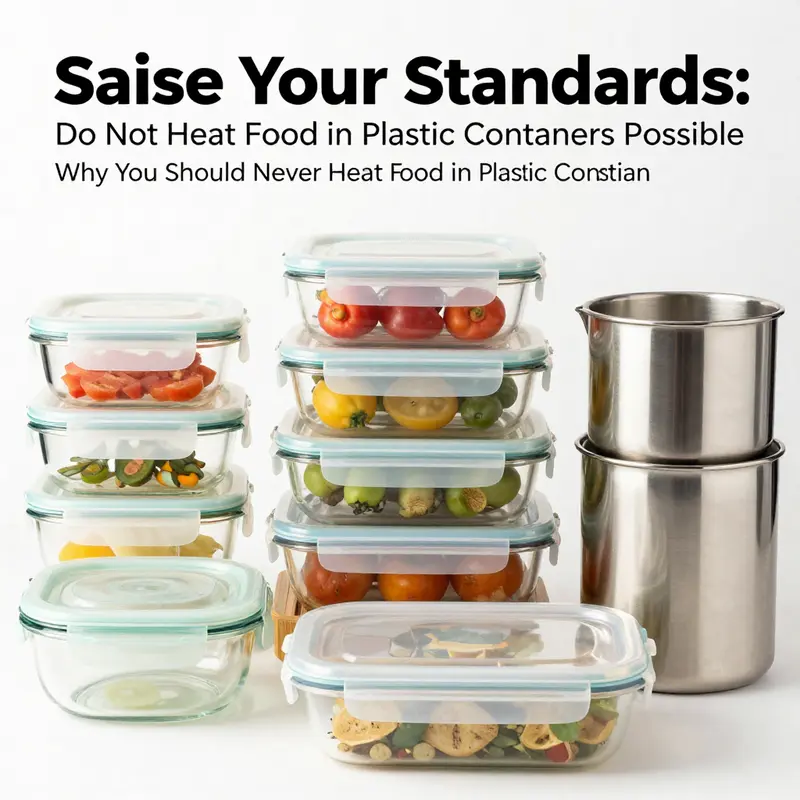
The evidence is clear: heating food in plastic containers poses significant risks to health and safety. As industry leaders, it is essential to understand these risks and make informed decisions that prioritize the well-being of your customers. By transitioning to safer alternatives and adhering to regulatory standards, businesses can not only mitigate potential harm but also enhance their reputation. Remember, informed choices lead to a healthier future for everyone. Let’s enhance our service quality by making smart, safe decisions that resonate with health-conscious consumers.