
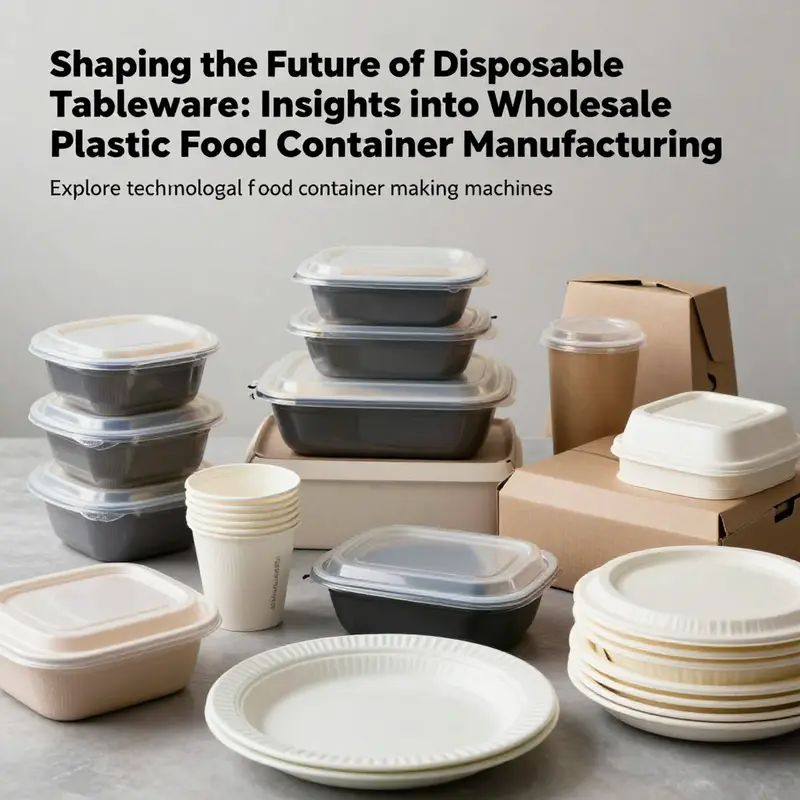
The wholesale market for disposable plastic food container making machines is thriving, with a growing demand from diverse sectors like bubble tea shops, restaurants, food trucks, and catering services. As businesses strive to improve efficiency while reducing costs, the role of advanced machinery becomes increasingly critical. This article delves into how technological advancements, economic impacts, geopolitical factors, societal implications, and sourcing strategies shape the landscape of manufacturing disposable food containers. By understanding these dynamics, stakeholders can navigate the market more effectively and enhance their operational capabilities.
Automation at Scale: How Tech-Driven Machines Redefine Wholesale Disposable Plastic Food Containers
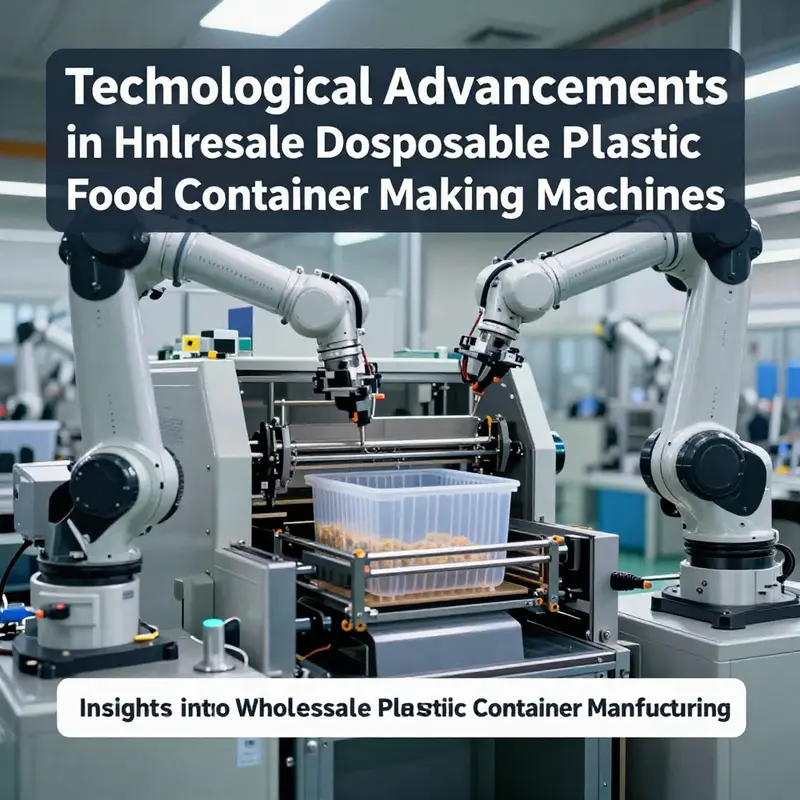
The wholesale market for disposable plastic food container production sits at a nexus of demand, efficiency, and evolving material science. Foodservice operators, catering companies, and retail-packaging networks require large volumes of sturdy, safe containers with consistent performance. In response, manufacturers are turning to highly automated, software-enabled machinery that can run around the clock, maintain tight tolerances, and adapt quickly to changing product mixes. The result is not just more output, but a more predictable production rhythm that aligns with shifts in consumer behavior, regulatory requirements, and sustainability goals. Across the sector, the shift toward automation is driven by a simple truth: processing speed and waste control translate directly into lower unit costs and better margins in a highly competitive field. In practice, this means moving beyond manual line work to integrated systems where material handling, forming, trimming, and stacking are synchronized to minimize idle time and scrap. The most capable packages weave these tasks into a seamless workflow, so that an incoming order for a family of lunch boxes, bowls, cups, and lids can be produced, tested, and packaged with minimal human intervention while still preserving traceability and quality assurance. This holistic approach to manufacturing is what enables suppliers to offer wholesale capacities that match the appetite of large-scale operators, while also supporting smaller, high-mix runs that demand flexibility without sacrificing efficiency.
Automation in this segment is not a luxury; it is a core competency. Modern systems begin at the raw material feed, where auto-feeding mechanisms reduce manual input and ensure a steady supply of resin in the correct grade and color. The precise melting and thermoforming stage follows, with calibrated temperature profiles and pressure controls that yield consistent wall thickness and surface finish. By eliminating variance in the forming cycle, manufacturers can produce more uniform products and minimize post-process trimming. Automatic stacking and downstream handling complete the line, moving finished items toward packing or warehousing with minimal handling. The cumulative effect is substantial: faster cycles, fewer bottlenecks, and a dramatic reduction in labor costs. In high-volume contexts, the ability to sustain 24/7 operation with stable throughput becomes a competitive differentiator, allowing producers to meet retailer deadlines and scale to multi-million-unit orders without sacrificing quality.
A central driver of efficiency in these automated lines is the thermoforming and molding architecture itself. Three-station vacuum forming systems, designed for disposable tableware and related items, exemplify how form, feed, and finish can be synchronized for maximum yield. The first station concentrates on material distribution and heating, ensuring the sheet material reaches a uniform pliability. The second station shapes the product with precise vacuum and pressure parameters, producing the base geometry and any particular geometry features—such as curved edges or reinforced corners—that contribute to stacking stability and user ergonomics. The final station handles trimming, cooling, and dimensional checks, delivering a near-net-shape part that requires little post-processing. The benefit is not simply speed; it is repeatability. When a line can reliably produce the same shape, thickness, and surface texture across thousands of cycles, downstream packaging and quality-control workflows become predictable rather than ad hoc.
In the realm of rigid, high-performance containers—those made from polypropylene and similar resins—injection molding remains indispensable for parts requiring exceptionally tight tolerances and ridge stability. Here, high-speed, thin-wall injection molding machines are optimized for multi-cavity molds. The objective is to maintain short cycle times without sacrificing wall integrity or seal performance. Advances in screw design, nozzle control, and cooling channel efficiency contribute to energy savings and shorter dwell times, which in turn lowers per-unit energy consumption. For manufacturers handling a broad assortment of container shapes and lid configurations, the ability to run multiple cavity counts in parallel and rapidly demold works in concert with automated part handling to sustain high line utilization. In practice, this means a facility can switch between different product families with minimal downtime, a critical capability as seasonal demand or promotional programs drive product variation.
Waste minimization has moved from a compliance concern to a strategic priority. Intelligent waste recycling systems are now integrated into forming and molding lines to capture trim scraps, flash, or defective pieces and return them to the resin stream where feasible. Closed-loop scrap management reduces raw material losses and lowers disposal costs, reinforcing the environmental case for automation. The systems also enable better raw-material planning; when scrap rates are tracked in real time, operators can adjust process windows, resin grades, or mold temperatures to push waste toward zero at the source. This level of material discipline is essential when margins are already tight due to competition from global suppliers and pressure from retailers to optimize packaging costs. Across facilities, waste reduction programs are increasingly paired with lean production principles, enabling managers to identify and eliminate non-value-adding steps while preserving or improving product quality.
Digitalization ties all of these physical innovations together. Modern machines come with an ecosystem of sensors, connectivity, and analytics that provide visibility into every stage of production. Real-time dashboards translate process data into actionable insights, enabling operators and maintenance teams to spot drift in temperature, pressure, or cycle time before it becomes a quality issue. Predictive maintenance tools scan vibration, temperature, and cycle-count data to forecast when a component will fail or require calibration, reducing unplanned downtime and extending equipment life. The benefit extends beyond uptime; data-driven control also supports quality consistency. When wall thickness, surface gloss, or edge straightness can be monitored and correlated with resin grade or mold wear, adjustments can be made proactively to prevent off-spec parts. In training, digital playbooks guide new operators through standard operating procedures with contextual feedback, reducing ramp-up times and ensuring repeatable outcomes across shifts.
The industry’s momentum toward eco-friendly material compatibility is a crucial trend shaping equipment design. As global regulations tighten and consumer demand shifts toward more sustainable packaging, lines are being engineered to handle a broader mix of materials. Machines designed to process biodegradable or recyclable resins alongside conventional PP, HDPE, or PS offer flexibility that translates into longer equipment life and broader market access. This adaptability matters not only for compliance but for competitive positioning. Facilities that can pivot between rigid, semi-rigid, and semi-flexible containers to accommodate different customer requirements—while maintaining performance and safety standards—are better positioned to respond to contract wins, seasonal spikes, and evolving retailer specifications. The ongoing research into barrier properties, heat resistance, and compostability informs machine design choices as well, ensuring that processing capabilities align with the evolving material science landscape.
Market trends reflect a broader convergence of automation, analytics, and sustainability. Companies that integrate end-to-end digital control with highly automated forming and molding lines can reduce variability, shorten changeover times, and deliver consistent performance across a diverse product portfolio. This is especially important in wholesale contexts, where buyers seek reliable supply chains and predictable pricing. The ability to manage product families through a single, coherent line-management system helps operators optimize maintenance windows, spare-part inventories, and energy use. Furthermore, the trend toward modularity means facilities can expand capacity by adding new stations or parallel lines without retooling the entire plant. In practice, this modularity translates into a scalable architecture that supports growth while preserving quality and meeting environmental commitments.
For sourcing inspiration and real-world examples of how suppliers structure these capabilities, the disposable tableware category on the supplier platform offers a window into available options and configurations. This catalog reflects how automation, material compatibility, and digital control converge in modern lines, helping buyers compare line architectures, cycle times, and waste-management approaches. The ability to browse cataloged configurations allows procurement teams to map requirements to machine footprints, energy budgets, and maintenance schedules more efficiently. As manufacturers evaluate their capital plans, they weigh not only the upfront cost but the long-term total cost of ownership, including energy consumption, maintenance, and the flexibility to adapt to new product families without a major rebuild. In this sense, the most successful investments are those that balance high throughput with intelligent waste management and data-driven decision-making.
The chapter’s conclusions point toward a future where wholesale production lines are increasingly self-optimizing, with machine intelligence guiding every stage from raw material feed to finished goods packaging. Companies will benefit from fewer disruptions, more stable yields, and greater agility in product mix without compromising safety or regulatory compliance. As the equipment landscape evolves, it will be important to stay connected with industry-wide research, supplier documentation, and best practices around thermoforming, injection molding, and waste recycling. For those who want a technical primer on current thermoforming capabilities in this sector, industry literature and manufacturer documentation provide a deeper dive into process parameters, energy profiles, and the architectural decisions behind next-generation lines. External references can illuminate how leading facilities balance throughput with quality, and how emerging materials choices influence machine design and maintenance planning.
External reference: https://www.southernplasticmachines.com/automatic-disposable-pp-plastic-food-box-container-machine-ad7252
null
null
Borders, Bills, and Batches: Geopolitics and the Global Pipeline of Wholesale Disposable Plastic Food Container Making Machines
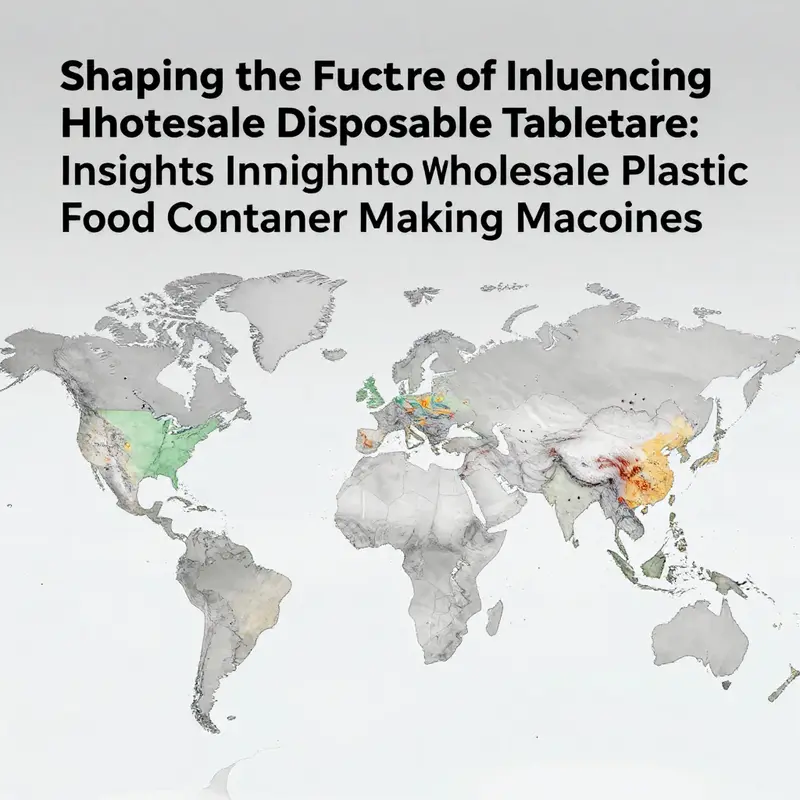
Geopolitics rarely shows up on the factory floor, yet it quietly scripts the rhythm of every order, every delivery, and every investment decision in the wholesale market for disposable plastic food container making machines. Plant managers and procurement teams constantly balance capacity and cost, but the backdrop they navigate is a web of tariffs, trade agreements, export controls, and political shocks that can tilt the arithmetic of risk and profit in unpredictable ways. When a plant contemplates adding a high-capacity thermoforming line or a fast-cycle injection system, it is not just weighing metal, motors, and molds. It is weighing access to a global network of suppliers, resellers, and service professionals whose availability can shift with policy and diplomacy. The numbers tell part of the story: a fully automatic thermoforming setup can sit in the six-figure range, while a compact, high-speed thin-wall injection package might land in the lower five figures per unit, depending on configuration and volume. Yet those price points are conditioned by supply chain normalcy, not just machine specifications. In this sense, geopolitics is a cost-driver and a reliability metric at the same time, influencing both the top line and the bottom line through exchange rates, duties, and the velocity of component resupply.
Tariffs and trade policies serve as the most visible levers. When a country taxes imported machinery or scarce raw materials—polymer resins, specialty coatings, or precision molds—the landed cost of equipment rises, sometimes sharply. Conversely, favorable trade terms can unlock price normalization that supports large-scale capital investments. Policy shifts can also trigger sudden reconfigurations of supplier networks. If a sanction or export control curtails access to certain advanced manufacturing technologies, manufacturers in developing markets may face longer lead times or the need to source from alternative regions. This is not merely about price; it is about the predictability of procurement, the availability of spare parts, and the continuity of after-sales service that keeps lines running through planned maintenance windows and unexpected downtime.
Environmental regulation adds another layer of geopolitical complexity. The global push toward sustainability—driven by international frameworks like the Paris Agreement and regional statutes such as the European Union’s Single-Use Plastics Directive—reshapes demand for traditional plastic containers and, by extension, the machinery that makes them. In regions with stringent waste and recycling mandates, there is a growing appetite for machines compatible with recycled content, post-consumer resin, or biobased materials. These shifts require capital, not just to upgrade or adapt equipment, but to retool processes, validate new materials, and implement testing regimes that ensure food-contact safety. On the other hand, markets with looser environmental constraints may see steadier demand for conventional lines in the near term, even as global investors start prioritizing green transitions. For manufacturers, the strategic choice is less about chasing one regulatory regime and more about building a flexible platform—machinery that can handle a range of resins, tolerances, and end-use specifications while meeting evolving compliance standards across markets.
Supply chain instability is the quiet but persistent force shaping decisions about capacity, location, and risk management. Regions that dominate the supply of crude oil, natural gas, or polymer feedstocks directly influence resin prices and the feasibility of maintaining large inventories of raw materials. Disruptions—whether from geopolitical tension, sanctions, or物流/logistics chokepoints—translate into tighter lead times and higher costs for components like sheets, films, and molds. The result is a practical intensification of localization strategies. Governments and manufacturers alike are pursuing domestic manufacturing of both the containers and the machinery that produces them. Local production reduces exposure to global freight volatility, currency swings, and border delays. It also encourages investment in workforce skills, quality assurance programs, and maintenance ecosystems that can withstand regional shocks. For buyers, localization can mean shorter supply chains and more stable production calendars, but it also demands a careful assessment of local supplier ecosystems, after-sales support, and the ability to scale output to meet fluctuating demand for food service packaging and takeaway trends.
The interplay of these geopolitical factors cannot be fully understood in isolation. It ripples through every facet of the market: from the design considerations of a thermoforming line that must handle multiple resin types to the lifecycle costs of a high-speed injection unit that may be justified only under sustained, high-volume demand. In practice, manufacturers assess not only the immediate price of a machine but the total cost of ownership across a horizon that accounts for policy risk, material availability, and regulatory compliance. This broader lens helps explain why some markets favor modular, upgradeable machines that can evolve with new materials or new standards, while others emphasize robust, service-heavy configurations designed to minimize downtime in volatile environments. As supply chains diversify, the landscape also rewards operators who cultivate strong supplier relationships and transparent procurement practices. Clear visibility into lead times, spare parts availability, and service-response commitments becomes a form of competitive advantage when geopolitical currents shift abruptly.
The narrative of geopolitics also intersects with market signals that buyers use to forecast capacity needs. A buyer anticipating stricter environmental rules, for instance, may accelerate investment in machinery that can process post-consumer materials or that features enhanced energy efficiency and cleaner production cycles. In regions where import duties loom, strategic sourcing may favor nearby suppliers or regional aggregators who offer consolidated packages that reduce cross-border complexity. The practical upshot is that the market for wholesale plastic container machinery is adapting to a world where policy and politics influence not only the price of a single machine but the rhythm of entire production lines. In this environment, a well-timed investment in adaptable equipment can yield resilience, while inflexible, single-material configurations risk obsolescence as standards evolve.
For readers seeking a tangible anchor in this landscape, the discourse on product families and capacity planning is enriched by exploring the broader ecosystem of disposable tableware and packaging. A convenient touchpoint is the accessible catalog of disposable tableware options, which reflects industry trajectories toward materials compatibility, safety testing, and regulatory alignment. Learn more about the disposable tableware category in our catalog, where you can explore materials, forms, and compliance considerations that parallel the capabilities buyers seek in their machinery. This linkage offers contextual grounding for how shifts in policy and markets influence the kinds of containers manufacturers aspire to produce and the machinery that makes those products possible. Disposable Tableware product category.
The global market for wholesale disposable container machinery remains robust in volume and opportunity, even as the geopolitics around it become more intricate. Buyers who track policy developments, currency movements, and environmental trends can better calibrate their capital plans, ensuring that the selected equipment not only meets current production needs but remains adaptable to future regulatory and material ecosystems. As nations pursue localization and resilience, the value of modular, serviceable, and material-flexible machinery grows. The capacity to retool lines for new resins or alternative packaging formats becomes a lever for competitive differentiation, enabling manufacturers to respond quickly to changes in consumer preferences and in the policy landscape that shapes them. In sum, the interplay between geopolitics and production technology is not a footnote; it is a decisive factor in the economics, reliability, and strategic positioning of wholesale disposable plastic food container making operations.
External reference for further market context: Global Disposable Plastic Food Container Making Machine Market Size, Statista. https://www.statista.com/statistics/1435672/global-disposable-plastic-food-container-making-machine-market-size/
Machines, Markets, and Consequences: The Societal Reach of Wholesale Disposable Food Container Manufacturing
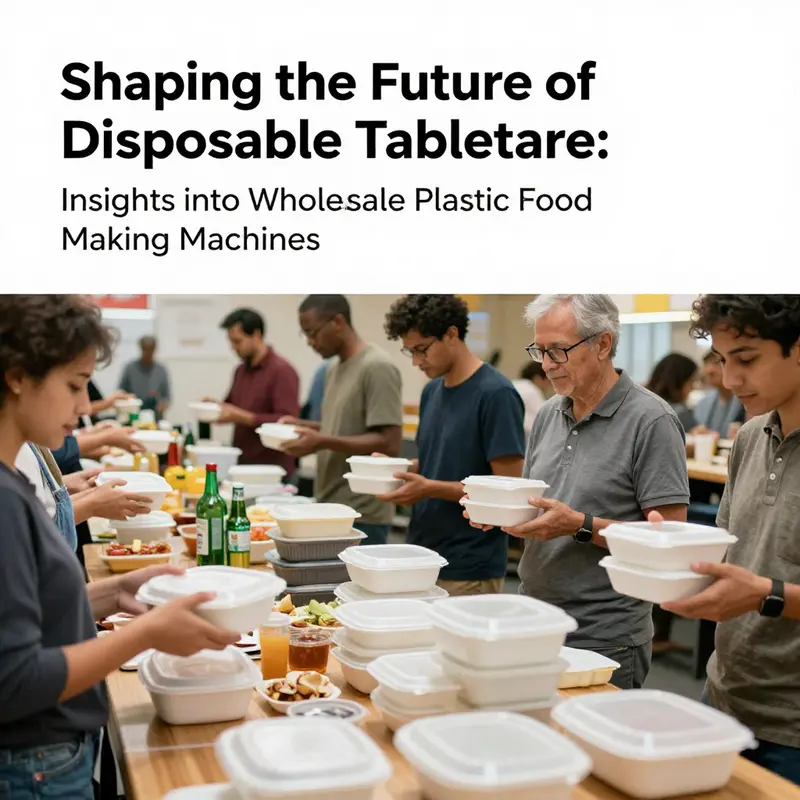
The spread of industrial-scale machines that make disposable plastic food containers reshapes more than factory floors. These machines enable rapid, low-cost production of single-use cups, bowls, boxes, and cutlery. That capacity filters through supply chains, retailers, and daily habits. It lowers unit costs, expands availability, and changes how food businesses package and deliver meals. At the same time, this shift creates ripple effects across the economy, the environment, public health, and culture. Understanding those effects makes it possible to design responses that preserve economic benefits while limiting harm.
On the economic front, high-capacity production equipment supports the growth of diverse food service models. Restaurants, delivery kitchens, caterers, and street vendors rely on affordable, hygienic containers to serve growing urban markets. Machines that automate forming, molding, and finishing reduce labor intensity and production variability. The result is predictable supply and price stability for packaging buyers. For manufacturers, scaling with automated equipment creates opportunities for job specialization. Skilled technicians maintain and program machines. Logistics and distribution roles expand as volumes increase. Local economies can benefit when factories secure large orders for institutional clients, events, or retail chains. Yet this economic upside is not evenly distributed. Large producers often outcompete small workshops, and automation can suppress entry-level manufacturing jobs. Policy and workforce planning must therefore reconcile efficiency gains with equitable employment strategies.
Environmental implications are among the most consequential. The convenience of single-use containers increases consumption of disposable items. Many of these containers are made from polymers that resist degradation. They fragment but persist in ecosystems, accumulating in soils, rivers, and oceans. This persistence has cascading effects. Wildlife ingest or become entangled in debris. Microplastics enter food chains. Landscapes and waterways bear the visual and ecological burden. Waste management systems become stressed as volumes grow. In regions lacking robust collection and recycling, discarded containers contribute to blocked drains and overflowed landfills. That, in turn, creates public health vulnerabilities, from increased vector-borne disease risk to contaminated water sources.
The distribution of these environmental costs often mirrors existing social inequalities. Communities located near manufacturing hubs or waste disposal sites frequently experience higher exposures to pollutants. Informal waste pickers, who recover recyclable materials, face occupational hazards and limited social protections. Neighborhoods with weak municipal services shoulder additional cleanup and health burdens. These patterns highlight how technological adoption in packaging production interacts with spatial and social structures. Addressing impacts therefore requires interventions that account for where harms concentrate and who bears them.
Cultural and behavioral dynamics also shift as disposable containers proliferate. A packaging ecosystem that emphasizes low-cost convenience normalizes single-use habits. Consumers grow accustomed to disposability as a default. That cultural tilt can undercut efforts to encourage reusable systems or more sustainable consumption patterns. At the same time, consumer expectations drive industry responses. Food businesses prioritize speed, hygiene, and branding. Packaging that is cheap, reliable, and printable meets those needs. Breaking this feedback loop calls for alternatives that match the functional demands of operators while changing cost calculations and habit formation among consumers.
Technological and material pathways offer partial mitigation. Substituting polymers with compostable or bio-based materials can reduce long-term persistence in the environment, provided appropriate collection and composting systems exist. Designing for recyclability improves the odds that material value is reclaimed. Machines that produce alternative substrate containers, such as molded fiber or coated paperboard, can be integrated into supply chains. For manufacturers already invested in polymer-based processing equipment, retrofitting and modular tooling can ease transitions to different materials. However, alternatives are not panaceas. The environmental benefits of bio-based or paper options depend on lifecycle factors like feedstock sourcing, energy use, and end-of-life treatment. Without systemic improvements in waste collection, even seemingly greener containers may end up in landfill.
Policy levers and corporate choices shape outcomes. Extended producer responsibility schemes shift incentives by making producers accountable for post-consumer waste. Standards for food-contact safety and compostability provide technical clarity for manufacturers and buyers. Fiscal measures, such as differential taxes or subsidies, can alter market prices to favor reusable or recyclable solutions. Public procurement policies and large institutional buyers can create market demand for sustainable packaging. At the factory level, investing in energy-efficient equipment and optimized process controls reduces the environmental footprint of production itself. Transparent reporting of material flows and waste performance helps stakeholders align around measurable targets.
Social strategies matter too. Education campaigns can reframe convenience without vilifying consumers. Promoting reusables in contexts where they are practical, and providing infrastructure for washing and return, can change norms over time. Formalizing the role of informal recyclers through training, safety measures, and integration into collection networks improves livelihoods and raises recovery rates. Collaboration between equipment manufacturers, material suppliers, waste managers, and foodservice operators creates space for pilots that test scalable solutions. These pilots can show whether alternative materials and new business models work under real-world constraints.
As the industry evolves, transparency and evidence must guide decisions. Lifecycle assessments provide data on greenhouse gas emissions, resource use, and pollution pathways for different container types. Social impact assessments reveal who benefits and who is disadvantaged by shifts in production and waste management. Technology choices in manufacturing should be evaluated not only by throughput and cost per unit, but also by how they affect circularity, labor, and local environments. Investors, equipment suppliers, and buyers who adopt broader performance metrics encourage innovations that balance productivity with stewardship.
The societal implications of wholesale disposable food container machinery are therefore complex and interlinked. Machines accelerate supply and reduce cost. That supports food economies and creates skilled roles. But increased throughput magnifies waste and environmental harm without systemic countermeasures. Disadvantaged communities often bear the heaviest burdens. Shifting trajectories requires coordinated action across technology, policy, markets, and culture. By aligning manufacturing practices with improved materials, waste systems, and social protections, it is possible to retain the economic advantages of automated production while reducing long-term harms. For further reading on the environmental dynamics of plastic pollution, consult an authoritative review on the topic: https://www.sciencedirect.com/topics/environmental-science/plastic-pollution. For those exploring non-plastic packaging alternatives and suppliers, consider researching paper packaging options available from industry vendors: https://cupbowlpack.com/product-category/paper-packaging/
Global Flows and Factory Floors: Sourcing and Manufacturing Wholesale Disposable Plastic Food Container Machines

Across the global packaging supply chain, wholesale disposable plastic food container making machines sit at a critical juncture where capability meets volume, quality, and cost. The dominant narrative about these machines is not simply about hardware; it is about the ecosystem that surrounds them: the raw materials, the automation know-how, the qualification standards, and the networks that connect a factory floor in one coastal city to food manufacturers in distant markets.
China has become the central hub for these machines because its manufacturing system aligns with the speed and scale required by modern packaging. Clusters in Guangdong, Zhejiang, and Fujian knit together toolmakers, mold shops, automation specialists, and component suppliers into a tightly integrated fabric. This proximity shortens development cycles, reduces logistics friction, and makes it feasible to customize lines for different container formats—from compact lunch boxes to larger meal-prep trays. The result is a flexibility that is rarely found in more dispersed supply chains, where a new mold or a precision part can become a bottleneck.
Within this ecosystem, the core equipment categories are designed to convert resin into shaped containers in high-throughput environments. Injection molding handles rigid, durable parts with precise tolerances, ideal for thicker-walled components like lids and bases. Thermoforming lines, often configured with multiple stations, excel at producing light, economical, and food-safe disposable tableware such as cups, bowls, and shallow trays through rapid forming and trimming. Multi-station assembly systems bring together forming, trimming, sealing, and sometimes stacking in a single production line, reducing handling and improving consistency. These machines are typically designed to work with food-grade polymers—polypropylene, polystyrene, and PET—because of their proven safety profiles and recyclability options. The choice of resin is not merely a matter of cost; it influences cycle times, part strength, and the feasibility of downstream quality checks.
In practice, manufacturers balance speed, energy efficiency, and labor costs by adopting automated feeding systems, precise temperature controls, and digital interfaces that monitor every parameter. Automated feeding reduces the risk of stalling, while advanced temperature control maintains material properties and product uniformity. Operators interact with dashboards that display throughput, cycle time, and quality metrics, enabling rapid adjustments in response to shifts in demand or material batches. The most capable lines are designed for turnkey deployment: installation, commissioning, operator training, and after-sales technical support become part of the package, touching everything from electrical integration to mold changes and preventive maintenance.
The decision to buy wholesale machinery is inseparable from the sourcing framework that new and growing packaging businesses rely on. Buyers frequently turn to centralized marketplaces and direct factory channels to compare specifications, prices, and lead times. In China, platforms that connect buyers to verified suppliers provide filters for legitimate certifications, production capacity, and customer feedback, making due diligence more transparent than ever. While the lure of bargain prices is strong, buyers increasingly demand traceable quality histories and clear warranties. This shift has pushed suppliers to provide detailed technical specifications, batch-specific test reports, and evidence of compliance with food-contact safety standards. The governance of safety becomes especially important because containers that come into contact with food must meet regulatory expectations across different markets. Many suppliers present ISO 9001 quality management, CE marking for European markets, and FDA-related compliance notes as standard features rather than optional add-ons, reflecting the cross-border nature of the business.
The practical reality of sourcing is that MOQs can be flexible, especially for startups testing new packaging concepts. Factories may accommodate smaller trials while maintaining scalable options for larger runs, a model that supports innovation while preserving operational efficiency. Yet the economics still favor scale. Once a line runs reliably on a given resin, throughput costs per unit drop, maintenance programs optimize uptime, and energy consumption can be managed through smarter control strategies. For buyers, this means that the total cost of ownership includes not only the purchase price but also the cost of molds, spare parts, and the reliability of after-sales support. The best suppliers offer a complete lifecycle approach: design consultation that aligns mold geometry with product requirements, commissioning that ensures process stability, and ongoing training for new operators as the production team grows.
The interconnectedness of the sourcing landscape extends beyond the shop floor. Logistics infrastructure, export capabilities, and waste stream considerations shape decisions about where and how to manufacture. Chinese suppliers leverage established export channels, experienced freight forwarders, and bilingual technical support to ease international shipments. The result is a pipeline that can deliver large lines within tight project schedules, often with on-site or virtual visits to verify capabilities. Yet, even with such robustness, discerning buyers still perform due diligence. They request safety and performance data, review batch test reports, and often arrange virtual or on-site factory assessments before placing significant orders. In some cases, buyers tour multiple factories to compare mold-making capacity, machine rigidity, and installation efficiency, looking for a synergy between equipment performance and the plant’s process control culture.
Being mindful of safety and regulatory alignment is essential across markets. ISO 9001 certification signals a systematic approach to quality and process control; CE marking supports compliance with European health, safety, and environmental norms; FDA alignment ensures food-contact materials meet U.S. standards. Buyers can pursue third-party test reports and documentation for resin compatibility, migration tests, and packaging performance tests to ensure that containers maintain integrity during shelf life. These steps are not bureaucratic hurdles; they are practical assurances that a machine’s output will satisfy customers and regulators alike. When vendors respond with complete documentation and a transparent testing trail, they demonstrate readiness for product runs that could become brand-defining for buyers and their customers.
For those seeking to broaden their understanding of packaging workflows, a practical touchpoint lies in related packaging equipment categories and production streams. A well-integrated sourcing strategy considers not only the forming and molding steps but also how the finished containers fit into downstream packaging lines. The packaging ecosystem benefits from resources that cover printing, labeling, and sealing processes, all of which influence how a new line is designed and utilized. This chapter’s emphasis on wholesale machinery sits within that wider narrative, acknowledging that the machine is part of a system, not a standalone asset. A relevant cross-reference can be found in the packaging printing category to see how printing disciplines align with thermoforming and injection molding outputs. See the project catalog in the packaging printing section for examples of how printing disciplines align with thermoforming and injection molding outputs. Packaging printing category.
The sourcing and manufacturing story also has a pragmatic side. Buyers should verify supplier credentials and negotiate warranties that reflect a long-term partnership. They should request clear examples of production capability, including machine uptime, maintenance response times, and the availability of spares. They should also plan for plant visits or video audits to gauge the factory’s readiness to support a large-scale installation. In the end, the objective is not merely to acquire equipment but to establish a reliable, scalable, and compliant manufacturing platform that can adapt to changing packaging formats and regulatory environments. The chapter’s stake in this discussion is straightforward: wholesale disposable plastic food container making machines enable a factory to convert resin into a steady stream of consumer-ready packaging, with the capability to scale as demand grows while maintaining safety and consistency across batches.
At a macro level, the globalization of manufacturing, and the globalization of packaging, has created a powerful incentive to optimize both ends of the supply chain. On one hand, buyers can access competitive pricing and broad capability through chambered supply lines that offer integrated turnkey solutions. On the other, suppliers gain access to a vast, diverse customer base that demands customization and reliability. The result is a dynamic equilibrium where standardization and flexibility coexist, and where the next generation of lightweight, efficient, and hygienic containers can be produced at scale without compromising safety or performance. This is the climate in which wholesale disposable plastic food container making machinery flourishes, and it is the climate that shapes future selections and partnerships for the companies that rely on them.
Looking forward, the leap is as much about data as steel. Many suppliers now offer IoT-enabled dashboards that monitor temperatures, cycle counts, and machine health. Predictive maintenance helps avoid surprises, while digital twins let engineers test mold changes virtually, shortening development cycles for new container formats. For buyers, this means turning a machine into a living asset that evolves with demand.
Sustainability also shapes decisions. Lines are being optimized for lower energy use and for compatibility with recycled content, where possible. Machines emphasize heat recovery, efficient servo drives, and control algorithms that stabilize process windows. Such enhancements reduce operating costs and respond to brand commitments to circularity. Given the strict requirements for food-contact materials, resin traceability and batch-level testing remain integral. Vendors support end-to-end documentation, migration tests, and performance data across lots, giving buyers confidence to scale.
Despite the gains from automation, the human factor matters. Skilled technicians still set up lines, validate product properties, and respond rapidly to anomalies. Turnkey projects that include installation, training, and after-sales service create a dependable ecosystem around the equipment, helping plants reach high uptime and consistent quality. Finally, as buyers seek risk mitigation, many look to diversified sourcing for resilience, while still leveraging the cost and speed advantages of the primary manufacturing hubs. This balance—scale with reliability, speed with safety—defines the ongoing growth of wholesale disposable plastic food container making machinery. This chapter aims to reflect that evolving landscape, tying together the threads of sourcing, process design, and ongoing partnership that stakeholders rely on to keep containers moving from resin to ready-to-sell products in a world of rising demand and strict standards. External resource: https://www.alibaba.com/showroom/disposable-plastic-food-container-making-machine.html
Final thoughts
Understanding the dynamics of wholesale disposable plastic food container making machines not only aids businesses in making informed purchasing decisions but also emphasizes the importance of adapting to technological advancements and economic trends. With the right knowledge and resources, stakeholders can enhance their production capabilities and meet the ever-growing demand for disposable food packaging solutions effectively.