
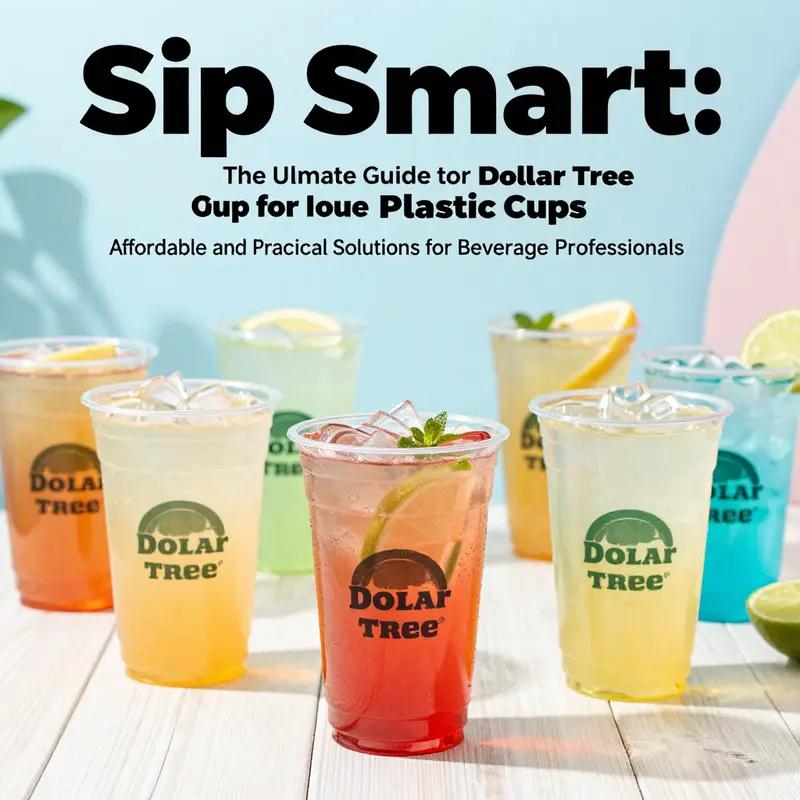
For beverage businesses such as bubble tea shops, restaurants, food trucks, and catering services, the right cup can make all the difference. Dollar Tree disposable plastic sip cups offer a perfect blend of affordability, durability, and practicality. This article explores the various types of cups available, their multiple functionalities for everyday use, and how they align with environmental considerations while being budget-friendly. Each chapter will unravel distinct aspects of these cups to help you make informed choices that elevate your business.
From Clarity to Convenience: Exploring the Varieties and Practical Realities of Dollar Tree Disposable Plastic Cups

When a household ledger is sketched out in a few simple lines, the humble disposable cup often sits at the intersection of practicality and economy. In the context of a dollar store landscape, the disposable plastic sip cups sold at Dollar Tree have carved out a distinct niche. They are not merely generic vessels for beverages; they are a compact system designed to travel with daily life. The cups, typically clear and sturdy, are built to be durable enough for routine use while remaining light on the pocket. The practicality begins with clarity. The transparent walls reveal whatever is poured inside, which makes these cups easy to use for a quick morning juice, a cold brew, or a simple splash of flavored water in the middle of a long conference call. The clear plastic provides a straightforward way to gauge consumption, portion control, and, in a small kitchen, even the temperature of the drink within. This combination of visibility and lightness is exactly what makes the cups appealing to a broad spectrum of users—from busy families coordinating school lunches to commuters rushing between meetings, and from small offices stocking a shared break room to organizers setting up casual events.
In terms of design, the emphasis is on a balance between leak resistance and everyday resilience. The cups are built to minimize spills, a feature that matters a lot when cups travel in bags, car cup holders, or on crowded event tables. The secure lids are part of the same design logic, turning a simple cup into a portable beverage system. The lids snap into place with a decisive click that reassures the user that the contents will stay put during transit. When paired with compatible straws, these cups become a complete, low-friction solution for on-the-go hydration. This trifecta of cup, lid, and straw is a recurring pattern in the product line, reinforcing the sense that Dollar Tree’s disposable drinking hardware is crafted for convenience as much as for cost containment.
Size variety is another cornerstone of the lineup. Across the range, you can expect configurations that span from a tiny 4-ounce portion cup to a generous 32-ounce behemoth, with a sweet spot most commonly found between 6 and 12 ounces. The proliferation of sizes is not merely a marketing ploy; it reflects real-world needs. A 6-ounce cup is perfect for a kid’s juice or a light tasting portion at a marketing giveaway. The mid-range 8, 12, or 16-ounce sizes fit standard beverages—from iced tea and soda to water and lemonade—at family picnics, classroom events, or workplace meetings. The larger 24 and 32-ounce options, meanwhile, step into the role of party and events serviceware, streamlining self-serve stations while reducing the hassle of frequent refills. The practical upshot is a set of options that can cover everyday hydration needs as well as short, casual gatherings without forcing a shopper to overcommit to a single size.
What ties these different sizes together is a shared ethos of reliability. The cups are recognized for durability that stands up to regular use, which matters more than a quick glance at price tags might suggest. The material is chosen to withstand typical mishandling—being stacked for storage, knocked around during transport, or nudged aside on a crowded table—without leaking or cracking under normal conditions. This durability matters for households with kids, for office environments with active break-room traffic, and for families that like to take beverages on the go during outings. The result is a set of returns on investment that feel tangible: you buy once, and the cups serve you across multiple occasions rather than becoming a disposable afterthought.
The overall value proposition is reinforced by a pragmatic approach to events and shared spaces. These cups are well-suited for serving beverages at birthday parties, community gatherings, or promotional events where speed and simplicity trump elaborate serveware. They are easy to stock, easy to organize, and easy to dispose of—an important consideration when planning for cleans-up and waste management after a casual function. The alignment with broader, everyday routines is what makes the product line particularly resonant. For families juggling school mornings, workdays, and weekend outings, the cups offer a low-friction solution that scales from a single-use daily habit to a modest, shared-use event setup.
From a usability standpoint, the cups’ compatibility with lids and straws adds a layer of practicality that can hardly be overstated. In many cases, the cups are offered with matching lids or as part of bundles that include straws. This packaging approach reduces the friction of decision-making at the point of purchase and minimizes the chances of mismatches between cup and lid, a common pain point with other disposable drinkware. The lids, designed to snap securely, provide a safety net against spills during rapid transfers or travel, which is particularly appreciated by parents loading lunches or by commuters juggling coffee while maneuvering through crowds.
Yet, even as these cups perform effectively in a wide range of real-world scenarios, the user experience is not without its caveats. A subtle but recurring observation concerns decorative elements and printed designs on some cups. In the interest of keeping costs low and production lines efficient, a number of packaging variants feature simple, clean aesthetics or minimal branding. Over time, and with repeated use or exposure to sunlight, decorative finishes can fade. This is not typically a major issue for disposable use, but it is a reminder that the cups are designed primarily for cost efficiency and practicality, rather than for long-term aesthetics or repeated reuse in environments where appearance matters as much as function.
The interplay between cost and quality is a recurring theme for anyone evaluating Dollar Tree’s disposable plastic cups. The pricing model aims to strike a balance that makes everyday hydration accessible. For many shoppers, the appeal lies in being able to stock up on a reliable supply without the need for a larger, more expensive set of drinkware. This is particularly relevant for households that host family gatherings, school events, or weekend activities where the demand for cups spikes for a short period. The ability to purchase in bulk, or in convenient bundles, helps minimize worries about running out mid-event and alleviates the need for frequent shopping trips. In such scenarios, these cups function as a kind of practical infrastructure—an inexpensive, dependable backbone for hydration, snacks, or even simple, self-serve treat stations.
The conversation around these disposable cups inevitably brushes against the broader realities of consumption patterns. They embody a convenient, low-commitment solution to everyday hydration while also contributing to the larger conversation about waste and environmental impact. It is worth acknowledging that disposable products, by their very nature, create a cumulative footprint that concerns many households and organizations. The affordability and ease of use that define these cups are the same attributes that complicate their environmental narrative. The standard advice—recycle where possible, reuse when feasible, and opt for sturdier ware when hosting longer-term needs—remains relevant. In daily life, the cups can be part of a thoughtful approach to disposable tableware, rather than a cul-de-sac of single-use habits. Their role is best understood as compromise: a practical choice for short-term use that should be paired with mindful disposal practices and, where possible, alternatives that align with personal or organizational sustainability goals.
The user experience, the quality signals, and the practical economics come together to form a coherent story about why these cups persist in households and workplaces alike. They fulfill a clear, universal need: a reliable vessel for beverages that is simple to source and affordable enough to be commonplace. The availability of multiple sizes adds a layer of adaptability that is especially valuable for families with growing children, for offices managing a steady stream of visitors, or for organizers who want to keep things uncomplicated at casual gatherings. In this light, the Dollar Tree disposable plastic cup series can be seen as a pared-down instrument of daily life—functional, affordable, and straightforward enough to become a default choice in many everyday contexts.
This perspective also invites a practical framework for assessment. When selecting a disposable cup for either personal or institutional use, a shopper can weigh several dimensions: the cup’s clear visibility, which enhances quick recognition of contents; the integrity of the lid that minimizes spills; and the ease of stacking and storing that supports orderly pantry management. The variety in sizes offers tailored solutions for different scenarios—from quick sips during a morning rush to generous servings at community events. The durability aspect, while not the same as that of reusable glasses, remains a meaningful point of comparison. These cups are designed to resist the everyday stresses of transport and handling, which translates to fewer compromised beverages and less cleanup mess.
To readers exploring options beyond plastic, and to those who want to balance cost with ecological considerations, a related resource on eco-friendly disposable options can broaden the frame of reference. See the linked resource titled senang01-hot-sale-customized-disposable-single-wall-paper-ice-cream-cups-with-lid-eco-friendly-food-grade for context on paper-based alternatives and the design choices that come with them. This reference provides a useful contrast to the Dollar Tree plastic cups, highlighting how different materials approach the same functional goals—ease of use, portability, and affordable mass production. For more about the current Dollar Tree lineup and its place within broader consumer ecosystems, you can visit the company’s product page to see how these cups are positioned in today’s market and how they’re marketed to shoppers seeking budget-friendly, practical beverage solutions. External readers may also consider how these options compare to other disposable tableware categories that emphasize eco-friendliness or reduced environmental impact. External resource: https://www.dollartree.com
Budget-Friendly Clarity: The Functionality and Everyday Uses of Clear Disposable Cups

Clear, lightweight, and remarkably versatile, the disposable plastic cup you often see bundled in bulk at discount retailers is more than a simple vessel. It is a practical tool that quietly supports daily routines, spontaneous gatherings, and organized events alike. While the cups are typically made from polystyrene, a material known in recycling streams as #6 plastic, their real value comes from how their design accommodates ease, efficiency, and predictable performance. In everyday life, this combination of clarity and convenience translates into a beverage service that is straightforward, efficient, and scalable from a quick home refill to a bustling office coffee break or a neighborhood picnic. The cups’ transparent walls offer an unobstructed view of the liquid inside, which is not merely an aesthetic perk. It helps hosts and guests monitor consumption, portion control, and the status of chilled beverages during a party or a long workday when drinks sit on desks or in communal fridges. The visual cue of a nearly empty cup often informs restocking decisions in real time, reducing the risk of surprising lag times at events or gatherings where guests expect consistent beverage availability. In this sense, the cups function as a quiet orchestration tool, guiding service flow without drawing attention to the mechanics beneath the surface.
The design and features of these cups are intentionally utilitarian. The material choice—polystyrene—keeps the cups light, economical, and compatible with a range of cold and room-temperature beverages such as water, juice, soda, and iced coffee. The lightness matters when a helper needs to carry multiple cups at once or when cups are stacked for grab-and-go service at a make-shift beverage station. The clear, smooth walls also make the cups forgiving for a variety of liquids. Light refracts through the plastic in a way that highlights color and clarity, which can be desirable for a visually appealing beverage display at events where guests notice simplicity and cleanliness more than branding. In many cases, the cups come with lids, and some designs are compatible with straws. The lids serve multiple practical purposes: they help prevent spills in crowded spaces, minimize temperature fluctuations for short periods, and provide a closed environment that makes transporting drinks to a nearby seating area more manageable. For families, commuters, and students, the combination of cup, lid, and straw represents a compact, modular system that supports on-the-go consumption without the mess of a loose lid rolling around in a diaper bag or backpack.
Size variety is another essential facet of functionality. Ranging from small 4-ounce portions to generous 32-ounce servings, the range supports tailored beverage service. A 4-ounce cup is ideal for sampling, testing flavors, or providing a kid-friendly size during a party where parents want to limit spill risk. A 12-ounce cup suits everyday water or soft drinks at small gatherings. The 16- to 20-ounce options align with everyday iced coffee or soda, balancing volume with the opportunity to carry a comfortable grip. Large 24- or 32-ounce cups are particularly useful for casual events, outdoor picnics, or office setups where refilling needs to be minimized, and the cups can be a temporary stand-in for more formal glassware. Importantly, the scale of these options lets hosts design a beverage experience that feels consistent and abundant without requiring specialized equipment or extensive cleaning afterward. The result is a service model that can flex with the size of the gathering and the speed of turnover, a critical consideration for both small households and community events.
The practical uses extend far beyond the home kitchen or a one-off party. In event settings or workplace environments, disposable cups speed up service and simplify cleanup. When a caterer, staff member, or teacher is tasked with serving a crowd, the ability to pre-fill cups and arrange them in stations reduces bottlenecks and lowers the labor costs associated with washing glassware. The single-use nature of the cups means less commitment to post-event cleanup, which can be a meaningful advantage when time is tight or schedules are tight. The cups also support a level of standardization that helps staff maintain consistent portion sizes. The deliberate choice of transparent cups means guests can quickly gauge the quantity of liquid in a cup, enabling an efficient, frictionless refill cycle that keeps the event moving forward without frequent checking or apologizing for mismeasurement. For anyone coordinating a promotion or sampling campaign, the cups provide a simple, cost-effective platform to deliver beverages while keeping the focus on accessibility and speed rather than elaborate equipment.
In recent years, these cups have also found a place in social media as a practical symbol of everyday practicality. Content creators often showcase clear plastic cups with lids as a staple of family life and budget-conscious households. The emphasis on affordability paired with reliability resonates with viewers who seek tangible solutions for common daily tasks. While the online chatter can balloon into trendiness, the underlying utility remains grounded in real-world use: leak resistance, visibility of contents, and compatibility with simple, on-the-go configurations. This convergence of practicality and online presence underscores how these cups fill a recognizable niche. They are not flashy ornaments but dependable workhorses for everyday beverage service, from a quick office refresh to a family picnic where guests bring their own cups and lids to minimize waste and confusion.
Safety considerations, though, are an essential part of understanding when and how to use these cups. While they are well-suited for cold and room-temperature liquids, polystyrene cups are not recommended for hot beverages. When exposed to high temperatures, these cups can become brittle and may not perform as expected, increasing the risk of leaks or structural failure. This is particularly important in settings where hot coffee or tea might be served. In such cases, choosing alternatives designed for heat resistance becomes prudent. The conversation around safety also touches on chemical leaching concerns at elevated temperatures. Even if the risk is a matter of degrees, the prudent approach for hot liquids is to lean toward containers known to perform well with heat and to avoid overhomogenizing scenarios where cups could be exposed to heat for extended periods. Therefore, while the cups excel in many everyday contexts, a clear boundary exists around heat that should guide decision-making in menus and event planning. The same careful approach applies to cleaning and reuse. While some consumers may naturally rinse and reuse disposable cups, this practice is not generally advised, especially with polystyrene, where repeated exposure to moisture and handling can degrade the integrity of the material and invite contamination.
Alongside safety, the environmental footprint invites thoughtful reflection. The single-use design undeniably introduces waste, and the ease of bulk packaging which makes stock management simple for events also contributes to waste streams that challenge sustainability efforts. For organizers who are conscious of environmental impact, these cups invite a comparative analysis with alternatives. Reusable options or compostable and recyclable models can reduce waste, though they might carry higher upfront costs or require dedicated washing facilities or composting infrastructure. The balance between convenience and ecological responsibility often comes down to the context: a small family gathering, a school function, or a company meeting in a rented space may call for different strategies. In some scenarios, bulk-discounted, single-use options deliver significant time savings and predictable costs that help stakeholders stay within budget, while in others, sustainable choices and the logistics of recycling or composting come to the fore. In any case, awareness of the end-of-life considerations for polystyrene and the environmental costs associated with single-use items remains a critical driver for informed decision-making.
From a purchasing perspective, the decision to stock disposable cups at home, school, office, or event space is often driven by predictability and speed. The price per cup in bulk can be compelling, particularly when the goal is to serve a high volume of beverages quickly with minimal training required for staff. The simplicity of using a single standardized cup size also helps minimize confusion on the beverage line, particularly in high-pressure settings like concession stands or busy break rooms. The lids—where included—enhance security during transit and reduce spill risks, a feature increasingly valued by parents and school staff who must balance service with safety. In this regard, the cups act as a practical bridge between cost control and operational efficiency. They reduce the need for expensive glassware rental, the risk of broken glass, and the complexities involved in washing and sanitizing reusable options in less-than-ideal facilities.
An interesting dimension of the cups’ functionality is their adaptability to promotional strategies and personal expression. The clear surface invites quick, low-friction branding opportunities when a lid or sleeve bears a logo or color theme for a party or organization. Even when branding is minimal, the cup’s neutral appearance can complement a wide range of surfaces and decor styles without clashing. For instructional settings, clear cups can also support demonstrations in science classes or tasting sessions where the color and clarity of the beverage become part of the learning experience. The straightforward, unadorned presentation helps maintain focus on the liquid itself, which can be crucial in contexts where color and presentation matter for perceived quality or flavor cues. In this sense, the cups are not merely containers; they are a functional canvas that supports a broad spectrum of activities with minimal friction.
To illustrate a broader point about practical usage, consider the workflow of a casual event coordinator who expects a moderate turnout. The cups, with their lid-compatible designs, can be pre-assembled into stations near the entrance for easy access, enabling guests to serve themselves with minimal guidance. A well-placed stack of cups at a beverage station reduces lines and helps maintain a steady flow of guests through the space. In office settings, a similar arrangement can streamline daily routines: a simple coffee or water station with pre-packaged lids and straws can keep employees productive and satisfied during longer work sessions. In both cases, the beverage experience remains consistent and predictable—an important factor for satisfaction and perceived service quality—without requiring a large investment in equipment or staff.
What about the value of packaging efficiency? The bulk packaging that makes these cups so affordable also simplifies inventory management. Large shipments can be stored in compact stacks, occupying minimal space until needed. This characteristic is especially valuable for organizations that rotate supplies or operate in spaces with limited storage. It means more predictable orders and fewer interruptions during busy weeks. In practice, this translates to cost savings that are not merely about the price per cup but also about the total cost of ownership including storage, handling, and labor. When combined with the lids and straws that are often part of the same product family, the cups become part of a simple, modular system that reduces decision fatigue for buyers who require dependable beverage service under tight timelines.
Embedded in this discussion is a note about public sentiment and consumer behavior. The clear cups, when used responsibly for cold and room-temperature beverages, align with consumer expectations for hygiene and simplicity. The visual transparency invites a level of accountability—both from service providers and guests—because it is easy to see whether a cup is clean, whether it contains the expected liquid, and whether it is time to replace it. This transparency can contribute to a positive service experience, where guests feel that the beverage is served with attention to cleanliness and order. The social dynamics around sharing drinks at events or in communal workspaces also factor into how such cups are perceived. When a group shares beverages from a tube of cups, the absence of elaborate glassware or specialized equipment helps cultivate a practical, no-frills atmosphere that suits casual environments and informal gatherings.
For readers seeking additional perspectives on the broader market for disposable cups, it can be instructive to compare different materials and designs. The polystyrene cups discussed here excel in cold-liquid scenarios and offer cost and convenience advantages that many buyers value. Yet the conversation around alternatives—such as recycled plastic, compostable papers, or plastic-free options—highlights the trade-offs between performance, cost, and environmental impact. In some cases, users may prefer a more sustainable route that trades some degree of convenience for a reduced ecological footprint. The key takeaway is that the choice of cup should be guided by the specific needs of the setting: the nature of the beverage, the expected volume of service, the available cleanup capabilities, and the environmental and safety considerations that matter most to the host and guests. The cup itself is a tool, and like any tool, its effectiveness comes from how appropriately it is used within its given constraints.
To reinforce a practical takeaway, consider the simple act of selecting a cup for a given scenario. If the setting emphasizes speed and affordability for cold beverages, a bulk-packaged, clear polystyrene cup with optional lids offers a reliable path forward. If the environment requires extended transport or hot beverages, a different choice—one that tolerates heat and reduces risk—may be warranted. If the goal is to minimize waste and support recycling streams, exploring recyclable or compostable alternatives and setting up proper disposal channels becomes important. In all cases, the decision should weigh both the immediate needs of service and the longer-term consequences for the environment, balancing convenience with responsibility. This balanced perspective helps ensure that the cups serve not only as a practical convenience but also as part of a thoughtful workflow that respects safety, budget, and sustainability considerations.
For readers who want a reference point on product specifics and safety guidelines, the official product information page provides essential details. It offers guidance on material composition, appropriate uses, and general safety notes that can inform procurement decisions. While this chapter discusses practical considerations and real-world use cases, consulting authoritative specifications helps ensure that the chosen cup aligns with the intended application and complies with relevant safety standards. (External resource: https://www.dollarstore.com/products/plastic-cups)
In sum, the clear disposable cup embodies a straightforward yet powerful mix of visibility, versatility, and value. It supports a broad spectrum of everyday activities—from the quiet efficiency of a desk-side beverage station to the dynamic pace of an event kitchen—without demanding specialized equipment or significant upkeep. The cups offer a practical compromise: they deliver reliable performance for cold drinks, simplify service logistics, and minimize cleanup time, all while keeping costs predictable. They are not meant to replace glassware or more durable serveware in every setting, nor are they a universal solution for every beverage service need. Rather, they function as a practical, budget-conscious option that shines in the situations that demand speed, simplicity, and a clear view of what is in the cup. The result is beverage service that is approachable, dependable, and scalable—a small but meaningful piece of the everyday rituals that keep homes, offices, and communities moving forward.
External resource: https://www.dollarstore.com/products/plastic-cups
Tiny Cups, Large Footprints: Weighing Price and Planet in Discount-Store Disposable Cups

In the aisles of bargain retail, a familiar sight sits at the edge of the cart: a clear, lightweight plastic cup that promises convenience with a simple twist of the wrist. These disposable sip cups are designed to deliver just enough capacity for a quick drink, a child’s juice box on the go, or a shared cup at a casual gathering. They’re advertised as sturdy enough to resist leaks and chattering as you hustle through a commute or a family outing. For many, that practicality comes wrapped in a single, persuasive promise: affordability. A pack that costs about a dollar, sometimes less, can seem like a small price to pay for a solution that saves time, reduces mess, and keeps beverages portable. The appeal deepens when you consider the accompanying lids and straws that often pair with the cups, turning a simple sip into a spill-resistant, ready-to-serve package. In busy households, at impromptu outdoor events, or during office coffee runs, the math of using inexpensive cups often looks clean at first glance: low upfront cost, bulk quantities, and predictable performance. The psychology of convenience nudges many toward such purchases. Instead of measuring the value of a reusable cup passed around at a party or a long lineup of mugs in a busy office, the single-use option reframes the decision as a time saver and a cleanliness guarantee. The narrative of affordability is reinforced by social media clips and product displays that highlight the practical dimensions of these cups—their transparency, their clean edges, their compatibility with standard beverage sizes, and their capacity to hold everything from water to iced tea to juice without visible seepage or warping after hours in a cooler or a car cup holder. This is not merely about price; it is about a broader culture of quick, disposable solutions that align with modern tempos and the logistical realities of everyday life. Yet behind that straightforward calculus lurks a second, less friendly truth: the environmental cost of convenience. The same attributes that make these cups appealing—their light weight, their simple manufacturing, their ready availability—also shape their end-of-life trajectory in ways that can surprise even the most prudent shopper. The materials most commonly used for these disposable cups are lightweight plastics, often polypropylene (PP) or polystyrene (PS). Their chemistry is chosen for durability in the moment of use and cost-efficient production in the factory. Because they are clear, rigid, and easy to mold into a consistent cup shape, PP and PS become the default choices for low-cost disposable drinkware. The result is a product that feels sturdy enough to pass from hand to hand, yet is designed to disappear after a single service, leaving an environmental footprint that tends to outlive the moment of use. In practice, price and packaging reinforce a simple equation: buy more, spend less, serve quickly, and move on. The reality of bulk packaging adds another layer to the affordability story. When a retailer offers a bulk carton that can be broken down into many individual packs, the per-unit cost drops further, empowering event planners, teachers, caregivers, and host families to stock supplies for large groups without inflating the budget. For many, bulk purchasing becomes a practical strategy for managing recurring needs—birthday parties, outdoor picnics, school events, or daily offices where beverages flow in steady streams. The ability to combine a stack of cups with matching lids and straws within a single, compact bundle is an efficient solution for organizers who must prepare refreshments while keeping things tidy and portable. The appeal of practicality is easy to see, and it often wins out over more temporally sensitive options. Yet any clear-eyed assessment must confront the ecological dimension with equal gravity. The environmental considerations attached to single-use plastic cups are not a mere footnote. They touch on questions of waste management, recycling viability, and the broader story of how consumer choices accumulate into societal outcomes. In many municipal systems, disposable plastic cups do not readily enter the recycling stream. Contamination is a frequent stumbling block. Food residues, mixed plastics, and the fact that a cup is thin and lightweight can complicate separation processes in sorting facilities. The result is a disproportionate likelihood that used cups end up in landfills rather than being recycled. The environmental literature increasingly emphasizes that the lifecycle of single-use plastics, from production to disposal, carries ecological costs that extend far beyond the moment of consumption. A range of studies and official assessments highlight leaky loops in the system—cups manufactured cheaply, used briefly, and discarded into waste streams that are not always well-equipped to recover the material. The net effect is a growing volume of plastic waste that persists in landfills or as environmental litter. For the broader context, the Environmental Protection Agency’s analyses on single-use plastics provide a stark reminder: a substantial share of disposable tableware winds up in landfills, with recycling rates often far below what consumers expect. This reality underscores a critical tension in the affordability narrative. The value proposition of cheap cups must be weighed against the longer view of waste generation, the risk of environmental contamination, and the limits of current recycling infrastructure to manage these items responsibly. The result is a nuanced decision matrix. On one axis sits immediate cost savings and logistical convenience; on the other, the ecological footprint and the stewardship required to minimize waste. Consumers who rely on these cups frequently emphasize practical considerations: how easy they are to transport, how reliably they seal with lids to prevent spills, and how straightforward it is to dispose of them after a simple event. For many, these factors translate into real-world benefits, particularly when the alternative would be to handle multiple dishes and cups, to wash a large volume of dishes, or to manage spill-related cleanups that would otherwise disrupt plans. The affordability angle is compelling, particularly for short-term or one-off uses. A TikTok‑driven snapshot from a recent year highlighted the low price point and the perceived durability of a familiar line of clear cups. In that context, the price tends to be perceived as a clear win—one that makes hosting easier, student projects more feasible, and street-side or park gatherings more feasible from a budgetary perspective. But price signals do not operate in a vacuum. They co-exist with the intangible costs associated with environmental impact and the long tail of waste management challenges that accompany disposable products. The conversation then shifts from simply counting pennies to considering responsible consumption as a continuum. If affordability is the starting point, environmental considerations become the compass. This is not a call to abandon practicality in favor of perfection. Rather, it is an invitation to reflect on where and how these cups fit into a larger approach to sustainable living. Alternatives are part of that equation, though they do not promise to eliminate trade-offs entirely. Compostable paper cups, for example, can reduce some forms of waste, but their adoption may involve higher upfront costs and the need for composting facilities to be readily accessible. Reusable containers, while ideal in theory, demand a different set of habits, storage space, and cleaning protocols. In many communities, the availability of curbside recycling or composting services also shapes what makes sense for households and organizations. The decision, then, is less about an absolute right or wrong and more about a context-sensitive balancing act. It invites consumers to consider not only what they buy, but how they dispose of it, and how their choices align with local waste-management realities. For those who want to explore tangible eco-friendly alternatives, there are options that emphasize materials like paper or plant-based fibers, sometimes paired with lids and accessories designed to mimic the convenience of plastic cups while offering more favorable end-of-life outcomes. These options often come at a premium, and the market remains uneven in terms of availability and price parity. This reality highlights an important dimension of consumer decision-making: the role of context. A school event that occurs once a year may tolerate a higher-cost, eco-friendly option if it reduces waste and supports a sustainability message. A weekly office refreshment station, by contrast, may prioritize lower costs and simpler disposal, pushing organizers toward disposable plastic cups with a robust plan for waste streams and post-event cleanup. The affordability and environmental considerations captured in this chapter reflect a broader truth about consumer goods: value is multidimensional, and flattening it to a single metric can obscure the complexities of real-world use. When evaluating the store-brand disposable cups in practice, the question becomes not only what they cost today, but what their cumulative effect is over many occasions. The environmental calculus becomes more concrete when we consider the lifecycle of these cups. The cups are lightweight and inexpensive to produce, which explains part of their appeal. But the energy and material inputs, along with end-of-life handling, mean that the total environmental impact extends beyond the moment of purchase. The EPA’s body of work on single-use plastics provides a framework for understanding these dynamics. It documents lifecycle impacts, waste-management challenges, and the gaps between consumer behavior and recycling systems. This body of evidence supports a careful, measured approach to use—one that prioritizes reducing unnecessary waste, maximizing reuse where feasible, and choosing disposal pathways that align with the local infrastructure. In practice, this means that decisions about using inexpensive disposable cups should be informed by a few strategic choices. First, use them when the benefit is clear and the alternative would introduce greater waste through washing or mess. Second, if you expect to serve many beverages in a single setting, plan for appropriate waste handling, including clearly marked receptacles and a quick service flow that minimizes spills and residual residue. Third, when possible, pair disposable cups with more sustainable options for the same venue. For instance, one can offer a mix of disposable cups for certain uses and encourage guests to reuse personal cups or bring containers where appropriate. The narrative of affordability is not inherently at odds with environmental responsibility; it simply requires context, planning, and a willingness to adapt to the realities of local waste management. To support that balancing act, a growing segment of the market offers eco-friendly alternatives that resemble the familiar convenience of plastic cups but rely on materials more conducive to responsible disposal. These options vary in availability and cost, but they represent a meaningful push toward reducing the environmental burden of single-use drinkware. For readers who want to explore concrete examples without sacrificing accessibility, one practical path involves considering paper-based cups and other compostable or recyclable designs that are available in some retailers and online shops. The aim is to preserve the ease of service while narrowing the gap between consumption and responsible disposal. In this spirit, a linked resource points to an avenue of eco-friendly, printed-paper cup options that maintain a similar user experience while offering a path toward more sustainable end-of-life outcomes. You can learn more about these options here: eco-friendly paper cup options. It is not a universal replacement for all contexts, but it provides a tangible alternative for planners who want to signal sustainability without sacrificing convenience. The overarching takeaway is practical and hopeful: affordability remains a real driver of how people equip themselves for events and everyday routines. Environmental considerations do not have to derail that practicality; instead, they can guide smarter choices about when, how, and with what materials beverage service occurs. By aligning procurement with waste-management realities and by embracing feasible eco-friendly options when appropriate, consumers can maintain the benefits of inexpensive cups while reducing their environmental footprint. The end-of-life question—what happens after use—stays central to the decision process, shaping not only purchases but also the responsibility we carry as participants in a shared ecosystem. External resources provide a broader lens for this conversation, emphasizing that policy, infrastructure, and consumer behavior must all progress in concert to shrink the footprint of disposable drinkware. For a comprehensive view of the lifecycle and policy considerations surrounding single-use plastics, the Environmental Protection Agency offers detailed guidance and data that professionals and informed consumers can consult. External resource: https://www.epa.gov/sustainable-management-plastics/environmental-impact-single-use-plastics
Final thoughts
In the competitive landscape of beverage businesses, choosing the right disposable plastic cup is essential for functionality, affordability, and sustainability. Dollar Tree’s offerings provide practical solutions that address these needs head-on, allowing you to cater to your customers effectively without compromising quality. Investing in these cups can enhance your service delivery, promote brand image, and ultimately contribute to your bottom line. Stay ahead in the beverage market by making informed choices that align with both your operational goals and environmental responsibilities.