

As the global focus on sustainability intensifies, businesses in the beverage sector and food service are increasingly seeking eco-friendly alternatives to reduce their environmental impact. Eco-friendly paper cups, specifically from reliable exporters like Shanghai Goodpak Packing Co., Ltd., offer an ideal solution. This article delves into the diverse types of eco-friendly paper cups available, customization options that cater to branding needs, sustainability standards, and the changing market demand for these products. Each chapter covers vital aspects that can help business owners make informed decisions about their disposable cup solutions.
From Insulation to Identity: The Diverse Frontier of Eco-Friendly Paper Cups Exported for Global Use
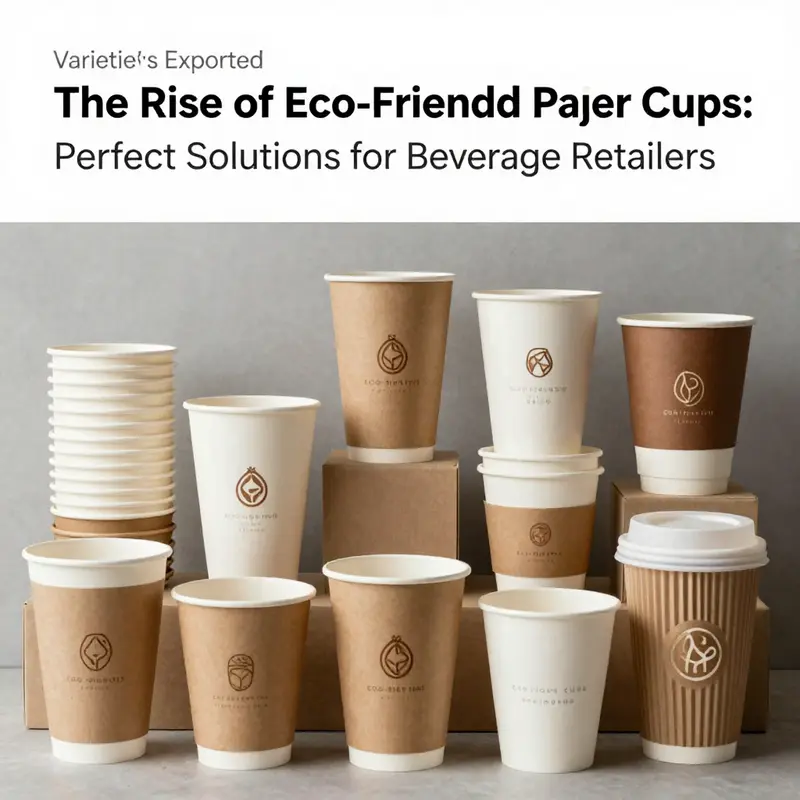
Every culture drinks differently, yet a shared urgency hums beneath the simple act of pouring a beverage into a cup: a demand for cleanliness, safety, and a lighter footprint on the planet. When an exporter specializes in eco-friendly paper cups, the product lineup becomes more than a menu of vessels. It becomes a flexible toolkit that addresses heat, flavor, branding, and end of life considerations across kitchens, cafes, street stalls, and event spaces around the world. The journey from raw pulp to the final, ship ready cup is a carefully choreographed process. It weaves together material science, wet end chemistry, print technology, and export logistics, all under the umbrella of environmental stewardship. In this chapter, we explore the spectrum of cup types that an eco-friendly exporter typically brings to the table, emphasizing how each category serves different beverage needs while remaining faithful to sustainable principles. The goal is not merely to describe products but to illuminate how a coherent portfolio supports customers who are balancing speed, cost, and responsibility in a highly competitive global market.
At the heart of the portfolio lies the double wall insulated design. These cups are built to keep beverages at their intended temperature while protecting the hand from heat, a feature that matters profoundly to takeout services and busy urban environments. A double wall construction, formed by two layers of food grade paperboard with a small air gap, reduces heat transfer and minimizes condensation. The result is a more comfortable experience for customers sipping hot drinks on the go, and it is easier for staff to handle large volumes under pressure. The insulation is not merely a convenience; it translates into real world efficiency. By maintaining the drink’s temperature longer, shops can reduce the need for frequent refills or supplementary packaging, which in turn cuts waste and supports a calmer dining experience for customers. While each producer may have their own internal optimizations, the fundamental value proposition remains consistent: improved user comfort, safer handling, and a practical advantage in high volume service settings. The insulating layer is typically achieved with recyclable paperboard and a food safe barrier that can withstand a range of temperatures. In many cases, a biodegradable or compostable lining is chosen to align with broader environmental goals, even as the outer shell relies on PE coated paperboard to ensure waterproofness and structural integrity. When customers see a cup labeled as insulated, they are recognizing a product that was designed to reduce heat transfer without compromising recyclability or safety.
Beyond insulation, the collection extends to hot and cold beverage cups that are explicitly designed for versatility. These standard format cups honor the reality that many venues serve both hot drinks like coffee and tea and cold beverages such as iced tea, boba, or smoothies. The coatings used in these cups are often selected to strike a balance between barrier protection and end of life considerations. While traditional plastics have given way to more sustainable alternatives in many markets, there is a continued emphasis on coatings that minimize environmental impact without sacrificing performance. PLA based coatings, for example, offer a compostable option that aligns with industrial composting infrastructure in many regions. The result is a cup that performs reliably in crowded settings, resists leakage, and remains compatible with a spectrum of catering operations that seek to reduce plastic reliance. The consumer experience no leaks on the move, no soggy sleeves, and a clean, crisp lid interface becomes a silent driver of brand perception and repeat business.
Another important segment addresses hot and ready to eat meals in standalone formats. Paper soup and instant noodle cups are engineered with stronger bases and tailored liners to handle hot liquids over extended periods. These vessels must withstand heating in some contexts and still protect the consumer from scalding while preventing leakage. A crucial consideration here is the liner material, which is often selected to be compostable or at least readily incinerable in appropriate waste management streams. The design philosophy centers on safety, ease of use, and waste minimization. If a consumer can heat a meal directly in the cup without fear of breakage or leakage, the experience is more seamless, and the chance of spill related accidents drops. The evaluator, whether a restaurant operator or a festival organizer, seeks a product that can stand up to the rigors of a fast paced service environment while supporting a sustainability narrative that resonates with diners.
Color and branding play a powerful, sometimes underestimated, role in the lifecycle of these cups. Colorful and custom branded paper cups are increasingly common in catering, events, and promotional campaigns. The ability to print logos, patterns, and messaging directly onto the cup surface creates a tangible link between a brand’s story and the consumer’s moment of use. The printing process is designed to be robust against repeated hand offs, moisture exposure, and the stresses of transport. The inks used in these processes are chosen for stability, low migration risk, and compatibility with food contact materials. The aesthetic outcome matters not only for the sponsor’s visibility but for the consumer’s perception of the product as environmentally responsible. When branding is paired with sustainability claims such as renewable sourcing, recyclability, or compostability, the overall value proposition strengthens. The cups become more than containers; they become ambassadors for a brand’s environmental commitments. To support clients who want high impact branding without compromising eco friendliness, exporters often provide a range of customization services, from color matching to interior design friendly graphic layouts, while ensuring the entire workflow remains compliant with relevant food contact legislation. For readers exploring such options, the internal category page linked here can serve as a starting point to understand the breadth of surfaces and finishes available: paper cups category.
The portfolio would be incomplete without addressing cups made from 100 percent wood pulp. These cups emphasize natural fiber origins and straightforward recyclability. Wood pulp based cups are positioned as a clear option for customers who want to minimize synthetic content while maintaining structural integrity and barrier properties. The wood fiber approach often pairs with coatings designed to enhance water resistance without compromising compostability in industrial facilities. This alignment with renewable resources appeals to businesses striving for strong circular economy credentials. In markets where consumer education is robust, wood pulp cups can be a compelling storytelling device, illustrating a tangible commitment to forest stewardship and responsible sourcing. Exporters help by providing documentation and certifications that reassure buyers about the chain of custody, the source of pulp, and compliance with international environmental standards. The practical challenge remains balancing performance with end of life outcomes, a balance that increasingly tilts toward compostability and recyclability as infrastructure evolves around the world.
In addition to these core categories, there is a dedicated space for handle equipped cups. The handle design is not merely a convenience; it enhances safety, warmth retention, and user comfort especially for hot drinks or for populations that require a more secure grip. A handle cup can be particularly appealing for to go contexts where users carry beverages through busy spaces or during commutes. When combined with a double wall structure, the result is a cup that remains manageable in a moist environment, resists heat transfer to the fingers, and preserves the beverage’s integrity. The handle option also opens doors for smaller operators who value ease of use and a more confident customer experience. Exporters can offer a range of sizes and configurations to fit different drink types and service formats, from compact hot beverages to larger cold drinks. The flexibility of this product family makes it a versatile component of any sustainable packaging lineup.
All cups share a common foundation: food grade paperboard crafted to meet the stringent hygiene standards demanded by global customers. The waterproof barrier is typically achieved through a PE coating that protects the inner surface from liquid exposure without compromising safety. The use of polyethylene, while being scrutinized in certain markets, remains a practical choice when paired with responsible end of life management. Some exporters are investing in alternative barrier technologies that reduce or replace conventional plastics, aligning with regions that prioritize compostable or fully biodegradable solutions. This evolution reflects a broader market shift toward packaging that can be reliably processed by waste streams in diverse geographies. The combination of a robust outer shell, a dependable inner barrier, and a sealed seam made through heat fusion techniques ensures that each cup maintains its integrity from filling to final disposal. The seam sealing method, in particular, contributes to leak resistance and durability during transport, a critical factor for exporters aiming to minimize returns and complaints while maintaining high service levels.
The logistical side of offering such a diverse collection is not incidental. Export ready packaging, standardized cartons, and clear labeling are essential to move goods efficiently across borders. A minimum order quantity, often around fifty thousand pieces, helps align production runs with factory planning and shipping cycles, reducing per unit costs and optimizing freight usage. Meanwhile, free samples though the buyer handles shipping give buyers tangible confidence before committing to large orders. The export ready packaging strategy is designed to streamline customs clearance, minimize damage in transit, and support the buyer’s own distribution networks once the cups arrive at their destination. All of these operational elements underscore that the product is not simply a cup but a complete solution that integrates design, materials, branding, and logistics into a coherent value proposition.
Behind the scenes, trusted exporters adhere to rigorous quality controls and audit processes. The most reliable producers cultivate relationships with audited manufacturers who demonstrate consistent adherence to environmental and safety standards. Certifications and documentation accompany shipments to reassure buyers that the cups comply with international requirements for food contact, hygiene, and waste management. For customers who operate in markets with strict sustainability criteria, this assurance is as valuable as the cup’s performance itself. The interplay between product design and compliance becomes a defining feature of a modern eco friendly exporter’s capability. It signals to buyers that the supplier is not merely a source of material goods but a partner in achieving broader environmental and social objectives.
A crucial and practical dimension of this narrative is how the portfolio supports the myriad contexts in which beverages travel—from quick service cafes and street vendors to large scale catering and corporate events. The choice among insulated, standard hot cold, soup or noodle cups, branded options, and wood pulp or handle variants is rarely about a single criterion. It is about balancing temperature stability, safety, branding impact, end of life considerations, and cost. For example, a consumer attending a festival may encounter a quickly consumed hot drink in an insulated cup that resists leaks and allows for easy disposal within a composting stream where available. A cafe seeking repeat orders might opt for a branded cup that reinforces its environmental commitments while delivering a comfortable drinking experience for customers who stay in the zone after filling up. A catering service presenting a multi course event could rely on either wood pulp or compostable cups to illustrate a transparent sustainability story, paired with color and print that capture the brand’s essence without overwhelming the sensory experience of tasting the beverage. In all these cases, the exporter’s catalog becomes a bridge between practical performance and environmental responsibility, transforming packaging choices into tangible demonstrations of corporate values.
Ultimately, the spectrum of cup types reflects a broader truth about the market for eco friendly packaging: demand is driven not only by performance but by the narrative around use, reuse, and end of life. The exporter navigates this by offering options that are recyclable, compostable, or at least more sustainable than traditional alternatives, while maintaining efficiency in production and reliability in service. The result is a robust, adaptable portfolio capable of meeting the needs of diverse buyers—from a small cafe experimenting with branding to a multinational food service company under pressure to reduce its plastic footprint. In this way, cups cease to be mere containers and become instruments of environmental stewardship and brand storytelling. For researchers, practitioners, and buyers curious to explore more examples of how a modern cup portfolio is organized and presented, a broad catalog of paper cup options is available to browse: https://cupbowlpack.com/product-category/paper-cups/.
External resources and further reading can deepen understanding of the standards underpinning these products and provide a broader view of global market expectations. For those seeking additional context on the ecosystem of eco friendly cups, one resource worth consulting is the supplier information page that highlights the range of cups and the environmental commitments involved in their production. More details can be found at https://www.goodpak.com/.
Marrying Brand Identity to Green Materials: Customization as the Engine of Eco-Friendly Paper Cup Exports
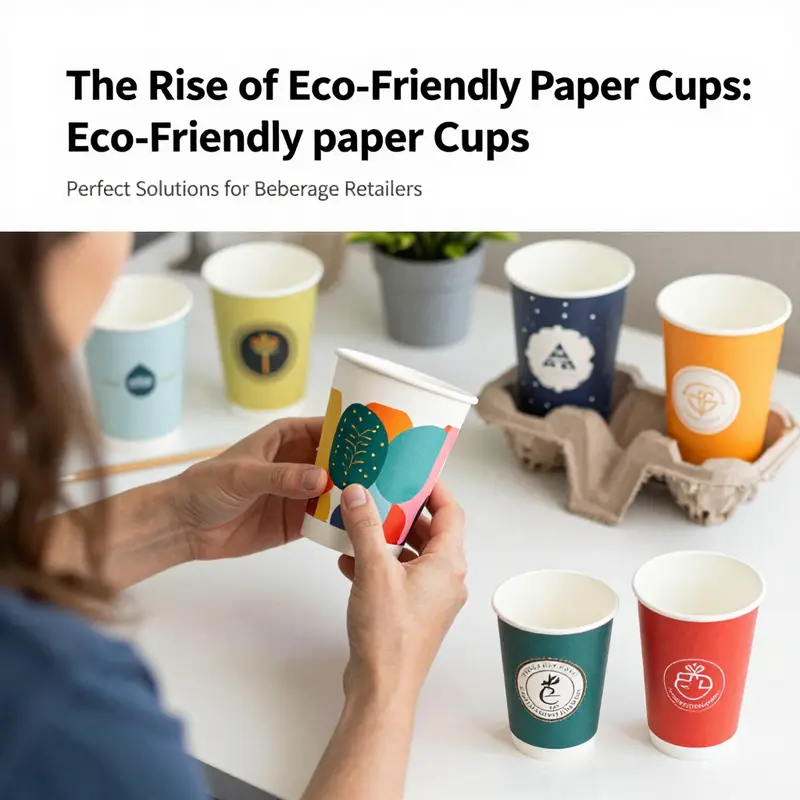
In eco-conscious packaging, customization is not a flourish; it is the core strategy by which exporters translate sustainability into market impact. The journey of an eco-friendly paper cup from factory floor to global storefront hinges on tailoring form, function, and presentation to buyers and end users. Choices span practical design decisions—size, wall construction, and coating—alongside branding elements such as logos, colors, and patterns. When these decisions align with environmental credentials, the product communicates a promise to the consumer and a commitment to responsible production that resonates across regulation and the economics of international trade. Customization becomes the bridge between a supplier’s capabilities and a buyer’s need for differentiation in crowded markets.
At the heart of customization lie tangible options that shape performance and brand voice. Exporters offer a range of sizes: 8, 10, 12, 16, and 20 ounces, with the possibility of custom dimensions for campaigns. This flexibility responds to foodservice realities and regional preferences for compact versus larger cups. The sizing conversation evolves into broader questions about printing, packaging, and sustainability, forming a decision matrix exporters navigate with care.
Printing customization is another pillar of value. Custom logos and full-color designs elevate a plain cup into a portable brand display. A design system conveys color psychology, seasonal campaigns, and environmental messages in a compact medium. Printing interacts with material and coatings; inks and finishes must maintain legibility while respecting recyclability and compostability targets. The result is a family of cups that preserves design fidelity through heat, moisture, and handling, without undermining the environmental story.
Cup design offers a spectrum of structural choices. Single-wall remains common for some cold beverages and budget-conscious uses, while double-wall insulation supports hot drinks and comfort. Double-wall cups add insulation, improve grip, and provide more surface area for branding while signaling premium quality. This choice becomes a lever for loyalty and responsible messaging when durability and safety matter.
Material composition is foundational. Suppliers emphasize 100% biodegradable paper or wood-based pulp, balancing sustainability with production realities and coating compatibility. The PE coating provides waterproofing but must be considered alongside recyclability and compostability in different markets. In practice, heat-fusion seam sealing ensures structural integrity under heat and transit. Together, material choices and processes create a sustainable yet reliable product.
Packaging can reinforce export readiness and brand narratives. Standard cartons support cross-border efficiency, while buyers may request packaging that aligns with regional standards or protects against moisture. With emphasis on reducing waste, some exporters explore compact, stackable configurations or reusable packaging. Packaging thus communicates care for the lifecycle of the cup and the supplier’s environmental commitments.
The business mechanics around customization matter as much as design. Exporters commonly offer favorable payment terms, such as T/T, to align with buyers’ cash flow. This flexibility complements product options by enabling production scheduling aligned with market cycles and promotions. When buyers evaluate suppliers, customization depth and financial reliability can be decisive, especially for brands testing new regional markets.
MOQs also shape decisions. A common baseline of 50,000 pieces reflects scale economics for efficient production and transport. It can encourage larger campaigns or pilot programs that gradually scale. Free samples with buyer-borne shipping provide a mechanism to validate fit before large runs, helping buyers test materials, print fidelity, and ergonomic performance.
From the buyer’s perspective, customization is strategic for market entry and brand signaling. Regions with strong sustainability expectations reward biodegradable or recyclable materials, double-wall insulation for comfort, and culturally resonant motifs. Exporters translate those expectations into feasible specs, production-ready files, and end-to-end quality processes that ensure a consistent experience from sample to shipment. The integration of design intent with manufacturing discipline creates a reliable rhythm of delivery, keeping buyers confident as order volumes vary with seasonality. Customization thus becomes a continuous capability that aligns product evolution with consumer preferences, regulations, and environmental commitments.
For readers mapping options to real-world sourcing, consider how sizes, wall designs, materials, printing, and packaging come together to form a coherent value proposition. The range of options spans service environments from quick-turn cafes to branded events, while materials align with environmental targets. Printing and packaging translate brand values into tangible cues for consumers, turning disposable tableware into a storytelling medium. Payment terms, MOQs, and sampling policies bind these elements into repeatable, scalable relationships, enabling pilots that mature into durable export programs.
To visualize how these ideas translate into contracts, explore the catalog for more cup options that underpin customization in eco-friendly packaging. A practical note on environmental claims should accompany every design decision, ensuring the cup travels with a credible sustainability narrative. The broader implication is clear: exporters who invest in flexible production, transparent communication, and scalable quality assurance position themselves to lead in a market that defines success by sustainability alongside performance. Brands—from local cafés to multinational platforms—seek partners who deliver compliant, reliable cups and a shared commitment to reducing waste, enabling recycling, and supporting responsible consumption. In this sense, customization is the lever by which eco-friendly cup exporters connect innovation with responsibility, enabling commerce that respects the planet while supporting growth. As markets evolve and regions adopt stricter packaging standards, the ability to tailor cups to fit local tastes, regulations, and brand stories will remain a defining feature of export success.
Raising the Bar: How Sustainability Standards Redefine Eco-Friendly Paper Cup Exports
In the crowded landscape of food service packaging, the rise of eco-friendly paper cups has shifted from a novelty to a baseline expectation. Exporters who long relied on simple convenience are now measured by the rigor of sustainability standards that govern sourcing, production, end-of-life management, and even the footprint embedded in each shipment. This evolution is not merely about ticking boxes; it is a fundamental shift in how the industry builds trust with buyers, how it assigns accountability for waste, and how it aligns with the environmental goals of nations that import these products. At the center of this shift is a set of interconnected criteria that exporters must harmonize: responsible material sourcing, proven biodegradability or recyclability, transparent life-cycle assessments, and compliance with extended producer responsibilities. Taken together, they form a framework that not only validates product claims but also elevates the strategic value of the exportable cup in an increasingly regulated, consumer-conscious market.
Material sourcing stands as the first and perhaps most visible pillar of credibility. In the best practice scenarios, the paper pulp used to manufacture cups originates from forests managed under rigorous stewardship standards. Certification schemes, notably the Forest Stewardship Council (FSC), have become a distinguishing feature in the competitive export landscape. FSC certification signals that the pulp debt is backed by forests that protect biodiversity, respect local communities, and uphold high social and environmental standards. The practical implication for buyers is straightforward: material that carries FSC credentials reduces supply-chain risk and reinforces a commitment to responsible production. Exporters who can present FSC-certified pulp as part of their supply chain often position this as a differentiator in markets where consumers and regulators scrutinize claims of sustainability. The emphasis on certifiable sourcing also responds to the demands of global retailers and foodservice operators who seek auditable provenance for every component of the packaging they use.
Beyond certification, many exporters are turning to innovations in the composition of the cups themselves. The modern eco-friendly cup often incorporates a combination of recycled paper fibers and responsibly sourced virgin pulp, balancing performance with environmental considerations. Some suppliers highlight the use of virgin pulp alongside certified recycled content when presenting a product’s eco-profile. This nuance matters because it affects both the ballistics of the cup—whether it can withstand hot liquids, whether it maintains rigidity in transit—and its end-of-life pathways. For instance, certain structural designs rely on treated paperboard that preserves moisture barriers while maintaining compatibility with recycling streams and industrial composting facilities where appropriate. The industry is also moving toward non-petroleum-based surface chemistries and water-based inks that minimize hazards for recycling processes. In this context, the discourse around certifications expands beyond FSC to include imple mentation details like PE coatings and heat-sealed seams that preserve integrity but do not derail recyclability; a well-implemented PE layer, when paired with proven recycling infrastructure, can still fit into responsible waste management systems.
Extended Producer Responsibility (EPR) regulations further anchor the credibility of eco-friendly cups in markets across Europe and beyond. In several European jurisdictions, producers are held accountable for the post-consumer fate of the packaging they introduce to the market. The practical upshot for exporters is the need to demonstrate that their products are compatible with end-of-life management regimes—whether through mandatory take-back schemes, financing for recycling programs, or clear specifications about disposal pathways. When exporters present EPR certifications or compliance statements, buyers gain assurance that the entire lifecycle of the cup has been considered, from cradle to grave. The alignment with EPR is especially salient for products that feature folding lids or similar attachments, which can complicate disposal if not designed with end-of-life in mind. In such cases, the packaging’s composition, the ease of separation of components, and the availability of industrial composting or recycling facilities become explicit decision criteria for purchasers.
From a performance perspective, sustainability standards increasingly intersect with functional metrics. Buyers no longer accept trade-offs between environmental friendliness and user experience. Instead, there is a demand for cups that deliver superior temperature retention with less material weight, translating into leaner logistics and lower energy costs across the supply chain. It is not unusual to encounter performance claims such as improved insulation that reduces the need for additional sleeves or packaging, thereby diminishing overall resource consumption. Lightweight designs—often up to 20 percent lighter than traditional cups—contribute to lower transportation emissions, a factor that resonates with multinational buyers seeking to tighten value chains and reduce carbon footprints. At the same time, manufacturers are adopting plant-based inks and offset printing techniques to minimize toxic inputs and to align with sustainability narratives that emphasize responsible branding without sacrificing readability or color fidelity.
A holistic approach to sustainability also entails robust end-of-life considerations. The conversation has shifted from merely describing a cup as “biodegradable” to asking how and where it degrades. Biodegradability can mean industrial compostability in a controlled facility or degradability under specific environmental conditions that may not always be present in consumer waste streams. Recyclability, meanwhile, hinges on the compatibility of the cup with existing paper recycling processes and on the ability of coatings to be separated from fibers or dissolved during repulping. In this context, the presence of PE coatings, while facilitating waterproofing and heat sealing, requires careful coordination with recycling facilities that can handle such materials. Exporters who can articulate precise end-of-life pathways, supported by relevant certifications and facility guidelines, provide an added layer of assurance to buyers and to local regulators who monitor waste in the places where cups are consumed.
Branding and customization are no longer at odds with sustainability. Shaped by consumer expectations and regulatory disclosures, modern packaging providers offer customization techniques that harmonize design with ecological responsibility. Offset printing, for instance, enables vivid branding while employing inks derived from plant-based sources and formulated to minimize wash residues or contamination in recycling streams. The ability to customize—whether through branding, color schemes, or patterns—without compromising the integrity of the cup or its recyclability has become a practical demonstration of how a supplier can deliver value in a responsible manner. For buyers, customization means more than a logo; it is a signal of alignment with corporate sustainability goals and with the broader narrative of responsible consumption that their customers increasingly demand. In this sense, the most reputable exporters present themselves as full-package partners: they offer not only the product but also a transparent story about materials, processes, and end-of-life considerations that can be woven into a buyer’s sustainability leadership communication.
The case of a leading exporter of eco-friendly cups illustrates how these principles translate into real-world offerings. The company emphasizes products such as double-wall cups designed for both hot and cold beverages, which exhibit strong insulation properties and help reduce the need for added sleeves or wraps. Its custom printed cups enable brands to express identity while maintaining food-grade safety and a water-resistant barrier. The handle cup variants, including compact sizes like 7 ounces, address ergonomic and safety considerations for hot beverages, providing grip advantages that reduce accidental spills. A notable emphasis on 100 percent wood pulp cups showcases a commitment to natural fiber sources that are thoughtfully aligned with recycling streams and compliance frameworks. All of these products are manufactured with food-grade paperboard and integrated with polyethylene coatings to ensure waterproof performance, while a heat fusion seam sealing process secures structural integrity under pressure and hot liquids. The features reflect a deliberate design to balance performance with environmental stewardship. Importantly, such exporters also support the logistics dimensions of sustainable trade. They accommodate small-batch orders with a mindful minimum quantity and extend the courtesy of free samples—though buyers bear shipping costs—while packaging is standardized for export to facilitate international transportation. In practice, these aspects translate into a credible export profile: a supplier capable of meeting diverse market requirements without compromising environmental values or supply reliability.
The narrative of sustainability in export markets is not a solitary tale of a single company; it is a market-wide transformation underpinned by certifiable practices, transparent supply chains, and measurable environmental outcomes. For buyers, the value proposition rests on a combination of trust and convenience: a supplier who can point to FSC-certified pulp, outline EPR compliance, demonstrate performance metrics that reduce overall resource use, and provide designs that enhance branding without creating waste. This is no longer a niche demand; it is the baseline expectation for durable partnerships across borders. In this context, the strategy for exporters like the one described involves a careful orchestration of certificate management, technical specifications, and customer education. They must articulate how each product aligns with recognized standards, how materials can be traced through the supply chain, and how end-of-life options are integrated into the product’s lifecycle. Where possible, they should also illustrate how innovations in printing, coatings, and structural design contribute to lower carbon intensity in both production and distribution.
For readers exploring the broader ecosystem of sustainability in paper cup exports, a practical touchstone lies in the ways buyers evaluate certifications and supply chain transparency. Certifications such as FSC are not merely decorative; they serve as verifiable signals that define responsible procurement. End-of-life statements and EPR compliance documents provide the legal context that governs post-consumer responsibility. When exporters combine these assurances with performance data—demonstrating, for example, that a cup retains temperature more efficiently or that a lighter design translates into fewer emissions during transport—their value proposition becomes more compelling. Such a blend of certification, performance, and transparency is what differentiates credible suppliers in a market where buyers increasingly demand rigor and accountability as part of their sustainability narratives.
From a practical standpoint, buyers should also consider how readily a supplier can support ongoing improvement. A credible exporter will not only meet current standards but will also engage in continuous improvement initiatives that anticipate evolving regulations and consumer expectations. This includes activities such as lifecycle assessments to quantify environmental impacts, ongoing material sourcing audits, and the exploration of alternative coatings or bio-based adhesives that maintain barrier properties without complicating recycling streams. In the end, the exporter’s sustainability program becomes a living framework—responsive to new evidence, adaptable to different regulatory contexts, and aligned with the evolving language of corporate responsibility.
For readers who want to see how these themes translate into the marketplace, the current dynamics among eco-friendly cup suppliers reveal a convergence between technical capability and accountability. Some listings emphasize FSC-certified pulp and sustainable sourcing, while others highlight end-of-life compliance and recycling-friendly design features. This convergence signals a broader recognition: in a global market, credibility is earned through a coherent, auditable story that links raw materials, manufacturing processes, product performance, and post-consumer management. As buyers seek partners who can deliver this holistic value, exporters who invest in certification programs, transparent supply chains, and robust environmental performance metrics will be best positioned to grow sustainably and responsibly in the decades to come. The resulting market reality is that sustainability is not a separate feature; it is an integrated capability—the backbone of exports that earns trust, reduces risk, and supports brand value across borders.
To explore related collections that illuminate how these themes are presented within broader product categories, you can browse focused resources such as the COFE-CUP blog’s paper cups category, which demonstrates how paper cup ranges are structured and described in ways that emphasize durability, recyclability, and design versatility. See: paper cups category.
External reference: For a contemporary view of market-certified, biodegradable eco-friendly cups with folding lids and related compliance considerations, see the external resource at https://www.alibaba.com/product-detail/Biodegradable-Eco-Friendly-Paper-Cups-with_1600873498479.html?spm=a2700.187179.0.0.7e5a4e3cVrTgOu.
Global Demand Dynamics: How Eco-Friendly Paper Cup Exports Align With a Green Packaging Economy

The trajectory of eco-friendly paper cups is no longer a tale of isolated novelty—it’s a reflection of how modern economies reconfigure demand around responsibility, resource efficiency, and resilient supply chains. As environmental consciousness deepens and governments tighten the rules on single-use plastics, buyers across cafes, quick-service restaurants, corporate events, and institutional catering increasingly seek packaging that performs as well as it performs for the planet. In this environment, exports of eco-friendly paper cups are less about a niche product and more about a strategic conduit for sustainable procurement. The numbers reinforce the shift. Projections indicate that the global market for paper cups will reach about five and a half million tonnes in 2026 and will continue its expansion to roughly six and a half million tonnes by 2032, underscored by a steady compound annual growth rate of around 3.5 percent. This growth is not evenly spaced; it concentrates in regions where urban density, consumer culture around takeout, and regulatory discipline intersect. North America, Europe, and parts of Asia-Pacific stand out as engines of demand, where businesses embrace responsible packaging as a business differentiator and a compliance necessity as much as a marketing message.
The push toward greater sustainability depends on material science, consumer behavior, and policy design that rewards or requires greener choices. Wood pulp remains a foundational feedstock for many eco-friendly cups, chosen for its renewability and relative ease of integration into established recycling streams when designed correctly. Yet the market is also experimenting with variants that reduce footprint further, including plant-based bioplastics and coatings that align more readily with composting programs in mature waste-management systems. The appeal of fully recyclable or compostable cups is strongest in markets that have built, or are rapidly building, the infrastructure to collect, sort, and process used packaging. In this sense, the decision to source eco-friendly cups is inseparable from the broader logistics of waste handling, municipal programs, and consumer education about proper disposal. For exporters, this means that success hinges not only on product performance but also on the credibility of environmental claims, the clarity of labeling, and the alignment of manufacturing practices with recognized standards.
The material options that dominate the field are telling reflections of regional preferences and environmental policies. Natural wood pulp cups, lauded for their renewable origin and compatibility with many recycling streams, have become a strategic baseline for many buyers seeking verifiable sustainability. At the same time, there is growing interest in alternatives derived from plant-based feedstocks, including bioplastics that offer compostability advantages under appropriate conditions. The choice between these options often comes down to the interplay between supply reliability, composting infrastructure in the destination market, and cost considerations. In regions with robust municipal compost programs, plant-based formulations may enjoy a discriminatory edge, while in areas where recycling systems are highly developed, a well-designed recyclable cup with a clean polyethylene or biopolymer lining may fulfill the dual goals of performance and end-of-life practicality. The distinction matters because the end life of a cup is not simply a technical outcome; it is a signal about a company’s environmental stewardship and a driver of consumer trust.
The polyethylene lining embedded in many solutions, while essential for waterproof performance, presents a recycling conundrum that buyers weigh carefully. Recycling facilities vary in their ability to handle lined cups, and gaps in collection systems can complicate the path from cup to second life. This challenge nudges both producers and buyers to pursue compositions and coatings that harmonize with local waste streams. It also nudges the market toward certification schemes and eco-labels that provide assurance about sourcing, processing, and the ultimate fate of the product. For exporters, these dynamics translate into meaningful go/no-go criteria when negotiating market entry. It becomes prudent to couple product design with transparent supply-chain documentation, including fiber origin, coating chemistry, and end-of-life scenarios. In practice, this combination helps customers navigate regulatory landscapes and strengthens their marketing narratives around sustainability.
From a macroeconomic perspective, the expansion in demand is linked to growth in the food-service sector, including takeout and delivery. The pandemic era accelerated the shift toward convenient, climate-conscious packaging, a trend that endures as consumer routines consolidate around convenient, high-quality service. The rising demand for customization adds another layer of complexity and opportunity. Cafés and event organizers increasingly want cups that display branding, colors, and messages that resonate with their audiences. Custom printed cups allow a business to tell a story at the point of consumption, reinforcing brand identity while signaling environmental commitment. In practice, this means exporters that can combine scale with customization—and do so with consistent quality—will have an edge in markets where competition is intense and margins depend on value-added features rather than price alone.
The regulatory backdrop is a crucial driver of export strategy. The European Union and many other jurisdictions have introduced or are strengthening bans and restrictions on single-use plastics. This regulatory wave creates a predictable demand pull for alternatives that meet both functional requirements and environmental expectations. It also encourages a design mindset that reduces waste, improves recyclability, and makes the end-of-life step more straightforward for consumers. For exporters, this translates into a market landscape where product compliance is not a mere afterthought but a core capability. Achieving alignment across certifications, such as those related to fiber origin, coatings, and manufacturing emissions, becomes a competitive differentiator that buyers actively seek when committing to long-term supplier relationships.
In the practical terms of export strategy, these dynamics favor a multi-pronged approach. First, there is a clear incentive to diversify the material platform while maintaining strict standards for safety and performance. Wood pulp-based cups provide a strong baseline in many markets, but buyers in regions with aggressive circular-economy strategies may also prefer cups that are explicitly designed for easy composting or higher recyclability. Second, branding and customization capabilities are not decorative add-ons but central components of value proposition. The market is increasingly willing to pay a premium for cups that carry distinctive branding while still meeting environmental expectations. Third, there is substantial value in demonstrating supply-chain integrity through certifications, audits, and transparent traceability. When buyers can verify the fiber origin, the coating chemistry, and the end-of-life options, their procurement decisions become more confident and scalable.
Within this broader frame, it is important to consider how exporters position themselves in relation to the packaging ecosystem. The expansion of eco-friendly solutions is not a siloed movement; it runs through a network of categories that includes cups, lids, sleeves, and other disposable tableware. For buyers seeking coherence in their sustainability programs, options that sit within a unified packaging strategy become compelling. This is where the wider packaging family, including paper packaging in general, begins to inform purchasing decisions for cups. Buyers may explore cross-category synergies, such as designing a packaging line that uses uniform coatings and fiber sources across cups, plates, and boxes. To further illustrate this, consider the broader packaging landscape and the potential to align with a category that echoes the same environmental commitments as cups themselves. For those exploring this broader horizon, the paper-packaging category provides a convenient, integrated reference point: explore its offerings to understand how cups can sit within a consistent sustainability narrative paper-packaging category.
Looking ahead, the market will reward exporters who can demonstrate resilience and adaptability amid evolving consumer expectations and regulatory standards. The entrance of new, more efficient manufacturing technologies will gradually reduce the cost curve for sustainable cups, making them more accessible to a wider set of buyers. Yet the transition remains capital-sensitive. Investments in pulp sourcing, coating innovations, and waste-management partnerships require careful planning and credible ROI assessments. Exporters that pair capability with transparency can build durable partnerships with buyers who have long-term packaging strategies rather than just short-term needs. In this sense, success depends on forging relationships with customers who value reliability, traceability, and the social license to operate as much as price competitiveness.
For the cultures and economies that are expanding takeout culture and hospitality services, the demand for eco-friendly cups will continue to grow alongside the appetite for brands that communicate a clear environmental stance. This is not merely a trend but a structural shift in how businesses think about packaging. It invites exporters to design products and processes that align with the principles of resource stewardship, waste reduction, and circular-economy thinking. The opportunity lies in offering a compelling package: cups that perform reliably in hot and cold beverages, can be customized for branding and campaigns, and can be integrated into end-to-end sustainable packaging solutions. When taken together, these elements create a durable value proposition that can withstand the cycles of global trade and the ebbs and flows of consumer appetite for green choices.
External reference
External resources continue to shed light on the evolving market. For readers seeking a broader, data-driven perspective on market size, growth rates, and regional dynamics, the Industry Reports study provides up-to-date projections and analysis that complement the narrative here: https://www.industryreports.com/industry-reports/paper-cups-market-1852
Note for buyers and collaborators: the landscape described here underlines the importance of choosing partners who can deliver not only on product performance but also on environmental credibility and logistical reliability. As the market grows, the ability to scale while maintaining transparent practices and effective communication will separate leaders from followers. For those who want to explore related packaging options in a cohesive way, the wider packaging ecosystem offers fertile ground for integrating sustainable choices across products and campaigns. In this sense, the dialogue between cups and packaging is not merely about conversion rates or box counts; it is about building a sustainable practice that resonates with consumers, retailers, and regulators alike, and that travels well across borders with consistent quality and responsible stewardship.
Final thoughts
Choosing eco-friendly paper cups entails understanding the types available, the added value of customization, and adherence to sustainability standards. As the demand for greener solutions grows, integrating these eco-friendly products can enhance your brand’s reputation while contributing to a healthier planet. Making informed choices today can positively influence your business’s future within an increasingly eco-conscious market.