
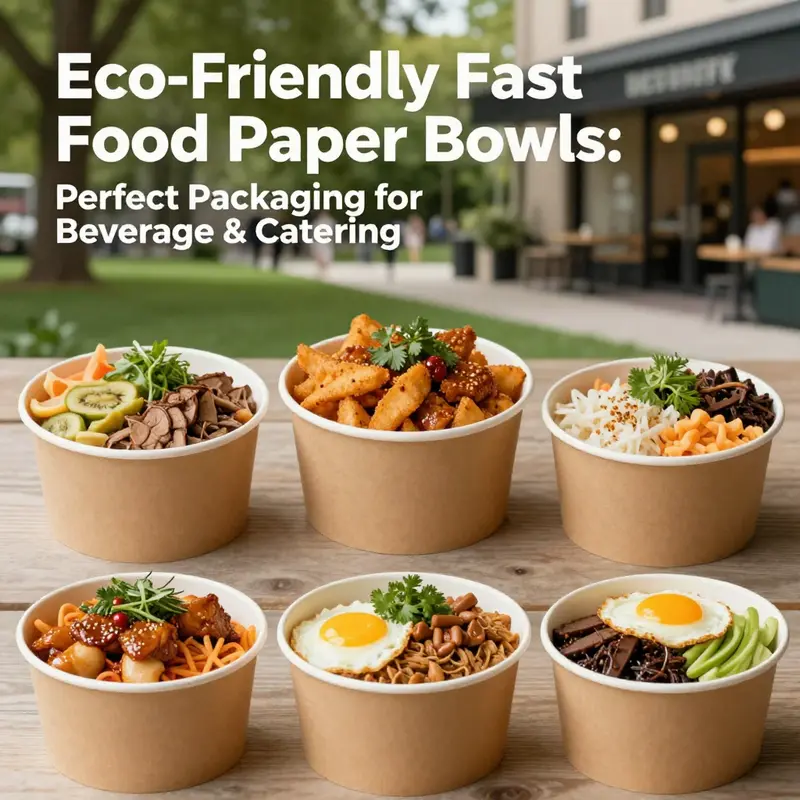
Fast food paper bowls have emerged as a favored choice for diverse businesses like bubble tea shops, food trucks, restaurants, and catering services. These eco-friendly options are not just practical; they also resonate with increasingly environment-conscious consumers. As the demand for sustainable packaging solutions grows, understanding how customization, environmental impact, market trends, material specifications, and various applications work in tandem can help businesses make informed choices. Each chapter delves into these key aspects to offer a holistic view of fast food paper bowls, positioning them as an essential component in the catering and fast-food industry.
Brand on the Bowl: The Role of Customization in Fast-Food Packaging
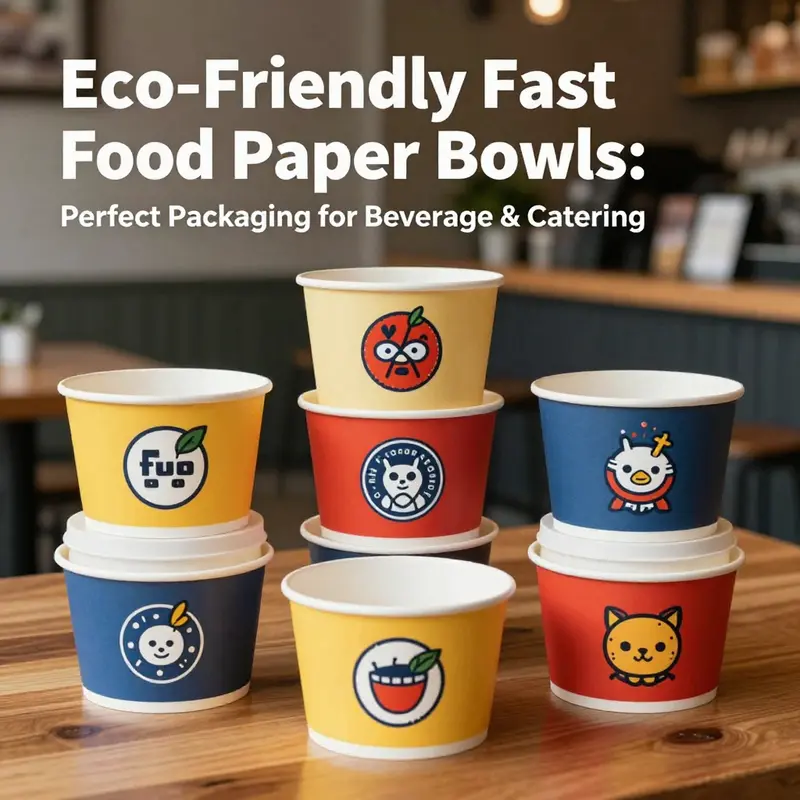
Customization turns the paper bowl into a brand touchpoint. In fast-food, the bowl is more than a container; it is a portable interface between kitchen and customer. Design decisions—materials, coatings, printing—shape safety, sustainability, and perception. Branding on the bowl reinforces trust and recall whether the meal is eaten in-store, on the go, or at home. From eco-friendly fibers to barrier coatings, the bowl must perform while signaling a brand’s values. As bowls adapt to menus and service models, they enable built-in portions, secure lids, and easy stacking, which improve operational efficiency and reduce waste. The visual language—color, logo, typography, texture—extends the restaurant’s identity beyond the storefront into social media posts and user-generated content. End-to-end design collaborations between brands and suppliers, including ODM/OEM partnerships, help deliver packaging that aligns with safety standards, recyclability, and end-of-life considerations. Finally, customization can drive loyalty when the packaging tells a story of sustainability and care. Practical steps include: choose materials with a clear sustainability story; select a shape that supports menu logic and logistics; decide on a coating that preserves food integrity without hindering recyclability; plan printing that balances legibility with brand voice; design lids and seals for easy use yet reliable containment; and map the customer journey from purchase to disposal to ensure the packaging remains a coherent part of the dining experience.
null
null
Rising Currents in Paper Bowls: Market Trends, Standards, and the Wholesale Pipeline for Fast-Food Packaging
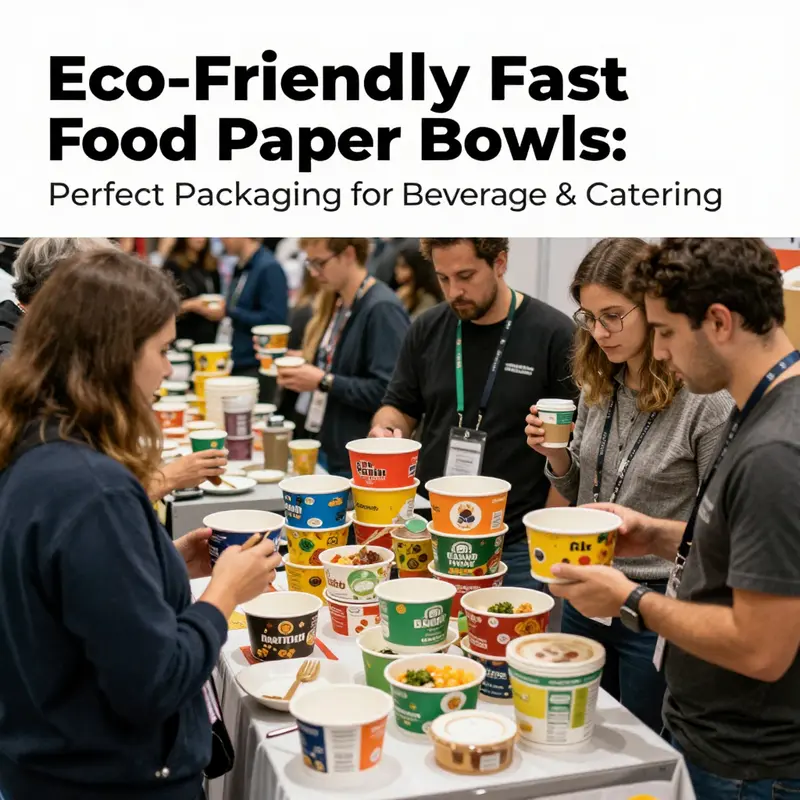
The global market for disposable paper tableware is expanding, with fast food paper bowls sitting at the heart of takeout culture. In the current landscape, the appeal of paper bowls goes beyond convenience; it is increasingly tethered to environmental responsibility, regulatory clarity, and the evolving expectations of both operators and diners. Market intelligence from early 2026 shows a steady ascent in demand for biodegradable and compostable paper bowls, a shift that mirrors broader consumer and policy-driven forces shaping packaging across food service, retail, and away-from-home dining. This momentum is not merely a reflection of trendiness; it is grounded in measurable growth. The global paper pulp disposable tableware market has begun to look structurally different from a decade ago, with continued expansion expected as standards mature and adoption widens. In this context, fast food bowls are a critical entry point for brands migrating toward more sustainable, brandable, and reliable packaging options.
The core drivers of this evolution are threefold: environmental compliance, functional performance, and the strategic value of customization. Environmental compliance is unfolding in a way that compels businesses to seek alternatives to traditional plastics. In Europe, North America, and several Asian markets, regulatory actions against single-use plastics are accelerating. Paper bowls, particularly those built from kraft or recycled fibers, can be designed to meet recognized compostability or biodegradability standards and align with programs such as EN 13432 or ASTM D6400 where local facilities permit. This regulatory clarity provides a path to substitution and supports circular economy goals.
Beyond regulatory alignment, the functional demands of fast food applications are reshaping product design. Paper bowls now emphasize water and oil resistance, essential for soups, noodle dishes, salads with dressing, and other moist meals. Coatings are increasingly plant-based or wax-derived, chosen to balance barrier performance with end-of-life considerations. The result is a dependable barrier that keeps leaks contained in transit while enabling composting or recycling where facilities exist. This upgrade expands the range of dishes that can travel in a single container, enabling tighter SKU rationalization without compromising service quality.
Branding and customization have become practical imperatives as well. The packaging surface is a canvas for identity, trust, and consumer recall. Custom printing, embossing, and tactile finishes are widely available on a broad spectrum of bowls, reinforcing perceived value and supporting campaigns and seasonal menus. For many operators, tailored packaging translates into measurable marketing benefits and can help justify higher unit costs through improved engagement and repeat purchases.
The supply chain considerations around bowls are equally telling. A growing portion of demand favors suppliers with local warehousing and rapid fulfillment. Nearshoring and domestic stock reduce lead times, lower transport emissions, and cushion buyers against raw material volatility. The value proposition now includes speed, reliability, and the ability to mix small orders with high quality.
China and Southeast Asia remain central to the wholesale ecosystem for fast food bowls. The region’s scale and export channels support a robust market, with manufacturers offering high-volume capacity and food-grade certifications along with packaging solutions beyond bowls. The supplier landscape blends large packaging groups with specialized paperware producers, all integrated into a broader supply chain.
For buyers, wholesale platforms that connect manufacturers offer flexibility for testing designs, sample runs, and short-run pilots. The economics vary, with modest minimums in some cases and larger volumes in others, while the emphasis remains on variety, coatings, and branding options.
In considering total cost of ownership, buyers weigh not only price but also sustainability credentials, coating safety, and end-of-life pathways supported by local facilities. This blended approach—standard core products with selective customization—helps maintain consistency while enabling campaigns and store-specific differentiation.
To close the loop, industry analyses and market intelligence reports are valuable for assessing market size, regional distribution, and competitive dynamics. External references can help operators evaluate future supply strategies and supplier footprints as they expand capacity, shift toward sustainable materials, or diversify sourcing.
In sum, the fast food paper bowl category sits at a confluence of environmental policy, product performance, and strategic branding. The next chapters will explore regional translations of these forces, investments in sustainable technology, and how operators configure packaging portfolios that deliver on taste, safety, and story as much as on economics and logistics.
Heat, Hold, and Handle: The Material Science Behind Fast Food Paper Bowls
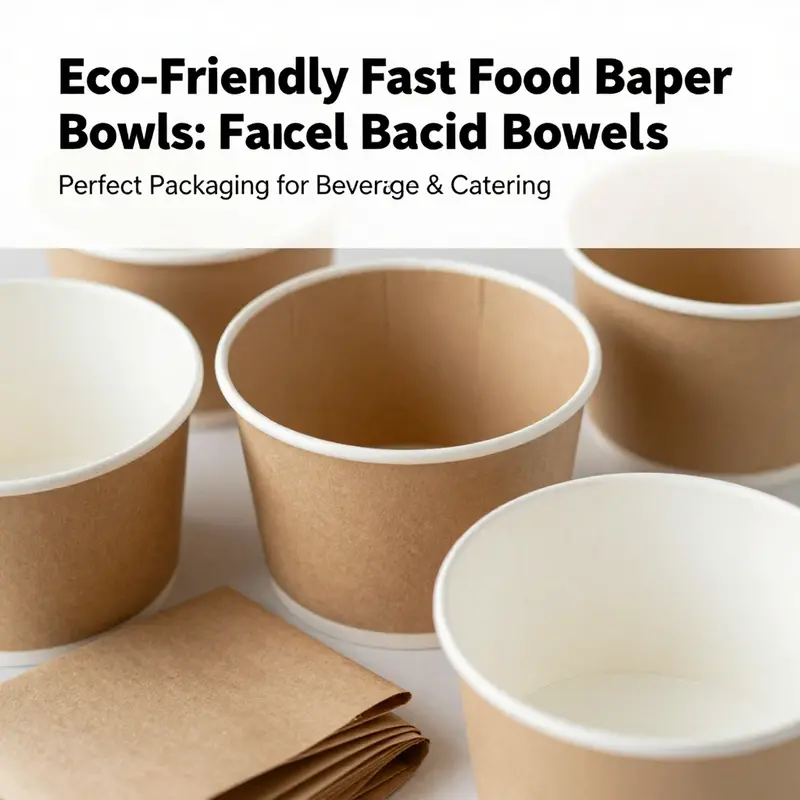
The cardboard corner of a takeaway meal often goes unnoticed, yet the material choices behind fast food paper bowls shape every bite, every transport, and every decision about sustainability. What begins as a simple circular or square vessel carrying noodles, soups, salads, or sandwiches unfolds into a careful negotiation among strength, insulation, grease resistance, and end-of-life practicality. At the core, these bowls rely on a trio of base materials—kraft paper, paperboard, and bagasse—each selected for properties that respond to a specific culinary context and service model. The base structure can be a single layer of sturdy paperboard or a more elaborate multi-layer construction that creates an air gap between walls. This air gap is not decorative; it functions as a passive heat exchanger barrier, slowing heat loss and making hot foods more comfortable to carry without external sleeves or sleeves that need frequent replacement. In an industry where minutes matter and customers demand convenience, such insulation translates into tangible gains in user experience, ensuring that a hot soup remains discernibly hot after the journey from kitchen to curbside, and that a salad dressed in sauce won’t leak through the vessel walls before it reaches the mouth of the diner.
Coatings further refine performance, and here the trade-offs become a study in materials science and waste infrastructure. PLA, a plant-based bioplastic derived from renewable resources, often lines the inside of these bowls to deliver leak resistance and oil absorption without depending on traditional fossil-based plastics. PLA’s compostability is attractive on paper, especially for brands aiming to align with circular economy goals. Yet the practical reality depends on the local waste stream: many facilities require industrial composting behind closed doors to realize true end-of-life benefits. In contrast, PE coatings deliver durability and a robust moisture barrier, which remains unmatched in certain cold- or grease-heavy applications. The catch with PE is that, while effective for containment, it complicates recyclability, particularly if the coating remains attached to the paper substrate during the recycling process. The result is a nuanced balance: for some operators, the faster, cleaner disposal of a PE-coated bowl is outweighed by the longer-term goal of a clean recycling stream or compostable options, and for others, durability and leak resistance may take precedence, particularly in high-volume or high-velocity service contexts.
Sustainability also has a material face in the form of bagasse—the fibrous pulp left after sugarcane juicing. Bagasse-based bowls represent a premium direction within fast food packaging, presenting a 100% biodegradable and compostable option that retains strength even under heat and with moist or fatty foods. The fiber structure of bagasse lends natural rigidity and a clean, non-greasy surface that many eco-conscious brands prize. Bagasse can handle both hot and cold foods, making it versatile for diverse menus while aligning with strict sustainability promises. Yet bagasse is not a one-size-fits-all solution. It often carries a cost premium and may require different manufacturing and disposal ecosystems than kraft-based products. For operators evaluating the switch, the decision hinges on a blend of menu physics, customer expectations, and local composting or recycling capabilities.
Underlying all these material choices is an unwavering commitment to food safety. The bowls are designed to meet food-grade safety standards, with strict controls to avoid contaminants and harmful residues. In practice, that means avoiding substances such as PFAS and ensuring that coatings and substrates do not migrate into food under typical serving and transport conditions. Labels such as plastic-free, recyclable, or compostable appear as marketing signals, but they are not mere labels. They reflect a mosaic of coating choices, fiber sources, and end-of-life pathways defined by regional waste infrastructure and regulatory definitions. A bowl may be marketed as compostable in one region and simply recyclable in another, depending on what the local facilities can actually accept and process. This regional nuance is essential for operators who want to communicate accurately with customers while shortening the path from packaging to recycling or composting.
From a performance perspective, the fastest way to evaluate a fast food bowl is to imagine the sequence of everyday use—filling, serving, transporting, and consuming. The base material must tolerate sauces and oils without wrinkling or collapsing, especially when held by a customer during a short walk or a longer commute. The coating must prevent leaks and maintain integrity when faced with hot liquids, such as soups or broths, or with noodles slick with sesame oils. In many cases, this is achieved through multi-layer constructions with air gaps that provide insulation and structural resilience. The layering strategy may also include embossing, coatings, or surface finishes designed to improve grip, reduce sweating, or enhance branding through subtle textures. For some menus that emphasize premium, artisanal, or sustainable positioning, the aesthetic dimension matters as well. The texture of the surface, the sheen of the coating, and the impression of heft all contribute to perceived value, which in turn influences repeat orders and brand loyalty. It is no accident that these choices often go hand in hand with customization options—logos, embossing, metallic foil stamping, and color finishes that align with a restaurant’s visual identity. The capacity to tailor a bowl’s appearance while preserving functional performance makes packaging a strategic touchpoint in the consumer experience.
The material science also informs the lifecycle of fast food bowls in the market. Sustainability signals have become increasingly important in wholesale procurement and consumer perception. The rise of biodegradable and compostable options, alongside more sophisticated recyclable pathways, reflects a broader shift toward packaging that aims to harmonize with waste management realities rather than merely symbolizing virtue. However, the realization of these benefits depends on the infrastructure at the consumer end and on clear labeling that helps sorting facilities place the bowls correctly. The interplay between design, coating, and substrate thus becomes a collaboration between manufacturers and waste officials, retailers and customers. It is precisely this collaboration that drives ongoing improvements in both material formulations and manufacturing processes, enabling bowls to be more durable, more insulating, and more environmentally aligned without compromising cost and practicality in fast-paced service environments.
Beyond the technicalities lies the business dynamic of supplying these bowls at scale. In a market shaped by takeaway culture, the ability to source in bulk with customization options is a key competitive differentiator. Suppliers offer a spectrum of sizes—from compact 500 ml portions to larger 1200 ml servings—and provide customization features such as logo printing, embossing, or metallic finishes. The drive toward sustainability has amplified demand for coatings and substrates that look and perform well while offering clear end-of-life pathways. Some operators seek PLA-coated bowls for their compostability, while others rely on PE-coated variants for open-ended durability and ease of use in high-throughput settings. In parallel, brands are exploring premium bagasse-based options when their sustainability commitments reach beyond marketing claims into verifiable waste reductions. The sourcing landscape includes wholesale platforms and direct manufacturing channels, with minimum order quantities varying widely. A restaurant group looking to rebrand packaging or adjust inventory can navigate these options, balancing cost, lead times, and customization capabilities with shifting consumer expectations about environmental responsibility.
For readers who want a concrete sense of how these material choices translate into real-world packaging, consider the practical example of a multi-layer, lid-compatible bowl designed to handle both hot soups and cold salads. This design embodies the insulation, leak resistance, and user comfort discussed above. The inner coating choice—whether PLA for compostability or PE for robust leak control—dictates downstream disposal options and the required waste infrastructure. The base structural design, such as a double-wall construction with an air gap, addresses temperature retention and handling comfort. In menu planning terms, this means fewer cups or sleeves and more confident delivery logistics, as the vessel itself contributes to maintaining the dish’s intended temperature profile during transit. The balance of durability and sustainability is a nuanced equation, and it is precisely the engineering of these bowls that allows fast-food service to scale without sacrificing the quality of the consumer experience.
To illustrate how industry practices translate into practical sourcing, consider the broader ecosystem in which these bowls exist. Suppliers offer a range of sizes and options for printing and branding, enabling dedicated packaging that aligns with a brand’s ecological promises and aesthetic identity. The flexibility to print logos or emboss textures on the bowl surface can reinforce brand recognition while remaining compatible with the functional requirements of microwave reheating, if applicable, and with efficient stacking for storage. The design choices extend beyond the bowl itself to lids, liners, and compatible accessories, all of which must cooperate to ensure a reliable user experience. Through this lens, packaging is not an afterthought but an active element of product integrity, food safety, and consumer satisfaction. The culminating effect is a packaging system that helps restaurants deliver consistent quality—from the first bite to the last, with a cradle-to-cradle aspiration that guides material selection and end-of-life outcomes.
In this broader narrative, the material specifications described here are not merely technical footnotes; they are the levers by which fast food operators can reconcile speed and convenience with responsibility and trust. When a bowl performs its primary functions—holding hot or cold foods, resisting leaks, and protecting contents during transit—without compromising on safety or sustainability, it becomes an essential component of the entire dining experience. The ability to tailor material choices to the menu’s needs, while maintaining a coherent waste strategy, empowers operators to meet evolving customer expectations and regulatory standards. As fast-casual and quick-service concepts continue to evolve, the material science of bowls will remain central to achieving a reliable, scalable, and responsible packaging system that customers can trust with every order.
For readers who want a tangible reference to a practical packaging option that embodies these design principles, see the kraft paper octagonal bowl with lid product page. This example highlights how a well-considered base material, compatible coating, insulation strategy, and thoughtful lid integration can come together in a single, functional package that supports both hot and cold foods and communicates a commitment to sustainability. This kind of integration is what modern fast-food packaging aspires to—robust enough for the hustle of mass takeaway, gentle enough to respect environmental constraints, and flexible enough to accommodate a diverse range of dishes and dining moments.
Further reading and reflection on material choices and sustainability trends can be found in industry analyses that explore how packaging evolves with changing waste management realities and consumer expectations. External perspectives emphasize that coatings, fiber sources, and labeling standards are not just about performance; they shape the downstream fate of packaging and influence whether it becomes a resource or a problem. Ultimately, the confluence of engineering, logistics, and environmental stewardship defines the material future of fast food bowls and their role in a circular economy.
Internal link reference: kraft paper octagonal bowl with lid product page
External resource for further context: Plastics News — Fast food paper bowls: material composition and sustainability trends (2026)
On-the-Go Vessels: The Ubiquity, Design, and Environmental Footprint of Fast Food Paper Bowls
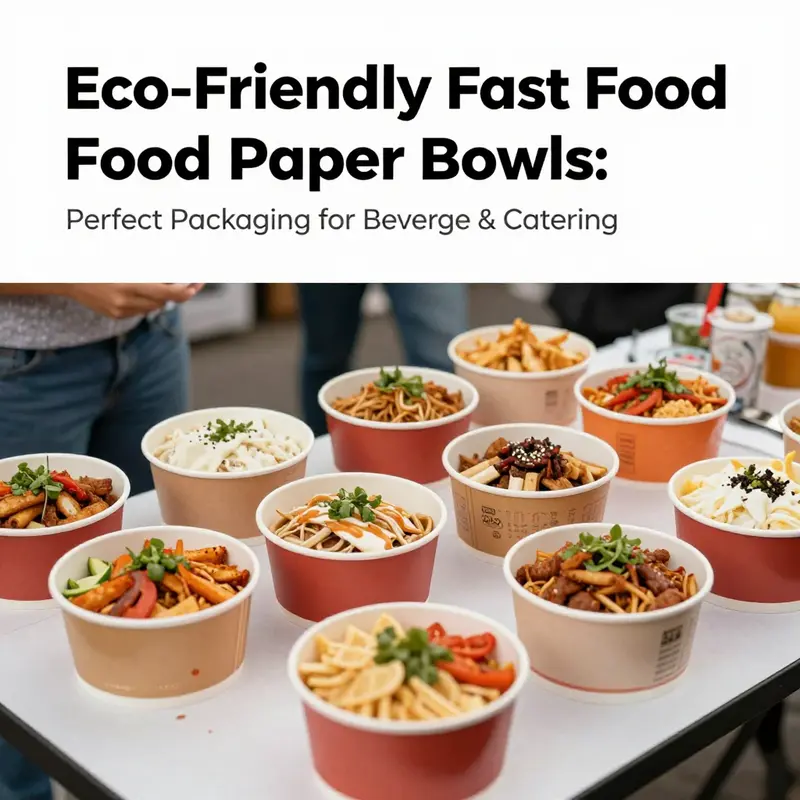
The fast food paper bowl is more than a disposable shell for a meal. It is a crucial intersection of speed, reliability, and responsibility in a system that moves meals from kitchen to curb, doorstep, or desk with remarkable efficiency. These containers are designed to withstand the immediacy of takeaway service, yet they carry the longer arc of consumer expectations about sustainability and cleanliness. Their ubiquity across cities and towns signals a quiet revolution in how meals are packaged and transported. In practice, these bowls must function across a broad spectrum of foods—from hot soups and hearty noodle dishes to cool salads, desserts, and even dry snacks. The material science behind them is intentionally forgiving in use yet precise in performance. Kraft or recycled paper forms provide a sturdy backbone, while one or both sides are coated with a water-resistant layer to prevent leaks and keep grease from seeping through. The coating choices, often plant-based or biodegradable, are not merely technical details; they are statements about how a business communicates its environmental stance to customers who increasingly read the packaging as a proxy for corporate values.
The applications of fast food paper bowls are intentionally expansive. In fast food chains, they are paired with secure lids to minimize spills during bustling service windows. In takeout operations, they form a reliable, stackable line of transit that fits neatly into bags and handoffs. Delivery platforms depend on them for predictable performance—containers that stay intact while traveling through varied weather, traffic, and handling. For meal kit services, these bowls offer convenient portioning that mirrors consumer expectations for fresh contents and easy disposal after use. Food trucks, cafeterias, buffets, and grab-and-go grocery sections all rely on bowls that can be carried without fear of leaks, softened exteriors, or messy experiences upon arrival. In each setting, the bowls contribute to a rhythm of service that feels seamless to the customer even as it conceals a complex supply chain of materials, coatings, and manufacturing standards.
One of the defining advantages of these containers is their moisture and grease resistance. The layered construction—paperboard coupled with a water-repellent coating—lets the bowls hold up to oily sauces, broth, or creamy dressings without compromising the integrity of the container. The coating may be plant-based or biodegradable, such as polylactic acid (PLA) or wax, which aligns with growing environmental standards while still delivering performance under heat and humidity. Double-wall configurations, where two layers of paperboard are fused together, provide enhanced insulation. They help retain heat for hot soups, noodles, or stews, improving the eating experience by keeping contents warm and the user’s hands comfortable during transport. This insulation also contributes to a more stable lid fit, reducing the likelihood of accidental spills.
Functionality extends beyond raw performance. Modern fast food bowls often include secure-fitting lids that seal tightly and minimize air exposure, preserving freshness and reducing the risk of contamination during transit. Tamper-evident features add a further layer of safety for delivery and bundled takeout orders. In practice, these features translate into a tangible benefit for operators: fewer returned orders, less waste from spilled meals, and higher customer satisfaction from a clean, resealable package. The packaging is not only protective; it is interactive in a practical sense, offering a straightforward interface for the consumer—open, enjoy, reseal, discard with ease. Design decisions around lids, venting, and sealing mechanisms are therefore as important as the choice of fiber and coating. A well-designed lid works in concert with the bowl to minimize air exposure and maintain food quality, even during multi-stop deliveries or long commutes.
Sustainability has become a central axis around which these bowls are evaluated. A growing share of materials comes from recycled fibers, bamboo, sugarcane bagasse, or other agricultural byproducts, with coatings chosen to enhance compostability or recyclability. The environmental profile—whether a bowl is labeled biodegradable or compostable—carries weight with consumers who want packaging that aligns with broader ecological goals. Yet the trade-offs are nuanced. Some coatings that improve barrier performance can slow biodegradation, and some molded designs may rely on plastics in lids or inner linings that complicate composting in certain regions. The literature and industry discussions emphasize a shifting landscape: more suppliers are experimenting with fully compostable coatings and post-consumer recycled fibers, while policymakers in regions with rigorous waste management infrastructure push for clearer labeling and standardized end-of-life pathways. In this evolving scenario, operators weigh the total environmental footprint, including production energy, transport emissions, and end-of-life processing, against the functional need to deliver hot or greasy contents without compromising user experience.
From a design standpoint, operators and manufacturers consider sizes that map to typical portions and menu formats. Common capacities range from compact 500 milliliters to larger 1200 milliliters, with quick-serve environments often favoring the mid-range for balance between portability and substance. The availability of multiple sizes supports menu diversification without forcing customers into suboptimal packaging choices. Customization is another central thread. Many suppliers offer options for bespoke printing, embossing, or color coatings, allowing a brand to imprint its identity while preserving the bowl’s functional characteristics. Customization extends beyond aesthetics; it can include practical features such as embossed grip textures for easier handling or color-coded lids to align with dietary categories or promotional campaigns. Importantly, customization must maintain the integrity of the coating and the barrier properties; a striking appearance is valuable only if the package consistently performs under the conditions of transport and consumption.
In terms of procurement, wholesale pathways enable operators to scale packaging alongside growth in demand. Large-volume orders are common, with minimum order quantities designed to optimize manufacturing efficiency and reduce per-unit costs. The ability to source versatile formats from a single supplier streamlines inventory management, while long-term supplier relationships can yield predictable pricing and stable supply. For businesses seeking bulk orders, online marketplaces frequently feature a wide array of options with varying degrees of customization, payment security, and lead times. It is not merely a transaction but a strategic decision about how a brand presents itself to customers through every package that accompanies a meal. The choice of supplier often reflects a balance between cost, sustainability credentials, and the capacity to meet regional regulatory expectations around packaging waste and recyclability. As consumer expectations have grown, retailers and foodservice operators increasingly favor programs that highlight recycled content and clear end-of-life guidance, reinforcing brand values with tangible packaging choices.
An illustrative example of design flexibility can be found in one category of bowls that emphasizes water resistance and lid compatibility. Such bowls are engineered to withstand the rigors of busy service windows and the occasional rough handling common in takeout logistics. They are designed to work with lids that form secure seals to prevent leaks and minimize food exposure to air, helping to preserve flavor and texture for longer periods. The compatibility between bowl and lid is not incidental; it is a deliberate engineering choice that reduces the chance of spillage during stacking, transit, and unpacking at the point of consumption. When these design features are aligned with consumer expectations for convenience and hygiene, they contribute to a more reliable, satisfying customer experience. The narrative of the packaging thus moves beyond the bowl itself to the broader ecosystem of service design—how the bowl, lid, and transport materials interact to deliver a consistent and positive user journey.
The broader sustainability conversation inevitably touches regional differences in waste management and regulatory standards. In some markets, the push toward recyclability is tempered by the realities of local recycling infrastructure; in others, compostable packaging is supported by established municipal programs. Operators must understand the end-of-life pathways that apply to their packaging choices and communicate those pathways to customers. Clear labeling regarding compostability, recyclability, or disposal guidance helps reduce contamination in recycling streams and ensures that post-consumer packaging can be processed as intended. In practice, this means not only choosing materials that meet performance criteria but also selecting coatings and laminations that align with local waste-management capabilities. Operators who align packaging strategy with regional sustainability expectations often find that customers respond with greater trust and willingness to engage with eco-conscious brands, even if the packaging comes with a modest premium.
From a sourcing perspective, the marketplace offers a spectrum of options that accommodate both small-scale operations and large franchises. Platforms and manufacturers provide a range of sizes, configurations, and finishing touches that can be tailored to menu needs and brand aesthetics. The possibility of low minimum order quantities in some ranges supports small businesses testing new concepts or seasonal offerings, while scalable options enable established operators to maintain continuity during peak periods. A careful evaluation of supplier capabilities, lead times, and after-sales support is essential to avoid stockouts or quality variability that could undermine a brand’s reliability. The conversation around fast food paper bowls thus blends technical performance with supply chain resilience and ethical considerations, acknowledging that packaging is not an isolated component but an integral part of a business’s overall operational model.
For readers exploring further practical references, one avenue is to consider the specific product lines that emphasize environmental stewardship and customization options for takeaway packaging. For example, a category of eco-friendly kraft bowls with customizable features demonstrates how form and function can be married to brand priorities while maintaining practical performance in busy service environments. A representative page describes waterproof, disposable bowls designed for hot or cold foods and compatible with lids for secure transport, all while offering options for tailoring color, size, and branding to suit promotions or corporate identities. eco-friendly kraft paper octagonal bowl for takeaway illustrates how material choice, shape, and customization converge to meet the needs of operators who wish to balance efficiency with environmental responsibility. The interplay between these factors—design, materials, and lifecycle considerations—underpins the evolving narrative of packaging in the fast-food sector, where every meal is accompanied by a vessel that has its own story of origin and end-of-life possibilities.
Operationally, the takeaway packaging ecosystem continues to evolve as new coatings, new fiber blends, and new end-of-life pathways emerge. The industry dialogue increasingly centers on transparency—clear labeling about compostability, recyclability, and the conditions required for optimal disposal. Consumers respond to packaging that communicates not only the content within but also the journey of that content from production to disposal. In this sense, fast food paper bowls serve as a microcosm of a broader shift in consumer goods packaging: a move toward packaging that supports convenience and safety while acknowledging environmental accountability and social responsibility. The chain from kitchen to curbside is thus more than physical transport; it is a narrative about how a company treats the resources it uses, how it communicates with customers, and how it contributes to the communities in which it operates.
For those seeking wholesale options, the landscape remains robust and diverse. The availability of multiple sizes, coating choices, and customization capabilities enables businesses to tailor packaging to their menus, customer segments, and logistics realities. The capacity to scale orders while maintaining consistent quality is essential to sustaining service levels during high-demand periods. In sum, fast food paper bowls are not a mere packaging solution but a strategic instrument—one that shapes the speed of service, the integrity of food, and the environmental imprint of a business. They are a practical yet purposeful element of the modern dining experience, quietly supporting a global system that values efficiency, hygiene, and evolving standards of sustainability.
External resource: https://www.alibaba.com/product-detail/Wholesale-16oz-Paper-Bowl-Disposable-Food_1600342474411.html
Final thoughts
Fast food paper bowls present a practical, customizable, and eco-friendly packaging solution for businesses in the food industry. By understanding their design options, material specifications, and market trends, businesses can choose the packaging that not only meets their needs but also aligns with consumer preferences for sustainability. Fast food paper bowls enhance branding opportunities while supporting environmental goals, making them an ideal choice for any food-related service.