
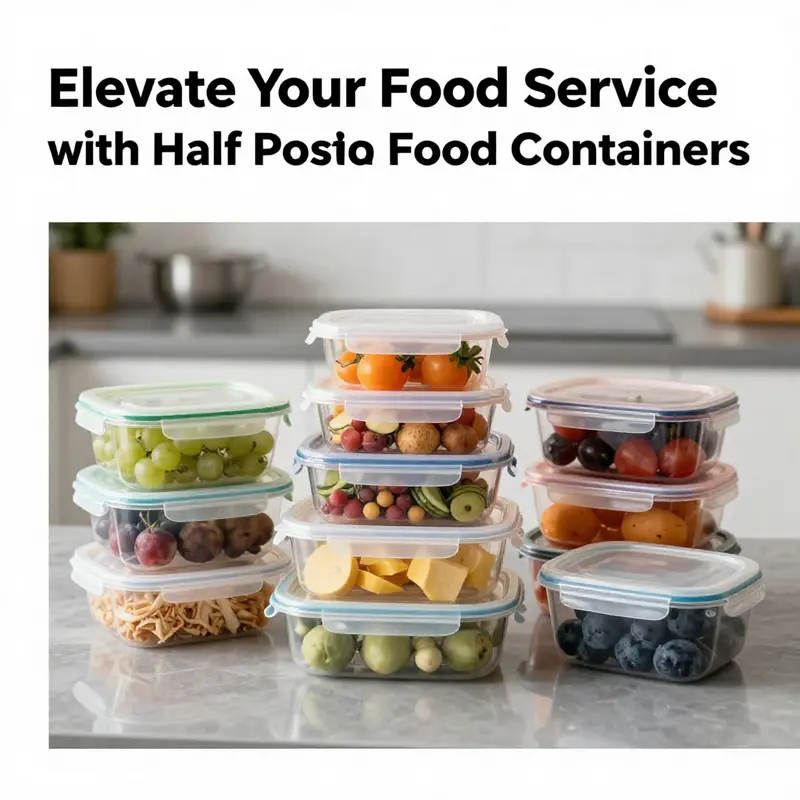
In today’s competitive food industry, choosing the right packaging solutions is crucial for businesses aiming for efficiency and customer satisfaction. Half round plastic food containers serve as an excellent choice across various sectors, from bustling bubble tea shops to catering services. They not only ensure optimal food preservation but also align with sustainable practices and respond to market trends. This article delves into the multifaceted applications of these containers, their environmental impact, and the economic importance they hold for businesses. By examining these aspects, we aim to provide valuable insights for beverage chains, restaurants, food trucks, event planners, and corporate procurement teams.
Shaping Freshness: The Subtle Science of Half Round Plastic Food Containers in Food Preservation
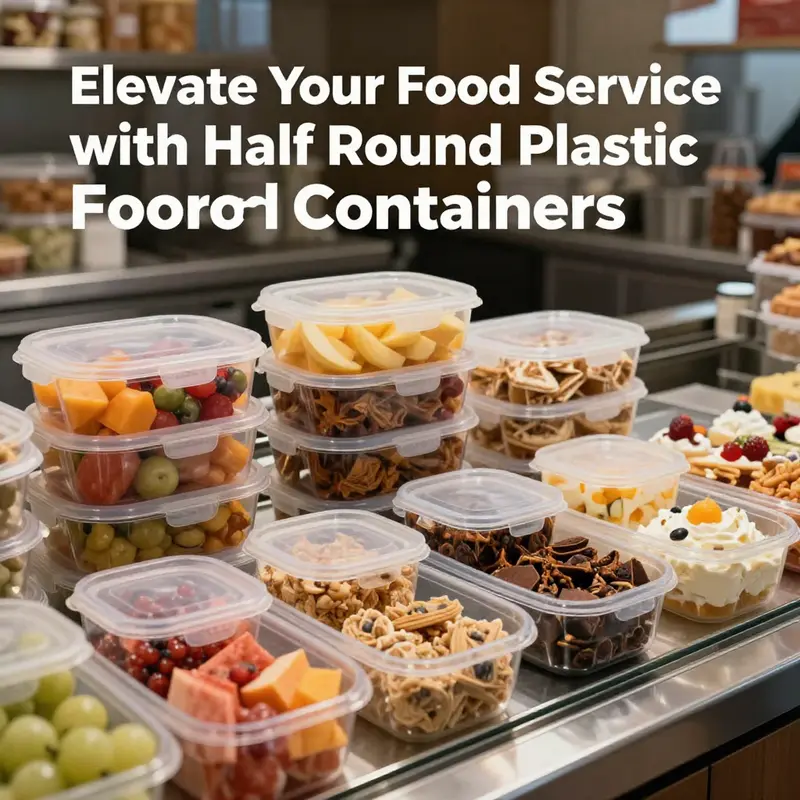
The half round plastic food container arrives in kitchens and pantries not as a flashy novelty but as a pragmatic instrument of preservation. Its semi-circular profile may seem niche at first glance, yet this gentle curvature unlocks a blend of efficiency and practicality that echoes through the routines of home cooks, meal planners, and professional caterers alike. When a storage solution prioritizes both space and visibility, it becomes more than a vessel; it becomes a partner in the daily choreography of food safety and waste reduction. The shape’s compact footprint fits snugly into crisper drawers and pantry shelves, hugging the contours of other containers rather than leaving awkward gaps that waste precious square footage. In busy environments, where every minute matters, such efficiency translates to faster organization, quicker retrieval, and a less cluttered work surface. The half round form, by virtue of its geometry, encourages a disciplined approach to how leftovers and prepared meals are stored, labeled, and rotated, reinforcing a culture of careful inventory management that quietly sustains quality over days rather than hours.
At the heart of their usefulness lies a foundation built from food-grade plastics, most commonly polypropylene (PP) and polystyrene (PS), materials selected for their proven safety profiles and barrier properties. Polypropylene offers resilience against cracking and heat, which is essential when containers are pulled from a cooler, stored in a pantry, or lightly warmed for convenience. Polystyrene, while sometimes viewed with skepticism in consumer circles, is utilized in versions designed to minimize moisture and air transfer, helping to keep solid leftovers from drying out or becoming stale. In both cases, the selection of a food-grade plastic is not just a compliance matter; it is a practical guarantee that the container itself will not contribute off-flavors, odors, or contaminants to the foods it holds. This attention to material integrity supports longer preservation timelines, especially for items like cooked grains, vegetables, and compact meals that rely on stable barriers to moisture and air.
One of the most compelling advantages of the half round design is its performance in real-world storage scenarios. In a refrigerator, the straight edge along the container’s diameter and the curved, symmetrical sides create a predictable footprint that stacks neatly with other containers. This predictability reduces the chaos of interlocking shapes, making it easier to organize by meal type, day, or dietary plan. The ability to nest or stack without sacrificing accessibility is more than a convenience; it is a logistical asset in kitchens where cold storage space is at a premium. A well-considered stack also minimizes the risk of accidental spills when the refrigerator door opens with a jostle of shelves and bottles. In larger kitchens, where dozens of containers may be in play at once, the space optimization afforded by the half round form translates into tangible savings in both refrigeration real estate and the time staff spend locating or returning items.
Beyond space efficiency, the integrity of the seal plays a crucial role in preservation outcomes. Many half round models are designed with airtight lids that pair with grooved rims to minimize the intrusion of oxygen and ambient moisture. This sealed system is a frontline defense against bacterial growth and the diffusion of odors, both of which can compromise quality and consumer satisfaction. The principle is simple: by slowing the rate at which air interacts with food, you extend the time during which flavors, textures, and colors remain faithful to their freshly cooked state. This is particularly important for items that do not reheat well or tend to become limp if reheated after long storage. For packed lunches and school meals, where a few hours can separate preparation from consumption, effective sealing helps preserve the intended sensory experience of the dish. It also reduces the chance of cross-contamination when multiple items share a single container stack, a practical consideration in cafeterias and communal kitchens where efficiency must not compromise safety.
Transparency plays a subtler but equally important role in preservation. The clear walls of many half round containers enable quick visual checks without disturbing the seal. This visibility supports bias-free decisions about what to reheat, refrigerate, or discard. Rather than guess at the state of leftovers, staff and home cooks can assess color, surface moisture, and portion size at a glance. For inventory management, visibility lowers the cognitive load required to track freshness and portioning. It becomes easier to identify items that are approaching their prime and to rotate stock to minimize waste. In practice, transparent design reduces waste in a twofold way: it helps ensure that foods are used while still at peak quality, and it minimizes guesswork that might lead to unnecessary discards.
From a service perspective, the combination of seal integrity and visibility supports efficient delivery and display. In catering settings, a robust container that protects hot or cold meals during transport, while still allowing for rapid content recognition upon arrival, enhances reliability and customer satisfaction. The semi-circular geometry can contribute to a stable loading profile that resists tipping and keeps items from shifting during transit. This is especially valuable for boxed lunches, where multiple compositions—salads, grains, protein portions—must travel together without compromising the intended balance of flavors and textures. For takeout and delivery, a dependable container with predictable handling characteristics reduces the likelihood of leaks, spills, or scuffing that can diminish a consumer’s first impression of the meal.
Of course, no tool is perfect in perpetuity, and thoughtful readers will recognize the importance of appropriate use and care. Prolonged exposure to high temperatures, repeated dishwashing cycles, or aggressive mechanical actions can wear lids and seals, potentially diminishing their protective performance over time. This caveat is not a flaw so much as a reminder that preservation is a dynamic practice. When containers are treated as disposable after a single use, or when lids become so warped that a seal is compromised, the benefits of the half round design are diminished. To maximize longevity, many facilities adopt guidelines that favor gentle dishwashing cycles, room-temperature air drying, and careful loading of dish racks to prevent lid deformation. In consumer households, simple practices—hand washing or using the top rack of a dishwasher, avoiding microwaving lids that are not rated for heat, and inspecting seals for wear—can preserve performance for longer, extending the container’s life cycle and keeping waste lower over time.
The literature on food packaging often highlights the tension between performance and sustainability. Half round containers, with their lightweight construction and efficient stacking, contribute positively to this balance. The reduced material weight lowers raw material demand and can improve transport efficiency, which in turn reduces energy use and greenhouse gas emissions across the supply chain. When selecting a system for home or business use, buyers frequently weigh cost against durability and recyclability. The half round option often occupies a sweet spot where reasonable price coexists with strong barrier properties and durable design. But it is essential to acknowledge that sustainability also depends on local waste-management practices and the availability of recycling streams for the particular plastics in use. In regions with robust recycling infrastructure, the environmental footprint of these containers can be further mitigated through recycling programs and proper sorting.
For those tasked with sourcing and quality assurance, the market presents a landscape of options that emphasize customizable sizes and finishes. A key advantage is the ability to tailor capacities to specific needs, from modest 300 ml portions to larger 700 ml serves. The flexibility to specify color, lid type, and sealing mechanism can align with branding strategies and operating procedures, ensuring that the packaging system supports both presentation and function. In practice, businesses often prioritize freshness preservation and secure sealing as non-negotiables, while also seeking uniformity across batches to streamline inventory planning and fulfillment. Platforms that connect buyers with manufacturers frequently highlight these features, underscoring the importance of supplier reliability, consistency in lid performance, and the ability to meet industry standards for food-contact materials. The result is a packaging ecosystem that is not only practical but also adaptable to evolving consumer expectations around convenience and sustainability.
The broader ecosystem surrounding half round containers includes a significant emphasis on compatibility with other packaging categories. When integrated into a larger system of storage and transport, these containers work in concert with stackable lids, labeling components, and outer packaging designed to protect freshness during logistics. This integrative approach echoes the idea that preservation is not a solitary act but a network of decisions that begin in the kitchen and extend into the supply chain. In this sense, a half round container acts as a node within a broader strategy of inventory control, waste reduction, and quality assurance. The design choices—shape, material, seal, and transparency—collectively influence outcomes, guiding how effectively a business can implement portion control, batch tracking, and meal-prep workflows. By aligning container features with organizational goals, kitchens can realize measurable improvements in efficiency, consistency, and consumer satisfaction.
For readers seeking reassurance about sourcing and standards, several industry insights emphasize the reliability and performance of half round containers. The evidence points to robust barrier properties against moisture and air, excellent compatibility with common reheating and storage practices, and the practicality of a design that reduces space consumption both in refrigeration and in transit. In the context of delivery services and office meal programs, the containers’ durability and light weight contribute to safer transport and simpler handling, while their clear construction supports quick content recognition—an attribute that accelerates service speed without sacrificing accuracy. The careful balance between rigidity and flexibility in the wall material also influences how well the container holds up to stacking pressures and movement during shipment. The net effect is a storage solution that aligns with contemporary demands for efficiency, safety, and cost-effectiveness, while remaining adaptable to diverse food categories—from solid leftovers to more complex bento-style arrangements.
Within this narrative, one cannot overlook the role of credible sourcing channels that ensure components meet industrial standards for food packaging. Platforms that feature customizable sizes and colors, with clear emphasis on freshness preservation and secure sealing, provide a practical bridge between design intent and real-world application. For researchers and practitioners who need to compare options quickly, these sources offer concise visibility into material choices, seal integrity, and regulatory compliance. The combination of accessible data, practical performance, and the ability to tailor features fosters a more informed selection process, which in turn supports consistent outcomes across kitchens and service operations. In a market that increasingly values both adaptability and reliability, the half round container stands as a small but meaningful example of how thoughtful packaging design can reinforce the core aims of food preservation: safety, freshness, and responsible stewardship of resources.
The practical implications extend beyond the kitchen door. For households aiming to reduce waste and improve meal planning, these containers enable precise portioning that helps maintain dietary balance and minimize leftovers that would otherwise be discarded. For school and workplace meal programs, they support standardized portioning while accommodating a range of meal types, from rice bowls to salads to steamed vegetables. The transparent walls make it easier to audit storage at a glance, supporting routine checks and inventory planning. In all settings, the container’s semi-circular geometry translates into a reliable, scalable solution that can be deployed across multiple locations with consistent performance. As consumer expectations shift toward convenience without compromising safety, the half round design emerges as a thoughtful answer—an adaptable tool in the ongoing practice of preserving the integrity of food from production to plate.
Internal linking to related resources can further bolster a reader’s practical understanding. For readers exploring how half round containers fit into broader storage systems, the category dedicated to storage containers on the hosting site provides a natural checkpoint for related options, accessories, and compatible components. This linkage supports a seamless transition from theory to application, encouraging practitioners to consider how a single container type interacts with lids, labels, and shelving solutions. It is a reminder that an effective preservation strategy is not built on a single piece of equipment but on an interconnected suite of tools designed to work together to maximize freshness, reduce waste, and streamline operations. In this spirit, the half round container is best viewed not as a standalone gadget but as a durable, adaptable element within a cohesive packaging and storage ecosystem.
Ultimately, the promise of half round plastic food containers in food preservation rests on a balance of tangible performance and practical accessibility. They deliver a compact, efficient footprint for storage, robust barriers that help lock in freshness, and a transparent design that supports vigilant inventory management. They are light enough to ease handling and transport, yet sturdy enough to withstand the rigors of daily use in busy kitchens and service environments. While care must be taken to replace worn seals and to observe manufacturer guidelines for microwaving and dishwasher use, the overall value proposition remains compelling: a versatile, economical option that supports portion control, reduces waste, and aligns with modern expectations for safe, convenient food storage. For anyone seeking to optimize preservation without overhauling existing workflows, examining the role of half round containers within the broader storage and packaging system offers a clear path to tangible gains in efficiency and quality.
External resource: For a broader technical perspective on composition, standards, and applications of transparent plastic food containers used in meal prep and storage, see Understanding China Transparent Plastic Food Container: Composition, Standards, and Applications. https://www.made-in-china.com/products-products-detail/1604532898756/Transparent-Plastic-Food-Container-Storage-Box-for-Meal-Prep-Leftovers-Office-Lunches/90324312712.html
Internal link reference for further practical context can be explored in the storage containers category. This helps connect the preservation-focused discussion to a broader spectrum of organizational packaging options: storage containers.
Between Convenience and Responsibility: Reassessing the Environmental Footprint of Half-Round Plastic Food Containers
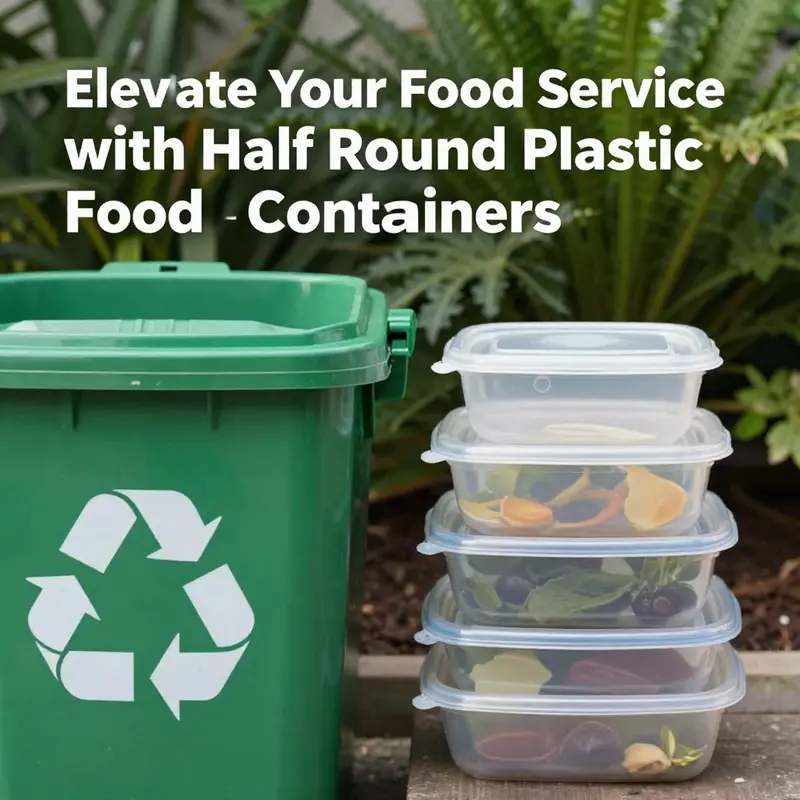
A lunchbox nestled in a backpack, a school cafeteria tray, a bakery display with neatly stacked pastries, a takeout order set in half round plastic containers—these scenes illustrate how deeply half round containers have woven themselves into modern eating habits. They are not merely vessels; they are practical tools that enable portion control, preserve freshness, and simplify food service logistics. Yet the everyday utility they provide comes with an ecological trade-off that grows more urgent as consumption scales and disposal systems strain under volume. The tension between convenience and responsibility emerges most clearly when we examine the life cycle of these containers, from raw material choices to end-of-life outcomes, and the competing pressures of cost, performance, and environmental stewardship. In this chapter, we explore that tension with a focus on the environmental footprint of half round plastic food containers, while also tracing pathways that could tilt the balance toward more sustainable practice without sacrificing the benefits that users value in daily operations.
At the heart of sustainability concerns is material composition. Many half round containers are manufactured from polypropylene or polystyrene, plastics derived from fossil carbon and known for their durability in the face of everyday handling. This durability is precisely what makes them useful: they resist cracking, they can tolerate cold, and they hold shape under pressure. But durability is a double-edged sword. When a product lasts longer in use, it can help reduce waste in some contexts. When it persists in the waste stream or leaks microplastics into ecosystems, durability becomes a liability. Moreover, neither PP nor PS is biodegradable in natural environments, and the end-of-life fate of many containers remains uncertain in systems that struggle to capture and process mixed plastics. Even using reusable variants does not automatically resolve the problem; if they are not properly cleaned and returned to a recycling stream or are discarded after limited reuse, those gains can vanish as microplastic fragments re-enter soils and waterways.
The environmental impact of producing half round containers extends beyond the waste stage. The conversion of fossil feedstocks into polymer chains requires energy and fuels, and manufacturing facilities emit greenhouse gases in the process. The emissions profile varies with factory efficiency, energy sources, and the efficiency of the molding and shaping operations. When containers are exposed to heat or acidic or oily foods, there is also concern about potential chemical migration, which, while generally regulated, raises questions about long-term exposure and cumulative effects on human health and ecosystems. This is not just a consumer worry; it resonates through value chains that include farmers, processors, retailers, and waste managers who must respond to the complex reality of how packaging behaves under real-world conditions. The environmental story is thus not simply about what happens to a container after it is emptied; it is about the many interactions across its life: how it is made, used, cleaned, disposed, and eventually recollected or released back into the environment.
Recycling presents a central set of challenges. While many manufacturers promote recyclable grades of plastic, widespread, efficient recycling remains hampered by multiple factors. Consumer behavior often fails to separate items correctly or to follow local guidelines, and municipal infrastructure can be inconsistent, especially for multi-material components or items with intricate lid designs. The half round shape, though advantageous for stacking and display, frequently comes with lids that are made from different plastics or even different polymers than the base container. This separation difficulty reduces salvage rates and can lead to contamination that undermines recycling streams. The net effect is that the lifetime of these containers is often shorter than ideal, and the proportion that truly re-enters the economy as high-quality recycled material remains modest in many regions. Even when lids and bases are detachable, the overall system must coordinate collection, sorting, and processing capacities—a coordination that many regions struggle to achieve at scale.
The gravity of these recycling hurdles feeds directly into the broader conversation about waste and resource use. When end-of-life management fails to close the loop, containers contribute to landfill mass and, over time, to environmental leakage into soil and waterways. In coastal and riverine systems, plastics of all kinds accumulate as microplastics, infiltrating aquatic food webs and potentially affecting both biodiversity and human health. These outcomes underscore a crucial point: even products designed for repeated use or extended lifespans can become liabilities if systems for their recovery and recycling are weak or unevenly distributed. The circular economy framework, which emphasizes retention of materials, modular design, and responsible end-of-life management, offers a lens through which to reimagine half round containers as actors in a closed loop rather than as line items in a throwaway economy.
Mitigation strategies being discussed by industry experts emphasize shifting toward materials that either biodegrade under controlled conditions or are easier to reintegrate into new products. Certified compostable materials like polylactic acid (PLA) show promise for reducing landfill pressure in contexts where industrial composting is available. Recycled post-consumer plastics represent another pathway, consolidating demand for pre-existing plastic streams and reducing dependence on virgin fossil feedstocks. In both cases, however, infrastructure matters. Industrial composting facilities are not universally accessible, and specialized recycling streams require advanced sorting technologies and consistent consumer participation. Without these supports, even well-intentioned shifts toward greener materials may underperform expectations and inadvertently create new forms of waste management complexity.
These ideas feed into ongoing circular economy initiatives that aim to reframe how packaging is designed, used, and disposed. Organizations championing a circular approach have highlighted the importance of designing for reuse, repair, and recycling from the outset. The Ellen MacArthur Foundation, a leading voice in this space, emphasizes the need to reimagine packaging systems so that products are kept at their highest value for as long as possible and end-of-life options keep materials flowing within the economy rather than leaking into the environment. Similarly, the U.S. Environmental Protection Agency has advanced guidance and frameworks that encourage producers, retailers, and consumers to adopt practices that minimize environmental footprints and improve recyclability. These efforts reflect a broader acknowledgment that packaging decisions cannot be isolated from the structures that govern waste collection, sorting, and recovery. They require alignment across product design, supply chains, and consumer education to create pathways where half round containers contribute less to pollution and more to resource efficiency over their full life cycles.
From a consumer and business perspective, several practical avenues exist for aligning short-term utility with long-term sustainability. First, design choices can prioritize recyclability. When possible, using base materials and lids that share the same resin can simplify sorting and improve the likelihood that a container is processed into a new product rather than discarded. Second, durability and reuse must be balanced with the realities of cleaning and hygiene. Reusable configurations should be robust enough to withstand repeated cycles yet compatible with existing washing practices without warping or release of contaminants. Third, companies can engage in take-back or refill programs that close the loop by returning containers to the supply chain for cleaning and reintroduction. These systems require careful coordination but can dramatically reduce waste if scaled and maintained with high standards of sanitation and traceability.
A broader ecosystem view also invites closer examination of consumer education and behavior. Even the most thoughtfully designed packaging cannot achieve sustainability without responsible user actions. Clear guidance on proper cleaning, safe heating practices, and end-of-life disposition helps ensure that what is bought as a practical solution does not become a systemic liability. In this sense, the journey toward sustainability is not only a matter of material science or industrial policy; it is also about social practice, incentive structures, and reliable information that empowers individuals and organizations to act in ways that honor both convenience and environmental integrity. The packaging landscape today thus presents a mosaic of competing interests and potential improvements. It invites decision-makers to weigh immediate operational needs against longer-term ecological health and to pursue solutions that maintain service levels while reducing adverse environmental effects.
Within this complex landscape, a single, focused step is to foreground the plastic packaging category as a source of design and policy innovation. The category includes a range of materials and configurations oriented toward different performance needs, and it serves as a practical site for testing strategies that can be scaled across supply chains. By analyzing options that emphasize recyclability, compatibility with existing recycling streams, and potential for post-consumer content, stakeholders can identify pathways that minimize negative externalities without compromising the benefits that half round containers deliver to users. The idea is not to abandon practicality but to rewire it so that practicality and environmental responsibility reinforce one another rather than trading one for the other. For those seeking additional context on material options and end-of-life considerations, the broader catalog of plastic packaging choices offers a useful reference point, including the range of options available within the plastic packaging category. plastic packaging category.
In addition to design and policy shifts, there is a clear call for stronger, more consistent governance that supports better outcomes across regions. This includes standardized labeling that communicates recyclability and compostability clearly to consumers, improved data on recycling rates and contamination levels, and incentives for manufacturers to incorporate higher post-consumer content into new products. Public-private collaboration can help align incentives with the realities of local waste management capabilities, enabling packaging that is not only technically recyclable but also practically recovered and reused within the economy. Such alignment reduces the risk that single-use or short-life packaging contributes to long-term environmental burdens and instead positions half round containers as components of resource-efficient systems that support food safety, consumer convenience, and ecological resilience alike.
The 2026 landscape of sustainability policy and practice reflects these evolving priorities. Initiatives from major environmental organizations and government agencies emphasize reducing packaging waste, expanding the use of recycled materials, and creating closed-loop systems that prioritize reuse and responsible end-of-life management for both single-use and reusable packaging. These movements recognize that the success of any packaging solution hinges on the synergy between product design, consumer behavior, and the infrastructure that handles disposal and recovery. They also underscore the reality that progress is incremental and context-specific. A solution that works well in one city may require adaptation in another, depending on local recycling capabilities, composting facilities, and market demand for recycled content. The challenge is to translate global best practices into local, scalable improvements that respect cultural, economic, and logistical differences while advancing a shared goal: reducing the environmental footprint of everyday food packaging without sacrificing the practical benefits that half round containers provide.
For researchers and practitioners seeking deeper technical or regulatory perspectives, several authoritative sources offer comprehensive guidance on material performance, environmental impact, and best practices. The U.S. Environmental Protection Agency provides a detailed guide to plastic food containers, outlining standards, disposal considerations, and recommendations for reducing environmental harm. This resource highlights the interplay between product design choices, consumer behavior, and waste management outcomes, reinforcing the idea that environmental responsibility is a systemic challenge that requires coordinated action across actors and stages of the life cycle. For readers who want to explore these issues further, the EPA guide serves as a foundational reference that complements industry perspectives and policy initiatives. https://www.epa.gov/epawaste/consumers/pubs/PlasticFoodContainersGuide.pdf
In closing, the conversation around half round plastic food containers is not simply about whether a container can be reused or recycled. It is about how a single packaging decision fits into a broader system of production, consumption, and recovery. It is about recognizing the value of convenience while acknowledging the environmental costs that accompany it. It is about designing for resilience, enabling effective recycling, and building consumer trust through transparent labeling and robust take-back options. It is about aligning the incentives of manufacturers, retailers, municipalities, and households so that the containers that support daily meals become agents of sustainability rather than points of waste. The path forward is incremental, collaborative, and site-specific, but the direction is clear: through thoughtful material choices, smarter design, improved infrastructure, and engaged audiences, half round containers can continue to serve their essential role in food storage and service while contributing less to environmental degradation in the years ahead.
Half-Round Harmony: How Half-Round Plastic Food Containers Shape Modern Storage and the Economic Pulse Behind Their Rise
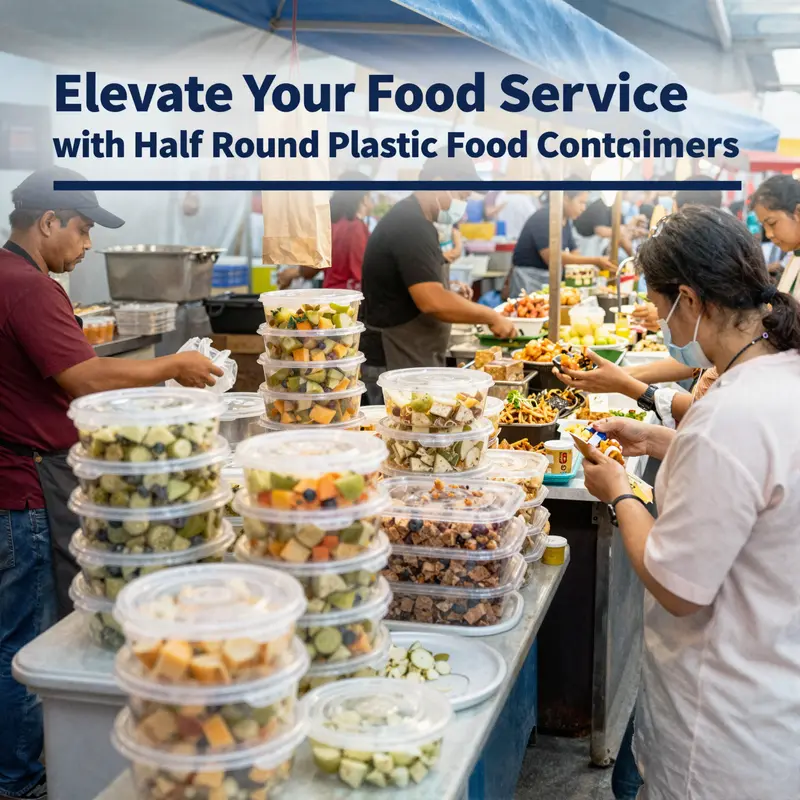
A half-round plastic food container is more than a simple box with a lid. In the markets where convenience, efficiency, and predictability govern operations, this shape embodies a careful balance of form and function. It is a design that meets the fast pace of both kitchens and consumer routines while quietly supporting a broader commercial ecosystem. The half-round silhouette creates a streamlined profile that maximizes space in transport, on shelves, and in the most compact home pantry. It fits neatly alongside other round items because it respects the same curve of storage spaces, yet it is not so rounded that it becomes unwieldy. This subtle efficiency translates into tangible benefits: easier stacking, more stable piling on carts, and cleaner, more consistent display in both retail and food service settings. In practice, the half-round container shows up wherever there is a need to protect freshness without sacrificing accessibility, from a bulk kitchen to a single home kitchen used for meal prepping.
The core of the half-round container lies in its materials. Many variants are produced from food-grade plastics such as PET, PP, HDPE, and LDPE. Each material brings a different set of properties to the table, and clever design choices blend them to fit specific applications. PET is prized for clarity and visibility. In a display context, transparent PET elevates the appeal of contents, whether it is a colorful mix of berries or neatly arranged baked goods. The ability to see inside at a glance helps with inventory control and customer appeal alike, reducing the guesswork that often accompanies bulky, opaque packaging. When clarity is less critical, polypropylene offers superior heat resistance and stiffness, enabling containers to endure the rigors of microwave reheating and dishwasher cycles that are common in busy kitchens.
Durability and safety are also at the heart of the material portfolio. HDPE adds rigidity, helping containers resist crushing during transport and stacking. LDPE contributes to flexible sealing and lid performance, supporting airtight and leak-proof characteristics that are essential for both storage and display. The combination of these materials can be tuned to balance weight, cost, and performance. An important trend within the industry is the adoption of recycled content, particularly rPET, which keeps the circular economy moving and reduces the ecological footprint of packaging without sacrificing the features consumers expect: clarity, barrier performance, and recyclability in many municipal programs. In practice, rPET-based half-round containers demonstrate that sustainable packaging can still deliver the same level of visibility and protection, preserving the integrity of perishables while aligning with sustainability goals that matter to both retailers and households.
In everyday use, the half-round shape and the lightness of plastic are a winning tandem for portioning and serving. A typical capacity like 500 ml is especially popular for snacks, small meals, and baked goods. The size is versatile enough to accommodate a portion that is easy to plan and pair with a meal or a snack, yet compact enough to encourage mindful consumption and reduce waste. The containers can be employed in a range of settings—fine enough for a display case that invites impulse purchases, robust enough for delivery and catering operations, and practical for home meal-prepping that seeks to control portions without sacrificing freshness. This versatility is a key driver of the economic and practical appeal of half-round containers. They are not a one-trick figure; they are adaptable shapes that align with a spectrum of storage and service needs.
The design is not merely about what the container holds but how it holds up under real-world use. The lids are engineered to be airtight and often leak- or spill-resistant, particularly when combined with a tight-fit rim and a well-designed sealing mechanism. In professional kitchens and catering operations, this reliability translates into fewer spoiled deliveries and less wasted product during transit. The ability to seal effectively protects the contents from moisture loss, gas exchange, and contamination, which is especially important for fragile items like berries, sliced fruits, or soft pastries. The half-round design also enables easy access and efficient cleaning, a practical advantage when turnover is high and speed matters.
Visibility and accessibility go hand in hand with the display potential of these containers. Retail and food-service environments benefit from clear, stackable designs that present contents attractively while taking up only the necessary shelf space. The transparent aesthetic is not simply about looks; it enhances inventory management, helps staff identify items quickly, and supports consumer trust by showing exactly what is inside. When used for ready-to-eat meals or assembled portions, the half-round containers become a practical merchandising tool, turning product into a reliable, bite-sized promise of freshness and portion control. The mood they create on display—clean, orderly, and predictable—fits with modern expectations for convenient yet responsible packaging.
The value proposition extends beyond the shelf. In a world where urbanization and time constraints shape consumer behavior, the convenience of a container that can survive the microwave, withstand dishwashing, and still return to the shelf intact is a significant advantage. For households, the possibility of reheating and reusing a container aligns with a broader culture of reuse and efficient cleanup. For food service and catering, the ability to stock, transport, and re-serve food without compromise reduces labor costs and accelerates service, two economic levers that accumulate quickly across large operations. This is where the market dynamics come alive: the containers are not only packaging; they are a logistical scaffold that supports the cadence of modern meals, grab-and-go snacks, and bulk storage.
Economic momentum in this space is reinforced by several converging trends. First, the rising demand for convenience foods means more meals and snacks are prepared, stored, and transported in flexible packaging. The urban lifestyle pushes households to rely on compact, efficient storage solutions that save space and minimize waste. Second, the expansion of food delivery services intensifies the need for packaging that travels well—from kitchen to doorstep—without leaking, tarnishing, or losing content quality. Third, the broader market for plastic storage containers remains dominant, with plastics accounting for a substantial share of the market. In many forecasts, plastic storage containers approach or exceed a near-half share of the total market, underscoring the critical role of plastic packaging in the food supply chain and in daily life.
The shared features across many half-round containers—clarity, light weight, stackability, and cost-efficiency—make them particularly attractive for a wide range of applications. In households, they support meal prep and flexible lunches, enabling portion control that aligns with dietary goals and budget considerations. In commercial kitchen operations, they streamline workflow by simplifying prep stations, reducing cross-contamination risk through sealed lids, and enabling rapid turnover during peak service periods. In retail and logistics, their broad visibility and stable form factor help protect product integrity during distribution while presenting a clean, professional image to customers.
Sustainability remains a central axis around which future developments revolve. The move toward recycled content and greater recyclability reflects a growing emphasis on eco-conscious packaging across sectors. Recycled PET, or rPET, is emblematic of this shift: it preserves the essential properties—clarity, moisture and gas barrier performance, and recyclability—while diverting plastic from landfills. This development supports a circular economy and resonates with consumers and buyers who seek responsible packaging solutions. Industry players are actively exploring material science advancements that allow higher recycled content without sacrificing service life or food safety. The result is a continuum where half-round containers can be produced in materials that honor environmental commitments while maintaining the functional traits that define their market appeal.
In application terms, half-round containers have found a home not only in households but also in the retail and logistics ecosystem for displaying and transporting fresh produce, including berries and small fruits. The transparent, stackable design enhances perceived freshness and makes it easier for customers to evaluate quality at a glance. In professional kitchens, gadings and compartments can quickly become organized into a system that minimizes waste and maximizes throughput. The containers’ airtight properties help maintain product quality during short-term storage and shipping, which is essential for meeting the expectations of both customers and business partners. The chaining together of these practical advantages—visibility, protection, portability, and economy—creates a synergistic dynamic that sustains demand and fuels investment in improved materials and manufacturing processes.
From a market perspective, the economic importance of half-round plastic food containers rests on their adaptability and scalability. They are designed to be produced at various scales, from small batches to large runs, enabling manufacturers to respond to changing demand without significant retooling. Their light weight reduces transportation costs, which is a non-trivial factor given the costs associated with global supply chains. As food service and grocery sectors continue to grow, the ability to standardize on a few widely compatible container sizes, such as the 500 ml class, helps streamline procurement, inventory management, and waste reduction. In this sense, half-round containers function as a backbone of efficient storage and distribution, supporting both operational performance and customer experience.
The broader narrative around these containers is one of adaptation and resilience. They are a practical response to the realities of modern life: busy schedules, the need for safe and hygienic storage, and the imperative to minimize waste while maintaining product quality. Their shape, materials, and attributes collectively answer a set of questions that retailers, food service operators, and households repeatedly ask: Can I store this item safely? Will it travel well without leaks? Is it easy to view and identify contents at a glance? Can it be recycled or repurposed after use? The half-round container does not pretend to solve every packaging challenge, but it provides a durable, economical, and versatile solution that integrates into a broad spectrum of workflows and cultures.
In terms of strategic direction, the ongoing evolution in material science and sustainable manufacturing suggests a continued emphasis on balancing performance with environmental criteria. The half-round container will likely see further refinements in barrier properties, temperature tolerance, and compatibility with sophisticated recycling streams. As manufacturers experiment with higher recycled content and even more efficient production processes, the consumer-facing benefits—clear visuals, reliable seals, lightness, and cost efficiency—will remain central. The economic importance of these containers is thus not a static measure of current sales; it is a dynamic indicator of how packaging technology can adapt to shifting consumer behaviors, urban living patterns, and the global push toward sustainable practice.
For readers seeking a deeper technical dive into the material science that informs these designs, a broader discussion of material grades, performance, and industrial uses can provide useful context. This particular thread explores how small, round or roundish containers differ in their interactions with heat, moisture, and mechanical stress, and how those interactions influence the choice between PET, PP, HDPE, LDPE, and recycled variants. Such technical perspectives illuminate why a half-round form is not merely an aesthetic choice but a rational answer to a complex calculus of protection, visibility, cost, and end-of-life considerations. When designers and buyers weigh their options, they are weighing time saved in handling, waste reduced in the supply chain, and customer satisfaction gained from a reliable, visually appealing package.
In sum, the half-round plastic food container is both a practical tool and an economic lever within the modern food ecosystem. Its rounded edge, crisp lid fit, transparency, and resilience enable it to do more with less—more efficiency, more visibility, more trust, and more sustainable performance. The story behind it is not just about packaging. It is about how simple shapes can unlock complex value across kitchens, stores, and delivery networks, shaping how people store, display, and consume food in an era defined by pace, convenience, and responsibility. As the market continues to evolve, the half-round container is positioned not as a fleeting trend but as a durable component of the infrastructure that supports a global food system. For those exploring the continuum of packaging solutions, its blend of form, function, and adaptability offers a lens into how design can advance efficiency without compromising safety or quality. And for readers who want to connect this discussion with broader storage and organization resources, a relevant category can provide practical reference points for planning, procurement, and implementation across varied contexts. storage containers category. To appreciate the scientific underpinnings and material performance that inform these choices more deeply, consider the external resource that examines material grades and industrial uses in a broader context: https://www.benjaminross.com/understanding-3-inch-round-plastic-containers-material-grades-performance-and-industrial-uses/.
Final thoughts
Incorporating half round plastic food containers into your food service strategy can greatly enhance operational efficiency, food preservation, and sustainability efforts. As consumer preferences shift towards convenience and eco-conscious products, these containers stand out as a practical solution for diverse food applications. With their attractive aesthetics and functional design, they not only help in presenting your menu items beautifully but also contribute to reducing food waste and improving portion control. As you plan for the future of your business, consider the benefits that half round plastic food containers bring and position your brand to meet the ever-evolving demands of the food industry.