
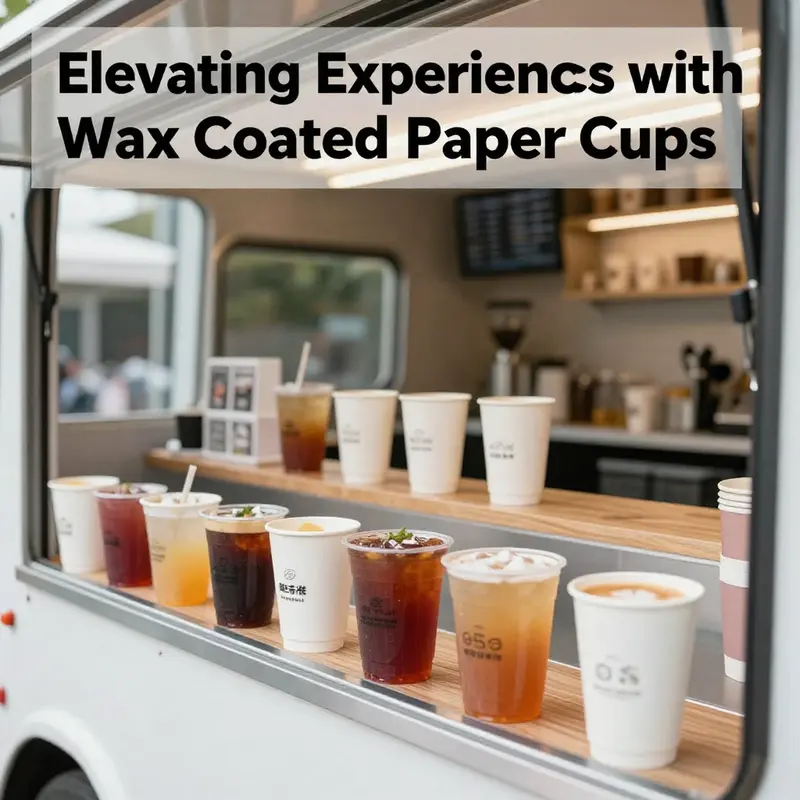
Wax coated paper cups have become essential in the food and beverage landscape, particularly for businesses like bubble tea shops, restaurants, and catering services. Their unique design offers excellent waterproofing while maintaining eco-friendly characteristics, making them popular among consumers conscious of sustainability. This article delves into various aspects of wax coated paper cups—from their material composition and environmental impact to market trends and manufacturing processes. Each chapter will unveil insights essential for beverage chains, food trucks, corporate procurement teams, and event planners, illustrating how these cups can enhance service delivery and align with sustainable practices in the modern food industry.
Guardians of the Cup: How Design and Material Choices Shape Performance and Sustainability in Wax-Coated Paper Cups

Wax-coated paper cups occupy a quiet yet essential niche in modern food service. They are the everyday guardians that keep beverages—hot and cold—contained, without demanding a heavy price from the planet or from operators. The design philosophy behind these cups centers on a straightforward goal: create a barrier strong enough to prevent leakage and soggy paper, while staying compatible with high-volume production processes and reasonable costs. In practice, this means a careful dance between paper strength, coating behavior, and the end-of-life narrative that surrounds disposable packaging. The core material is a base of paperboard that provides stiffness, with a coating that forms an effective seal against liquids and fats. The paperboard itself is typically thick enough to resist crushing under the hand or the heat of a poured drink, yet light enough to be molded, printed, and stacked efficiently in a factory setting. The interior wall is the primary stage for the wax film; the exterior may be coated as well, in some designs, to influence appearance, feel, and moisture interaction at the cup’s outer surface. The coating is not merely a single layer but a functional system whose chemistry and thickness determine both performance and sustainability. Traditionally, paraffin wax has dominated because of its low cost, predictable behavior, and strong barrier properties. It flows as a molten layer, wets the paper surface well, and then solidifies into a continuous film that resists penetration by water and grease. Yet, rising environmental concerns have shifted attention toward plant-based alternatives. Soy wax, beeswax, and biodegradable options such as specialized biowaxes are increasingly tested for their ability to maintain leak resistance while reducing reliance on fossil-based materials. The conversation in manufacturing rooms now often centers on how to balance functionality with environmental responsibility, a balance that becomes more delicate as markets demand recyclability or compostability alongside robust performance. The coating process itself is a technical routine performed under controlled conditions. Molten wax is applied to the interior surface, and in many cases to the base thickness and sometimes the exterior, depending on the cup design and the intended use. After application, the wax is allowed to cool and solidify, creating a continuous, uniform film. This uniformity is not incidental; it is the product of precise temperature control, coating viscosity, and line speed in the production line. Variations in any of these parameters ripple through to the cup’s performance. A film that is too thin may provide insufficient barrier strength, leading to seepage under pressure or with hot liquids. A film that is too thick can impair flexibility, hinder sealing on automated lines, or alter heat retention in subtle ways that affect the user experience. The physical and chemical properties of the wax—melting point, viscosity, and hydrophobicity—emerge as pivotal determinants of both performance and processability. Melting point sets how the cup behaves when hot beverages are poured, influencing drip, pool formation, and the moment the coating begins to soften. Viscosity affects how evenly the molten wax spreads, which in turn governs coverage uniformity and the absence of thin spots that could invite leakage. Hydrophobicity, the wax’s repellence of water, helps ensure the surface remains water-impervious even after repeated exposures to steam and condensation. When these properties align with the paperboard’s surface energy and the manufacturing line’s parameters, the result is a reliably sealed vessel that can hold a steaming latte or a cold smoothie without the risk of an early failure. The conversation, however, does not end at leakage protection. The environmental narrative surrounding wax-coated cups has grown louder as consumers and regulators scrutinize packaging lifecycles. Traditional paraffin-based coatings have a clear obstacle to recyclability in many municipal streams. The wax film can complicate pulping and fiber recovery, depending on local processing capabilities. In response, the industry has explored wax blends and alternative systems that either facilitate recycling within existing facilities or reduce the material’s environmental footprint. Some newer formats employ plant-based waxes—soy or beeswax, sometimes in blends designed to optimize heat resistance and barrier performance. There are also biodegradable options described in industry literature, often marketed as biowax solutions, which aim to offer similar leakage protection while supporting composting in specialized facilities. These shifts reflect a broader ambition to preserve the practicality that wax-coated cups offer to food service while aligning with a more sustainable, circular economy. Yet the practical realities of disposal and end-of-life remain nuanced. In facilities equipped for industrial composting, certain wax-coated cups with compatible inner layers can break down more readily than traditional wax alone. In contrast, home composting rarely achieves the temperatures and residence times needed for effective degradation. Recycling streams vary by region, with some treating coated papers as separate, non-recyclable waste streams simply because the coating complicates standard pulping. For operators, the challenge is to choose a coating strategy that preserves performance while aligning with local waste management capabilities. This is where material science debates become intertwined with operations planning. If the coating is tuned to maintain leak-proof performance at a lower thickness, the cup can still offer strong resistance while reducing material input. Conversely, if a design prioritizes rapid production or simple heat transfer, a slightly different wax formulation might be more forgiving on the line. Importantly, the choice of coating interacts with printing and branding on the cup’s exterior. A well-designed coating system should not hamper the adhesion of inks or varnishes used for decoration, yet it should not interfere with the cup’s interior performance either. The interface between design, coating, and printing is a technical ecosystem. For readers who want to explore how these interactions play out in broader packaging contexts, the Packaging Printing category offers a useful lens into how coatings influence surface energy, ink spread, and image durability across packaging types. This interconnected view helps explain why even seemingly small choices in coating chemistry can ripple outward into print quality and consumer perception. A practical implication of this ecosystem is the trade-off between cost and sustainability. Traditional wax-coated cups are inexpensive to produce at scale, which remains a decisive factor for many operators. The ability to recycle them industrially, or to compost them in appropriate facilities, adds a layer of complexity that municipalities must manage. The market response has been to offer a spectrum of options, from conventional wax layers with straightforward recycling pathways to newer wax formulations that claim improved compostability or easier recycling. In all cases, the ultimate performance—whether in a busy cafe or a stadium concession—relies on careful control of coating thickness, even distribution, and adherence to process parameters. Beyond the factory floor, consumer expectations are evolving. People want packaging that performs reliably without creating waste that lingers in landfills. That tension makes the design space around wax coatings both technically rich and socially important. For practitioners, the key takeaway is that the best solution is not a single material or a single thickness, but a tuned system that respects the beverage’s thermal profile, the printing and branding goals, and the local waste-management landscape. This tuning is a collaborative exercise across suppliers, manufacturers, and waste-management partners, and it is increasingly supported by data from pilot trials and performance testing. As with any material system, transparency about the coating’s composition, its processing requirements, and its end-of-life options will help operators compare options more confidently. To see a broader picture of how coatings relate to the entire packaging ecosystem, consider exploring related content in the Packaging Printing category. Packaging Printing. For readers seeking a deeper dive into the chemistry and industrial uses of coffee cup packing wax, external resources offer detailed analyses that complement this narrative. A useful starting point is the long-form exploration of wax composition, grades, and industrial uses in the coffee packaging sector: https://www.benjaminross.com/blog/exploring-coffee-cup-packing-wax-composition-grades-and-industrial-uses/.
Waxed Barriers and Green Horizons: Navigating Environmental Trade-offs and the Path to Circularity for Wax-Coated Paper Cups
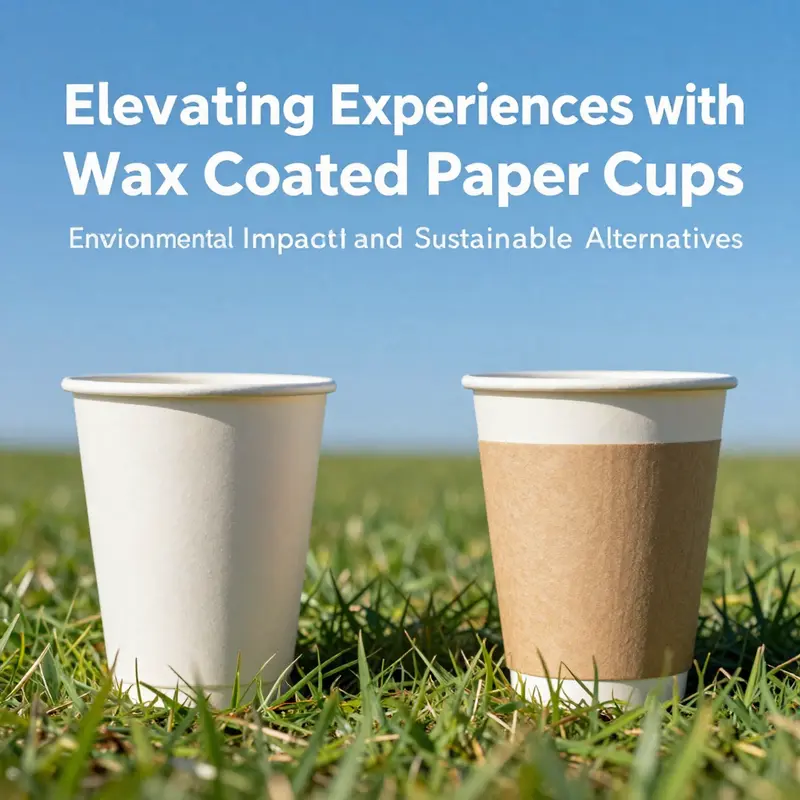
Wax-coated paper cups have long stood as a reliable, economical fixture in the food service landscape. The protective wax layer is the quiet workhorse, preventing liquid from penetrating the pulp and maintaining structural integrity as beverages, hot or cold, make their journeys from counter to curb. Yet beneath the familiar sheen lies a dynamic conversation about sustainability that has grown louder as environmental awareness sharpens and circular economy models gain traction. The recent discourse centers on bio-based and water-based wax coatings as viable alternatives to traditional plastic-laminated options, suggesting a future in which the same disposable cup can deliver dependable performance while aligning with resource stewardship. In this evolving narrative, the coatings themselves become a lens through which we view the broader challenges and opportunities of disposable tableware: the tension between convenience and responsibility, the complexity of recycling streams, and the collective effort required to translate lab-tested promise into real-world impact. When we look closely at the coatings—beeswax, soywax, and an emerging TopScreen biowax family—we see a family of renewables that emphasizes biodegradability and renewability without sacrificing the essential barrier properties that keep beverages from seeping through. Unlike conventional plastic-laminated cups, these bio-based options aim to close loops rather than break them, in theory enabling a more straightforward path toward circularity. But the practical reality demands a more nuanced view. Not all wax coatings are created equal in terms of recyclability, recyclers’ capabilities, or compatibility with existing paper streams. Some coatings can complicate pulping or contaminate recycled pulp, while others can be successfully integrated when paired with properly designed cup systems and recovery processes. This nuance is critical for industry stakeholders and for conscientious consumers who want to support sustainable choices without inadvertently undermining recycling efforts. The current moment, then, is less about choosing a single perfect solution and more about aligning materials science, waste management infrastructure, and consumer behavior to reduce environmental impact at scale. Within this alignment, the idea of performance without compromise becomes plausible: a cup that serves the practical needs of the hospitality space while contributing to a lower carbon footprint over its lifecycle, provided it is designed with its end-of-life implications in mind. The educational undertone of this trajectory is clear: the sustainability of wax-coated cups is not a blanket endorsement or a blanket rejection. Rather, it hinges on design decisions, production methods, and the willingness of the supply chain to invest in compatible recycling pathways. In practice, this means choosing coatings that are compatible with established pulping and recycling technologies, labeling cups to clearly indicate disposal pathways, and coordinating with municipal or industrial facilities that can efficiently process the material. For many users, this translates into a straightforward recommendation: when selecting wax coatings for cups intended for broad distribution, prioritize options that emphasize renewability, biodegradability, and compatibility with current recycling streams. The broader implication is a shift in mindset from “how cheaply can we manufacture this cup” to “how responsibly can we design and manage its entire lifecycle.” The discourse is buttressed by concrete findings from recent research that complicate the once-simple dichotomy between biodegradable coatings and recyclability. A 2024 assessment led by researchers in the field highlights natural waxes such as beeswax, soywax, and TopScreen biowax as promising substitutes for traditional plastic-based barriers. These coatings demonstrate biodegradability and renewable sourcing while maintaining the functional attributes required for beverage containment. Importantly, the study also underscores a reality that practitioners must acknowledge: even among wax-based coatings, not all are created equal in terms of environmental performance or recyclability. The key determinant is how well the coating can integrate with the existing recycling infrastructure. In some cases, coatings that appear environmentally friendly on paper may hinder pulping or contaminate pulp streams if not matched with compatible liner materials or processing steps. This nuance dispels a common misconception that wax coatings are inherently “pseudo-environmental.” When designed with end-of-life in mind, they can be processed alongside standard waste streams rather than being relegated to landfills or incinerators. This is reinforced by credible sources that note coated cups can be used safely up to high temperatures, and that, under the right conditions, they can be recycled as waste paper. The practical takeaway for producers and users is to emphasize compatibility and transparency: ensure that the coatings and the book of materials used under the lid—liners, substrates, and adhesives—readily respond to existing pulping processes. The potential for safe reuse hinges on such systemic coherence, not merely on the coating itself. In a broader macro view, lifecycle analyses offer a more hopeful lens. A recent lifecycle assessment presented at a major industry expo compared water-based coated cups with traditional PE-laminated cups. The results are instructive: producing 1,000 PE-laminated cups generates about 24.77 kg CO2e, while the same quantity of water-based coated cups emits roughly 21.92 kg CO2e. The gap, modest at the point of manufacture, widens in the post-consumption phase: recycled water-based coated cups drop to around 19.47 kg CO2e per 1,000 units, delivering a total reduction of approximately 5.30 kg CO2e over the lifecycle. To translate those numbers into lived reality, consider that roughly 36,226 water-based coated cups could offset the carbon sequestration of a single 20-year-old tree. When scaled to a national level—assuming tens of billions of cups consumed annually—the environmental arithmetic becomes compelling: the cumulative climate benefit could be substantial, potentially contributing to meaningful reductions in the sector’s carbon footprint over time. This quantitative framing helps demystify the rhetoric around disposable cups and climate impact, moving the discussion from abstract ideals to tangible, measurable outcomes. It also highlights the systemic leverage points where improvement is most likely to accrue. For example, collaboration among manufacturers, material suppliers, and recyclers can accelerate the adoption of designs that maximize recyclability without compromising performance. Initiatives that gather industry leaders into a unified effort to improve recovery rates and to optimize the end-of-life value of coated cups are increasingly common. Such alliances aim to harmonize material choices with recycling infrastructure, create shared standards for labeling and disposal, and invest in pilot programs that demonstrate real-world feasibility. In this spirit, the field is shifting from a purely technical debate about coatings to a broader dialogue about circular economy integration. The consumer, in turn, becomes a key actor in this chain. Clear disposal guidance, trustworthy labeling, and accessible recycling streams empower individuals to participate in sustainable outcomes rather than simply consuming and discarding. When readers encounter cups in daily life, the responsibility to ensure proper recovery rests not only with the producer but with the entire ecosystem—from retailers and waste handlers to municipalities and households. The ecological case for wax-based coatings thus hinges on three intertwined strands: material innovation that emphasizes renewables and biodegradability; process compatibility that ensures recyclability with minimal contamination; and system-level collaboration that aligns incentives across the value chain. Together, these strands create a credible pathway toward a future where wax-coated cups can deliver convenience and performance without compromising environmental integrity. For those seeking a closer look at the research landscape, the literature and experimental data offer a nuanced portrait of what is possible and what remains a challenge. If you would like to explore related product categories and applications, our catalog includes a dedicated section that highlights the broader family of disposable tableware, including focus areas on paper cups and their related packaging. For a concrete sense of how these materials connect to everyday choices, see our overview in the relevant product category: paper-cups category. External perspectives further illuminate the science behind these coatings and their implications for waste management and policy, such as the rigorous analyses published in major journals. In sum, wax coatings—when thoughtfully designed and transparently labeled—are not relics of a bygone era but rather a dynamic component of a sustainable future for disposable beverage packaging. The challenge lies in translating laboratory promise into scalable, real-world outcomes. Doing so requires careful selection of coatings, a keen eye on recyclability, and a willingness to invest in infrastructure that can close the loop. It is a multidimensional task, but the potential climate dividends and the practical advantages for food service operations make it a worthy pursuit. The journey toward truly sustainable cups is incremental and collaborative, guided by data, shaped by policy, and materializing in everyday choices that consumers and businesses make at the point of sale and after. External resource: https://www.sciencedirect.com/science/article/pii/S026372582400087X
Shaping the Surface: Sustainability-Driven Transformation in Wax-Coated Paper Cups

Across the beverage service landscape, wax coated paper cups have long served as a practical compromise between performance and cost. The wax layer provides a reliable moisture barrier that keeps cold drinks from seeping into the paper, preserving structural integrity during serving and transport. For operators, this means fewer spillages, quicker service, and a predictable supply chain. Yet beneath this straightforward value proposition lies a broader conversation about sustainability, recycling, and the evolving expectations of consumers who increasingly connect packaging choices with environmental impact. The market has not stood still; it has begun to reexamine the surface on which many beverages are served. As coffee shops, juice bars, and event venues push toward greater transparency about waste streams, practitioners and researchers alike have started to map the full lifecycle of wax coated cups, from raw materials to end of life, and to align what works in the short term with what becomes feasible in the long term. The shift is not merely about replacing wax with a greener alternative; it is about rethinking the entire coating strategy to balance performance, economics, and responsibility in a connected system.
The core appeal of traditional wax is its reliability. Paraffin or wax based barriers have long provided an effective shield against grease and moisture, essential when cups are used for cold beverages or for foods with light oil content. In many regions, this performance has been coupled with a familiar manufacturing footprint and a well-established recycling or disposal stream. Yet environmental considerations have grown up around these choices. Wax coatings, while cheap and efficient in some contexts, pose challenges for recycling streams that are optimized for paper fibers rather than coatings. In places where industrial facilities can segregate or process coated papers, the status quo remains viable. Where facilities lag, the environmental calculus shifts, and stakeholders demand coatings that either separate cleanly from paper fibers or break down more readily in composting or industrial processing. This tension is at the heart of ongoing market evolution, shaping both product development and procurement criteria for foodservice operations. To understand where the sector is headed, it helps to look beyond the barrier function and toward the broader ecosystem of coatings, substrates, and waste management, where seemingly small changes ripple outward across supply chains.
A meaningful trend is the movement away from traditional wax coatings toward more environmentally friendly alternatives. Plant based biopolymers, such as polylactic acid derivatives, and improved food grade polyethylene coatings are increasingly common in new designs. These choices reflect a growing global effort to reduce reliance on fossil fuel derived materials, minimize plastic pollution, and enhance recyclability. The shift is not merely about chemistry; it is a response to regulatory signals and consumer expectations that favor packaging that can be recycled more cleanly or composted under appropriate conditions. In practical terms, this means that cups may now feature a biopolymer or a refined PE barrier that preserves grease resistance while enabling better separation during recycling or more predictable composting outcomes where facilities exist. Some evolving designs integrate a biobased inner system that preserves leak resistance for hot and cold liquids alike, while enabling entry into composting streams in industrialized settings. The promise is not to eliminate coatings but to align them with the realities of waste management infrastructure, which varies widely across regions and municipalities. Meanwhile, manufacturers continue to refine barrier performance to ensure that the transition does not compromise the user experience, keeping out leaks and maintaining durability during handling and transport, even for beverages with higher solids content.
For buyers and operators, the decision framework becomes more nuanced. The old equation of cost and performance has grown more complex with sustainability factors entering the calculation. Cost remains a decisive lever, especially for high-volume outlets that require predictable margins. Yet the premium for eco friendly coatings can be offset by reductions in waste disposal costs, the potential for improved recycling yields, and, in some markets, access to incentives tied to sustainable packaging. Beyond dollars and cents, practitioners weigh the reliability of supply chains. The transition away from wax has accelerated in parts of the market where suppliers can guarantee consistent access to alternative coatings, maintain comparable leak resistance, and deliver on industrial scale. When a café or stadium operations team evaluates a new coating strategy, they do so with a holistic view: Will the alternative maintain a barrier during peak service? Can it be produced at scale without interrupting current procurement channels? Does it align with local waste management capabilities and regulatory expectations? These questions are as crucial as the barrier properties themselves, because the best coating in a lab may falter in a real world waste stream if systems are not prepared to handle it.
In parallel with coating transitions, the research community has intensified exploration into surface chemistry and fiber functionality. There is growing interest in coatings that improve adhesion to paper without compromising recyclability, as well as in barrier systems that resist grease and moisture yet can be separated from fiber during pulping. This research is often incremental but cumulative, leading to hybrid approaches that combine a thin outer wax or polymer layer with a more easily processed inner liner. For cold beverages and light oil containing products, such configurations can deliver a familiar performance while enabling second life options for the packaging. The industry is learning that success does not hinge on a single material solution but on a family of compatible choices that together broaden options for sustainability, depending on local capabilities and business models. Companies and research institutions increasingly publish data on barrier performance, compostability thresholds, and recyclability outcomes, helping buyers compare alternatives in a practical, apples to apples way. While the landscape is dynamic, one constant remains: the demand for packaging that works reliably in service and in the waste stream, with a footprint that aligns with regional and global environmental goals.
This evolving landscape also highlights the role of supply chain education and consumer communication. When packaging shifts away from familiar wax based cups, operators need clear guidance on disposal expectations and recycling instructions for customers. Transparent labeling and straightforward consumer messaging help prevent contamination of recycling streams and ensure that the intended end of life pathway is understood. In parallel, retailers and food service chains increasingly require packaging partners to demonstrate not only barrier performance but also end of life feasibility within their own local systems. The practical outcome is a more collaborative relationship among beverage producers, packaging manufacturers, waste management providers, and regulators. In this environment, the value of curated packaging libraries or category pages becomes evident. For readers exploring related packaging families and how they relate to cup design, the paper cups category offers a useful reference point that connects the dots between film coatings, liners, and end of life options. paper cups category.
Ultimately, the market’s trajectory points toward a balance rather than a replacement. Wax coated cups are unlikely to vanish overnight, given their enduring advantages in cost and scalability and their compatibility with existing industrial processing in some regions. Yet the push toward sustainability is reshaping what a wax coated cup can be. It is prompting a spectrum of coatings and liner strategies, a reevaluation of recycling and composting infrastructure, and a renewed emphasis on lifecycle thinking in packaging procurement. The most successful designs are those that can demonstrate robust performance across service and end of life, while aligning with the regulatory and market realities of the places where they are used. In this sense, the future of wax coated cups is less about a single material pivot and more about a pragmatic, measured evolution—one that integrates performance with responsibility and uses innovation to unlock practical pathways for a more sustainable beverage packaging ecosystem.
For readers seeking broader context and current market dynamics, the latest industry analyses offer a snapshot of emerging technologies and supplier developments that continue to shape this category. External resources provide deeper market forecasts and technical insights that illuminate how coating technologies may evolve over time. External resource: https://www.researchandmarkets.com/reports/5984721/wax-coated-paper-cups-market-global-industry-trends-and-forecasts
Between Wax and Water: The Precision Craft Behind Wax-Coated Paper Cups
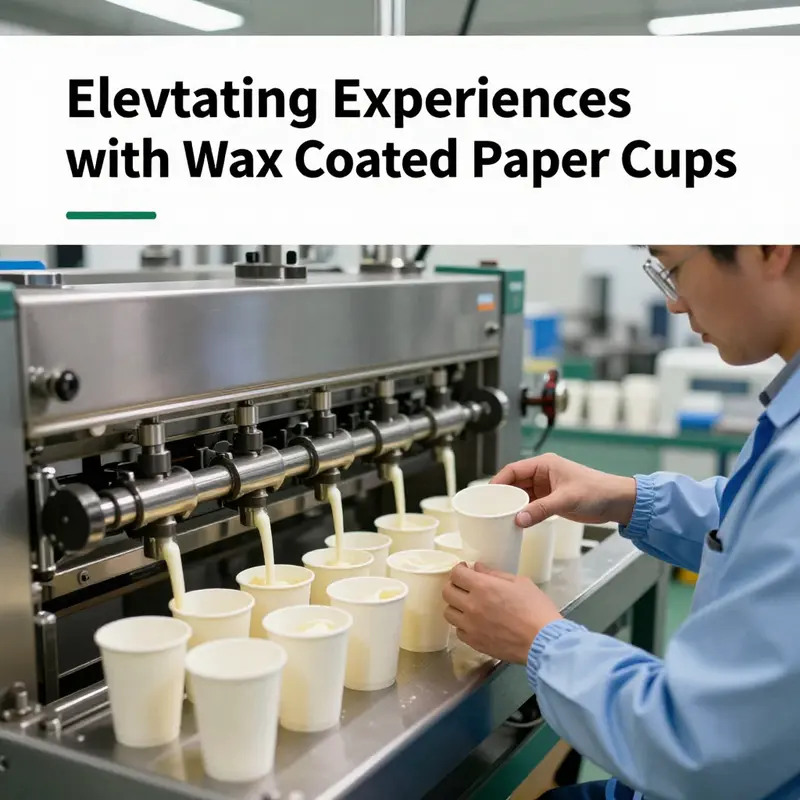
For readers seeking a more technical treatment of process validation and testing, an external study provides a comprehensive validation framework that underpins the practical steps described above. It offers a detailed examination of manufacturing and testing practices for similar moisture-barrier structures, which can inform quality programs and future improvements. See the external study for a rigorous, evidence-based perspective on these methods. external study
null
null
Final thoughts
As wax coated paper cups continue to play a pivotal role in the food and beverage industry, understanding their unique benefits and applications is critical for businesses seeking to enhance customer experience while being mindful of environmental impact. These versatile cups combine functionality with sustainability, making them an ideal choice for bubble tea shops, restaurants, and catering services alike. By staying informed about their design, market trends, manufacturing processes, and eco-friendly alternatives, businesses can make informed choices that resonate with both customers and their ecological values.