
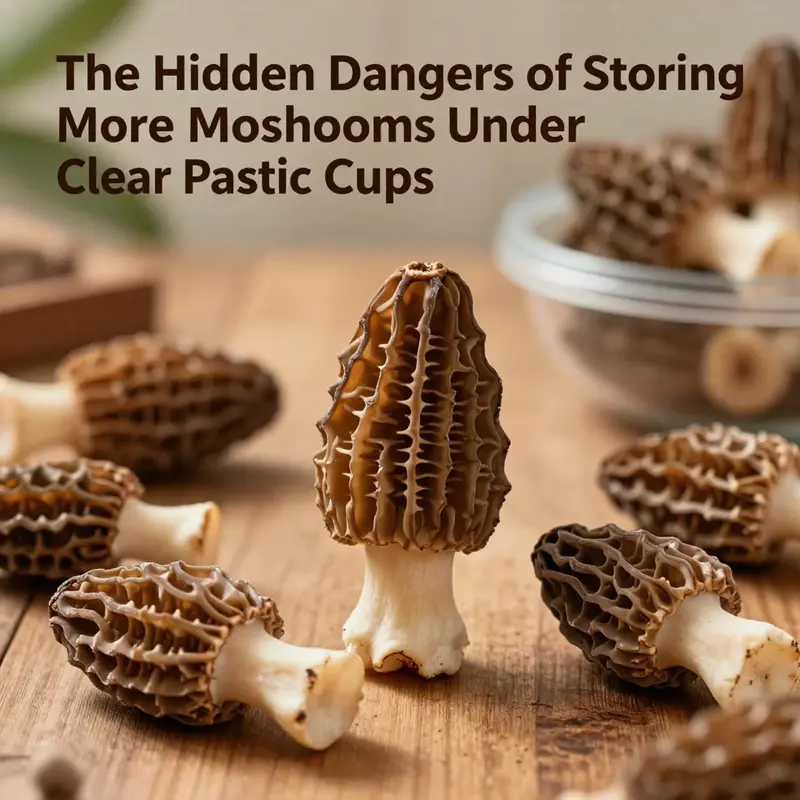
Morel mushrooms are a culinary treasure highly sought after for their unique flavor and texture. However, improper storage practices, such as placing clear plastic cups over them, can compromise their quality and safety. This article delves into why this method is not recommended, outlining the detrimental effects on the mushrooms and the food safety concerns that arise from such practices. Each chapter will guide you through proper storage techniques, the context of mushroom presentations, and alternative display methods that respect the natural integrity of morels, ensuring your culinary creations shine.
Clear Cups, Clouded Freshness: Reconsidering the Practice of Covering Morel Mushrooms
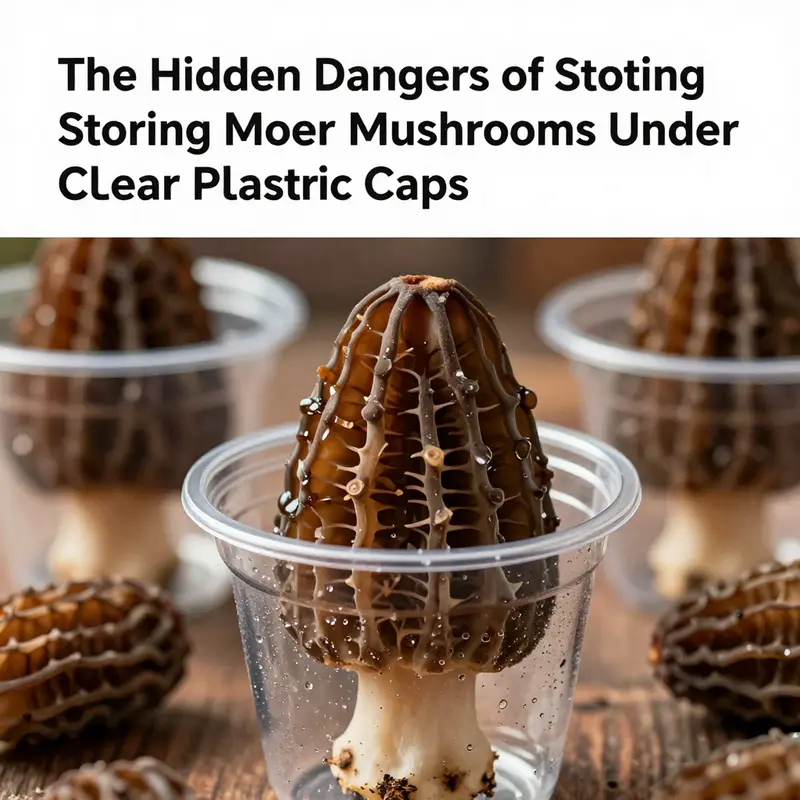
Morel mushrooms hold a special place in seasonal foraging and kitchen lore. Their honeycomb-like caps and earthy aroma invite curiosity, yet they arrive with a fragile physiology that flagging moisture, temperature, and handling can quickly betray. The practice of slipping a clear plastic cup over a handful of fresh morels—whether for a moment of display, a makeshift transport solution, or a cinematic plating effect—appears attractive in theory. It presents a neat, minimal silhouette and a sense of containment that many cooks associate with “presentation” as much as preservation. But the science of fungal life, and the practicalities of everyday kitchen storage, urge a more cautious stance. The chapter that follows threads these ideas into a coherent approach: a careful balance between aesthetics, safety, and respect for the mushroom’s biology, rather than a reflex to seal and forget.
Morels arrive with a surprisingly high moisture content relative to their size, and their surface, though robust to a degree, is highly porous. This combination is a double-edged sword. The moisture helps preserve the cap’s delicate texture when kept dry and cool, contributing to the mushroom’s prized mouthfeel and aromatic profile. However, that same moisture, locked beneath a lid or under a cup, can become a catalyst for texture breakdown and microbial activity. When a clear plastic cup is placed over the mushrooms, the air exchange that is critical to maintaining a stable microclimate is restricted. Condensation readily forms on the interior surfaces, and droplets may linger on the cap and stem. Rather than remaining airy and dry, the mushrooms sit in a humid pocket where surface microbes can thrive and enzymes can continue to act on the tissue. This is the condition that accelerates slime formation, softening, and the development of off-odors—signatures of deterioration that can transform a pristine harvest into a liability in a short window of time.
The question, then, is not whether a cup can physically cover morels, but what happens to the conditions that determine freshness under such a cover. The biology of fungi is driven by moisture, warmth, and oxygen. In a sealed or semi-sealed environment, oxygen becomes limited, and carbon dioxide can accumulate. For any fleshier mushroom, including morels, this shift can alter respiration, promote anaerobic pathways, and invite spoilage organisms that prefer damp, still air. When the fruit body is from the wild, it may carry tiny surface communities of bacteria and yeasts from its field environment. In a moisture-rich microclimate created by a cup, these microbes find conditions conducive to growth. Even if a mushroom starts pristine, the clock begins ticking the moment condensation appears. The result can be a dramatic loss of texture—mushy caps, darkened coloring, and an off-taste that betrays freshness.
The absence of robust, direct evidence that clearly defined, cup-over-mushroom setups cause specific harm to morels does not absolve the practice from scrutiny. The available research points to a broader, biologically plausible risk: moisture retention in a closed or semi-closed environment is a common driver of spoilage for high-moisture produce, including mushrooms. It is not simply a matter of one time-limited exposure; repeated or prolonged use compounds the risk. In everyday kitchens, where temperature fluctuations, variable humidity, and imperfect sanitation are common, the temptation to seal for the sake of appearance can outweigh the perceived risk. This is why the culinary and food-safety communities emphasize that presentation should never eclipse preservation. The principle is to protect the mushroom’s natural breath rather than to imprison it in a static, humid capsule.
An important nuance in this discussion is the material composition of the container itself. The literature on plastic storage consistently flags potential concerns about chemical leaching, especially when plastics are not food-grade or when they encounter heat or acidic conditions. While there is no conclusive, mushroom-specific evidence that a clear plastic cup will necessarily poison or spoil morels, the prudent path is to avoid introducing any container that could transfer substances or compound adverse effects if used improperly. Conversely, the use of breathable, food-safe materials aligns with the fundamental goal: minimize moisture accumulation, promote evaporation, and preserve the mushroom’s structural integrity and aroma. In practice this translates to choosing storage approaches that prioritize air circulation, dryness, and cleanliness. Morels should be kept in a cool, dry environment with ample air around them, not sealed inside a humid microenvironment. When a display is needed, it should be visually appealing yet minimally invasive to the mushroom’s physiology.
From a culinary standpoint, the tension between display and preservation manifests in how the product is used in a dish or a service setting. In a high-end plating scenario, chefs often seek a precise, curated visual impression. Yet the same goal can be achieved without compromising the fungi’s quality. A shallow, ventilated tray, lined with clean paper or a breathable liner, can present the mushrooms in an orderly, aesthetically pleasing manner while ensuring ample evaporation and airflow. If a cup-like vessel is ever considered for display, it should be non-sealing, clearly ventilated, and used for only a brief window. The aim is to maintain the mushroom’s aroma, color, and firm texture, not to trap humidity that would dull those attributes. The practical upshot is clear: display decisions must be guided by an understanding of microclimates, not by a simplistic impulse to encase.
For readers who want to consider alternatives in packaging and presentation, the broader packaging landscape offers options that reflect safety and practicality without sacrificing artistry. A useful approach is to frame the mushrooms in a manner that respects their need for air while preserving the visual appeal of the dish or display. An immediate, tangible alternative is to present the mushrooms on a plate with a light, breathable cover such as parchment or a fine, porous mesh that keeps the items in view while enabling air exchange. This strategy aligns with the overarching aim of protecting freshness and flavor. When a container is necessary for transport or staging, use a vessel designed for food contact and air exchange, rather than a sealed compartment. This subtle shift in thinking—from containment to exchange—helps preserve the integrity of morels through handling, storage, and service.
If readers want to explore related options for containers that might appear in a plating or display context, consider looking at broader cup designs designed for food contact and presentation. For instance, the idea of a lid that allows continued air flow can influence how a chef approaches the staging of delicate ingredients. A general example from the broader cup landscape—disposable options with appropriate lids that prioritize airflow and safety—offers a useful frame for thinking about presentation without sacrificing quality. See disposable single-wall paper ice-cream cups with lids for a practical illustration of how lids can be used to balance containment with ventilation. This point of reference helps bring the discussion from the theoretical to the practical, illustrating how materials design and culinary intent intersect in the care of delicate produce.
The broader takeaway is straightforward. Morel mushrooms reward cautious handling that emphasizes dryness, cleanliness, and ventilation. The use of clear plastic cups as a storage or display device is not inherently a death sentence for every mushroom, but it is not a reliable preservation method for morels. The absence of definitive, mushroom-specific harm in some sources does not override the practical wisdom gained from food-safety principles and the biology of fungi. In most cases, a simple, breathable approach will outperform a sealed, humid microclimate. The most reliable path to maintaining morel quality lies in dryness, cool temperatures, prompt usage, and mindful display techniques that respect both the science and the art of mushroom cuisine.
For readers seeking authoritative guidance on mushroom safety and storage, established food-safety resources offer a rigorous framework that applies across fungi and vegetables alike. The FDA’s guidance on Food Safety and Storage of Fresh Mushrooms presents core recommendations around moisture control, temperature management, and careful handling, which remain central to preserving quality and minimizing risk. By anchoring display and storage decisions in these principles, cooks can protect the distinctive character of morels while delivering elegant, safe offerings.
Under the Cup: Rethinking Clear Plastic Covers and the Realities of Morel Storage
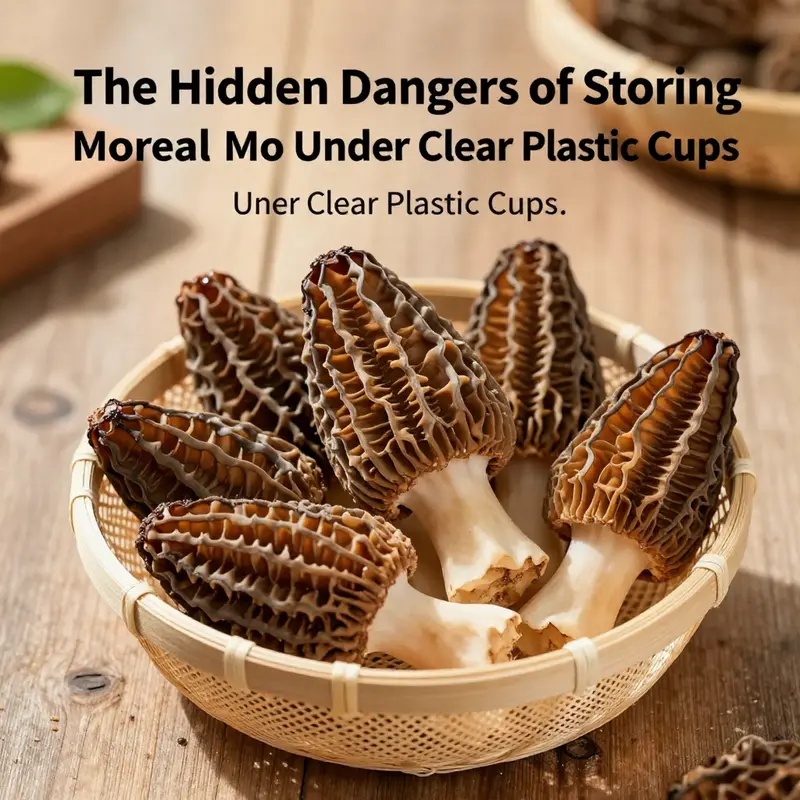
When people first encounter the idea of placing a clear plastic cup over a delicate harvest of morel mushrooms, it often feels like a clever staging trick rather than a serious preservation strategy. The impulse is understandable: a transparent cap seemingly protects the surface from dust, offers a quick visual, and creates a neat, plate-ready silhouette. Yet as with many food-arts experiments, the line between display and preservation matters. Morels are prized for their honeycomb caps and spongy interiors, but that same structure makes them unusually sensitive to the microclimate created by a sealed, moisture-laden cup. The research that informs this chapter traces a simple, sobering truth: what looks like a tidy solution can rapidly undermine the very quality it seeks to preserve. In the kitchen and the field alike, the goal is not to trap the mushroom beneath a plastic dome, but to steward its moisture, texture, and aroma in a way that respects the biology of the organism and the safety of the eater. The temptation to use a cup as a quick fix can be strong, especially when time is short or a presentation demands drama. But the science of storage—not merely the aesthetics of display—tells a different story. Morels breathe, so to speak, and they exchange gases with their environment as they lose water to surroundings that are never perfectly dry or perfectly ventilated. A clear cup, especially when placed upside down or sealed tightly, alters that exchange. Condensation collects on the inner surfaces, humidity climbs, and the mushrooms become reservoirs for bacterial and mold growth. Slimy textures and off-odors can emerge within a day or two, turning what began as a prized harvest into waste. The behavior of high-moisture foods in closed spaces is a well-documented caution across food-safety guidelines, and morels are no exception. This is not a moralistic judgment about ingenuity; it is a practical invitation to align handling with how these fungi actually respond to their environment. The moment we move from display to storage, the rules change, and the cups once used for display become liabilities rather than allies in the kitchen’s ongoing quest for freshness. In this light, it is worth acknowledging a subtle distinction. For an artfully plated restaurant piece or a temporary showcase, a clear plastic cover or a glass dome footnoted with a precise shelf-life might be appealing. But even in that momentary context, the cover should be considered a tool for presentation—never a substitute for proper preservation. The broader error is to conflate a visual effect with a protocol. If the goal is to extend the edible life of morels, the path is a careful, science-grounded sequence that prioritizes air movement, cool temperatures, and controlled moisture rather than enclosure. The conversation around storage thus begins with anatomy—the way the mushroom’s cap and stem absorb moisture and how their porous surfaces shed or retain it. Morels are not dense mushrooms; they have a delicate lattice-like structure that invites oxidation and microbial colonization when humidity is not managed. In practice, this means that a cup’s interior can become an incubator for bacteria or mold, particularly if the mushrooms are not perfectly dry or if the cup traps steam released during any residual temperature fluctuations after washing or trimming. Even brief exposure to high humidity in a closed space accelerates texture breakdown. The lesson extends beyond the kitchen, touching on broader consumer behaviors. The same principle that governs mushroom storage—controlled environment, gentle handling, and minimal moisture exposure—also governs how households should store other highly perishable produce. The impulse to seal and shroud is seductive, but it is rarely compatible with the biological realities of fragile fungi. The research confirms that the most reliable approach to preserving morels is one that emphasizes breathability and climate control rather than enclosure. This is not merely a preference but a series of steps anchored in practical outcomes. In the domestic setting, the widely endorsed method is to store unwashed, dry morels in a breathable container that permits airflow while limiting excess moisture. A brown paper bag emerges as a practical gold standard. It is not a miracle cure; rather, it balances several competing needs simultaneously. Airflow is essential to prevent condensate buildup, which can seed spoilage organisms. At the same time, the bag absorbs surface moisture that would otherwise linger on the mushroom’s exterior, creating a damp microclimate conducive to decay. The bag’s minor permeability is just enough to keep the humidity from becoming a stagnant layer that hovers around the mushrooms. This approach aligns with the instinct of many foragers and cooks who know that the storage environment’s simplicity can be more forgiving than elaborate, moisture-trapping contraptions. The recommended practice is straightforward yet effective: place clean, dry morels into the bag, loosely fold the top, and refrigerate in the main compartment. Do not cram them into the crisper drawer, where humidity tends to be higher and air circulation poorer. When done correctly, this method can preserve flavor and texture for seven to ten days. It is a modest window, but for seasonal delicacies like morels, that window is a valuable bridge between harvest and plate. The emphasis on timing also carries a safety dimension. When perishable products sit too long, they become a potential risk—especially when moisture and temperature swing outside the narrow band where mushrooms remain safe to eat. This is why the forager’s eye must remain vigilant for spoilage indicators: a slimy surface, dark spots, or a strong off-odor signal that the mushroom has passed its prime. Trimming the stems by about a half-inch at the bottom can help remove dirt-prone zones and improve texture. The cleaning step warrants particular care. Dry brushing with a soft brush is preferred, moving from the cap toward the stem, with gentle taps to release soil clinging to crevices. Water should be minimized; if washing is unavoidable, a brief rinse followed by rapid drying with a clean towel or a salad spinner helps reduce moisture that can hasten decay. The goal is to minimize the mushroom’s water content before it meets the storage environment, not to saturate it in the act of cleaning. For longer-term preservation beyond a week, mushrooms can be dried or frozen after they are properly cleaned and dried. Drying concentrates the mushroom’s concentrated flavor and makes it a versatile pantry staple for soups, sauces, and stews. Freezing, while more straightforward for some cooks, requires careful pre-treatment—usually a blanching step or a thorough drying—to maintain texture after thawing. These options extend the seasonal window and enable more flexible use of morels across recipes. As knowledge about storage accumulates, a broader understanding of foraging ecology complements practical care. Morels tend to fruit in spring, in response to specific temperature patterns and soil conditions. Their habitats—disturbed woodlands, riverbanks, burn areas—offer clues about harvest timing and subsequent handling. A basic thermometer can help track soil temperature, a small but useful tool for predicting the moment when foraging is likely to be most productive. The science of storage, then, is not merely about keeping a mushroom intact for a few more days; it is about aligning harvest realities with kitchen needs so that each bite remains bright and aromatic. In this sense, the cup’s white, translucent shell becomes a reminder of the boundary between art and science. A moment that might seem visually striking can undermine the very characteristics that define morels: their delicate aroma, their crisp yet tender texture, and their concentrated flavor. The display impulse can coexist with preservation as long as the two are not conflated. A subtle, responsible approach keeps the cup in its rightful role: an optical aid for presentation or a temporary display device, not a substitute for ventilation and temperature control. When chefs or home cooks consider plating and service, they may occasionally reference packaging options that blur the line between form and function, such as the clear-plastic packaging used to present pastries or other delicate items. The choice of container should be guided by whether it is appropriate for storage or purely decorative display. For example, the option described as clear-plastic combo pastry packaging can illustrate how packaging technologies sometimes mimic the aesthetic of a preserved product without offering actual preservation benefits. It is a useful reminder to evaluate gear not only by appearance but by function. To keep this topic grounded in practical terms, consider a simple nursing of process rather than a dramatic visual trick. The emphasis should be on clean, dry mushrooms, breathable storage, careful temperature management, and an awareness that moisture control is central to maintaining freshness. If you find yourself drawn to a momentary display technique, reserve it for short-term, aesthetic purposes and revert to the breathable bag method for storage. In the end, the cup’s allure lies in its simplicity and immediacy, not in its capacity to stabilize the life of a fragile harvest. For those who want a dependable, science-aligned approach, the guidelines above offer a clear roadmap: inspect, trim, brush, dry, and store in a breathable container in the fridge, where airflow and modest humidity are balanced. The result is a practical, food-safe way to enjoy morels at their best, season after season. For further reading on safe storage and preparation practices, see the external resource linked at the end of this chapter. A concise reminder that aligns with official recommendations helps sustain both flavor and safety in equal measure. External resource: https://www.fda.gov/food/buy-store-serve-safe-food/mushroom-storage-and-preparation-tips
Plastic, Moisture, and Morels: The Food-Safety Case Against Clear Cups

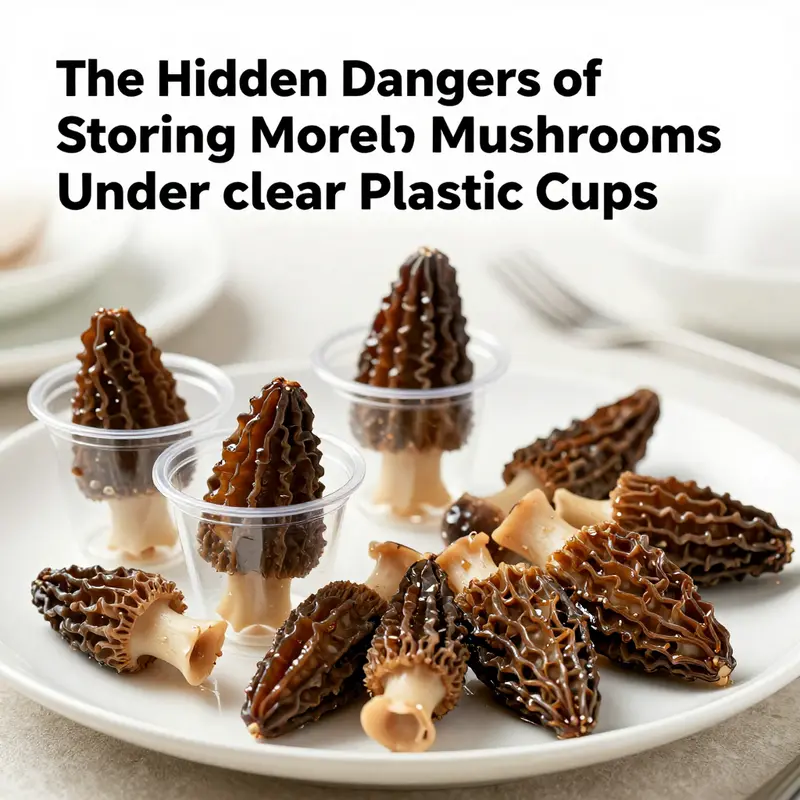
Morel mushrooms sit at a delicate crossroads between cuisine and safety. Their honeycomb caps and spongey texture make them prized, but also highly perishable. The impulse to cover or display them with clear plastic cups may seem clever, yet it creates a microclimate that accelerates spoilage rather than preserves freshness. A transparent shell can trap moisture, limit airflow, and invite mold growth. In morels, moisture fuels microbial activity and can lead to off odors, textural deterioration, and potential toxin risk. The risk is not merely cosmetic; certain molds can produce mycotoxins that pose health concerns. Hence, plastic cups should not be relied upon for preservation. After cleaning, store morels in a breathable container that allows moisture to escape. Use open baskets or ventilated paper containers, and keep them cool and dry. If refrigeration is needed, choose a ventilated compartment such as a paper bag inside the fridge to maintain dryness. Display and storage functions should be separated: use cups only for temporary display and not for long term storage. For immediate cooking, minimize handling and moisture, and remove dust with a dry brush. When planning a display, consider breathable packaging that preserves appearance without trapping humidity. For further reading about mycotoxins and safe food handling, refer to FDA guidance on mycotoxins. https://www.fda.gov/food/chemicals-in-food/mycotoxins
null
null
Showing Morels with Respect: Sustainable, Attractive Displays That Beat Plastic Cups
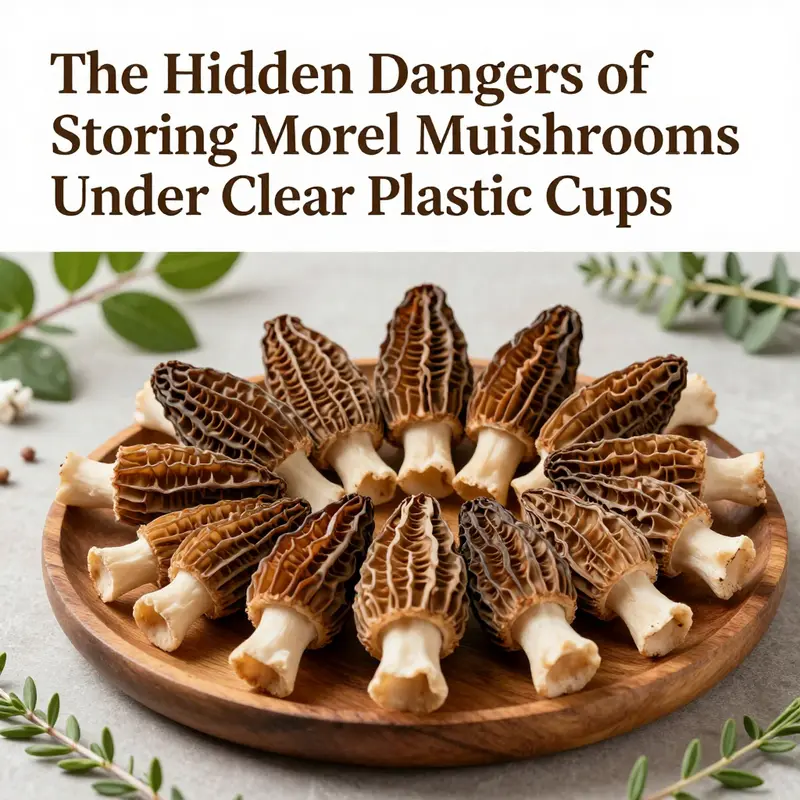
Morel mushrooms demand displays that honor their delicate form and short shelf life. A display is not just decorative. It affects freshness, buyer perception, and waste. Clear plastic cups, when used to cover morels, create a humid microclimate. That humidity speeds decay and can invite bacterial growth. Instead, consider approaches that protect and present morels while keeping air flowing. The goal is simple: highlight the mushrooms’ texture and color while preserving aroma and structure.
Natural baskets are an obvious starting point. Woven bamboo or rattan baskets cradle morels gently. Their porous structure promotes airflow around stems and caps. Arrange morels stem-down or leaning slightly on their sides. This reduces pressure on the fragile caps. Place a layer of unbleached paper or a thin cloth at the base for hygiene. The cloth absorbs stray moisture while remaining breathable. Baskets also reinforce the mushrooms’ woodland origin. When set on a wooden table or a rustic tray, they create a cohesive, inviting vignette that appeals to chefs and shoppers alike.
For market stalls and gourmet counters, rustic displays on dried moss or wood slices emphasize provenance. A bed of dried moss cushions morels and adds contrast to their honeycomb caps. Use wood slices or small sections of bark as natural pedestals. These materials evoke the forest without sealing the mushrooms in plastic. Keep arrangements shallow so each piece is visible. Overcrowding causes bruising and traps moisture. If you need to elevate a few specimens for emphasis, use small wooden blocks or ceramic tiles rather than closed containers. The result feels artisanal and allows morels to breathe.
If the setting calls for a cleaner aesthetic, ceramic or porcelain dishes with organic shapes are excellent. Choose plates with matte finishes to reduce glare. Neutral colors like cream, slate, and soft gray make the mushrooms’ pattern pop. The smooth surface is easy to clean between uses. For hygiene, line dishes with absorbent, food-safe paper towels. Replace the lining regularly so moisture never accumulates. This approach suits fine-dining displays and tasting events, where a minimalist backdrop highlights each mushroom as a culinary gem.
A glass bell jar offers a compromise between openness and protection. Used properly, it shields from dust and curious hands while staying ventilated. Avoid sealing the jar to the base. Instead, set the bell jar slightly ajar or use one with small ventilation holes. The transparency keeps the visual drama intact without creating a sealed, humid chamber. Place the jar on a wooden stand or stone slab for texture contrast. For short-term indoor presentation, this method looks refined and keeps morels sanitary without forcing them into a warm, moist trap.
Lighting and placement shape how people perceive morels. Use soft, directional lighting to bring out ridges and shadows. Avoid intense heat sources that can dry or wilt the mushrooms. Position displays away from direct sun and warm lighting fixtures. Signage should be simple and informative. Indicate harvest date, location, and recommended storage tips. Buyers respond to transparency. When they know how fresh the mushrooms are and how to care for them, they feel more confident about buying.
Handling before display matters as much as the display itself. Inspect each specimen and remove any soft or discolored pieces. Gently brush away debris with a soft brush. Avoid prolonged washing; morels are porous and will absorb water. If cleaning is necessary, do a quick dip or a very brief rinse, then pat dry immediately. For display, keep morels cool. A chilled display surface, such as a metal tray that has been briefly cooled, can slow deterioration without creating condensation. Just be sure the surface is dry before placing mushrooms on it.
For temporary takeaway or market packaging, breathable, compostable options are preferable to rigid plastic. Sturdy paper trays, molded pulp baskets, or shallow kraft paper boxes work well. They protect morels during transit while allowing airflow. When customers need a sealed option for travel, a ventilated paper sleeve or a box with perforations keeps air moving. If you supply utensils or napkins, choose biodegradable items to reduce waste. For bulk takeaway needs, consider a shallow, compostable tray lined with absorbent paper. This keeps mushrooms separated and prevents moisture accumulation.
If you require disposable packaging for hygiene or convenience, pick materials designed for breathability. An eco-friendly disposable serving bowl can be useful when paired with a breathable lid or venting. Ensure lids are not airtight. A lid that snaps or rests lightly in place will protect against dust while permitting air exchange. For events, prepack small portions on trays lined with absorbent paper and label them clearly. Encourage customers to refrigerate immediately and consume within a day or two. Clear instructions help maintain quality and reduce food safety risks.
Transport considerations are often overlooked. Avoid stacking morels directly on top of each other. Use shallow compartments or dividers. When transporting longer distances, keep the cargo area cool and shaded. If refrigeration is available, transport in a cool crate rather than a sealed cooler that traps evaporative moisture. At markets, rotate stock frequently. Place the freshest mushrooms front and center and move older pieces to the back or remove them promptly.
A mindful display strategy also reduces waste. Avoid overstocking displays with mushrooms that cannot be sold within their window of freshness. Offer small sample plates so buyers can see texture and aroma without handling the main display. Partnering with local chefs or vendors can convert unsold stock into prepared items, reducing loss and extending value.
Finally, treat presentation as an extension of stewardship. Morels are seasonal and sought after. A display that balances beauty, breathability, and education respects both the product and the buyer. Whether you choose woven baskets, wood slices, ceramic dishes, or a ventilated bell jar, prioritize airflow and gentle handling. These choices will keep morels looking and tasting their best, while avoiding the moisture trap that a clear plastic cup can create.
For practical, sustainable packaging ideas you can source for markets and events, consider options like compostable bowls and ventilated kraft containers available through many suppliers. For deeper reading on display techniques and the science behind produce preservation, see this comprehensive guide on sustainable display techniques: https://www.sciencedirect.com/science/article/pii/S030852162400078X
Final thoughts
Overall, the practice of using clear plastic cups over morel mushrooms is fraught with risks that compromise both their quality and safety. By understanding proper storage techniques and embracing alternative presentation methods, culinary professionals can preserve the integrity of these remarkable mushrooms. Elevating the way we handle food not only enhances the dining experience but also ensures a commitment to food safety, freshness, and flavor—a crucial aspect for any food service or catering operation. Choose quality methods and take pride in delivering the best to your customers.