
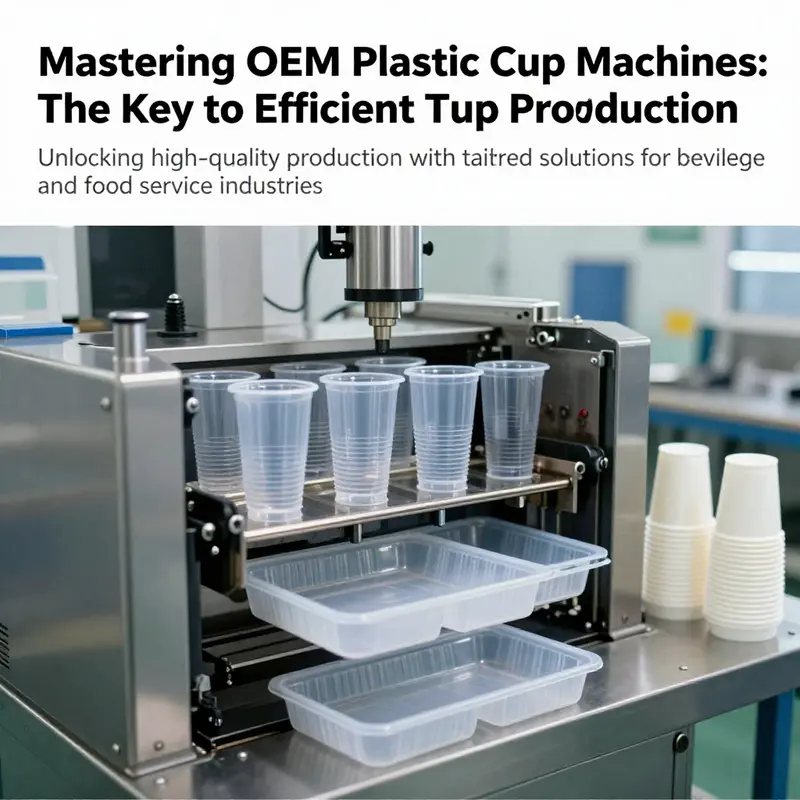
The demand for eco-friendly, disposable packaging solutions is surging, and on-demand production capabilities are critical for businesses in the beverage, food service, and event planning industries. An OEM plastic cup machine for disposable trays represents a crucial investment for establishments such as bubble tea shops, restaurants, food trucks, catering services, and corporate procurement teams. This article explores the key features of these machines, the thermoforming process they utilize, and the customization options available to meet your unique production demands. Understanding these facets will empower your business to make informed decisions while enhancing operational efficiency and product quality.
From Sheet to Shelf: The Role of OEM Plastic Cup Machines in Disposable Tray Production
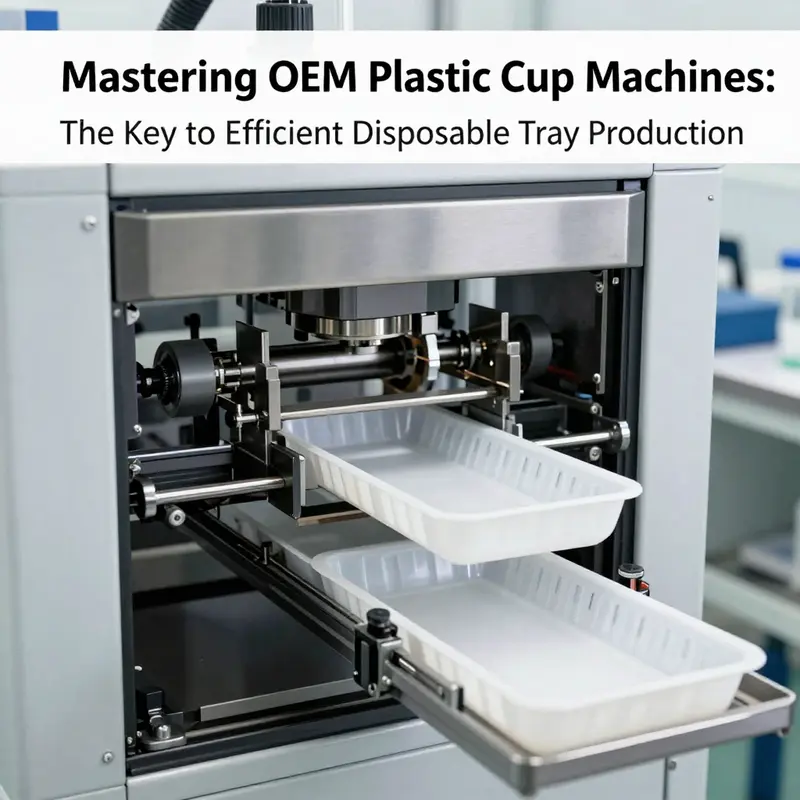
OEM plastic cup machines drive the thermoforming line that converts sheet plastic into disposable trays and clamshells. The process involves in-line thermoforming with precise heating, forming, vacuum, trimming, and cooling. PLC-based control ensures repeatability, tight tolerances, and rapid cycling. Material versatility includes PS, HIPS, PP, PET, and occasionally PLA blends; selection affects barrier properties, clarity, and cost. High-speed lines can achieve up to around 30 cycles per minute depending on part geometry, sheet thickness, and downstream equipment. End-to-end integration minimizes handling, reduces scrap, and improves cleanliness; automated sheet feeding, controlled heating zones, and servo-driven trimming create a robust flow. Branding and customization are common, with options for embossing or logos on trays or lids, multi-cavity configurations, and adjustable tray footprints. Certifications (CE, ISO) and robust service networks provide assurance, spare parts availability, and on-site commissioning. Durability and post-sale support matter; suppliers offer extended warranties and remote monitoring to sustain uptime. Selecting the right partner hinges on technical fit, material compatibility, and a collaborative approach to design reviews, commissioning, and training. As packaging shifts toward sustainability, the ability to process recycled-content sheets and to minimize waste becomes a differentiator. The result is a scalable, repeatable platform that can grow with brand needs while meeting safety and regulatory requirements.
Shaping Scale: Inside the OEM Plastic Cup and Tray Thermoforming Line
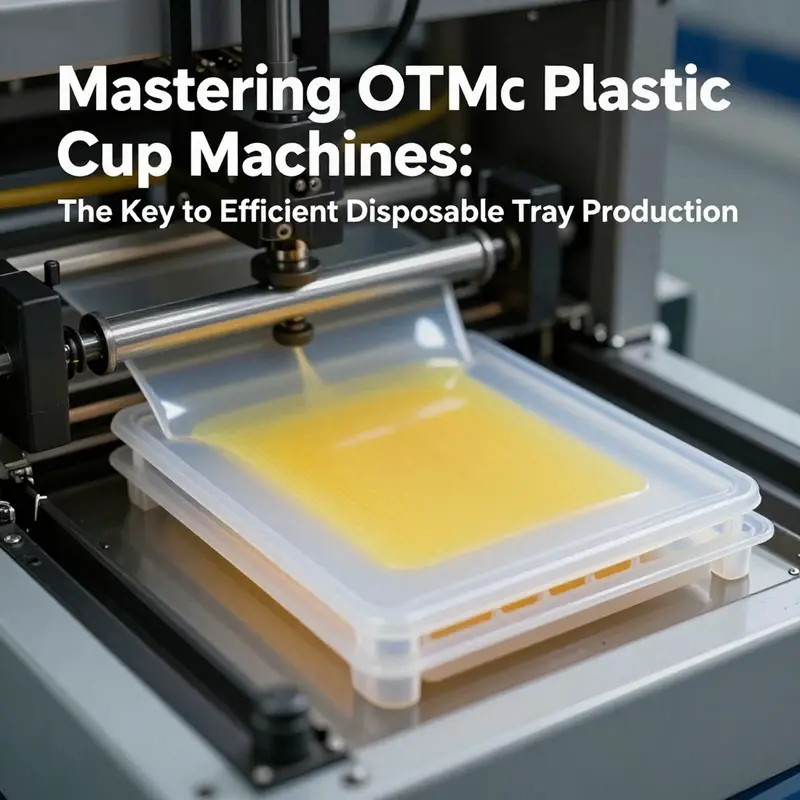
The thermoforming process sits at the heart of modern packaging production, turning flat sheets of thermoplastic into lightweight disposable trays and cups. In an OEM line designed for high throughput, the process is a carefully choreographed sequence: heating the sheet, forming in a mold with vacuum or pressure, cooling and ejection, trimming, and downstream handling. Each station must be precisely synchronized to deliver consistent parts at high speed.
At the core, heating zones raise the sheet to a pliable window. Too little heat yields stiff parts that do not take the mold cleanly; too much heat risks sagging and thinning of rims. In a multi station line, staged heating enables rapid transition from warm sheet to a true three dimensional form. The sheet then encounters a mold that defines geometry. Vacuum draws the softened material into cavities, with occasional forming pressure to crisp walls and rims. The formed piece is cooled, often by forced air or a cooled mold, before ejection and trimming. The result is a tray or cup with uniform wall thickness and surface finish across many cycles per hour.
Machine configuration matters as much as material and mold. OEM lines for disposable trays are often multi station. A three station layout can spread heating, forming, and cooling/ejection, reducing bottlenecks and enabling higher speeds than a single station. The line runs in a rhythm where each station performs its task in sequence. Heating preconditions the sheet, forming shapes geometry, and cooling and ejecting ready parts for trimming and packaging. When synchronized, the line can produce tens of thousands of parts per day, meeting the needs of fast food, supermarkets, and catering with consistent product quality. Automation — sensors, servo driven axes, and PLC control — minimizes rejects by catching drift in temperature or alignment early.
Material compatibility is crucial. Primary thermoplastics used in disposable packaging include PP, HIPS, PET, and PS. polypropylene offers chemical resistance and fatigue strength; HIPS provides stiffness and impact resilience; PET offers clarity and moisture resistance; PS remains common for lightweight containers. A flexible OEM line supports these materials by adjustable heating zones, mold temperatures, and cycle parameters matched to the sheet profile and viscosity. Food grade design emphasizes easy cleaning and cleanable surfaces to support hygiene and rapid changeovers.
Automation translates heat and forming into reliable production. Modern lines use programmable presets, touchscreens, and smart diagnostics. Operators select a tray size and cavity count, and the line retrieves heating curves, forming pressures, and cooling sequences. Mold alignment uses pins, servo drives, and closed loop position and temperature control. Multi cavity molds multiply throughput but require uniform heat distribution and efficient cooling to avoid thickness variation or surface defects. Routine calibration ensures mold alignment, temperature uniformity, and smooth ejection to prevent marks or warping.
Practical realities include material variability and post forming handling. Sheet thickness variation, resin batch differences, or moisture can ripple through the process. Material handling systems must feed sheets flat and with tension control. Downstream trimming and ejecting must be gentle enough to preserve rim integrity while fast enough to keep up with the line. Changeovers should be quick with minimal retooling to preserve uptime. Downstream packaging and stacking require conveyors that accommodate curved rims and any locking features.
Beyond speed, a line is judged by energy use and maintenance. Heating elements draw substantial power, so smart controls balance demand with cooling efficiency. Regular maintenance targets mold surfaces, cooling circuits, vacuum lines, and ejector assemblies to preserve tolerances and throughput. The result is a line that remains productive with minimal downtime and predictable maintenance.
Flexibility is a design goal. The market demands a family of tray shapes, sizes, and wall thicknesses. A line built around modular tooling, adjustable forming parameters, and rapid changeovers can shift from bakery trays to clamshells in hours. This flexibility reduces capital risk and helps respond to demand shifts while maintaining quality.
From procurement to compliance, suppliers and customers seek a holistic value. A complete thermoforming solution reduces integration risk and accelerates time to production. Standardization with platform components, added with customization as needed, supports scalability as trends lean toward lighter weights, better stackability, and recyclability. Environmental and regulatory considerations guide resin selection for safety and recyclability, with attention to sanitation and maintainability. Certifications like CE and ISO offer confidence that equipment meets safety and quality expectations while supporting market access.
The design and installation journey ends with commissioning and data. A line is installed with validated tolerances and monitored for drift using process analytics. The mold geometry, sheet material, and process windows create a dataset that guides ongoing quality and maintenance planning. In this ecosystem, the machine becomes a collaborative partner in product development, enabling rapid iteration and reliable scale for new tray concepts.
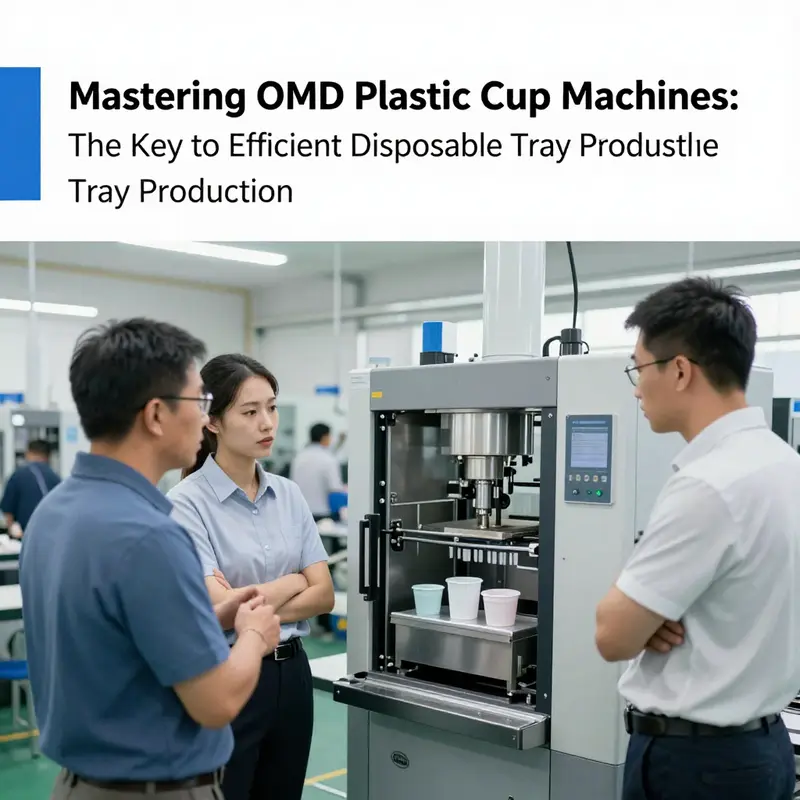
Ultimately, the human element remains central. Operators, technicians, and engineers sustain rhythm with attention to heat, pressure, and mold geometry while prioritizing safety, sanitation, and changeover discipline. Training emphasizes not only operation but the decision making needed to adjust parameters when raw material deviations occur and to assess how mold changes affect cycle time and energy use. The OEM thermoforming line is thus not a fixed asset but a dynamic platform that supports innovation, compliance, and value across every tray that exits the mold.
null
null
Final thoughts
Investing in an OEM plastic cup machine for disposable trays provides a significant boost to production capabilities, particularly for businesses in beverage and food service sectors. Understanding the machine’s key features, the thermoforming process, and customization options enables informed decisions that lead to enhanced operational efficiency and product quality. As the demand for disposable packaging solutions increases, equipping your business with the right technology is essential for meeting customer expectations and driving growth.