

Paper packaging recycling plays a crucial role in promoting sustainability across businesses, particularly in the food and beverage sector. As establishments like bubble tea shops, restaurants, food trucks, catering services, and event planners increasingly prioritize environmental responsibility, understanding the significance of paper packaging recycling becomes vital. This article delves into innovative applications, consumer awareness, and the environmental impact of recycling paper packaging. Through this holistic exploration, we aim to empower businesses to implement effective recycling practices and promote a greener future.
Turning Fibers into Future-Ready Solutions: The Expanding Horizon of Paper Packaging Recycling
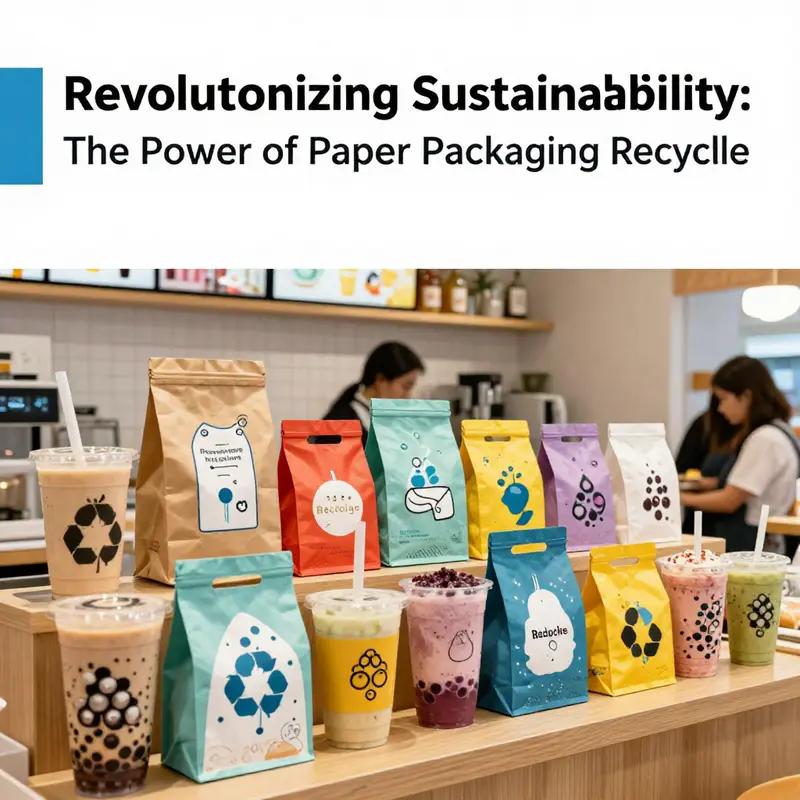
The story of paper packaging recycling is no longer a simple cycle of collection, pulping, and reapplication. It has evolved into a dynamic field where material science, cooperative logistics, and consumer engagement converge to redefine what is possible with renewable fibers. The core idea—transforming waste into valuable, safe, and market-ready packaging—remains intact. Yet today’s innovations push the boundaries of performance, safety, and circularity. Moisture resistance, barrier properties, and even antimicrobial capabilities are no longer trade-offs to sustainability; they are becoming integral features. As the world accelerates its shift away from virgin materials, recycled paper packaging is increasingly positioned not just as a lower-impact option, but as a high-performance platform capable of meeting stringent demands in food service, consumer goods, and beyond. In this evolving landscape, the recycling value chain is driven as much by material science as by the choices of businesses and communities that collect, sort, and refeed used paper into new products. The result is a resilient, adaptable system whose benefits extend from local communities to global supply chains, and from waste reduction to resource conservation.
The innovations emerging from this space are as practical as they are forward-looking. On one track, researchers and manufacturers are refining coating technologies and bio-based additives that enable recycled paper to withstand humidity, oil exposure, and direct contact with fresh foods without losing its recyclability. Coatings based on plant-derived polymers, nanocellulose layers, or other bio-inspired barriers can dramatically improve moisture resistance while maintaining the optical and mechanical qualities needed for branding and consumer appeal. The challenge is to balance barrier performance with end-of-life viability. Each coating layer must be compatible with standard pulping and de-inking processes, so it can contribute to a clean stream of recyclate rather than complicate it. When done well, these coatings reduce the need for virgin resin and enable higher recovery rates for recycled fibers, thereby closing the loop more efficiently and with fewer environmental trade-offs.
A parallel frontier centers on antimicrobial properties that directly address food safety and shelf life. The integration of antimicrobial characteristics into recycled paper products is powered by research into safe, food-grade additives and surface treatments that inhibit microbial growth without compromising recyclability. Natural and synthetic antimicrobial agents must be selected with care to avoid environmental persistence or regulatory hurdles. The aim is not to create sterile packaging in a permanent sense, but to extend freshness, lessen spoilage, and protect both producers and consumers. Because many food packaging applications demand clear labeling, these technologies are being designed to maintain readability and printability while delivering protective benefits. When antimicrobial coatings are compatible with recycling streams, they can contribute to longer product lifespans and reduced waste from spoiled foods, aligning with broader objectives of waste avoidance and resource stewardship.
The push toward advanced functional properties does not happen in isolation. It unfolds in communities and networks that sustain a circular economy through cooperative models, shared standards, and localized infrastructure. Packaging recycling cooperatives, for instance, help streamline the collection and sorting of used paper packaging. By aggregating feedstock, these collectives reduce contamination, improve processing efficiency, and strengthen the economic resilience of participating communities. The benefits extend beyond waste reduction: local jobs are created, small businesses gain access to a more stable stream of raw materials, and the region builds capacity to pilot new recycling technologies at a practical scale. The cooperative approach also fosters knowledge exchange, enabling small operators to implement coating trials, microbial-control tactics, or labeling innovations that might be too costly for a single firm to test alone. In this way, the social architecture of recycling becomes as important as the technical architecture, reinforcing trust and shared responsibility across the supply chain.
Consider the visual impact of recycled paper in a public setting. A powerful example emerges from a temporary exhibit at a science museum, where a complex ocean reef ecosystem was constructed from hundreds of sheets of Hexacomb honeycomb protective packaging. This installation showcased how paper-based materials, sourced from renewable forests, can be repurposed into large-scale, durable structures meant for education and reflection. It is more than an artful demonstration; it is a strategic message about durability, reuse, and the potential of paper to participate in high-visibility, environmentally conscious storytelling. When audiences encounter such installations, they witness a tangible alternative to single-use plastics and a proof point that recycled materials can perform in contexts that demand structural integrity, long-term performance, and a compelling narrative about sustainability. The exhibit embodies circular thinking: a material originally designed for protection becomes a vehicle for education about resilience, renewal, and responsibility.
This chain of ideas naturally leads to a broader set of practical considerations for both consumers and manufacturers. Proper recycling begins with recognition of material types and understanding how different papers behave in the recycling stream. Paper food packaging—bakery boxes, produce wraps, and similar items—often remains recyclable if contaminants such as grease or food residues are minimized. Yet laminated or coated papers can pose challenges that require specialized facilities. Clear labeling, including standardized material-type indicators, helps residents and businesses separate streams effectively. As researchers map out the performance landscape for recycled paper, they also map the signals that help households and workplaces identify what can be recycled in curbside programs and what requires alternative streams. These labeling systems, though sometimes mundane in daily routines, are foundational to achieving high-quality recyclate and to maintaining the integrity of the end-product’s performance in subsequent cycles.
In the rooms where policy, industry, and hobbyist innovation intersect, the conversation about substrate quality and processing efficiency intensifies. The pulping stage remains central, but its quality is increasingly influenced by the presence of coatings and additives used to extend shelf life or improve moisture control. Advances in pulping technology, de-inking efficiency, and fiber recovery are enabling cleaner, brighter sheets with fewer contaminants. Higher recovery rates reduce the demand for virgin wood fibers and lower the energy footprint per ton of recycled paper. These improvements ripple through the supply chain: brands gain confidence that recycled materials can meet stringent performance criteria for food-contact applications; packaging converters gain reliability in meeting tight deadlines; and municipalities see a reduction in landfill loads and methane emissions. The synergy among processing science, product design, and consumer behavior is what makes today’s innovations scalable rather than experimental.
A critical dimension of scalability is the alignment between recycled paper formulations and food packaging safety requirements. Food-contact safety hinges on the compatibility of fiber, coating, and printing systems with regulatory standards. The goal is to ensure that recycled fibers do not introduce contaminants or migrate undesired substances into food while still delivering the crisp print, barrier performance, and mechanical strength demanded by modern packaging. When coatings and inks are carefully chosen for end-of-life recyclability, the resulting products can meet high marks for safety and sustainability. In practice, this means choosing barrier chemistries that break down cleanly in the pulping process and avoiding multilayer architectures that severely limit recyclability. The balance is delicate but achievable, and it is being refined through cross-disciplinary collaboration among chemists, packaging engineers, and waste-management professionals.
Alongside technical optimization, consumer awareness and education play indispensable roles. Understanding which items are recyclable, how to prepare them for collection, and why certain laminates or coatings complicate the recycling stream empowers individuals to participate more effectively in the circular economy. Marking-code systems and material-type labeling help bridge knowledge gaps, enabling households and businesses to make informed decisions quickly. The impact of clear labeling goes beyond individual actions; it shapes municipal sorting practices, informs the design choices of manufacturers, and drives the market toward materials that perform well in reuse cycles while respecting environmental constraints. When communities can distinguish between recyclable, compostable, and non-recyclable fractions with confidence, the overall quality of the recycled fiber improves and the likelihood of successful downstream reprocessing increases.
The practical implications for high-demand sectors—especially food packaging—are substantial. Recycled paper that resists moisture and supports safe handling opens doors to products that previously required virgin fibers or non-recyclable barriers. This progression is not merely about substituting one material for another; it is about redefining what a recycled fiber can achieve in terms of performance, safety, and brand integrity. It invites designers to rethink packaging architectures, opting for simpler, more recyclable constructs that harmonize with the fibers’ natural recycling trajectory. It also encourages manufacturers to experiment with surface treatments that do not compromise de-inking or pulping, allowing for deeper integration of recycled content without sacrificing consumer experience. In this sense, innovation becomes a collaborative language that translates environmental objectives into tangible packaging features.
The social and economic dimensions of innovation should not be overlooked. Cooperative models that organize collection, sorting, and reprocessing foster resilience in the face of shifting commodity markets and policy landscapes. These models can scale from urban neighborhoods to regional hubs, enabling shared access to equipment, data analytics, and quality-control protocols. Through such collaboration, communities can pilot new recycling technologies, test novel coatings, and evaluate antimicrobial formulations in real-world settings. Importantly, these pilots are not merely proof-of-concept exercises; they generate practical knowledge about cost, performance, and lifecycle impact that informs broader policy discussions and investment decisions. The result is a more transparent, accountable system where stakeholders—municipalities, manufacturers, retailers, and residents—deploy a common framework for continuous improvement.
The chapter’s narrative would be incomplete without acknowledging the broader environmental significance of these innovations. Recycling paper reduces landfill volume, curtails methane emissions from anaerobic decomposition, and conserves virgin wood resources. Each improvement in barrier performance or antimicrobial safety translates into fewer discards and a larger share of materials returned to productive use. When energy efficiency in pulping and de-inking improves, the overall carbon footprint of recycled paper declines. Collectively, these gains contribute to a more sustainable packaging landscape that aligns with climate and biodiversity objectives while supporting economic resilience across communities. It is a comprehensive strategy: keep paper fibers in circulation, maximize the value extracted from each cycle, and design products that respect both people and the planet.
To illustrate how theory translates into everyday choices, consider the subtle but meaningful way a consumer might select a product in a store or online. A shopper who understands that certain coatings permit better moisture control without compromising recyclability will be more inclined to choose packaging that carries those features. A brand that communicates clear stewardship credentials—without sacrificing performance or cost—gains trust and loyalty. Vendors and retailers, in turn, learn to balance demand signals with material constraints, steering the market toward innovations that can be scaled responsibly. In this ecosystem, the most successful innovations are not singular feats of engineering; they are reproducible, auditable, and compatible with the cycles that keep paper fibers alive for longer, thereby multiplying environmental benefits across generations.
The dialogue between researchers and practitioners continues to deepen as new data emerge from controlled trials, pilot plants, and field deployments. These findings feed back into design choices, refining what constitutes a commercially viable closed loop. The future of paper packaging recycling is thus characterized by iterative learning, where each improvement in coating chemistry, antimicrobial strategy, or cooperative logistics informs the next generation of products and processes. The end goal remains straightforward: deliver safe, high-performance packaging that can be recycled again and again, while supporting communities and ecosystems. The path forward requires ongoing investment in material science, smart logistics, and consumer education—an integrated effort that turns recycling from a niche activity into a mainstream engine of sustainable manufacturing.
For readers seeking a deeper technical and comparative perspective on the cutting-edge approaches shaping this field, a comprehensive overview of innovative approaches in paper recycling provides additional context and analysis. This resource surveys advances in processing efficiency, materials compatibility, and lifecycle assessment methodologies that underpin decisions about which technologies to scale. It is a valuable companion to the narrative above, offering actionable insights for researchers, policymakers, and industry players navigating the transition toward a more circular economy. External resources can illuminate how micro-level innovations aggregate into macro-level impacts, helping stakeholders evaluate risks, opportunities, and trajectories as the sector evolves. Innovative Approaches in Paper Recycling: An Overview
Internal link reference:
In practice, real-world examples of innovative packaging design and recycling workflows surface in consumer-facing materials that emphasize sustainability without compromising usability. For instance, some contemporary food-service packaging solutions showcase coatings tuned for moisture control, paired with printed branding that remains legible after de-inking and reprocessing. For a concrete example of how these principles translate into consumer materials, see the following product category that demonstrates eco-conscious design in action: eco-friendly printed-logo paper ice-cream cups with lid. This link illustrates how packaging can blend functional performance with market-ready aesthetics while remaining compatible with recycled-fiber streams. It is emblematic of a broader trend where sustainability and practicality reinforce one another, encouraging broader adoption and investment in recycling-forward materials.
From Awareness to Action: Bridging Knowledge and Practice in Paper Packaging Recycling
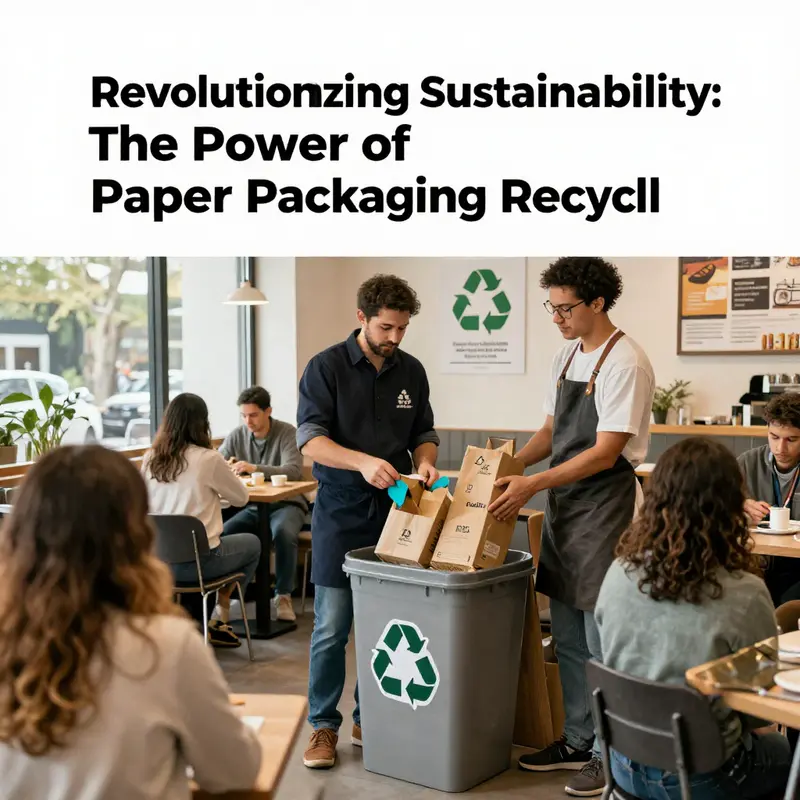
Awareness is only the opening act in the theater of sustainable waste management. In the world of paper packaging, knowing that recycling matters must translate into action that is easy, reliable, and economically sensible for households and businesses alike. The human mind is adept at processing information, yet the daily decision to recycle hinges on a matrix of practical cues: how convenient it is to access a recycling bin, whether the item is truly recyclable given its surface treatments, and whether the disposal instructions are perceived as straightforward rather than opaque. The research landscape has begun to map this terrain with clarity. A 2025 study revealed that a striking 84% of participants recognized deforestation as a key issue tied to paper production and recycling. This awareness reflects a broad grasp of the environmental stakes. In the same vein, about 79% of participants demonstrated knowledge about recycling practices, signaling a solid foundational literacy. Yet literacy does not always equal behavior. The gap between knowing and acting remains a stubborn feature of the consumer landscape. This discrepancy is not a moral failing but a friction problem—an ecosystem problem—where convenience, clarity, and design intersect to either enable or impede recycling. Recognizing this divergence is the first step toward crafting systems that align intention with action, and it places packaging designers, retailers, policymakers, and educators in a shared role: to reduce friction at the moment of disposal while preserving the integrity and utility of paper fiber streams.
The factors shaping behavior in paper packaging recycling extend beyond knowledge. Among the most influential is convenience. Households and small businesses recycle more when an accessible, clearly labeled route exists. If a curbside program is sparse or bins are hard to locate, even the most motivated person may default to throwing items into the general waste stream. This is not merely a matter of space; it is a problem of timing. The moment of decision happens quickly, often in the kitchen or storefront, where a misplaced lid or a confusing symbol can derail proper disposal. Accessibility is not only physical; it is cognitive. When disposal instructions require decoding a string of symbols or an unfamiliar labeling system, the likelihood of misclassification rises. Clarity matters as much as availability.
Packaging design itself operates as a form of behavioral nudge. When packaging is visually transparent about its recyclability, consumers are more likely to act in accordance with that instruction. A notable insight from the research is the power of design to serve as a quiet guide. Transparent packaging, where appropriate, can reveal product information and reduce the guesswork involved in deciding what to recycle. The presence of clear recycling symbols and simple, actionable messages can transform a moment of disposal into a routine rather than a decision that requires deliberation. In this sense, the material properties of the packaging become a communication channel, signaling what can and cannot be accepted by local facilities. MarkingCodeMaterial Type systems—labeling schemes that identify material type and recyclability in a standardized, machine-readable way—emerge as particularly practical. When consumers encounter consistent labels across brands and regions, the learning curve shortens and participation rates rise. Clear labeling is not a nuisance; it is an investment in participation and system efficiency.
Labeling clarity dovetails with packaging design in a broader conversation about recycling systems. If a package presents a straightforward, friendly message—something that tells the user exactly what to do and why it matters—consumers are more likely to follow through. Coatings and laminates, however, complicate the equation. Paper that carries certain coatings or lamination may require specialized facilities for de-inking and pulping, actions that are not always available in municipal streams. This reality creates a specific, actionable need: labeling that communicates recyclability in light of local capabilities. When a consumer sees a symbol that confirms recyclability in a given program, the decision becomes easier. Conversely, ambiguous signals can erode trust and participation if people fear they are misplacing items or contaminating the stream.
The behavioral science behind recycling also points to a set of commonly observed gaps. Even where awareness is high, routine recycling can stagnate due to practical barriers. A case study focusing on paper recycling attitudes found that while the majority of respondents acknowledged its importance, consistent action lagged behind intention. The primary culprits were not lack of care but lack of access and clarity: insufficient recycling bins in convenient locations, and a lack of confidence about what can actually be recycled. In other words, knowledge without accompanying infrastructure and unambiguous guidance fails to translate into habitual behavior. This insight reframes the problem as a systems issue rather than a purely individual one. If we want to close the awareness-action gap, we need to stitch together three layers: infrastructure, labeling, and packaging design that makes the right choice the easy choice.
Turning from the abstract to the concrete, the research points to practical strategies that can move awareness toward action without sacrificing the principles of circularity that define paper packaging recycling. First, invest in infrastructure that reduces friction. This means expanding curbside recycling programs to cover a broader range of paper packaging types and ensuring that bins are well-signposted and accessible in public and commercial spaces. It also means coordinating with local facilities to ensure that the streams coming from households and businesses align with the fiber qualities required for high-quality recycled paper. When a municipal program accepts corrugated boxes, paper bags, and rigid paperboard without excessive pre-processing, participants can recycle with confidence. Second, standardize and simplify labeling. A consistent approach to material type and recyclability helps people learn quickly and apply what they have learned across different products and brands. The MarkingCodeMaterial Type systems illustrate a path forward: a common language that reduces cognitive load and reinforces correct behavior. Third, design packaging for recyclability. This means choosing materials that are compatible with de-inking processes and avoiding coatings or laminates that prevent fiber recovery or contaminate streams. It also means rethinking packaging to minimize multi-material complexity, favoring monomaterial structures where possible. When a package can be efficiently de-inked and repulped, its journey back into a new product becomes smoother and more predictable.
The Perot Museum of Nature and Science in Dallas offers a vivid illustration of how paper-based materials can play a catalytic role in recycling education and public engagement. An ocean reef ecosystem was constructed entirely from hundreds of sheets of Hexacomb honeycomb protective packaging. This installation, built from renewable, paper-based materials, circulated a powerful message about the circular economy in a public space. It demonstrated that even industrial-grade packaging can be repurposed for educational value and visual storytelling, reinforcing the idea that the materials we use can be designed for reuse rather than relegation to landfills. The exhibit made tangible the circular economics at stake: fiber streams that can be repurposed into new products, the reduction of waste streams, and the inspiration that comes from seeing waste transformed into meaningful, informative displays. The message resonates with consumers because it connects daily packaging choices to visible outcomes in the built environment, turning abstract benefits into a story people can witness and share.
To translate these insights into everyday practice, many actors in the system—consumers, retailers, and manufacturers—need to align incentives and messaging. For consumers, the key is to experience recycling as a seamless, low-effort act. For retailers and product designers, the objective is to present packaging that communicates recyclability clearly and supports convenient disassembly and disposal. A practical approach is to pair packaging design with in-store and online communication that reinforces correct disposal behavior. For example, packaging that carries a visible cue indicating recyclability, reinforced by a short explanation of what to do at home, can elevate participation rates. When such cues are paired with easy-access recycling options, people are more likely to act in the desired fashion, and the overall recovery rate of fiber improves as a result.
The social dimension of recycling should not be underestimated. Social norms exert quiet but powerful influence. If people perceive that their peers are recycling and that recognizable, recyclable packaging is becoming the standard, they experience a reinforcement loop that sustains behavior. Brands, organizations, and communities can nurture this norm by celebrating recyclable design, by publishing simple, universal disposal messages, and by sharing success stories that highlight how local recovery programs benefit the environment and the economy. The cumulative effect is a shift in everyday behavior that reduces contamination and strengthens the integrity of paper fiber streams. When households see that packaging design and labeling align with local capabilities, the perceived effort required to recycle decreases, and participation tends to increase.
A practical thread running through these considerations is the need for coherent, ongoing education. Awareness campaigns are valuable, but they must translate into repeatable actions. Education should address not only why recycling matters but also how to do it correctly in the local context. This means tailoring messages to address regional differences in recycling infrastructure, providing clear examples of acceptable materials, and offering guidance on dealing with items that pose particular challenges, such as coated or laminated packaging. In this way, communication becomes a tool for reducing confusion rather than a source of further ambiguity. When education and infrastructure are in harmony, the user experience of recycling becomes intuitive rather than puzzling, enabling more people to participate consistently over time.
The potential for technology to support these efforts is meaningful but should be approached with care. Digital tools can deliver real-time guidance about local recycling rules, provide scans of packaging to confirm recyclability, and offer personalized tips to reduce contamination. However, technology should complement, not replace, the human-centered design of packaging and labeling. The goal is simplicity and reliability in the physical world, where people make quick disposal choices. In the end, the success of paper packaging recycling depends on a cohesive system in which awareness informs action, action reduces waste, and waste reduction reinforces awareness in a virtuous loop.
To illustrate how these ideas come together in real settings, consider the following synthesis. When a consumer picks up a paper package at a store or orders a takeout meal, their first encounter is often the packaging itself. If the package clearly communicates recyclability and carries a straightforward disposal instruction, the consumer experiences a moment of alignment between intention and behavior. The packaging acts as a steward of the fiber it contains, guiding it back into the recycling stream rather than toward waste. If, in addition, the product offer includes an option for easy recycling with minimal effort—such as readily accessible bins and simple curbside pickup—the consumer receives a consistent message: recycling is expected, supported, and rewarded by the system. This alignment reduces cognitive load and fosters a sense of confidence that sustains repeat participation.
The broader environmental benefits of improved consumer behavior extend beyond immediate waste reduction. Diverting paper from landfills lowers methane emissions, a potent greenhouse gas, and reduces energy consumption tied to producing virgin paper. The cumulative impact of many individuals choosing to recycle correctly at scale yields measurable improvements in resource efficiency and emissions. Moreover, better recycling performance can stimulate technological advances in fiber recovery, enabling higher-quality recycled paper products and expanding the range of packaging that can be responsibly recovered. As science and industry continue refining de-inking, pulping, and sorting technologies, the quality and value of recycled paper can rise, reinforcing the economic case for recycling and attracting broader participation from communities and businesses alike.
In sum, translating awareness into action in paper packaging recycling requires a triad of components: accessible infrastructure, clear and standardized labeling, and packaging design that communicates recyclability while minimizing barriers to correct disposal. Public displays, educational campaigns, and community initiatives can amplify these effects by creating social norms that favor recycling. The Perot Museum installation reminds us that paper-based materials can play a powerful role in storytelling about sustainability, turning everyday packaging into a public message about reuse and resilience. By embracing these principles, manufacturers and retailers can produce packaging that is not only functional and attractive but also inherently compatible with the circular economy. And consumers, armed with better cues and clearer guidance, can participate with greater confidence and consistency, turning awareness into lasting action that benefits both people and the planet.
For readers seeking a concrete example of how design and labeling can influence behavior, consider the potential of packaging that blends practical recyclability with an approachable aesthetic. An approach such as eco-friendly printed-logo paper cups demonstrates how a product can maintain user-friendly functionality while signaling recyclability and responsibility. This intersection of form and function makes the recycling decision almost automatic for the user, reducing the effort required to participate and increasing the likelihood that the material will re-enter the fiber loop.
Ultimately, advancing consumer awareness toward sustained action in paper packaging recycling is a shared endeavor. It requires alignment among manufacturers, retailers, municipalities, and the public. It calls for labeling systems that are unambiguous, packaging designs that are easy to recycle, and infrastructure that makes the right choice the natural choice. As communities test and refine their local capabilities, the larger system benefits through higher recovery rates, cleaner fiber streams, and, ultimately, a healthier environment. The journey from awareness to action is ongoing, but with deliberate design, transparent communication, and accessible disposal options, it can become a steady, measurable part of everyday life. The chapter that lies ahead will build on this foundation, examining how policy, industry standards, and consumer education can converge to close remaining gaps and accelerate the transition toward a truly circular paper packaging economy.
External resource: For deeper insights into consumer perspectives on paper packaging and recycling practices, see the following external study: Assessment of consumer perspectives on the use of paper packaging.
Circulating Clean: Tracing the Environmental Ripple of Recycling Paper Packaging

Paper packaging stands at a pivotal intersection of daily utility and environmental stewardship. It is not merely a container for goods; it is a living thread in the fabric of a circular economy. When used and reused through recycling, paper packaging transforms a once-end-of-life material into the feedstock for future products. This process unfolds in a cascade of benefits that begin with the fibers themselves and radiate outward to communities, landscapes, and air and water quality. The environmental impact of recycling paper packaging is not a single data point; it is a system-wide effect that grows as societies optimize collection, sorting, pulping, de-inking, and the eventual production of recycled paper products. In the following pages, we explore how recycling saves forests, preserves water, reduces energy use, and lowers pollution—while also addressing the practical realities of contaminants, coatings, and consumer behavior that shape the outcomes of these cycles.
A fundamental premise anchors the entire discussion: paper packaging is predominantly made from renewable wood fibers, which are biodegradable and, crucially, recyclable multiple times. In practice, those fibers can typically be reused five to seven times before they become too short to yield high-quality new products. This biological potential is complemented by a human-made infrastructure—a network of collection programs, sorting facilities, pulping operations, and converting plants—that keeps the material moving through cycles rather than letting it end up in a landfill. When this system operates efficiently, the environmental benefits accumulate with each ton of material diverted from waste streams. The scale of these benefits becomes clearer when we translate them into concrete savings. Recycling one ton of paper can save approximately 17 trees, roughly 7,000 gallons of water, and more than one metric ton of CO2-equivalent greenhouse gas emissions. These figures are not abstract ideals; they are indicative of real-world outcomes observed across many recycling systems. As the fibers cycle, the energy required to produce paper from recycled stock is often dramatically lower than the energy needed to create virgin pulp. In many cases, recycled paper production uses up to 60 percent less energy than virgin-pulp manufacturing. The implication is straightforward: every saved kilowatt-hour, every avoided ton of emissions, and every shred of water saved compounds the environmental dividend of disciplined recycling.
In parallel with these material benefits, recycling disrupts conventional production and waste-management patterns by shifting how communities view disposal, usage, and reuse. Diverting paper packaging from landfills dampens methane emissions, a greenhouse gas that rises from anaerobic decomposition in buried waste. Methane has a higher short-term climate impact than carbon dioxide, so reducing landfill volumes can yield meaningful climate benefits even before considering the long-term sequestration of materials. The energy intensity of the industry declines as well; manufacturing paper from recycled stock consumes less energy than producing paper from fresh fiber. This energy advantage translates into lower fossil-fuel consumption, lower emissions from power plants, and, ultimately, a smaller carbon footprint for everyday packaging needs.
Of course, turning a recycling success story into a reliable climate and resource-saving practice depends on attention to detail across the entire value chain. Sorting accuracy, contamination control, and the compatibility of coatings and laminates with recycling streams all influence outcome quality. In consumer environments, food packaging, bakery boxes, and grocery wraps are commonly recyclable when they are free of grease and other contaminants. Yet there are exceptions: some coated or laminated papers may require specialized facilities to separate them from the main pulping stream. Understanding these material types begins with clear labeling. Systems that help identify recyclable versus non-recyclable components play a vital role in reducing process losses and ensuring that more material stays in the loop. When labeling is intuitive and standardized, households and businesses can participate more effectively, shortening the path from curb to cafe or corner store to a paper mill.
The environmental logic of recycling gains an evocative illustration in a striking, real-world display. At a temporary exhibit, an ocean reef ecosystem was constructed from hundreds of sheets of Hexacomb honeycomb protective packaging. This installation, rooted in paper-based materials derived from renewable sources, demonstrated not only the versatility of paper products but also the circularity of the materials themselves. The structure stood as a powerful message: industrial-grade packaging can serve as more than a use-and-discard commodity if it is designed, managed, and repurposed with recycling and reuse in mind. The exhibit became a bright reminder that the materials we often overlook in daily routines can be repurposed, reimagined, and reintegrated into new cycles of use. It is a vivid embodiment of the circular economy in action and a reminder that sustainability is practical, experiential, and within reach when policy, industry, and consumers collaborate.
For households and organizations alike, the practical pathway from waste to recycling begins with an honest assessment of material types. Paper food packaging—such as bakery boxes, produce wraps, and related containers—tends to be widely recyclable when free from food grease and residue. However, contaminants can complicate processing, and some coatings or laminates may require specialized facilities. Consumer labeling and industry-standard systems like MarkingCodeMaterial Type play a crucial role here by providing a clear indication of recyclability and any necessary preparation steps. When materials are properly identified and prepared, curbside programs across much of the United States and in many other countries accept the bulk of paper packaging—including corrugated boxes, paper bags, and rigid paperboard. The broader implication extends beyond the methods of recycling to the cultural shift in attitudes toward waste: a growing appreciation that waste is a resource with value when kept within a loop, rather than a problem to be disposed of.
Beyond the operational and behavioral dimensions, the environmental impact of paper packaging recycling is also about resource stewardship. Forests are a finite, valuable resource, and sustaining them through responsible fiber sourcing and recycling reduces the overall need for deforestation. Every ton of recycled paper reduces pressure on forests and preserves biodiversity, while also maintaining a steady supply of wood fiber for a range of essential applications. In addition, the reduction in energy consumption associated with recycled-paper production lessens the demand for fossil fuels, contributing to air quality improvements in communities near manufacturing facilities. The cumulative effect of these savings—trees preserved, water conserved, emissions reduced, and energy spared—entails a more resilient, lower-impact packaging system that serves both commerce and environmental justice.
A critical, sometimes overlooked, dimension of this narrative is the relationship between consumer behavior and the quality of recycling outcomes. When households rinse containers, keep packaging relatively free of food residue, and separate paper from non-paper plastics and metals, they streamline the downstream processes. Conversely, high levels of contamination can degrade fiber quality, muddying the recycling stream and increasing the energy and water required for cleaning and reprocessing. This dynamic helps explain why clear labeling matters and why public education, as well as consistent municipal guidelines, can improve recovery rates. In some markets, a shift toward clearer, standardized labeling reduces confusion and encourages more consistent participation. It also helps collectors and processors optimize sorting, which, in turn, lifts the overall efficiency and environmental performance of the system.
Suitably, many organizations emphasize that a robust recycling system cannot rely on a single intervention. It requires synchronized action—from the design of packaging with recyclability in mind to the investment in advanced sorting technologies, the expansion of recycling infrastructure, and the ongoing education of consumers and businesses. The practical benefits also extend to the economic side of the equation. Recycling reduces material costs for manufacturers by providing a relatively stable feedstock, fosters local job creation in collection and processing facilities, and lowers the environmental and health costs associated with virgin-pulp production. When markets value recycled fiber appropriately, the economic incentives align with ecological gains, reinforcing a virtuous cycle where environmental and economic objectives reinforce one another.
In this broader frame, the environmental advantages of paper packaging recycling resonate not only in the reduction of waste and emissions but also in the opportunities it creates for more resilient urban and regional systems. Climate policy increasingly recognizes the importance of resource efficiency and waste reduction as essential components of emissions targets. Recycling becomes a measurable, practical means of achieving those targets, turning everyday packaging choices into climate-friendly actions. The convergence of policy goals, corporate responsibility, and consumer awareness is what sustains progress, turning the recycling of paper packaging from a niche activity into a mainstream, effective element of sustainable development.
As we consider the path forward, it is essential to acknowledge the role of design and material science in shaping environmental outcomes. Advances in recycling science and technology continue to unlock higher recovery rates and better quality in recycled-paper products. Innovation focuses not only on how to separate and de-ink more efficiently but also on how to design coatings, adhesives, and laminates that are compatible with recycling streams. The goal is to enable products that meet performance standards while remaining economically and environmentally compatible with circular loops. Each incremental improvement—whether in de-inking efficiency, mechanical pulping, or energy recovery—contributes to a future where paper packaging is increasingly seen as a renewable, recyclable, and resilient material rather than a disposable afterthought.
Consumers often encounter practical shortcuts that can diminish the environmental benefits of recycling. A widely discussed approach is to opt for products with clear, credible labeling indicating recyclability. When a label is ambiguous or when the packaging combines incompatible materials, the material must often be diverted to a less ideal processing stream or, worse, landfilled. This outcome not only wastes resources but also undermines the public trust in recycling programs. To counter this, municipalities and manufacturers collaborate to improve labeling clarity and to educate users about permissible recycling practices. In addition, some communities offer dedicated drop-off points for items that require special handling, such as certain coated papers or laminates, ensuring that even complex materials can be responsibly managed. The overarching message is that each person’s choices, when aligned with accurate information, can contribute to higher recovery and better environmental performance across the system.
A practical takeaway for readers who want to contribute to this environmental pathway is to view paper packaging not as a one-way wrapper but as a resource with ongoing value. When you separate recyclables from trash, rinse and dry where appropriate, and follow local guidelines, you support a network that turns waste back into usable materials. The broader impact includes cleaner landscapes, healthier ecosystems, and more sustainable manufacturing that respects the limits of natural resources while supporting the needs of a growing population. The environmental dividend extends beyond the immediate footprint of a single product or company; it touches the public health of communities, the vitality of forests, and the stability of regional economies.
To connect the conceptual with the tangible, consider a dependable, widely used packaging category that demonstrates both practicality and recyclability: disposable kraft paper products designed for take-away food service. These materials are emblematic of how a simple packaging choice can align with environmental goals when designed and handled with care. For a glimpse into how such packaging can be integrated into the recycling stream, see a representative example of disposable kraft paper packaging in action: disposable kraft paper soup cup with lid. This example highlights how functional, customer-facing packaging can also be part of a high-performing recycling loop when contamination is minimized and labeling is clear. It is a reminder that the everyday choices of consumers—what they buy, how they dispose of it, and how they prepare it for recycling—play a tangible role in shaping the environmental profile of a community.
As we reflect on these threads—the science, the policy context, the industry actions, and the everyday consumer decisions—it becomes clear that the environmental impact of paper packaging recycling is both substantial and actionable. The numbers speak with clarity: significant resource savings, lower energy demands, and reduced emissions compared with virgin-pulp production; and the even more important story is the reachable path by which societies can intensify those savings through thoughtful design, robust infrastructure, and informed participation. When we treat packaging as a material resource to be recovered rather than as waste to be disposed of, we unlock a practical mechanism for reducing our ecological footprint without sacrificing convenience or economic vitality. This is the essence of sustainable packaging in a modern economy: the quiet, persistent return of paper packaging to the cycle, a loop that strengthens forests, water sources, and air, while supporting communities with tangible benefits.
For readers seeking deeper, official data on the benefits and processes involved in paper recycling, resources such as the U.S. Environmental Protection Agency’s Recycling Basics offer a rigorous overview of how recycling works, the key drivers of performance, and the environmental stakes involved. This body of information provides a foundation for informed decision making at every level—from household habits to corporate procurement policies and municipal waste-management strategies. EPA Recycling Basics
Internal link (for additional context on recyclable packaging): disposable kraft paper soup cup with lid
External resource: https://www.epa.gov/recycle/recycling-basics
Final thoughts
Understanding the importance of paper packaging recycling can significantly enhance the sustainability efforts of food and beverage businesses. By exploring innovative applications, fostering consumer awareness, and recognizing the environmental impact of recycling processes, companies can position themselves as leaders in sustainability. Embracing these practices not only benefits the planet but also attracts a growing base of eco-conscious customers. Together, we can make a meaningful difference in promoting a circular economy.