
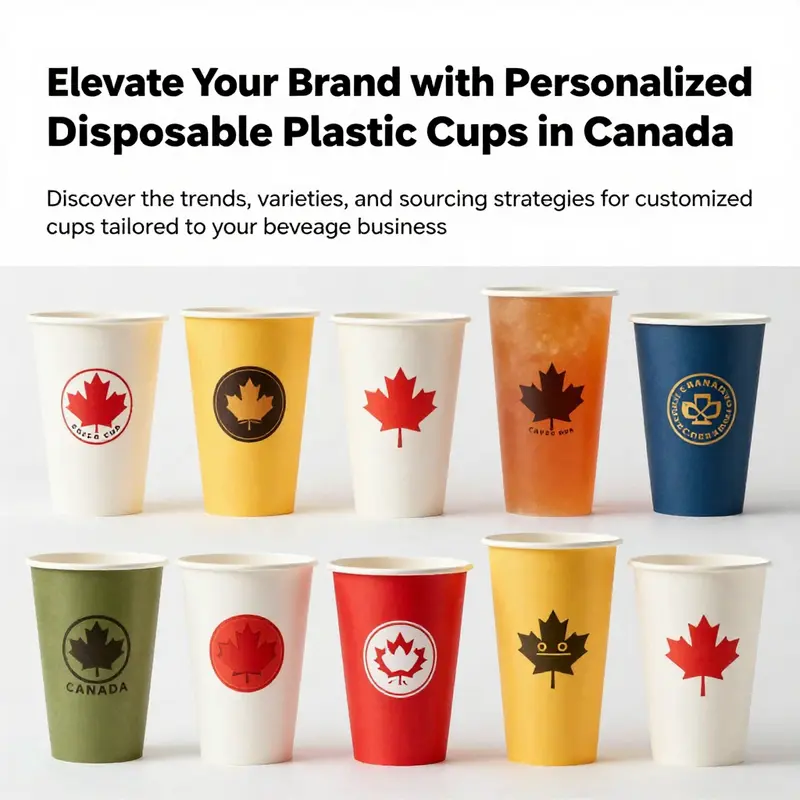
As the beverage landscape in Canada becomes more dynamic, the demand for personalized disposable plastic cups is on the rise. These cups serve not only as functional containers but also as important branding tools for bubble tea shops, restaurants, food trucks, and event planners. Understanding the current market trends, exploring the extensive variety of customizable options, and recognizing the best channels for procurement are crucial for staying competitive. In this article, we will delve into the growing market demand, discuss the endless product possibilities available, and provide guidance on how to effectively source and procure these cups to meet your unique business needs.
Demand, Design, and Delivery: Mapping Canada’s Growing Hunger for Personalized Disposable Plastic Cups

Across Canada’s bustling cafes, university campuses, conference halls, and festival grounds, a familiar sight is taking on new dimension: cups that carry more than a beverage. They carry a brand’s voice, a message of care for the environment, or a moment of shared experience. The rise of personalized disposable plastic cups in Canada isn’t just a design trend; it’s a reflection of how customers encounter brands in public spaces. In a market that rewards speed, convenience, and recognizability, customized cups offer a quiet, portable billboard that travels with every sip. This is especially true in a country whose drink culture is inseparable from social rituals—coffee rituals in the morning rush, boba and fruit-tea frenzies in the afternoon, and the surge of events where language, logos, and color become a memory cue long after the last toast. The Canadian equation for personalized cups blends practicality with marketing, and the numbers underscore a broader, steady ascent rather than a sudden spike. In 2024, the disposable cup market produced around USD 853.9 million in revenue. Projections point toward USD 1.1 billion by 2030, a compound annual growth rate (CAGR) hovering near 3.0%. This is not merely inflationary drift; it signals a sustained expansion of demand fueled by the foodservice and hospitality sectors, plus a continuous growth of events, promotions, and experiences where branding on a cup amplifies consumer recall. What lies behind this trend is a combination of consumer behavior and business strategy—two forces that push brands to think differently about packaging, display, and portability. The consumer wants convenience, yes, but increasingly they want a shared, branded moment as well. In a crowded market, a customized cup can stand in for a multi-step promotion, a loyalty reminder, or a seasonal campaign. And for brands seeking measurable impact, cups become touchpoints that are easy to observe, quantify, and repurpose across campaigns and channels. It’s not simply a matter of slapping a logo on a cup; it’s about translating brand personality into a usable, memorable form that travels with the consumer from the storefront to the street, from the event stage to the social feed.
The commercial vitality of this segment rests on three intertwined factors: supply readiness, consumer demand, and a marketing ecosystem that rewards visible branding. On the supply side, Chinese manufacturers have become a major conduit for North American orders, including those from Canada. They offer customization options at scale, printing logos, designs, and text on a range of cup formats, with English-speaking support and international logistics capabilities that align with Canadian import requirements. The typical entry point for many Canadian buyers has been a 16-ounce disposable cup with a lid, commonly made from PET or PP plastic, that keeps beverages sealed and portable. The available price range for such customized units—roughly USD 0.035 to USD 0.076 per cup, with orders often set at a minimum of 50,000 units—reflects the economies of scale that global suppliers can leverage. Some manufacturers extend the opportunity to sample with no charge, though the MOQ remains a factor that brands must weigh against the speed to market. While this pricing signals considerable affordability for large campaigns, it also emphasizes the critical balance between batch size, lead time, and marketing window. For businesses testing a seasonal campaign or a new cafe concept, the path to smaller trials may involve negotiating with suppliers who can accommodate limited runs or who offer pilot programs that cap risk while preserving the ability to deliver tight timelines.
Yet the decision to embrace personalization goes beyond price and lead time. It hinges on the ability to integrate branding into a consumer journey with authenticity and legibility. Modern cup designs are more than visuals; they are communications devices. The choice of material, the printing method, and the position of a logo all influence readability and recall. In many cases, the 16-ounce cup serves as the primary canvas for branding in beverage-led businesses, while other formats—such as transparent cups for cold drinks or cups with lids designed for hot beverages—extend customization opportunities into seasonal campaigns and event merchandising. The choice of a transparent cup, whether used alone or decorated with seasonal motifs, can maximize visibility for color branding and brand colors, while printed sublimation or digital printing techniques can reproduce high-resolution logos and taglines. There is also growing interest in eco-conscious options, including biodegradable or compostable materials made from PLA or pulp, which align with Canada’s evolving environmental standards and the rising consumer expectation that brands take responsibility for their packaging footprint. While the majority of mainstream customization in this segment remains tied to traditional plastics, the market is gradually expanding toward sustainable alternatives that can accommodate print quality and durability in a comparable price range, especially for brands that want to align with sustainability commitments without sacrificing the convenience of disposables.
From a procurement perspective, Canadian buyers navigate a landscape that includes both global supply routes and local alternatives. The dominant narrative in sourcing points to online platforms that specialize in wholesale customizable cups, where screening for certifications—ISO, FDA, CE, and BRCGS, among others—helps ensure compatibility with Canadian food-safety standards. Certification matters not only for compliance but for consumer trust; a party who sees a logo on a cup that has traveled across borders may want assurance that contents will be safe and that the packaging will maintain its integrity during transit and in hot or cold conditions. Small-batch trial orders become a practical pathway for Canadian cafés and event organizers who want to test a design or a new material before committing to a longer production run. Local delivery options also matter, particularly for businesses operating in metropolitan centers or within university towns where rapid restocking and predictable freight times support a steady service level.
Canada’s regional players also contribute to the customization ecosystem. Local suppliers with a specialty in eco-friendly packaging have started to emerge, offering not only printed or branded disposable cups but also the option to pair cups with sustainable lids and sleeves. These suppliers aim to support brands that want a one-stop solution—custom cups that fit a brand’s color system, accompanied by compatible packaging accessories. The availability of such bundles can simplify procurement, reduce coordination overhead, and improve delivery timelines for busy foodservice environments where timing matters as much as aesthetics. In addition to traditional plastics, these suppliers are increasingly highlighting biodegradable and recyclable packaging options that meet or exceed evolving regulatory expectations for single-use items in Canada. The market is not just about a single material or a single aesthetic; it’s about a spectrum of options that enable brands to tailor their packaging to the customer experience they want to deliver, whether it’s the premium coffee shop presenting a high-contrast logo on a clear cup or a festival vendor embracing a bold, playful colorway that amplifies brand recognition from a distance.
The procurement path that many Canadian buyers follow starts with a search for personalized cups “Canada” or “custom disposable cups wholesale Canada.” When they land on supplier pages, they seek assurances about customization scope, minimum order quantities, and the availability of samples. The truth is that the world of customizable cups is a multi-layered supply chain: raw materials, printing capabilities, packaging compatibility, and distribution networks all intersect. A practical approach for most buyers is to begin with a clear specification: cup size, material, lid type, color palette, and the maximum print area for logos or text. Then, they evaluate supplier capabilities against these specs, looking for evidence of robust manufacturing processes, quality control, and traceable logistics. This approach helps ensure that the promotional impact of a customized cup translates into actual brand visibility and consumer engagement, not just a momentary novelty.
For brands that prize speed and proximity, local players such as Cup & Co. in Toronto and EcoCup Canada provide another set of advantages. They’re positioned to handle customization with local delivery, which shortens lead times and reduces freight complexity. They also offer guidance on materials that align with environmental standards and may provide design services that translate brand guidelines into print-ready artwork. In this landscape, the the interplay between global scale and local presence becomes a key strength: global manufacturers can offer low per-unit costs and broad customization, while local suppliers can streamline logistics, expedite testing, and facilitate quick restocking for events and high-traffic venues.
Branding strategy increasingly turns on the integration between packaging design and consumer engagement data. A well-executed cup design supports not only immediate recognition but also social storytelling. When a drink becomes a moment in a larger narrative—shared on social media, photographed at a conference, or featured in a promotional campaign—the cup itself becomes part of the content. Brands are learning that the impact of a personalized cup is not simply the moment of purchase; it is the repeat visibility that comes when customers carry a branded cup into retail spaces, into workplaces, and onto campus grounds. The research landscape confirms that the broader disposable cup market is expanding, but the specific segment of personalized cups is where branding returns on investment can be most tangible. A cup that prompts a selfie, a review, or a mention on a story becomes an inexpensive, portable advertisement that travels with the consumer, often at a lower incremental cost than other forms of collateral.
As the Canadian market continues to evolve, the demand for personalized cups will likely be shaped by several converging forces. First, the growth of foodservice and hospitality—especially in urban centers with high foot traffic—will sustain demand for reliable, branded cups that can withstand repeated use or single-use convenience. Second, the proliferation of events, festivals, and corporate functions will continue to require a consistent stream of branded cups for displays, samplings, and on-site promotions. Third, consumer preferences are gradually tilting toward packaging that communicates brand values. Whether that means a cup that communicates a commitment to sustainability or a cup that carries a strong, recognizable identity, the cup becomes a focal point where marketing and customer experience intersect.
One practical takeaway for buyers is that the future of personalized cups in Canada will hinge on balancing customization with sustainability and supply chain reliability. Those who pursue customization at scale must weigh the economics of MOQ against the potential marketing payoff. Those who test the waters with smaller campaigns must manage risk by aligning print quality, cup durability, and delivery reliability with the campaign timeline. And those who pursue local partnerships will benefit from faster iterations and a more proficient understanding of Canadian consumer expectations around packaging safety and environmental responsibility. In all cases, the art of personalization is not merely about choosing a design; it is about understanding how the design performs in real-world contexts—how it captures attention, how it engages the customer, and how it endures across a customer journey that crosses from the storefront to the streets and into online shares.
To explore practical examples of logo customization and branding on disposable cups, brands can reference suppliers that offer customized logo options and eco-friendly materials, such as those that provide a range of disposable options with logo printing and color customization. One such example is the Senang line, which highlights custom logo capabilities on eco-friendly disposable containers—an approach that resonates with brands seeking a green branding narrative alongside print fidelity. See senang01-custom-logo-eco-friendly-disposable-matt-lamination-brown-kraft-catering-takeaway-sushi-food-box for a concrete reference to how a logo and sustainable material integration can look on a take-away packaging solution. senang01-custom-logo-eco-friendly-disposable-matt-lamination-brown-kraft-catering-takeaway-sushi-food-box
As Canada’s market matures, the interplay between global supply networks and local service quality will determine how rapidly personalized cups move from a niche option to an everyday staple in consumer-facing businesses. The sustained growth trajectory of the broader disposable cup market, coupled with the rising importance of branding and experiential marketing, suggests a future where personalized cups become a standard component of a company’s promotional toolkit. For many operators, the question is not whether to adopt customization, but how to optimize the design and procurement process to maximize impact while maintaining flexibility, cost control, and compliance with Canada’s evolving packaging standards. In the long arc, Canada’s personalized disposable cup segment is likely to become a microcosm of broader branding trends—where packaging becomes part of the story, and stories, in turn, drive repeat business and social amplification.
External resource: For a fuller market dynamics view of the Canadian disposable cup sector and its growth trajectory, see the MarketsandMarkets analysis at https://www.marketsandmarkets.com/Market-Reports/canada-disposable-cup-market-17627.html
Color, Material, and Connection: Navigating the Spectrum of Personalized Disposable Cups in Canada

Canadian beverage culture has evolved to embrace more than just the drink in the cup. In a market where cafes, event organizers, and retail brands increasingly rely on memorable, on-brand serving experiences, the disposable cup has become a canvas for communication. The push toward personalization is more than a trend; it is a strategic decision that links product design, sustainability considerations, and consumer engagement. When a customer receives a cup that carries a logo, a seasonal message, or a color palette aligned with a brand, the moment of consumption becomes a touchpoint for recognition and loyalty. This means that behind every cup is a careful calculation of materials, manufacturing capabilities, and the kinds of customization that will endure in a busy café line, at a bustling music festival, or during a takeout rush after a late-night shift. In Canada, the collection of available options—ranging from traditional single-use varieties to eco-conscious alternatives—reflects a market balancing practical needs with branding ambitions and environmental responsibility. The result is a spectrum of choices that allows operators to tailor the cup experience to context, audience, and budget, without sacrificing reliability or safety.
Material choice is the first language of this spectrum. For cold beverages, clear, rigid polymers are favored for their transparency and structural integrity. PET typically delivers crisp clarity and shatter resistance, lending itself to branding opportunities where imagery and color can be faithfully reproduced on the cup. In hot-beverage applications, PP is often preferred because of its higher heat tolerance, which reduces the risk of deformation and ensures a better user experience during takeaway. While PS remains in play for certain applications, it is less common for hot drink usage due to temperature sensitivity and evolving sustainability standards. These material distinctions inform not only performance but also how a brand can present itself—from a bright, transparent cup that showcases a drink’s color and toppings to a matte or colored surface that becomes a consistent brand backdrop. In many Canadian applications, the choice among these materials is inseparable from the perceived value of the beverage experience. The cup is part of the product’s storytelling, and the material signals the tone of that story, whether it is premium, playful, or eco-conscious.
Sizing and form factor broaden the creative horizon beyond material alone. Operators can select from a broad range of capacities and shapes to match beverage type, portion size, and the intended service context. A standard 16-ounce option is widely used for everyday coffee, iced tea, or juice orders, offering enough volume for a generous drink while maintaining manageability for customers and staff. For promotional campaigns or event-driven promotions, variables such as sleeves, lids, and insulation features come into play, enabling more intricate packaging solutions. The versatility of cups extends to design aspects that matter at the point of purchase or pickup. Many suppliers provide not only color and print on the exterior but also functional additions like secure lids, sweat-proof insulation, and ergonomic handles. The ergonomic consideration is especially relevant for hot beverages, where grip comfort and heat transfer management influence customer satisfaction. In a market where speed and accuracy matter, these design elements can reduce spillage, improve transport ease, and reinforce a brand’s identity through tactile cues and visual language.
Customization stands at the heart of the Canadian disposable-cup narrative. Printing services offered by suppliers commonly enable the addition of logos, brand colors, promotional messages, and even certifications that signal environmental commitments. The ability to align a cup’s look with a brand’s broader packaging ecosystem turns a simple item into a mobile billboard, broadcasting a message at the moment when the consumer is most engaged. Beyond visuals, customization can address functional and experiential aspects. Some clients opt for cups with ergonomic sleeves that improve insulation and handling, while others pair cups with secure lids or with insulated bands for cold-weather promotion. Even the most subtle design choices—such as a consistent use of typography, color accents, or a seasonal motif—help in building recognition and recall. Companies exploring sustainable branding can also embed eco-certifications or messaging on the cup surface, signaling commitment to responsible practices without compromising legibility or impact. The Canada market recognizes that branding is not just about a prettyprint; it is about delivering a coherent experience across channels—whether in-store, on a catering cart, or in a delivery box.
In practice, the breadth of customization options translates into a practical decision framework for buyers. Brand managers and procurement professionals weigh print fidelity, color consistency, and the ability to reproduce intricate logos on curved surfaces against cost, lead times, and minimum order quantities. A common dynamic in the market is the tension between large-scale orders that unlock favorable unit costs and the desire to test, refine, or localize designs through smaller runs. Suppliers have responded with flexible terms that support pilot programs or limited trials, enabling Canadian customers to validate artwork, color matching, and print durability before committing to bigger volumes. This is particularly important for seasonal campaigns or time-bound events when the ability to pivot messaging quickly is valuable. From a supply-chain perspective, the option to print on demand or to source from manufacturers that can ship directly to Canada further accelerates the cadence of campaigns and reduces the friction of cross-border logistics. Safety and compliance are non-negotiable considerations in this calculus. Standards and certifications—such as ISO quality frameworks, food-safety attestations, and other recognized marks—provide assurance that cups meet regulatory expectations and industry best practices. Buyers can be confident that customization does not come at the expense of safety, product integrity, or consumer trust.
Another arc of customization is the growing interest in environmentally friendly materials and processes. In Canada, there is rising demand for eco-friendly disposable options that can align with sustainability programs and consumer expectations. PLA-based cups, bagasse fiber, and other compostable materials are increasingly marketed as viable alternatives to conventional plastics. The appeal goes beyond the end-of-life story; these options are positioned to fulfill corporate social responsibility goals, participate in green marketing, and capture the loyalty of eco-conscious consumers. Yet, the eco equation is nuanced. While plant-based alternatives can reduce certain environmental footprints, they may require specific industrial composting infrastructure or unique disposal channels to realize their benefits. Storage, shelf life, and compatibility with existing lids and sleeves must also be considered. For busy venues or seasonal pop-ups, the cost premium and handling requirements of eco-friendly cups can be a deciding factor. Many operators approach this trade-off by adopting a mixed strategy: standard cups for routine service and a sustainability-forward line for campaigns or premium offerings. This pragmatic approach preserves brand flexibility while aligning with broader environmental goals.
The procurement landscape for personalized disposable cups in Canada is shaped by a mix of global and local players. A considerable share of customization activity for entry and mid-market needs occurs through manufacturers based in Asia that offer export services to North America. These suppliers often provide English-speaking customer support, end-to-end logistics, and a range of customization options that include logo printing, color-matching, and text customization across various cup formats. The practical advantage for Canadian buyers is access to a broad spectrum of materials, finishes, and print capabilities, complemented by the ability to scale from pilot trials to full production runs. However, buyers should conduct due diligence on certifications and compliance, ensuring that a chosen supplier holds pertinent attestations such as ISO, FDA alignment for food-contact materials, CE, or other recognized standards appropriate for the Canadian market. The recommended approach includes researching keyword-led searches, such as “custom disposable plastic cups Canada” or “personalized drink cups wholesale Canada,” and verifying whether suppliers can handle small-batch trial orders and local delivery arrangements.
A critical factor that underpins successful customization campaigns is the alignment between design intent and manufacturing feasibility. Colors must be reproducible across printing processes on curved surfaces, and artwork files should be ready for scale without distortion. Clients often need to contemplate how seasonal shifts, promotional themes, or limited-edition campaigns will translate onto the cup’s surface. Print durability matters too; outside exposure, condensation, and handling can degrade logos and messaging. In response, some suppliers offer robust print coatings, such as matte or gloss finishes, UV protection, or laminated layers that resist smudging and moisture. The result is a more durable conveyance of brand identity, extending the life of the cup’s visual impact from the moment it leaves the counter to the moment the consumer finishes the beverage.
For Canadian buyers seeking a more localized supply chain, the option of domestic or nearshore collaboration can be appealing. While the strongest footprint for customized cups has historically involved large-volume importers, there is growing interest in domestic packaging providers that offer customization and direct delivery within Canada. Domestic suppliers can simplify logistics, shorten lead times for reorders, and provide closer support for ongoing campaigns. They also help brands project a commitment to local economies and reduce the carbon footprint associated with long-haul shipping. The decision between domestic production and international sourcing often hinges on total cost of ownership, including transport, duties, lead times, and post-purchase support. In either case, buyers should verify certifications and ensure that the packaging choices align with Canadian food-safety standards and labeling requirements. The overarching narrative remains consistent: customization enables brands to speak directly to their customers at the critical moment of beverage enjoyment, and choosing the right partner requires balancing cost, capability, and compliance.
In exploring the breadth of options, it is helpful to acknowledge that customization is not limited to plastics alone. Market participants increasingly present edible or compostable alternatives that align with sustainability goals. These options can coexist with traditional plastic cups in a well-structured portfolio that addresses different consumer segments and service contexts. For example, a cafe might use standard plastic cups for everyday service, while a festival or corporate event could feature a short-run, eco-forward line designed to reinforce a sustainability narrative. The ability to mix formats and materials—paired with consistent branding—creates a coherent, diversified offering that can adapt quickly to changing demand patterns. This adaptability is essential in a market like Canada’s, where regional preferences, seasonal fluctuations, and varied event calendars demand flexible procurement strategies.
The practical implications for marketing teams are clear. A well-executed cup program supports event activations, retail promotions, and in-store experiences by extending brand presence beyond the packaging and onto the consumer’s hand. It creates a tangible touchpoint that can drive recognition, reinforce messaging, and prompt word-of-mouth sharing. The same principles apply to takeout and delivery channels, where cups travel with customers to homes, offices, and social venues. In all cases, the goal is to maintain a consistent visual language, ensure reliable performance, and respect the evolving environmental expectations of Canadian consumers.
From a results perspective, the value of a personalized cup extends beyond immediate branding benefits. For events, the cup can become a collectible or a shareable moment that fuels social media engagement. For cafes, a customized cup can articulate a distinct personality—whether it leans toward bold energy, artisanal craft, or sustainable stewardship. The versatility of customization supports a brand’s longer-term narrative, helping to differentiate offerings in a crowded marketplace while still meeting practical considerations such as menu predictability, refill policies, and customer comfort. The challenge for operators is to implement this complexity without compromising operational efficiency. That means aligning artwork approvals with production timelines, coordinating with packaging teams for print consistency, and forecasting demand across campaigns to avoid stockouts. Positive outcomes arise when teams invest in a thoughtful, end-to-end packaging plan that treats the cup as an active element of the customer journey rather than a disposable afterthought.
Sustainability continues to shape a significant portion of the decision-making process. In Canada, a growing emphasis on responsible packaging translates into a three-pronged approach: choosing materials with favorable end-of-life characteristics, integrating recycling or composting considerations into the purchase decision, and communicating environmental stewardship clearly to consumers. Eco-friendly cups, whether made from plant-based polymers or bagasse fibers, can align with corporate missions and help brands attract customers who value environmental responsibility. Yet it is important to present a balanced narrative. Materials selection, disposal infrastructure, and the total environmental profile of a cup depend on multiple variables, including manufacturing energy use, transportation distance, and consumer disposal behavior. When planning a personalized cup program, buyers should weigh both the immediate branding benefits and the broader sustainability implications. By embracing a nuanced approach that accommodates both conventional and eco-friendly options, brands can present a responsible, compelling story to their audiences.
In sum, the Canadian market for personalized disposable cups blends material performance, flexible customization options, and evolving environmental standards into a dynamic ecosystem. The spectrum of choices—from clear PET for cold beverages to heat-tolerant PP for hot drinks, from bold, logo-driven prints to durable finishes, and from traditional plastics to compostable alternatives—empowers brands to craft experiences that resonate with consumers. The logistics of procurement—from global manufacturing partners to potential domestic production—are part of a broader strategy that requires careful consideration of safety standards, lead times, costs, and local delivery capabilities. As brands in Canada continue to experiment with message, image, and form, the cup becomes more than a container. It is a portable extension of brand values, a trusted prop in the consumer ritual of enjoying a drink, and a visible reminder of the choices shoppers make about the products they support. The power of personalization, then, lies not only in aesthetics but in the ability to shape moments of connection and memory—one cup at a time.
For readers seeking a direct example of how customization is marketed through packaging variants, a practical reference point is available at custom-logo double-wall craft paper cups. While this link points to a different material family, it illustrates how flexible design logic can be implemented across cup formats, reinforcing the principle that branding opportunities are not limited to plastics alone. The core takeaway is that effective personalization rests on a thoughtful alignment of material capabilities, print fidelity, functional design, and a clear understanding of consumer expectations.
External resource for broader context on sustainability in Canadian disposable cups: https://www.canadagreen.ca/disposable-cups-in-canada/
How to Source Personalized Disposable Plastic Cups for Canadian Brands: A Practical Procurement Roadmap

Sourcing personalized disposable plastic cups for use across Canadian cafes, events, and promotions requires a procurement approach that balances brand needs, regulatory safety, and cost. The right strategy reduces waste, speeds time to market, and preserves design fidelity. This chapter weaves technical considerations and practical buying steps into a single, actionable narrative. It focuses on material choices, supplier selection, customization capabilities, compliance checks, sample testing, logistics, and sustainability trade-offs, so procurement teams can move confidently from brief to finished pallets.
Begin by clarifying why personalization matters. A printed logo, a seasonal wrap, or a full-color campaign turns a simple cup into a mobile brand touchpoint. That value justifies time spent on specifications. Define expected lifetime, target use (hot or cold beverage), and disposal pathway. Those answers guide material selection and print methods. For example, thin, clear shells work for iced drinks, while double-wall or heavier polymers improve insulation for hot serving. Compostable alternatives suit brands with visible sustainability commitments, but they change tooling and storage needs.
Material decisions are foundational. Common thermoplastics include polypropylene (PP) and polyethylene terephthalate (PET). Both offer food safety and clarity. PP is flexible, resistant to heat, and often used for hot cups. PET is clear, rigid, and widely used for cold drinks. For brands seeking degradable options, PLA—a plant-based polymer—offers industrial compostability under the right local conditions. Each material imposes constraints on printing, sealing, and lid compatibility. Discuss material trade-offs with suppliers before approving tooling.
Printing and finishing determine visual impact. Simple single-color logos can be pad-printed quickly and cheaply. Full-color wraps require digital or rotogravure printing and more complex prepress work. Some regions of production specialize in different strengths: one manufacturing area may excel at high-volume runs with cost efficiencies, while another region may offer superior digital printing for detailed gradients and photographic images. Ask suppliers for print profiles, color gamut ranges, and proofs. Request PMS (Pantone) color matches when color consistency is essential.
Tooling and mold development often define lead time. Custom molds shorten cycle times and improve tolerances. Suppliers with in-house tooling capabilities can iterate more quickly. Where possible, choose vendors that handle mold design and modification internally. This reduces coordination overhead and helps resolve fit issues between cups and lids. If molds are shared across multiple SKUs, ask about changeover times and the costs of new tooling versus modifying existing dies.
Minimum order quantities (MOQs) are critical for budgeting. Many export-focused manufacturers publish MOQs that reflect production line economics. High MOQs are common for injection-molded and thermoformed cup families, while printed, paper-based, or laminated offerings sometimes have lower thresholds. Procurement teams should negotiate sample runs or small-batch trials. Several suppliers support pilot orders that test print quality and material performance. Start with a quantity that allows a meaningful test across beverage types and service environments.
Quality assurance must be embedded in the sourcing process. Request material certificates that prove food contact safety. Common documents include FDA-equivalence statements, EU food contact compliance, and ISO certifications for factory processes. For Canada, ensure materials and inks meet Health Canada expectations for food contact. Insist on test reports for migration, odor, and heat resistance. Where possible, require lot-by-lot traceability so brands can trace issues back to a production batch.
Samples are more than proof of appearance. Use them to validate cup-lid fit, cup strength when stacked, sealing performance, and print durability after exposure to cold, heat, and condensation. Perform tests that mimic real use: fill cups with hot coffee, then drop in ice; stack cups repeatedly; leave printed cups under UV light; and check for ink rub-off after contact with napkins or sleeves. Feedback from baristas and event staff is invaluable. Incorporate their observations into final specifications.
Sustainability is both an ethical choice and a procurement variable. Biodegradable materials and reusable designs change supply chain dynamics. PLA and other compostable polymers need specific disposal routes that are not available everywhere. Reusable plastic designs increase per-unit cost but can be worthwhile for festivals or loyalty programs that support cup returns. Weigh the life-cycle benefits. Ask suppliers for environmental declarations, end-of-life guidance, and third-party verification of compostability or recyclability claims.
Price modeling must consider landed cost. Unit price alone is incomplete. Build a landed-cost model that includes tooling amortization, printing setup, sample costs, shipping, customs, duties, and local delivery. For large orders, shipping by sea remains the most economical method. For smaller or urgent orders, air freight is appropriate but expensive. Factor in warehousing and distribution inside Canada, plus the cost of returns or damaged goods. Negotiation around payment terms, such as deposits tied to production milestones, can free cash flow while keeping suppliers accountable.
Supplier reliability is measurable. Verify lead times, production capacity, and export experience. Check if a factory offers international logistics support and English-language account management. Search for suppliers with documented work for North American clients and a track record of on-time shipments. If a vendor provides references or case studies for similar orders, ask to speak with previous buyers. This helps surface common issues and the supplier’s responsiveness during problem resolution.
Communication best practices make complex orders manageable. Provide suppliers with structured technical packs. Include clear dielines, vector logos, color references, material specifications, tolerances, and expected quantities. Set milestones: prototype approval, pre-production sample, production run start, and pre-shipment inspection. Use visual mockups to avoid confusion around wrap placement and print orientation. Agree on revision limits and costs for reworks in advance.
Inspections and acceptance criteria protect brands. Use pre-shipment inspections with a third-party agent if possible. Inspect for print quality, material defects, dimensional tolerances, and packaging integrity. Confirm that inner packaging prevents abrasion during transit. If cups come pre-nested or in specific tray formats, verify the packing density and labeling. Reception at port should include a QC checklist that matches your acceptance thresholds.
Custom packaging and logistics sequencing can support market rollout. For seasonal campaigns, staggered deliveries reduce warehousing needs and allow adjustments. For multi-site rollouts across provinces, consider regional distribution centers. Where small-batch trials are needed, suppliers can ship consolidated sample kits by courier for quick evaluation. For high-volume launches, negotiate flexible shipping options that allow you to accelerate or slow shipments within agreed windows.
Regulatory and labeling considerations must not be overlooked. Packages that display recycling claims, compostable logos, or food contact statements require supporting documentation. Keep records of certificates and test reports to demonstrate compliance during audits. If export documentation is needed for import clearance into Canada, confirm that the supplier can provide customs paperwork, certificates of origin, and any required declarations.
Domestic sourcing has advantages for speed and reduced import complexity. Local converters and printers can expedite small runs, support faster iterations, and reduce freight. However, domestic capacities for highly customized plastic cups remain limited. Where local suppliers exist, they may excel at eco-friendly paper alternatives and reusable options. Evaluate whether the domestic route aligns with your design and budget constraints.
When considering a blended approach, split production across local and international partners. Use local providers for proof-of-concept runs and urgent top-ups. Reserve large-volume, cost-optimized runs for exporters with proven logistics to Canada. This hybrid approach reduces risk and maintains flexibility while keeping per-unit costs manageable.
Negotiation tactics help reduce price and risk. Ask about tiered pricing for increasing volumes. Explore shared tooling costs or amortizing molds over multiple SKUs. Seek flexible MOQs for proven buyers. Lock in lead times with penalties for late delivery where feasible. Many suppliers accept staggered payment terms for recurring clients. A fair contract balances protection for both parties and aligns incentives.
Finally, learn from each procurement cycle. Track key performance indicators: on-time delivery rate, defect rate, customer complaints related to cup performance, and the accuracy of color matching. Use these metrics to refine vendor selection, revise specifications, and set sourcing strategies for future campaigns. A supplier that adapts and improves with each run becomes a strategic partner rather than a transactional vendor.
For brands focused on eco-conscious packaging, review available domestic paper-based printed options as an alternative or complement to plastic. For a sample of printable eco-friendly paper cup solutions, review an example of eco-friendly printed paper cup options that demonstrate printing quality and compatibility with lids.
For a concrete supplier example that illustrates typical specifications, minimums, and international shipping options for a standard 16 oz customizable cup, consult a representative manufacturer listing that provides detailed product and export information: https://www.alibaba.com/product-detail/Custom-Disposable-Plastic-Cups-16oz-with-Lid_1600528925681.html
Final thoughts
Navigating the world of personalized disposable plastic cups presents an exciting opportunity for businesses in the beverage sector. The increasing market demand, coupled with a rich variety of customizable options, offers the potential to enhance customer engagement and brand recognition. By understanding effective sourcing and procurement strategies, businesses can ensure they remain competitive and responsive to consumer preferences. As you look to elevate your beverage service offering, consider the integral role that personalized disposable plastic cups can play in achieving your goals.