

Plastic containers have become ubiquitous in Mumbai’s bustling food industry, providing restaurants, cafes, and catering services with the ideal blend of convenience, cost-effectiveness, and durability. Understanding the various types of plastic containers, their manufacturing standards, sustainable practices, current market demand, and the challenges faced in this sector is vital for businesses in the food and beverage landscape. This exploration will highlight how plastic packaging not only meets regulatory compliance but also caters to emerging consumer preferences, setting the stage for businesses to thrive in a competitive market.
Clarity, Heat, and Habit: The Anatomy of Plastic Food Packaging in Mumbai
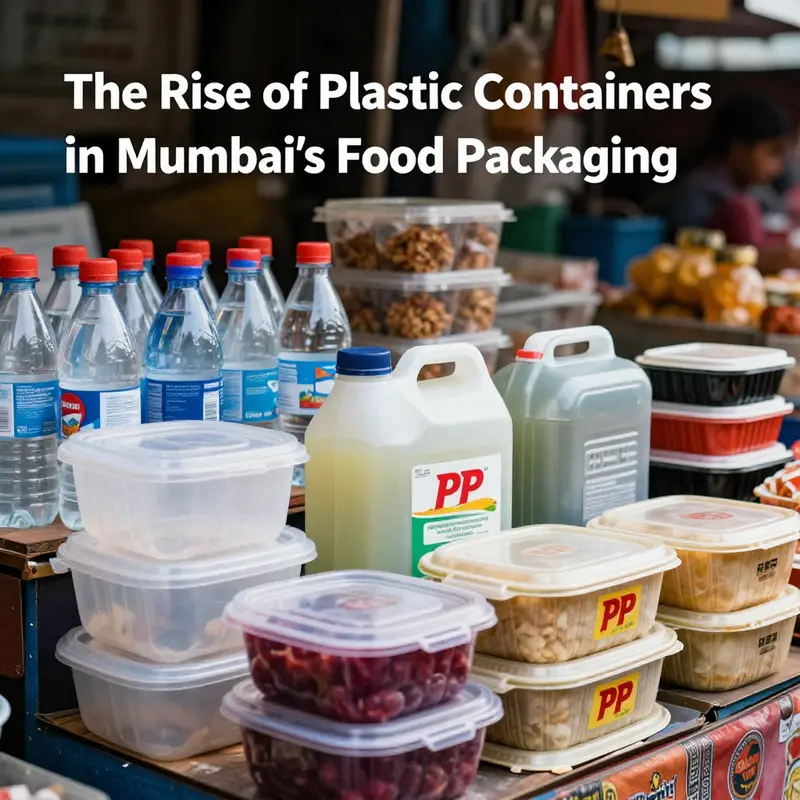
In Mumbai, the daily choreography of meals and snacks unfolds with a visible rhythm of plastic containers. From the clutter of street-side kiosks to the measured efficiency of large-scale kitchens, food packaging in the city is shaped by a blend of function, affordability, and regulatory guardrails. The materials chosen for packaging are less about fashion and more about how well they protect freshness, resist moisture, withstand the city’s varied temperatures, and endure the wear of busy service routes. The result is a layered ecosystem where three plastics—PET, HDPE, and PP—play leading roles, each selected for its particular strengths and its fit within the broader web of safety, sustainability, and consumer habits that define Mumbai’s food culture.
PET, or polyethylene terephthalate, is the most recognizable of these materials in the city’s beverage and transparent food container display. It offers clarity, a light touch, and a robust moisture barrier that helps keep water, juices, and ready-to-eat items fresher for longer. In practice, PET is most commonly seen in single-use beverage bottles and clear containers for dry or semi-dry foods such as fruit boxes or cake boxes. Its glass-like transparency makes it appealing for displays, but it is not designed for heating or repeated reuse. This limitation matters in a city where home cooking and reheating leftovers are frequent, and it underscores a broader principle: PET serves best as a packaging stage rather than a reuse scenario. When invested in, it ensures visibility and lightweight handling, two traits that are highly valued by vendors managing high turnover across crowded markets and bustling consumer corridors.
HDPE, the high-density cousin, enters the Mumbai scene as a sturdier, more chemical-resistant option. It is the backbone of milk jugs, certain juice bottles, and a wide array of durable containers used in both households and commercial kitchens. HDPE’s appeal lies in its resilience: it can be reused for storage, resists many cleaning agents, and offers a degree of impact strength that protects contents during transport. Though it tolerates routine reuse, it remains less common for direct packaging of hot foods. The city’s restauranteurs and caterers often weigh HDPE against the convenience of disposables, balancing cost, durability, and the expectations of customers who value containers that carry groceries, grains, and non-fresh items safely from stall to table. HDPE’s role is not just about keeping things sealed; it is about dependable performance under the city’s frequent transitions—from cool markets to hot kitchens and back again.
Another material you will encounter frequently in Mumbai’s food packaging landscape is LDPE, the flexible workhorse behind films and wraps. This polyethylene variant is the primary material for cling film used to cover plates and bowls, and for many transparent wraps that preserve the freshness of prepared foods. LDPE is prized for its conformability and low cost, but its heat resistance is modest. When exposed to microwaves or direct heat, LDPE can soften or degrade, which is why its use is typically restricted to covering and short-term storage rather than heating. In a city where street food, home kitchens, and takeaway routines converge, LDPE serves a distinct niche: it helps secure plates and containers during transit and sale, while keeping costs down for vendors and households alike. The trade-off is clear: LDPE supports convenience and economy, but not reheating or high-heat applications.
PP, or polypropylene, is increasingly the preferred material for containers intended for hot foods and reheating. Its notable heat resistance—up to roughly 130 degrees Celsius—makes PP a natural choice for microwave-safe containers, takeout boxes, and yogurt cups that travel through the city’s delivery networks. In Mumbai, this material aligns with the needs of vendors who offer ready-to-eat meals or hot snacks that customers then reheat at home or in micro-waves at offices or hostels. PP’s versatility also extends to reusable storage and durable lids, creating a practical bridge between single-use convenience and the growing demand for reusability. The shift toward PP reflects a broader pattern: as the city’s food service sector expands and consumer expectations evolve toward quick service with reliable heat tolerance, packaging must keep pace without sacrificing safety or ease of use.
Polystyrene, once a staple in some fast-food and street-food settings, now occupies a more cautious position in the Mumbai packaging landscape. Foam containers and cutlery made from PS are familiar sights in crowded stalls, but their heat resistance is limited and there are ongoing health concerns linked to certain heat-exposure scenarios. The city’s food safety ethos increasingly disfavors PS for hot foods, particularly where longer contact with fats and heat can raise questions about migration of residual compounds. This shifting preference mirrors a larger global conversation about safe packaging options and how vendors adapt to evolving regulatory expectations and consumer concerns.
Against these technical profiles sits a growing awareness of the risks associated with certain plastics, notably PVC and older PS formulations that can release undesirable compounds when heated. In Mumbai’s diverse food economy, there is a clear push toward safer alternatives, especially for reheating and hot-service contexts. The conversation is not merely about individual materials; it is about the life cycle of packaging—from resin procurement and manufacturing to consumer handling, waste generation, and end-of-life management. The city’s buyers and suppliers are increasingly mindful of traceability, ensuring that packaging resins are food-grade and that products meet the standard checks required by national and international frameworks. This is where BIS, the Bureau of Indian Standards, and the Food Safety and Standards Authority of India (FSSAI) come into play, establishing the guardrails that help both manufacturers and buyers navigate quality, safety, and consistency across a sprawling market.
The Mumbai packaging ecosystem is as much about people as it is about polymers. Local manufacturing units and packaging suppliers work within a complex network that often includes custom printing, tamper-evident seals, and choices that cater to both domestic retail and export markets. In a city where culinary traditions mingle with modern service norms, the ability to tailor packaging to specific needs—whether a bright, clear PET box for a cake platter or a robust PP takeout container that can survive a courier’s ride—becomes a strategic advantage. As demand for safer and more sustainable options grows, a number of suppliers are moving toward recyclable materials and closed-loop systems, recognizing that waste streams in a dense urban environment require both practical handling and responsible stewardship.
For businesses sourcing food packaging in Mumbai, the criteria extend beyond initial cost and appearance. Reputable manufacturers and distributors are expected to provide traceability, FSSAI certification, and a documented quality control process. These elements help ensure that the containers can withstand the city’s variable temperatures, handle the pressure of busy service, and maintain safety throughout the product’s life. While the core materials—PET, HDPE, LDPE, PP, and PS—each bring different strengths, the overarching aim is a packaging mix that protects food integrity without compromising safety or sustainability. Forward-looking suppliers are also embracing certified food-grade resins and exploring materials designed for recycling or biodegradation, signaling a transition that could reshape the city’s packaging landscape over the coming years.
In practical terms, Mumbai’s food packaging decisions are guided by a blend of use-case requirements and regulatory expectations. A vendor serving a dairy shop must consider the compatibility of HDPE jugs with cold storage, the ability to reuse containers, and the long-term durability of closures. A street-food stall that offers hot snacks needs containers that can handle reheating, maintain steamy freshness, and resist grease. A bakery that ships pastries or cakes benefits from PET’s clarity to showcase product appeal, while a takeout restaurant may opt for PP containers that tolerate quick warming. Across these contexts, the underlying discipline remains the same: selecting materials that balance performance, safety, and cost while aligning with national standards and consumer expectations. The role of regulators and standard bodies is to weave these threads into coherent guidelines, enabling a market that is both dynamic and accountable.
From a sustainability standpoint, the city’s packaging narrative cannot ignore the waste dimension. Recycling infrastructure, consumer behavior, and corporate responsibility converge to shape outcomes. While PET and HDPE can be recycled in many facilities, the realities of Mumbai’s waste streams—collection efficiency, sorting capacity, and end-of-life processing—determine how much of the packaging cycle ends in reuse or reuse-like pathways. In response, many suppliers are exploring recyclable formulations and enhanced labeling to assist proper sorting. Some producers are even pursuing closed-loop programs that reclaim packaging from service environments, clean it, and reintroduce it into manufacturing pipelines. These initiatives reflect a broader shift toward packaging that is not only safe and functional but also aligned with a city-scale ambition to reduce environmental load while keeping food safe and accessible.
In short, the typology of plastic containers in Mumbai is a narrative of fit and fidelity. Each material serves a distinct purpose within a wider system that must meet quick service demands, consumer safety, and evolving environmental norms. The city’s experience reflects a global pattern: as food packaging becomes more specialized, the choices become more nuanced, balancing the realities of heat, reuse, and end-of-life challenges with the imperative to protect health and preserve food quality under the pressures of a megacity. For readers seeking a broader sense of the packaging ecosystem, the collective catalog of plastic packaging options offers a practical window into how choices are made, how regulations shape those choices, and how the industry envisions a future where safety, efficiency, and sustainability coexist in everyday dining. For a broader range of packaging options, explore the plastic packaging category.
External resource for further guidance on standards and safety: https://www.fssai.gov.in
From Plant Floor to Pantry: Navigating Mumbai’s Manufacturing Standards for Food-Grade Plastic Containers

In Mumbai, the journey of a plastic container from the factory floor to the consumer’s pantry is governed by a tight weave of standards, tests, and traceability that sits at the intersection of safety, performance, and sustainability. The city’s manufacturing landscape for food-contact plastics is shaped by national statutes and the expectations of a market that includes bustling restaurants, growing delivery ecosystems, and a wide network of retailers. At the heart of this system is a regulatory update that reframes how plastic packaging materials can be produced, sourced, and used for foods and beverages. As of March 28, 2025, the Food Safety and Standards Authority of India (FSSAI) rolled out revisions that require manufacturing inputs to come from approved recycling streams and to undergo a defined set of FSSAI testing and certification procedures. For Mumbai producers, this means transforming procurement practices, tightening quality checks, and aligning documentation with a framework designed to elevate safety, transparency, and accountability across the supply chain.
The practical implications begin with the materials themselves. PET, HDPE, and PP remain the workhorse polymers in food-grade packaging, each selected for a particular strength: PET offers a clarity and moisture barrier prized in single-use and ready-to-eat applications; HDPE provides ruggedness and chemical resistance for containers that may endure transport, handling, and repeated use; PP brings heat resistance and compatibility with microwave-ready packaging. In a city where speed and volume are constants, the choice among these resins is rarely about a single performance metric but about a carefully balanced profile that fits the intended use, regulatory expectations, and end-of-life considerations. The new regulations intensify this balancing act by mandating that recycled plastics entering food-contact streams come from authorized suppliers and be processed through approved recycling technologies. This shift aims to reduce the risk of contaminants while retaining the functional benefits of recycled content, a move that resonates with both manufacturers and buyers who are increasingly attentive to sustainability alongside safety.
Alongside the material calculus, the regulatory framework calls for rigorous verification. For Mumbai’s plastics manufacturers, the path to compliance traverses several checkpoints. First, suppliers of recycled resin and other post-consumer inputs must be traceable to authorized sources and to documented recycling processes that meet FSSAI’s approval. This traceability is not a mere administrative requirement; it is a practical instrument that helps manufacturers verify that the resin entering the extrusion line has been produced under controlled conditions, with attention to contaminant levels and compatibility with food-grade applications. Second, all packaging materials intended for contact with food must pass through FSSAI testing and certification procedures. These tests verify that the final packaging obeys safety thresholds and performance criteria, from migration limits to overall structural integrity, under typical usage scenarios. The emphasis on validated testing supports a broader objective: ensuring that performance remains predictable from the moment the container is filled to the moment it is opened by the consumer.
A further pivot in the 2025 provisions concerns additives and substances used in packaging. The revised rules explicitly address the presence of certain long-chain compounds and processing aids that could pose risks when in contact with meals or beverages. The directive prohibits or tightly restricts the use of per- and polyfluoroalkyl substances (PFAs) in food-contact materials, aligning with a global movement to curb persistent chemistries that can migrate into food. Packaging made from polycarbonate and epoxy resin must be free of Bisphenol A (BPA) and its derivatives. For manufacturers in Mumbai, this translates into careful supplier audits and material specifications that clearly state resin composition, additive packages, and any recycling residues that may accompany recycled feeds. In practice, it means that product development, procurement, and quality assurance teams must work in concert to confirm that every batch entering the line complies with the letter and spirit of the law.
The consequences ripple through the operational fabric of production facilities. Updating internal quality control to match the statutory expectations is not a one-off exercise but a sustained program. It begins with a thorough review of the entire supply chain: from recovered feedstock to finished container, from supplier certificates to on-site testing results. Many Mumbai producers will embed additional checks, including supplier scorecards, periodic third-party audits, and randomized testing of incoming materials. The goal is not only to demonstrate compliance but to create a robust control system that grows with evolving standards and market expectations. For plants that anticipate export readiness or domestic expansion, alignment with international references such as FDA-equivalent considerations, REACH, and ISO 22000 often accompanies the FSSAI framework, creating a more resilient quality culture that can travel beyond national borders.
In the daily rhythm of the factory floor, the push for higher safety and sustainability also intersects with consumer-facing realities. The updated regulations reflect a broader trend toward greater packaging transparency and responsible design. For food businesses in Mumbai, this means that packaging must reliably communicate its safety credentials through documented processes and standardized testing outcomes, while also presenting a practical story about recyclability and reuse. The demand for tamper-evident seals, traceable batch information, and consistent print quality aligns with consumer expectations for trust and clarity. While the technical core of the standards centers on resin types, testing, and restricted substances, the peripheral expectations—such as clear labeling, tamper evidence, and end-of-life considerations—support a holistic approach to safety that touches every interaction a consumer has with a product.
The regulatory emphasis on traceability and quality control dovetails with the city’s broader packaging ecosystem. Mumbai’s manufacturing units are part of a network that often includes custom print capabilities, compliance documentation, and quality-control services that help convert global requirements into local realities. The interplay between domestic standards and international expectations can be nuanced, with some manufacturers aiming to satisfy multiple markets by maintaining stringent testing regimes and transparent material declarations. This alignment often requires partners who can share detailed material specifications, provide certificate of analysis, and support ongoing audits. Embedded within this ecosystem is the practical recognition that sustainable packaging is not merely about using recycled content; it is about ensuring that recycled content remains within safe and predictable performance bounds for food contact. In this sense, the city’s packaging landscape is gradually integrating the circular economy with stringent food-safety mandates, even as cost and supply-chain resilience remain central concerns for smaller producers and large scale operators alike.
Behind the regulatory language lies a guiding principle: safety must travel with every kilogram of resin, every batch of molded container, and every sealed lid. To achieve this, Mumbai’s manufacturers are encouraged to view compliance not as a checklist but as a continuous improvement journey. Practices such as supplier qualification protocols, batch-specific certificates, and routine verification testing become routine parts of production planning rather than occasional experiments. For managers and technicians, the new regime invites a culture of proactive risk management—anticipating potential nonconformances, addressing them before they affect quality, and communicating findings clearly to regulators and customers. The aim is a seamless chain of assurance that begins with responsibly sourced recycled content and ends with a consumer experience that is safe, consistent, and trustworthy.
As the city advances on this path, there is room for a more deliberate alignment between product design and regulatory expectations. Designers and process engineers can contribute by selecting resins that perform well under the intended use, while allowing space for recycled content without compromising barrier properties or heat resistance for hot-fill and microwaveable applications. The push toward eco-friendly options—recyclable or biologically decomposable materials where feasible—should be balanced with the imperative to meet food-safety standards and maintain supply-chain stability. In this evolving landscape, the role of qualified suppliers and compliant manufacturers is central. Those who build robust documentation trails, establish rigorous testing routines, and cultivate a transparent dialogue with regulators will likely find themselves better equipped to navigate both current requirements and future amendments.
For practitioners seeking concrete pathways, a practical touchstone is the direct relationship between documented compliance and operational readiness. The journey begins with a meticulous review of the materials being used, followed by a careful mapping of the supply chain to ensure that every input originates from an authorized, traceable source. Next comes the validation of materials through FSSAI-approved tests and certifications, with a system in place to refresh certificates as required. Finally, ongoing audits—both internal and external—should confirm that the packaging never drifts from the standards that govern it. In Mumbai, where scale and diversity of demand are high, such a disciplined approach does more than safeguard public health; it also strengthens the city’s manufacturing credibility, enabling local producers to compete effectively in domestic markets and beyond. The chain of compliance, once firmly established, supports not only regulatory adherence but also principled innovation—where safety, performance, and sustainability advance together rather than in tension.
Internal link: For readers exploring the spectrum of packaging options discussed in the chapter, see the Plastic Packaging category to explore how different packaging formats map to specific regulatory and safety considerations.
External reference: For the official regulatory text that underpins these changes, see the FSSAI 2025 Food Packaging Regulations. https://fssai.gov.in/Portals/0/PDFs/NOTIFICATION%20-%20Food%20Packaging%20Regulations%202025.pdf
From Circular Ambitions to Street-Level Change: Reimagining Plastic Food Packaging in Mumbai
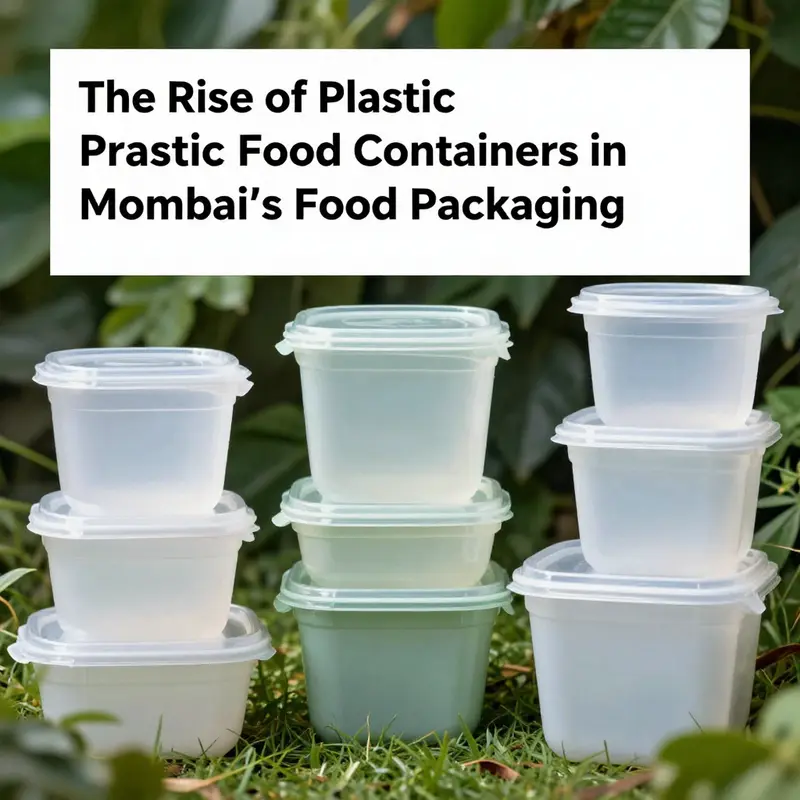
In Mumbai, plastic containers for food packaging have long stood as quiet workhorses of urban life. They circulate through kitchens, street-side stalls, myriad takeaway counters, and household pantries with a reliability born of low cost and practical durability. Yet beneath this everyday familiarity lies a changing dialogue about sustainability that threads through design choices, production methods, waste streams, and policy levers. This chapter traces how sustainable practices in plastic food packaging are taking shape in the city, not as a single silver bullet, but as a coordinated shift in materials, processes, and mindsets that can bend the city’s plastics system toward a more circular future.
Material selection remains the most visible starting point for Mumbai’s shift toward sustainability. Among the commonly used polymers, High-Density Polyethylene (HDPE) has gained particular traction because of its strength, chemical resistance, and recyclability. When HDPE is used in water bottles, edible oil containers, or ready-to-eat packaging, it often yields a relatively straightforward stream for recycling and repurposing. PET and polypropylene (PP) play their roles as well: PET offers clarity and moisture barriers ideal for certain foods and beverages, while PP provides heat resistance that makes it suitable for hot foods and microwave-safe applications. The city’s packaging ecosystem therefore leans toward materials that can participate in closed or semi-closed loops, but the actual circularity hinges on robust collection, sorting, and processing channels, which Mumbai continues to refine through public-private collaboration and informal recycling networks.
The real strength of Mumbai’s sustainable packaging story lies in the way it treats packaging as a system rather than a stand-alone product. The broader shift toward a circular economy is prompting packaging designers and manufacturers to pursue high-recyclability resins, thinner walls where feasible, and formats that reduce material use without compromising safety or functionality. In practice, this means rethinking packaging geometry, lightweighting where it does not compromise containment or delivery, and embracing transformations that ease recycling at the end of a product’s life. It also means recognizing the value of traceability. Reputable manufacturers in the city increasingly provide documentation that aligns with food safety and quality standards, enabling buyers to verify that resins meet food-grade requirements and that production lines maintain consistent quality control. This traceability is critical when containers are used for ready-to-eat meals, dairy products, or oils, where contamination or mislabeling could undermine consumer trust and regulatory compliance.
Mumbai’s packaging sector is not simply about material chemistry; it is also about the chemistry of collaboration. The interplay between manufacturing units, suppliers, waste recyclers, logistics networks, and end-users creates a dynamic feedback loop. Local manufacturers often offer customization—printing, tamper-evident seals, and even eco-friendly options—that can boost consumer confidence while encouraging proper disposal and recycling. The presence of BIS-compliant and internationally informed standards within the supply chain has helped align domestic production with global expectations, making it easier for packaging to serve both local markets and export clients. In many cases, this alignment manifests as a packaging system that is not only safe and convenient but also transparent about its origin, performance, and end-of-life pathways.
Yet the city’s sustainability journey is more than a matter of improved materials and better documentation. It is a response to environmental challenges associated with conventional plastic packaging and the realities of urban waste management. A growing body of research highlights techniques for extending the life of plastic packaging through valorization and transformation. For instance, studies published in 2025 emphasize microbial solutions that can contribute to a circular economy by breaking down waste plastics and converting the resulting breakdown products into valuable biobased materials. While these approaches are still maturing, they offer a glimpse of how Mumbai could close loops more effectively, turning discarded packaging into feedstocks for new products rather than into environmental burdens. In day-to-day terms, such innovations push the industry to integrate waste management thinking early in the design process, a practice sometimes described as life cycle thinking or functional analysis applied across the packaging’s entire life cycle—from design and production to use, collection, and end-of-life management.
The practical constraints of manufacturing also shape the sustainability agenda in Mumbai. Traditional injection molding, widely used to produce plastic containers, remains cost-effective for high-volume parts and provides precise control over dimensions. However, it also imposes requirements for wall thickness uniformity, can struggle with complex geometries, and often leads to trimming and finishing steps that generate waste. These realities have nudged manufacturers toward alternative production approaches that reduce material use and waste. For instance, engineers are experimenting with design optimizations that minimize resin while preserving strength and barrier properties. Biodegradable materials are being explored in select niches, especially where compostable disposal or industrial aerobic conditions exist, but widespread adoption requires careful balancing of performance, sanitation, and supply security. In Mumbai, this balancing act is most evident in tight product-tile constraints at street-food hubs and in high-demand takeaway environments where reliability, speed, and cost cannot be compromised.
To make sustainable packaging more than a theoretical ideal, a coherent framework is essential. A systematic approach that blends life cycle thinking with functional analysis helps packaging developers forecast environmental impacts across stages of use, maintenance, and end-of-life management. This framework supports decisions such as whether a given design should prioritize recyclability over a marginal gain in barrier performance or whether a modest material substitution could unlock higher recovery rates in the city’s recycling streams. When such analysis informs design, the result is a packaging system that minimizes waste, reduces energy intensity, and strengthens the resilience of urban supply chains in a city where space, resources, and environmental pressures are persistent realities.
The path forward, however, requires more than technical innovation. It demands policy support, consumer awareness, and cross-industry collaboration that aligns incentives and coordinates action across sectors. Policymakers and regulators in India have begun to shape the environment in which packaging evolves—through safety and labeling standards, compliance regimes, and incentives for sustainable producers. In Mumbai, the practical realization of these policy signals depends on the capacity of municipal agencies, accredited labs, and industry bodies to verify conformity, track performance, and communicate best practices to thousands of small and mid-sized manufacturers. Public education plays a complementary role, helping households and businesses understand how to sort, store, and return packaging materials in ways that feed recycling streams rather than contaminate them.
Amid these developments, the city’s procurement practices and market expectations influence the pace of change. Businesses sourcing food packaging in Mumbai increasingly value traceability, FSSAI certification, and consistent quality control. Suppliers that can demonstrate compliant resins, reliable supply, and transparent processes offer a competitive edge in a market that is both local and global. The result is a packaging ecosystem that rewards reliability and responsibility, with manufacturers and distributors learning to balance cost pressures with the long-term benefits of sustainable design and responsible end-of-life management. This is not a passive transition; it is a recalibration of priorities that recognizes the interdependence of design, production, consumption, and waste handling in a densely populated, resource-constrained urban landscape.
For readers interested in a tangible sense of the range of available packaging formats and materials, exploring the broader plastic packaging category can illuminate how design choices translate into real-world options. See the Plastic Packaging category for a sense of the spectrum—from clear containers that preserve freshness to multidose, heat-tolerant options designed for hot meals and ephemeral service contexts. This snapshot helps bridge the gap between high-level sustainability concepts and the day-to-day decisions that shape Mumbai’s packaging landscape. Plastic Packaging category.
Ultimately, Mumbai’s sustainable plastic food packaging story is evolving from isolated material improvements to an integrated design philosophy. It is moving toward a framework in which ecological design and circular management are not afterthoughts but core criteria driving every stage of a container’s life. As microbial valorisation concepts mature and supply chains become more resilient, the city could realize tangible gains in waste reduction, resource recovery, and lower environmental footprints. The research community’s contributions—ranging from microbial degradation studies to systematic lifecycle analyses—underscore the potential for breakthrough ideas to translate into practical, scalable solutions on the ground. Yet realization will require coordinated policy support, concerted public education, and deliberate cross-industry collaboration that aligns the incentives of manufacturers, recyclers, and end-users. When these elements converge, Mumbai’s plastic packaging system can become a model of responsible innovation—one that preserves the city’s dynamic food culture while protecting its air, water, and streets from the externalities of waste.
External resources and ongoing discourse in this field continue to refine the roadmap for action. As the city leans into circular strategies and increasingly sophisticated design methodologies, it will be essential to anchor progress in robust standards, transparent reporting, and shared learning across markets. For practitioners and policymakers seeking authoritative guidance on how to align packaging practices with safety and environmental objectives, established regulatory frameworks and scientific research provide a compass. FSSAI guidelines.
Transit, Taste, and Tailored Packaging: The Rising Demand for Plastic Containers in Mumbai’s Food Landscape
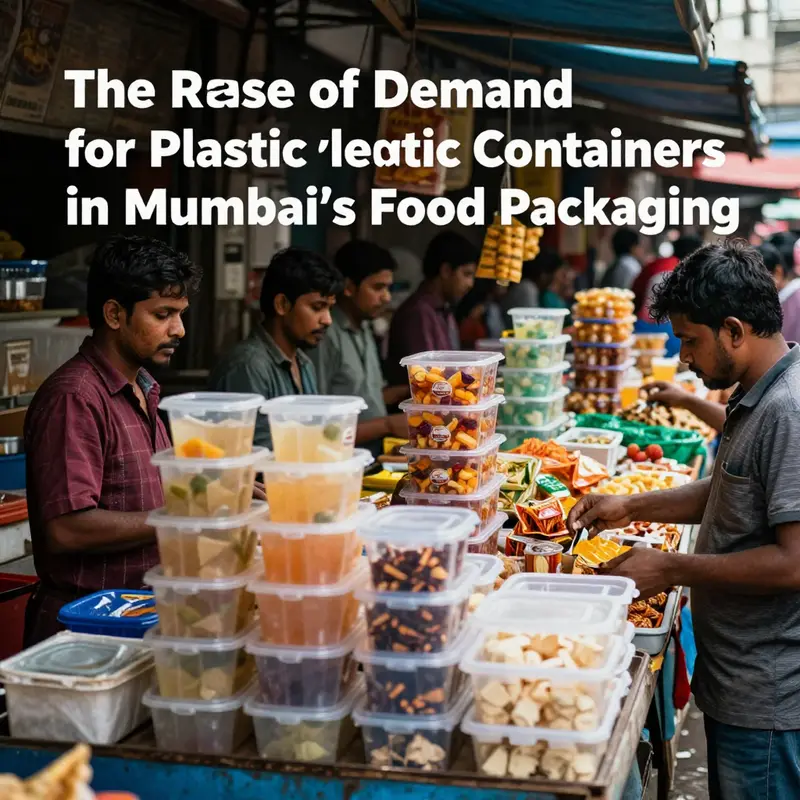
Mumbai’s food economy relies on plastic containers as a flexible packaging backbone. The demand is driven by dense population, rapid urbanization, a thriving takeout and delivery culture, and the need for lightweight, durable, and economical solutions. From street stalls to large kitchens, plastic packaging helps preserve safety and portability while enabling quick service. The market dynamics reflect national trends but are amplified by Mumbai’s scale and logistics networks. The dominant resins used are PET, HDPE, and PP, chosen for transparency, durability, and heat resistance respectively. Regulatory requirements around food safety and traceability are pushing suppliers to adopt certification and documentation, supporting trust across supply chains. The growth outlook is positive with continued expansion of the food service sector and ongoing investments in recycling infrastructure. Sustainability considerations are shaping product development toward better barrier properties and recyclability, while maintaining affordability. For buyers, choosing reliable suppliers with clear traceability and compliance becomes essential. The Mumbai packaging ecosystem demonstrates how urban food operations balance immediacy, safety, and environmental responsibility as they evolve.
null
null
Final thoughts
As Mumbai’s food industry continues to expand, the role of plastic containers in food packaging remains pivotal. Understanding their types, adhering to manufacturing standards, exploring sustainable practices, and recognizing market demand are all crucial for stakeholders across the sector. While challenges persist, the industry’s advancement towards responsible and effective packaging solutions positions it for a sustainable future.