
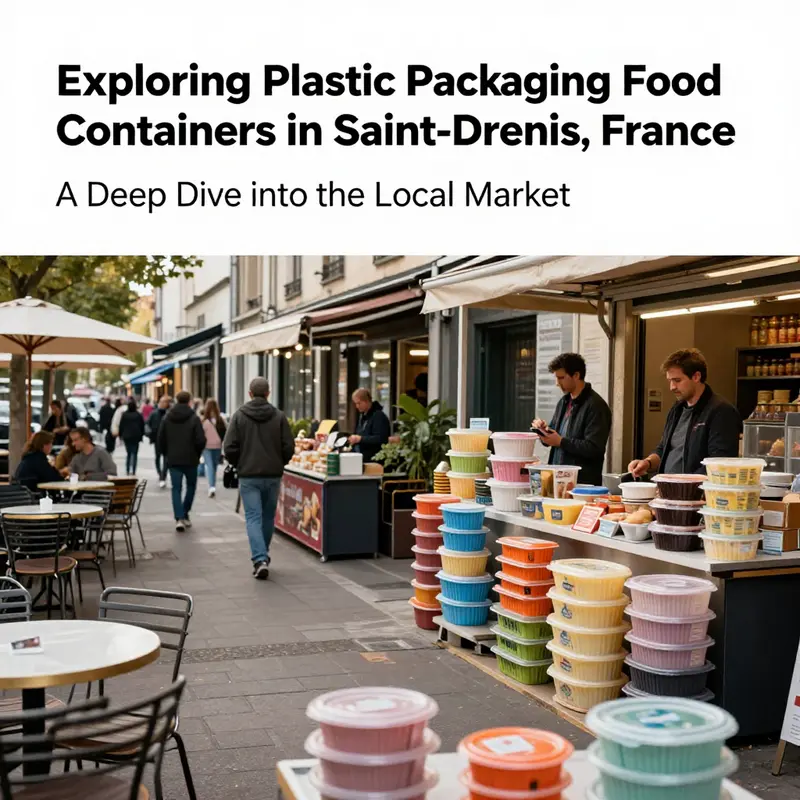
Plastic packaging food containers play a significant role in the culinary landscape of Saint-Denis, France. As the city evolves with its vibrant food scene, understanding the history and current trends associated with these containers provides crucial insights for beverage chains, restaurants, food trucks, catering services, and event planners. This article will explore the historical context of plastic packaging, current market trends, logistics involved in importation, environmental impacts and regulations, and consumer preferences in Saint-Denis. Each chapter will contribute to a comprehensive understanding of how these factors collectively influence the use and importance of plastic packaging food containers in various businesses.
From Postwar Plastics to Modern Scrutiny: The Evolution of Food Packaging in Saint-Denis

A long arc of material, market, and policy change has shaped how Saint-Denis receives and uses plastic food containers. The story begins not in a single factory in the city, but with national shifts after World War II. France embraced synthetic polymers as symbols of modernity and efficiency. Polyethylene, polystyrene, and polypropylene emerged as practical answers to pressing needs. They were lighter than glass, cheaper than metal, and easier to shape than ceramics. Manufacturers and retailers moved quickly. Supermarkets, cafeterias, and street vendors adopted disposable containers to serve an urbanizing public. Saint-Denis, adjacent to the capital, felt these changes through demand and distribution rather than through large-scale local production.
As the Paris region rebuilt and expanded, Saint-Denis grew into a dense, working-class suburb. Populations increased, and lifestyles changed. More households relied on ready-prepared meals, takeout, and packaged produce. These trends created steady demand for clamshell trays, molded food tubs, and film-sealed trays. Packaging practices that began as conveniences transformed into everyday habits. The same decades that saw new polymers become commonplace also saw supermarket chains standardize packaging formats. Food safety, portion control, and shelf life drove adoption. For many consumers in Saint-Denis, disposable plastic containers meant quicker meals and longer-lasting fresh goods.
The transition to plastics in France gained a notable boost in the late 1960s. Large companies experimented with plastic bottles and containers for beverages and mineral water. These decisions echoed across distribution networks. Products wrapped or bottled in plastic reached Parisian suburbs like Saint-Denis via wholesale suppliers and retail chains. While the city did not host major polymer mills, its logistics links—rail, river, and road—ensured rapid flow of goods. International suppliers began to play a larger role. By the 1980s and 1990s, much of the manufacturing base for single-use food containers had shifted to Asia. Factories in China, Taiwan, and Southeast Asia produced high volumes at low cost. European importers and distributors then handled local compliance, labeling, and delivery to points of sale, including outlets that serve Saint-Denis.
Over time, concerns grew alongside convenience. Environmental impacts became visible in urban contexts. Littered streets, clogged drains, and overflowing waste bins forced municipal attention. Saint-Denis’ dense neighborhoods and heavy foot traffic made disposal problems more apparent. Scientific studies added new urgency. Research into chemical additives in plastics, notably compounds with endocrine-disrupting potential, reframed the debate. Regulatory agencies in France and the EU began to respond. Risk assessments and public health advisories influenced both manufacturers and consumers. One outcome was an accelerated move away from certain substances in food contact materials. Industry adapted by replacing materials, redesigning seals, and reformulating products for safety.
National and municipal regulation shaped the local landscape. France implemented rules that affected packaging composition, migration limits, and labeling. Municipal waste strategies in the Paris region encouraged recycling and separation. In Saint-Denis, recycling facilities and collection routes had to cope with mixed waste streams. The presence of packed food from restaurants, markets, and festivals increased the complexity. Local campaigns nudged behavior. Educational efforts informed residents on proper disposal. Still, recycling single-use plastics proved technically and economically challenging. Many containers combine different polymers or include paper and plastic layers, complicating sorting and processing. These technical realities gradually shifted procurement decisions among businesses that serve Saint-Denis. Cautious caterers and chain operators sought materials that complied with evolving norms and could be handled by local waste systems.
Simultaneously, market responses introduced a broader palette of materials. Paper-based bowls with waterproof coatings, compostable pulps, and biobased alternatives entered supply chains. Some alternatives reduced fossil-based plastic content. Others attempted full compostability under industrial conditions. Retailers and foodservice operators in Saint-Denis began experimenting with these options. Their choices were driven by cost, staff training needs, and the ability of local waste processors to accept new streams. In many cases, hybrid solutions persisted: a paper bowl with a thin plastic lid, or a bagasse container with a sealed film. These hybrids met immediate operational needs while reducing the volume of traditional plastics.
The interplay between supply chains and local demand has also influenced packaging design. Size, transparency, and stackability matter for display and transport. In Saint-Denis, vendors value containers that showcase fresh goods and keep them crisp. Importers and distributors adapted assortments sold through wholesalers and marketplaces to these preferences. The sourcing model often looks global. Large minimum order quantities for low-cost plastic containers favor economies of scale. Consequently, European buyers consolidate shipments and distribute them through regional hubs. Saint-Denis benefits from this network because it lies within a major consumption area. Containers produced far afield still arrive quickly and affordably.
Public health and consumer trust have become central themes. Media coverage and scientific reports increased public scrutiny of additives such as BPA. French authorities evaluated evidence and updated recommendations. The regulatory environment tightened to protect vulnerable groups. These changes prompted manufacturers and importers to market BPA-free and safer alternatives. For businesses in Saint-Denis, the switch required re-evaluating suppliers and verifying certification. Some operators prioritized suppliers that could document compliance and provide clear traceability. Others balanced cost pressures against the reputational value of safer packaging. Overall, the direction pointed toward transparency and safer material choices.
Economic and social dynamics in Saint-Denis shaped how businesses implemented change. Small restaurants and market stalls often operate on thin margins. Switching to more expensive compostable or certified materials can be costly. Yet consumer expectations and municipal guidelines nudged choices. Programs that supported businesses through subsidies or collective procurement made transitions more feasible. Meanwhile, larger catering companies and supermarket chains drove scale adoption of new formats. Their purchasing power helped mainstream alternatives and pressed manufacturers to refine designs that matched operational needs.
Current trends suggest a continued rebalancing between convenience, cost, and responsibility. Reuse initiatives, deposit-return approaches, and standardized recyclable formats are gaining traction. For now, single-use plastics remain part of everyday life in Saint-Denis. But the blend of regulation, local logistics, and shifting consumer norms is steering supply toward less harmful options. Local stakeholders—municipal authorities, waste managers, retailers, and consumers—play active roles in shaping outcomes. Their combined choices determine which materials enter circulation, and which leave the market.
For practitioners and observers who want a deeper historic perspective, an academic review charts the early adoption of plastics in France. It explains key technological and cultural drivers behind the shift to polymer-based packaging. That review is available here: https://www.jstor.org/stable/10.1086/694341
Practical sources connected to newer material options illustrate market responses. For an example of an eco-oriented container format serving takeaway markets, see an illustrative product page for an eco-friendly kraft paper salad bowl with a PP lid: https://cupbowlpack.com/product/senang-130-disposable-eco-friendly-food-grade-reusable-square-salad-bowls-with-pp-lids-for-pet-food/
The historical arc in Saint-Denis shows how global production, national policy, and local practice intertwine. It highlights how an urban community receives, uses, and ultimately decides the fate of the materials around its food. The result is an evolving mosaic of convenience, regulation, and emerging responsibility.
Trade Corridors and Tray Walls: Tracing Saint-Denis’ Role in Plastic Food Packaging
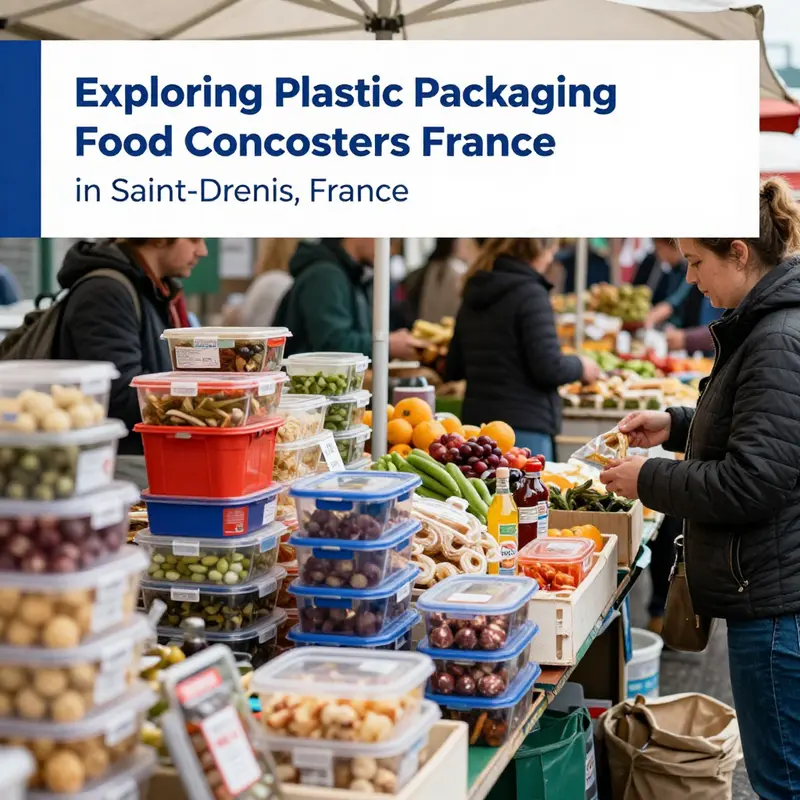
Saint-Denis sits just north of Paris, a city whose daily pulse is less about banners and more about the arteries of modern logistics. Its proximity to major transport hubs, rail lines, and dense urban markets gives it a quiet but persistent importance in the flow of goods that cross borders and end up on local kitchen counters. When we examine the market for plastic packaging food containers in Saint-Denis, we are not simply tallying the number of trays and clamshells that pass through a warehouse. We are looking at a node in a continental system that moves material from manufacturing floors in Asia to European distribution centers, and finally to the hands of retailers, restaurateurs, and home cooks. The Saint-Denis context matters because it embodies the integration of a sophisticated urban economy with the realities of global supply chains. The city’s logistics infrastructure—its networks of highways, rail corridors, and nearby ports—facilitates the rapid replenishment of a category whose demand is driven by convenience, safety, and speed. In practical terms, this means a steady, if not escalating, inflow of rigid plastic packaging designed for microwave use, leak resistance, and temperature stability. These features are not mere conveniences; they are operational imperatives for quick-service restaurants, take-away outlets, and online meal delivery services that dot the greater Paris region and extend into Saint-Denis and its suburbs. The broader French market for food packaging reflects a mature, technology-driven industry that balances performance with regulatory compliance and environmental considerations. Recent analyses show that the France Food Packaging Market generated about USD 11.0 billion in revenue in 2025 and is projected to reach roughly USD 13.5 billion by 2033. Within this landscape, rigid plastic packaging—an essential segment for durable, reusable, or pre-portioned containers—remains the backbone of many foodservice and retail applications. Projections place the rigid segment expanding at a compound annual growth rate of around 3.5 percent, reaching approximately 3.73 million metric tons by 2030. In 2025, the sector’s scale was already in the vicinity of 3.14 million metric tons, underscoring sustained demand for sturdy, dependable packaging that can withstand the rigors of transport, storage, and consumer handling. Saint-Denis mirrors these national dynamics but with its own urban inflection: the density of its neighborhoods, the concentration of dining and take-away activity, and the high volume of e-commerce deliveries all press toward packaging solutions that are not only compliant with safety standards but also efficient to source and reliable in performance. The city’s proximity to Paris effectively makes it a demand amplifier for suppliers who can meet stringent expectations without sacrificing speed or cost efficiency. In this sense, Saint-Denis does not chase trends so much as it absorbs them and translates them into practical supply chain decisions. The key features that resonate across the local market are microwave safety, leak resistance, and temperature stability. Containers must perform in busy foodservice environments, withstand repeated heating cycles, and retain integrity under varying temperatures during transit. For business-to-business buyers, the criteria extend beyond upfront price. They prioritize regulatory compliance with food-grade standards, such as EU regulations and the FDA’s 21 CFR 177, which govern materials, additives, and manufacturing practices. Demonstrating compliance and traceability becomes as important as the product specification itself. Suppliers are increasingly evaluated on technical capability, track record, and risk management approaches. This shift, while global in scope, is particularly pronounced in metropolitan corridors like Saint-Denis, where a high concentration of diners, take-away operators, and delivery platforms creates a demand rhythm that favors dependable partners with robust quality assurance and reliable logistics. The market is not static, however. Innovation in packaging is evident in both rigid and flexible formats, even as the rigid plastic segment continues to dominate where durability and reusability are paramount. Flexible packaging is gaining ground for certain product classes, particularly where weight reduction and extended shelf life are prioritized. Yet in denser urban contexts—think ready-meal kits, fast-food bundles, and grocery deliveries—the rigid format remains a workhorse for its predictability, stacking efficiency, and consumer familiarity. In Saint-Denis, these dynamics acquire local texture through consumer behavior and business models. The area’s restaurants and retail points emphasize convenient, fast, and reliable packaging solutions that can be processed quickly in busy kitchens and efficient in cold-chain or microwave reheating scenarios. This translates into a preference for containers that are microwavable, leak-resistant, and structurally robust even after multiple handling stages. As the city engages with the broader European market, import pathways become a visible feature of the local packaging economy. The bulk of production for these containers lies in Asia, with China often serving as a central manufacturing hub before products travel through European distribution centers and onward to French retailers and foodservice operators. Saint-Denis benefits from this global-to-local dynamic through its well-developed logistics networks and proximity to major distribution channels. The result is a steady, predictable stream of container formats that meet regional regulatory requirements and consumer expectations. For businesses seeking to navigate this landscape, the emphasis has shifted from simply acquiring a catalog of options to conducting a holistic assessment of supplier capabilities, performance history, and risk mitigation. In practical terms, this means scrutinizing supplier capacity to meet recurring demand, their quality control regimes, and their ability to provide documentation that supports compliance with European food-contact regulations as well as potential U.S. standards for international shipments. The emphasis on risk mitigation has grown in importance as supply chains become more interconnected and exposed to disruptions. To meet these demands, many buyers in Saint-Denis and the surrounding region are adopting supplier evaluation frameworks that weigh technical capability and consistency more heavily than price alone. The trade-offs between cost, performance, and regulatory alignment are becoming more nuanced, with buyers seeking long-term value rather than short-term savings. Against this backdrop, the packaging conversation in Saint-Denis also intersects with broader sustainability and circular economy goals. European policymakers and industry groups have been shaping a future in which packaging is lighter, more recyclable, and easier to sort at end of life. While the rigid plastic segment remains dominant for many durable or pre-portioned applications, there is a clear push toward solutions that minimize plastic use without compromising functionality. This has given rise to continued exploration of alternative materials, innovative surface laminations, and improved barrier properties that extend shelf life and reduce waste. In this sense, the Saint-Denis market is not only about meeting current demands but also about anticipating regulatory shifts and consumer attitudes toward environmental stewardship. Within the supply chain, manufacturers and distributors are increasingly expected to demonstrate environmental responsibility across the product lifecycle. This includes considerations of recyclability, the use of food-safe materials, and transparent labeling about composition and disposal. The local market, with its density and diverse food culture, provides a fertile testing ground for such innovations. For buyers and policymakers alike, the question remains how to balance the imperative for safe, reliable packaging with the collective goal of reducing environmental impact. One practical direction policymakers and buyers are considering is the shift toward recyclable, microwave-safe packaging such as kraft-based containers, which often combine paperboard with minimal coatings to preserve performance while enhancing recyclability. For a concrete example of this kind of solution, see eco-friendly kraft paper containers with lids. This type of packaging aligns with the preferences of many Saint-Denis buyers who want reliable functionality and a clearer path to recycling streams, especially in urban foodservice and take-away operations. Meanwhile, industry reports underscore ongoing demand growth in the broader French market, reinforcing the sense that Saint-Denis operates within a thriving, increasingly sophisticated ecosystem for plastic food containers. The interplay of regional demand, international supply flows, and evolving sustainability expectations shapes a dynamic that continues to favor risk-aware procurement, rigorous regulatory compliance, and a strategic approach to technology adoption. As e-commerce and on-demand meal services expand, the need for uniform, predictable packaging performance becomes even more critical. Operators value containers that can withstand rapid reheating, avoid leaks, and maintain shape during transport—all while fitting into standardized stacking and storage schemes. In practice, this means manufacturers and suppliers who can offer consistent product quality, verifiable test data, and responsive customer support. The Saint-Denis market, with its dense consumer base and varied food service formats, is an instructive case: it demonstrates how global production patterns, local logistics prowess, and regulatory expectations converge to shape the design, selection, and use of plastic packaging containers. Looking ahead, the trajectory in Saint-Denis mirrors broader national and continental trends: a push toward safer materials, smarter design for recyclability, and a more integrated approach to supply chain resilience. The balance of convenience, safety, and sustainability will continue to define how packaging choices are made by retailers, restaurants, and households alike. For readers seeking a broader perspective that situates Saint-Denis within the wider French packaging landscape, the France Food Packaging Market provides useful benchmarks for growth, regional variation, and regulatory considerations. External reference: https://www.grandviewresearch.com/industry-analysis/france-food-packaging-market
Global Flows, Local Access: Packaging into Saint-Denis through Regulation and Logistics

In Saint-Denis, north of Paris, plastic food packaging containers travel through a global-to-local journey defined by EU safety rules, technical testing, and complex distribution networks. The region sits at a strategic logistics hub where containers sourced in Asia or other European production clusters are routed through ports and continental freight corridors before reaching urban retailers and food service operators. European regulations such as Regulation (EC) No 1935/2004 and the newer Regulation (EU) 2023/987 establish the safety and traceability framework for food-contact materials, while documentation of migration testing, declarations of compliance, and HS classification (for example HS 3923.20) support customs clearance and supply chain transparency. The Saint-Denis corridor relies on bonded warehousing, EUR-pallets, and integrated logistics providers to balance speed and perishability with regulatory scrutiny. While physical routes and margins shift with port congestion, road traffic, and supplier diversification, the overarching logic remains: safe materials, transparent documentation, and reliable delivery into Paris-area markets that supply homes, restaurants, and retailers with convenient packaging.
Regulating Plastic Packaging in Saint-Denis: Pathways from Global Flows to Local Circularity

Saint-Denis sits just north of Paris, a gateway between dense urban life and continental networks that move goods. When we examine plastic packaging for food, the city rarely appears as a production hub, yet its role in the wider system matters. It acts as a node in a European flow where packaging is manufactured far away, travels through distribution networks, and enters households, restaurants, and markets. The environmental implications depend on regulatory and organizational choices that steer how packaging is designed, used, collected, and recycled. In Saint-Denis, those choices are increasingly shaped by a national push toward a circular economy, reinforced by EU objectives and by collaborations that a dense urban area can sustain. The city’s experience offers a window into how policy instruments, business models, and public sentiment converge to reimagine packaging as a resource rather than waste.
France’s 2020 anti-waste law marks a watershed moment in this rethinking. It codifies a shift away from disposables toward reuse, durability, and better end-of-life management. A core principle is extended producer responsibility (EPR): manufacturers finance the lifecycle of their products, creating incentives to design for recycling and to minimize environmental footprints. In practice, firms supplying food packaging to retailers and the hospitality sector face pressure to choose recyclable materials or to implement take-back schemes that close the loop. For a city like Saint-Denis, these changes translate into concrete municipal requirements, procurement criteria for public institutions, and collaboration with local businesses balancing cost, safety, and sustainability.
On the ground, the regulatory architecture sits within a broader European framework that seeks to harmonize standards, improve recycling infrastructure, and reduce leakage of plastics into the environment. The EU agenda emphasizes reducing single-use plastics, promoting reusable systems, and accelerating the transition to materials compatible with a circular economy. Saint-Denis is not merely applying rules but experimenting with how a dense urban area can adapt to shifting expectations about waste, resource use, and accountability. This is visible in the city’s engagement with regional networks that bring together local governments, waste managers, universities, and industry partners to pilot reusable packaging and better sanitation protocols for closed-loop systems. The result is a narrative linking schools, hospitals, markets, and eateries to long-term goals of reducing plastic pollution and cutting greenhouse gas emissions tied to virgin plastic production.
A telling thread is the BUDDIE-PACK initiative. This project is about designing and operating closed-loop systems that keep plastic containers in circulation longer. The idea is simple in theory but demanding in practice: design containers so they can be collected after use, sanitized, refilled, and reused multiple times without compromising safety. In urban settings, closed-loop models rely on a mesh of partners—municipalities, hospitality groups, logistics providers, and technology platforms—that coordinate collection, cleaning, and redistribution. Saint-Denis, with its strong logistics spine, has the potential to scale these models from pilots to broader adoption.
Saint-Denis’s engagement with BUDDIE-PACK reflects a broader willingness to view packaging not just as a commodity but as a resource when properly designed and managed. The project’s emphasis on collaboration matters in a context of international supply chains and local commerce. The question is how to foster the cooperation needed to make reuse practical in a densely populated urban landscape. It requires reliable sanitation standards, robust collection infrastructure, and incentives for businesses to participate. It also demands consumer cooperation: a public accustomed to convenience must learn to return containers for cleaning and reuse, trusting that safety protocols are maintained. In Saint-Denis, public information campaigns and clear labeling can bridge that gap, translating policy into everyday behavior.
The practical realities of supply and demand reinforce the challenge. The packaging in question originates in distant production centers, travels through European networks, and ends up in diverse food-service contexts—from street vendors to sit-down restaurants. The scale of this flow shows why Saint-Denis’s regulatory strategy cannot rest on a single policy: it must blend bans on certain single-use items with incentives for designers and manufacturers to reimagine packaging for reuse and recyclability. The national ban on certain plastics, while headline-grabbing, works best when paired with EPR schemes that align producer incentives with waste management outcomes. Policymakers must connect what is used, how it is disposed of, and how it can reappear as a valuable input in a new product.
The conversation about regulation in Saint-Denis also intersects the broader social and economic fabric of the region. Local authorities recognize that transitioning to sustainable packaging is not a bans-only exercise; it requires creative procurement, supportive regulatory environments, and local champions who demonstrate that sustainable packaging can coexist with competitive pricing and reliable supply. In the hospitality sector, reusable systems often hinge on the availability of efficient sanitation solutions and a stable business case. The city’s networks help translate policy goals into practical pilots that demonstrate cost savings, waste reduction, and improved consumer perception when packaging aligns with environmental values. Saint-Denis’s strategic position in the Île-de-France region provides a platform for cross-border learning, where experiences from nearby French cities and European capitals can be shared, refined, and scaled.
Within this framework, the internal dynamics of packaging choice become a rich field for analysis. The decision to favor reusable packaging is not merely environmental; it is a strategic business decision shaped by logistics, space constraints, and consumer demand. Reusable systems require more complex logistics for pickup, cleaning, and redistribution, but they can offer long-term savings as the cost of purchasing new containers declines or is offset by extended use. In Saint-Denis, public agencies and economic development bodies are likely to support pilot programs that demonstrate the viability of reuse schemes for common food-service containers. At the same time, the push for recyclability ensures that even when reuse is not feasible for a given use case, the packaging can be processed efficiently at end of life, minimizing environmental harm.
Design for circularity is central. Materials science, sanitation technology, and data systems all play vital roles. Containers must be designed with cleanability in mind, compatible with cleaning technologies, and traceable so that food-safety standards are never compromised. Designers and manufacturers are increasingly tasked with choosing materials and finishes that enable straightforward recycling or reuse, while still delivering performance in busy kitchens and with consumers who expect freshness and safety. The BUDDIE-PACK framework helps articulate how these requirements translate into scalable business models, not just aspirational goals. In cities like Saint-Denis, the ability to test, learn, and adapt is a decisive advantage.
For readers exploring this topic further, an internal resource offers a glimpse into practical considerations. A recent collection of packaging options highlights the move toward compostable, biodegradable, and recyclable solutions that can replace certain plastics in daily use. One example features a disposable, eco-friendly bamboo utensil set that illustrates how material choices intersect with sanitation and consumer expectations. This signal points to packaging ecosystems that prioritize reuse or responsible end-of-life management while remaining accessible to businesses of varying sizes.
The broader European perspective points to ongoing commitments. The BUDDIE-PACK project, highlighted as a leading example of circular-economy thinking, provides a roadmap for how closed-loop systems can be designed so city infrastructure, business models, and consumer behavior reinforce one another. The project’s emphasis on sanitation, collection efficiency, and reuse protocols aligns with Saint-Denis’s ambitions to reduce landfill dependence and minimize the climate impact of packaging. While this approach requires upfront investments in logistics and cleaning facilities, it also offers resilience in the face of supply-chain disruptions and evolving regulatory expectations. The synergy between policy, urban planning, and industry innovation is where Saint-Denis finds its greatest leverage—the capacity to turn global material flows into local, sustainable routines that serve both people and the planet.
In closing, Saint-Denis exemplifies how a city can navigate the transition from a linear system of take-make-dispose to a circular framework that respects environmental limits while supporting economic vitality. The regulatory architecture—rooted in national law and reinforced by EU objectives—provides guardrails that encourage producers to rethink packaging design and end-of-life management. Yet the full promise of these regulations depends on local action: municipalities that champion reuse pilots, businesses that adopt more sustainable packaging choices, and citizens who participate in recovery and return schemes. The interplay of policy, design, and behavior in Saint-Denis offers a blueprint for other urban areas wrestling with the same questions. It is a testament to how a city near Paris can help shape a future in which plastic packaging is not merely a commodity to be managed, but a resource to be preserved, reused, and thoughtfully integrated into a circular urban economy.
External resource for further reading: https://www.buddie-pack.eu
Saint-Denis, Packaging Networks, and Urban Flows

Saint-Denis sits at the edge of Paris, a city of everyday rhythms and vital connections to global trade. It is not a manufacturing hub for plastic food containers, but it sits inside a web of logistics, distribution networks, and consumer practices that move packaging from factories to shops and households.
Across Europe, the market for plastic food containers has grown thanks to durability, light weight, and cost. Containers that can go from freezer to microwave have become standard for groceries and take-away. Yet the same packaging that enables convenience also raises environmental questions, especially when waste management and recycling are not equally robust across the region.
In Saint-Denis, practical packaging choices reflect a balance between price, performance, and safety. Residents value containers that protect food and are easy to store, while policymakers and businesses push for more recyclable and reusable options. The region’s logistics backbone reduces transit times and helps keep prices competitive, reinforcing the role of plastic packaging in urban life.
A path forward involves aligned incentives, better labeling, and expanded recycling infrastructure. Pilot programs for reusable containers in take-away venues, standardization of recyclable packaging, and clear public communication can help communities move toward sustainability without sacrificing convenience.
As in many cities, consumer attitudes are shaped by a mix of habit, cost, and trust in safety. People may prefer plastic for everyday use but welcome safer, more sustainable alternatives when performance and price align. Saint-Denis thus offers a microcosm of how European packaging systems evolve in the direction of circularity while keeping urban life smooth and efficient.
A concrete example is disposable kraft paper soup cups with lids used in take-away. While seen as more recyclable, their end-of-life outcomes depend on collection and sorting efficiency. External resources such as European Commission analyses on consumer attitudes toward single-use plastics illustrate the broader context in which Saint-Denis operates.
Final thoughts
The examination of plastic packaging food containers in Saint-Denis, France, reveals a dynamic interplay between historical evolution, market trends, and regulatory frameworks. As businesses from beverage shops to catering services adapt to consumer preferences and environmental concerns, strategic choices in packaging can significantly influence their success. The insights provided in this article serve as a guide for those looking to innovate and align with best practices in packaging, fostering sustainability and enhancing customer satisfaction in the food service industry.