
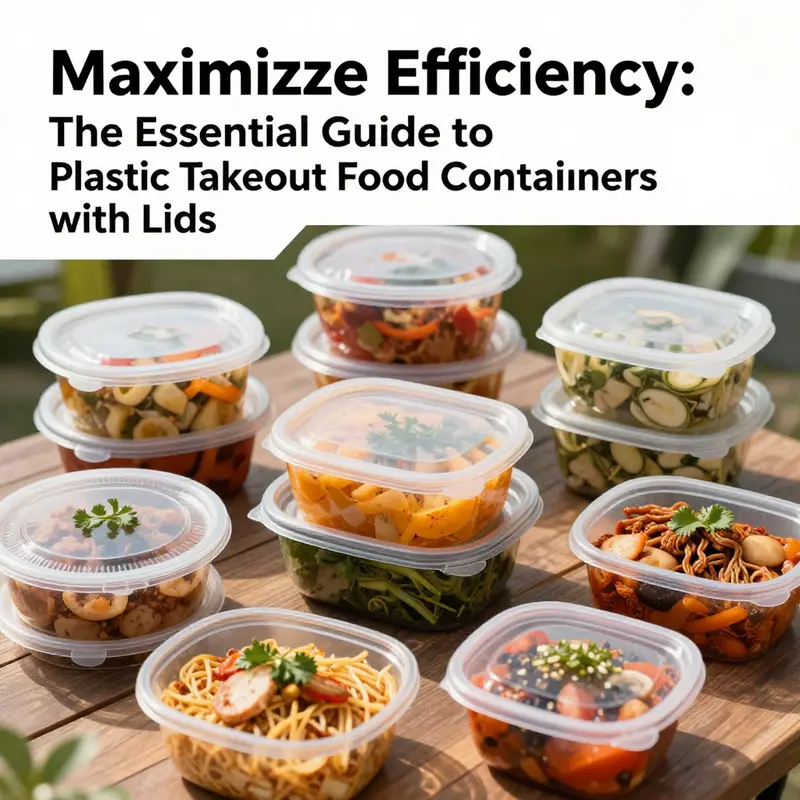
Plastic takeout food containers with lids are vital for food service industries like bubble tea shops, restaurants, and food trucks. Their durability, convenience, and versatility make them ideal choices for maintaining food quality during transport. As businesses adapt to changing consumer preferences and expectations, understanding the different types of containers available, the materials each is made from, market trends, and alternative eco-friendly options becomes increasingly important. This guide will delve into these aspects to empower food service professionals in making informed choices that benefit their operations and the environment.
Guardians of Freshness: A Deep, Fluid Look at Plastic Takeout Containers with Lids
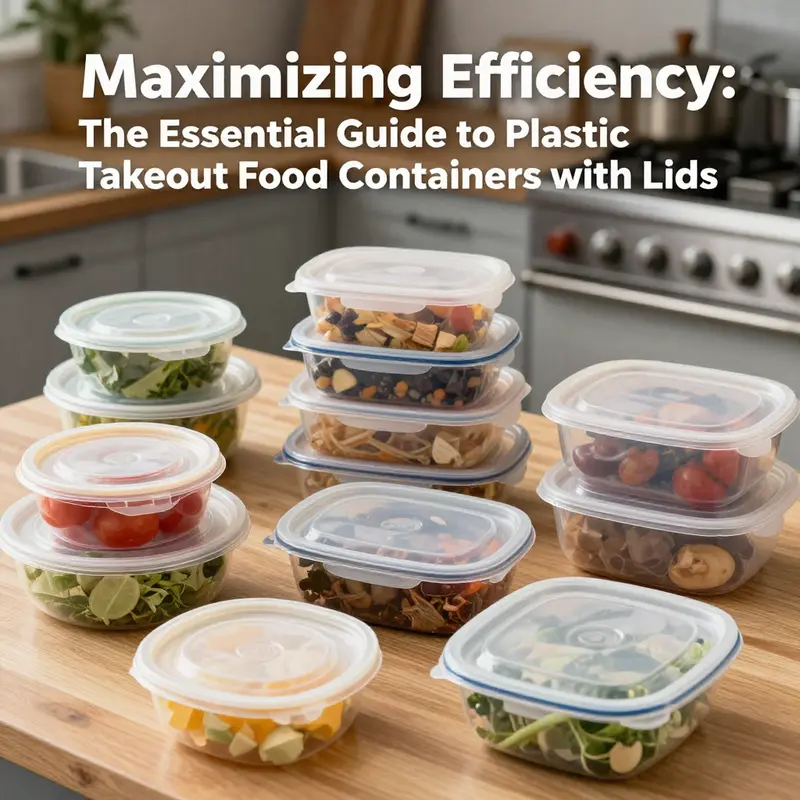
Plastic takeout containers with lids are the quiet workhorses of modern food service. They carry meals from kitchen to table, from storefront to doorstep, and from lunch break to the next craving, all while preserving texture, temperature, and appearance. Their popularity rests not just in their convenient shapes or the crisp snap of a well-fitted lid, but in a carefully chosen balance of materials, design, and safety features that together determine whether a dish arrives as intended. This chapter moves through the landscape of these containers, tracing how different materials interact with heat, moisture, and movement, and how design choices influence flavor preservation, portion control, and perceived value. The narrative is not simply a catalog of shapes; it is a narrative about reliability, trust, and the evolving demands of food service, delivery ecosystems, and educated consumers who value both performance and responsibility in packaging.
At the core of every plastic takeout container with a lid is a material story. The common workhorse materials—APET, PETG, PP, and increasingly recycled content like R-PET—offer a spectrum of strengths that make them suitable for hot or cold foods, for immediate serving or for short to medium term storage, and for systems that demand both visibility and protection. APET and PETG are prized for their clarity and rigidity, which helps highlight a dish’s colors and textures during display and transport. This visual clarity is not merely aesthetic; it also communicates freshness and quality to a consumer who may be glancing at a lineup of options. Polypropylene, or PP, brings a robust all-purpose resilience: it can take microwave heat, it holds its shape under pressure, and it resists the kinds of oils and acids common in sauces and dressings. When containers harness recycled content, such as R-PET, the same properties can be retained while reducing the environmental footprint, a balance increasingly demanded by operators who seek sustainability without sacrificing performance. These materials are the backbone of the many container families that appear across food service contexts, from quick-service venues to cafeterias to meal-prep operations, each with its own set of trade-offs and opportunities for customization.
The lids, often a separate but equally important element, are the other side of the reliability coin. Hinged lids, which keep the seal consistent as a single integrated unit, are a staple in clamshell designs. They mine friction and pressure to reduce the chances of leaks when a container is tipped or jostled during transit. Snap-on lids, meanwhile, provide a quick, versatile closure that adapts well to a range of shapes and sizes and is especially common in divided or single-compartment configurations. The key feature buyers look for is a dependable seal that resists moisture migration without making the lid difficult to open at the point of service. For hot foods, a lid must tolerate steam without warping, while for salads or dressings, the lid’s tightness helps prevent dressing leakage, a frequent customer complaint when travel is involved. The interplay of lid and base shapes determines how a product stacks on a shelf, how it travels in a vehicle, and how easily a consumer can reheat or refrigerate without compromising texture.
Sizes and configurations further tailor containers to specific culinary needs. Divided or compartmentalized containers offer a practical solution for meals that pair proteins with grains, vegetables, or sides that risk flavor crossover. A two-compartment design can maintain the integrity of a protein’s savory profile while keeping grains from absorbing sauces that would otherwise dull their texture. This design is especially valued in meal-prep services and delivery programs that emphasize balanced meals with clear, intact portions. For salads and dressing-heavy dishes, dedicated salad containers often feature leak-resistant lids and built-in dressing compartments, ensuring that a vinaigrette doesn’t mingle with greens before the consumer arrives at the table. In some cases, these compartments double as a means to present an aesthetically pleasing, organized meal that looks as fresh upon opening as it did when plated. Single-compartment containers, by contrast, appeal for their lightness and cost-effectiveness when the menu does not require multiple sections, or when a supplier wants to maximize stackability and reduce bulk in bulk orders.
A broader family of options embraces rectangular biodegradable containers, signaling a shift in the industry’s approach to sustainability without sacrificing the reliability customers depend on. Biodegradable or compostable formats are often engineered to be leakproof and microwave-safe, aligning with expectations that a restaurant can serve hot soups or microwavable meals in a container that is kinder to the environment than traditional styrenic or non-recyclable plastics. While biodegradable options sometimes carry concerns about heat tolerance or shelf life, ongoing material science work toward robust compostable polymers helps to close the gap between performance and environmental responsibility. This evolution reflects a broader trend where operators seek to demonstrate stewardship while offering the same level of functionality customers rely on for reliable takeout and delivery experiences.
Within the spectrum of plastic solutions, there are also straightforward single-compartment containers designed for simplicity and cost efficiency. These are often used for sandwiches, baked goods, or single-serving items where the food’s form and flavor can shine without the distraction of extra compartments. Their lighter weight and lower material use make them attractive for high-volume operations, grocery-store delis, and quick-service contexts where speed and economy matter. Yet even these simpler designs benefit from thoughtful lid mechanisms and the assurance of a secure closure that protects the item during transit. The small but essential details—the hinge action, the snap fit, the lip geometry that aids stacking—accumulate into a container that performs reliably day after day, week after week.
In parallel with these core shapes, condiment containers round out the ecosystem with a purpose-built niche. Small lids for sauces, spices, or salad dressings must resist leaks while being reusable or recyclable within a food-service supply chain. Frequent handling during service, buffets, or catering calls for lids that resist wear and tear yet remain user-friendly for staff and customers alike. The durability of these smaller components matters; lids that crack or become loose can undermine an entire order, leading to spills, customer dissatisfaction, and cleanup challenges on delivery routes or at events.
The practical implications of these design choices ripple through operations in tangible ways. For the kitchen, selecting the right material and lid type affects how well a container holds up to reheating and refrigeration, how much heat transfer occurs, and how easily the container stacks for shipping. For the driver, the seal’s reliability translates into fewer leaks on the road and less waste from spoiled or partially cooled meals. For the consumer, the seal and the seal’s ease of use influence the dining experience, including how confidently they can reheat and whether the appearance remains appetizing upon unpacking. In many cases, the right container becomes a signal of quality; it communicates that a business respects the customer’s time, values the meal’s presentation, and has considered the practical realities of transport, storage, and reheating.
The market context also shapes how these containers are sourced and perceived. Platforms that aggregate suppliers offer a wide range of options, including hinged and snap-on lids, multiple sizes, and both standard and customized configurations. Bulk orders enable restaurants and catering companies to optimize cost per unit while maintaining consistent performance. Custom printing, available through some suppliers, allows a brand to imprint logos or color schemes on containers, reinforcing identity even at the point of sale or during delivery. The accessibility of these products online makes it easier for operators to test different formats and iterate on what best serves their menus and service models. At the same time, the proliferation of choices creates a decision-making map that operators must navigate with attention to safety standards, compatibility with reheating equipment, and the environmental expectations of their customers.
As a result, the materials and designs discussed here are not merely technical details. They influence flavor preservation, texture integrity, and the overall perceived quality of a takeout experience. A container that hugs tightly enough to protect a delicate sauce, yet releases steam at the right moment when opened, can contribute to a meal that feels as satisfying at the moment of consumption as it did when first plated. A compartmentalized design can preserve the crispness of vegetables while preventing moisture from blurring a starch’s surface. A lid that stands up to microwave heat without deforming reassures customers about convenience and safety, especially in households where quick reheats are the norm. These are the practical benefits that drive ongoing innovation in packaging and the careful curation of container families in a restaurant’s toolbox.
In this evolving landscape, biodegradable and compostable options have gained momentum, even as many operators still rely on established, durable plastics for their track record of reliability. The dialogue around sustainability is nuanced. It involves weighing the functional requirements of a given dish against the desire to minimize environmental impact, considering life cycle analyses, recycling streams, and regional waste management practices. Biodegradable rectangle containers, for instance, promise lower end-of-life impact if composted properly, but only if there is a functioning system to collect and process the material. For many food-service operations, these decisions are not about a single event but about a long-term strategy that aligns with menu diversity, customer expectations, and supply-chain realities. The goal remains consistent: to deliver meals that look and taste good while ensuring safety, convenience, and responsibility across every touchpoint from kitchen to consumer.
The design and material choices of plastic takeout containers with lids also reflect broader industry dynamics. The availability of many options through online marketplaces—ranging from clear clamshells to opaque, weight-optimized compartments—gives operators the flexibility to match packaging to food type, portion size, and delivery scenario. It also enables rapid experimentation with new formats as menus evolve, as demand patterns shift, and as food service businesses explore new service models, including contactless delivery and curbside pickup. The impact of these containers extends beyond the immediate meal; it touches on branding, on the efficiency of kitchen workflows, and on how a customer experiences a brand during the moment of unwrapping and consumption. In this sense, the choice of container becomes a quiet ambassador for the restaurant’s standards and for the practicality of its service model.
For readers seeking concrete examples of the breadth of options available, consider the wide range of sizes, lid types, and configurations that exist in current markets. A container with a built-in dressing compartment can elevate the presentation of a salad and reduce the risk of leakage during transport. A hygienic, airtight seal can maintain the integrity of sauces and prevent cross-contamination between components. A robust, heat-tolerant base ensures that hot meals remain appetizing after a short journey, while a clear or lightly tinted shell can help highlight the dish’s colors and textures. These features, though they may seem small, accumulate into a packaging system that reliably supports a diverse array of culinary formats, from comfort foods to delicate, dressings-heavy offerings. The result is a packaging ecosystem that is not only functional but also adaptable, capable of meeting the changing demands of dining, delivery, and consumer expectations with a quiet efficiency that often goes unseen until a box arrives at the doorstep.
To connect this discussion to practical sourcing and industry trends, one can observe how suppliers negotiate between performance, cost, and sustainability. The move toward recycled content and biodegradable polymers demonstrates a willingness to reimagine packaging while maintaining the proven reliability customers expect. It also reveals how supply chains adapt to new materials, processing methods, and testing protocols designed to ensure food safety and regulatory compliance. The tension between durability and environmental impact drives ongoing experimentation with coatings, barrier properties, and lid designs that can minimize air, moisture, and odor transfer without sacrificing usability. In this evolving space, the most successful containers are those that integrate smoothly into kitchen workflows, shipping matrices, and consumer routines, delivering a consistent experience across different meals, service models, and destinations.
As you reflect on the landscape of plastic takeout containers with lids, consider how the various types and materials serve the practical needs of food service while aligning with consumer values about safety, convenience, and environmental responsibility. The clamshell with a hinged lid might be best for a hot meal that benefits from a secure seal, while a compartmented rectangle or a salad-ready container might be ideal for a cold entrée and its accompaniments. Biodegradable rectangles offer a path toward more sustainable packaging while still honoring performance requirements. The single-compartment and condiment containers complete the toolkit, ensuring that even the smallest packaging decisions can support a seamless, satisfying customer experience. In sum, the art and science of plastic takeout containers with lids lie in marrying material science with user-centered design, logistics, and brand stewardship, producing packaging that not only holds food but also enhances its journey from kitchen to consumer’s table.
For readers who want a concrete example of a widely used, multi-functional option that underscores the themes discussed here, the rectangle kraft paper salad bowl with PP lid demonstrates how a simple, reliable design can work across different contexts while showcasing the evolution of packaging toward safer, more efficient, and more brand-conscious solutions. See the related product page here: best-selling rectangle kraft paper salad bowl with PP lid 750ml for cookie and sugar takeaway containers. While this particular item sits at the intersection of paper-based packaging and PP lids, it embodies the kinds of design decisions that cross over into plastic takeout systems: secure closures, leak resistance, stackability, and the potential for branding and customization that supports a cohesive customer experience across channels. It also hints at the broader ecosystem of containers that operators may select from as they balance cost, performance, and sustainability in a competitive food service market.
As a final note, shoppers and operators looking for guidance on where to source these items in a way that complements their menus and service models will benefit from exploring established product summaries and safety information provided by major suppliers and retailers. The landscape is dynamic, shaped by regulatory updates, material science advances, and evolving consumer expectations. The right container, chosen with attention to the dish, the transport method, and the environment in which it will be reheated or stored, can elevate the entire takeout experience, turning a simple box into a reliable partner in flavor and convenience. For further context on product availability and range, external resources such as major online marketplaces provide current listings, specifications, and safety data that illuminate how these containers perform in real-world settings. See an external resource for broader context here: https://www.amazon.com/s?k=plastic+takeout+containers+with+lids.
Beyond the Seal: How the Materials in Plastic Takeout Containers with Lids Define Safety, Flavor, and Sustainability
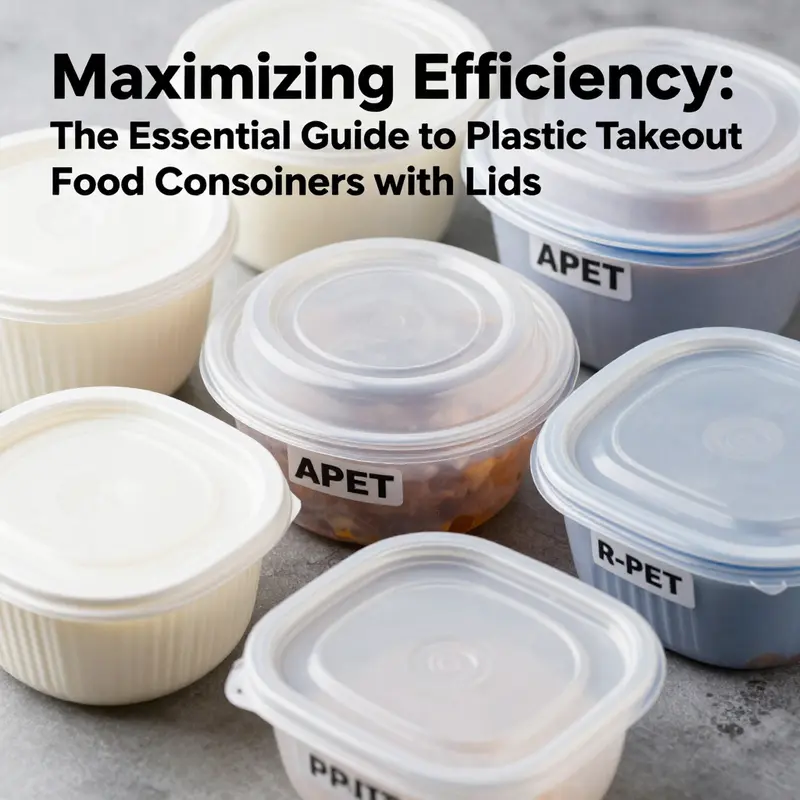
The lid is a simple instrument, yet it is the culmination of a long conversation between material science and kitchen practicality. Plastic takeout containers with lids do more than transport meals; they frame safety, preserve taste, and influence waste streams. The materials chosen for these vessels are not decorative details but the primary drivers of performance. They determine how well a container can withstand heat, how it behaves under pressure during transit, how clearly the contents appear, and how easy it is to recycle or compost once the meal is finished. At the core of this conversation are a handful of polymers, each with its own strengths and tradeoffs. Among the most common is polypropylene, or PP, a workhorse of the food-service world. PP has earned its place because it can tolerate hot temperatures without warping, yet remains light enough to handle in large volumes. It is regularly labeled with the recycling code #5, a practical beacon for sorting and processing in many municipal streams. For operators, this translates into a reliable, microwave-ready option that can withstand successive reheats without buckling, a feature essential for ready meals, quick-service meals, and family packs that migrate from kitchen to car to office desk. From the consumer’s perspective, the safety story is equally important. PP’s stability under repeated heating cycles reduces the risk of chemical migration into hot foods, which is a primary concern when people reheat leftovers. The material’s chemical resistance also supports a broad range of sauces, oils, and seasonings, helping to maintain flavor integrity while minimizing staining or odor transfer. Yet PP is not a universal remedy. Its performance hinges on the right processing, the correct lid geometry, and the absence of stress concentrations that might occur during rapid cooling or impact. In other words, compatibility between the polymer, the sealing mechanism, and the lid’s design matters as much as the polymer’s intrinsic properties.
Another major polymer in the takeout landscape is polystyrene, often found in disposable containers for items like sandwiches, baked goods, and other cold-to-warm meals. Polystyrene brings excellent insulation and a lightweight feel, which historically made it popular for to-go packaging. However, its heat resistance is more limited, and its suitability for microwave use is generally restricted. This limitation creates a boundary condition for menu items that demand reheating, such as soups or stews, where polystyrene containers may soften or deform under heat. Environmental and health considerations further complicate its role. Polystyrene’s recycling options are uneven across regions, and concerns about potential styrene monomer exposure, especially at high temperatures, have shaped consumer and regulatory scrutiny. In practice, many operators reserve PS for cooler or room-temperature items or opt for alternate materials in scenarios where reheating occurs. When a container or its lid shows signs of wear, disfigurement, or discoloration, migration risk and leakage potential can increase, underscoring the importance of routine quality checks in high-volume environments.
A third widely used plastic is polyethylene terephthalate, commonly known as PET. PET is prized for its clarity, light weight, and robust barrier properties against moisture and oxygen in some contexts. This combination makes PET attractive for certain cold or ambient-temperature foods where visibility is a selling point or where transparency helps showcase a product’s appearance. Yet PET’s heat resistance is limited, and it is not typically recommended for hot foods or for microwaving. The material’s relatively higher susceptibility to puncture and deformation under heat can compromise seal integrity, particularly when the container is subjected to jostling during transit. PET’s recyclability is a major advantage in the right waste system, but it is not a universal solution; exposure to heat, acidic ingredients, or long-term storage can challenge its performance and longevity. These limitations remind us that the choice of material is inherently a decision about use-case and lifecycle, not merely a texture or color preference.
In recent years, polylactic acid, or PLA, has emerged as a notable biodegradable option for takeout packaging. Derived from renewable resources such as corn starch, PLA fits a growing consumer demand for lower-impact packaging. Yet PLA operates under more restrictive conditions. Its heat resistance is typically well below the temperatures encountered when hot foods are packed and carried, often hovering around 60°C. Industrial composting facilities can break PLA down, but without access to such facilities, the material’s end-of-life story becomes less favorable. For this reason, PLA is frequently positioned for cold or room-temperature foods or for short-term storage rather than for reheating trays. The story of PLA illustrates a broader truth about sustainable packaging: ecological advantages are highly contingent on the waste-management infrastructure available to a given community. In the absence of appropriate facilities, even a biodegradable option may fail to deliver the intended environmental benefit.
Beyond these primary materials, some containers incorporate polyethylene for specific components like lids or seals. PE’s flexibility and chemical resistance make it well-suited for seal seals and interfaces that must endure repeated opening and closing, occasional contact with fats or oils, and the vagaries of fridge or freezer storage. While not a primary food-contact material for all components, its role in the overall packaging system is often to ensure leak resistance and structural integrity where other polymers might be less forgiving.
To translate material properties into practical decisions, it helps to align material choices with both intended use and lifecycle expectations. For hot foods, PP often wins on the basis of its heat tolerance, resilience, and broad certification landscape. For cold items or meals that are eaten at room temperature, PET or PS may be acceptable, provided packaging design safeguards the integrity of the lid seal and prevents leakage. When sustainability is a central criterion, PLA or compostable alternatives find favor in menus with strict environmental commitments, but such choices require careful attention to end-of-life infrastructure and consumer disposal behavior. Consumers who want to navigate this terrain can look for clear labeling that communicates food safety certifications, heat tolerance, and recycling guidance. Labels that indicate microwave suitability, freezer compatibility, and recycling codes can help prevent damage to containers during reheating and ensure that the container returns to a new life through recycling streams rather than persisting in landfills.
The narrative of material selection also intersects with handling practices in the food-service ecosystem. Manufacturing processes, resin quality, and the geometry of the container all influence performance. A well-designed lid, for example, is not just about preventing leaks; it is about enabling predictable resealability, reducing the risk of toppling or leakage during transport, and maintaining a tight barrier against moisture and odors. The lid material often mirrors the base polymer or uses a compatible seal chemistry to achieve a reliable fit. When lids fail or become warped, leakage and contamination risks rise, undermining both safety and customer satisfaction. Consequently, the interplay between base resin, lid design, and sealing method is a critical axis along which container performance is measured in real-world conditions.
From a safety perspective, the packaging ecosystem also grapples with migration concerns, especially when high-fat or high-acid foods are involved and when containers endure repeated heat exposure. Regulatory frameworks mandate that materials intended for food contact meet specific migration thresholds, and manufacturers often conduct tests to quantify how much of a given substance might migrate into food under defined conditions. These assessments underpin the trust that food-service operators place in packaging systems and, in turn, influence the design choices that procurement teams make when selecting containers for a particular menu or service model. In this context, material science serves not merely as a toolkit for performance but as a safeguard for public health and consumer confidence.
Another dimension to consider is the environmental footprint that accompanies each material pathway. The club of plastic polymers is joined by renewable-content options and compostable alternatives, each with distinct advantages and logistical needs. Biopolymers such as PLA offer a renewable feedstock story, but their end-of-life reality depends heavily on whether industrial composting is accessible. If composting facilities are distant or underutilized, PLA may end up in a standard waste stream with limited environmental benefit. Conversely, while paper-based or bagasse containers may be celebrated for renewability and compostability in certain contexts, their performance in high-moisture or high-oil scenarios can lag behind that of petroleum-based polymers. In many operations, this translates into hybrid strategies: some chains deploy a mix of materials to address diverse menu items and customer preferences while seeking to optimize container weight, cost, and environmental impact.
This nuanced landscape invites a broader reflection on consumer choices and restaurant practices. For diners, the material story can influence how long meals stay hot, how easily food separates during transport, and how memorable the meal is when unwrapped. For operators, the choice of material is a balancing act among cost, durability, performance under heat, and the downstream realities of recycling or composting. It also informs branding, as the appearance and tactile feel of a container—whether a glossy PET tray, a matte PP box, or a sleeve wrapped around a lid—conveys messages about quality and care. The marketing dimension is not accidental; it reflects the understanding that packaging is part of the dining experience. A container’s material can shape expectations around freshness, portion integrity, and even the perceived value of the meal inside.
The conversation does not end with the material itself. It extends to the ecosystem of related packaging components, including inserts, dividers, and sleeves that help separate items and reduce cross-contamination. Dividers might be molded from the same base material or fortified with barrier coatings to maintain the separation of sauces, dressings, and solids. The lid’s design, sometimes featuring vent channels or pressure-relief features, can mitigate steam buildup, a common concern for hot meals that travel in sealed environments. Even the color and translucency of the container influence perception: a clear PET lid can showcase a vibrant salad while an opaque PP base hides staining and helps reduce expectations around appearance during transit. All these factors—the material, the geometry, the seals, and the ancillary components—work in concert to deliver a reliable, appetizing, and safe dining experience.
For readers seeking a tangible contrast to plastic-based options, several eco-friendly packaging alternatives are highlighted in the industry. While these options sit outside the primary focus of plastic containers, they illuminate the broader spectrum of choices available to operators aiming to reduce environmental impact. Among these, kraft paper-based containers with lids exemplify a line of packaging designed with renewability in mind. The kraft format often features waterproofing and customization opportunities that can align with brand identity while offering recyclability or compostability benefits in suitable waste streams. For those curious to explore a concrete example, consider examining a product page that showcases a kraft paper octagonal bowl with a lid. This option demonstrates how packaging designers translate vegetarian-friendly and vegan-friendly menus into robust, leak-resistant containers that function without relying on traditional plastics. The link provides a sense of how material choices evolve in response to sustainability goals while still meeting the practical demands of takeout dining. kraft paper octagonal bowl with lid.
The reality is that the best material choice is usually the one that harmonizes with a restaurant’s menu, service model, and waste-management reality. A pizza shop that serves hot, greasy slices every night may prioritize a sturdy PP container with a reliable heat seal to keep cheese molten and toppings intact. A cafe that emphasizes fresh salads and dressings on the side may favor containers with built-in dressing compartments and leak-resistant lids, ensuring that dressings do not mingle with greens during transit. A family-dinner service that relies on deliveries might lean toward a design that reduces weight while maintaining a strong barrier against leakage and odor migration, thereby improving customer satisfaction and reducing spill-related complaints. In all these cases, the underlying material is the silent partner that determines whether a container thrives in real-world usage or becomes a maintenance headache for staff and a source of waste for the environment.
As the conversation around plastic takeout containers with lids continues to evolve, material science remains a cornerstone of progress. Innovations in barrier coatings, lid sealing technologies, and multi-layer composites promise to push performance boundaries further while accommodating broader sustainability objectives. These advances aim to deliver not just better food protection, but also clearer labeling, more precise temperature tolerance, and more efficient recycling or composting pathways. The result is a packaging ecosystem that supports fast, reliable service without compromising safety or the planet’s health. For practitioners in the field, staying ahead means balancing the convenience and reliability of traditional polymers with the compelling but sometimes demanding requirements of eco-friendly alternatives and evolving waste-management capabilities. The chapter on materials is, therefore, not merely a catalog of polymer names; it is a lens through which the entire lifecycle of takeout packaging can be understood, optimized, and responsibly communicated to customers.
External resource: https://www.amazon.com/s?k=plastic+takeout+containers+with+lids
Sealed for Freshness: The Dynamic Evolution of Plastic Takeout Containers with Lids
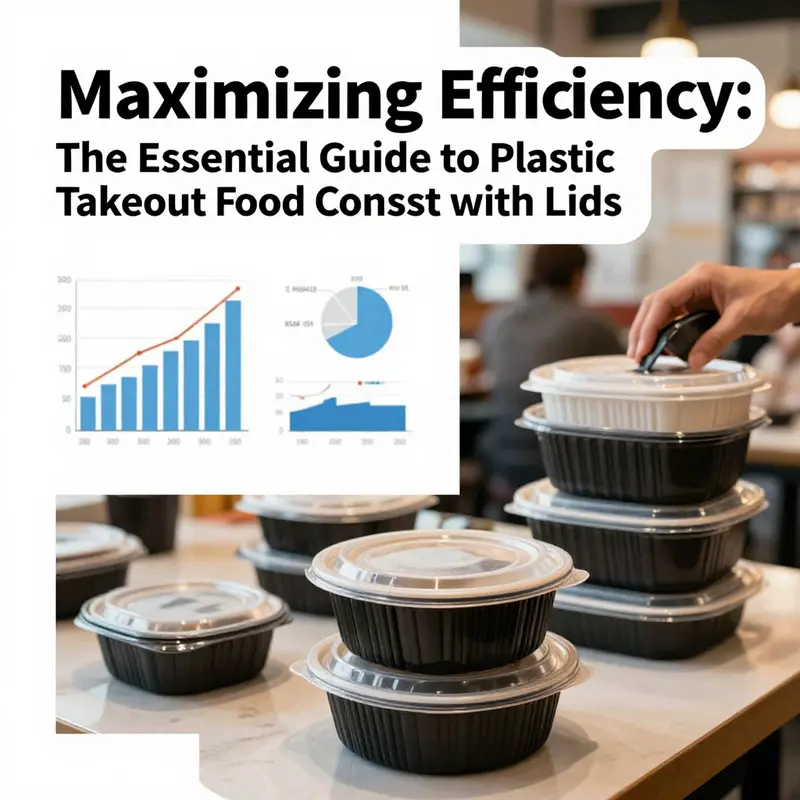
The plastic takeout container market is undergoing a multi-faceted transformation as demand remains robust across food service and delivery platforms while sustainability, safety, and design innovation guide choices. Hinged clamshells improve secure closure and reduce spills, while partitioned designs preserve flavor and presentation. Leakage resistance, built-in dressing compartments, gasket technologies, and barrier films continue to evolve to protect quality during transit. Sustainability remains a pivotal axis, with food-grade polymers, recycled-content materials, and evolving end-of-life options shaping strategies while addressing odor control and migration concerns. Material choices such as APET, PETG, PP, and R-PET balance stiffness, clarity, heat tolerance, and moldability, often with barrier layers to extend shelf life. Regional supply chains are aligning toward proximity to ports and just-in-time manufacturing, accompanied by procurement emphasis on traceability, food-grade certification, and lifecycle impact. From the consumer perspective, safety, leak resistance, ease of use, and the visual appeal of compartments drive satisfaction and brand loyalty. Looking ahead, ongoing hinge and lid design improvements, advances in barrier coatings, and a mix of materials and recycling infrastructure will expand options without compromising performance, while market forecasts and case studies highlight regional dynamics and practical design considerations.
Lids, Leaks, and Lifecycle: Reimagining Plastic Takeout Containers for a Planet-Friendly Future
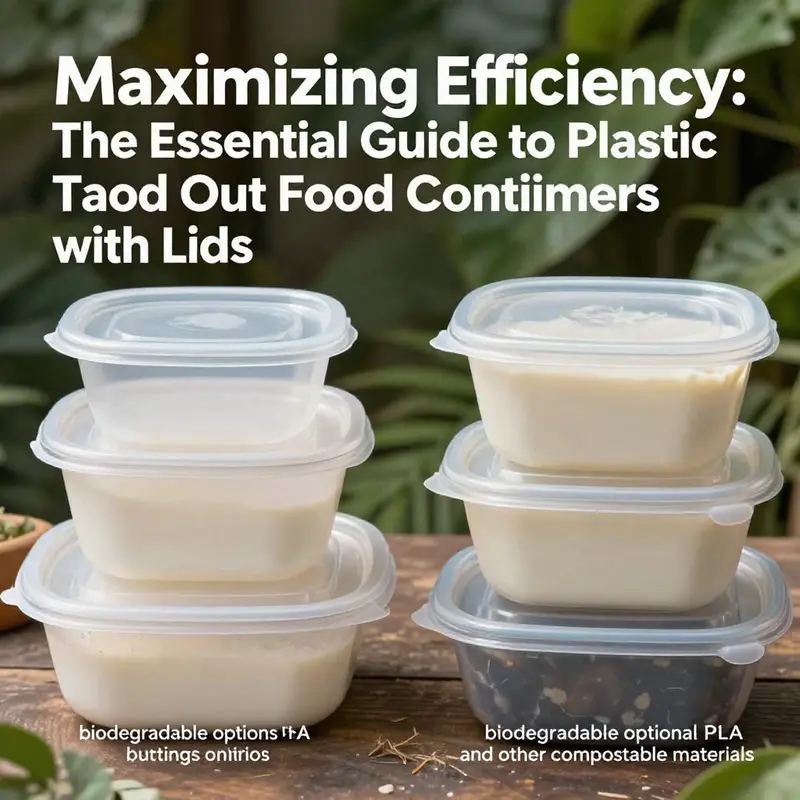
The ubiquity of plastic takeout containers with lids is a testament to the speed and efficiency of modern food service. From bustling cafeterias to late-night delivery, these containers promise a simple promise: to keep food intact, fresh, and easy to transport. Yet beneath their convenience lies a broader material story—one that stretches from fossil-fueled production to landscapes of discarded packaging. This chapter moves through that story not to condemn appetite or innovation, but to chart a path toward containers that meet the needs of today while preserving options for tomorrow. It treats the container not as a disposable afterthought but as a critical node in a system that can be redesigned to reduce waste, lessen environmental harm, and still honor the practical demands of both business and consumer life.\n\nThe environmental footprint of plastic takeout containers with lids begins long before a lid ever clicks shut. The lifecycle starts with the extraction of fossil fuels, the conversion into polymers, and the energy-intensive manufacturing that hardens those resins into shapes capable of withstanding heat, cold, and rough handling. Each stage—raw material production, resin synthesis, molding, and finishing—carries a carbon cost. Transportation adds to the tally, as containers move from factory floors to kitchens, then to customers’ hands. In practice, the most visible phase—the use cycle—often confers a misleading impression of safety and cleanliness. Containers are designed for one-time use, but the energy invested in their production remains in the atmosphere for decades, if not centuries, after their final disposal.\n\nEnd-of-life handling is where the chain reveals some of its harshest realities. A large share of takeout containers is labeled recyclable, yet actual processing depends on local infrastructure, sorting accuracy, and the propensity of consumers to rinse and separate materials. In many jurisdictions, multi-material constructions—where a plastic body is fused with coatings, barriers, or liners—confound recycling streams. Even when facilities exist to accept them, contamination from food residues often renders batches unrecyclable, triggering disposal in landfills or, worse, litter that finds its way into soils and waterways. The consequence is a paradox: a container that helps feed people but frequently becomes a contributor to pollution because the system to recover, sort, and reintroduce those materials into new products is uneven and under-resourced.\n\nMicroplastics provide a stark emblem of delayed consequences. As containers degrade in natural environments or under the mechanical stresses of incineration or landfill processes, the fragments can persist and travel through soil and water systems. Once microplastics enter a food chain, they pose risks that are difficult to quantify and even harder to reverse. The carbon footprint of plastic takeout is not limited to production. It echoes in the energy demands of waste management, in the emissions associated with long-term landfilling or high-temperature incineration, and in the ongoing potential for environmental contamination that can span generations. These structural costs remind us that the convenience of a lid comes with a responsibility to examine how containers are designed, used, and ultimately disposed.\n\nRedesigning the system begins with recognizing that not all containers are created equal. There is a spectrum of alternatives that can reduce harm while preserving the benefits of takeout food distribution. One family of options centers on compostable containers. Made from plant-based materials such as cornstarch-based polymers, bagasse (sugarcane pulp), or bamboo fiber, these options are designed to break down under industrial composting conditions. Their appeal lies in the potential to return organic material to the soil, instead of returning plastics to the environment. Yet this potential hinges on infrastructure: industrial composting facilities that can process these materials quickly and safely. Without such facilities, compostable plastics can fragment or linger, undermining their environmental advantage. Moreover, not all compostables behave the same in the field. Some require specific temperatures or timeframes to break down, and some may not degrade effectively in home composting systems. These caveats are essential reminders that “green” claims require context and verification.\n\nAnother robust path is paper-based packaging. Paper, especially when it uses compostable or biodegradable coatings rather than polyethylene, can be more resilient in recycling streams while offering a cleaner end-of-life profile. The coating choice matters; a truly compostable lining or PLA (polylactic acid) coating might enable composting in appropriate facilities, whereas wax coatings or non-biodegradable laminates can hinder recycling. Paper-based containers also present a potential market for improved sourcing and manufacturing practices, from responsibly managed forests to reduced energy inputs during production. The larger point remains: recycling and composting outcomes are not purely materials questions. They hinge on a suite of supporting systems, from collector networks and sorting facilities to consumer participation and municipal handling rules.\n\nReusable containers promise a very different set of outcomes. When designed for durability and repeated use, they can dramatically lower the life-cycle waste associated with single-use packaging. Materials such as high-quality polypropylene or other sturdy plastics, glass, or stainless steel can withstand repeated washing and transport. The trade-offs here include higher upfront costs, the need for reliable cleaning in a household or workplace setting, and clear protocols for returning or exchanging containers within a food service ecosystem. The up-front investment can be offset by long-term waste reductions and a more predictable end-of-life calculus. The challenge, then, is to foster a culture of reuse that is hygienic, convenient, and economically sustainable for businesses that rely on high volumes of orders and deliveries.\n\nAnother compelling option is molded fiber packaging, built from recycled paper or agricultural byproducts. Molded fiber often performs well with hot foods and can be both recyclable and compostable, depending on the specifics of its coating and the composting infrastructure available. The strength and water resistance of these materials continue to improve, expanding their viability for salads, noodles, and other dishes that demand a sturdy, leak-resistant vessel. As with other alternatives, success hinges on a systems approach: ensuring that facilities exist to process the packaging after use and that consumers understand how to dispose of it properly.\n\nCrucially, the environmental advantage of any alternative hinges on certification and lifecycle transparency. Certifications such as OK-compost or TÜV Austria help buyers and businesses verify that claims about compostability, recyclability, or safety are credible. They are not a substitute for robust waste management infrastructure, but they do offer a credible signal about performance under specific conditions. Consumers and operators alike benefit from clear labeling that distinguishes containers designed for industrial composting from those intended for home use or standard recycling. Without such clarity, well-intentioned choices can be neutralized by mismatched disposal practices and misaligned expectations.\n\nTo translate these broad options into practical practice, businesses and individuals must think beyond the moment of purchase. A durable solution involves aligning container choice with local waste streams and consumer behavior. For restaurants and delivery services, this means not only selecting appropriate materials but also adopting operational practices that minimize contamination. Rinsing containers before disposal is a practical step, but it must be coupled with clear guidance on whether the rinsed packaging will be accepted by local facilities. Labeling containers with disposal instructions, providing customers with easy-to-use recycling or composting guides, and offering incentives for return or reuse can shift the default behavior toward more sustainable outcomes. In the end, the container is most effective when it serves as a bridge between food safety, consumer convenience, and responsible waste management.\n\nA practical illustration emerges when considering a transition from conventional single-use plastics to bagasse-based or other compostable options. The switch, when integrated with a local composting framework, can dramatically reduce landfill mass and curb microplastic leakage. The key is to treat the change not as a one-off substitution but as part of a broader packaging strategy: materials selection, sourcing, labeling, customer engagement, and post-use processing must all align. The opportunity extends to packaging design itself. Fewer layers of barrier coatings, simpler multi-material configurations, and a focus on barrier performance that matches the actual food profile can reduce wastefulness and energy intensity. In addition, exploring regional partnerships for composting or recycling can maximize the likelihood that a container completes its intended environmental loop rather than becoming a stray fragment in the environment.\n\nIn exploring the environmental dimension of takeout containers, it helps to have a concrete sense of what the science tells us about lifecycle impacts. A peer-reviewed assessment of takeaway packaging highlights the breadth of factors—from material choice to end-of-life processing—that drive total environmental burden. The study suggests that packaging systems designed with circularity in mind—where materials are recoverable, reusable, or compostable within an effective waste-management network—can meaningfully lower emissions and resource use. This does not diminish the complexity involved; it underscores the necessity of coordinated action across production, distribution, consumer behavior, and municipal infrastructure. It is a reminder that the path to sustainability is not a single invention but a network of design choices, policy signals, and cultural shifts that together move the needle on waste and emissions.\n\nTo place a practical beacon in this landscape, consider the material choices at the point of manufacture. A shift toward more recyclable or compostable inputs, combined with designs that minimize material diversity and coating complexity, can ease the processing needed after use. For example, a container with a single-material body and a compatible lid reduces the barriers to efficient sorting and processing. Where coatings are necessary to shield hot foods, selecting coatings that are compatible with intended disposal streams—industrial composting or standard recycling where possible—can improve outcomes. And where reuse is feasible, fostering systems where containers are collected, sanitized, and returned closes the loop more robustly than any one-off product swap.\n\nAmong the most compelling paths forward is scalar experimentation: testing different container families across communities with varying waste-management capabilities, observing outcomes, and iterating designs accordingly. The goal is not to impose a one-size-fits-all solution but to cultivate a menu of credible options that align with local capabilities. Businesses can pilot compostable options in regions with robust industrial composting, while others might emphasize reusable containers with established return channels. In all cases, transparency remains essential. Clear labeling about disposal pathways, timeframes for compostability, and the conditions required for recycling helps prevent the disjunction that often undermines environmental claims.\n\nFrom a consumer perspective, the question becomes how to participate in this evolving system without compromising convenience. The answer lies in choices that balance practicality with responsibility. Carrying a personal set of reusable containers for takeout, choosing options that claim credible compostability with recognized certifications, and supporting vendors who invest in end-of-life infrastructure all contribute to a more sustainable pattern of consumption. It is not merely a matter of preference; it is a willingness to engage with a more complex but potentially more resilient packaging ecosystem. When customers bring their own containers or opt for vendors with robust reuse or composting programs, they help to normalize sustainable practices and reduce the volume of packaging entering the waste stream.\n\nOne tangible way to connect the threads of material science, policy, and consumer behavior is through targeted ecosystem design. A container is not just a container; it is a negotiated artifact that reflects how a society handles waste. Designing for reuse requires not only durable materials but also practical return logistics, hygiene protocols, and incentives that encourage uptake. Designing for composting requires alignment with composting facilities, acceptance by households, and accurate labeling so that industrial operators can process materials correctly. Designing for recycling requires materials that can be repeatedly remanufactured and a municipal system capable of sorting and substituting virgin resin with recycled content. When these pieces align, a container can become part of a closed loop rather than a perpetual drain on resources.\n\nAs we look toward a more sustainable future, it is worth highlighting the potential for cross-material collaborations. A hybrid approach—combining a recyclable paper-based exterior with a minimal, food-safe plastic barrier only where essential for performance—could strike a balance between recyclability and functionality. Such inventive configurations must be evaluated through rigorous life-cycle assessment and validated with credible certifications. The objective is not to abandon plastics abruptly but to replace the most problematic patterns with alternatives that fit local waste realities while maintaining food safety and user experience.\n\nFor readers seeking a practical touchpoint within this broader discussion, consider exploring materials and packaging options that emphasize end-of-life clarity and system compatibility. An example of the direction many communities are taking involves shifting toward products designed with explicit disposal guidance and with materials that align with local processing facilities. This alignment is not a marketing slogan; it is a structural requirement for achieving real environmental benefits. The container becomes a facilitator of responsible food service rather than a reminder of wasteful excess. In this sense, the lid is less a symbol of convenience and more a commitment to a rational, well-supported waste-management pathway.\n\nInternal reference can help bridge theory and real-world application. For instance, lightweight, sugarcane-based (bagasse) lunch boxes represent a family of materials used in takeout contexts that leverage agricultural byproducts to create sturdy, compostable vessels. When paired with appropriate composting infrastructure, these options can significantly decrease the volume of material that ends up in landfills or as litter. If you are exploring practical, material-aware options, you can learn more about bagasse-based designs here: bagasse sugarcane-based lunch boxes. This resource illustrates how a single material choice can influence end-of-life outcomes without compromising the functional requirements of takeout packaging.\n\nIn sum, the challenge of plastic takeout containers with lids is not a binary decision between habit and harm. It is an invitation to rethink the container as a design object embedded in a network of waste streams, recycling facilities, composting infrastructure, and consumer behavior. The path forward combines better materials, smarter design, credible certifications, and a robust commitment to end-of-life management. If these elements come together, containers can continue to support the delivery economy while leaving a lighter footprint on the environment. The future may not be one type of container for all uses, but a spectrum of solutions tailored to local waste realities, each chosen for its capacity to minimize harm, maximize recovery, and sustain the dignity of meals that move from kitchen to table.\n\nExternal resources can deepen this understanding. For a broader, peer-reviewed lifecycle perspective on takeaway packaging, see the comprehensive study available in the external literature: https://www.sciencedirect.com/science/article/pii/S0956053X1830477X. This source offers a rigorous framing of how material choices, processing steps, and disposal pathways collectively shape environmental outcomes, underscoring the importance of integrated packaging strategies that span production, use, and end-of-life stages.
Final thoughts
The selection of plastic takeout food containers with lids can significantly enhance a food service business’s efficiency and customer satisfaction. By understanding the types and materials available, businesses can tailor their choices to meet their specific needs and align with market trends. Furthermore, exploring eco-friendly alternatives can offer not just environmental benefits but also improve brand loyalty among increasingly conscious consumers. The right container not only preserves food quality and presentation but also drives operational efficiency and supports sustainable practices.