
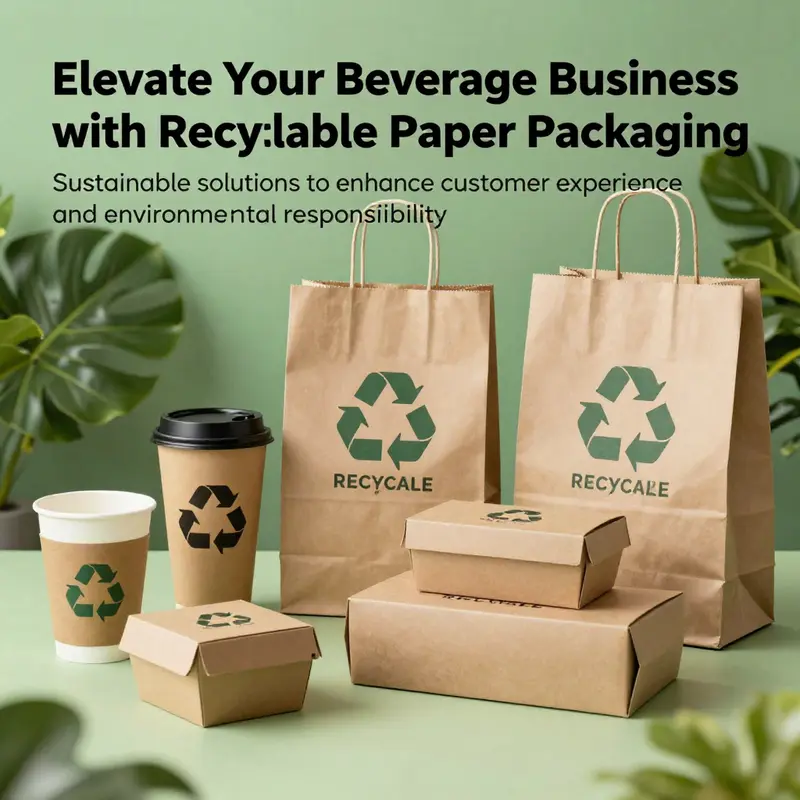
As consumers become increasingly aware of environmental issues, businesses in the food and beverage sector are under growing pressure to adopt sustainable practices. One effective strategy is the implementation of recyclable paper packaging. This kind of packaging not only meets customer expectations for eco-friendly options but also provides a slew of benefits that range from innovation in materials to economic advantages. In this exploration, we will navigate through innovations in recyclable paper packaging technology, delve into the economic benefits, assess environmental impacts, examine the societal changes spurred by this movement, and highlight challenges alongside future directions. Each chapter contributes to a comprehensive understanding of how recyclable paper packaging can play a pivotal role in enhancing your business while caring for the planet.
Closing the Loop: Breakthroughs in Recyclable Paper Packaging Technology
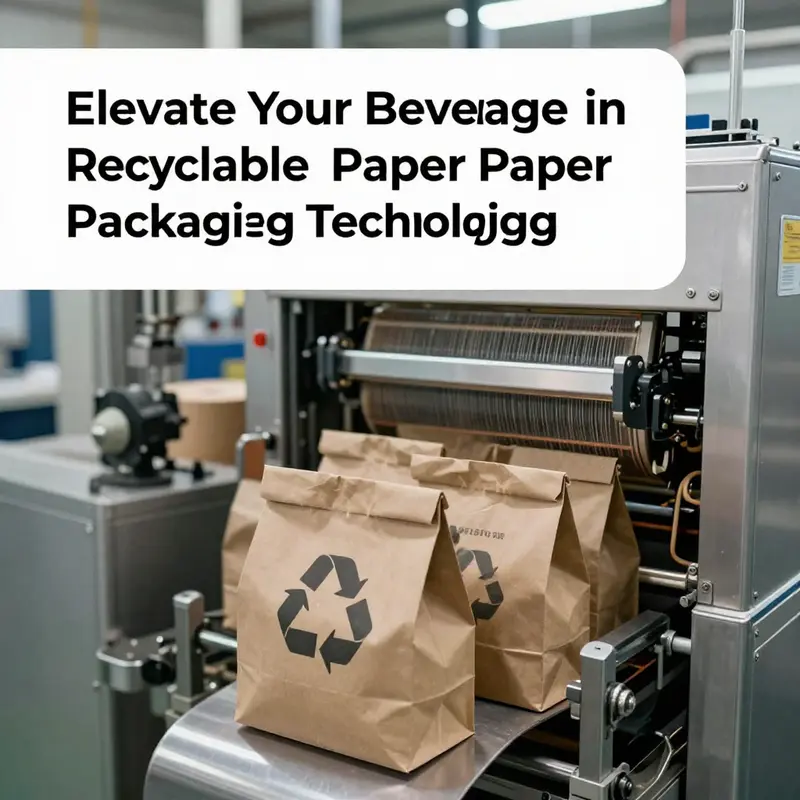
A shift in packaging is unfolding: paper-based materials are moving from a supporting role to the foreground as credible contenders for truly recyclable packaging. The pressure to reduce plastic waste and resource use has intensified the demand for solutions that perform as well in practice as they do in theory. The path forward hinges on rethinking how barrier properties, durability, and end-of-life processing can coexist within a single, recyclable fiber stream. What is becoming clear is that innovations in paper packaging are not simply about substituting one material for another; they are about redesigning the entire material stack to align with circular economy principles. In this light, the core challenge is dual: to deliver performance that protects contents and preserves product integrity, while preserving the integrity of the recycling stream at the end of use. The result is a family of solutions that integrate moisture, grease, and air barriers directly into the paper architecture through compatible coatings and binders, avoiding the traditional pitfalls of multilayer plastics that complicate or halt recycling.
At the heart of these innovations are multi-barrier concepts that bring together paper and carefully engineered barriers without creating non-recyclable composites. Instead of conventional plastic laminations, researchers and manufacturers are turning to water-based barriers and heat-seal coatings that can be processed together with standard paper streams. Water-based barrier systems can repel moisture and manage grease, while heat-seal coatings provide the durable seal needed for contain- ment without locking in plastic materials that would disrupt recycling. The objective is clear: retain the performance profile required for food contact, beverages, and consumer goods, while ensuring the material can be reprocessed into new paper products after use. This aligns with the broader aim of making packaging designs that are both fit for purpose and fit for recycling, a balance that has often proved elusive in the past.
These barrier innovations are not merely incremental; they represent a strategic shift in how the industry thinks about compatibility with existing recycling streams. Paper-based barrier systems are designed to fracture away from the traditional problem of non-separable layers. The emphasis is on chemistry and physics that allow the coated paper to pass through deinking and pulping processes, preserving the fiber for subsequent reuse rather than sending it to landfill or downcycling. The practicality of this approach is underscored by the growing interest in paper-based flexible packaging concepts, which previously faced skepticism about protecting contents under real-world handling and storage conditions. The ongoing research demonstrates that moisture, grease, and oxygen can be controlled within a predominantly fiber-based structure, enabling a continuity of recycling that is essential to scaling sustainable packaging across sectors.
A crucial element in this transition is the development of advanced paper materials that can stand in for certain plastic functionalities without becoming a dead end for recycling. These materials are engineered to deliver robust barrier properties through the integration of compatible coatings and surface treatments. The overarching design principle is straightforward: the barrier system must break away cleanly from the fiber during pulping, leaving behind a clean fiber that can be reincorporated into new paper products. In practice, this means that a well-executed barrier layer should not impede deinking, nor should it introduce contaminants that compromise the quality of recycled fiber. The industry is already seeing tangible results as these materials are validated through laboratory testing and third-party industrial assessments. When combined with strong mechanical performance, the result is a recyclable paper packaging solution that does not require a fundamental change in consumer disposal behavior.
In this landscape, the concept of fully recyclable paper packaging is no longer a theoretical ideal but an attainable standard. The practical reality is that barrier performance, seal integrity, and recyclability must be engineered in concert. This means a careful balance of coating chemistry, fiber type, and processing conditions chosen to work with existing recycling infrastructure. The emphasis on water-based barriers reflects a broader shift toward reducing reliance on fluorinated or solvent-based systems that pose environmental and processing challenges. Heat-seal coatings, while traditionally associated with plastic packaging, are being adapted for paper in ways that allow reliable sealing without creating non-recyclable layers. The combination of these technologies holds the promise of protecting products in real-world conditions—such as humid environments, oily foods, or spicy beverages—while ensuring that packaging remains compatible with standard pulping and recycling streams.
From the perspective of the broader packaging ecosystem, these innovations enable a more circular approach to materials. When paper-based barrier systems are designed to be compatible with the mechanical and chemical processes inside mills and recycling facilities, they contribute to a closed-loop model. This means the same fibers can be reused to produce new paper products rather than being diverted toward waste. The end-to-end impact is a reduction in virgin fiber demand, lower energy use, and diminished emissions associated with plastic production and disposal. It also simplifies consumer choices, as end users encounter packaging that performs as needed without requiring them to separate materials or dispose of packaging in a specialized way. The shift toward recyclable paper barriers thus becomes part of a larger sustainability narrative that links product design, manufacturing, and post-consumer processing in a seamless loop.
Industry-wide adoption of recyclable paper packaging is further supported by material science advances that broaden the range of applications. In sectors such as food, cosmetics, and consumer goods, packaging must not only deter moisture and grease but also withstand handling, stacking, and transport without compromising integrity. Paper-based barrier systems now offer the necessary durability while keeping recycling streams intact. This dual capability is particularly important for flexible formats and for products with shorter shelf lives where efficient moisture control can significantly improve product quality and reduce waste. The ripple effect is significant: brands and manufacturers gain a reliable packaging option that aligns with sustainability goals, reduces reliance on fossil-based plastics, and supports the long-term viability of recycled fiber markets. As more players pilot and scale these technologies, the cumulative effect will be felt across supply chains, where packaging decisions increasingly reflect life-cycle thinking rather than upfront cost alone.
A practical signal of progress can be observed in the types of paper packaging configurations entering mainstream use. Modern paper packaging no longer relies solely on a rigid corrugated box for protection; it embraces flexible, coated paper structures that can perform like coated films while still being recyclable in standard paper streams. This convergence of flexibility and recyclability opens doors for packaging formats that were previously impractical for certain products, enabling more compact, lighter, and more efficient designs. For retailers and manufacturers, the operational benefits are meaningful: reduced material weight lowers transportation emissions, and the simplification of end-of-life processing eases compliance with evolving waste-management regulations. The result is a packaging system that supports both environmental objectives and business goals, aligning corporate responsibility with operational efficiency.
For procurement and supply-chain teams evaluating these materials, the emphasis should be on long-term compatibility and supplier reliability. Buyers should seek partners who can demonstrate that barrier coatings and sealants are compatible with standard pulping processes and that the entire system maintains performance during shelf life and transport. It is also essential to assess the clarity and consistency of test methodologies used to verify barrier properties, including moisture, grease, and oxygen performance, as well as deinking and recycling outcomes. A sound evaluation goes beyond initial performance data; it includes predictive models for how packaging will behave across different climates, product categories, and distribution networks. In practice, this means demanding transparently reported data from suppliers, including lab results and third-party validation that confirm recyclability and recyclability yield in a fiber-based recycling stream.
As the market matures, practical demonstrations of recyclable paper packaging come from real-world applications that illustrate both the elegance and the challenge of the approach. A tangible example is the way packaging can be designed to serve multiple functions with a single material platform: a coated paper structure may act as a moisture and grease barrier, provide a secure seal for contents, and still be processed with standard recycling equipment. The design philosophy emphasizes modularity and compatibility, enabling packaging lines to adapt a common material system to different formats and product needs. The outcome is not a single miracle material but a family of compatible solutions that share a core principle: maximize recyclability without sacrificing performance. Consumer expectations rise in tandem with these capabilities, as shoppers increasingly value packaging that is both functional and environmentally responsible. The challenge now becomes one of scale and consistency—how quickly and uniformly this approach can be adopted across markets, suppliers, and product categories while maintaining stringent quality standards.
A practical touchpoint for readers and practitioners is the availability of concrete packaging formats built on recyclable paper principles. For those interested in tangible examples, consider the broader ecosystem of paper-based packaging options that showcase how barrier and seal technologies can be integrated with fiber. One illustrative example is a kraft paper octagonal bowl with a snug lid designed for take-away use. This type of packaging demonstrates the potential for high-demand formats to be both recyclable and robust, suitable for a range of foods and consumer goods. kraft paper octagonal bowl with lid This kind of solution embodies the synthesis of performance, aesthetics, and recyclability that defines modern paper packaging innovations.
Looking ahead, the trajectory of recyclable paper packaging technology points toward even more integrated systems. Advances in ambient curing chemistries, barrier coatings derived from renewable feedstocks, and coatings that can be stripped cleanly during pulping will continue to erode the barriers that once limited paper to only a subset of applications. The circular economy perspective remains the north star: every design choice should contribute to the viability of recycling streams, the reduction of virgin fiber demand, and the integrity of downstream processes. Achieving this requires collaboration across the value chain—from material scientists and converters to brand owners and waste-management operators. Shared testing protocols, common performance benchmarks, and transparent reporting will accelerate trust and adoption. As the industry refines these approaches, recyclable paper packaging will increasingly stand on equal footing with traditional plastics for a broad range of applications, from everyday consumer goods to premium offerings, while delivering the environmental benefits that customers increasingly demand. Deepening this alignment between design intent and end-of-life reality will define the next era of sustainable packaging, where paper not only serves as a sustainable packaging substrate but also as the backbone of a truly circular packaging economy.
External resource for further reading: https://www.researchgate.net/publication/392048567InnovationsinPaperPackagingfortheRealizationofaCircular_Economy
Economic Benefits of Recyclable Paper Packaging

Economic benefits of recyclable paper packaging extend beyond the upfront price tag. They arise from waste disposal savings, regulatory risk reduction, and revenue opportunities tied to sustainability. When a company weighs cost against risk and long term value, recyclable paper often proves smarter financially.
Reducing waste translates into direct savings on hauling, tipping fees, and landfill taxes, depending on local rules. Lighter, single-material packaging simplifies sorting and improves recycling yields, which lowers operating costs over time and can free up resources for product protection and customer experience improvements.
Regulatory alignment also has a meaningful financial impact. Fully recyclable paper packaging helps avoid penalties, audits, and extended producer responsibility fees associated with multi-material solutions, delivering more predictable costs and smoother supplier compliance processes.
Consumer willingness to pay can broaden margin opportunities for brands that communicate credible sustainability. When packaging signals environmental responsibility and product integrity, it can support premium pricing, stronger brand equity, and more resilient demand across markets and channels.
On the production side, recyclable paper packaging can reduce capital intensity and cycle times when designs emphasize simplicity and material efficiency. Fewer lamination steps, faster conversion, and better compatibility with recycling streams contribute to lower unit costs as volumes scale.
Rethinking the Footprint: The Environmental Dynamics of Recyclable Paper Packaging
Recyclable paper packaging is often celebrated as a kinder choice, but its true environmental story unfolds only when production, use, and end-of-life are considered as a connected system. Paper’s biodegradability and ability to be recycled many times offer a sturdy cross-hatch of benefits. When a carton or courier mailer is placed into the correct recycling stream, it becomes raw input for new paper products, reducing the demand for virgin wood pulp and easing pressure on forests. The energy and water demands of recycling are markedly lower than those of pulping fresh fiber, which translates into lower greenhouse gas emissions over the life cycle of the packaging. In communities where collection and sorting are well organized, paper waste can be diverted from landfills, diminishing methane formation and soil contamination that sometimes accompanies improper disposal. These advantages form the backbone of why many producers and retailers choose recyclable paper as a default packaging material, especially for items that travel through mixed-use environments where durability and printability matter. Yet the picture is not unambiguous. The environmental gains hinge on how the packaging is designed and how the recycling system is run. If the pathway to recovery becomes blocked by non-recyclable barriers, the same packaging that promises lower impact ends up contributing to resource waste and pollution. That is the central tension that researchers and practitioners are tackling today.
One starting point is to recognize that recyclable paper packaging functions within a broader ecosystem. Collection infrastructure, consumer disposal habits, and the capacity of mills to process recovered fiber all shape the actual outcomes. When recovery rates are high and contamination is low, the advantages multiply. In contrast, if inks, coatings, or adhesives resist removal, or if multi-material laminates trap residues, the quality of the recovered fiber declines. In practical terms, this means fewer good fibers for new paper products and a potential need for more virgin content to meet market specifications. The result is a paradox: packaging materials that are technically recyclable may, in practice, offer diminished environmental gains if the end-of-life stream is not well managed. This underscores the importance of aligning design, labeling, and consumer education with the realities of local recycling capabilities. The design decisions become not just about shelf appeal, but about how easily a package can re-enter the fiber loop after use.
The challenges extend beyond mechanical processing. The recycling system also contends with resource-intensive aspects of de-inking, cleaning, and separating contaminants. In many cases, inks, adhesives, and coatings require additional energy, chemical treatments, and water to remove from the recovered pulp. When these inputs are not carefully controlled, water quality can suffer and the efficiency of pulp recovery can decrease. This is not merely a technical hurdle; it is a governance and value-chain issue. The more complex the surface of a package—think several layers with different materials—the harder it becomes to separate components without compromising fiber purity. As research attention has shifted toward emerging contaminants in organic recycling streams, the friction between durability and recyclability grows more pronounced. Some coatings and surface treatments intended to boost moisture resistance or print fidelity may persist through pulping and contaminate the resulting fiber, even if the package appears to be recyclable in theory.
To address this, the industry is moving toward barrier chemistries and coatings that are either removable or compatible with standard paper recycling processes. Water-based barrier systems, in particular, offer a promising path forward. They can provide the necessary moisture resistance without creating a stubborn, non-recyclable layer that would derail fiber recovery. While promising, these chemistries must be validated through rigorous laboratory and real-world testing, ensuring they meet both recyclability standards and practical performance requirements. In tandem with material science advances, voluntary standards for fiber packaging have emerged to guide manufacturers toward designs that align with recoverability. The aim is to ensure that what leaves the factory can truly re-enter the manufacturing stream rather than accumulate as waste. When coatings and inks are chosen with end-of-life in mind, mills can recover fiber more consistently and with less energy expenditure, reinforcing the environmental case for recyclable paper.
Design becomes the decisive variable. If a package uses a separate plastic lining, fluorinated coatings, or multi-material laminates, its recyclability suffers. By contrast, simple, mono-material paper structures with minimal coatings and compatible inks can be reprocessed into new paper products with less energy and chemical input. When brands and suppliers commit to full recyclability, they often reframe package features as part of a system rather than as an individual asset. For instance, envelopes, mailers, and boxes conceived as 100 percent recyclable can be processed without resorting to shredding or chemical additives that would compromise fiber quality. The industry is also experimenting with closures, windows, and attachments that can be easily separated, or eliminated altogether if they do not add value to the consumer experience. These design choices are not just about end-of-life; they influence the entire energy and water footprint of the packaging, from the initial pulping and bleaching steps to the final recycling mill operations. Consumers play a pivotal role here, since the best-designed package can lose its environmental advantage if it ends up in the wrong stream due to unclear labeling or inconsistent sorting practices.
The move away from hard-to-recycle constructs also resonates with the broader circular economy narrative. A packaging system that keeps fiber within a closed loop reduces the need for virgin forests, lowers transport emissions, and supports regional recycling infrastructure. When a consumer places a recyclable paper envelope into the curbside bin, they participate in a chain of recovery that, ideally, regenerates the material into fresh paper products. The practical realization of this vision depends on clear labeling, consistent collection practices, and industry-wide agreements on what constitutes recyclability in real-world streams. In many regions, local programs already reward households and small businesses that separate materials correctly, reinforcing the connection between everyday choices and systemic benefits. The challenge is to extend those successes to more complex packaging formats without compromising either performance or recoverability.
Industry momentum toward recyclable paper packaging is visible in the way pilots and challenges are shaping product development. The push includes exploring truly sustainable cups, wrappers, and packaging components that can withstand daily use while leaving little residue for the recycling mill. In practice, this means evaluating coatings, adhesives, and barrier layers not only for performance but for recoverability. The dialog is increasingly cross-sector, linking material science with consumer behavior, municipal recycling policies, and procurement strategies. For procurement teams, the implications are practical and urgent. Choosing a recyclable solution is not only about the material itself; it is about the supplier’s governance, traceability, and risk management. Buyers benefit from clear assurances that their orders will be manufactured to sustainable specifications, that payments are secure, and that deliveries occur within agreed windows. Platforms that offer payment protection and refunds give buyers confidence to transact across borders, particularly when order sizes are large and production lead times stretch over weeks. In this landscape, transparency about the composition of coatings, inks, and inner layers becomes a public good as much as a business advantage.
As an illustration of consumer-facing packaging, some suppliers offer eco-friendly designs that emphasize recyclability through aesthetic cues and simplified structures. A paper mailer or packaging box that highlights its recyclable nature can influence shopper choices and disposal behavior. The key is to balance the expectations of the consumer with the technical realities of the recycling stream. A packaging solution that looks impressive on a shelf but fails in the washroom of the recycling plant benefits no one. The industry recognizes that true sustainability requires consistency across design, production, and end-use.
Within this context, the following example demonstrates how a recyclable paper packaging option can engage end users without compromising recyclability: a socalled eco-friendly printed-logo paper cup that emphasizes its paper-based construction and post-consumer disposal pathways. eco-friendly-printed-logo-paper-ice-cream-cups-with-lid. This kind of example shows how product styling can align with a close-loop system if the materials and inks are chosen with end-of-life in mind. It is not a standalone marketing angle; it mirrors a broader truth about recyclable packaging: surface appeal must harmonize with recycling realities to deliver genuine environmental gains.
Policy and standards development also play a central role. When governments and industry groups set aspirational goals for recyclability, designers respond with materials that meet those criteria rather than risk an uncertain fate in the waste stream. The evidence from laboratory and field studies supports a cautious optimism: recyclable paper packaging can outperform many alternatives on energy and water metrics while offering waste diversion benefits, provided the design avoids non-recoverable layers and the recycling stream remains clean. Yet the success of this approach depends on ongoing innovation in barrier chemistries, inks, and fiber processing. It requires investment not only in equipment but in data sharing and compliance frameworks that help mills distinguish recyclable inputs from contaminated streams. In other words, the environmental performance of recyclable paper packaging is a function of how well the supply chain coordinates material choices, labeling, and consumer education. For researchers, the challenge is to quantify tradeoffs across multiple life-cycle stages and to translate that knowledge into actionable guidelines for designers, recyclers, and regulators.
In sum, recyclable paper packaging offers a compelling pathway to reduce material intensity and to keep fiber in circulation. It is not a panacea, however, and its full promise rests on a shared commitment to design for recyclability, to rigorous testing of new barrier technologies, and to responsible management of chemical additives that could compromise recovery. When these conditions are met, recyclable paper packaging can contribute meaningfully to resource conservation, waste reduction, and lower emissions across the packaging system.
For a deeper dive into emerging contaminants in organic recycling streams, see Science of the Total Environment: https://www.sciencedirect.com/science/article/pii/S004896972401394X
Shifting Minds, Shaping Markets: The Societal Rise of Recyclable Paper Packaging
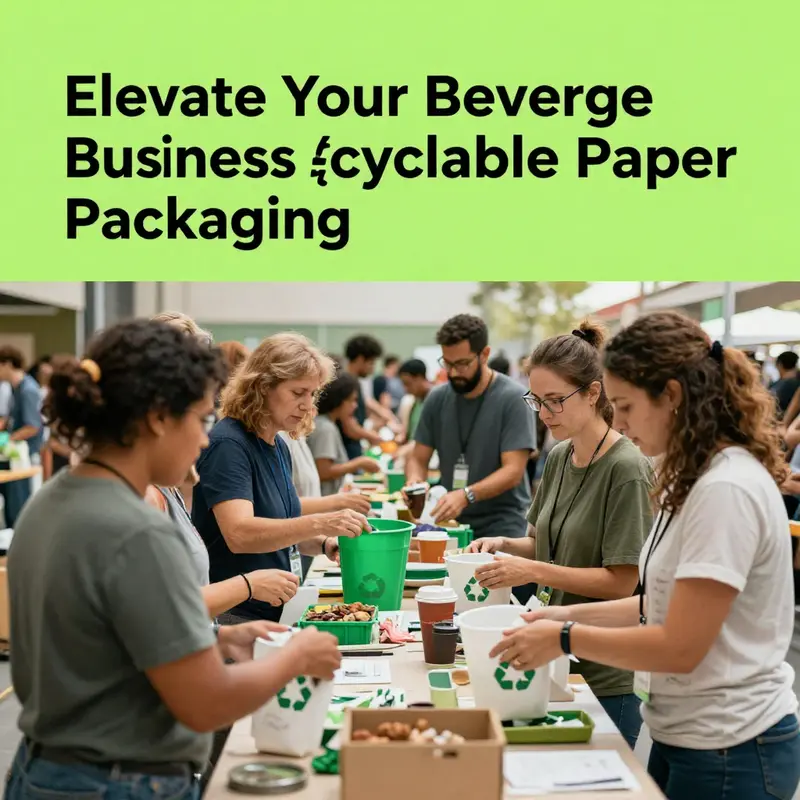
Shifting social norms are rarely born in laboratories or boardrooms alone. They arrive when everyday objects become arguments for a different kind of economy. Recyclable paper packaging has emerged not merely as a material choice but as a catalyst for a broader cultural movement. As plastics pollution garners attention across cities and households, communities increasingly demand packaging that can be returned to circulation rather than consigned to landfills. The rise of fully recyclable paper packaging signals a redefinition of value: what matters now is not only how a package protects a product, but how easily its materials can be recovered, reprocessed, and reintroduced into the supply chain. This shift ripples through households, stores, and policy rooms, producing a layered effect that touches how people shop, what companies promise, and which rules govern waste management. The result is a more intentional relationship between consumption and waste, one that places responsibility upstream in sourcing and downstream in end-of-life processing, and it begins with the simple act of choosing paper over plastic when the paper is designed for circularity.
Consumer behavior has begun to reflect this rethinking. People are increasingly selecting products wrapped in packaging that minimizes waste and supports compostability or recyclability. They read labels with recycle arrows less as a marketing cue and more as a trust signal. When packaging communicates that it can be fully recovered, people tend to treat it with care, separating it from general waste and keeping it in accessible streams. Retail environments respond by highlighting sustainable options, making the most durable and recyclable choices visible at the shelf. In practice, this translates into lighter, simpler structures that forego multi-layer laminates unless the performance can be achieved without compromising recyclability. Consumers also indicate a willingness to support brands that reveal their sourcing and end-of-life strategies, a shift that nudges marketing away from vague commitments toward concrete, measurable actions. The outcome is a marketplace where packaging becomes part of a product’s promise, not an afterthought that customers ignore in the rush to the checkout.
Corporations respond to this changing atmosphere not merely through cosmetics but through strategic design and governance. Packaging engineers collaborate with sustainability teams to simplify structures, reduce coatings that hinder recycling, and ensure fibers come from responsibly managed forests. This is more than compliance; it is a new baseline for corporate accountability. Suppliers publish responsible sourcing credentials, and manufacturers partner with third-party auditors to validate end-of-life performance. The shift creates a shared vocabulary across the supply chain, where terms like recyclability, repulpability, and material recoverability carry weight in procurement decisions as much as price and lead times. The result is a market where packaging decisions influence product development, logistics, and even retail layouts, aligning operations with customers’ expectations that sustainability be integral to what a brand stands for. Companies that inspire trust in how they source fibers and dispose of packaging tend to earn loyalty not just for a single product but for the broader ethical posture the brand embodies.
Policy makers also begin to listen more closely to the chorus of voices calling for systemic change. As recyclable paper packaging displaces a portion of single-use plastics, regulations embracing extended producer responsibility, recycling targets, and standardized labeling gain traction. Local governments invest in curbside infrastructure and transparent waste-tracking systems so households can contribute to higher recovery rates without confusion. The public dialog shifts from blaming plastic waste to praising a circular economy mindset, where the emphasis is on designing products so that every fiber finds a second life. This alignment of policy and practice accelerates investment in paper-based recycling streams, improves the quality of recovered fiber, and lowers the barriers to entry for new recycling facilities. In turn, manufacturers and retailers gain clearer guidelines and incentives to optimize packaging from cradle to cradle, translating moral suasion into practical standards that sustain industry growth while protecting the environment.
Beyond policy and preference lies a tangible environmental dividend. The broad adoption of recyclable paper packaging reduces the footprint of both production and disposal. Fewer virgin fibers drawn for single-use packaging translates into lower energy use and lower emissions. When materials stay in circulation, the economy moves toward a circular model in which waste becomes feedstock. The paper stream benefits from mature recycling technologies that separate fibers from contaminants and reconstitute them into high-quality products. Recyclable paper packaging thus supports a cascade of reuse opportunities, from packaging itself to the cartons, bags, and other paper goods that follow. This cascade reduces the demand for new raw materials, stabilizes supply chains, and helps communities build resilient waste management systems. The cumulative effect is not only cleaner rivers and skies but a steady decline in the energy intensity required to design, produce, and recycle packaging over successive cycles.
For buyers, the implications are both strategic and practical. Procurement teams increasingly favor suppliers who demonstrate end-to-end literacy of circularity: their mills, their forest sources, and their end-of-life processes. This means asking for documentation of sustainable fiber sourcing, third-party verifications, and transparent claims about recoverability in real-world streams. It also means rethinking payment terms and risk, because the transition toward a recyclable, globally traced fiber system benefits from fair, secure transactions that ensure commitments are fulfilled. In markets where digital procurement platforms enable escrow-style payments and platform-backed guarantees, buyers can negotiate with greater confidence while supporting suppliers who invest in recyclable packaging innovations. The shift toward paper-based packaging thus reshapes vendor relationships, enabling smaller producers to compete by offering credible environmental credentials alongside price and service quality. The result is a marketplace that values responsible stewardship as a core competitive capability rather than a niche attribute. For buyers seeking practical options, eco-friendly printed logo cups with lids illustrate how packaging can combine performance with recyclability.
Industry-wide initiatives illuminate the road ahead. A consortium of players is testing new designs that aim to achieve true recyclability and compostability across cup systems, lids, and outer packaging. The aspiration is a closed loop where every cup, sleeve, and vessel can be collected, separated, and processed into new paper products without adding streams of non-recyclable contamination. These efforts are not merely technical exercises; they reflect a broader willingness across the value chain to adopt radical collaboration, sharing performance data, and aligning on standard testing that proves end-of-life outcomes. Consumers benefit when this collaboration translates into packaging that performs reliably in everyday use while remaining compatible with established recycling streams. It is the kind of progress that reassures households and small retailers alike that sustainable choices are compatible with convenience, affordability, and brand trust. The pace of experimentation may be uneven, but the overarching trend is clear: design for recyclability becomes a core criterion in new packaging concepts, and it increasingly dominates conversations about how products are presented and disposed of in a consumer society.
All these dynamics converge to a future where recyclable paper packaging is not a marginal option but a foundational capability. In communities large and small, households, retailers, and policymakers participate in a shared project: to minimize waste, maximize materials recovery, and keep paper fibers circulating despite growing demand for convenience. The efficiency of this system depends on thoughtful design, transparent sourcing, reliable end-of-life processing, and a marketplace that values environmental responsibility as a strategic asset. The result is a quieter economy, one in which resources move in loops rather than in straight lines, and where the environmental cost of packaging becomes more predictable and lower over time. For practitioners and buyers seeking practical grounding, it helps to examine the broader evidence about how recycling paper and cardboard shapes waste management and sustainability objectives. The EPA’s extensive report on recycling paper and cardboard offers a rigorous, accessible overview of the lifecycle, performance, and policy implications of these materials, underscoring why recyclable paper packaging matters beyond a single product category. Ultimately, this shift is a shared learning curve, not a single breakthrough. It invites readers to see how everyday choices accumulate into systemic momentum that reshapes production, retail strategies, and civic life. In this way, recyclable paper packaging becomes a shared future we can build together. External resource: EPA Report on Recycling Paper and Cardboard: https://www.epa.gov/sustainable-management-waste/recycling-paper-and-cardboard
Beyond the Barrier: Navigating Challenges and Envisioning a Truly Recyclable Paper Packaging Future
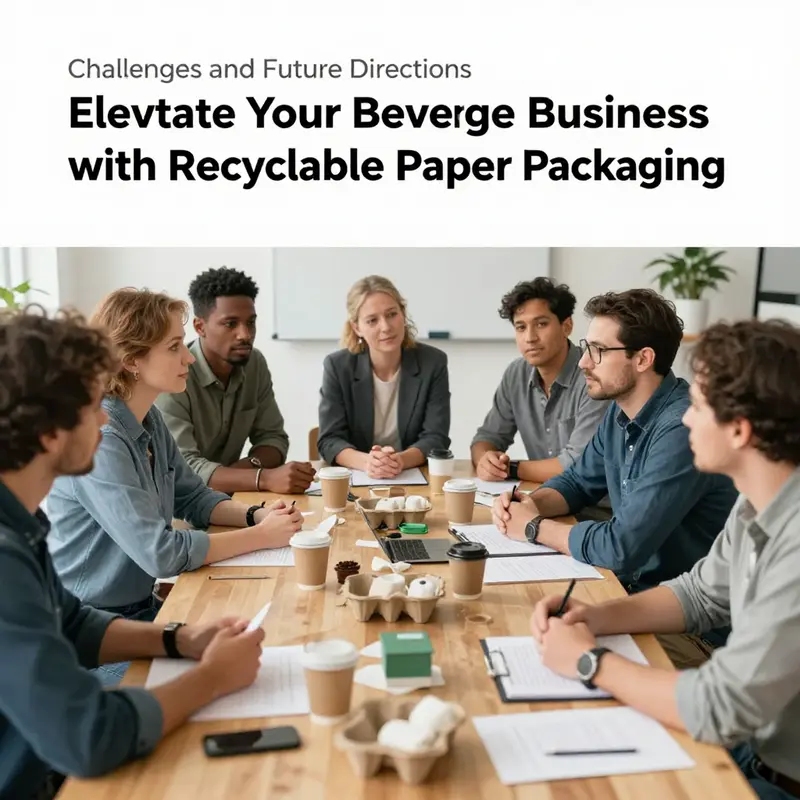
Chapter Overview and the Pull Toward Circularity
In the march toward sustainability, recyclable paper packaging stands out as a practical bridge between today’s waste streams and tomorrow’s circular economy. Yet a chapter-long view reveals that the path from concept to commonplace is not a straight line. It runs through material science, the realities of processing facilities, and the daily choices of consumers. The promise is clear: paper-based packaging that can be repulped, remade, and reused with minimal contamination. The challenges are equally concrete: achieving reliable barrier performance, coordinating an infrastructure that can handle new materials, and guiding end users to dispose of packaging correctly. When these threads are woven together, recyclable paper packaging moves from a niche option to a systemic solution that can scale across industries and geographies.
Material Performance: The Core of Recyclability
At the heart of any packaging that carries grease, oil, or moisture is a dual demand: it must protect its contents and also remain compatible with standard recycling streams. Traditional barrier methods—coatings or inner linings that block liquids—often rely on plastics or multi-layer constructions. While these solutions perform well at preserving product integrity, they complicate recycling. The fibers must be separated from non-paper components, a separation that is easy in theory but difficult in practice at scale. When separation is imperfect, contaminants creep into the pulp, reducing quality and undermining the very premise of recyclability.
This tension has spurred a shift toward barrier systems designed to be repulpable. Instead of a classic plastic lining, researchers and manufacturers are exploring approaches that pair barrier properties with recyclability. The central idea is to use coatings and interlayers that can withstand food-service demands yet break down cleanly with the paper fibers during pulping. The objective is not merely to resist moisture or grease for a few minutes of handling but to maintain recyclability through countless cycles of reuse and remanufacture. In practice, this means pushes toward water-based polymer chemistries and other modalities that promise both performance and end-of-life compatibility. These innovations align with industry standards that emphasize repulpability and process compatibility, ensuring that new materials meet tested benchmarks rather than merely performing in isolated lab tests.
The practical upshot for designers and buyers is a daunting but navigable design space. They must balance barrier performance with recyclability, cost, and supply chain compatibility. This often means rethinking package geometry, coatings, and sealants so that each element contributes to a coherent end-of-life story. While the details of chemistry are essential, the overarching lesson is simple: the most transformative solutions are those that integrate barrier efficiency with a seamless, recyclable end-of-life route rather than trades between one performance metric and another.
Innovative Pathways Without Naming Names
A meaningful portion of the ongoing progress rests on substituting traditional, non-recyclable barriers with alternatives that can be broken down in standard recycling streams. The narrative here is intentionally material-focused rather than brand-driven. Water-based polymer systems, when engineered carefully, can deliver high barrier performance suitable for food contact while still allowing fibers to be recovered through conventional pulping processes. The emphasis is on compatibility with fiber recycling and on meeting independent testing standards that certify recyclability. In addition, ongoing research into surface-modified papers and smart yet simple interlayers offers a way to tune barrier properties without locking packaging into a single material family. The broader goal is to keep the packaging closed-loop—used once, then returned to a fiber mill to be reconstituted into fresh paper products.
All of this unfolds within a framework of industry standards and third-party validation. The Fibre Box Association and similar bodies provide guidance on what constitutes recyclability in the context of corrugated and carton-grade packaging. The emphasis on repulpability—not just biodegradability or compostability—reflects a pragmatic view of waste management systems that are already organized around fiber-based streams. For purchasers, the takeaway is clear: materials should be vetted not only for product performance but also for how they fit into existing recycling infrastructure. That means looking for certifications, independent testing, and clear disclosure about end-of-life handling.
Infrastructure Realities: The Fragile Backbone of Scale
Even the most promising material innovations can stall without compatible processing and collection systems. Recycling streams are not monolithic; they vary by region, season, and the capacity of local mills. If a new barrier system requires specialized equipment or atypical sorting steps, adoption becomes a regional decision rather than a universal upgrade. This reality places a premium on scalability and interoperability. Packaging designers need to anticipate how their choices will be received by recyclers, waste managers, and municipal programs. Materials that are easy to transport, easy to sort, and easy to pulpeate at scale stand a better chance of helping the system realize its environmental goals.
A related consideration is the end-to-end logistics of supply chains. Even when a material demonstrates recyclability in an ideal lab setting, real-world factories and distribution networks must be capable of handling it. That means consistent supplier capability, predictable lead times, and alignment across suppliers, manufacturers, and retailers. The industry’s push toward standardization—common ink systems, standardized print surfaces, and uniform packaging dimensions—helps reduce friction and speeds adoption. It also lowers the risk for buyers who need to place secure, timely orders for packaging that carries the weight of a sustainability promise.
Consumer Understanding: The Human Side of Recycling
Beyond chemistry and logistics lies the human factor. Consumer behavior can either unlock or derail a packaging system’s environmental benefits. Even the most recyclable material loses value if it is contaminated by non-recyclable elements or if it is discarded improperly. Education, clear disposal instructions, and visible signals on packaging can help bridge the gap between design intent and practical outcomes. As with any system that relies on end-of-life sorting, the more straightforward the disposal pathway, the higher the likelihood of proper recycling.
To this end, some packaging designs experiment with simple, intuitive cues—color-coded coatings, legible icons, and straightforward tear-away features that separate components for recycling. The objective is not to create a consumer education program from scratch but to design packaging that inherently guides responsible behavior. In a world of instant information, it is also essential to provide accessible, accurate disposal guidance across channels, from in-store signage to online specifications and product documentation.
Future Directions: A Systems View of Change
The road ahead for recyclable paper packaging is less about a single breakthrough and more about a network of coordinated advances. A truly scalable future hinges on several interlocking elements. First, scalability itself must be pursued through industry-wide collaboration. This includes material scientists, packaging designers, waste management operators, and policymakers working in concert to define common goals, share best practices, and align incentives. Standardizing processes and expanding collection and sorting infrastructure are not trivial tasks; they require policy support, investment, and ongoing stakeholder dialogue.
Second, design must continue to evolve with a systems view. Transformative designs are those that balance functionality, environmental impact, and cost. The most promising concepts will be those that can be produced at scale without requiring disproportionate changes to existing manufacturing lines or end-of-life facilities. In practice, this means packaging that preserves product integrity, minimizes waste, and can be processed without expensive post-recycling steps.
Third, testing and certification need to mature. Third-party validation offers a trusted benchmark for recyclability claims, helping buyers distinguish genuine breakthroughs from greenwashing. The certification landscape should be transparent, repeatable, and aligned with real-world recycling capabilities. When a material or design is certified recyclable by a credible authority, it signals to supply chains that the investment in new packaging will be supported by the recycling system rather than undermined by it.
The industry can also learn from broader sectors that grapple with similar constraints. Initiatives that encourage in-house recycling programs, durable reuse concepts, or shared collection systems offer useful templates. While the goal is not to return every cup and box to a local mill, the principle of reducing the complexity of the end-of-life pathway is universally applicable. The broader takeaway is clear: progress requires a portfolio approach—material innovation, processing readiness, consumer engagement, and policy alignment all advancing together.
A Practical Touchstone: Where Design Meets Day-to-Day Use
Even when theoretical benefits are compelling, practical demonstrations matter. A single example of recyclable, windowed kraft packaging illustrates how design choices can harmonize with recycling realities. Consider a packaging format that maintains a robust exterior while allowing visibility of contents through a window crafted from recyclable materials. Such a form can be produced with standard paper-processing equipment, avoids complex laminates, and can be repulped with minimal contamination when disposed of correctly. It serves as a tangible reminder that sustainable design does not have to compromise usability or aesthetics. For those who want to peer into concrete packaging forms that prioritize recyclability, a case in point can be found in the family of kraft-based boxes with windowed presentation. kraft-white-cardboard muffin box with window.
This example underscores a central theme: the packaging industry benefits from looking beyond a single metric—be it barrier strength or recyclability—and toward holistic solutions. The best designs are those that perform reliably in use, are compatible with current recycling infrastructure, and carry a clear, honest message about end-of-life handling. In a world where packaging must satisfy safety, cost, and environmental goals, the integration of smart material choices with straightforward disposal narratives is a practical path forward.
Closing Thoughts and External Resources
The journey toward truly recyclable paper packaging is ongoing and iterative. It requires patience, investment, and the willingness to collaborate across domains. By focusing on repulpable barrier systems, aligning with established recycling standards, and building consumer understanding, the packaging ecosystem can move closer to a circular model where materials circle back into new products rather than accumulating in landfills. For practitioners seeking technical guardrails, the Fibre Box Association guidelines offer a solid reference point for how recyclable, fiber-based packaging is defined and validated in practice. This external resource provides the technical lens through which future innovations can be assessed and trusted.
External resource: https://www.fibrebox.org/
In sum, the chapter of recyclable paper packaging is not just about new coatings or clever geometries. It is about orchestrating a network of material science, processing capability, and human behavior that together bends the curve toward a cleaner, more resilient packaging economy. When designers speak the language of recyclability as fluently as they speak of barrier performance, the packaging of the future will be both protective and preservative—protecting contents today while preserving resources for tomorrow.
Final thoughts
Recyclable paper packaging presents a strategic opportunity for beverage shops, restaurants, food trucks, and event planners to align with consumer expectations and regulatory requirements. The integration of innovative packaging solutions not only boosts brand image but also leads to cost savings and environmental stewardship. By embracing these developments, businesses can set themselves apart in a competitive market while playing an essential role in fostering a sustainable future. As the industry evolves, staying ahead of trends and challenges in recyclable paper packaging will be critical in shaping successful, responsible, and resilient enterprises.