
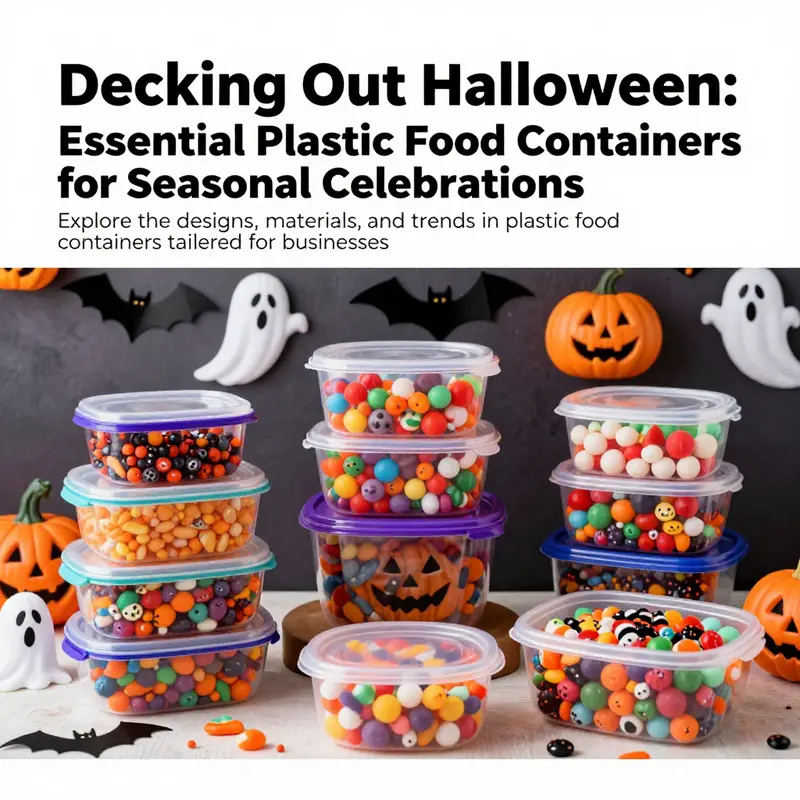
Halloween is not just a time for costumes and candy; it’s an opportunity for businesses to engage customers and elevate the festive spirit. As Bubble Tea Shops, Beverage Chains, Restaurants, Food Trucks, Catering Services, Event Planners, and Corporate Procurement Teams gear up for this exciting season, the use of Halloween plastic food containers can play a pivotal role in enhancing product presentation, boosting sales, and creating a delightful experience. This article will delve into five major aspects: innovative designs that capture the holiday spirit, the durable materials that ensure quality, practical use cases that cater to various business needs, market trends highlighting availability, and understanding consumer preferences while leaning towards sustainability. Together, these insights will help businesses make informed choices for the upcoming Halloween celebrations.
From Spooky Silhouettes to Smart Storage: Innovative Designs of Halloween Plastic Food Containers
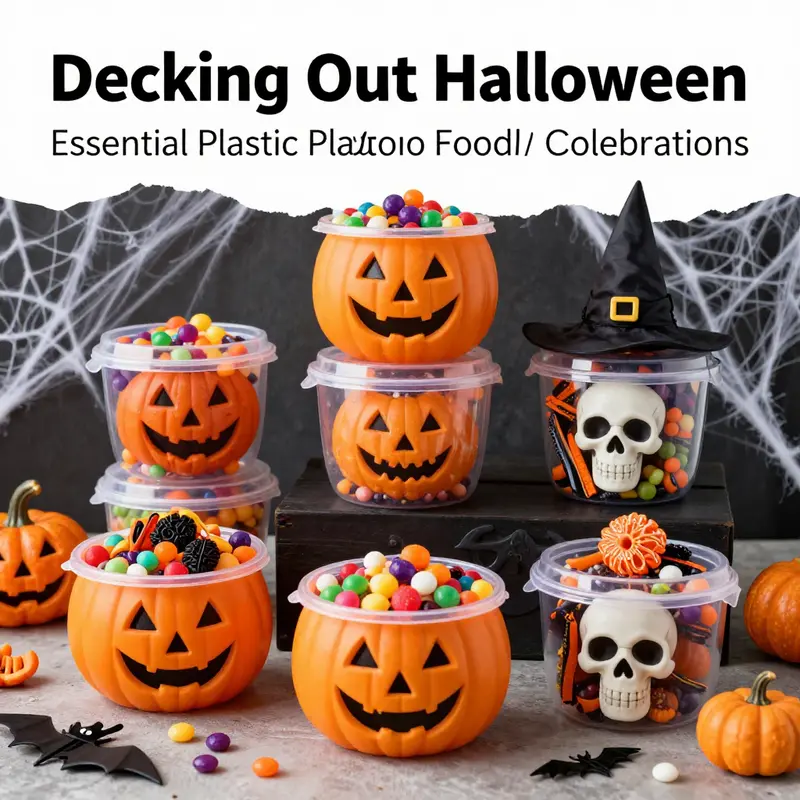
Every Halloween season, households prepare not only costumes and candy but the small ecosystems that carry treats from porch to pantry. What began as simple airtight jars and bowls has evolved into a design-forward category where function and fantasy intertwine. The most compelling innovations in Halloween plastic food containers do more than seal cookies—they tell a story, make storage easier for busy families, and stand up to the playful chaos of trick-or-treat routes or party rooms. The movement blends safety, durability, and a dash of theatrical flair, inviting users to reuse, repurpose, and display these pieces long after the last knock on the door.\n\nCustomization leads the way. Personalization is not merely a nicety; it reduces mix-ups during group outings and creates keepsakes. Custom pumpkin-shaped buckets, embossed names, and themed decorations like stars and moons broaden the palette beyond the traditional orange. The lids, often secure snap-on or flip-top designs, are engineered to stay shut during energetic rounds and provide a reassuring seal for candy, snacks, and small favors. When a child sees their name on a container, the moment becomes part of the memory, transforming a practical tool into a cherished artifact. This trend toward individualization echoes broader shifts in consumer packaging, where the value of a container lies not only in its capacity but in its emotional resonance.\n\nBeyond the familiar, designers push shape and material boundaries to protect contents and spark delight. Banana-shaped boxes, BPA-free and food-safe, curve along the natural hand and backpack profile, reducing the chance of squashed fruit during transport or cross-contamination during sorting. Spheres carved from impact-resistant plastics offer a premium presentation for boutique confections or holiday gifts, their surfaces catching light as they roll from porch to living room. These shapes are not mere novelties; they optimize stacking, storage efficiency, and display, turning a simple container into a stage for Halloween theater. In this way, the container becomes part of the narrative of the evening—a playful prop that carries sweets and stories alike.\n\nGoblets and cup designs aim to balance handling with occasion. Plastic goblets with party-ready walls must survive clinking, swirling, and the occasional spill, while still feeling festive. Finishes range from translucent twilight tones to metallic sheens and glow-in-the-dark accents that reveal themselves under dusk and candlelight. The glow elements are more than gimmicks; they aid visibility in dim settings and guide little hands toward the right cups in a busy room. Such features elevate a table setting from mere nourishment to an immersive experience, and they set the tone for beverages, mocktails, or treat assortments that feel both magical and approachable for all ages. The result is a collected ambiance that reads as a carefully curated display rather than a mere assortment of containers.\n\nSome designers lean into the cleanliness and transparency of white plastics or crystal-clear resins to emphasize the candy inside. Transparent white containers, while often marketed for pantry organization or industrial storage, translate effectively to Halloween party décor and back-of-house efficiency. They stack neatly, label clearly, and let hosts quickly identify contents without rummaging. Yet they come with caveats: not designed for oven use, but they excel in cold or dry storage, protecting cookies, nuts, or bite-size treats. Their modularity enables a cohesive display on a party table or a kitchen shelf, reinforcing the theme while staying practical. This emphasis on visibility aligns with a broader cultural push toward openness in packaging, where consumers expect to see what they are selecting and how much remains available at a glance.\n\nPracticality also shows up in lid design. Secure snap-ons and flip-top closures reduce spills during driveway treks and inside party spaces. A lid that preserves freshness matters when a day’s worth of sweets is distributed in a batch, or when a school event requires reliable packaging that travels home without leaks. The lids are often engineered to resist cracking from cold and from playful knocks, a small but meaningful detail that enhances long-term reuse. The combination of durable materials and dependable closures underpins the broader strategy of reducing waste and extending the life of seasonal packaging, so that the same container can serve multiple Halloweens with minimal fuss.\n\nWhile premium pricing may accompany intricate designs, many families justify the investment by reuse and display value. Indoor celebrations with table décor benefit from containers that double as centerpieces and photo backdrops; in many homes, displayed designs become part of a seasonal vignette that lasts well beyond October. In classrooms and community events, these containers function as memory-makers—favors kept as mementos rather than discarded after a single use. The best designs marry festive aesthetics with pragmatic concerns, ensuring compatibility with dishwashers and safe reuse, while keeping openings large enough to refill and clean without undue difficulty. This balance—between sparkle and practicality—defines the current landscape of Halloween plastic containers and keeps the category evolving year after year.\n\nUltimately, innovation in Halloween plastic food containers reflects a broader shift in how households think about packaging. Containers are not just vessels; they are narrative devices that accompany a ritual of gathering, sharing, and storytelling. A clever latch, a curved silhouette that fits a child’s hand, or a sphere that acts as a tiny treasure chest—all contribute to an experience that feels both magical and manageable. The growing emphasis on safety, durability, and sustainability nudges designers toward materials that are easy to sanitize, long-lasting, and compatible with reuse cycles, while still delivering the whimsy that makes Halloween memorable. In this sense, Halloween containers have evolved from mere storage into an artful layer of seasonal theater, capable of transforming ordinary treats into experiences that families remember long after the bags are emptied.\n\nIn exploring these trends, one can glimpse how this category sits at the crossroads of practicality, aesthetics, and memory-making. For readers who want tangible examples of how design translates into everyday use, consider a practical case of a take-away cup system with lids that can be repurposed for Halloween treats; see an internal example here: eco-friendly kraft soup cup with lid. While this is paper-based rather than plastic, the core principles—secure lids, stackability, and clear presentation—mirror the plastic variants that populate seasonal shelves. For deeper context on specialized Halloween goblet designs and industry best practices, see the external resource: https://www.plasticsindustry.org/halloween-goblets-guide.
Shaping Safe Spooks: Material Makeups and Durability in Halloween Plastic Food Containers
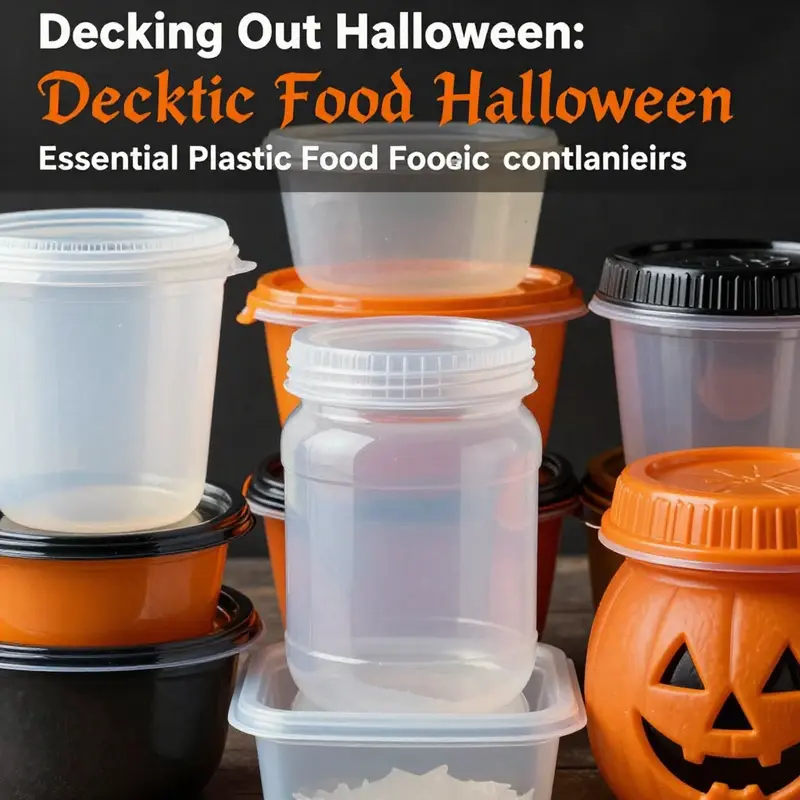
Halloween plastic food containers are more than festive casings for candy and snacks; they are a compact study in material science dressed up for the season. As the calendar narrows toward October, households and event planners seek containers that marry playfulness with practicality. The appeal lies not only in shapes that evoke pumpkins, witches, ghosts, or graveyard scenes, but in the quiet, reliable performance that keeps treats fresh, lids secure, and cleanups manageable long after the last glow-stick has faded. Beneath the whimsy, though, a disciplined conversation about material composition and durability unfolds. The choices made at the point of manufacture—what resin to use, how thick to mold the walls, how the lid seals—directly affect how long the container will endure, how safely it will store food, and how many seasons it will earn a place on kitchen shelves, party tables, or photo backdrops. This is where aesthetics and resilience meet, and where informed decisions translate into fewer disappointments when plans grow larger than the closet space, or when a spill demands swift, confident cleanup rather than a hurried replacement. In the swirl of ideas that Halloween invites—from décor to display to delivery—the material narrative often travels quietly in the background, yet it powers the entire experience with reliability and safety that people notice only when it’s absent.
At the heart of most Halloween plastic containers lies a straightforward pairing: a sturdy jar or reservoir made from a clear, impact-resistant plastic, and a cap or lid crafted to form a careful seal. The most common body material is a transparent, light, and resilient polymer that resists cracking when bumped during party setup or while a child negotiates a crowded kitchen. This clarity matters; it allows the contents to be identified at a glance, which is convenient for both display and quick access during busy hosting moments. The lid, meanwhile, is often made from a different polymer that emphasizes durability and a snug fit. The combination aims to deliver airtight or near-airtight performance, reducing the chance of moisture ingress or aroma escape, which is essential when keeping cookies, candies, or small snacks fresh across a short time horizon. In practice, this pairing supports both reuse and seasonal reuse, aligning with the broader goal of sustainable celebration practices while keeping costs and waste in check.
When we turn to the specific materials science behind these containers, the most frequent duo appears as a clear, durable body resin paired with a robust cap resin. The body is typically a polymer known for clarity, light weight, and reasonable resistance to impact. That combination makes it easy to handle, easy to stack, and visually appealing, which helps a table spread draw the eye without sacrificing practicality. The cap material is chosen for its ability to withstand repeated opening and closing, chemical resistance, and the creation of a tight seal that helps preserve the treats inside. The two-part construction is deliberate: it separates the functional demands of containment from the mechanical demands of frequent use, so each component can be optimized without compromising the other.
Of course, not every Halloween design can ride on the same pedestal of durability. Some of the most eye-catching containers lean into decorative elements that require thinner walls or more elaborate shapes. A jack-o’-lantern silhouette, a ghostly figure, or a haunted-house motif can look striking, but the cost is often a bit of reduced ruggedness. Glow-in-the-dark accents, metallic finishes, or highly ornate textures add visual drama, yet they can introduce weak points where stress concentrates or where the surface finishes wear with repeated handlings, washings, or refills. In practical terms, these are the trade-offs buyers weigh: how much visual drama is worth a bit more care in handling, or how many seasons a decorative piece can serve before its luster dims or its seams loosen.
Durability, in this context, is a function of use as well as design. A container might survive many dishwasher cycles, but only if it carries a clear label about food safety and heat tolerance. The materials chosen determine foundational properties—how well the container resists cracking, how it tolerates a low-temperature chill when treats are stored in a fridge, or how it behaves when taps of moisture or condensation appear on the surface after a party. For many designs, there is a tolerance range: it handles dry goods and light snacks well, but exposing it to hot liquids or microwaving can challenge the integrity of seal lines or the clarity of the body. The best choices commonly come with explicit guidance from manufacturers about care and safe reuse, a clear signal that the container is built for repeated use within a reasonable lifecycle. In such cases, the material composition directly informs not only the lifespan of the container, but also its suitability for safe food storage from one Halloween to the next.
From a buyer’s perspective, the most practical guidance centers on clarity about materials and the confidence that the construction is robust. A high-quality Halloween container will spell out that it uses food-grade materials and a design that supports durable storage. The seal is crucial: even the most striking exterior cannot compensate for a lid that loosens with a slight tilt or a jar whose walls bow under pressure. Reading the labeling about food safety and checking for indications of durable, impact-resistant construction can prevent a season of disappointment. If a design relies heavily on decorative thin walls or delicate finishes, one should plan for a shorter life cycle or a more careful handling approach. The balance between beauty and resilience is a hallmark of well-made seasonal containers, and it tends to become evident after the first few uses, when ease of refilling, cleansing, and re-stowing becomes as important as the initial display appeal.
Care and lifecycle considerations reinforce these principles. After a Halloween rush, the containers that endure are those that survive being washed, stored, and possibly repurposed for pantry organization or classroom uses. The care instructions, often sketched in small type on the bottom or the lid, become a practical manual for extending the life of a festive collection. For many families and hosts, avoiding overly aggressive cleaning cycles or extreme temperatures preserves both the seal integrity and the decorative finish. Reusability, a core value of responsible consumer behavior, is more than a trend here; it is a straightforward extension of the material’s purpose. When treated with reasonable care, the containers can be repurposed as cookie jars, snack bins, or display pieces for future events, providing continuity across seasons and reducing waste associated with single-use alternatives.
In the end, material composition and durability are inseparable from the broader experience of Halloween storage and presentation. The design choice to favor a bright, transparent body and a dependable cap is not merely about keeping treats fresh; it is about delivering a sense of order and reliability amid the festive chaos. The best containers manage to be visually captivating while resisting the wear and tear of routine handling, refilling, and cleaning. They invite use across a season and beyond, aligning the practical demands of storage with the celebratory impulse that makes Halloween so memorable. For readers who want a concrete example of how design translates into everyday use, consider exploring a product page that highlights food-grade takeaway bowls with lids, a practical case study in the kind of dependable, reusable solution that fits into a busy kitchen and a busy holiday schedule. food-grade takeaway bowls with lids.
To deepen the practical perspective, it helps to reference broader resources that discuss material choices, safety, and durability across the design of seasonal containers. For additional context on how professionals weigh these factors in real-world settings, an external resource offers a thoughtful overview of Halloween plastic containers and their practical implications. External resource: https://www.benjaminross.com/halloween-plastic-containers/
Ghouls, Glow, and Practical Magic: The Halloween Plastic Container Guide
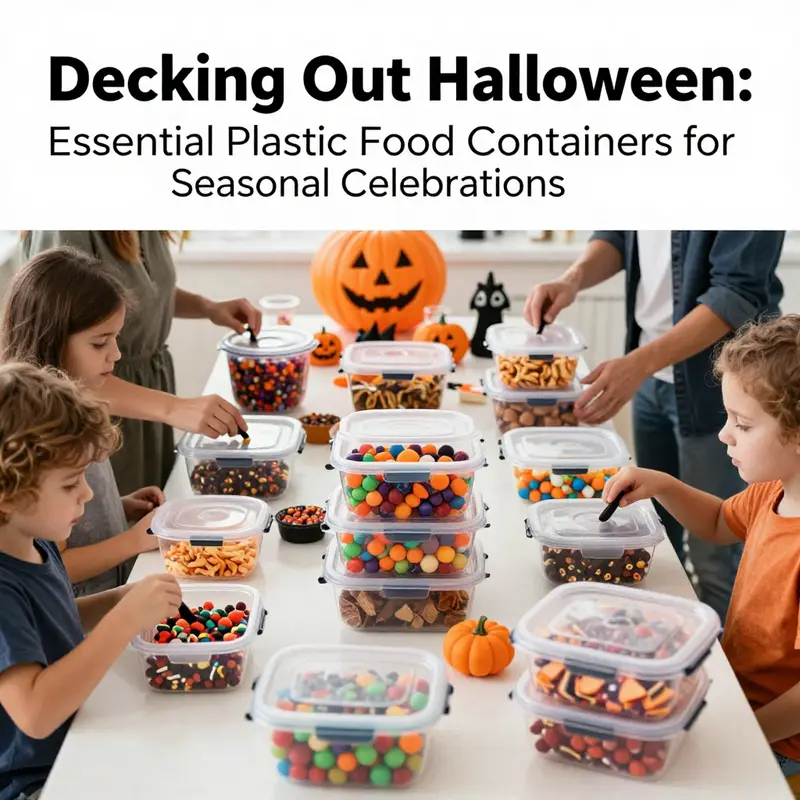
The nights of Halloween bring more than costumes and candy; they invite containers that carry mood as surely as they carry treats. Halloween plastic food containers stand at the curious crossroads of practicality and play, turning ordinary storage into seasonal storytelling.
Primarily, these containers support storage during the trick or treat circuit; sturdy pails and jars gather a growing trove of sweets. Glow in the dark accents add a practical glow to evening excursions and a touch of eerie whimsy to the tree lit sidewalks. The materials emphasize durability and light weight to satisfy kids who carry heavy bags and parents who want cleanup to be straightforward rather than fraught with glass.
Beyond storage, containers become displays and interactive props at indoor parties. A cluster of small jars can anchor a photo backdrop, while a larger pumpkin pail signals the seasonal mood with a wink. The palette of orange, black, purple and white keeps the mood unmistakable while offering variety in shapes and sizes.
Durability and safety are central. The most successful designs balance robust construction with cost, offering enough thickness to withstand rough handling while remaining light enough for easy carrying. Clear lids that seal securely help in keeping cookies, candies, and snacks fresh through the evening. Some designs use decals or finishes that tolerate occasional handwashing rather than daily dishwasher cycles.
Accessibility matters. Wide openings, easy grip lids, and forgiving fit between lid and container help make quick handoffs feel like choreography rather than a rush. On table displays, the same traits translate into storage pieces that double as décor, keeping the mood cohesive while simplifying cleanup at the end of the night.
Cultural appeal rests on a blend of whimsy and theater. Containers that glow softly, show friendly silhouettes, or catch light with a metallic sheen invite closer interaction from kids and adults alike. In haunted halls, school fairs, and family photoshoots, a single container can anchor a narrative that feels intentional and warm, not merely practical. The interplay of utility and ornament is what sustains their popularity: they satisfy daily needs while elevating the festive mood through thoughtful design and dependable performance.
To shop wisely, seek durable, food safe interiors, secure lids, and silhouettes that align with your seasonal color palette. Favor options that are easy to clean, store, and reuse, and pick a mix of sizes to accommodate both small treats and larger snack stations. In short, the most memorable Halloween containers are those that quietly fulfill everyday needs while enhancing the night’s atmosphere with reliable charm.
Shaping Spookiness: Availability, Design, and the Market Pulse of Halloween Plastic Food Containers
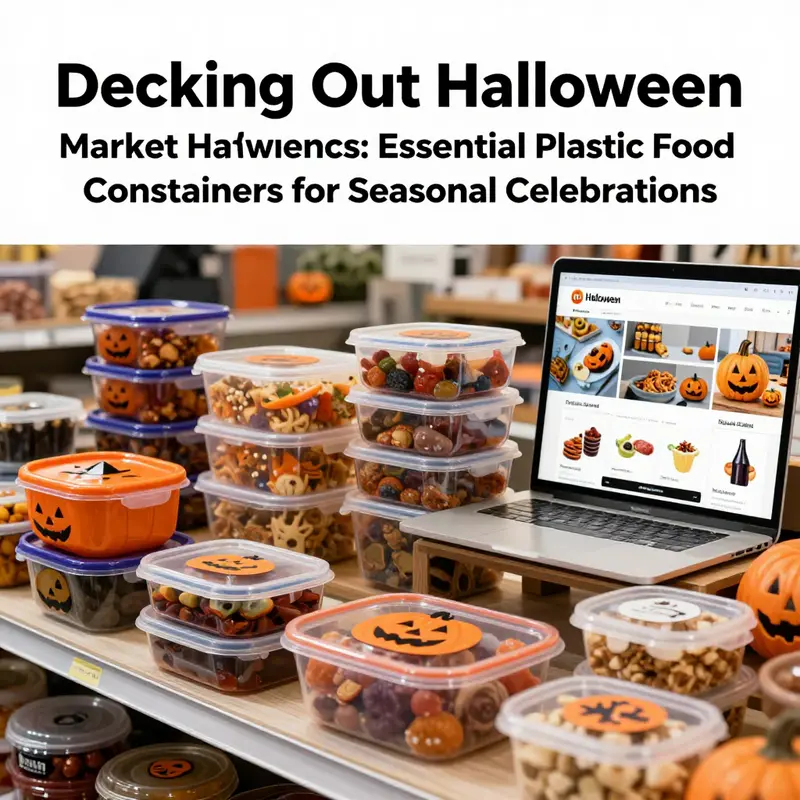
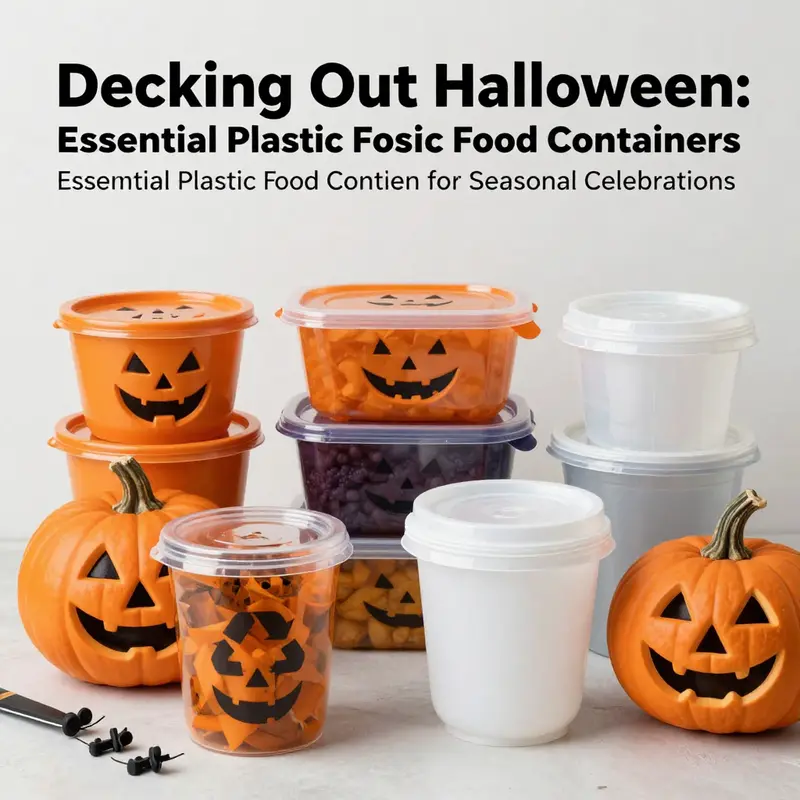
The Halloween season transforms ordinary kitchen storage into a stage for celebration, and plastic containers designed with festive silhouettes do more than hold treats. They fuse function with mood, becoming vessels that keep cookies fresh, candy secure, and party favors neatly gathered, while adding a dash of whimsy to the table, the pantry, or a photo backdrop. In this moment, containers with jack-o’-lantern faces, ghostly profiles, witches’ silhouettes, or skeletal motifs align practicality with storytelling. They are durable enough for repeated use, yet light enough to pass through a household’s seasonal rotation, and they come in a palette that instantly signals October: orange, black, purple, and white. Some designs incorporate glow-in-the-dark elements or metallic finishes that catch the eye as dusk falls, turning a simple storage jar into a prop for twilight festivities. The visual punch matters as much as the seal, because Halloween relies on shared atmosphere as much as shared treats, and these containers help create a cohesive vignette from the kitchen to the party table. The material story behind these containers often emphasizes durability and ease of care. Many traditional Halloween storage options lean on sturdy polycarbonate or ABS plastics that resist cracking under the occasional rough handling of kids and the occasional tumble off a kitchen shelf. The practical advantages are clear: dishwasher safety, reusability, and robust latching or sealing mechanisms that keep aromas in and pantry pests out. Yet the appeal isn’t purely utilitarian. Themed shapes and finishes offer an instant decor solution, a way to stage a snack station or a trick-or-treat collection without additional props. The effect is double-edged: while some designs push premium pricing for their intricate details, their decorative value and reusability often justify the expense for families who want a recurring, festive cue each year and for hosts who stage Halloween as an at-home event rather than purely a neighborhood activity. In the broader retail landscape, a wide spectrum of seasonal containers circulates through major channels, from online marketplaces to big-box aisles. The market presents a mix of candy jars, pumpkin-pail shapes, and goblet-like containers, each pitched to different purposes—from candy storage to tabletop décor and party favors. Sizes vary to accommodate everything from single-serve gifts to larger treat bundles, and the lids or closures are designed to simplify refilling while preserving freshness. The result is a practical now-and-future use pattern: these items are not merely one-season curiosities. Their durability and aesthetic flexibility make them candidates for storage beyond Halloween, bridging holiday display with everyday organization. As retailers and designers refine this space, the emphasis often lands on visually striking shapes and motif-driven finishes that do not sacrifice core function. Lids are engineered to seal effectively while remaining easy for small hands to operate, a crucial detail when little trick-or-treaters help themselves to goodies. The color palette—orange and black, with purples or whites—signals the season at a glance, and glow-in-the-dark components can add a late-evening flourish for outdoor gatherings. Some designs push reflective or metallic surfaces to heighten lighting effects during dusk while maintaining practical storage standards. Looking ahead, the chapter suggests that Halloween plastic containers will continue to blur the lines between seasonal décor and everyday organization. Themed storage may migrate into pantry systems and gift packaging, while retailers experiment with cross-channel promotions and sustainable materials to address growing environmental awareness. The narrative highlights how design choices—seal performance, visibility, and ease of cleaning—shape consumer decisions and keep these items relevant long after October has passed.
null
null
Final thoughts
As Halloween approaches, embracing creatively designed plastic food containers can significantly enhance the customer experience and support your business goals. From robust materials to versatile functionality and growing market trends, these containers are not merely seasonal novelties—they are strategic tools that can elevate your brand during this festive time. Understanding consumer demand for sustainability also ensures your products resonate well with today’s conscientious buyers. Take this opportunity to stand out with excellent, themed packaging and ensure your Halloween offerings are memorable.