
In the world of dining, the details matter, and soup bowls play a crucial role in how food is presented and enjoyed. For Bubble Tea Shops, Beverage Chains, Restaurants, Food Trucks, Catering Services, Event Planners, and Corporate Procurement Teams, these bowls are more than simple containers; they reflect a brand’s identity and commitment to quality. This guide will delve into the various product types and materials available in the wholesale market, provide insight into reliable sourcing channels, discuss pricing, highlight current market trends, and explore sustainable options for disposable soup bowls. By the conclusion, you’ll be equipped with the knowledge needed to make informed purchasing decisions that enhance your food service offerings.
null

null
From Factory to Fork: Navigating Wholesale Sourcing Channels for Restaurant Soup Bowls

Sourcing wholesale restaurant soup bowls is less a single decision than a carefully composed process that weaves together access, quality, and reliability across distinct channels. The core idea is to align procurement pathways with a restaurant’s scale, service style, and sustainability goals, while remaining mindful of lead times, customization options, and the hidden costs of logistics. In practice, most buyers navigate three broad channels in a complementary rhythm: broad B2B marketplaces, industry-directed guides and directories, and direct factory sourcing with a strong emphasis on transparency and compliance. China remains the dominant hub for these products, thanks to an advanced industrial footprint, specialized regional clusters, and an infrastructure that supports large-volume production and consistent quality. Buyers who understand how these channels interlock can secure bowls that meet a restaurant’s aesthetic, functional, and safety requirements without sacrificing margins or service levels.
B2B marketplaces sit at the front line of wholesale sourcing. They are the most accessible and rapid way to inventory a diverse family of bowl styles. Practical buyers look for a spectrum of materials—porcelain and ceramic for a refined, high-end dining experience; melamine for durability and ease in fast-paced environments; and biodegradable disposables for events or takeout-focused concepts. The marketplaces consolidate a wide range of suppliers, from small manufacturers to larger factories, enabling comparison across price, lead time, and customization. A key advantage of these platforms is the ability to scrutinize supplier verification badges, read buyer reviews, and leverage payment protections that reduce the risk of unsettled orders. Customization—such as logo imprinting, special sizes, or color treatment—tends to be available at the supplier level, with minimum order quantities often tiered by design complexity. For example, porcelain bowls may show a pricing envelope around a few tenths of a dollar per piece at scale, while melamine options can fluctuate widely depending on thickness, texture, and color. The most cost-efficient routes typically emerge as order volume grows, with discounts tied directly to the size of the engagement and the degree of customization requested. Buyers who start here should prepare a concise spec sheet that covers diameter, wall thickness, weight, and any needed stacking compatibility so that several suppliers can bid on an identical brief.
Industry-specific sourcing guides and directories offer a different kind of value. They are especially helpful when evaluating supplier capabilities beyond price alone. These resources profile regional strengths—areas known for cost-effective production or a particular material specialization—and highlight the realities of production transparency, capacity, and export readiness. Within China, for instance, regional hubs matter: one cluster may be renowned for ceramic tableware and glazing quality, while another emphasizes melamine and durable plastics. A well-informed buyer uses such guides to map the landscape of Guangdong, Fujian, and Zhejiang as strategic corridors rather than singular destinations. The goal is to understand which districts have the most developed ecosystems for food-contact ware, which can reduce the risk of delays and quality gaps when a large, multi-SKU program is rolled out. Beyond regional insights, industry directories often discuss certifications and testing standards that matter for food safety and regulatory compliance, and they point buyers toward laboratories and testing bodies that can independently verify material safety and migration limits for substances like heavy metals or formaldehyde.
Direct factory sourcing offers the deepest level of control for buyers who need tight supply-chain resilience and highly tailored products. A direct relationship can unlock faster decision cycles, more aggressive pricing at scale, and the ability to influence process controls from the earliest stages of production. The ideal factory partner provides transparent production walkthroughs, access to third-party audit results, and documentation that maps to documented quality-control checkpoints. This level of openness is essential not just for cosmetic outcomes but for food safety compliance that protects both customers and the restaurant’s brand. When evaluating factories, buyers should seek evidence of consistent output, clear lead-time data, and a demonstrated track record of meeting or exceeding agreed delivery windows. This often includes a practice of staging samples and pilot runs, followed by a formal approval before full-scale production commences. In addition to standard product specs, buyers should request certifications relevant to food contact safety—such as those that align with FDA, EU 1935/2004, or LFGB requirements—along with independent test reports from laboratories like SGS or Intertek. These reports typically address hazardous substance migration, ensuring that ceramics do not risk lead or cadmium leaching and that melamine formulations meet migration limits under stated use conditions.
Price and minimum order quantities (MOQs) emerge as practical levers to manage the economics of a soup-bowl program. The data landscape shows clear material-driven differentials: porcelain bowls generally carry a unit price in a mid-range band with higher expectations for finish and glaze consistency, often accompanied by MOQs in the low thousands. Melamine bowls, valued for durability and light weight, commonly command a broader price range and MOQs starting around a few hundred pieces, scaling with design complexity and color options. Biodegradable disposable bowls, driven by sustainability targets and regulations, frequently appear at dramatically lower unit costs when orders run into the hundreds of thousands or millions, albeit with longer lead times and tighter constraints on customization. It is important to recognize that large-volume procurement can unlock meaningful unit-cost reductions, but it also tightens inventory risk and storage requirements. Sample programs offer a low-cost way to validate fit and performance before committing to large commitments. A strategic buyer will negotiate not just on unit price, but on total landed cost, including packaging, freight, duties, and potential forward-stock arrangements that stabilize supply during seasonal fluctuations.
As you form a sourcing plan, it helps to view the supplier landscape through the lens of reliability and compliance. The strongest partners are those with proven capability in handling food-contact ware, along with a robust quality-management framework. Certifications that attest to food safety, material integrity, and labeling accuracy should be non-negotiable, and buyers should insist on independent test reports for critical performance metrics. In addition to formal certifications, it is prudent to assess a supplier’s documentation practices, change-control processes, and the availability of after-sales support for product recalls or issue resolution. This is where the价值 of platform badges such as verified or trusted supplier becomes meaningful, signaling repeat business from other buyers and a demonstrated commitment to consistent fulfillment. When a supplier can reference long-standing relationships with restaurants that operate on strict schedule requirements, that is often a reliable proxy for on-time performance and quality consistency.
For practitioners who want a concrete sense of the category mix available online, the disposable dinnerware and tableware section provides a snapshot of how different materials and finishes fit across service styles. This resource helps frame the trade-offs between aesthetic appeal, durability, and end-of-life considerations, making it easier to select an appropriate combination of bowls for a given menu concept. See disposable dinnerware and tableware for an example of how a category page structures options across materials, sizes, and disposability profiles, which is useful when you are briefing suppliers or building internal specifications.
The path from factory to fork is rarely linear, so most buyers employ a blended approach: start with a broad market sweep to establish baseline pricing and lead times, then narrow to a few vetted partners for pilot runs, and finally scale with a factory-direct arrangement that includes rigorous QA and ongoing compliance checks. This approach aligns with the broader trend toward more resilient sourcing and more sustainable throughput in restaurant operations. It also mirrors how industry structures and regulatory expectations are evolving, with an emphasis on transparency, traceability, and accountability throughout the supply chain.
As you finalize your sourcing map, keep in mind that external resources can guide strategic decisions beyond the immediate purchase. For a deeper, practice-oriented view of strategic sourcing within this category, refer to specialized guidance on how to evaluate and constrain risk while maintaining quality and cost controls. External resource: Strategic Sourcing of Soup Bowls with Handles from China. https://www.sourcingguide.com/strategic-sourcing-of-soup-bowls-with-handles-from-china/
Pricing as a Compass: Navigating MOQs and Material Choices in Wholesale Restaurant Soup Bowls

Pricing in wholesale restaurant soup bowls is more than a sticker price; it is a compass that points restaurant operators toward reliability, consistency, and the right dining impression for their concept. The choices hinge on three intertwined factors: material, form, and the scale at which orders are placed. Each material carries its own economics, and the minimum order quantity (MOQ) acts as a gatekeeper between feasibility and flavor-tested consistency. When a chef talks about bowls, they are really talking about how a dish presents itself, how long it lasts on a table with high traffic, and how predictable the supply chain needs to be to avoid service gaps during peak shifts. The numbers you encounter—from ceramic to melamine to biodegradable options—are the signals you use to chart a dependable procurement path.
Take ceramic or porcelain bowls, the classic choice for many mid- and high-end restaurants. The cost per piece tends to be in a modest band, roughly $0.40 to $0.60, with an MOQ around 1,000 pieces. The logic is straightforward: the material’s weight and durability demand a higher upfront commitment, but the payoff is a consistent, premium feel that can elevate the dining experience across mains, soups, and even salads served in a shared bowl format. For establishments aiming at a refined aesthetic, white ceramic—often a clean, seamless canvas—also supports a broad menu. In many hotel or upscale restaurant settings, you’ll see a higher unit price when a broader ceramic line includes special finishes, but the MOQ remains a practical barrier that suppliers typically justify with production efficiency and warehousing costs. The math is familiar: more units collected in a single shipment reduce per-unit handling and shipping, and a predictable order cadence helps kitchen teams forecast stock without overbuying.
Melamine bowls present a different calculus, especially for fast-casual, casual Japanese concepts, and dine-in plus takeout models. They boast lightness, resilience, and ease of care in busy back-of-house environments. The price spectrum widens here—from roughly $0.58 up to $1.50 per piece—often reflecting design complexity, color, and any protective coatings that minimize staining from sauces. The MOQs for melamine are frequently lower than ceramic, commonly around 144 pieces, which makes them attractive for newcomers, pop-ups, or expansion into new formats where the risk of overstock is a concern. Within melamine, there are specialized variants such as black Japanese miso bowls or bowls with lids that address portion control or extended service windows in banquet settings. A single design can shift your cost-per-unit noticeably, especially when lids or unique shapes are involved. For operators testing a new concept, samples—priced as low as a few cents to a dollar per piece—offer a practical first step before committing to a larger run.
The broader market also includes specialty options that challenge the traditional boundary between serviceware and packaging. Biodegradable or compostable disposable bowls have surged in popularity as sustainability becomes a measurable business metric rather than a marketing slogan. These bowls come with the allure of reduced post-dining waste and a clear alignment with environmental goals, yet their unit price tends to be significantly lower on an at-scale basis when you reach very large volumes, sometimes in the cent-per-piece range, with MOQs that can be as high as a million pieces for certain bioplastic or bio-based materials. The economics shift decisively when a restaurant’s business model heavily relies on takeout or catering, but that same choice requires careful consideration of table experience and heat retention. In the spectrum of non-porcelain options, high-performance materials like SUS304 stainless steel bowls and the occasional specialty ceramic hybrid offer different value propositions. Stainless steel bowls might sit around $1.50 to $2.00 per piece with MOQs around 120 pieces, providing durability for buffet settings or outdoor service, while their price points reflect the longevity and metallic finish that can align with a particular brand narrative. The category of plain white hotel-style ceramic bowls sits a bit higher, at roughly $2.30 to $2.80 per piece with MOQs down to 50 for hotel-scale operations—an arrangement that supports menu execution in spaces where table turnover can be brisk but presentation remains important.
In practice, the procurement journey begins with a platform-based route that many operators find efficient. Wholesale marketplaces offer a curated landscape of suppliers, including those from major production hubs and packaging clusters. Payment mechanics, platform protections, and dispute resolution add a layer of security for large orders that may involve months of planning and several shipments. The most effective sourcing approach includes a two-step path: first, a direct inquiry to confirm current pricing, MOQ, lead times, and sample availability; second, a comparison across several vendors with attention to design consistency, finish quality, and the ability to scale. Some suppliers advertise a “diamond member” status or “audited supplier” credentials, signaling higher reliability, while a history of repeat orders often serves as a proxy for durability in real kitchen conditions. The goal is to verify that a given bowl can withstand the realities of a busy service—the scraped sauce, the repeated washing cycles, and the occasional accidental drop—without cracking or fading in color.
As you weigh these options, the aesthetics must align with the restaurant’s identity. The enduring appeal of Japanese-inspired black miso melamine bowls or minimalist white bowls is a reminder that appearance is not ancillary to function. A well-chosen melamine bowl that mirrors a black glaze or matte black finish can evoke a refined, contemporary vibe even in a casual setting, while a clean white porcelain profile communicates a different kind of hospitality. The market visibly leans toward these understated looks because they create a consistent backdrop for the food itself, letting the dish carry the color, texture, and aroma. In contrast, the disposable segment, while less about long-term durability, supports a concept that prioritizes speed, flexibility, and environmental considerations for customers who may choose to dine on the go. For operators exploring disposable alternatives, the trade-offs between cost, heat retention, and airtight lids must be weighed against the in-house dining experience.
In practice, suppliers rarely publish every detail in a single place, so direct outreach is essential. The typical workflow involves requesting quotes for several SKUs that reflect your restaurant’s most common portion sizes, whether 8 inches or 9 inches, and whether your service relies on bowls with lids or simple open profiles. The prices commonly observed in the data reflect a broad range: from the upper end of roughly $1.46 for a Japanese miso melamine bowl to about $0.90 for a melamine miso bowl with lid, and from $2.30 to $2.80 for a hotel-grade ceramic dish. The realistic lead times and shipping costs vary with the supplier’s location, but platforms often provide ballpark estimates that help in budgeting for a full menu cycle. It is not unusual to see 144-piece MOQs for melamine varieties, with larger or smaller runs depending on the supplier’s production line and the complexity of the design. The 1,000-piece MOQ for porcelain bowls is a higher hurdle, yet it aligns with steady kitchen cycles and predictable usage across a multi-year plan. The wholesale path also includes options such as a 200-piece MOQ for certain melamine lines or a 50-piece MOQ for specific hotel-grade porcelain lines, acknowledging the reality that a restaurant’s footprint and testing phase may require more agile procurement.
For readers pursuing practical steps, an integrated approach works best. Contact multiple suppliers via the platform to compare baseline pricing, MOQs, and shipping windows. Request exact quotes for the most-used SKUs—eight-inch white porcelain bowls for soups and bowls with lids for miso or beef bowls. Ask about samples to confirm weight, balance, and balance with your menu’s starch-rich or sauce-heavy items. Look for vendors with a robust return or refund process if quality issues arise, ensuring you have financial recourse should a shipment fail to meet expectations. If your concept leans into sustainability, consider the biodegradable options, but keep a critical eye on heat retention and dish performance, which can vary by material. An informed choice requires balancing cost per unit with the risk-adjusted impact on service speed, guest satisfaction, and waste management.
For quick reference during negotiations, a compact mental model helps. Ceramic bowls offer elegance with higher MOQs and steady long-term cost. Melamine delivers durability with moderate MOQs and flexible design options. Biodegradable disposables introduce environmental benefits but demand careful evaluation of lifecycle costs. Stainless steel presents a rugged, high-durability option for certain service contexts. Throughout, the shopping path remains anchored by platform protections and the supplier’s credibility signals that reduce the risk of misfit orders. If you’re curious about a broader ecosystem and want to explore related packaging and dinnerware options, you can browse the Disposable Bowls category for ideas and testing opportunities: Disposable Bowls.
External resource: https://www.greenbiz.com/article/packaging-trends-sustainability
Sourcing Soup Bowls at Scale: Trends, Materials, and Purchasing Guidance for the Wholesale Foodservice Market
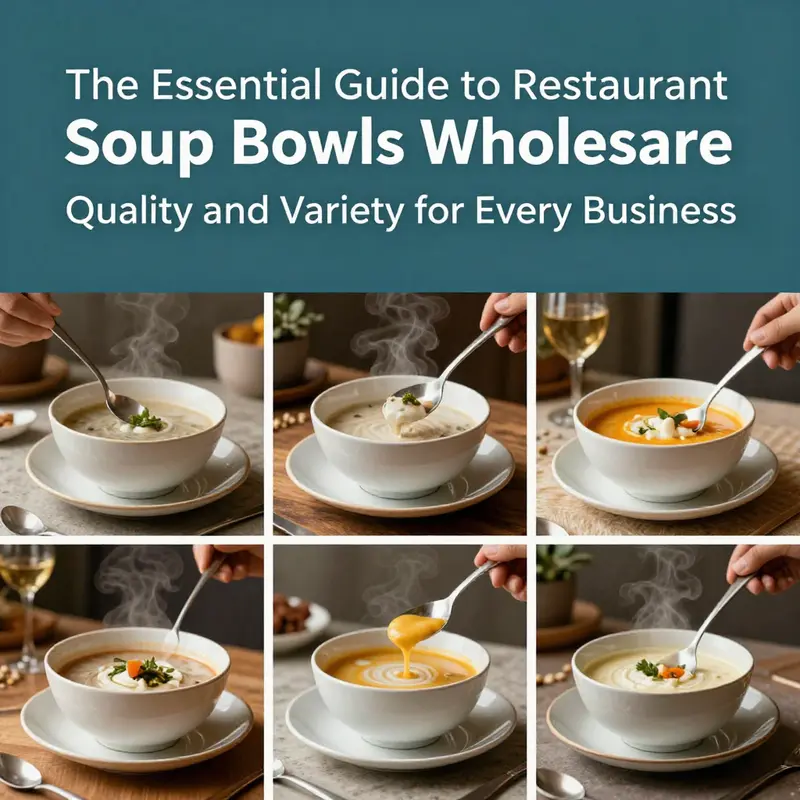
Sourcing soup bowls at scale is a nuanced exercise in balancing performance, aesthetics, and total cost of ownership. It is not enough to pick a shape or a color; operators must translate material science, supplier reliability, and brand narrative into a procurement plan that holds firm through seasonal peaks, menu shifts, and the daily rhythm of a busy kitchen. The wholesale restaurant bowl market has matured into a multi-material ecosystem, where porcelain, melamine, and biodegradable disposables each serve distinct roles in different service models. Market signals reinforce this reality: the global food trays and bowls segment exceeded USD 18 billion in 2026 and is projected to grow at a compound annual rate just above six percent, reaching roughly USD 24 billion by 2031. For restaurateurs, this means more options, more data points, and more opportunities to optimize the balance between cost, performance, and guest experience.
The material choices available to buyers are central to both cost structure and service design. Porcelain remains a workhorse for many midrange and premium concepts. The classic 8-inch white porcelain bowl with a broad base offers stability in the pass, a clean canvas for the dish, and resilience under high-temperature applications. Its use across rice bowls, noodles, salads, and even certain breakfast bowls exemplifies how material neutrality — a white, glossy surface — supports menu versatility. In wholesale terms, porcelain bowls often trade in a range near $0.40 to $0.60 per piece, with a minimum order quantity around 1,000 units. Those economies compound quickly for multi-outlet operators, and the standardized shape and finish make it easier to streamline dishwashing cycles, reduce breakage, and maintain a consistent guest experience across locations.
Melamine bowls, by contrast, bring different strengths to the table. For fast-casual, grab-and-go concepts, or outdoor dining where weight and durability matter, melamine presents an attractive value proposition. The textured, matte finishes that are common in contemporary melamine designs also align with many brand aesthetics, especially for venues seeking a modern, understated look without the fragility of ceramic. Price points for melamine typically range from about $0.58 to $1.50 per piece, with MOQs that can start as low as a few hundred and extend into the thousands depending on design, color, and supplier. For operators that cycle through service formats—dine-in, takeout, and delivery—melamine can serve as a practical core line while porcelain occupies the premium, in-house experience tier. At scale, the key is to harmonize the melamine and porcelain families so that menus remain cohesive and the server experience stays uniform for guests.
Sustainability has moved from a differentiator to a baseline consideration for most operators. The rise of eco-friendly materials, including biodegradable disposables and recyclable options, is reshaping how kitchens plan for peak times and off-peak transitions. In practice, eco-conscious disposables are now designed to mimic the practical advantages of their reusable counterparts while offering a lighter footprint. The economics can still be compelling at high volumes; for example, a 32-ounce biodegradable bowl may be priced at about $0.053 per piece when production runs exceed a million units. This illustrates how scale can tilt the economics in favor of disposables for events, stadiums, or pop-up concepts, without surrendering a restaurant’s sustainability commitments. Restaurants that pursue this path often adopt a blended approach: high-quality, durable bowls for in-venue dining and a carefully chosen subset of compostable options for delivery, events, or temporary service concepts. The result is a more flexible procurement strategy that respects both guest expectations and ESG goals.
The landscape for customization and branding has grown alongside these material and sustainability options. Operators increasingly seek tableware that communicates story as well as function. Custom printing, logo embossing, and precise color matching—enabled by a network of manufacturers capable of advanced glazing and kiln firing—allow brands to extend their identity onto the table. In regions renowned for ceramic production, commonplace references to centers known as the so‑called “Porcelain Capital” reflect a sprawling ecosystem of producers that can deliver consistent finishes and robust performance even at high temperatures. The ability to deploy branded or motif-rich designs is particularly appealing in themed restaurants, premium concepts, or hotel-driven hospitality where every tabletop element contributes to the guest’s impression. This trend reinforces the idea that bowls are not merely vessels for serving food but components of the broader brand experience.
A practical, supply-chain perspective remains essential for buyers facing the realities of time-sensitive orders and global logistics. Platforms that connect buyers with a wide range of suppliers can provide important assurances: USD payment options, platform-protected trade, and recourse if an order misfires or shipments fail to arrive as promised. For purchasers, this often translates into a preference for suppliers with verified status, high repeat business, and strong performance histories. The rationale is straightforward: in a market where a kitchen’s schedule hinges on reliable deliveries, the vendor’s capacity to meet lead times, maintain consistent quality, and offer transparent pricing is as critical as the bowl’s appearance. The procurement decision, therefore, moves from “which bowl do we like?” to “which supplier can we trust to deliver the right bowls, on time, within budget, and with the expected finish across all outlets?”
The economics of bulk purchasing remain a driving force behind decisions about which materials to choose and how to design a program for multiple locations. Large groups and distributors often negotiate substantial price breaks tied to order volumes. The cost architecture can be highly favorable for porcelain and other durable wares when ordering in tens of thousands of units, sometimes leading to per-piece prices that are significantly lower than smaller orders would yield. Meanwhile, disposables, engineered for scale, demonstrate how even tiny unit-cost differentials accumulate into meaningful savings when millions of pieces move through a facility over the course of a year. It is not unusual to encounter a porcelain line priced around a dollar and change per piece at very large volumes, contrasted with the $0.053 disposables at similar scales. Understanding these tradeoffs requires a clear view of total landed cost, which includes not only unit price but also packaging, shipping, handling, return rates, and the maintenance costs associated with heavy service ware in busy service windows. The most effective procurement teams map these elements across the entire lifecycle of a bowl—from storage and transport to daily use and eventual replacement—and they adjust as volume, menu mix, or concept shifts occur.
To translate these dynamics into action, buyers should consider a few guiding practices. First, prioritize verified suppliers and secure trading credentials that align with the shop’s risk tolerance and the complexity of the order. Second, leverage knowledge of regional production hubs—porcelain and ceramic centers for high-finish needs, and melamine or stainless steel hubs for durable, cost-conscious lines. Third, request samples to evaluate not just the aesthetic but also the tactile feel, rim integrity, and dishwasher compatibility. Fourth, incorporate sustainability into the procurement strategy by balancing durable wares with responsibly produced disposables, ensuring that eco-conscious choices do not compromise service quality or guest experience. Fifth, invest in customization as a long-term branding tool. When a restaurant can consistently reproduce a brand-identity bowl across hundreds of units, it reinforces recognition and loyalty, especially in themed settings or premium concepts.
For those navigating the options online, a practical tip is to survey category pages that reveal a breadth of formats and finishes. A resource like the Disposable Bowls category offers a quick snapshot of what is readily available for events, deliveries, or temporary service concepts, helping buyers gauge whether a supplier can offer the right mix of durability, branding options, and price points before committing to a wholesale agreement. This approach supports a gradual, data-informed scale-up rather than a rushed, all-at-once rollout. In sum, the wholesale market for restaurant soup bowls today is about more than choosing an item; it is about building resilience into the guest experience through thoughtful material selection, brand-consistent aesthetics, and supplier partnerships that can support growth across evolving service models.
External resource: https://www.statista.com/statistics/1446725/global-food-trays-and-bowls-market-size/
Sustainable Choices on the Takeout Tray: Rethinking Wholesale Soup Bowls for a Greener Era
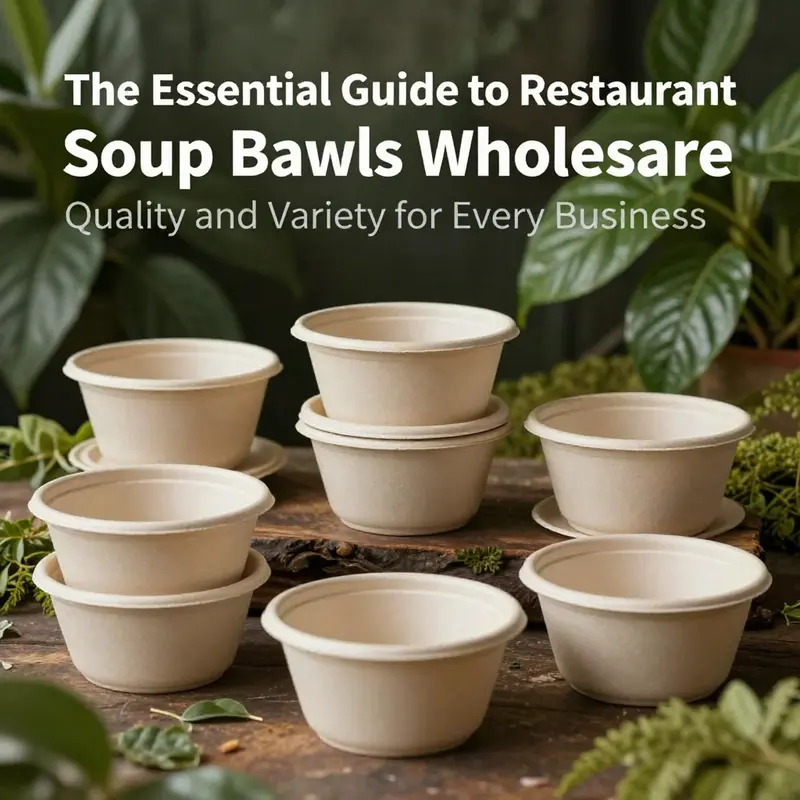
Sustainability has moved from a buzzword to a baseline expectation in the wholesale world of restaurant soup bowls. As takeout and delivery dominate today’s dining landscape, operators face a simple truth: the container that carries the soup is part of the dining experience, and its performance, cost, and environmental footprint all ride along with the order. Restaurants increasingly measure success not only by taste and speed but also by the choices they make behind the scenes. Consumers now expect brands to demonstrate responsibility, and regulators in many markets are tightening guidelines around disposable packaging. In this environment, wholesale suppliers are recalibrating their portfolios to emphasize materials, designs, and processes that reduce waste, lower carbon footprints, and preserve food quality from kitchen to customer’s door. The result is a more nuanced decision matrix for operators seeking to balance price, performance, and planet-friendly credentials without sacrificing reliability or brand image.
At the core of sustainable options is a spectrum of materials that can be categorized by end-of-life pathways and functional performance. Paper remains a heavily favored option for its recyclability and biodegradability when properly managed after use. Yet not all paper bowls are created equal: some are coated for moisture resistance, others rely on a lighter structure that minimizes material use. Then there is PLA, a bioplastic derived from renewable feedstocks such as corn starch, which offers compostable attributes under industrial facilities. The caveat is that compostability often depends on access to certified facilities, which can vary by region. Stainless steel and glass are the archetypes of reusables, prized for long service life and low waste when correctly sanitized. While these are not directly comparable to disposable bowls in terms of cost or convenience, they shape the conversation about how a modern takeout program can incorporate circular economy thinking—by offering a mix of reusable options for in-house service and clearly defined disposable paths for takeaway.
A practical path appears in recyclable and biodegradable disposables made from kraft paper and similar formulations. These bowls are designed to be food-grade and able to break down under appropriate waste streams, while still delivering the stability needed for soups with varying viscosities. They can be customized for branding through printing, allowing a restaurant to extend its identity beyond the food. Secure, leakproof lids are a critical companion, ensuring that soups travel without compromising the experience or creating mess during transit. In many wholesale catalogs, these features are bundled together as a package that supports both takeout efficiency and sustainability goals. A common takeaway from suppliers is that the best-performing disposable bowl is the one that combines robust barrier properties with clear end-of-life pathways. The design emphasis is often on a snug lid system, reliable sealant, and a base that resists soaking through during the first miles of delivery.
For operators who are evaluating options, the availability of a diverse range of designs is encouraging. The kraft-paper-based, recyclable solution exists alongside biodegradable options that are certified for composting in the right facilities. The mix is not merely about environment versus cost; it’s about matching the choices to the restaurant’s brand narrative and its operational realities. Aesthetic appeal matters, too. In many markets, Japanese-inspired or minimalist silhouettes with matte or natural finishes are popular for conveying a sense of refined simplicity. While those stylistic cues can influence guest perception, the real payback comes from reliability, cost predictability, and the confidence that the chosen vessels perform consistently under heat or cold, retain broth integrity, and resist leaks during transport. The best-performing options balance all of these factors with supplier assurances that the materials comply with applicable food-safety standards and waste-management protocols.
Economic viability remains a central pillar of the wholesale decision. Bulk purchasing usually drives the most meaningful savings, and sustainable disposables are no exception. It is common to see price points in the range of a few cents per unit when orders reach several thousand pieces, with the cost per unit declining further as volumes climb. For operators, the math extends beyond the sticker price. A thoughtfully chosen sustainable bowl can reduce overall waste handling costs if it resonates with customers who recycle or compost properly. Custom printing adds branding value without inflating per-unit costs dramatically when spread across large quantities, making a high-impact, green packaging story financially plausible for many restaurant groups. Suppliers sometimes offer samples for testing, which can be a prudent step to verify performance before committing to a lengthy production run. Small orders of trial quantities enable chefs and operators to assess heat retention, lid security, and leak resistance in real-world delivery tests while keeping risk modest.
The procurement process in wholesale channels reinforces the importance of working with vetted partners who can deliver consistent quality and reliable fulfillment. Platform-backed trade ecosystems often highlight supplier certifications and performance indicators that help buyers distinguish between options. In particular, buyers may prioritize vendors with verified status, high repurchase rates, and durable logistics capabilities, since these signals correlate with reliable delivery timelines and predictable product performance. This is especially relevant for operators who rely on just‑in‑time inventory or who need to scale quickly across multiple outlets. The ability to request detailed quotations that include packaging, labeling customization, and shipping costs is a decisive advantage when these elements are aligned with sustainability goals and brand strategy.
Beyond the technical and economic considerations, there is a broader narrative about how sustainability is communicated and perceived. The way a restaurant frames its packaging choices can empower guests to participate in the broader environmental effort. A takeout strategy that pairs compostable or recyclable disposables with clear labeling and customer education about the proper disposal streams can materially improve end-of-life outcomes. In markets where curbside pickup and delivery dominate, such messaging can complement operational practices, from separating recyclables to implementing takeout-friendly recycling stations in partner venues. The design language of the packaging—from color and texture to the tactile impression of the lid—also communicates a commitment to stewardship. When visible, that commitment strengthens the brand story and can influence repeat business from guests who value responsible practices as part of their dining experience.
For those exploring options, a practical pathway is to examine the disposable bowls category that foregrounds recyclable and biodegradable solutions. These offerings are often adaptable to different branding strategies and can be tailored to meet specific volume targets. This category is where the industry’s momentum is most evident, reflecting a broader shift toward packaging that respects both customers and the planet. While it is essential to balance performance and cost, the long-term benefits—brand trust, regulatory alignment, and reduced waste—often justify the initial investment. In a wholesale setting, the choice is rarely binary; many operators will blend multiple solutions, maintaining a core set of recyclable or biodegradable disposables while keeping a smaller pool of reusables for in-house service, capacitating a flexible takeout program that can scale with demand.
Within this evolving landscape, it helps to keep a finger on the pulse of supplier ecosystems. Platforms that aggregate wholesale suppliers typically provide access to a wide range of options, from basic recyclable bowls to premium, branded, biodegradable designs. When vetting these sources, it is prudent to look for clear specifications on barrier properties, shelf-life performance under different temperatures, and the supplier’s commitments to responsible sourcing and waste-management practices. Contacting suppliers directly through the platform to discuss lead times, freight costs, and potential customization can yield a clearer sense of total cost of ownership, rather than just unit price. Such conversations often reveal how the sustainability profile aligns with a restaurant’s overall procurement strategy, including packaging procurement cycles, seasonal pricing, and the ability to bundle packaging with other disposable tableware needs.
For readers who want to see real-world examples of the direction the market is moving, the disposable bowls category serves as a useful mirror for current capabilities and future potential. It is a space where brands can express environmental responsibility while maintaining the reliability customers expect from a trusted takeout experience. As these options mature, the intersection of design, material science, and logistics will continue to shape the way restaurants present their green commitments to customers, both in visuals and in performance during transport. The practical reality is that sustainability is increasingly embedded in the wholesale decision framework, influencing supplier selection, product development, and the economics of scale.
To explore broader options within the sustainable disposable packaging ecosystem, you can browse the disposable bowls category to review current offerings and collaboration opportunities. disposable bowls.
External resource for further analysis: Wholesale Recyclable Soup Bowl 1k+.
Final thoughts
Selecting the right soup bowls for your business is more than just a transaction; it’s about making an investment in your brand’s presentation and sustainability practices. The diverse materials, innovative designs, and current trends offer exciting avenues for enhancing your dining experience, whether you’re operating a bustling restaurant, a quaint food truck, or a large catering service. Embracing eco-friendly options not only addresses the growing demand for sustainability but also aligns your brand with today’s consumer values. Prioritize quality in your sourcing decisions to ensure that your soup bowls not only serve their functional purpose but also elevate the overall guest experience. As you pursue your soup bowl wholesale needs, keep in mind the recommended suppliers and market insights to ensure a satisfied dining experience for years to come.