
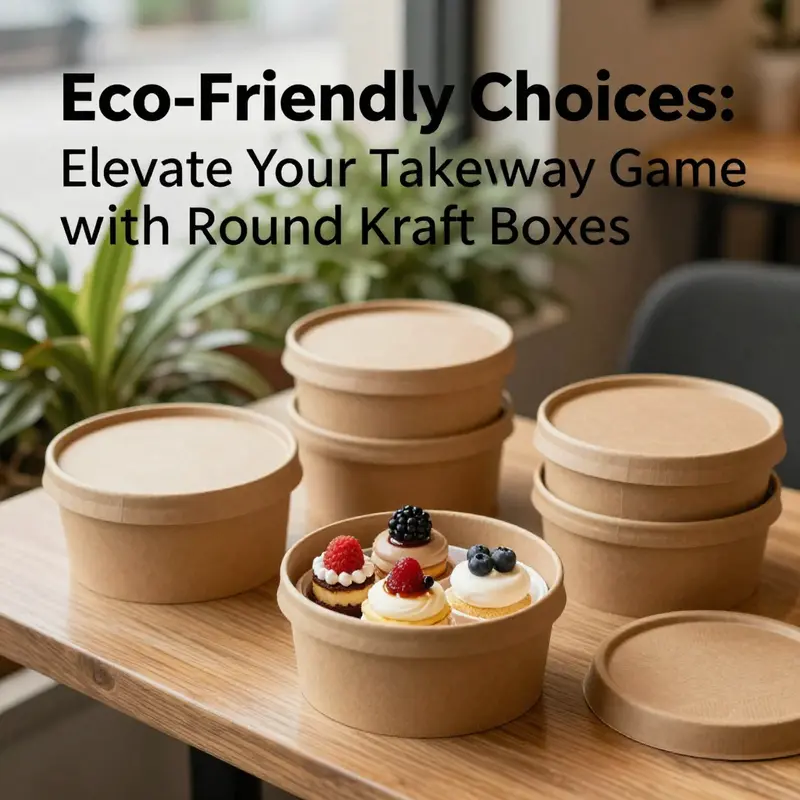
In today’s eco-conscious marketplace, the demand for sustainable takeaway food packaging has never been greater. Businesses like bubble tea shops, restaurants, food trucks, and catering services are increasingly seeking packaging solutions that not only meet customer expectations but also align with environmental values. Among the plethora of available options, round kraft takeaway boxes with lids stand out as a favorable choice. This article explores how these boxes contribute to sustainability, enhance branding, leverage technological innovations, respond to economic trends, and navigate regulatory landscapes. By delving into these chapters, you’ll gain a holistic understanding of why adopting round kraft boxes can set your business apart in an evolving market.
Kraft, Curve, and Care: How Round Kraft Boxes with Lids Deliver Sustainable Takeaway Packaging
Kraft, Curve, and Care: How Round Kraft Boxes with Lids Deliver Sustainable Takeaway Packaging
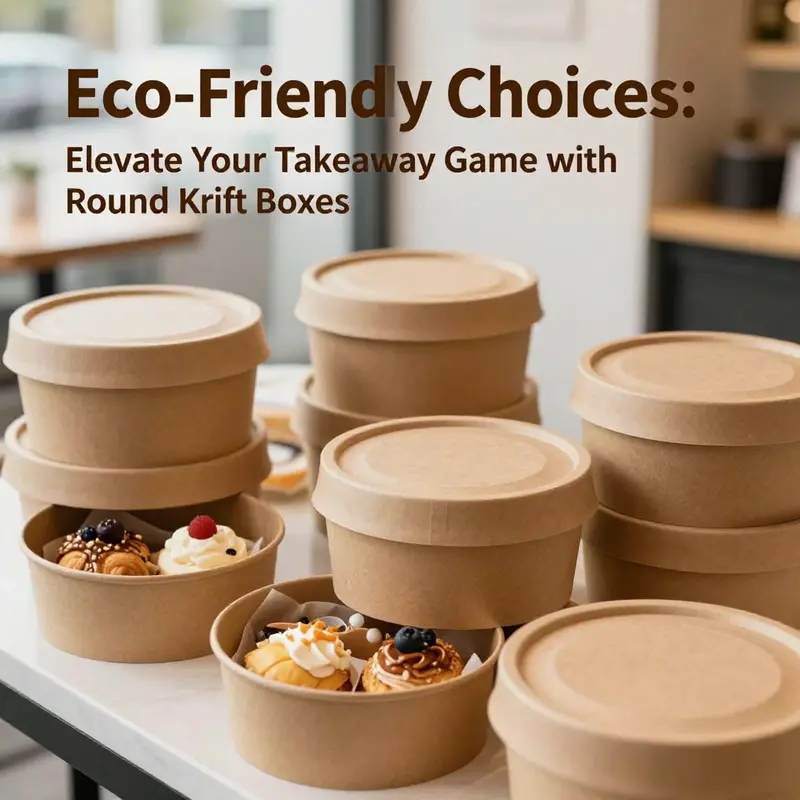
Round kraft boxes with lids have moved beyond trend status to become a practical cornerstone of sustainable takeaway packaging. Made from unbleached kraft paper, these containers combine a low-impact material with a form factor that fits many modern foodservice needs. Their round silhouette is particularly suited to pastries, desserts, salads, and comfort foods, and it creates a distinctive on-screen appearance in delivery apps. Yet their appeal runs deeper than looks. The material, construction, and finish work together to meet environmental goals while keeping food secure during transit.
At the material level, kraft paper offers important sustainability advantages. It originates from wood pulp and is produced in ways that favor strength and durability without heavy chemical processing. Unbleached kraft retains its natural brown tone, which communicates authenticity and reduces the need for extra finishing. Biodegradability and compostability are intrinsic benefits when the boxes are sourced and disposed of correctly. This reduces landfill burden compared with conventional plastics and polystyrene. When businesses choose kraft over non-recyclable alternatives, they tap into consumer preferences and regulatory momentum favoring lower-waste solutions.
Design and function are tightly linked in round kraft boxes. The lid creates a secure envelope that reduces spills and preserves freshness. The cylindrical geometry resists compression differently than square containers, offering gentle protection for delicate items like cakes and pastries. Round boxes also stack efficiently when designed with nesting or stacking features, saving storage space in commercial kitchens and lowering shipping volume for distributors. For operators who manage high turnover during peak hours, the space savings translate into faster service and lower handling costs.
Advances in coatings and linings have addressed earlier functional limitations of paper packaging. Modern plant-based films and water-resistant coatings provide oil and moisture resistance while keeping the container compostable in many systems. These coatings expand the usable food range beyond dry goods to include slightly moist or oily dishes without compromising sustainability claims. However, very wet or high-temperature liquid foods still require advanced linings or a secondary insert. That limitation is manageable through product selection and clear menu mapping, ensuring that each dish uses packaging matched to its needs.
Custom printing and branding are major advantages for businesses. Kraft surfaces accept a variety of print techniques, from minimal one-color logos to full-color wraps using eco-friendly inks. The tactile, natural finish complements artisan and premium brand identities. Packaging becomes a mobile billboard, reinforcing loyalty with every delivery. Younger consumers, who weigh aesthetics alongside sustainability, respond positively to this combination. Thoughtful messaging on the lid or side panel can also guide proper disposal, helping close the loop on end-of-life management.
Manufacturers have scaled production to support high-volume demand while maintaining eco-standards. Verified strength ratings and food-safe certifications show that durability no longer requires plastic. Suppliers now offer bulk options with consistent quality, enabling bakeries, cafes, and restaurant chains to adopt kraft solutions at scale. Choosing a supplier with transparent sourcing, verified compostability, and reliable lead times reduces operational risk and ensures that sustainability promises are backed by measurable practices.
Customer experience is a key benefit that feeds business outcomes. The natural look of kraft conveys quality and care. A secure lid reduces complaints and returns. Good tactile and visual cues make dishes feel more premium. For delivery-first operations, packaging that preserves presentation builds repeat business. When customers see clear recycling or compost instructions, they are more likely to follow through, which bolsters the brand’s reputation for responsibility.
Cost considerations require an honest view. Kraft containers tend to cost more than the cheapest plastic equivalents. But that premium often reflects better materials and supply-chain transparency. When factored into brand positioning, waste savings, and regulatory compliance, the higher unit cost can be offset. Bulk purchasing, rationalized SKUs, and careful menu-packaging pairing all reduce per-order packaging spend. Moreover, regulations limiting single-use plastics increasingly make compliant paper-based solutions the lower-risk choice.
Operational realities must be addressed to reap the full benefits. Staff training ensures lids close properly and fragile items are protected. Storage protocols prevent moisture exposure in humid climates. For delivery, pairing kraft boxes with secure sealing methods—sticker seals or tamper-evident bands—protects product integrity during longer transport. Clear disposal labeling helps customers return packaging to the right stream. Where municipal composting is available, educating customers about compost-ready coatings and local requirements improves end-of-life outcomes.
Kraft sits among several eco-material options, each with trade-offs. Bagasse and molded fiber offer compostable strength for heavier or wetter foods. Bamboo provides premium aesthetics and rapid renewability. Yet kraft’s accessibility, printability, and balanced performance give it broad appeal for many food categories. Businesses that need specialized moisture resistance or very long transit windows may blend materials or use targeted linings to achieve both sustainability and functionality.
Looking ahead, round kraft boxes will evolve along both material and systems lines. Improved plant-based coatings, standardized compostability labels, and better closed-loop collection systems will increase their environmental value. Manufacturers will continue to refine shape and closure design, enhancing stackability and reducing material use without sacrificing durability. For operators, the strategic shift is not just swapping materials. It is rethinking packaging as part of a service promise: preserving flavor, protecting presentation, and reducing waste.
Choosing the right round kraft box requires evaluating menu, transport needs, and end-of-life options. Match coatings to food moisture. Verify supplier certifications. Train staff on handling and labeling. Communicate disposal instructions to customers. These steps ensure the packaging performs well while delivering authentic sustainability benefits.
For a practical example of bulk round kraft packaging and supplier options, see a representative listing for round kraft boxes with lids. (External source: https://www.alibaba.com/product-detail/Round-Kraft-Boxes-999-Eco-Friendly-Packaging_1600423765682.html)
For operators seeking related kraft-form packaging like round soup bowls with lids, consider exploring a compatible product option that aligns with takeaway needs: round kraft paper soup bowl with lid.
Adopting round kraft boxes with lids is not merely a compliance step. It is a strategic choice that aligns product presentation, customer experience, and environmental stewardship. When selected and implemented thoughtfully, these containers strengthen brand identity while reducing ecological impact.
Round Kraft, Round Brand: How Lidded Takeaway Boxes Elevate Perception and Loyalty
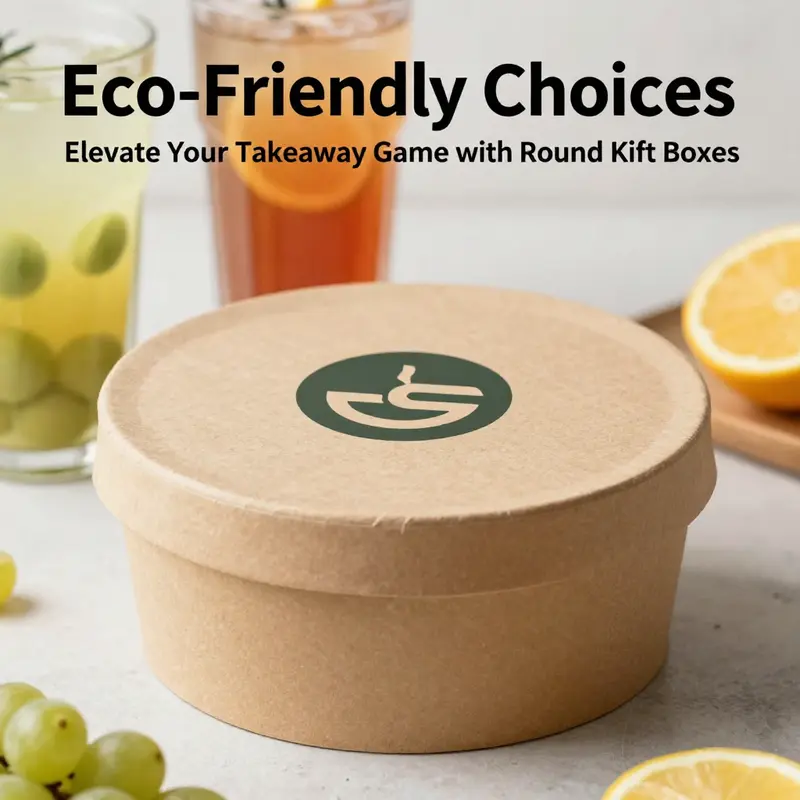
The packaging a restaurant chooses is more than a vessel for food; it is a quiet ambassador that travels with the product from kitchen to doorstep and into the customer’s memory. Round kraft takeaway boxes with lids fuse two distinct strengths in a single, purpose-built package: a natural, premium aesthetic and a branding surface that invites touch, glance, and recall. In markets where sustainability has shifted from a passing preference to a baseline expectation, the decision to present a pastry, a cake slice, or a delicate dessert in a round kraft container is less about cost and more about how a brand positions itself in a customer’s daily life. The box becomes a portable billboard, an opportunity to tell a story of care for the planet while signaling quality and confidence in every bite. The rounded form, the tactile warmth of unbleached kraft, and the practical lid come together to create a consumer experience that feels thoughtful before the first taste and memorable after the last crumb.
Round kraft boxes are inherently conversation starters. The natural texture and earthy hue communicate values—simplicity, honesty, earth-friendliness—that resonate with modern diners who are increasingly evaluating an entire experience, not just the product. This is not merely about avoiding plastic; it is about choosing packaging that invites customers to associate the meal with a responsible, contemporary lifestyle. The round silhouette, in particular, holds a distinctive place in the realm of baked goods and desserts. Pastries, donuts, and specialty desserts arrive at the counter or in the delivery inbox wrapped in a form that mirrors their own curves and generosity of proportion. That congruence between food and container enhances perceived value, making the box feel like part of the dish rather than a disposable afterthought. Such alignment matters when customers post unboxing photos or share their delivery stories online, because the box is one of the few visible, durable points of contact in the post-purchase moment.
Branding, in this context, becomes a matter of surface conversation as much as internal philosophy. The surface of round kraft boxes offers ample canvas for brand identity without compromising the purity of the raw material. Logos can be placed with strategic priority, but there is also room for bold, full-bleed graphics that articulate a brand’s personality. A well-planned design can balance legibility with artistry: a clean logo near the lid, a vibrant accent color on the rim, or a seasonal motif that celebrates a bakery’s craft. The result is a container that acts as a compact, mobile storefront. When customers see a box on a storefront shelf, on a delivery rider’s tray, or in a social feed, the packaging already communicates a story of reliability and taste before the food is even opened. The act of opening becomes a continuation of that narrative, a small moment of delight that strengthens the association between brand and sensory pleasure.
The power of customization in this packaging category cannot be overstated. The surface of round kraft boxes is highly receptive to branding and design, enabling a business to embed its ethos in a tangible, shareable form. Logo placement, bold typography, and promotional messaging can be arranged to guide the consumer’s eye and reinforce memory. Moreover, customization transcends mere aesthetics. It projects consistency across channels, from in-store displays to delivery packaging to social media. A cohesive look makes the brand appear more established, which in turn builds trust and encourages repeat orders. For a deli with a signature dessert, for example, the ability to imprint the brand’s colors and crest on each box elevates the entire purchase experience, transforming a simple takeaway into a manifestation of the brand’s identity. It is this continuity that drives loyalty; customers feel a sense of familiarity that reassures them they are choosing the familiar quality they expect, even when trying a new item.
A branded container also amplifies sustainability as a narrative, not just a technical characteristic. Modern consumers do not simply want packaging they can recycle; they want packaging that tells a responsible story. The kraft box’s biodegradable, compostable, and recyclable nature aligns with CSR initiatives that many businesses already champion. Communicating this alignment through careful design—color cues that signal recyclability, messaging about compostability on the lid, and a tone that emphasizes responsible sourcing—adds a layer of authenticity to the brand. This is particularly potent for audiences who prioritize environmental impact, including younger shoppers who view packaging as part of a brand’s moral footprint. The packaging thus becomes a stakeholder in the brand’s mission, a physical artifact that embodies commitments to the planet and to customers’ values.
From a practical standpoint, the round kraft box with a reliable lid supports the delivery and takeout experience in ways that influence brand perception. Advances in coatings—food-safe, water-resistant, oil-resistant surfaces—mean that these boxes can hold a range of products from dry pastries to mildly moist desserts without compromising integrity. The left-to-right journey of the meal, from kitchen to doorstep, is safeguarded by a design that reduces leakage and spillage, preserving the food’s appearance and aroma. This reliability strengthens customer satisfaction, which in turn feeds the brand’s reputation for quality and care. A well-engineered lid that seals securely also suggests durability and attention to detail, reinforcing the impression that the business values its customers enough to protect their meals. In a world where delivery reliability is a top priority, the packaging itself becomes a promise kept.
The marketing payoff of this packaging choice is not limited to the moment of purchase. A round kraft box with lids offers opportunities for ongoing engagement through branding and storytelling. The envelope of the design can carry seasonal campaigns, limited-edition flavors, or community-minded initiatives that bring customers back for more. It can host QR codes leading to loyalty programs, recipes, or behind-the-scenes looks at the baking process, turning packaging into a gateway for deeper brand interaction. The box, therefore, is not a passive container but an active participant in the brand’s marketing ecosystem. When paired with strategic copy and imagery, it nurtures a sense of anticipation and delight that extends beyond the last bite.
For brands contemplating how to realize these advantages, a thoughtful design approach is essential. The aim should be to achieve visual impact without compromising the natural, premium feel of kraft. This often means striking a balance between minimalism and personality: a restrained color palette, a crisp logo, and a few accent elements that convey the brand’s voice. The use of a consistent typographic system across packaging, digital assets, and in-store signage helps reinforce identity, increasing recognition with every touchpoint. Because the surface area of a round box is different from that of a rectangular carton, designers should optimize the layout for round geometry, ensuring that text remains legible and imagery reads clearly at a glance. The result is a packaging suite that behaves as a family rather than as discrete, one-off items.
In this broader market context, the branding and marketing advantages of round kraft takeaway boxes with lids are complemented by practical considerations tied to logistics and consumer expectations. The lightweight, stackable nature of kraft boxes simplifies storage and shipping, reducing costs while supporting sustainable supply chains. The compostable and recyclable credentials align with regulatory trends and industry push toward single-use plastics reduction, giving brands a compliance edge as well as a reputational one. As consumer demand for responsible packaging grows, the round kraft option not only satisfies this demand but also transforms packaging into a strategic asset, capable of differentiating a business in crowded digital marketplaces and in saturated neighborhoods of bakeries and cafés. This is why the packaging choice matters as much as the product itself.
For readers seeking a concrete example of how branding can be embedded into packaging, consider how a brand’s story can be carried through a single, well-designed container. The surface treatment, the color accents, and the choice of messaging work in harmony to remind customers that the brand they trust is thinking about them at every stage of the journey. And when the packaging invites sharing—whether through social media posts, unboxing videos, or word-of-mouth recommendations—it multiplies the reach of the brand with every delivery. In this sense, round kraft takeaway boxes with lids are not merely packaging; they are a versatile, portable extension of a brand’s promise, an instrument that translates taste into trust and familiarity into loyalty. This is the crux of branding in the modern packaging landscape: packaging that protects, communicates, and invites ongoing engagement, all while honoring the values customers care about most.
To explore how design specifics can translate into real-world outcomes, a practical resource on custom branding through kraft packaging offers deeper guidance and examples. custom-logo-eco-friendly-disposable-matt-lamination-brown-kraft-catering-takeaway-sushi-food-box. And for further reading on broader industry dynamics and material capabilities, see the external resource: Kraft paper boxes with customizable size and food-grade properties on Alibaba. https://www.alibaba.com/product-detail/Kraft-Paper-Boxes-Custom-Size-Food_1600547932742.html?src=1&spm=a2700.18404705.0.0
How Technology Is Reinventing Round Kraft Takeaway Boxes with Lids
Packaging has always balanced form and function. For round kraft takeaway boxes with lids, recent technological advances have shifted that balance decisively toward smarter, greener solutions. Innovations now extend beyond simple material swaps. They re-engineer performance, user experience, branding potential, and supply-chain efficiency. The result is a new generation of kraft containers that retain their natural appeal while meeting demanding operational and environmental standards.
At the material level, coatings and barrier technologies are the most visible breakthroughs. Traditional kraft paper struggled with grease and moisture. Modern, water-based coatings address that limitation. These coatings resist oils and moderate liquids while remaining compatible with recycling and composting streams. Plant-based films, such as PLA and other biopolymers, provide a thin, effective barrier. They preserve the kraft look and enable use with moist foods like sauced dishes or cream-filled pastries. Crucially, many of these barriers are applied as ultra-thin layers. That approach reduces resource use while preserving biodegradability and end-of-life options.
Manufacturers also leverage multilayer paperboard constructions for targeted performance. Double-wall designs add thermal insulation and structural strength without heavy plastics. Paperboard can be combined with strategically placed coatings to create zones of protection. For example, the base receives a thicker oil barrier while the upper walls keep their natural texture for printing. This targeted method optimizes cost and recyclability. It also makes these boxes safer for hot foods, short microwave use, and longer transit times.
Precision manufacturing has transformed the physical design of round kraft boxes. Advanced die-cutting, laser scoring, and robotic folding create consistent, airtight closures and tight tolerances. These processes make stackable and modular designs viable. Engineers optimize geometry so lids snap or interlock without adhesives. The result is storage efficiency and faster assembly at scale. Facilities report up to a 30% increase in storage and shipping density compared to older designs. For operations handling thousands of boxes daily, that increase translates directly to lower warehousing costs.
Closures are receiving particular attention. Interlocking tabs, tongue-and-groove rims, and integrated gasket-like ridges all improve the seal between lid and cup. Some solutions use magnetic elements embedded into the rim for a premium, reusable feel while still allowing compostable materials elsewhere. When properly engineered, these closures reduce leakage during delivery. That reduces returns and improves customer satisfaction. It also supports third-party delivery platforms that require durable, spill-resistant packaging.
Printing and surface finishing have evolved alongside material science. Digital printing now delivers rich, full-color imagery directly onto kraft surfaces. These presses handle variable data, letting brands print logos, promotions, or unique designs on-demand. The kraft texture adds a premium, artisanal backdrop that younger consumers appreciate. Finishing options like matte lamination, embossing, and selective UV coating provide tactile contrast while protecting ink and improving moisture resistance at critical points. Importantly, many of these finishes are engineered for recyclability, avoiding the trade-off between visual impact and sustainability.
Designers also work on user experience with functional details. Built-in venting systems help hot foods breathe without losing heat. Removable compartments or stackable trays can hold sauces and condiments separately. Tear-away bands and easy-peel seals improve tamper evidence for delivery. All of these features are designed with minimal material addition in mind, maintaining compostability and low weight.
Sustainability credentials remain central to adoption. New industry standards and third-party certifications validate claims for compostability, recyclability, and food safety. Certification helps operators navigate municipal waste streams that vary across regions. It also builds consumer trust. Brands increasingly include clear disposal instructions on the box, guiding customers to the correct end-of-life option. This transparency reduces contamination in recycling and composting systems.
Supply-chain technologies underpin many of these advances. Automated lines for printing, cutting, and folding lower per-unit labor costs. Inline quality control systems use vision sensors to detect defects and misprints in real time. That reduces waste and improves yield on custom-printed runs. On-demand manufacturing and shorter runs became practical thanks to digital print presses. Small food businesses can now order bespoke designs without long lead times or high minimums. This democratizes premium branding previously reserved for larger chains.
The e-commerce and delivery boom has pushed design priorities further. Boxes must perform in stacked delivery bags and temperature-controlled boxes. Reinforced bases and optimized lid geometry resist crushing and deformation. Shock-absorbing features in the lid reduce sloshing for liquid-adjacent products. Packaging engineers run transit simulations to refine designs, testing real-world conditions to ensure performance across riders, vehicles, and weather.
There are trade-offs, of course. Advanced coatings and finishes add cost. Some municipalities still lack composting infrastructure, limiting local circularity. High-performance solutions also require careful material selection to maintain recyclability. But technological progress continues to lower these barriers. Material costs fall as biopolymer production scales. Coating chemistries evolve toward simpler, certified formulations.
For businesses seeking to trial modern round kraft boxes, there are off-the-shelf options that demonstrate these innovations. One example is a factory-produced round kraft bowl that features waterproofing and a paper lid, designed for takeaway salads and soups. That offering showcases how waterproofing, custom printing, and food-safe manufacturing combine into a single product. For more detail on a representative round kraft bowl with lid and waterproof properties, see this round disposable eco-friendly customizable kraft waterproof takeaway bowl.
Manufacturers continue to innovate with new geometries, coatings, and printing techniques. The immediate focus lies on reducing material footprints while enhancing performance. The broader move is toward system thinking—designing packaging that performs in transit, communicates brand values, and fits into circular waste systems. Round kraft boxes with lids sit at the intersection of these trends. They offer a compelling mix of aesthetics, practicality, and environmental promise.
For technical specifications and supplier examples, consult this detailed sourcing resource: https://www.alibaba.com/product-detail/Kraft-Paper-Boxes-Custom-Size-Food-Packaging_1600528977461.html
Greener by Default: Economic Currents Driving Round Kraft Takeaway Boxes with Lids into the Mainstream
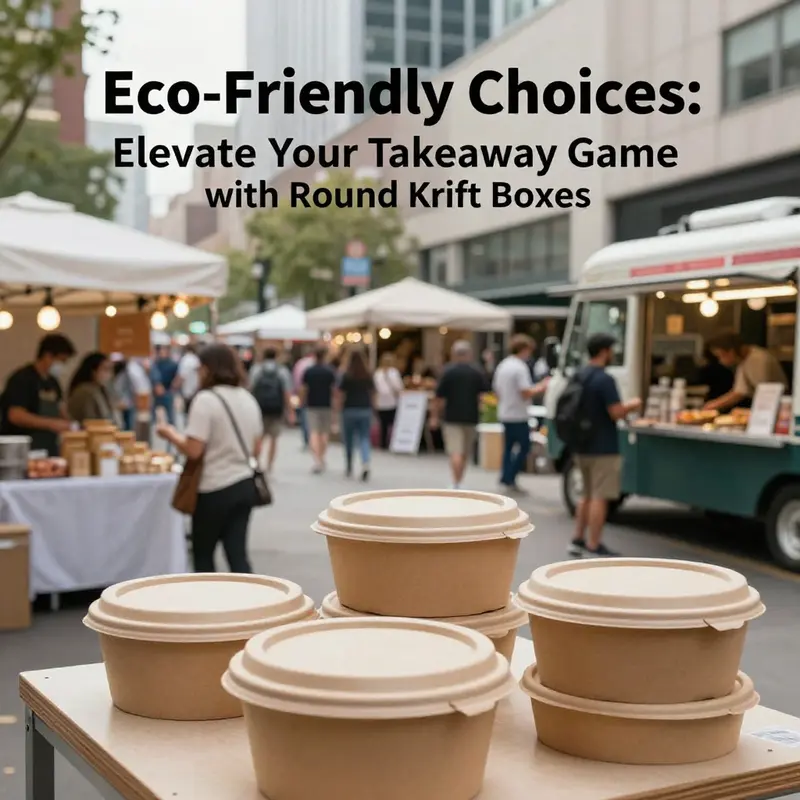
Growth in the use of round kraft takeaway boxes with lids is driven by a triad of dynamics: material stability, scale driven efficiency, and the marketing value of sustainability. Raw kraft fibers provide a predictable performance profile compared with petroleum plastics, which helps businesses plan budgets across months and seasons. In contexts where fuel costs and currency shifts matter, the relative stability of kraft pricing becomes a strategic advantage. As more operators adopt round boxes, manufacturers invest in larger runs, smoother coatings, and tighter logistics, which translates into lower unit costs over time even as moisture resistance and heat retention improve. Regulatory signals matter too. Governments are increasingly restricting single use plastics and supporting renewable materials, which nudges brands toward kraft and paper based options. The EU Single Use Plastics Directive, plus similar initiatives in North America and Asia, have accelerated investments in compostable and recyclable packaging. Brands that plan ahead can avoid retrofit costs and supply disruptions. From a consumer perspective, packaging communicates values. A natural kraft surface signals simplicity, authenticity, and environmental care. The round shape suits pastries and desserts, presenting products with premium appeal and practical stacking for transport. The lid helps prevent leaks and keeps toppings intact during delivery, important as the takeout economy expands and delivery times stretch. Custom printing and embossing on natural kraft are possible, enabling brands to carry logos and messages without a heavy plastic overlay. Coatings and lining options now include plant based films and PLA, balancing moisture and grease with compostability. But there is no one size; some products require stronger moisture barriers or more robust sealing. Here, the selection of a suitable coating is a negotiation among performance, cost, and end of life. The result is a packaging system that remains robust in everyday use yet aligns with sustainability goals. Beyond unit economics, the broader advantage is supply chain resilience. Round kraft boxes stack efficiently, save space in fulfillment centers, and reduce breakage during transit. This improves delivery margins and reduces waste. The adoption of kraft boxes is not a fringe trend but part of a bigger shift toward materials that support circular waste streams. As more communities build collection and sorting infrastructure for paper based packaging, the value proposition strengthens. Looking ahead, expect deeper integration with recycling and composting networks, more coatings that preserve products while enabling compostability, and continued cost improvements through scale. The story of round kraft takeaway boxes with lids is a story of how sustainable design becomes economic reality, enabling brands to deliver quality while staying true to environmental commitments. For readers seeking deeper technical background, one practical resource on kraft packaging standards and applications is available at http://www.paperandpackaging.com/kraft-paper-food-packaging-standards-grades-applications/
How Global Regulations Are Rewriting the Rules for Round Kraft Takeaway Boxes with Lids
Regulatory forces are reshaping design, sourcing and labeling for round kraft takeaway boxes with lids. Across jurisdictions, rules now combine food-safety tests with sustainability benchmarks. Manufacturers, foodservice operators, and brand managers must translate those requirements into practical choices about materials, coatings, supply chains, and on-pack communication.
In regions governed by strict food-contact rules, the primary legal concern is safety. Materials must not transfer harmful substances into food during normal use. That legal duty steers selection toward food-grade kraft papers and coatings that have undergone formal assessment. For producers of round kraft boxes, that means validated formulations for adhesives, inks, and barrier layers. It also means documenting migration tests, Certificates of Analysis, and any third-party test reports. These documents are not optional; regulators and large buyers expect them as standard procurement artifacts.
At the same time, sustainability mandates are accelerating replacement of single-use plastics. Laws that target non-recyclable materials have a direct effect: they increase demand for compostable or recyclable kraft packaging and shape allowable claims. Producers that choose plant-based coatings or PLA films must ensure those coatings match the promised end-of-life pathway. If a box is labeled “compostable,” it must meet recognized standards. For municipal composting systems and consumer trust, certifications such as OK Compost and home-compostable approvals are decisive. Equally important, certification for responsible fiber sourcing is becoming a market requirement; credible chain-of-custody claims backed by independent certification limit buyer risk and open institutional contracts.
Regulation also changes how designs are engineered. Round boxes historically prized aesthetics for pastries and desserts. Now they must balance visual appeal with compliance: tighter rims and secure lid closures reduce spill risks during delivery. Reinforced sidewalls and fluting choices improve stacking strength without adding non-compliant laminates. Where moisture resistance is essential, producers are choosing food-safe, thin barrier coatings rather than plastic lamination. That permits moderate wet-food use while preserving recyclability or compostability. Such design decisions are a direct response to both legal tests and delivery realities.
Labeling law drives a second wave of product changes. Claims about biodegradability, compostability, recyclability, and renewable content are regulated in many markets. Misleading labels invite penalties and reputational harm. Manufacturers must be ready to provide documentation for each environmental claim and follow guidance on permitted logos and wording. Clear on-pack instructions about disposal keep consumers aligned with municipal waste systems and lower contamination risks. Labels that advise “industrial composting only” or “check local recycling rules” reduce the chance of incorrect disposal and regulatory scrutiny.
Supply-chain implications are extensive. Procurement teams must source certified pulp, validated coatings, and compliant inks. Suppliers that lack traceability or certification can block sales into regulated markets. That drives vertical transparency: mill-to-converter traceability, chain-of-custody certifications, and supplier audit records. For brands selling across borders, harmonizing material choices to satisfy multiple legal regimes lowers complexity. In practice, many buyers now seek suppliers whose baseline product meets the strictest of their target markets.
Testing and quality control are operational necessities. Routine migration testing, composability validation, and physical performance checks—such as leak and stack tests—move from periodic exercises to continuous quality gates. Laboratories accredited under recognized standards issue the reports that buyers and regulators accept. Investing early in standardized testing reduces delays during tendering and avoids costly product redesigns later. It also supports truthful marketing. Brands that can supply up-to-date test certificates, along with certification numbers for compostability and responsible sourcing, shorten approval cycles with large foodservice clients.
Enforcement and market dynamics vary by region. Some governments favor outcome-based rules that define performance thresholds, while others specify allowable materials or ban particular polymers. In practice, the combination of legal bans on certain plastics and incentive programs for compostable or recyclable alternatives accelerates adoption. For operators, this means the legal environment not only punishes non-compliance but also creates market opportunities for compliant packaging. Retailers and platforms increasingly select suppliers based on compliance credentials, shifting commercial advantage toward companies that invest in certified kraft solutions.
Practical strategies for navigating this landscape emphasize alignment and clarity. Choose materials that meet the most demanding jurisdictions you serve. Build testing and certification into development timelines. Include clear disposal guidance on packaging. Strengthen supplier agreements to require traceability and proof of compliance. When marketing sustainable features, link claims to verifiable certifications. These steps reduce regulatory risk and increase buyer confidence.
The regulatory environment will continue to evolve. Expect stricter standards for compostability, clearer definitions of recyclability, and closer scrutiny of ink and adhesive chemistries. For businesses using round kraft takeaway boxes with lids, staying ahead requires a compliance-first mindset that integrates legal requirements with functional design and supply-chain transparency. That approach protects public health, satisfies sustainability mandates, and sustains the visual and practical qualities customers value.
For an example of a practical, eco-friendly round kraft bowl option with lid that illustrates many of these design and material choices, see this example of an eco-friendly round kraft soup bowl with lid: https://cupbowlpack.com/product/senang05-promotion-large-porridge-350ml-double-wall-eco-friendly-disposable-round-kraft-paper-soup-bowl-with-lid-cup-bucket/
For regulatory reference and details on food-contact materials in the EU, consult the European Commission guidance on food safety and material requirements: https://ec.europa.eu/growth/sectors/food-safety_en
Final thoughts
The increasing demand for sustainability in the food service industry makes round kraft takeaway food boxes with lids an ideal choice for businesses striving to meet consumer expectations. By prioritizing eco-friendly packaging, companies not only enhance their brand image but also align with compliance regulations and customer values. As you consider your takeaway options, round kraft boxes present a versatile solution that combines aesthetics, functionality, and environmental responsibility. Remember, adopting responsible practices today can lead to a more sustainable future, positively impacting both your business and the world.