
Starbucks clear plastic cups are a popular option in the beverage industry, known especially for their aesthetic appeal and practicality. However, these cups do not cater well to customization using markers, a factor that can be a significant limitation for businesses such as bubble tea shops, catering services, and restaurants looking to offer personalized experiences. In this article, we will delve into the limitations of Starbucks clear cups, explore alternatives that allow for greater customization, and analyze market trends regarding personalization in beverage service. Understanding these aspects will empower businesses to make informed decisions that align with customer demands and enhance brand engagement.
Why Starbucks Clear Plastic Cups Resist Markers — Material Limits, Safety Risks, and Smarter Personalization Choices
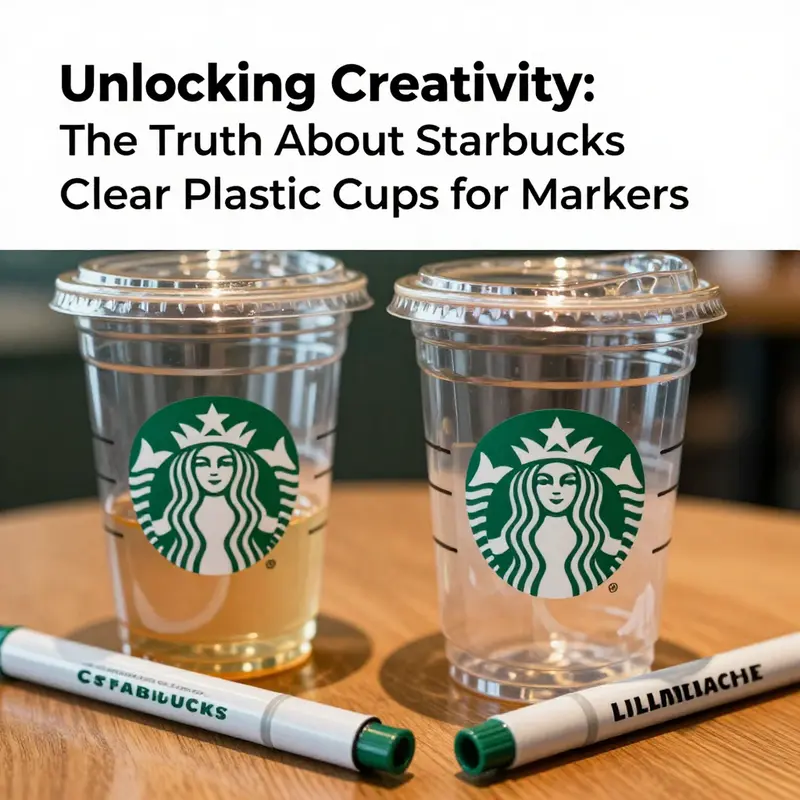
Why markers rarely work on clear disposable cups
People often reach for a marker to write a name, draw a doodle, or mark a drink. Clear disposable cups are transparent, lightweight, and convenient, so they seem like an obvious canvas. Yet the results are usually disappointing: ink smudges, fades, flakes off, or simply beads up and rolls away. The reason is not random; it lies in the chemistry and finish of the cup itself. Most clear disposable cups are made from food-grade plastics such as PET, characterized by a very smooth, non-porous surface. That surface repels ink rather than absorbing it. Where paper or fabric gives marker inks microscopic pores to bite into, clear cup plastic leaves ink sitting on top. When ink remains on the surface, it is vulnerable to touch, moisture, and friction.
This basic material mismatch explains several familiar problems. Writing rubs off after a single use, especially if a hand brushes the letters. The mark may fade after a short exposure to sunlight, or smear when condensation forms on the cup. Washing or even a quick rinse often removes the ink entirely. Some markers claim to be “permanent,” but that permanence usually applies to porous substrates; on slick plastic, permanence is relative and short-lived. The more you press the marker, the greater the chance of dragging ink into an uneven, smeared mess. In short, the smooth food-grade plastic used for cold cups is fundamentally incompatible with a lasting, legible mark made by typical consumer markers.
How marker chemistry and plastic surfaces interact
Markers are formulated with different solvents and pigments to suit target surfaces. Alcohol-based markers use fast-evaporating solvents and dyes designed to soak into porous materials. Their apparent permanence on paper comes from dye molecules physically embedding in fibers. On non-porous plastic, those solvents evaporate but leave dye molecules loosely adhered to a slick surface. That weak bond leads to easy smudging and rubbing.
There are markers intended for non-porous surfaces, such as those labeled for use on plastic, glass, or metal. These markers often use different binders and pigments designed to form a film on top of the substrate. Even these specialized markers can struggle with thin, flexible food cups. Differences in plastic formulation, coatings, and surface energy change how well the marker can wet and bond to the cup. Some plastics are also treated to be more resistant to oils and ink, or carry a shiny finish that increases slip.
More aggressive options exist: paint markers, oil-based markers, and solvent-heavy industrial markers can form a durable film on many plastics. But those solutions come with trade-offs. Solvent-based markers may contain volatile organic compounds (VOCs) and strong chemicals that can compromise the cup surface. They can cause stress cracking, clouding, or tiny abrasions in thin plastic. Abrasions and crazing reduce strength and change appearance. Importantly, many aggressive marker pigments and solvents are not intended near food contact surfaces. Writing near the rim or in areas that touch lips and beverages can create hygiene and safety concerns.
Surface damage and chemical compatibility
Attempting to force permanence on an unsuitable material can harm the cup. When solvents dissolve certain polymers or their surface additives, the plastic may develop cloudy patches or fine cracks known as crazing. These surface changes are not only cosmetic. Crazing and micro-abrasions can become sites where bacteria and residue collect. If the cup is reused, those imperfections make proper cleaning harder and compromise hygiene.
Some ink residues also leave behind a sticky or greasy film that is hard to remove without solvent cleaners. Using strong solvents to strip ink from a cup can, in turn, remove protective coatings or migrate residual chemicals into the plastic. For intended single-use cold cups, these cascading interactions are unnecessary and risky. The simplest, safest choice is to treat the cup as a surface not intended for permanent marking.
Hygiene and safety considerations
Clear disposable cups are designed for direct food and beverage contact. Any surface marking introduces foreign chemicals—pigments, binders, and solvents—onto an item that will hold a drink. Even if the writing is purely decorative and on the outside of the cup, there is potential for transfer. Condensation on the cup, or brief contact near the rim, can move traces of ink toward the mouth. Some marker inks contain solvents and pigments not approved for food contact. Reusing a disposable cup that had ink on it increases the chance of ingestion of ink components. These concerns are not theoretical: food-contact safety regulations are strict because repeated or careless exposure can add up. For anyone customizing cups intended for drinking, it is safer to use materials and methods that are explicitly food-safe.
Why washing and handling make marks fail
Condensation, handling, and cleaning are the three most common failure modes for ink on clear cups. Cold beverages create moisture on the cup surface, reducing friction and making ink transfer easier. Hands are natural abrasives; any friction can smear ink that hasn’t bonded well. And even a short contact with a wet napkin or a streak of rain can blur the letters.
Washing compounds the problem. Most disposable cups are not designed to survive dishwasher cycles, but even hand rinses remove ink easily. Using soap, water, or alcohol-based wipes strips the pigment film because the ink is not anchored in the substrate. Trying to make the ink stick by applying repeated layers only creates a thicker film that flakes off and looks messy.
Safer, more reliable personalization approaches
If the goal is to identify a drink or personalize a cup on the spot, there are several reliable, low-risk techniques that bypass the plastic-ink conflict.
-
Use a sticker or adhesive label. Paper or vinyl labels accept marker ink readily. An inexpensive roll of blank labels lets you write names or messages and apply them to the cup. Labels keep ink off the cup surface and are easy to remove.
-
Write on the lid or cup sleeve. Many disposable coffee lids are textured or made from different plastics that accept certain markers better. Paper sleeves are porous and welcome ink. Writing on a sleeve or a sticker reduces the chance of ink contacting the drink.
-
Use tape as a writing surface. A strip of masking tape applied to the cup creates a writable area that peels away cleanly.
-
Bring your own reusable vessel. Reusable cups made of stainless steel, glass, or ceramic accept a wider range of markers and paints, and many brands offer customizable, dishwasher-safe options.
-
Opt for custom printing. For groups or businesses, ordering cups with pre-printed logos or names is the most durable route. Printing processes such as screen printing or digital print use inks cured specifically for food-contact outer surfaces, delivering lasting results without the hazard of ad-hoc marker use.
When the intent is decoration rather than a quick label, commercial customization methods are preferred. Printing provides predictable adhesion and can be made food-safe when executed properly. If you need disposables with graphics, consider suppliers that offer printed paper or plastic cups, where inks are chosen for durability and safety. For example, many eco-friendly printed paper cup options offer a balance between appearance and safer, more sustainable materials: https://cupbowlpack.com/product/senang07-eco-friendly-printed-logo-buy-paper-cup-take-away-coffee-cup-8-oz-12-oz-paper-cup/.
If you still want to mark a clear cup: practical steps and warnings
Sometimes the only option is to mark a clear cup on the spot. Follow these precautions to reduce mess and risk.
-
Test first. Try your marker on an inconspicuous area or on a spare cup. Observe how it dries and whether it rubs off.
-
Choose the right marker. Look for markers specifically labeled for use on non-porous surfaces. Acrylic paint pens often form a better, longer-lasting film. Avoid cheap alcohol markers that absorb poorly.
-
Keep marks away from the rim. Write on the outer lower half of the cup to reduce risk of ink contacting lips or beverages.
-
Let ink fully cure. Allow more time than the marker manufacturer suggests. Longer drying improves adhesion.
-
Avoid sealing attempts near where beverages touch. Clear sprays or sealants may protect ink, but many are not food-safe and should never be used where they can contact drink or lips.
-
Use a label over the ink if reuse is required. An outer label can protect the mark and provide a barrier between ink and hands.
-
Dispose after use if ink was applied to the cup. Single-use cups are inexpensive compared with potential health risks from improper inks.
Even with careful technique, marks will usually be temporary. If permanence is essential, choose a different material or an appropriately designed container.
Better surfaces for lasting marker work
Certain reusable materials accept markers and paints far more reliably. Glass needs a marker designed for glass or heat-curable paints. Stainless steel can be decorated with specially formulated markers or laser engraving. Ceramic takes ceramic paints that are fired or cured. These substrates allow more aggressive marker chemistries without the risk of crazing or structural damage.
For temporary personalization, consider matte-surfaced clear cups explicitly manufactured for art or labeling. Some third-party suppliers sell clear drinkware with a slightly rougher finish or a removable liner that accepts permanent ink. These products are designed with different surface energy and coatings so that ink forms a stronger bond.
Environmental and practical trade-offs
It is tempting to mark the clear disposable cup because it is available and free in many settings. But there are trade-offs. Disposable cups create waste. Aggressively marking and then discarding them amplifies the environmental cost, especially when inks and sealants involved are petroleum-based and not biodegradable. For those who personalize regularly, investing in a reusable vessel reduces waste and offers a true canvas for creative expression.
Custom-printed disposable options can reduce on-the-spot marking and supply visually appealing alternatives without the need for markers. A modest upfront cost for printed cups pays off in consistent appearance and avoids the mess of ad-hoc writing. In contexts like events or promotions, professional printing provides a polished, consistent result that markers cannot achieve.
Practical summary and next considerations
Clear disposable cups are designed for practical beverage service, not as a permanent writing surface. Their smooth, non-porous plastic repels typical marker inks, causing smudging, fading, and poor durability. Stronger markers or paints can bond better but bring health, safety, and material-damage risks. For safe, long-lasting personalization, use labels, sleeves, custom printing, or reusable vessels made from glass, ceramic, or metal. If you must write on a clear cup, test first, keep marks away from contact areas, and accept that the result will likely be temporary.
Understanding the material limits of disposable drinkware helps you choose the right tool for personalization. The next chapter explores marker types and ink chemistries in depth, showing which are safe for various substrates and which to avoid around food and drink.
For authoritative guidance on food-contact materials and safety considerations, consult the FDA’s resources on packaging and food-contact substances: https://www.fda.gov/food/packaging-food-contact-substances-food-ingredients-and-dietary-supplements.
null
null
null
null
Final thoughts
In wrapping up, while Starbucks clear plastic cups offer functionality and visual appeal, they fall short in meeting the needs for personalization with markers. As trends in the beverage industry push for more custom interactions, exploring generic options designed explicitly for art and labeling becomes essential. By understanding market dynamics and integrating creative customization solutions, businesses in the beverage industry can elevate their service offerings and enhance customer satisfaction, ultimately leading to a more engaging brand experience. The journey towards personalization doesn’t have to follow traditional paths; there are plenty of alternative options to explore that cater to the evolving needs of customers.