
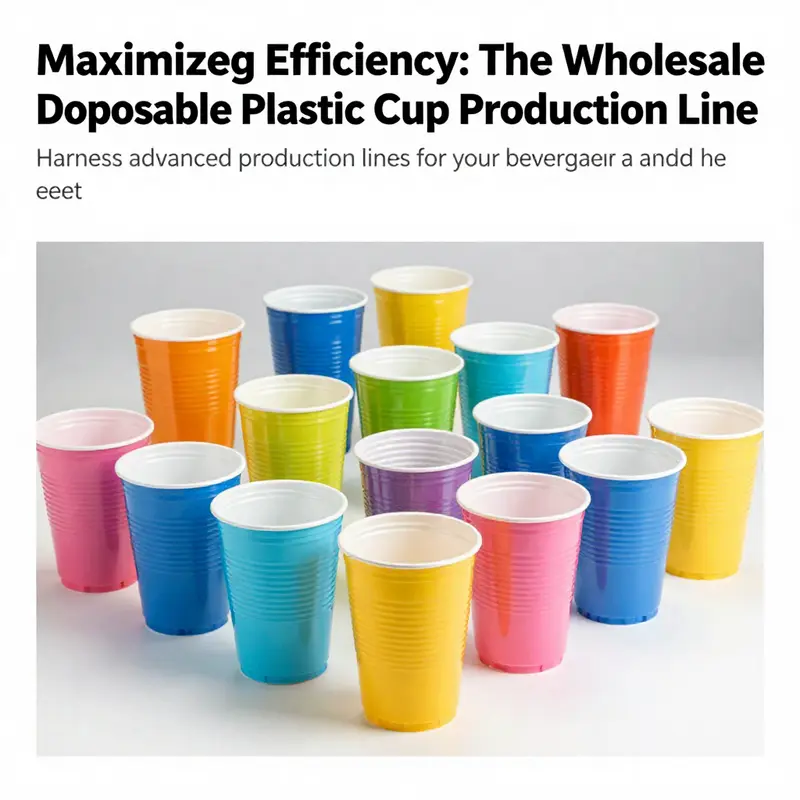
The demand for disposable plastic cups continues to soar, particularly among bubble tea shops, restaurants, and catering services. As these businesses seek cost-effective, efficient solutions for serving beverages, understanding the wholesale disposable plastic cup production line becomes essential. In this overview, we will delve into the technology and machinery that power these production lines, discuss the economic implications of adopting such systems, address environmental considerations, and identify market trends that shape competition in this dynamic industry. Each chapter will empower you to make informed choices that enhance your service offerings and sustainability efforts.
Engineering Throughput in Wholesale Disposable Cup Lines
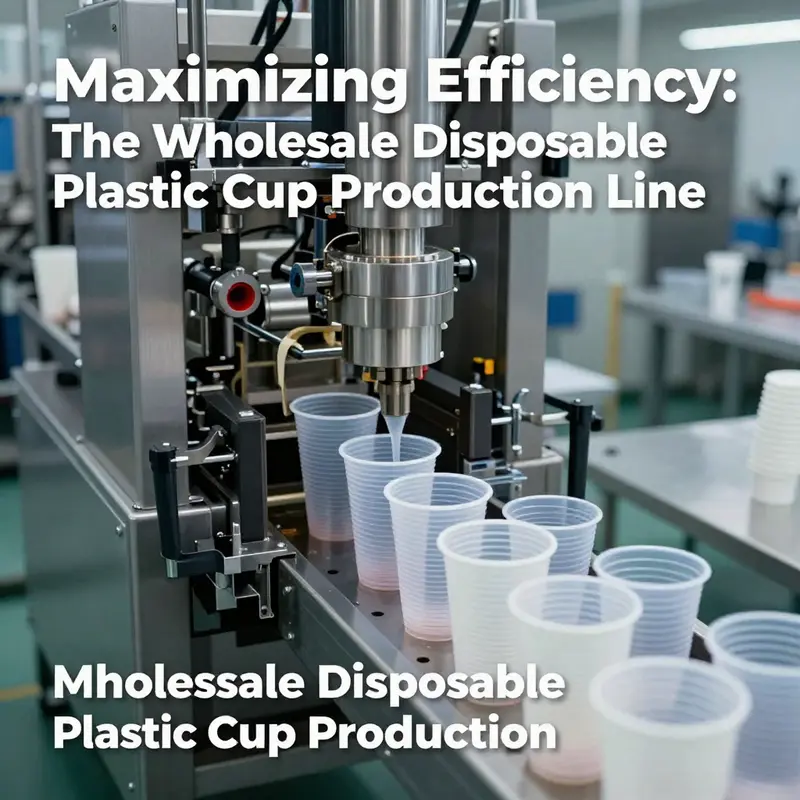
The wholesale disposable cup line sits at the intersection of mechanical precision and supply-chain tempo. It is not simply a row of machines converting resin into cups; it is an ecosystem that translates demand into reliable, hygienic, scalable streams. When you walk a line designed for high volume, you hear a rhythm: sheets feeding into forming, cups emerging with consistent wall thickness, lids snapping into place, and finished items gliding toward stacking and packaging.
A core element is automatic thermoforming or vacuum forming. Flat sheets are heated and drawn into cup geometry. Material thickness typically ranges from 0.2 to 1.2 millimeters, defining durability and heat tolerance. The challenge for operators is to calibrate heat, pressure, and cavity dimensions so every cup shares the same outer diameter and bottom geometry, regardless of batch. In modern plants, inline sensors monitor tolerances in real time, delivering confidence to offer a uniform family of products from clear cold cups to colored or tapered variants.
Molding, filling, sealing, and packing are often integrated in a continuous stream. An automated molding, filling, and sealing setup can reduce labor and human error. The sealing stage must reliably form airtight or semi airtight seals to preserve cleanliness and shelf life, even under hot fill or carbonated conditions. Some lines seal with film or foil, depending on barrier needs and regulatory expectations.
Lid formation and lid filling ride on parallel timelines. A dedicated lid machine can produce lids in synchrony with cups, allowing rapid changeovers between sizes with minimal downtime. Centralized digital control systems let operators adjust cycle times and clamping forces from a single interface.
Branding and decoration are no longer optional; inline printing can apply branding or regulatory information directly onto cups or sleeves. This preserves surface integrity and enables customization without extra handling steps.
Efficiency and waste management are critical. Modern lines minimize scrap through tight process control and recycling loops. Offcuts can be reclaimed and fed back into the process; downstream waste streams are redirected to recycling or rework.
Digital controls and real time data enable stability across shifts and formats. Sensors track wall thickness, seal temperatures, fill volumes, and cycle times. Data supports quick adjustments when drift occurs or material batches vary. Changeovers between formats can be guided by on screen sequences that minimize downtime.
Sustainability and material choices, such as PLA, are shaping line design. PLA offers an ecological advantage but may require different processing due to heat and barrier properties. Hybrid approaches combine PLA for cold drinks with barrier coatings or recyclable coatings to extend service life. Equipment is evolving to accommodate mixed materials and modular upgrades.
Market dynamics reward lines that combine scale with flexibility. Producers seek lines that handle multiple designs and sizes with tight tolerances and short changeovers. Suppliers highlight print and branding options to differentiate offerings while preserving cost discipline. The result is a lean portfolio of base configurations that can be adapted for campaigns or regional preferences.
In closing, the hidden architecture of cup lines is a narrative of precision, speed, and adaptability. The forming, sealing, and labeling modules operate in harmony, while design choices around tooling and coatings unlock opportunities for sustainability and customization. The industry continues to move toward smarter, more energy efficient configurations that align with circular economy goals and the needs of high volume foodservice and retail.
Economic Architecture Behind Wholesale Disposable Plastic Cup Production Lines
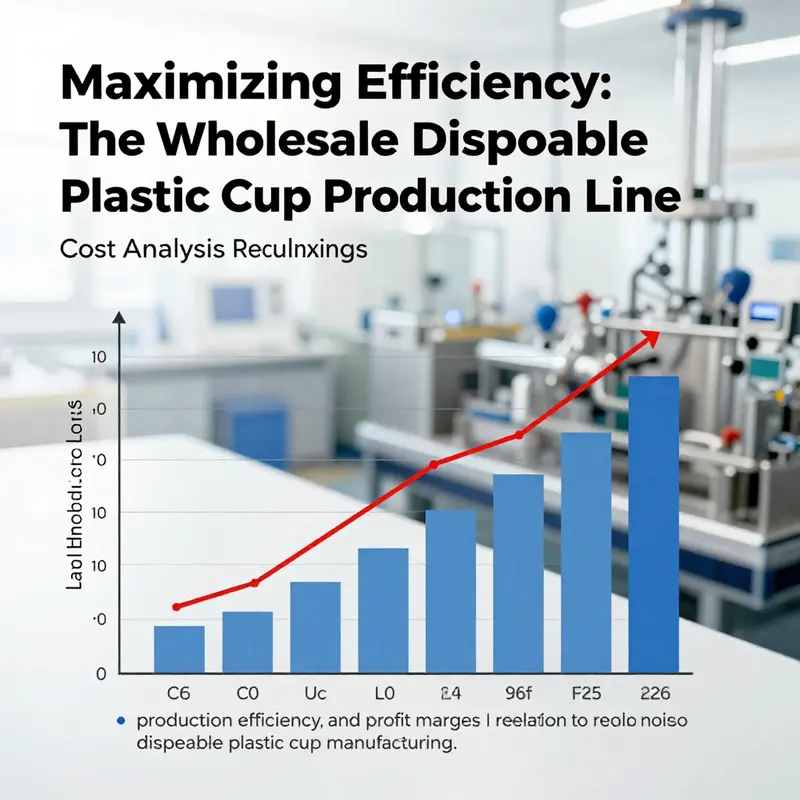
An overview of the economics behind wholesale disposable plastic cup production lines, focusing on forming, filling, sealing, and packing at scale. Key drivers include capital expenditure, operating costs, throughput, waste, energy intensity, and supply chain dynamics. The economics depend on line configurability, modular expansion, and lifecycle cost of ownership. Material costs for polypropylene resin, process yields, and scrap rates shape unit cost. Automation lowers labor, but uptime and maintenance influence return on investment. Sustainability considerations, such as bio-based materials, add cost and potential premium pricing opportunities. Compliance requirements for food contact, labeling, and environmental reporting affect capex and opex. A modular, scalable platform that can switch between cup designs and materials reduces risk of capital misallocation and supports growth. Supplier ecosystems, procurement discipline, and data-driven process control improve total cost of ownership. The strategic value lies in combining high throughput with flexibility to meet evolving regulatory and consumer expectations while maintaining price competitiveness.
From Production Lines to Planet: Environmental Realities and Pathways in Wholesale Disposable Cup Manufacturing
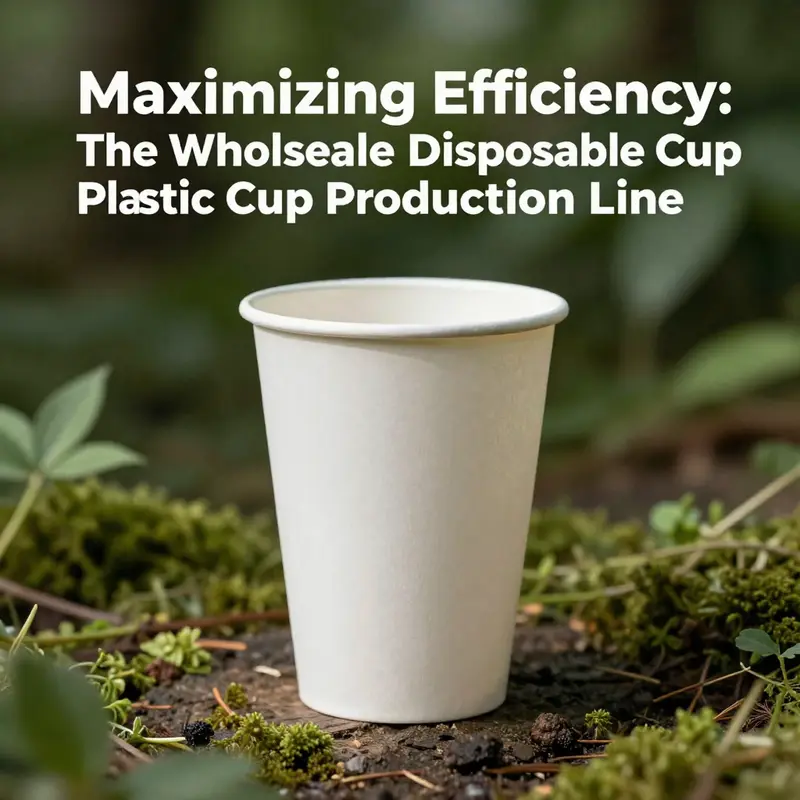
The environmental footprint of wholesale disposable plastic cup production lines is not confined to the moment a cup is formed or filled. It is a whole-life-cycle story that begins with raw material extraction and ends with post-consumer fate, looping back to influence future manufacturing choices. In this chapter, we trace that trajectory across its most consequential stages, not to cast blame but to illuminate where change can most effectively reduce harm and where opportunities for breakthrough lie. The central tension is clear: the very “one-time” use that makes disposable cups so convenient also concentrates the environmental pressures across energy use, water consumption, emissions, and end-of-life waste. Acknowledging this tension is the first step toward reimagining how wholesale production lines can align with a more sustainable system without sacrificing throughput, quality, or economic viability.
At the heart of the environmental challenge is material choice. The cups most often rely on polypropylene, polyethylene, or polyester-based polymers, derived from fossil fuels. The extraction and processing of these plastics demand substantial energy inputs, often with considerable greenhouse gas emissions per kilogram of polymer produced. Even when the final product is lightweight, the aggregate effect of millions, even billions, of units translates into a sizable climate and resource footprint. The problem is compounded by water use and chemical inputs inherent in polymer manufacturing, as well as the energy required to drive extrusion, molding, and sealing processes in high-speed lines. The numbers are not simply a function of unit cost or speed; they reflect the scale of modern production and the entrenched dependence on nonrenewable feedstocks. In this context, the production line is not merely a machine for shaping cups; it is an integral node in a global energy and materials system whose sustainability depends on how efficiently, how cleanly, and how flexibly that node can operate.
Beyond energy and materials, waste issues dominate the sustainability conversation. Estimates commonly cited in the sector point to hundreds of billions of disposable cups used annually worldwide. A considerable portion of these projects ends up in landfills or the natural environment, where fragmentation leads to microplastics that persist for decades or longer. The presence of microplastics in water bodies and soils raises concerns that headline the broader health and ecological narratives associated with plastic packaging. From a lifecycle perspective, the disposal phase is not a mere afterthought but a critical determinant of overall environmental performance. If end-of-life outcomes are poor, even highly efficient manufacturing can be offset by upstream production choices and downstream waste streams. The cup is, in effect, a signal of a system’s broader waste and recycling architecture, rather than an isolated product.
The dialogue about alternatives has grown more nuanced as well. Biodegradable materials, such as polylactic acid (PLA), and even paper cups with polymer coatings, are increasingly discussed as greener options. Yet their production footprints and recycling realities complicate the narrative. PLA, for instance, can demand substantial energy inputs and, if not properly separated, can contaminate conventional recycling streams. Paper cups with wax or plastic coatings may offer compostability or recyclability only under highly controlled conditions that are not universally available. In many contexts, the perceived environmental benefits of these substitutes depend on robust and reliable end-of-life infrastructure, something that is not yet universally in place. The takeaway is clear: substituting one disposable material for another does not automatically yield a net environmental win. The entire system—the materials, their production, and the collection, sorting, and processing pathways—must be aligned to ensure that the substitution reduces harm rather than exporting it downstream.
Against this backdrop, a more promising horizon emerges in the form of a circular cup model. The premise is straightforward but transformative: move from a linear, single-use paradigm to a closed-loop system in which cups are designed for repeated use, properly collected, thoroughly cleaned, and reintroduced into the supply stream. If a cup can be used 20 to 70 times with high-efficiency washing, its climate impact can drop below that of any single-use variant, even when measured across a broader set of environmental indicators. The mathematics of this transition rests on two levers: high-quality design for durability and repair, and a logistics and service framework that makes re-use practical for end users. When these levers work in tandem, even at relatively modest reuse frequencies (20 uses, the lower bound), the circular pathway outperforms traditional disposables in greenhouse gas emissions, fossil energy demand, water use, and overall ecological footprint.
Policy and standards play a pivotal enabling role in bringing circular cup systems to scale. In practice, the shift from a purely manufacturing-centric efficiency mindset to a system-wide, service-oriented model requires clear guidelines, pilots, and performance thresholds that can be replicated and audited. Authorities have begun to articulate frameworks for pilot programs and deployment strategies that reduce packaging emissions by significant margins. The Chinese policy discourse around circular cup pilots, for instance, outlines actionable steps for institutions and manufacturers to adopt closed-loop practices, accelerate the adoption of reuse-as-a-service models, and align collection, cleaning, and return logistics with environmental performance targets. The emphasis is not on banning disposables but on rethinking their lifecycle and establishing scalable mechanisms that cut emissions at the system level. In this sense, the environmental challenge becomes an opportunity for process engineers, packaging designers, and logistics planners to integrate their expertise in a shared blueprint for sustainability.
A truly effective response also hinges on the design of the production line itself. The modern cup line must be flexible enough to accommodate a range of materials and end-of-life pathways, yet precise enough to deliver consistent product quality at high speeds. The ecology of a production line thus evolves from a narrow focus on unit throughput to a broader concern for energy efficiency, water stewardship, waste heat recovery, and emission control. Energy efficiency can be pursued through multiple avenues: more efficient extruders, low-temperature or energy-recovering drying systems, servo-driven conveyors, and intelligent process control that minimizes idle energy. Water stewardship is equally critical, not just in cleaning stages but across the entire facility. Closed-loop water systems, high-efficiency washing, and heat recovery can drastically reduce total water withdrawal and wastewater discharge, which in turn lowers the environmental cost of maintaining cleanliness and product safety. In a circular model, cleaning systems merit special attention. Rather than simply washing cups for a one-way journey, they become a controlled, validated component of a service chain that guarantees hygiene while preserving energy and water resources.
The lifecycle logic also pushes manufacturers to rethink material flows and waste streams inside the facility. Segregation at the source, better capture of scrap for recycling, and partnerships with recycling or composting facilities all contribute to a more resilient system. In this context, the production line is not isolated machinery; it is a node in a network of services, suppliers, and post-use processing partners that together determine a cup’s ultimate environmental fate. The sequencing of operations—molding, filling, sealing, and packing—can be optimized to minimize waste generation, strip away nonessential steps that add energy without delivering corresponding value, and enable easier sorting downstream. These design considerations influence not only the environmental profile but the economic viability of recycling or reuse programs, which in turn affects brand decisions and consumer acceptance.
Another dimension that cannot be ignored is consumer behavior and demand-side pressure. The most efficient line and the most elegant circular model will still be limited if customers resist reuse or if the supportive infrastructure remains fragmented. Consumer acceptance hinges on reliable cleaning, convenient return mechanisms, clear branding that communicates environmental benefits, and transparent reporting of a program’s performance. In many settings, a successful circular cup program relies on a service model that providers can scale—one that includes deposits, easy return points, and predictable service levels. Digital tools and data analytics become essential here, enabling real-time tracking of cup inventory, condition, and cleaning cycles. The promise of a seamless experience—reduce effort for the user while extending a cup’s life—becomes a competitive advantage for businesses that implement these capabilities with rigor.
Incorporating all these strands—materials, energy, water, waste, policy, design, and user behavior—the wholesale disposable cup production line can evolve from a constrained, energy-intensive process into a backbone of a sustainable packaging system. The journey does not mean abandoning efficiency gains; it means embedding those gains in a broader architecture that prioritizes reuse, reduces leakage to the environment, and leverages data to optimize every step of the lifecycle. For manufacturers, this translates into a portfolio of opportunities: modular, upgradeable equipment that can handle circular workflows; process controls that maximize energy and water efficiency; and partnerships that create reliable end-of-life streams. It also translates into strategic considerations around investment—capital that may be directed toward equipment that supports cleaning, sorting, and yield recovery, rather than solely toward higher line speeds.
Within this evolving landscape, the option to explore alternative packaging materials and formats persists, and it should be assessed with a structured lifecycle lens. A dimension of the assessment is the relative performance of alternatives under realistic end-of-life scenarios. The ecosystem must align incentives so that the most sustainable option, under practical conditions, wins in the market. This alignment requires not only engineering and policy but also clear economic signals that reward long-term environmental performance. The case for circular cups grows stronger when the entire chain—from resin suppliers to waste managers—operates with shared data, coordinated logistics, and mutual accountability. When that happens, the environment does not bear the burden of a few inefficient link in the chain; it benefits from a cohesive system designed to minimize waste, maximize reuse, and decouple growth from resource depletion.
To illustrate a concrete, readable direction for stakeholders, consider the integration of existing, more sustainable choices into the broader system. For instance, the industry can accommodate the option for brands and buyers to choose eco-friendly paper cups in appropriate contexts where the downstream infrastructure supports recycling or composting. This pathway highlights how a production line can remain flexible enough to serve multiple packaging futures, from traditional plastics to paper and bioplastics, while maintaining a coherent, circular strategy across the value chain. The ability to adapt—without sacrificing throughput or reliability—remains one of the most valuable assets a wholesale line can possess. As this adaptability grows, so does the potential to reduce environmental impact across all stages of the lifecycle.
The practical implications for production line design are clear. Equipment that is modular, resource-aware, and capable of supporting closed-loop processes will outperform devices built for one-way operation. Operators should seek lines that offer energy recovery features, intelligent scheduling to minimize peak energy use, and integrated cleaning systems that function within a validated, auditable framework. These features do not merely lower the carbon footprint; they reduce operating costs by saving water, energy, and waste-handling expenses. In the larger picture, the industry’s move toward circularity is not a niche initiative but a strategic response to global sustainability expectations, regulatory momentum, and consumer demand for responsible packaging. It is a shift that elevates the role of the production line from a factory asset to a system enabler—one that helps redefine what it means to produce disposable cups in a world that aspires to reuse and rebuild rather than exhaust.
For readers seeking concrete examples of near-term options, the ecosystem already includes avenues for exploring more sustainable packaging alternatives. Some manufacturers and suppliers offer eco-friendly, printed, and logoed paper cup solutions that can sit alongside traditional plastics, providing a tangible bridge between today’s capacity and tomorrow’s circular potential. These options reflect a growing market segment that rewards environmental responsibility with branding clarity and consumer trust. If you are evaluating options, a helpful starting point is to explore the growing category of eco-friendly paper cups, which can be paired with reuse-focused programs to illustrate a practical pathway toward reduced lifecycle impact while maintaining the flexibility and speed required by wholesale production lines. eco-friendly paper cups.
The environmental considerations outlined here are not academic; they map onto the strategic decisions that shape whether a production line remains competitive and responsible in the decades ahead. A line designed with circularity in mind is not a constraint but a platform for innovation—an opportunity to blend engineering excellence with responsible stewardship. The journey requires collaboration across disciplines, investment in technologies that support reuse and recycling, and a commitment to transparent performance reporting. It also demands a long view: recognizing that the benefits of a circular system accrue over years as materials are kept in productive circulation and as the waste stream is progressively redesigned to support recovery and reuse rather than disposal.
If the goal is to minimize environmental harm while sustaining scale and profitability, a holistic approach is essential. It begins with design for durability, recyclability, and easy disassembly; it continues with process engineering that favors energy and water efficiency; and it culminates in a service-oriented model that makes reuse practical, convenient, and economically attractive. When these elements align, wholesale disposable cup production lines can contribute meaningfully to a packaging system that respects planetary boundaries while still delivering the reliability and value that customers expect. The environment does not have to be a sacrificed stakeholder; it can be the beneficiary of an integrated, system-level transformation that redefines what a plastic cup can be in the 21st century.
External resource for further reading: https://sdgs.un.org/goals/goal12
Pouring Ahead: Market Trends, Technology, and Competitive Dynamics in Wholesale Disposable Cup Lines
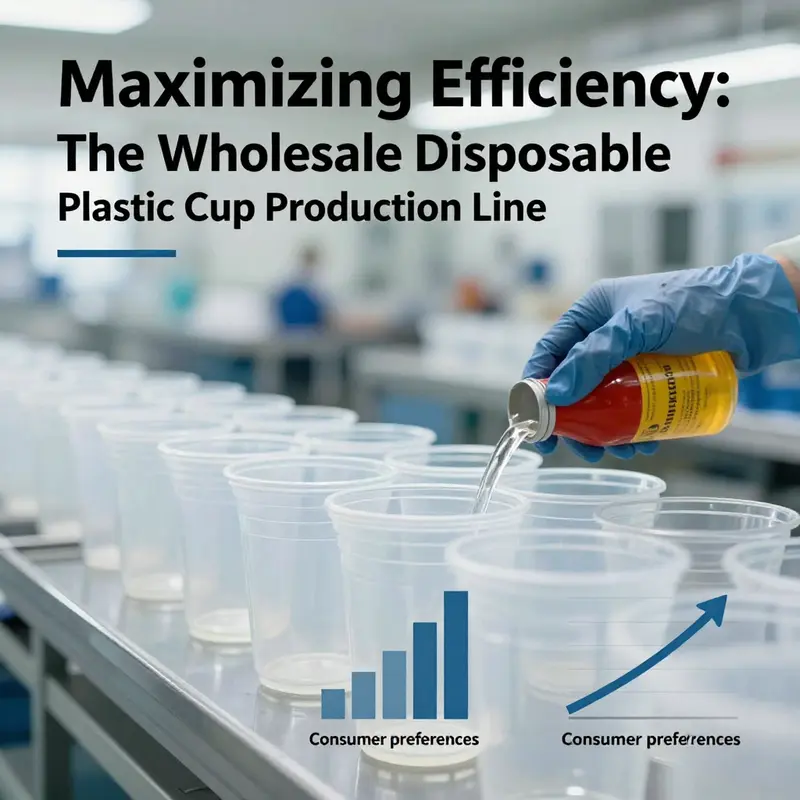
The wholesale disposable plastic cup production line is at a crossroads where efficiency, resilience, and adaptability are no longer optional—they are the precise metrics by which a supplier is judged. The market is expanding not merely because demand for single-use packaging remains high, but because the quality and reliability of the systems that produce these cups have become a competitive differentiator. In the wake of growing convenience-oriented consumer habits, fast-service operations, and stringent hygiene standards, manufacturers are racing to scale while preserving precision. The result is a landscape that rewards lines capable of continuous improvement, rapid reconfiguration, and close alignment with end-user needs across food service, beverage, and even laboratory applications. The trajectory through 2033, as indicated by industry analyses, points to a robust CAGR driven by the same undercurrents that power fast-food expansion, ready-to-drink beverages, and the demand for hygienic, on‑the‑go packaging. In Asia-Pacific, the story is particularly pronounced. Hubs in provinces such as Sichuan and Guangdong have evolved into high-volume, cost-competitive centers where automation, logistics, and material procurement converge to deliver scalable manufacturing capacity. This regional specialization does more than supply local markets; it fuels a global supply chain where time-to-market and customization capacity become the new currencies of competitive advantage.
Behind the headline figures lies a convergence of technologies that redefine what a production line can deliver. Modern cup-making lines are no longer monolithic machines dedicated to a single task; they are integrated ecosystems that weave forming, filling, sealing, labeling, and even palletizing into a single, orchestrated workflow. A line may begin with thermoforming or extrusion-blow forming to produce a range of cup shapes—from tapered to straight-walled—and then feed into a sequence of automated stations that apply lid foils or film seals, print branding, and verify dimensions. The advantage is twofold. First, there is the obvious throughput gain: fewer manual handoffs reduce bottlenecks and human error, boosting consistent output and allowing larger orders to be fulfilled with reduced labor input. Second, the consistency is brand-defining. For large-scale operators who service international chains, the ability to meet exacting tolerances in wall thickness, diameter, and sealing integrity is essential to maintain uniform performance across markets and seasons.
A central theme in the current generation of lines is automation with intelligent control. The incorporation of automated labeling, capping, and palletizing systems has evolved from a competitive edge into an industry baseline. These features are not merely convenience; they are risk mitigators. For brands that require strict packaging standards and traceability, automated labeling ensures accurate lot coding and barcodes, while robotic pallets guarantee stack uniformity that translates into predictable pallet heights on shipping docks and in warehouse racking. The capability to adjust line speed, seal type, and lid compatibility at the press of a control panel means manufacturers can quickly pivot between products—say from a 200 ml transparent cup for a cold beverage to a 500 ml cup designed for fruit juice—with minimal downtime. The broader implication is a market that supports both massive single-product runs and diversified, on-demand production. In this context, the ability to integrate proof-of-concept trials, small-batch validations, and scale-up sequences within a single facility becomes a decisive factor for buyers evaluating long-term supplier viability.
Material selection also anchors competitiveness. Polypropylene (PP) and polystyrene (PS) remain the workhorses of cold- and semi-solid product packaging due to their clarity, rigidity, and cost efficiency. Yet every material choice carries trade-offs. PS offers admirable stiffness but often falters in hot beverage applications due to brittleness and lower heat resistance. PP provides better heat tolerance and impact resistance, making it a versatile option for cups used with both cool and warm contents. Buyers increasingly weigh the lifecycle economics of these materials against their environmental footprints and regulatory expectations. The emergence of biodegradable and recyclable alternatives—such as PLA-based cups derived from renewable feedstocks—adds another layer of strategic consideration. Even if the current market remains anchored in conventional plastics for most high-volume lines, the push toward sustainability shapes product development roadmaps, supplier selection, and customer communications. For manufacturers, this means engineering cups that retain performance while opening avenues for certified green branding and circular-economy considerations.
Supply reliability has never been more central to competitiveness. Purchasers are moving beyond standard certifications to demand measurable operational indicators that reflect real-world performance. Three benchmarks have become common in supplier evaluations: the duration of typical production cycles for full-container loads, the speed of trial-order delivery, and the geographic or logistical proximity to an integrated ecosystem of service providers. In practical terms, many buyers now expect cycle times of roughly 15 to 30 days for a full container load, reflecting not only the line’s throughput but the end-to-end reliability of molds, timing belts, and downstream packaging. They also seek rapid trial orders—often 7 to 10 days for quantities in the range of 5,000 to 10,000 units—to accelerate product testing, branding decisions, and initial market introductions. Proximity to an integrated supply cluster—a network where mold makers, packaging specialists, and logistics providers sit within a few dozen kilometers—can substantially trim lead times and coordination costs. In major producing hubs, such clustering is a familiar advantage; it reduces risk during ramp-ups and creates a responsive ecosystem where a change in wall thickness or print design can be prototyped and implemented with minimal friction. These dynamics translate into a value proposition for buyers who must balance price with dependable delivery and customization capabilities. In practice, such ecosystems enable not only lower unit costs but also faster time-to-market and greater flexibility to accommodate branding or design requests, including custom logos and print options that align with international or regional branding requirements.
Strategic sourcing in this realm involves choosing partners with demonstrated technical compatibility, robust process control, and a long-term service commitment. A line that supports material thickness ranges from roughly 0.2 to 1.2 millimeters, offers stable process control across a spectrum of cups, and provides maintenance and spare parts with predictable lead times becomes attractive for buyers seeking durability and uptime. The economics of customization also matter. The capability to manufacture a broad suite of cup sizes and configurations while maintaining competitive pricing—down to the neighborhood of a few tenths of a cent per unit in bulk scenarios—defines market leaders who can respond quickly to retailer demands or promotional campaigns. In this context, the procurement strategy shifts from simply acquiring equipment to fostering a collaborative supply chain that emphasizes aftersales service, contamination control, and ongoing process optimization. The resulting value is not only a lower price tag but a more dependable partnership that supports ongoing product introductions and seasonal campaigns without destabilizing production.
Against this backdrop, the market’s future direction is shaped by sustainability aspirations and regulatory developments. While the current momentum remains anchored in efficient, scalable, and affordable conventional plastic production, there is a steady undercurrent pushing toward recyclability and biodegradability. The transition is gradual and selective, reflecting the realities of material performance, consumer expectations, and the commercial readiness of downstream recycling streams. Still, the lure of sustainability is undeniable. Brands increasingly seek to position themselves as responsible packaging providers, and manufacturers respond by designing lines that can accommodate alternative resins or post-consumer recycled content without sacrificing speed or reliability. The result is a pragmatic balance: lines that can deliver high-volume output with the flexibility to incorporate greener options when the economics and performance align. For suppliers, the strategic implication is clear—invest in modular, scalable lines that can adapt to evolving material choices, maintain quality standards across a diverse product range, and communicate a transparent sustainability narrative that resonates with retailers and end-users alike.
The market’s competitive dynamics also rely on clear regional strengths and the ability to leverage local ecosystems. In the Asia-Pacific arena, cluster-based manufacturing allows better coordination across the supply chain. Molds, packaging specialists, and logistics operators in close proximity reduce not only lead times but also risk through shared infrastructure and know-how. This proximity also fosters rapid iteration, enabling manufacturers to test new wall geometries, seal strengths, and labeling approaches in near real time. For buyers, this translates into reduced supply risk and an increased likelihood of meeting tight launch windows for new products or limited-edition promotions. The net effect is a marketplace that rewards suppliers who can demonstrate a track record of stable outputs, adaptable line configurations, and a willingness to align production schedules with the shifting rhythms of the consumer market.
To illustrate the practical implications of these trends, consider the dimension of customization. A modern production line may satisfy a diverse portfolio of product formats, including small lab-style cups suitable for sampling or testing, mid-size cups designed for beverages, and larger cups intended for desserts or ready-to-eat items. The material science underpinning these formats remains a guiding constraint; walls must be thick enough to resist deformation, lids must seal reliably for transport, and printing must withstand thermal exposure during storage and display. The capacity to deliver such ranges while maintaining consistent quality hinges on precise process control, early-stage material testing, and a tight feedback loop between design, production, and quality assurance teams. In practice, manufacturers committed to this level of versatility often invest in digital-monitoring systems that provide real-time data on cycle times, seal integrity, and defect rates. The insight gained from these systems informs continuous improvement programs and helps sustain a competitive advantage as brands push for more diverse packaging assortments and more aggressive promotional calendars.
As buyers navigate this evolving landscape, there is a natural tension between price and performance. The aggregate effect of automation, clustering, and process standardization tends to compress costs and shorten lead times, enabling price-competitive offerings without sacrificing quality. The economic calculus is further influenced by scale effects; as lines run at higher volumes, unit costs decline, and the capacity to underwrite rapid sampling and customization improves. Yet the market remains sensitive to fluctuations in energy costs, plastic resin prices, and freight logistics—factors that can shift the relative attractiveness of different production configurations. In response, suppliers emphasize not only mechanical reliability but also energy efficiency, waste minimization, and streamlined downstream handling. Small gains in efficiency aggregate into meaningful reductions in operating cost over time, reinforcing the case for investment in modern lines that emphasize control, automation, and modular flexibility.
For readers seeking a concrete reference point on the broader technology trajectory and regional dynamics, industry analyses project sustained growth through the coming decade, with Asia-Pacific firms leading the charge in both capacity and cost efficiency. The emphasis on automation, material compatibility, and supply-chain resilience will continue to define the winners in this space. In addition, the market will increasingly reward lines that can blur the line between traditional manufacturing and packaging execution. A line that forms, seals, prints, and labels in a single continuous flow, while offering small-batch capabilities for customization and large-batch productivity for standard products, will be the archetype of competitive advantage. In this sense, the wholesale disposable cup production line remains a bellwether for broader manufacturing trends: the fusion of precision engineering, data-driven process control, and an ecosystem approach to supply chain management.
For readers who want a tangible glimpse into related packaging categories and trends, a related reference on sustainable packaging options offers context for how markets are balancing performance with environmental considerations. See this example of an eco-friendly, disposable, paper-based option as a demonstration of how brands communicate sustainability while maintaining convenience and speed: disposable single-wall food-grade paper cup with lid. The example underscores a broader industry pattern: packaging lines must not only deliver on functional quality but also support flexible branding and sustainability narratives as part of a competitive package.
Ultimately, future competitiveness will hinge on the ability to combine automated precision with strategic sourcing and responsible material choices. Buyers will favor suppliers who can demonstrate a stable track record, rapid trial capabilities, and proximity to integrated ecosystems that shorten cycles from concept to shelf. Suppliers who can offer modular, upgradeable lines that accommodate evolving resins and packaging formats—while sustaining throughput and minimizing waste—will be well-positioned to meet the demands of retailers and consumers alike. In this sense, the market trend is not a single technology shift but a coordinated movement toward smarter lines that adapt to shifting consumer tastes, regulatory expectations, and sustainability commitments. The result is a dynamic, interconnected production landscape where continuous improvement, reliability, and the capacity to scale without sacrificing quality define the leaders of wholesale disposable cup manufacturing.
External resource: https://www.marketsandmarkets.com/Market-Reports/plastic-cup-making-machines-market-1896.html
Final thoughts
As the market for disposable plastic cups evolves, businesses in the beverage sector and catering industry must stay abreast of advancements in production technologies, economic trends, and environmental considerations. By investing in efficient wholesale disposable plastic cup production lines, you not only improve your operational efficiencies but also position your business favorably against competitors. Embracing innovative machinery and sustainable practices will enhance your brand’s reputation and appeal to a growing segment of eco-conscious consumers. The future is bright for those who adapt swiftly to these changes.