

Food delivery care packages have emerged as a significant way to convey support during times of need, whether for recovery or overwhelming life changes. These thoughtfully curated bundles often include nurturing meals, such as comforting soups, recognized for their emotional and physiological benefits. As we navigate various life challenges—be it the aftermath of an illness, the chaos of a new routine, or simply feeling overwhelmed—food delivery care packages serve as powerful reminders of care and community. Each chapter will explore an essential aspect of food delivery care packages, from their importance and nutritional balance to the geopolitical factors influencing their popularity, the cultural significance they hold, and the technological innovations shaping their delivery to communities across the globe.
Care Packages as Gentle Practice
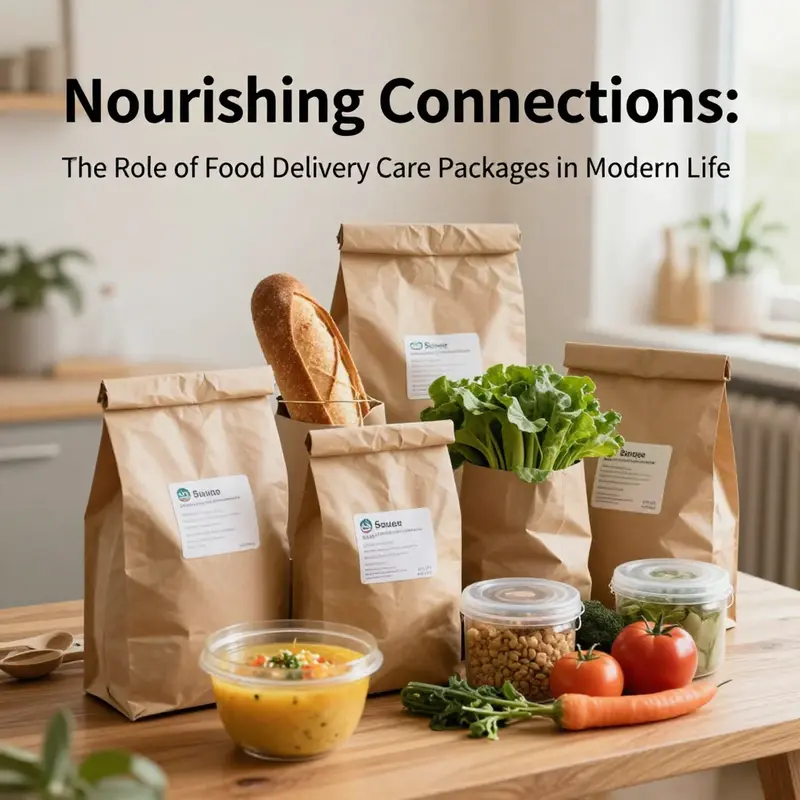
Food delivery care packages arrive not just to feed but to acknowledge care. They signal presence when routines feel fragile and offer a sense of belonging through a thoughtful mix of meals, textures, and small comforts. The best packages balance nourishment with autonomy, giving recipients options that fit daily energy and appetite. Packaging and presentation matter, conveying respect before the first bite, while sustainable materials align with broader values. In moments of recovery or disruption, a well-curated box can become a small ceremony of care that travels across distances and miles, turning a remote address into a place that feels a little more like home.
Nourishing Variety: Crafting Nutrition-Sensitive Food Delivery Care Packages
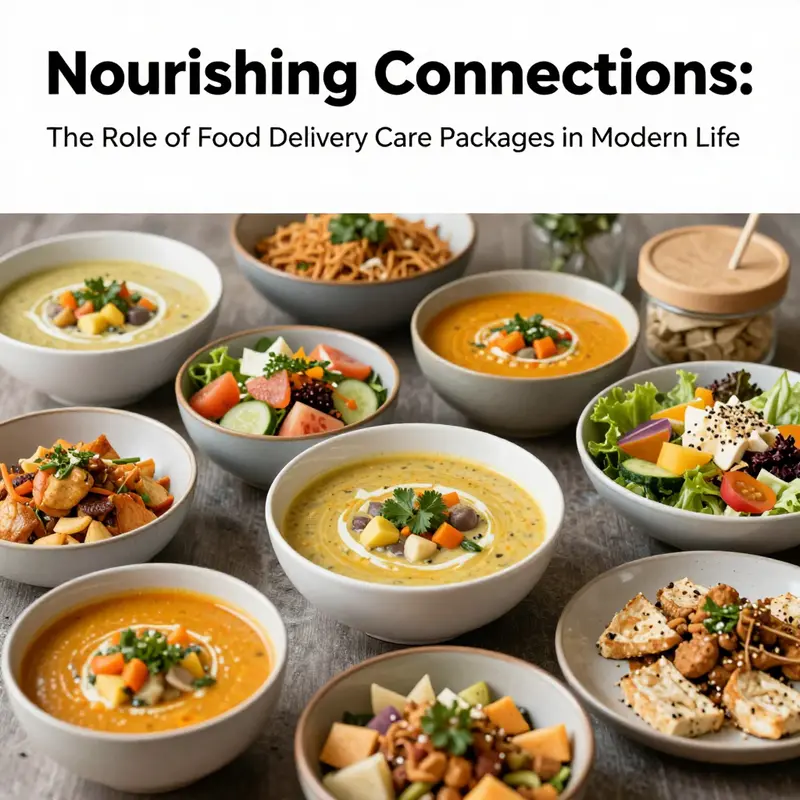
A care package intended for nourishment and comfort arrives with more than food. It carries intention, memory, and a quiet promise to ease a difficult season. When thoughtfully designed, a food delivery care package becomes a living container of care: it offers not only sustenance but also a sense of control in times of fatigue, stress, or disruption. Central to this promise is a careful balance of nutrition, texture, and taste. A well-balanced package can meet fluctuating appetites while still delivering on the need for nourishment that supports recovery and sustained well‑being. The simplest soups, mindful soups, and more complex bowls each serve a dual purpose: they invite the recipient to eat with ease and to savor a moment of warmth that says, without ostentation, that someone is with them through the day. The value of flavor diversity here goes beyond pleasure. It can stimulate appetite, steady energy, and a sense of normalcy when routines feel unsettled. The best packages acknowledge that recovery is rarely linear. Some days call for creamy comfort, other days for a leaner broth, and still others for a peppery lift to spark appetite. In practice, that means a thoughtful spectrum of textures and flavors, including creamy, clear, spicy, and mild options, so recipients can choose in the moment what their body is asking for. This sensory variety matters not merely for taste but for how the body processes nourishment during stress. The emotional resonance of familiar flavors should not be underestimated: warmth in the bowl can anchor a sense of home when the world feels unfamiliar or overwhelming. Beyond sentiment, there is a practical dimension. A well-conceived package is organized around portions that match different circumstances. A recovering patient might prefer single-serving meals that feel approachable and easy to heat, while a family managing a new routine may need larger servings that reduce meal prep time. This flexibility is essential because recovery and stress can shift appetite from day to day, and a package that accommodates those shifts is more likely to be fully consumed and beneficial. In this way, variety serves a purpose beyond novelty. It becomes a safeguard against nutritional gaps caused by appetite variability, ensuring that the recipient receives a continuum of nourishment that supports healing. The careful curation of texture—creamy for ease, clear broths for hydration, and heartier, chunkier bites for satisfaction—also supports sensory satisfaction when hunger signals are faint or erratic. A consistent but evolving menu helps maintain interest while preventing monotony, which can erode intake over time. The role of dietary inclusivity in care packages is equally important. Many recipients today require choices that accommodate gluten-free, dairy-free, vegan, low-sodium, or keto-friendly diets. The existence of clearly labeled options is not merely a convenience. It is a statement of respect for health constraints and personal identity. When a package explicitly offers these options, it signals that the giver has taken the recipient’s health goals seriously and understands that food can be both comforting and medically appropriate. In a climate where food is often linked to both comfort and health outcomes, the availability of inclusive options can transform a gift from indulgence into a responsible, supportive intervention. The importance of compatibility with personal or cultural food preferences cannot be overstated. Matching the cuisine type—be it Italian, Japanese, Mediterranean, farm-to-table, or fusion—to the recipient’s tastes can deepen the emotional impact of the gesture. A plate that echoes someone’s culinary memories or current cravings makes the experience more intimate and meaningful. This alignment with preferences transforms food delivery from a gesture of hospitality into a personal act of empathy, conveying that the giver not only recognized a need but also listened to the person’s history and tastes. Portional flexibility complements flavor and inclusivity. Packages that offer a range—from single-serving indulgences to family-style feasts—allow coordinators to tailor meals to the recipient’s living situation. A single serving might be ideal for someone living alone who is testing appetite, while a larger selection can benefit households or caregivers who share the responsibility of daily meals. The ability to mix and match, so the recipient can decide which items feel most nourishing on a given day, reinforces autonomy at a moment when many people feel their autonomy wane. It also supports practical logistics: it is easier to heat, store, and distribute meals when the package design anticipates real-life routines and constraints. The broader challenge, of course, is to translate goodwill into nourishment that sustains rather than merely fills. Even well-intentioned food aid can fall short without a deliberate focus on nutrition science and ongoing personalization. A study conducted in a major European city highlighted critical gaps in charitable food aid, revealing that one-person households often miss essential nutrients such as protein, calcium, zinc, and vitamin D, while larger households can struggle with micronutrient balance. At the same time, many food aid packages tend to exceed recommended levels of fat and sodium. This underscores a systemic tension: generosity alone is not enough. To be truly helpful, care packages must be planned with nutritional balance in mind, considering the recipient’s household type, energy needs, and health goals. The implication for care-package designers is clear. The most effective offerings are those that balance taste, portion size, and dietary inclusivity in a way that respects long-term health as much as immediate comfort. They must combine culinary appeal with nutritional science, ensuring that warmth and texture do not come at the expense of essential nutrients. The emphasis on gourmet ingredients should be coupled with a commitment to safety and balance. High-quality ingredients can deliver both flavor and nourishment, but they should be chosen with an eye toward overall dietary adequacy. This means seeking sources that provide robust protein options, sufficient fiber, and a spectrum of micronutrients, while avoiding excessive sodium, saturated fat, and added sugars. The result is a menu that feels indulgent yet responsible, sophisticated yet accessible, and deeply considerate of the recipient’s health trajectory. In practice, that balance requires more than a clever menu. It calls for thoughtful sourcing, precise labeling, and a packaging strategy that preserves texture, aroma, and nutritional value. The packaging itself becomes part of the care plan: appropriate containers help maintain temperature, protect delicate ingredients, and make re-heating straightforward. A practical approach is to design packages with modular components that can be heated separately or together, preserving the integrity of soups, stews, grains, and vegetables. When possible, including a mix of soft and textured elements can accommodate a variety of swallowing or chewing abilities, which are common concerns among those recovering from illness. Packaging decisions also influence sustainability, a growing concern for many givers. Eco-friendly materials that keep meals secure while reducing waste align with the broader ethos of care: nourishment should heal without leaving a heavier environmental footprint. Within this framework, the inclusion of thoughtful, easy-to-use serving ware matters. For practical guidance on packaging options that support easy serving and clean-up, see disposable dinnerware and tableware. This reference helps ensure that the physical experience of receiving food mirrors the care expressed in the nutritional design. The interplay between nutrition, texture, and presentation is not accidental. It reflects an evolving understanding of how food gifts operate in care contexts. Comfort foods carry emotional resonance; when paired with balanced nutrition, they become powerful allies in recovery. The science behind comfort foods suggests that warmth and familiarity can improve mood and stimulate appetite, which in turn supports better intake and healing. This is the undercurrent that informs the pursuit of variety. A truly effective package does not rely on novelty alone but uses a structured palette of flavors and textures to address different appetite states, while staying anchored in nutritional adequacy. The goal is to move beyond a one-size-fits-all model toward a personalized standard that can adapt to the needs of diverse households and health situations. In doing so, it honors the dignity of the recipient, recognizes the caregiver’s effort, and upholds the principle that nourishment is a form of ongoing, compassionate care. The practical outcome is a care package that feels generous and thoughtful at every bite, with food that nourishes both body and spirit. As hospitality meets health, the resulting experience becomes a reliable bridge between moments of vulnerability and days that promise stability. The next chapter will explore how logistics and service design further shape the recipient’s experience, ensuring that the promise of nourishment translates into dependable, equitable access for people in diverse circumstances. External research continues to illuminate how comfort, nutrition, and routine intersect in meaningful ways, reminding us that food delivery care packages can be both healing and empowering when guided by evidence and empathy. For further reading on the emotional and physiological dimensions of comfort foods, see the external resource linked here. The Science and Soul of Comfort Food
Borders, Budgets, and Bowls: How Geopolitics and Economics Shape Food Delivery Care Packages
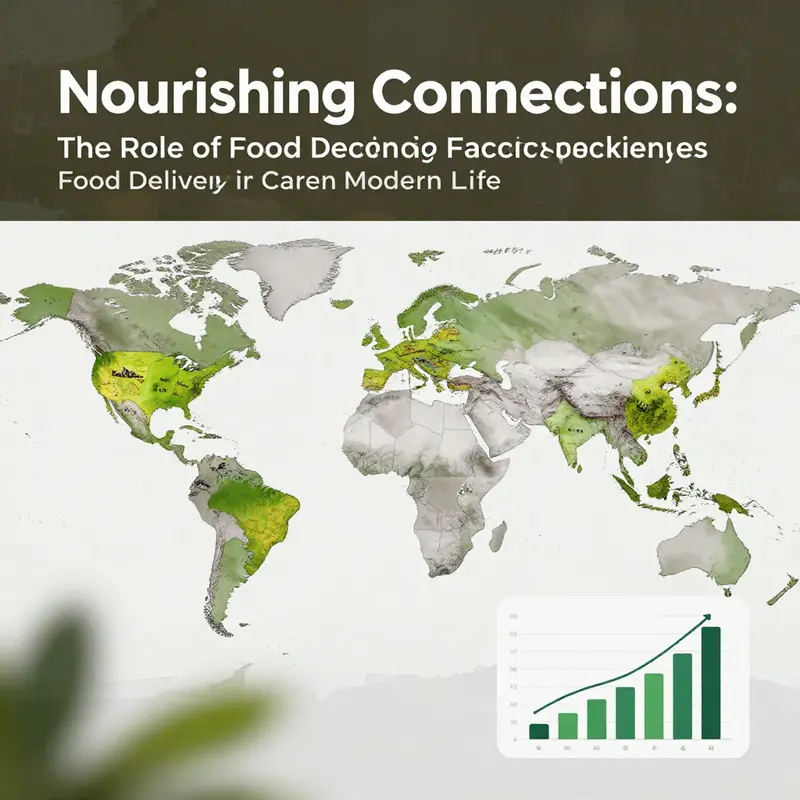
Care packages are more than food set in a box. They are a tangible signal of support that travels through complex systems—logistics networks, currency markets, and policy environments. In the same moment that a donor selects comforting dishes, they become participants in a larger conversation about how global events ripple into home kitchens. When we consider a food delivery care package through this lens, the topic shifts from simple goodwill to understanding the fragile interfaces that determine whether a bowl reaches a table with warmth, nutrition, and a sense of continuity. Geopolitics and the economy are not abstract backdrops here; they are active forces shaping what is possible, affordable, and timely for both giver and receiver. As a practical matter, the reach and reliability of these care packages hinge on how smoothly supply chains function under pressure, how currency shifts affect pricing, and how sanctions or regulatory changes influence sourcing. These factors do not merely alter cost; they redefine what can be offered, how often, and in what form, especially for families and individuals navigating recovery or upheaval. In this light, the care package becomes a lived example of resilience under constraint, a demonstration of how empathy can adapt to changing horizons of risk and opportunity. The emotional value of a warm bowl remains potent, but the delivery context gains new texture when we recognize that temperature, texture, and aroma travel alongside invoices, routes, and compliance checks. The result is a more nuanced understanding of care—one that blends nourishment with a sober awareness of the conditions that enable or restrict it.
Conflict zones and regions facing instability provide stark illustrations of these dynamics. In areas where infrastructure has been damaged and security risks multiply, transport costs rise sharply and delivery timetables become fragile. Even small delays can cascade into missed meals, spoiled perishables, or unmet dietary needs. In Ukraine and similar contexts, the war has disrupted road networks, rail schedules, and port functionality, while damage to storage facilities reduces the shelf life of ingredients and ready-to-eat items alike. Such disruptions are not merely logistical inconveniences; they directly affect the ability to provide reliable nourishment during vulnerable moments. The ripple effects extend to the costs donors face. When fuel prices surge or insurance premiums rise, the price of a single package can increase dramatically. Donors who hoped to send consistent support may, out of necessity, scale back or alter the composition of their gifts to maintain reach while managing budgets. The buyer’s market, in other words, becomes the donor’s field of strategic choices.
Beyond the immediate fragility of transport, geopolitical environments induce broader economic pressures that shape sourcing and pricing. International sanctions and currency fluctuations create a moving target for ingredients and packaging materials. Suppliers may diversify away from high-risk markets, which can limit availability or shift costs upward. Even if a back-pocket budget remains constant, the actual purchasing power of that budget can erode quickly as inflation climbs and energy prices rise. In many places, higher energy costs ripple into every stage of food production and delivery, from refrigeration to last-mile transportation. The combined effect is a tighter margin for care-package providers, who must balance the desire to offer varied, nourishing options with the reality of constrained resources. The challenge is not simply to minimize costs but to preserve the intention behind the gesture: to convey care through nourishment that respects the recipient’s tastes and dietary needs, while acknowledging the broader economic terrain. In this landscape, thoughtful packaging also becomes part of the equation. Packaging decisions—what can travel reliably, how long items stay fresh, and what materials withstand rough transit—are shaped by both cost pressures and the volatility of supply chains. For instance, choosing packaging that optimizes shelf life without adding prohibitive weight or cost can be the difference between a package arriving intact or arriving late and depleted. To understand some of the practical packaging considerations that support resilience in delivery, one can explore packaging and printing options, which cover a range of materials, customization, and protective features that suit fluctuating supply realities. packaging and printing options.
The picture also includes how donors and recipients approach dietary inclusivity under uncertain conditions. A well-designed care package recognizes that appetite and taste can swing during recovery or stress. It offers variety—creamy, clear, spicy, and mild options—while maintaining balance in flavor and texture. In regions facing economic strain, this balance extends to sustainability and accessibility. Packages increasingly incorporate gluten-free, dairy-free, vegan, low-sodium, and keto-friendly choices, ensuring that dietary restrictions do not become barriers to nourishment. The ability to tailor portions—from single servings to family-style feasts—becomes a critical tool for adjusting to changing household circumstances and the constraints of transportation and storage. The social value of these choices is substantial: diet-inclusive options convey respect for the recipient’s needs and circumstances, reinforcing the caregiver’s intent to provide not just calories but dignity and autonomy in meal planning.
A broader takeaway is that geopolitics and economics do not merely alter the price tag of care; they shape the entire constellation of decisions that define a delivery’s meaning. Suppliers who can pre-empt volatility by diversifying sourcing, or who invest in regional or domestic substitutes, are better positioned to sustain continuity. Flexible menus that can pivot toward available ingredients during shortages help preserve both nutrition and morale. This adaptability matters not only for individual households but also for communities that rely on steady support during crises. The human story behind every delivery remains central—the mother who looks forward to a comforting soup after a long day, the patient who measures progress in spoonfuls of broth, the caregiver who finds a way to keep routine intact when the world outside feels unstable. In these stories, the shop-wought realities of global markets and policy debates become part of the backdrop, not the foreground. The care package remains a vessel of care, but its content, timing, and cost are now understood as responsive to a world where borders, budgets, and weathering crises continually reshape what is possible.
As organizations and individuals navigate this terrain, a practical ethic emerges. Build from resilience: diversify suppliers, invest in shelf-stable and easy-to-transport items, and design meals with multiple dietary lanes in mind. Build for adaptability: use packaging that preserves quality across longer transit windows and variable climate conditions, and create logistics plans that anticipate disruptions. Build for transparency: communicate clearly with recipients about what to expect, potential delays, and substitutions that preserve the package’s intention. And build for empathy: honor cultural preferences, sensory comfort, and the emotional resonance of a familiar meal. These principles do not erase geopolitical complexity, but they translate it into compassionate, concrete action. The care package thus becomes not only a response to immediate need but a bridge across uncertainty, a quiet declaration that care Endures even as global currents shift. In this sense, the act of delivering nourishment is also a form of local stewardship within a wider, unsettled world.
External resource and broader context can deepen this understanding. For readers seeking to connect macro factors with real-world food systems in fragile regions, the referenced study offers a broader analysis of how geopolitics and socio-economic pressures shape food supply dynamics in Ukraine and similar contexts: Understanding the Geopolitical and Socio-Economic Factors on the Ukrainian Food Supply.
Wrapped with Meaning: The Cultural Fabric of Food Delivery Care Packages

Food delivery care packages are not merely meals delivered to a doorstep; they are messages in edible form, carrying values, memory, and social ties across distance and time. In many cultures, food is a language that translates care into practice. The act of assembling, shipping, and unveiling a package binds donors and recipients into a shared ritual, a small ceremony of recognition that can sustain someone through illness, transition, or overwhelm. The packages become cultural artifacts that encode expectations about nourishment, reciprocity, and belonging. They travel with a sense of place—comfort foods, familiar flavors, textures that evoke home—and they arrive carrying an expectation that the sender has listened, observed, and chosen with intention. In this way, the practice aligns with larger traditions of care: neighbors visiting a sick friend, a family gathering around a table, or a community offering support when times are tough. The modern delivery model simply scales this intimate gesture, making it precise, portable, and reliably timely.
Across Japan, the meaning embedded in a wrapped gift is inseparable from the wrapping itself. Gift-giving is a social lubricant, a way to acknowledge gratitude and to reinforce social bonds with humility and respect. The care package inherits this ethos: careful selection, quiet elegance, and packaging that signals thoughtfulness as much as flavor. The wrapping may emphasize soft colors, restrained ornament, and precise fastening—an outward sign of inward care. The content matters, but not as much as the sense that someone has treated you with care rather than convenience. This is why the gesture translates into a gentle conversation about gratitude, humility, and the long arc of relationship, not a single transaction. The receiver receives more than nourishment; they receive a message that someone noticed their needs and chose to invest in their well-being. In such contexts, the act of delivery becomes a ritual of reconciliation, of smoothing social frictions, and of reaffirming belonging.
In China, especially during festivals, food delivery care packages fuse appetite with auspicious symbolism. The foods themselves carry layered meanings—rice cakes for prosperity, dumplings for family unity, colors that signal luck. A holiday package can become a portable tableau of regional heritage, with designs that echo ancestral rituals and festive aesthetics. Contemporary packaging designers have begun to blend traditional symbols with modern materials and formats, creating containers that feel ceremonial yet practical. Yet the reception of these efforts depends on sensitivity to color schemes and ritual associations; a palette that leans too heavily into red and gold can evoke a funeral ambience for some viewers, even as it seeks to celebrate abundance. The best packages honor heritage while inviting contemporary appreciation, allowing recipients to savor both the taste and the memory of shared customs. In this way, a care basket becomes a microcosm of cultural continuity, a portable altar of welcome that travels across cities and generations.
At the same time, the cultural significance of these packages is expanding to include environmental stewardship. A growing proportion of care packages now arrive in packaging designed to reduce waste and to reflect a collective responsibility toward the planet. The shift toward paper-based and bio-based materials mirrors a larger social value: care for others and care for the world are inseparable. When the container and the contents align with ecological ethics, the act of gifting signals that generosity extends beyond the person to the place they inhabit. In practice, this means choosing compostable plates, recyclable boxes, and minimal yet meaningful decoration. It also means acknowledging the recipient’s own values, dietary needs, and home environment, so the package feels neither wasteful nor excessive. The packaging itself becomes a compact manifesto about how to live well together.
For givers, the care package offers a canvas for tailoring nourishment to evolving needs. Recovery can alter appetite, taste, and energy; a well-assembled bundle recognizes this and offers variety and balance—creamy, clear, spicy, or mild options; textures that soothe or excite; and dietary inclusivity like gluten-free, dairy-free, vegan, or low-sodium choices. Beyond nourishment, the emotional tone matters: a note of encouragement tucked among the bowls, or a small token that echoes a shared memory. Matching the recipient’s cuisine preferences can turn a practical gift into a deeply personal one. A package that speaks to Italian warmth, Japanese precision, or Mediterranean zest does more than please the palate; it signals that the giver has paid attention to identity and memory, creating a sense of continuity across changes in health, routine, or daily life. The ritual of delivery, the moment of opening, and the first bite combine to form a sustained thread of care that can outlast the crisis that prompted the gesture.
Design becomes a language in itself. The way a box opens, the texture of the tissue, the scent of the packaging, the sequence in which items are revealed—all these choices shape the recipient’s experience as surely as the soup inside. A well-considered package communicates attention, respect, and generosity, turning a practical service into a social rite. Bringing together nourishment with cultural meaning requires nuance: understanding what a particular symbol or color denotes in a given community, avoiding missteps, and offering options that honor both tradition and personal taste. The resulting experience is a reminder that care work travels far beyond the kitchen; it moves through rituals of gifting, expectations about reciprocity, and the shared memory that packaging helps preserve. For designers and providers, the challenge is to honor diverse sensibilities while sustaining a universal message: food can be a bridge that crosses distance, illness, and time, binding people through shared humanity.
As these practices evolve, the packaging itself becomes an increasingly important component of care. In addition to choosing flavors and portions, senders may gravitate toward packaging options that emphasize sustainability and tactile care. For instance, opting for paper packaging that highlights natural textures and minimal ornament can communicate both thoughtfulness and environmental mindfulness. See more about these approaches at the site that covers paper packaging options. paper packaging options. Looking outward, the broader literature on gift exchange shows that even small tokens can nurture social bonds in time of need, reinforcing communal values and shared responsibilities across generations. For readers seeking a broader frame on gift-giving culture, a concise overview helps illuminate why food delivery care packages feel so resonant across cultures and why their design matters, not just their contents.
External resource: https://www.britannica.com/topic/gift-giving
Tech-Driven Comfort: How Smart Systems Elevate Food Delivery Care Packages
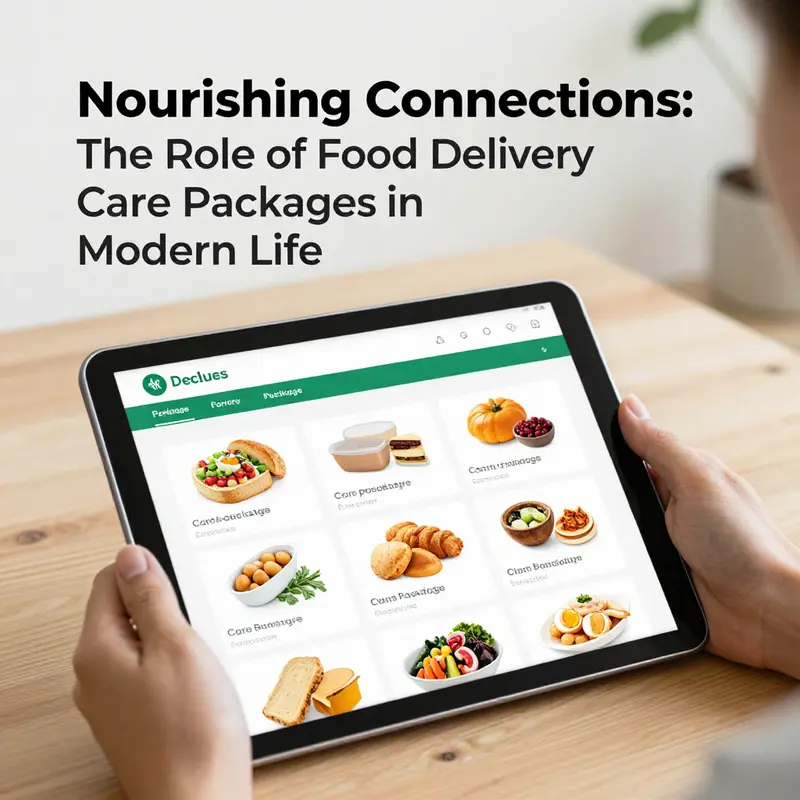
Every care package carries the weight of intention, a tangible signal that someone is seen and cared for. Over time, technology has begun to weave into nourishment and kindness, shaping how meals are prepared, tracked, and delivered. In modern practice, care packages are not just about what arrives; they are about how safely and personally it arrives. The convergence of smart packaging, AI-driven customization, and autonomous delivery transforms a thoughtful gesture into a reliable service that respects dietary needs, medical constraints, and changing appetites while preserving warmth. The impact goes beyond convenience; for elderly recipients, recovering patients, or anyone navigating new routines, these innovations can reduce anxiety around meals and foster a sense of continuity that steadies daily life.
At the heart of this shift lies IoT-enabled packaging. Tiny, resilient sensors monitor temperature, humidity, and the integrity of the box from dispatch to opening. Temperature control affects safety and nutrition as much as taste. Perishable ingredients and ready-to-eat meals degrade if exposure to heat or cold is prolonged. Real-time data feed caregiver dashboards and clinician portals, letting trusted supporters verify that conditions stay within safe ranges. For a family member overseeing a loved one’s recovery, this visibility replaces guesswork with reassurance and makes the journey auditable.
Beyond safety, AI-powered platforms tailor care packages to medical and cultural needs. Systems can translate clinician instructions into nutritional targets, account for allergies, and honor regional cuisines. A post-operative menu might emphasize high-protein, easy-to-digest options, while a heart-healthy plan could prioritize low sodium and fiber-rich choices. AI serves to support human judgment with speed and precision, letting caregivers curate a week of meals that balance macro- and micronutrients, adapt portions as appetite shifts, and swap items based on recovery milestones. These platforms run in cloud ecosystems designed to protect privacy while enabling seamless updates to ongoing orders.
Delivery methods are also evolving with autonomous vehicles and drone pilots, expanding access in rural or underserved areas. When speed and reliability matter, a faster cadence can stabilize meal routines and reduce missed meals. The design challenge is to keep safety, nutrition, and personal connection intact even as technology moves logistics forward. Interfaces should be simple for non-tech users, with clear steps for accepting, refrigerating, and storing deliveries, so caregivers and recipients can trust the process as much as the product.
Together, these shifts reshape the caregiving landscape. Real-time condition data can inform health decisions; automated inventory and dynamic scheduling cut waste and adapt to shifting days. The result is a care package that behaves like a partner, evolving with the recipient’s health journey and daily rhythms, while packaging and messaging reinforce human connection. A well-crafted package becomes a tangible reminder of care, not just sustenance, and a platform for dialogue between families, clinicians, and suppliers.
As practitioners explore these innovations, it is essential to address privacy, interoperability, and cost. Robust consent, transparent data practices, and standards-based integrations help keep trust intact as ecosystems scale. When designed with dignity at the center, care packages can deliver nourishment and comfort with the confidence that technology amplifies empathy rather than eclipsing it.
Final thoughts
Food delivery care packages have evolved into much more than simple meals; they represent an essential gesture of compassion and community support. Through the chapters, we’ve explored their significance, nutritional diversity, geopolitical influences, cultural relevance, and the technological advances shaping their distribution. As food delivery care packages continue to evolve, they provide nourishment in every sense—nourishing bodies, hearts, and connections across communities. Emphasizing thoughtful choices and the needs of diverse populations will ensure these packages remain impactful symbols of care.