
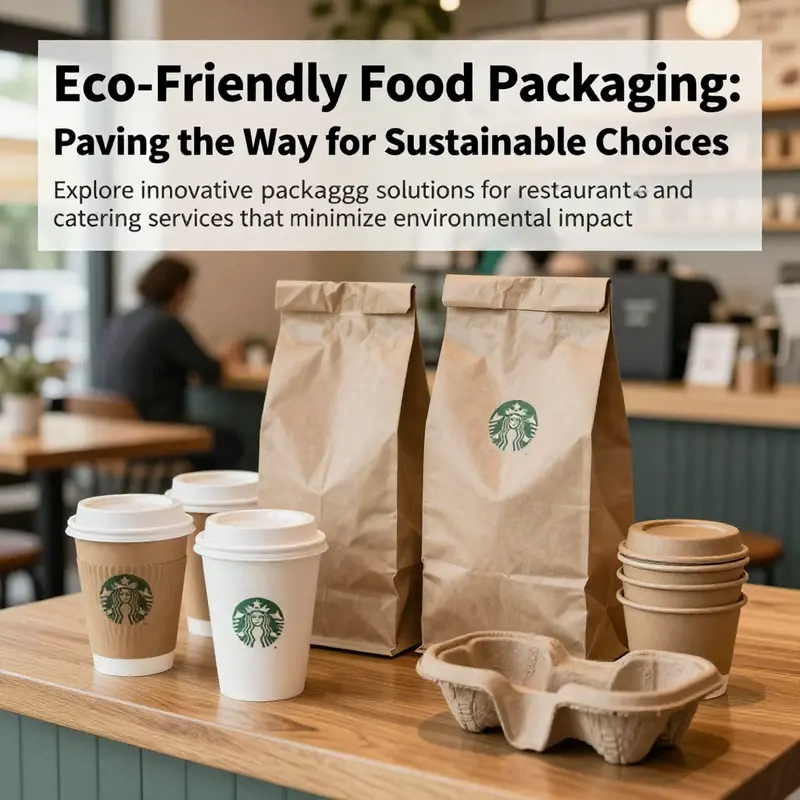
The food industry is increasingly looking for ways to mitigate its carbon footprint, especially in packaging. For bubble tea shops, beverage chains, restaurants, food trucks, and catering services, sustainable packaging is not just a trend; it’s a responsibility. Adopting eco-friendly food packaging options can enhance brand reputation, attract eco-conscious customers, and meet regulatory demands. This exploration of compostable, reusable, and minimalist packaging will illustrate the best practices for reducing environmental impact and emphasize the importance of a holistic approach in making sustainable choices.
Breathing Life into the Box: How Compostable and Biodegradable Materials Redefine Eco‑Friendly Food Packaging
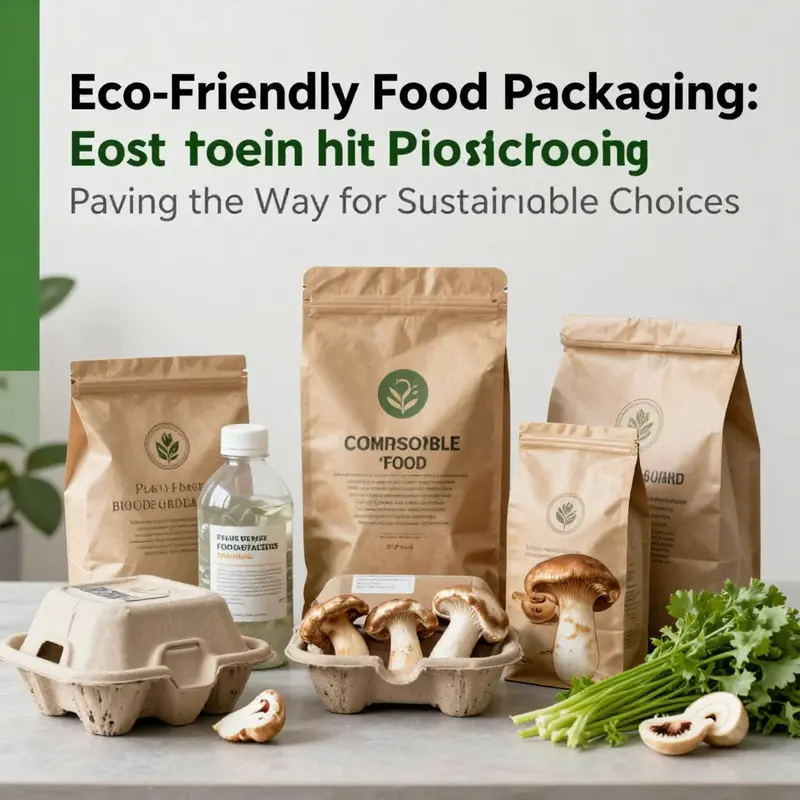
The shift toward truly sustainable packaging for food is a story of lifecycle thinking, not just a single clever material. At its heart lies the 4R+1D framework—Reduce, Reuse, Recycle, Recover, Degradable—an approach that urges designers, manufacturers, and regulators to look beyond the immediate act of packaging and to imagine what happens after use. Compostable and biodegradable materials sit at the forefront of this evolution because they offer a pathway for items that cannot realistically be reused or recycled in every context to return to the earth with minimal residue. But the promise of these materials is not automatic. It requires an integrated system of production, disposal infrastructure, consumer behavior, and credible certification. When these elements align, compostable and biodegradable packaging can meaningfully reduce pollution, conserve resources, and close the loop in a circular economy for food. In practice, this means choosing materials that are sourced from renewables, designed for end‑of‑life processing, and matched to the capabilities of local waste streams, while staying honest about the limitations and tradeoffs involved.
Among the most talked‑about materials are cornstarch–based bioplastics and polylactic acid, or PLA. Derived from renewable resources such as corn or sugarcane, these materials are positioned as alternatives to traditional polystyrene and other fossil‑based plastics. PLA is widely used for flexible films, wrappers, and compostable bags, and it has found its way into snack packaging, coffee cups, and light‑duty service ware. Its appeal is clear: lower lifecycle greenhouse gas emissions in some production scenarios and the promise of compostability under appropriate conditions. Yet compostability is not universal, and it is not a free pass to end‑of‑life bliss. PLA typically requires industrial composting facilities, which reach temperatures and residence times that ordinary home composting cannot reliably achieve. Without access to those facilities, PLA may not break down as intended, leaving residues or contaminating local recycling streams that are ill‑equipped to process it. Hence, the true environmental benefit rests on robust disposal infrastructure and clear consumer guidance.
Another material category that has captured imagination is mushroom packaging, or myco‑composites. These materials grow from agricultural waste and fungal mycelium into custom forms that can protect delicate foods or act as shipping inserts. The beauty of mycelium lies in its rapid, low‑energy growth process and its complete biodegradability. When disposed of, mushroom packaging breaks down in a relatively short time under the right conditions, returning organic matter to the soil and leaving little to no toxic residue. This makes mycelial packaging particularly appealing for protective uses where rigid or semi‑rigid forms are required during transit. Still, it is essential to evaluate feedstock sources, land use, and the end‑of‑life pathway, ensuring that growth conditions and subsequent processing do not introduce unintended environmental costs elsewhere in the system.
Paper and paperboard remain central to the eco‑friendly packaging dialogue, especially when sourced from responsibly managed forests and free from persistent plastic coatings or waxes. When forestry certifications such as FSC or PEFC are in place, and when coatings are minimized or eliminated in favor of purely paper or recyclable barrier layers, paper offers high recyclability, biodegradability, and a lower barrier to reprocessing streams than many plastics. The challenge with paper, however, is avoiding coatings that hinder recycling or compostability. A receipt, a liner, or an inner film that carries a plastic layer can compromise a whole recycling batch, even if the paper itself is sustainable. The same principle applies to paper that is lined with plastic or wax; these layers complicate disassembly and recovery and may negate the environmental gains at the end of life. The solution is deliberate design: opting for uncoated or compostable coatings, choosing barrier technologies that are compatible with composting or recycling streams, and ensuring certifications are in place so buyers and waste managers can trust the end‑of‑life performance.
A core takeaway is that compostable and biodegradable materials are not a universal replacement for all packaging needs. They excel in specific roles within a broader packaging strategy. For single‑use items such as cups, bowls, or wrappers that are not intended for prolonged reuse, plant‑based options like cornstarch‑based materials or PLA can substitute fossil‑based plastics when industrial composting is accessible. For packaging needs tied to protection during transit or for inserts inside shipments, mushroom packaging can provide a low‑impact, compostable alternative to conventional foams or plastics. For outer cartons, fresh produce wraps, or take‑out packaging, paper and paperboard offer a clean, recyclable pathway when produced under responsible forestry stewardship and free from intractable coatings. The objective is not a single “green” material, but a system that grows closer to a circular loop by aligning material choice with end‑of‑life realities and with the practicalities of local waste infrastructure.
The disposal and composting narrative is critical here. Even the most elegantly designed compostable material falls short if it cannot reach a facility that can properly process it. Industrial composting facilities operate at high temperatures and with defined residence times. Without collection streams that separate compostable packaging from other waste, these materials may end up in landfills where anaerobic conditions slow biodegradation. Sorting systems and consumer participation determine whether compostable packaging actually contributes to soil‑forming compost. This is a reminder that the environmental credentials of compostable materials hinge on end‑of‑life management. The presence of a compostable label does not guarantee environmental virtue if the local waste system cannot act on it. Conversely, materials that are easily recyclable within existing municipal streams can offer substantial benefits when properly collected and processed. The best outcomes emerge when municipalities, businesses, and households coordinate around clear labeling, dedicated collection streams, and consistent processing capacity.
From a production perspective, the footprint of any so‑called green material matters as well. The extraction of feedstocks, the energy and water intensity of cultivation or fermentation, the processing steps required to transform raw materials into film or foam, and the transportation distances all contribute to the overall ecological balance sheet. A material with strong performance in a single dimension—say biodegradability—may carry hidden costs in water use or energy requirements that offset its gains if produced far from where it is used. This is why almost every robust sustainability assessment now looks at cradle‑to‑grave or cradle‑to-cradle metrics, weighing the inputs and outputs across the entire supply chain. In practice, this encourages sourcing strategies that favor regional or near‑regional feedstocks, simple processing routes, and partnerships that minimize water and energy use while maximizing post‑use recovery potential.
Certifications and credible labels play a pivotal role in distinguishing genuine environmental performance from greenwashing. The marketplace is crowded with terms like biodegradable, compostable, and eco‑friendly, often applied without context. Consumers and professionals should seek third‑party verification, such as certifications that verify industrial compostability under established standards, or life‑cycle assessments that compare materials in real‑world settings. Labels that reference internationally recognized standards or trusted certification bodies help ensure that a material truly delivers the environmental benefits it promises. This scrutiny matters because the most eco‑friendly outcome is a packaging system that people and businesses can trust to perform as advertised, with a disposal route that actually leads to recovery, composting, or recycling rather than misdirected disposal.
Even within the same material family, performance varies by application. Cornstarch‑based materials may offer desirable compostability but can be brittle or sensitive to moisture in some forms, limiting their suitability for rigid trays or long‑shelf‑life applications. PLA can provide strong flexibility for films or wrappers and can improve barrier properties, yet it is often less heat‑resistant than traditional plastics, which affects its use in hot take‑out products. Mushroom packaging shines in protective roles but may require specific environmental conditions to decompose efficiently and may have size or strength limitations for certain shipping requirements. Paper packaging, while highly recyclable, may demand careful design to avoid contamination by coatings or barrier layers that impede recycling streams. The key is to match the material’s intrinsic properties with the intended use and to align the end‑of‑life pathway with local infrastructure and consumer behavior.
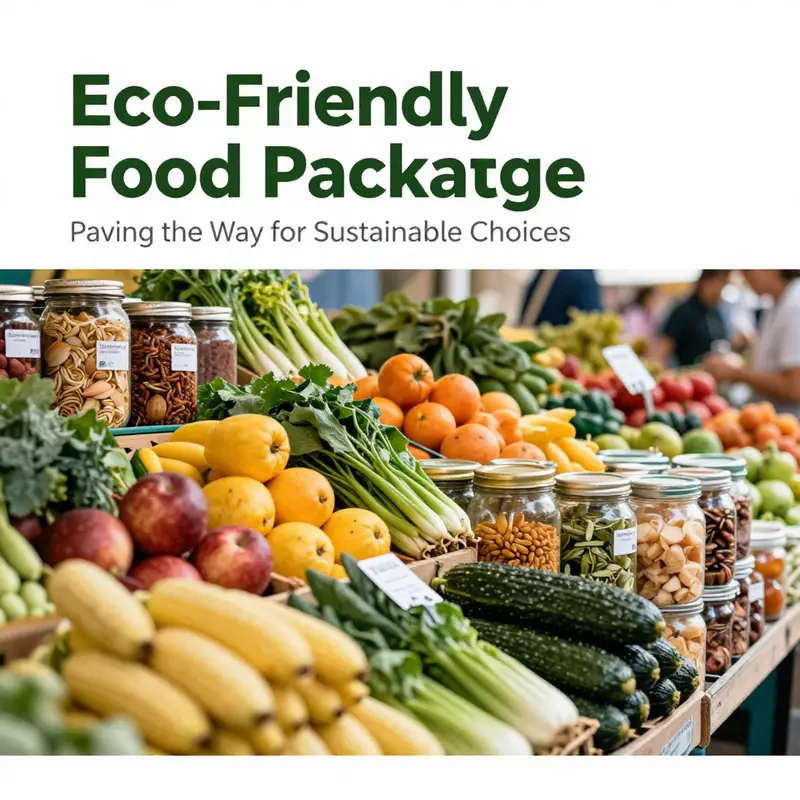
In the broader consumption landscape, minimalist and reduced packaging strategies deserve equal emphasis. The ethical ambition of selling “naked” food—produce without packaging, bulk goods dispensed into reusable containers, and takeout that travels in a permitted, reusable or compostable vessel—complements the advancement of compostable and biodegradable materials. Reducing material volume, avoiding unnecessary coatings, and adopting right‑sized packaging are all crucial steps in curbing needless waste. When we couple reduced packaging with materials that are genuinely recoverable or biodegradable, we begin to close the loop more effectively. This is not merely a design problem; it is a logistics and consumer education challenge as well. Consumers must understand how to dispose of materials and why certain streams exist for composting, recycling, or recovery. Businesses must invest in clear labeling, staff training, and partnerships with waste processors to keep the system flowing smoothly.
The interplay between reusable durable containers and compostable single‑use options is also central to a practical, planet‑friendly strategy. Reusable glass and stainless steel vessels excel where long‑term durability, inertness, and cleanliness are paramount. They reduce waste by design and are compatible with repeated use, but they come with considerations of weight, energy for cleaning, and the need for return systems or convenience logistics. In contrast, compostable plant‑based materials or mushroom packaging fulfill a different niche: those items that cannot be easily reused but still offer a humane end‑of‑life option. The best packaging ecosystems blend these approaches, using returnable systems for containers that travel repeatedly and disposable, compostable options for items that are single‑use but must not contribute persistent plastic waste.
Policy and regional realities cannot be ignored in this conversation. The European Union’s framework for packaging and packaging waste and related regulatory signals push manufacturers toward recyclable and compostable designs, minimizing hazardous substances and enhancing end‑of‑life processing. Such policy signals influence product development, waste management infrastructure, and labeling practices. They also encourage ongoing innovation in barrier technologies, coatings, and process engineering that unlock better environmental performance without compromising food safety or shelf life. In markets where industrial composting remains scarce, the practical gains may be smaller, underscoring the need for investment in waste infrastructure and public awareness. The path to true eco‑friendliness is thus a collaborative one, requiring alignment among designers, manufacturers, policymakers, waste managers, and consumers.
From a narrative standpoint, the future lies in systemic change rather than a single “silver bullet.” A sustainable packaging program must integrate reusable durable options for daily use, compostable plant‑based materials for single‑use context, and a serious commitment to reducing overall packaging volume. It also hinges on designing for end‑of‑life success: materials and products that waste streams can handle without contamination, and pathways that return resources to soil, air, or water with minimal residual harm. In practice, that means choosing materials with low water and energy footprints, minimizing distance traveled from source to shelf, and building supply chains that support ethical sourcing and responsible production. It also means avoiding greenwashing by relying on credible certifications and transparent life‑cycle data that stakeholders can verify.
A practical example of good design thinking can be found in how packaging decisions align with the specific needs of a product and its journey. For instance, a hot‑drink cup that relies on a compostable plant‑based coating might perform well in a setting with reliable industrial composting access, while a cold‑chain snack could benefit from a paperboard carton with a minimal barrier layer that does not hinder recyclability. The question is not only what material to choose, but what end markets and waste streams exist in the intended operating environment and how the packaging will be collected, sorted, and processed after use. In this regard, partnerships across the value chain—between farmers, processors, waste managers, retailers, and municipalities—are essential. Only through coordinated action can we ensure that compostable and biodegradable materials fulfill their promised environmental role rather than simply shifting the burden to another link in the chain.
For readers looking to connect theory to practice, a concrete, near‑term step is to evaluate packaging choices against local end‑of‑life realities, rather than solely against a material’s theoretical performance. If industrial composting is scarce, prioritizing paperboard with sustainable certification and recyclable coatings may yield greater overall environmental benefits than a compostable plastic alternative that never reaches a compost stream. If a brand aims to minimize packaging volume, right‑sizing and removing unnecessary layers can dramatically reduce resource use, especially when paired with materials that do not complicate downstream sorting. In this sense, the most eco‑friendly packaging is not a single material but a system that emphasizes clear disposal pathways, credible certification, supply‑chain transparency, and a genuine commitment to reducing environmental impact at every stage of the life cycle.
To illustrate how these ideas connect to real‑world choices, consider how a consumer or business might assess a packaging option. They would look for credible certifications that verify compostability under industrial conditions, assess whether the material can be recycled in local streams, and evaluate the energy and water footprints associated with its production. They would also ask whether the option supports a near‑term reduction in packaging volume and whether it enables a return or reuse model for containers. And they would seek materials whose end‑of‑life pathway integrates well with the available waste infrastructure, to avoid situations where a “green” label masks an outcome that is effectively disposal in a landfill. The culmination of these considerations is a packaging decision that genuinely contributes to a circular economy rather than a fragmented, misaligned system.
As a bridge to practical exploration, one example of a durable yet eco‑minded packaging option is the kraft‑paper octagonal bowl with a PET lid, a design that can be adapted to a range of foods while maintaining recyclability and compostability when paired with compatible waste streams. The choice of kraft paper, in particular, aligns with responsible forestry practices and end‑of‑life recyclability in many regions, provided coatings and adhesives are kept to a minimum and do not impede processing. For organizations seeking concrete avenues to test these ideas in a real‑world setting, this kind of packaging option demonstrates how design, material choice, and end‑of‑life planning can converge to deliver tangible environmental benefits. See more about this approach here: kraft-paper-octagonal-bowl-pet-lid-waterproof-eco-friendly-disposable-customizable-snack-pet-food-salad-containers-1l.
Looking ahead, the path to the most eco‑friendly food packaging will not rest on any single material alone. It will require a deliberate mix of durable, reusable containers for long‑term use; compostable and biodegradable plant‑based options for single‑use items where cycles exist; and continuous attention to waste management realities, certification credibility, and system design. The future lies in packaging that is designed to be returned for reuse, or that safely returns to the earth without leaving a toxic legacy. The chapter you have followed so far maps this terrain by outlining how materials perform, where they shine, and the conditions under which they excel. The next chapters will continue to build on this foundation, translating principles into scalable strategies that can be adopted by brands, retailers, and municipalities alike. For researchers and practitioners, the essential expectation is clarity: real environmental gains require real, accessible end‑of‑life solutions and a commitment to measuring impact across the entire lifecycle.
External resource: https://www.eco-packaging.com/guide-to-compostable-food-packaging-2026
Durable by Design: The Reusable Path to the Most Eco-Friendly Food Packaging
Every time a package is opened, the question surfaces again: how long will this container stay in use, and what happens after its usefulness ends? In the pursuit of the most eco friendly food packaging, durability becomes philosophical as well as practical. The guiding framework remains the 4R plus Degradable, a philosophy that asks not only how a package is made, but how it behaves after its first use. The choice then transitions from what can be discarded to what can endure, what can be reused again and again, and what can safely return to the earth when its time comes. This mindset shifts the conversation from singular products to ongoing systems, from single journeys to circular routes where households, retailers, and manufacturers share responsibility across the lifecycle. In this light, reusable and durable containers anchor the most credible eco friendly packaging strategy, because they directly reduce material throughput, lower waste generation, and align with a long arc of responsible consumption even as they meet the needs of modern kitchens.
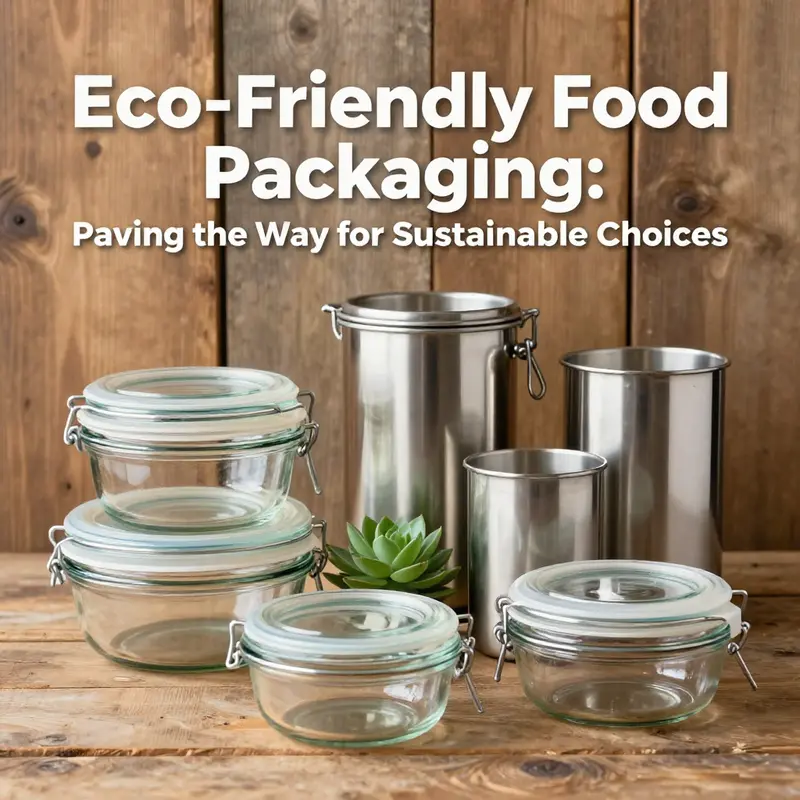
Glass storage containers stand out as archetypes in this reusable category. Their clarity is not simply a matter of aesthetics; it is a functional advantage that helps people see what is inside, reducing the likelihood of duplicate purchases and forgotten leftovers. Glass is inert, which means it does not leach chemicals into food over time, a reassurance that matters in the daily routine of storing soups, sauces, or meal portions. The material’s durability is rooted in its resilience under temperature changes. When used with airtight lids, glass maintains freshness effectively, resisting staining and absorbing flavors, and it tolerates the microwave, oven, fridge, or freezer under appropriate design. The end-of-life story for glass is straightforward: it is 100 percent recyclable and can be melted and reminted countless times without degradation in quality. This closed loop is a key feature of a truly eco conscious packaging approach because it minimizes the need for virgin raw materials and reduces energy intensity over multiple cycles.
If glass embodies permanence, stainless steel embodies adaptability. Stainless steel containers excel in meal prep and daily storage, delivering an impressive blend of durability, temperature stability, and safety. They stand up to repeated use without warping or degrading, and they do not rely on additives that can migrate into food. BPA-free concerns push many toward metal options, since steel is inherently non-toxic and chemically stable. The weight of stainless steel is a trade-off in some contexts, especially for commuting or traveling with meals. Yet that weight is a small price for decades of reuse, because these containers can outlast several generations of plastic or paper packaging in the same role. The metal’s recyclability is also a virtue; when a container finally reaches the end of its service life, it can be melted down and repurposed into new products with minimal downcycling. In a world that increasingly measures value by longevity, stainless steel containers demonstrate that sturdiness and sustainability can coexist without sacrificing practical daily use.
Beyond glass and steel, other durable materials contribute to a robust reusable ecosystem. Bamboo offers a rapid renewability story, driven by its astonishing growth rate and versatile applicability. Bamboo products for food storage and utensils carry a natural antimicrobial reputation and a warmth in design that complements kitchens seeking a natural aesthetic. The material’s sustainability hinges on responsible processing and finishes that avoid toxic treatments. When bamboo is used for containers, lids, or utensils, the life cycle hinges on careful manufacturing choices that prevent the introduction of harmful substances and ensure a long, serviceable life. The core idea is to align renewable resource economics with durable performance, so bamboo becomes a perennial support rather than a fragile novelty.
The strongest case for durable packaging is not only about the material itself but about the relationship it creates between product and consumer. A reusable container system relies on repeated use, simple maintenance, and a social contract that makes return and reuse easy. In practice, this means widely accessible cleaning guidelines, compatible dishwasher and sterilization processes, and standardized sizes that fit common storage needs. It also means acknowledging that the design of a container is inseparable from how people move through daily life. For instance, the convenience of a modular set, where containers stack neatly, lids seal tightly, and parts are easy to replace, contributes to long-term adoption. When a consumer purchases a durable package, they are buying into a system that promises fewer bags, fewer wrappers, and less waste overall. That system must be frictionless. Without ease of use, even the best materials fail to realize their potential in real-world settings.
Yet the practical realm cannot ignore single-use alternatives entirely. In the early stages of a transition toward sustainability, there is a place for compostable and biodegradable options for certain tasks. Plant-based plastics and mushroom-based packaging can fulfill roles where a one-time use is unavoidable, such as protective inserts or specialized packaging that requires shape customization. The key is to view these options not as replacements for durability but as complementary components of a broader 4R+1D strategy. A well-designed packaging program might pair reusable containers for everyday meals with compostable inserts where appropriate, all while maintaining a strong emphasis on reducing overall packaging volume. The synergy lies in recognizing where a single-use product is the most practical choice without neglecting the responsibility to recover materials at the end of life.
End-of-life management remains the decisive factor in true eco friendliness. The most durable, reusable containers carry their own accountability through responsible disposal practices. Glass and steel, when they reach the end of service life, feed into recycling streams that maintain material quality across cycles. Compostable options require access to industrial facilities that reach temperatures and conditions necessary for breaking down complex polymers; without such infrastructure, even the best intentions fall short. Paper and paperboard, when sourced from responsibly managed forests and used without problematic coatings, contribute to recycling streams that preserve fiber value. The risk of contamination—like plastics in paper streams—must be avoided through careful design and clear labeling. This is where transparency becomes a virtue; consumers need consistent signals about how to dispose of packaging and how to participate in local recycling or composting programs. Certifications that verify environmental performance, such as those related to composting standards, cradle-to-cradle principles, or forest stewardship, help distinguish credible efforts from greenwashed claims. In a market that grows increasingly sophisticated, the integrity of materials and the clarity of end-of-life pathways determine whether a packaging choice yields genuine environmental benefit or merely a tempting set of promises.
A durable, reusable approach also invites broader system thinking that reaches beyond material selection. The true eco friendly path recognizes that packaging is part of a network involving harvest, manufacturing, distribution, consumer behavior, and municipal waste management. The ecological footprint of a durable container is shaped not only by its material but by the energy and water used in production, the proximity of suppliers, and the efficiency of reuse cycles. A system built around return and reuse—whether through deposit schemes, take-back programs, or shared community resources—amplifies the environmental dividend. When a container is designed to endure, its overall impact scales positively with the frequency of use, the quality of the cleaning process, and the ease with which it can be integrated into daily routines. This perspective aligns with the core aim of the 4R+1D framework: reduce waste, reuse meaningfully, recycle with precision, recover energy and materials, and degrade only what can safely return to the earth. It also invites a realistic assessment of what can be achieved within existing infrastructure. The best outcomes arise when consumer habits, product design, and policy support reinforce one another so that durable containers are not a niche option but a common choice across households, workplaces, and hospitality venues.
In practice, what matters is the narrative we tell about these containers as instruments of care. A glass jar that shields ingredients on a pantry shelf, a stainless steel box that carries tomorrow’s lunch, or a bamboo lid that crowns a midday snack—each instance embodies a philosophy of resource stewardship. The narrative extends to the spaces where these containers live: kitchens that choose to wash and reuse rather than discard, schools that promote shared lunch systems, and workplaces that embed reuse into daily routines. The more people see themselves as custodians of materials that can outlast a single purchase, the more likely they are to resist impulse buying and to value the utility of a container that remains useful across seasons and cycles. The language of durability, in this sense, becomes a promise, a commitment to future generations to steward resources with care rather than to accumulate possessions that climate and waste systems struggle to absorb.
To connect these ideals with everyday choices, consider the practical advantages of basic container design. Airtight seals, smooth interior surfaces, and compatibility with common cleaning methods reduce the friction that often deters reuse. Clear labeling and modular sizes help households organize food storage, minimize spoilage, and streamline meal planning. In this light, a durable container system behaves like a small, reliable infrastructure within the home. It does not merely hold food; it supports ongoing habits that favor longevity, thrift, and responsibility. The social dimension matters as well. Businesses that embrace reusable packaging as part of a circular economy message—without overstating claims—can foster trust with customers who increasingly seek consistency, transparency, and a coherent environmental story. The 4R+1D lens is not a marketing slogan but a practical lens through which to evaluate alternatives, weigh trade-offs, and design packaging systems that endure with dignity and purpose.
As the discussion broadens beyond home kitchens, it is worth noting a counterbalance to the dominant focus on durability. The most eco friendly packaging strategy does not pretend that single-use materials have no place. Instead, it places emphasis on minimizing the necessity for such materials while ensuring that when they are used, they are chosen with the strongest possible end-of-life pathways. A packaging program can, for example, combine reusable containers for routine meals with compostable options for occasional special events or for products that must be delivered in pristine, contamination-free form. In other words, the future lies in designing systems where packaging is either returned for reuse or safely returns to the earth, guided by clear rules, reliable infrastructure, and a culture of shared responsibility.
The question then becomes not only what materials to choose but how to design the entire system around them. Transparency about production footprints, sourcing ethics, and the expected lifespan of containers helps consumers make informed decisions. Certifications and third-party assessments play a critical role in preventing greenwashing, offering signals that a packaging design genuinely minimizes environmental impact rather than merely sounding virtuous. For scholars and practitioners, this means continuing to map the lifecycle trade-offs of glass, metal, bamboo, and other durable materials, while also identifying ways to reduce the initial material draw without compromising function or safety. The 4R+1D framework remains a practical compass: aim to reduce the volume of packaging, reuse containers as widely as possible, recyclate where technically feasible, recover energy or material value when possible, and degrade only when design and disposal systems ensure safe end-of-life processing. The most eco friendly food packaging, then, emerges not from a single miracle material but from a thoughtful mix of durable, reusable options and responsible, well-supported single-use alternatives that fit into a larger circular economy.
To bring this to life in everyday terms, imagine a household that treats containers as long-term partners rather than disposable tools. A glass jar becomes the default for sauces and leftovers; a stainless steel box supports takeout and meal prep; bamboo utensils accompany daily meals and travel. The kitchen becomes a showroom for durability, not a landfill of castoffs. The social and environmental payoff accumulates over time: fewer wrappers entering the waste stream, less energy spent extracting virgin materials, and a steadier rhythm of consumption that values quality over quantity. In this vision, the future of packaging with minimal environmental impact is not a retreat from convenience but a redefinition of it. Convenience becomes the ease of reuse and the certainty that a container will perform reliably for many years, with disposal that is straightforward and responsible when the container finally retires from service. This is the pragmatic heart of the most eco friendly food packaging: a design ethos that treats packaging as a durable asset, a tool for reducing waste, and a bridge to a more circular economy.
For readers seeking concrete illustrations of packaging options that align with these principles, a closer look at available kraft-based, reusable or semi-reusable designs can be instructive. kraft-paper-octagonal-bowl-1200ml offers a window into how packaging can be shaped for practical use while remaining compatible with recycling streams when necessary. The fact that such options exist side by side with durable containers highlights the need for careful system design. Consumers and businesses alike benefit from choices that come with clear disposal guidance, consistent performance, and a credible pathway to recover and repurpose materials rather than consigning them to landfills. The dialogue around eco friendly packaging thus remains dynamic, balancing durability with responsible end-of-life practices and acknowledging that innovation thrives where system design aligns with daily habits.
In the end, the most eco friendly food packaging strategy is a synthesis. It blends reusable, durable containers that minimize waste and extend service life with responsibly sourced single-use alternatives that cleanly integrate into disposal and recovery systems when reuse is not feasible. It respects end-of-life realities, supports informed consumer choices through transparent labeling and credible certifications, and remains vigilant against greenwashing by upholding measurable standards. It recognizes that material impact is inseparable from production footprints and logistics, urging a preference for options with lower water and energy intensities and shorter transportation chains. It invites a cultural shift in which packaging operations become part of a community-wide effort to reduce waste and recover value. And it keeps a critical eye on the road ahead: identifying opportunities to improve, foster collaboration across sectors, and design packaging that truly serves people and planet alike, today and for the long horizon of tomorrow. For researchers, policymakers, and practitioners, the journey continues as new materials, better processes, and smarter systems emerge, always with the guiding aim of turning packaging into a durable, responsible component of daily life.
External resources can illuminate practical pathways forward without losing sight of the broader principles. For a practical lens into durable, reusable container design and its place within consumer packaging, see a representative external reference that captures the real-world trajectory of these concepts: https://www.amazon.com/dp/B0CQWZKX9D
Minimalist Precision: Designing the Clean Path to the Most Eco-Friendly Food Packaging
Minimalist packaging is more than an aesthetic choice; it is a disciplined approach to reducing environmental impact at every stage of a product’s life. In the realm of eco-friendly food packaging, minimalist strategies translate the 4R+1D framework into tangible design and operational decisions. The aim is to protect what matters—the food—while minimizing waste, energy use, and resource depletion. This requires a shift from packaging as a barrier to packaging as a lifecycle decision that values reusability, recyclability, and earth-friendly disposal pathways as non negotiables rather than afterthoughts. Too often, packaging is treated as a generic wrapper; the most forward-thinking brands treat it as an integral part of product stewardship, a system that must function smoothly from production line to consumer hands and, finally, to recycling bins or composting facilities. In this light, minimalist packaging becomes a strategic practice that aligns product integrity with planetary health, recognizing that every gram saved at the design stage may multiply across millions of units in circulation.
End-of-life considerations anchor the minimalist mindset. The single most important factor is what happens after a package is used. Materials that are industrially compostable require facilities that exist only in certain regions. Paper that is free from plastics and coatings should be destined for efficient recycling, not contamination streams that degrade recovery rates. These end-of-life realities are often overlooked in the rush to claim green credentials. A truly eco-friendly approach demands transparent pathways: can the material be composted when facilities exist, or reliably recycled where municipal systems are robust? Can the packaging be returned for reuse as part of a circular loop, or does it need to break down safely in a controlled environment? The answers shape design decisions as much as aesthetics. They also demand clarity in labeling, because consumer behavior remains a critical hinge. If customers do not know how to dispose of packaging correctly, the environmental credit decays at the point of use. Here, the minimalist creed advises simplicity in material choice, alignment with local infrastructure, and honest communication about what happens after the product is consumed.
The materials that dominate minimalist packaging come from a spectrum of choices, each with its own life trajectory. Plant-based plastics, such as polylactic acid, offer the allure of renewable feedstocks and industrial compostability. They can function well for items that require a moisture barrier or light-weight protection. Yet they are not a universal solution. Industrial composting facilities that heat to specific temperatures are often necessary to achieve proper breakdown. Without access to such facilities, these materials can behave like conventional plastics in the waste stream, undermining the intended environmental benefits. That is why the 4R+1D framework emphasizes context: the local waste infrastructure, the regional energy profile, and the transportation footprint all shape the true eco-friendliness of a material choice.
Mushroom-based packaging, or myco-composites, exemplifies the potential of biologically inspired design. These materials grow from agricultural byproducts into custom shapes that can cushion products and minimize void space. They are fully compostable under appropriate conditions and can be produced with relatively low energy input. The challenge lies in supply scalability, consistency, and consumer perceptions. Will users recognize mushroom-based packaging as a legitimate end-of-life option, or will it be treated as unfamiliar waste? The answer rests in credible certification, clear disposal guidance, and a distribution network that ensures composting streams receive the material rather than landfills.
Paper and paperboard remain indispensable in minimalist packaging, especially when sourced from responsibly managed forests and free from plastic linings or waxes that would contaminate recycling streams. When these papers are produced with high standards for responsible forestry (think well-governed certification schemes) and free from problematic coatings, they offer excellent recyclability and biodegradability. They also enable a tactile, premium sense of simplicity that resonates with consumers who associate minimalism with integrity. However, the environmental advantage of paper-based formats hinges on the full chain: harvest, pulping, transportation, and end-of-life sorting. If a paper box is lined with a non-recyclable layer or coated with a plastic film that survives the recycling process, the overall benefit shrinks. The minimalist packaging philosophy therefore seeks to minimize or eliminate such coatings, favoring straightforward, repulpable structures that can be recovered or biodegraded with minimal interference.
A key practice within minimalist design is the strategic use of right-sized packaging. In many cases, the simplest way to cut waste is to protect the product with exactly the amount of packaging required. This means eliminating extra layers, avoiding over-dimensioned boxes, and resisting the temptation to add decorative elements that serve no protective purpose. When a product ships in tight, right-sized packaging, it uses less material, reduces transport weight, and simplifies sorting and processing at the end of life. The flip side is ensuring that the product remains protected from moisture, impact, and deformation during transit and display. Minimalism does not equate to fragility; it demands clever engineering—thin but robust structures, judicious use of barriers, and materials that perform under realistic handling conditions. In practice, this involves a careful balance of barrier properties, stiffness, and seal integrity to maintain product safety while limiting material use.
The consumer landscape has shifted decisively toward sustainability. People are scrutinizing packaging choices and often voting with their wallets. Brands that embrace minimalist packaging are not simply reducing waste; they are signaling a broader environmental ethic that extends to supply-chain responsibility, fair labor practices, and transparent communication. When a company emphasizes “less packaging, less waste” as part of its brand story, it can build stronger loyalty among shoppers who connect with ecological values. The narrative of minimalism becomes a differentiator in a crowded market, especially as evidence-based claims—such as lower life-cycle emissions or higher recycling efficiency—become more expected. Yet consumer demand also raises expectations around performance. A minimal design must still reliably safeguard the product, preserve taste and texture, and deliver functional convenience. The tension between minimal material use and uncompromised product integrity is the creative crucible for designers and engineers.
From a design standpoint, minimalist packaging invites a rethinking of materials and structures. It encourages a shift away from multi-layer composites that hinder recycling toward simpler, single-material or easily separable configurations. It also invites more thoughtful consideration of adhesives, inks, and finishes. The goal is to avoid combinations that conflict within recycling streams or complicate industrial composting. When materials are compatible with common recovery systems, the likelihood of diversion to landfills drops significantly. This means prioritizing materials that can be separated without specialized equipment or that are already widely accepted in municipal systems. It also means acknowledging that some seemingly green solutions may not deliver the intended benefits if the local infrastructure fails to process them correctly. In this sense, minimalist packaging is, at heart, a collaborative enterprise—between designers, manufacturers, waste managers, policymakers, and consumers.
An honest assessment of minimalist packaging also demands vigilance against greenwashing. The market is full of statements that sound virtuous but do not withstand scrutiny in real-world disposal contexts. Certifications like OK compost or cradle-to-cradle can provide useful guidance, but they are only meaningful when the material actually reaches the intended end-of-life stream. The EU’s packaging waste framework underscores the necessity of reducing hazardous additives and bolstering the share of recyclable or compostable content. In practice, this means choosing materials with proven end-of-life performance, avoiding vague terms like biodegradable without placement context, and ensuring that labeling and guidance align with available infrastructure. The goal is to close the loop: what is designed to degrade or recycle should do so reliably in the real world, not merely in a lab.
A practical example of minimalist thinking in action can be seen in the use of paper-based formats for dry goods and soft commodities, with a focus on straightforward, no-frills presentation. When packaging is pared down to essential components, the product itself often takes center stage. The result can be a more confident, premium perception for the consumer, because the brand communicates that it values substance over superfluous packaging. This approach aligns with a broader societal shift toward simplicity, transparency, and responsibility. It is not merely about using less; it is about choosing the right kind of less, one that harmonizes with waste streams, energy use, and the social dimensions of consumption.
Incorporating a tangible example helps ground the discussion without drifting into product-specific chatter. Some brands explore kraft paper solutions that emphasize minimalism and recyclability. These formats can illustrate how right-sized packaging works in practice, delivering necessary protection with a modest material footprint. For instance, a brown kraft paper packaging option designed for noodle dishes demonstrates how a single, repulpable material can support a range of culinary formats while staying compatible with standard recycling processes. This kind of packaging strategy shows how simplicity can enable efficient collection, sorting, and processing. For readers curious about the concrete embodiments of minimalist packaging, a real-world example is referenced in the following link: kraft-paper-noodle-box-matt-lamination-embossing. This example underscores how the concept translates to scalable production while maintaining a gentle footprint.
The conversation about minimalist packaging would be incomplete without acknowledging the broader policy environment. Regulatory frameworks increasingly push for materials that can be recovered and reintegrated into production cycles. The European Union’s upcoming packaging regulations emphasize the minimization of hazardous substances, and the promotion of recyclable and compostable materials as standard practice. Compliance is not a hurdle but a catalyst for innovation. When designers and manufacturers adopt compliant, end-of-life-ready materials from the outset, they reduce the risk of stranded assets and misaligned waste streams. This alignment between policy, design, and consumer behavior is essential if minimalist packaging is to become a durable component of the eco-friendly packaging landscape.
The minimalist path does not pretend to be perfect in every scenario. It is a disciplined strategy that seeks to maximize environmental benefits by reducing material use, enabling reuse, and ensuring end-of-life recovery. In places where industrial composting infrastructure is robust, compostable plant-based materials can shine as humane end-of-life options. In others, reusable glass or stainless steel containers may be more appropriate for long-term storage and distribution. The 4R+1D framework guides these decisions, reminding stakeholders to Reduce, Reuse, Recycle, Recover, and Degradable with equal seriousness. The point is not a universal label but a tailored design philosophy that respects local realities while pushing the packaging system toward higher overall performance. As the chapter closes, the thread remains clear: minimalist packaging, when implemented with integrity, helps shrink the environmental footprint without compromising safety, quality, or consumer trust.
External resource for broader context and validation of packaging principles: https://www.sustainablepackaging.org/guide-to-environmentally-friendly-packaging-by-industry
Final thoughts
The journey toward sustainable food packaging is vital in the quest for a healthier planet. By embracing compostable and biodegradable materials, investing in reusable containers, and adopting minimalist packaging approaches, businesses in the food service industry can lead the charge in environmental responsibility. Each packaging choice influences not only our ecological footprint but also customer perceptions and brand loyalty. Making informed decisions now paves the way for a more sustainable future. Together, let’s create a greener, more eco-conscious food culture.