
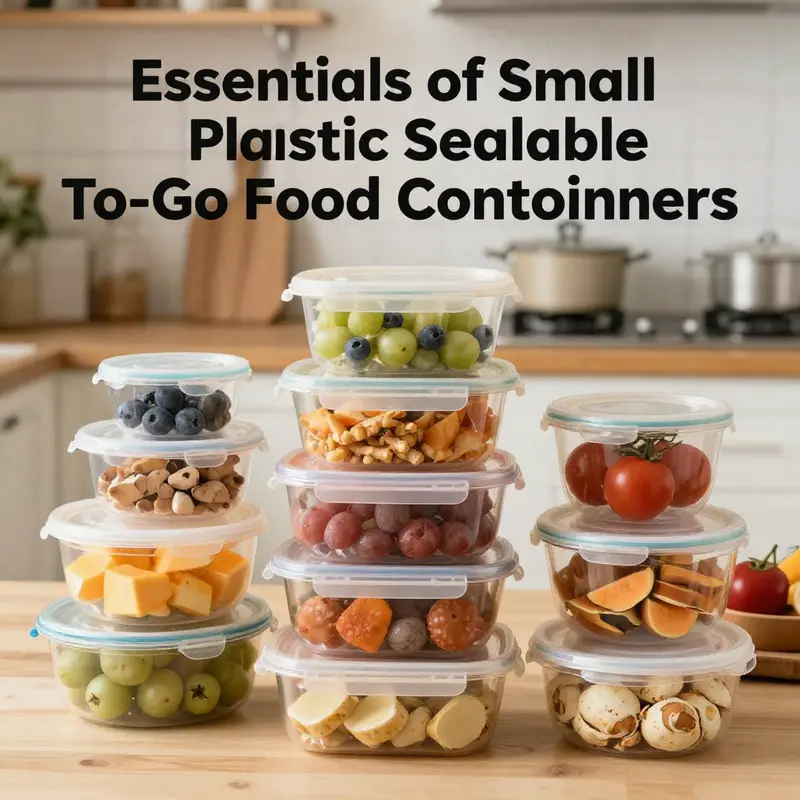
Small plastic sealable to-go food containers have become an essential element for businesses across various sectors including bubble tea shops, restaurants, food trucks, and catering services. Their versatility allows for the safe and convenient transport of meals, snacks, and beverages to meet the demands of a bustling consumer base. This article delves into the different types of containers available, important health and safety considerations, the economic impact and sourcing strategies, and the latest innovations in design and functionality. Each chapter aims to enhance your understanding of why these containers are not just practical but also pivotal to successful food service operations.
Tiny Vessels, Big Choices: Navigating the Landscape of Small Plastic Sealable To-Go Containers
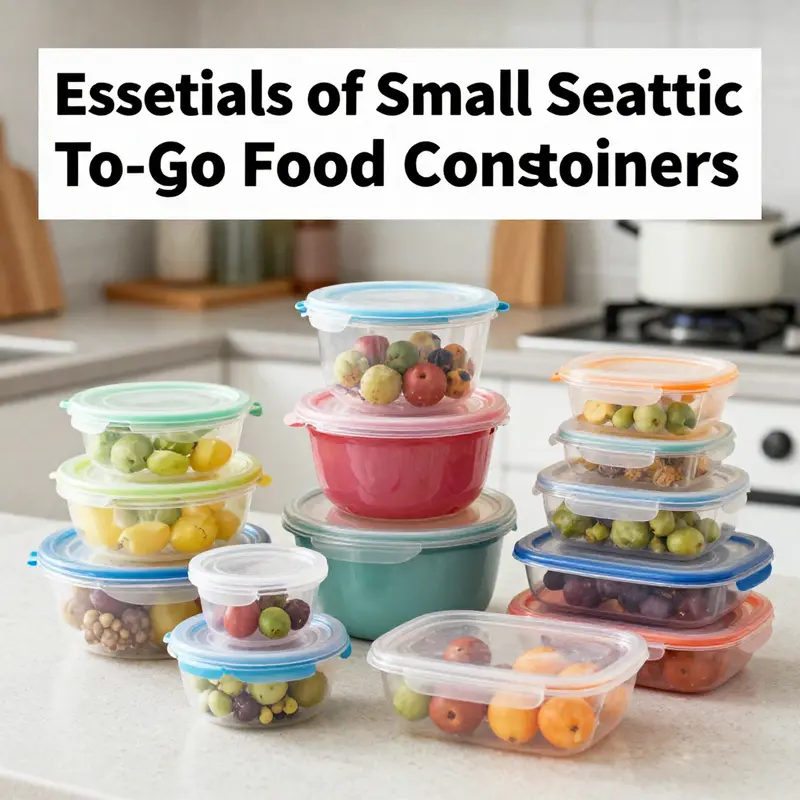
The everyday act of packing a meal, snack, or leftover seems simple, yet the small plastic sealable to-go container sits at the heart of that convenience. These diminutive vessels carry more than food; they deliver portion control, reduce waste, and translate a kitchen into a portable system. When we pause to consider their variety, the options are a spectrum shaped by size, configuration, material, and purpose. A single lunch can be a mosaic of micro-containers, each chosen for a precise function, from fruit compartments to sauces, from a yogurt cup to a tiny storage unit that fits in a bag or lunchbox. In that sense, the category operates like a miniature ecosystem of design decisions, each choice tethered to how and where the container will be used. The result is a balance between portability and performance, lightness and durability, price and safety. The chapter that follows does not merely catalog types; it traces the logic behind why certain designs emerge for particular needs and how those designs influence everyday behavior at home, work, and travel.
The spectrum of small plastic sealable to-go containers begins with configurations that acknowledge the reality of portioned meals. Mini sealed boxes, or mini sealable containers, are designed for portion control and for storing foods that benefit from a rigid, closed environment. They can hold fruit, chopped vegetables, nuts, baby foods, or small leftovers in a way that preserves moisture, prevents spills, and makes transport predictable. In many cases, these mini boxes are polymer-based, with a clear, durable wall that lets users identify contents without unlidding, a feature that becomes especially valuable when multiple items travel together in one bag or box. The lids themselves are often feature-rich: secure locking mechanisms, gasketed seals, and tight fit-chimneys that resist leaks when the container tilts or stumbles in transit. The benefit is immediate: reduced mess, easier sharing, and a level of containment that supports on-the-go dining or snacking.
Alongside the truly miniature, there is a parallel thread in the design world that speaks to modularity. Divided or multi-compartment containers enable users to separate incompatible foods—think a savory item and a dip, or a fruit slice that should not mingle with a moist entree. This separation is not mere convenience; it is a practical guard against cross-contamination in transit and refrigeration. When space is at a premium, stackable designs come into play, allowing several compartments to nest or lock within a single outer shell. The result is a compact system that behaves like a portable lunch, with the ability to keep flavors distinct even as the container is jostled in a bag or a backpack. The combination of transparency, lightweight construction, and secure closure makes these designs particularly well-suited to schoolchildren, commuters, outdoor adventures, and office lunches alike.
In the same family, yet distinct in use-case, are the containers that lean toward “one-take” meals or ingredients that don’t mix well with others. A small plastic bag with a zipper seal, for instance, is designed for dry goods, powders, spices, or items that can be portioned into a small pouch and resealed after opening. The zipper mechanism provides repeated access while maintaining a barrier against moisture and dust, a feature valuable for trail mixes, spices, and even travel-sized condiments. Packaging like this is not merely about liquid containment; it is about preserving the integrity of discrete ingredients and offering the user the option to open, use, and reseal without compromising the rest of the contents. The nuance here is in the closure system itself: the zipper must endure many open-and-close cycles and still perform a dependable seal, with the added need to resist pinching, tearing, or warping under pressure.
Material safety forms the backbone of trust in these products. The most common plastics designated for food-contact use are polypropylene and, in some cases, polyethylene. These materials are selected for their chemical stability, clarity, and generally good performance in typical food service scenarios. When consumers encounter “food-grade” or “BPA-free” labels, they are reading a pledge about the container’s safety profile under ordinary use. A lid with a robust seal helps keep contents fresh and minimizes odors, while a tight fit reduces the likelihood of leaks during transport. The practical implication is that most small containers can be microwaved or washed in a dishwasher if their labels permit, turning a quick lunch at the office into a minimal-effort routine. Yet caution remains essential: repeated heating, especially under high temperatures, can lead to material fatigue or slow degradation. This can alter the barrier properties of the plastic and, in some cases, raise concerns about chemical migration. In response, many users turn to alternatives for long-term storage, such as glass or stainless steel, which endure many cycles of heating and cooling without the same degree of structural fatigue. The balance, then, is pragmatic: plastics win on weight, cost, and convenience; glass and metal win on durability and long-term health considerations.
Design choices also extend to transparency and visibility. A clear wall makes it easier to identify contents at a glance, which is particularly valuable when multiple containers ride in the same tote or lunch bag. This visibility reduces the chance of misplacing items and lowers the need to open lids just to confirm what is inside. In parallel, some configurations emphasize a rugged, opaque exterior for a more professional or food-service appearance, while still incorporating a transparent lid or window that affords at least a partial view of the food. The range of choices means households, schools, and workplaces can tailor their containers to the kind of foods they store most often, from salads to fruit salads, from yogurt with toppings to separate sauces. The lids, seals, and locking systems form the critical interface between the user and the stored food, dictating how the container behaves in real-world conditions—whether it rides in a backpack, sits in a desk drawer, or travels in a lunchbox through crowded transit.
The conversation about small plastic sealable containers naturally expands to the broader ecosystem of packaging options that often accompany to-go meals. In some scenarios, a single container might be part of a hybrid packaging approach, blending paperboard or kraft materials with a plastic lid or inner lining to achieve a balance of barrier properties, weight, and cost. Such hybrid constructs aim to deliver the best of both worlds: the environmental appeal and rigidity of paper with the seal integrity and moisture barrier of a plastic component. A relevant example in this space illustrates how packaging components can be combined into a single unit to meet modern on-the-go requirements. senang-disposable-biodegradable-kraft-paper-matt-lamination-clear-plastic-combo-pastry-dessert-tiramisu-cake-food-container-packaging brings together a paper-based shell with a clear plastic component designed to maintain freshness while staying lightweight and easy to transport. This type of product highlights how the packaging industry continues to invent, iterating toward configurations that can perform under diverse conditions—refrigeration, microwaving, transport, and market-fluent consumer handling. For readers who want to explore a concrete example, see the linked product page that discusses this combination in detail: senang-disposable-biodegradable-kraft-paper-matt-lamination-clear-plastic-combo-pastry-dessert-tiramisu-cake-food-container-packaging.
The conversation then turns to lifecycle considerations. Consumers want a balance between cost and durability, and manufacturers culture that tension into design choices. Lightweight plastic containers excel in portability and are friendly to bulk orders, which makes them attractive for schools, offices, and catering services that move large volumes. Yet short-term convenience sometimes conflicts with longer-term environmental goals. Repeated use, difficulty in recycling, and disposal concerns can encourage the search for alternatives or for improved end-of-life options. Some plastics are easily recyclable in specific streams, while others are economically or technically challenging to recover. This reality pushes the market toward innovations such as reusable systems, better labeling, and more consistent protocols for recycling. The result is a practical question every consumer and business should ask: how many times will a given container be used, and what happens after that use ends? The answer is not only about price, but about the full lifecycle—from raw material extraction to manufacturing, distribution, consumer use, and final disposal.
From a consumer behavior perspective, the appeal of small plastic sealable containers lies in predictability and simplicity. They are easy to store, easy to access, and easy to share. Nutrition-conscious households appreciate precise portions that support meal planning, while busy professionals rely on the reliability of a sealed environment to prevent spills during commutes. The ability to microwave, chill, or freeze different containers in a cohesive set reduces the friction associated with the daily ritual of eating on the go. At the same time, households are increasingly mindful of material safety, ethical sourcing, and environmental impact. The push toward BPA-free labels, more robust seals, and better recyclability indicators signals a broader cultural shift toward packaging choices that respect both health and the planet. Even as the micro-scale appeal remains strong, the narrative of these containers is intertwined with broader conversations about waste reduction, circularity, and responsible consumption.
Sourcing practices for these containers reflect the global nature of modern supply chains. Bulk orders, often sourced from regions known for plastics manufacture, enable retailers and food-service outfits to equip teams with standardized solutions. The choice of supplier—and the assurance of certifications, food-grade materials, and safety compliance—can influence the reliability of the entire system. The conversation around these containers also intersects with broader questions about packaging design, consumer safety, and the environmental footprint of everyday items that accompany meals and snacks.
In closing, the landscape of small plastic sealable to-go containers embodies a delicate balance: the desire for portability, the expectation of safety, and the responsibility toward the environment. Each design choice—from the number of compartments to the type of seal, from the clarity of the material to the strength of the lid—maps onto a distinct use-case and lifestyle. The right container can simplify a hectic day, ensure a meal remains fresh, and support responsible waste practices. The wrong choice, however, can lead to leaks, spoilage, or a sense of waste mismanagement. As consumers and organizations refine their needs, the language of packaging becomes more precise—more aligned with portions, with safety, and with a future that seeks smarter, cleaner ways to carry nourishment. The ongoing evolution of these tiny vessels will likely emphasize durability, recyclability, and a more nuanced approach to how we heat, store, and reuse. And for those who want a tangible glimpse into how packaging can blend materials to meet modern demands, a quick look at the hybrid approach mentioned above provides a useful illustration of the direction this field is heading. senang-disposable-biodegradable-kraft-paper-matt-lamination-clear-plastic-combo-pastry-dessert-tiramisu-cake-food-container-packaging serves as a reminder that even the smallest packaging choices can symbolize larger trends in convenience, safety, and sustainability. For readers seeking authoritative guidance on food-contact safety more broadly, a reliable external resource offers detailed, up-to-date recommendations: FDA guidance on food contact materials.
Between Convenience and Caution: Health and Safety in the World of Small Plastic Sealable To-Go Containers
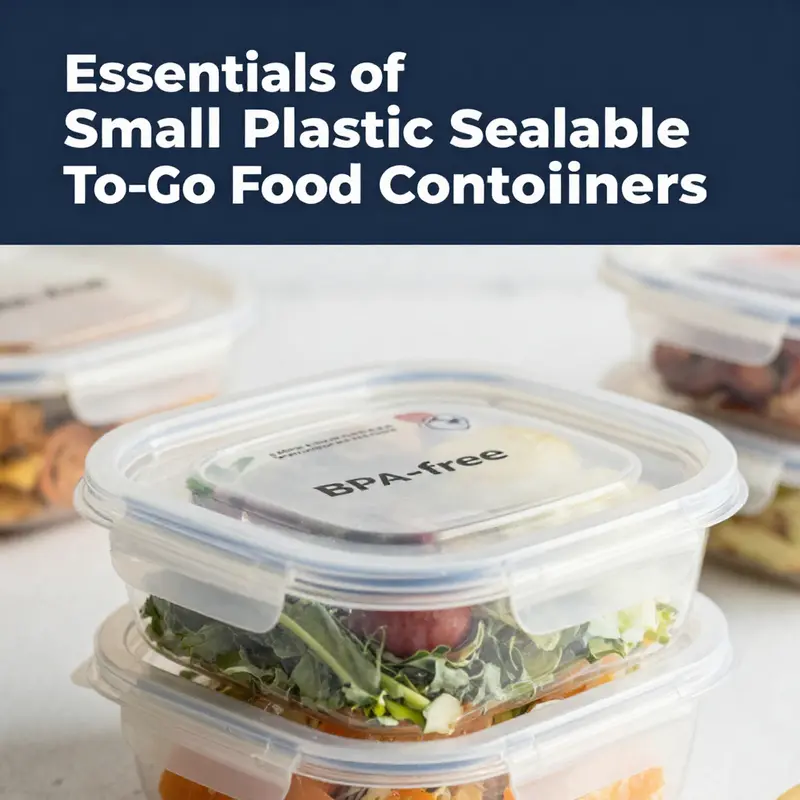
Small plastic sealable to-go containers sit at the intersection of everyday practicality and public health, quietly shaping how people store, transport, and reheat meals on the move. Their appeal rests on light weight, affordability, and a design language built around tight seals and secure lids. But behind the convenience lies a web of health and safety considerations that deserve careful attention.
Migration is a central concern: additives or components can move from the plastic into food, a process influenced by food type, heat, acidity, and storage duration. Resin identification codes offer a simple framework: high-density polyethylene, code 2, and polypropylene, code 5, show relatively stable performance for many food contact uses; low-density polyethylene, code 4, works well for bags and flexible cups. In contrast, PVC code 3, polystyrene code 6, and codes in the code 7 family that include polycarbonate carry higher questions about migration risks under heat, aging, or agitation. Consumers who prioritize safety often look for food-grade designations and explicit statements that products are BPA-free and tested for food contact safety. Keep in mind that BPA-free does not automatically guarantee zero risk, because other additives or breakdown products can migrate, especially with repeated use or heating.
A practical approach starts with material choice and official assurances. A container labeled microwave-safe should be used in line with the manufacturer guidelines, and heating may require transferring contents to a microwave safe vessel. For hot foods or acidic contents, more cautious handling is advised, and when possible select materials proven to be compatible with acidic foods or avoid long storage in containers known to leach under acidic conditions. Regulatory bodies in various regions set the baseline for safety, and many manufacturers submit third party testing or certifications to support their claims. Look for credible food-contact assurances, clear labeling about BPA-free status, and accessible testing information from the maker.
Structural features matter as well. A tight seal and a secure locking mechanism reduce spills during transit, but they must work with a material that resists cracking and discoloration with repeated use. Tamper-evident features can increase consumer trust by signaling intact packaging from factory to home. The goal is balance between a lid that keeps contents secure and a container that remains safe through reheating, washing, and reuse. Always follow the manufacturers directions for cleaning and avoid hot or damaged containers, which may harbor bacteria or degrade performance.
A broader context includes sustainability and realism about everyday use. Plastic offers portability and affordability, but repeated use and heating can alter its behavior. Some households rotate to glass or stainless steel for long term reheating, while others rely on durable, well labeled plastics designed for repeated use. Health considerations and environmental responsibility can align when consumers choose products with robust safety labeling and good lifecycle practices, including proper disposal or recycling when a container reaches end of life.
For shoppers, a simple checklist helps translate safety knowledge into purchases: verify the container is labeled as food-grade and BPA-free; confirm the resin code aligns with stable, food contact performance (prefer codes 2, 4, or 5); check for explicit heat tolerance and microwave use information; inspect the lid and seal for a secure locking mechanism and look for tamper evidence where available; decide whether the product is for single use or for repeated use and assess its expected lifespan under typical dishwashing and household temperatures. Cleaning care matters too; gentle hand washing or dishwasher cycles according to manufacturer directions help preserve seals and avoid micro-scratches where bacteria can hide. If you see cracks, warping, or discoloration, replacement is prudent.
The dialogue around plastic food containers continues to evolve as science clarifies migration mechanisms. Regulators and health authorities worldwide provide the framework for safety testing, labeling, and acceptable migration limits. Seek products with clear food-grade labeling, credible BPA-free claims, and accessible testing data. The field evolves, so staying informed with updated guidance and independent safety assessments supports responsible choices for meals, snacks, and school lunches.
In closing, a thoughtful approach to material choice, design, and usage allows households and institutions to balance convenience with safety while remaining mindful of sustainability and lifecycle considerations.
Seal and Scale: The Economic Pulse of Small Plastic Sealable To-Go Containers in Food Service
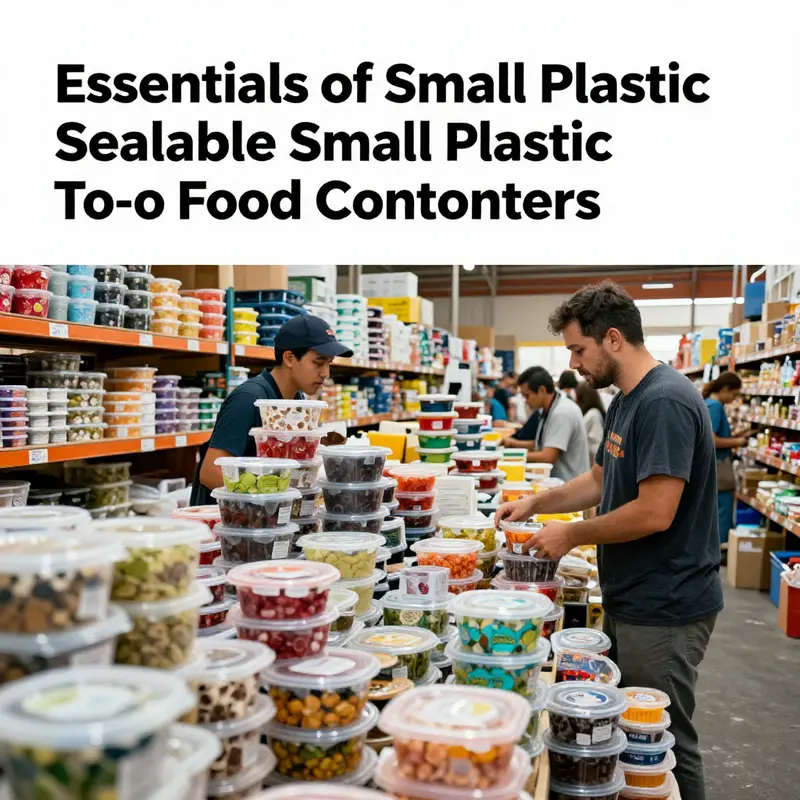
The small plastic sealable to-go container is more than a utensil for cradling a meal. It underpins freshness, portion control, and the reliability of the food-service ecosystem. In high-volume operations, a secure seal reduces leakage, preserves quality during delivery, and lowers waste—translating into measurable cost savings and improved customer satisfaction. The economics extend beyond unit cost to throughput, labor efficiency, and brand trust. Packaging decisions influence supply chains, procurement strategies, and even policy debates around sustainability.\n\nThe material choices, production scale, and end-of-life options shape not only the price per container but the total cost of ownership across a restaurant’s life cycle. Local production can shorten lead times and reduce carbon emissions, while recyclable or compostable materials align with broader sustainability goals and consumer expectations. Deposits, take-back schemes, and digital procurement platforms add layers of value through waste reductions and data-driven supplier management. In practice, the most successful programs balance performance with responsible end-of-life outcomes, creating a resilient and trustworthy packaging ecosystem for meals on the move.
Sealed for Mobility: How Modern Small Plastic To-Go Containers Redefine Convenience, Safety, and Sustainability
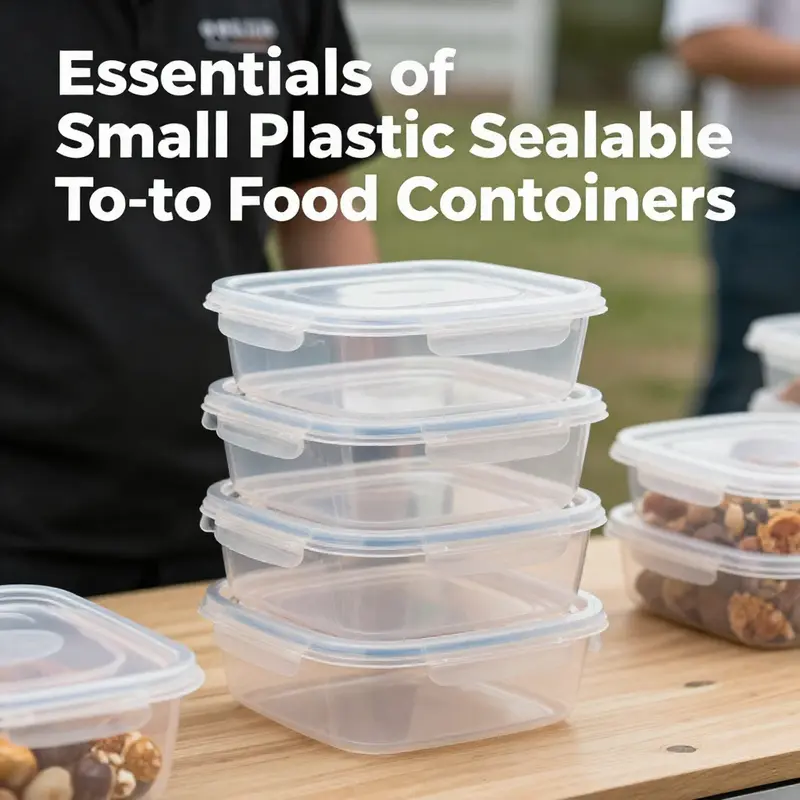
Small plastic sealable to-go containers have traveled farther than their initial, utilitarian cousins. Once a simple means to carry a few bites of lunch, they have evolved into compact, purpose-built systems that promise not just containment, but confidence during transit. The modern landscape blends everyday practicality with a disciplined approach to safety, sustainability, and user experience. What begins as a straightforward vessel for meals becomes a carefully engineered interface between food, the consumer, and a dynamic, often crowded day. In this sense, the container is less a disposable wrapper and more a performer in the choreography of how we eat on the move.
At the core of these innovations is a reimagined sealing system. The lid, formerly a passive top that could be pried off with a knife or a fingernail, now functions as a primary interface. Tamper-evident features reassure users that what they pack remains untouched until the moment they open it. Leaks are mitigated by gaskets that compress reliably against the container body, forming a continuous seal even when the box is jostled in transit. Some designs employ one-touch locking mechanisms that snap shut with a decisive click. These systems are especially valuable for liquids, sauces, or mixed dishes where seepage would otherwise soil a bag, a sleeve, or a sleeve’s contents. A simple, confident closure reduces the need for secondary containment like extra bags, enabling a cleaner, more efficient packing routine for busy mornings or post-work, when seconds count.
The materials themselves have become a focal point of evolution. Polypropylene (PP) and high-density polyethylene (HDPE) remain common choices because they balance rigidity with lightness and can withstand a range of temperatures—from refrigeration to microwaving—and even freezer environments. A growing share of containers adhere to food-grade standards and are explicitly labeled BPA-free, addressing consumer demand for safer packaging. The emphasis on safety is not just about avoiding a single chemical; it’s about creating a predictable, reliable experience where reheating food in the same container feels natural rather than hazardous. This is crucial as more households rely on leftovers for lunch or dinner and seek trustworthy solutions that minimize the steps between plate and palate.
Temperature resilience has become a practical necessity. The days when a container’s plastic would warp under heat or cold are fading. Today’s designs are engineered to tolerate microwave heating under specified conditions and to survive multiple dishwasher cycles without losing their shape or seal. The ability to reheat directly in the original container reduces transfer steps, lowers the risk of cross-contamination from other containers, and simplifies cleanup. Yet this capacity is not universal; manufacturers clearly mark microwave-safe and dishwasher-safe usage to prevent misuse that could degrade seals or compromise food safety. The dialogue between performance and safety is ongoing, with testing becoming more standardized and transparent as brands compete to prove resilience in real-world kitchen ecosystems.
Beyond the seal and the polymer, the geometry of the container plays a central role in how it integrates into daily routines. Today’s small sealable containers come in a spectrum of configurations: single compartments for simple meals, divided sections for balancing proteins, grains, and vegetables, and stackable designs that nest efficiently in lunchboxes or backpacks. The nested approach speaks to a practical maxim: fewer bulky containers means easier transport, quicker cleaning, and more predictable storage. Built-in dividers let users curate meals with portion control, reducing the temptation to mix flavors haphazardly and helping with dietary planning. Clear, transparent bodies enhance visibility, letting both the user and a curious observer gauge contents at a glance. When labeling is included, it’s often a subtle, yet powerful, branding opportunity—nutrition blocks, allergy indicators, or branding elements appear not as an afterthought but as part of the container’s identity.
The idea of modularity also extends to the way lids and bases interact. A secure fit is not merely about keeping food in; it’s about enabling a modular ecosystem where lids can be swapped for different capacities, or where smaller containers can attach to larger ones without sacrificing seals. This modularity reduces waste by enabling a family of containers to grow with needs rather than replacing them entirely. It also supports a more sustainable approach to everyday food storage, aligning with consumer desires for products that adapt to changing meal sizes, cooking routines, and social occasions.
From a design perspective, visibility matters. A transparent or frosted body makes it easier to identify contents without opening the lid, which saves time and reduces the chance of spills when rummaging through a bag or locker. Labeling options—ranging from generic date codes to more detailed nutritional notes—provide an informational layer that complements the eating experience. In a culture that increasingly values transparency in both food and packaging, these details become part of the product’s promise, reinforcing trust with the consumer.
Sustainability, long a peripheral concern in the mass market, now sits at the heart of design conversations. Modern containers seek to minimize material use through lightweight constructions and efficient geometry, a strategy that lowers the environmental footprint during production, transport, and use. Some manufacturers explore recyclable multi-layer structures that preserve performance while enabling end-of-life separation. Others experiment with bio-based plastics derived from renewable resources, aiming to reduce reliance on fossil-based feedstocks. There is also a growing interest in reusable and returnable systems, where containers circulate within a community or institution, supported by incentives to return for cleaning and reuse. These approaches reflect a broader shift toward circular economy models, where the container’s life is extended rather than shortened by single-use cycles.
In practice, these sustainability ambitions translate into a spectrum of consumer choices. For some buyers, the emphasis is on practical recyclability—containers that can be accepted by local recycling streams and that retain their performance after multiple uses. For others, the appeal lies in a durable, reusable system that supports daily meals and reduces waste over time. The trade-offs are nuanced: ultra-lightweight designs save material but may require more precise engineering to sustain seals over repeated cycles; heavier, sturdier designs may extend life but demand more energy in production. The best solutions strike a balance—optimizing weight without compromising safety, and ensuring that end-of-life options align with local waste-management realities.
The accessibility of these innovations is closely linked to manufacturing ecosystems and supply chains. Global production hubs, particularly in regions with mature plastics industries, enable bulk manufacturing and standardized quality controls that reassure buyers across markets. For buyers planning large-scale deployments—schools, corporate cafeterias, or event organizers—the ability to source food-grade, BPA-free containers in bulk with consistent lids and seals is a meaningful efficiency. This scale brings advantages in pricing, availability, and consistency, while also underscoring the importance of certifications and care in material selection. The conversation then extends to compatibility with microwaves, dishwashers, and freezers, ensuring that what arrives in a carrier or bag can be reheated and cleaned safely without compromising structural integrity.
As the design language has sharpened, the consumer experience has become more cohesive. Then the question becomes how these containers integrate with everyday routines and the rituals of eating away from home. A day’s worth of errands, meetings, and errands is peppered with moments to grab a quick meal, heat it, and eat, all without a cascade of mismatched containers or spillage. In such contexts, the container does more than hold food; it becomes a reliable partner in time management, portion control, and overall ease of use. A well-designed lid that closes securely, a container that heats evenly, or a divider that keeps sauces from mingling can transform what might have been a minor inconvenience into a smooth, almost instinctive habit.
Embedded in this narrative is a reminder of what often gets overlooked: the rhetoric of safety and the practical discipline of testing. Labels such as “food-grade” and “microwave-safe” are not mere marketing signals; they reflect laboratory standards, regulatory expectations, and the realities of consumer use. The difference between a container that performs well in a store display and one that endures in a busy family kitchen can hinge on how well the product is tested for repeated thermal cycling, improper stacking, or dishwasher wear. In this light, design is not only about aesthetics or clever mechanisms; it is a commitment to reliability, hygiene, and user confidence across countless meals and moments.
The chapter’s throughline is clear: the modern small plastic sealable to-go container is a convergence point where safety, convenience, and sustainability meet. The lid is no longer a barrier to access; it is a trusted interface. The container is no longer a passive wrapper; it is a co-pilot in daily logistics, supporting portion control, easy reheating, and clean storage. This convergence is not merely about making better boxes; it is about shaping how we eat when we are outside the home and how these choices ripple into broader patterns of health, waste, and efficiency.
To see how one design approach translates into practice, consider how a single, well-thought-out container family can evolve from lunchbox essential to kitchen staple. The emphasis on modularity enables families to tailor meals to preferences and schedules. A family could use a stackable, multi-compartment set for weekday lunches and repurpose a subset of containers for snacks or for condiments during travel. The transparent bodies provide quick content checks, while the labels help track freshness or dietary preferences. Even the act of disposing or returning containers takes on a new rhythm when the design anticipates reuse or coordinated recycling streams. When a brand communicates through subtle cues—material choices, pouring spouts, lid textures, and edge designs—it builds a narrative of care: care for the user, care for the environment, and care for the future of packaged foods in mobile settings.
In this evolving landscape, one can glimpse how future iterations may tilt toward even more integrated ecosystems. Advances might include standardized compatibility across lid sizes to reduce the number of spare caps kept in kitchens, or smarter gasket materials that resist aging through repeated heat exposure. The push toward bio-based or compostable options will likely continue, though it must be balanced against durability, safety, and the realities of consumer waste streams. In practice, this means ongoing collaborations among designers, material scientists, suppliers, and end users to translate theory into everyday utility while preserving safety and minimizing environmental impact. The story is not about a single breakthrough; it is about a continuous loop of feedback—consumer needs informing design, design guiding manufacturing, and manufacturers shaping what households can expect when they reach for a tiny, dependable container that travels with their meals.
For readers who want a tangible sense of how these principles translate into market-ready practice, the broader context becomes instructive. The innovations highlighted here are part of a wider industry conversation about food packaging design, where standards, performance, and sustainability increasingly walk in step with consumer expectations. This alignment is what differentiates the best containers from the merely adequate: the best are not only resistant to leaks and heat; they also embody a philosophy of responsible packaging, a commitment to safety, and an assurance that the daily act of eating on the go can be both convenient and conscientious. When a container earns a reputation for longevity and reliability, it becomes a trusted companion in countless meals, a small but meaningful contributor to reducing waste, and a quiet enabler of healthier, more organized eating routines.
Internal link example: senang05-food-grade-500-750-1000ml-take-away-bowl-with-lids-packing-food-single-wall-fast-food-salad-bowls. This reference illustrates how a single product family can embody safety, performance, and branding in a compact form, while remaining adaptable to a range of meal styles and user needs. It is a concrete reminder that the boundary between packaging as a passive container and packaging as an active participant in daily life has shifted decisively in favor of the latter.
External resource for further reading: https://www.packagingdigest.com/innovations-in-food-packaging-design-2026
Final thoughts
Understanding the diverse types and essential considerations for small plastic sealable to-go food containers can significantly enhance operational efficiency and customer satisfaction across various food service sectors. From health safety standards to economic sourcing strategies and innovative designs, each aspect plays a crucial role in ensuring that food remains fresh and appealing. By choosing the right containers, businesses can not only elevate their services but also establish a strong commitment to quality and safety, ultimately benefiting their bottom line.