
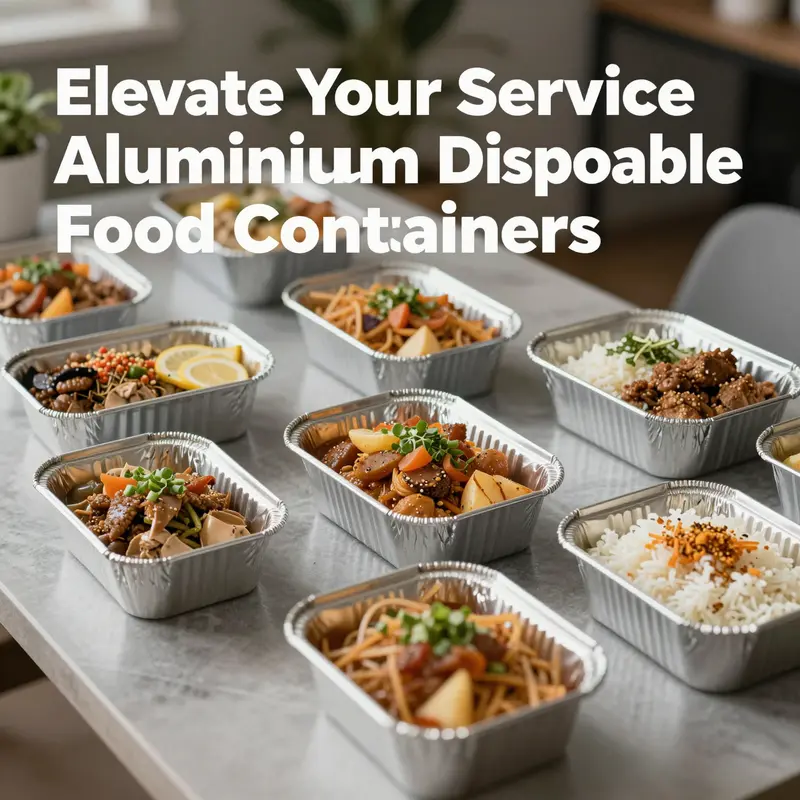
The food service landscape is evolving, and businesses from bubble tea shops to corporate catering teams are seeking efficient, eco-friendly packaging solutions. Aluminium disposable food containers offer a perfect blend of functionality, safety, and sustainability. Their lightweight construction and excellent resistance to moisture and grease make them ideal for a variety of food applications, from quick-service meals to event catering. This article explores the different types of aluminium containers available, their environmental impact, current market trends, and reliable suppliers, helping your business make informed choices.
null
null
Shimmer and Footprint: Unpacking the Environmental Footprint of Aluminium Disposable Food Containers
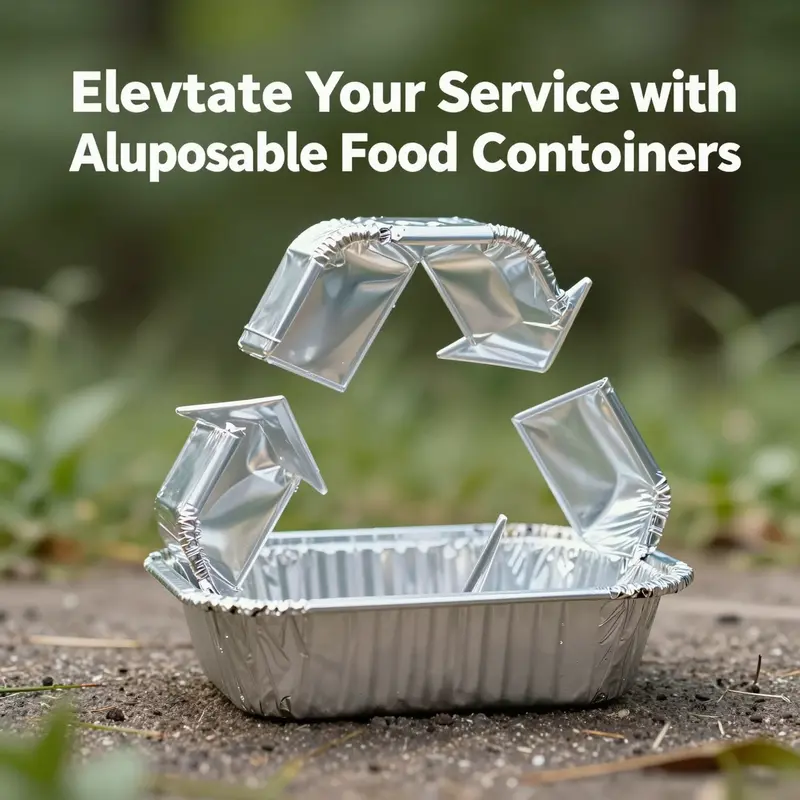
Aluminium disposable food containers occupy a paradoxical place in modern packaging. They offer reliability, safety, and practical performance for hot meals, soups, stews, and moist foods, while also presenting an environmental story that is not simply one of waste and harm. Their value begins with the material itself: a thin, highly malleable sheet that resists moisture, air, and grease, making them staples in both fast-casual service and take-away cultures. Yet the same metal that enables clean handling and efficient reheating can carry a significant carbon footprint at the moment of extraction and refinement. The lifecycle debate hinges on two pivotal realities: the energy-intensive start of aluminium production and the energy savings that come with recycling. When examined in isolation, the raw material’s origin looks heavy; when seen through the lens of a circular economy, it can become a case study in how design, policy, and consumer behavior together shape sustainability. The chapter that follows treats aluminium containers not as a simple binomial of good versus bad, but as a material whose environmental fate depends on decisions made at every stage of its journey—from design decisions and manufacturing choices to end-of-life handling and societal norms around recycling.
A core point in the environmental accounting of aluminium containers is their recyclability. In practice, aluminium can be recycled indefinitely without a meaningful loss of its properties, and the energy required to recycle is dramatically lower than the energy needed to produce primary aluminium from ore. It is commonly cited that recycled aluminium uses up to 95 percent less energy than producing new material. That stark energy gradient positions aluminium as one of the more favorable options in terms of long-term environmental performance, provided the containers are collected, cleaned, and reintroduced into the recycling stream. In a world where plastics struggle with mechanical recycling and contamination challenges, aluminium’s ability to be re-melted and reused repeatedly is a compelling attribute. The upshot is that, if the system around the product works—proper sorting, efficient collection, and robust recycling infrastructure—the containers contribute less to the waste stream than many of their disposable peers and can support a genuinely circular lifecycle. This is especially true when compared with certain plastics that may degrade in performance or release additives that complicate recycling streams. Yet the strength of aluminium in recycling hinges on behavior beyond the factory floor: consumers and businesses must understand how to prepare containers for recycling, and municipalities must provide accessible programs that minimize contamination and maximize recovery.
The flip side of this recycling advantage is the substantial energy input required during the initial production phase. The journey from bauxite ore to a finished aluminium sheet involves energy-intensive steps, including mining, refining, smelting, and rolling. In many regions this energy is still sourced in large part from fossil fuels, which elevates the carbon footprint of aluminium products at the outset. As energy systems evolve and cleaner electricity becomes more widespread, the upstream emissions of aluminium can fall. Still, the current baseline remains a factor, especially in markets with less mature energy mixes. The real question becomes how much of that upfront cost is offset over the container’s life through recycling and repeated reuse in a circular chain. When recycling rates are high and post-consumer collection is efficient, the net environmental impact tilts in favour of aluminium. When recycling is weak or contamination is rampant, the advantages erode quickly.
A practical dimension of the environmental narrative concerns how these containers are used in kitchens and on the move. Their lightweight nature, corrosion resistance, and superior heat conduction make them ideal for take-away meals, catering, and even some forms of meal-prep that require stable reheating without transferring food to another vessel. The convenience factor is real: food can travel safely and arrive hot, with minimal risk of leaks. But this convenience carries an obligation. To preserve recyclability, containers should be free from heavy food residues that could complicate processing. A quick rinse or scrape is often enough to ensure the material can be remelted cleanly. Without that step, contamination can degrade the quality of the recycled stream, potentially limiting the number of times a batch can be recycled and increasing the likelihood that the material will be diverted to landfill or downcycled. Clean separation is not a minor chore; it is a central practice that sustains the environmental promise of aluminium packaging. In this sense, the container’s value is as much about post-use behavior as it is about its performance in transit.
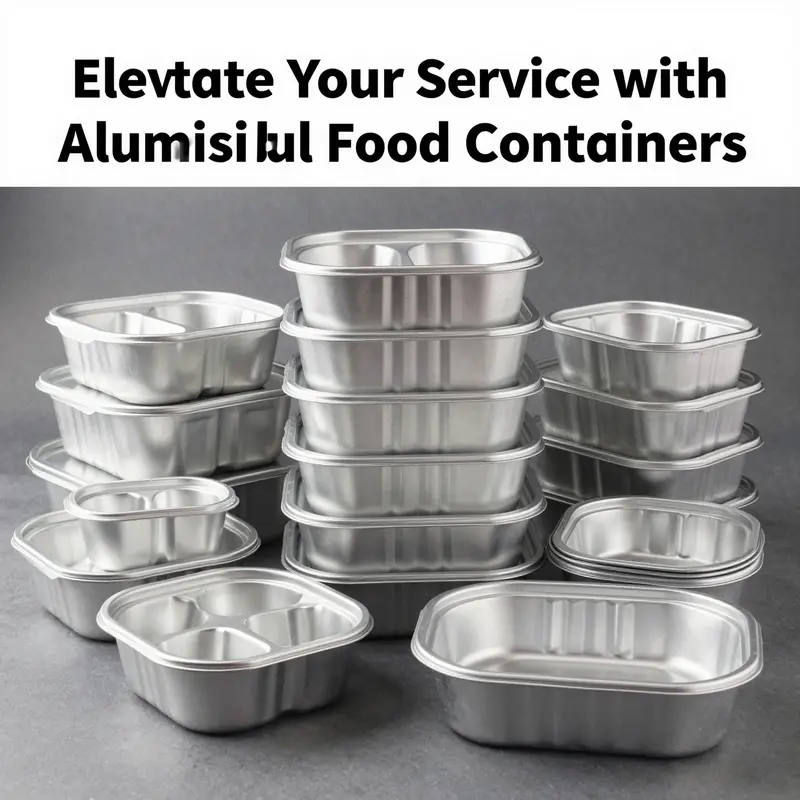
The design and use patterns of aluminium containers also influence their environmental outcomes. Single containers, often sold with secure lids for soups and meals, minimize spillage and simplify portion control. Double containers, with two compartments for a main dish and sides, reflect a design intention toward more complete meal packaging, yet they also create more surface area and potential complexity in recycling streams if their components differ or if they incorporate other materials. Some variants combine foil with plastic lids or other layers, adding barriers to recycling if the construction introduces incompatible materials. The broader implication is that the more a package maximizes recyclability through straightforward material choices and clean separability, the more effectively its end-of-life impact can be controlled. Conversely, designs that complicate separation or rely on multilayer coatings can hinder recycling and increase waste, even if their performance in use is exceptional. This tension highlights how packaging engineers and sustainability teams must balance functional demands with end-of-life realities, and how consumer education can tip that balance in favor of a more circular outcome.
Beyond the technical and behavioral dimensions, the environmental story of aluminium containers is inseparable from regional waste management capabilities. In regions where well-organized recycling infrastructure exists, aluminium can indeed close the loop, returning to production with relatively modest energy demands. In places where recycling collection is fragmented, or where households are not consistently motivated to separate recyclables, the same containers may contribute to higher waste totals. In that sense, the environmental footprint of aluminium is not a fixed metric but a systemic product of policy, public awareness, and local logistics. The trajectory of recycling rates—improving but uneven—reflects this broader governance landscape. It is also a reminder that sustainable packaging cannot rely on a single solution or a one-size-fits-all message; it requires a spectrum of actions across design, policy, and everyday practices. Even modest improvements, such as easier rinsing, clearer labeling for recyclability, and more accessible drop-off points, can yield meaningful reductions in energy use and emissions over time.
A further layer of the discussion concerns the evolving energy mix powering aluminium production and recycling. As electricity systems decarbonize, the carbon intensity of both primary production and recycling declines. In such a scenario, the environmental advantages of recycling become more pronounced, reinforcing the case for strong end-of-life programs and robust collection networks. Conversely, in regions dependent on fossil fuels, the immediate carbon cost of producing new aluminium remains a significant consideration, underscoring the value of policies that promote recycling and responsible consumption. These dynamics do not diminish the importance of reducing consumption or selecting lighter, more efficient designs; instead, they encourage a more nuanced approach: design for recyclability, invest in recycling capacity, and cultivate consumer habits that favor proper sorting and cleaning. The combined effect is a more resilient packaging ecosystem that can adapt to shifts in energy infrastructure while maintaining the functional benefits that aluminium containers deliver to food service operations.
As the packaging landscape evolves, the focus on aluminium cannot ignore alternatives that might complement or challenge its role. While recyclable aluminium has clear advantages, there is growing emphasis on materials and systems that reduce overall waste, improve compostability, or lower energy demand at every stage. A balanced strategy often includes a portfolio approach: aluminium where high performance and durability matter, and other materials where appropriate for different product categories and end-of-life pathways. Importantly, this broader view should not undermine the central message that responsible management of any disposable packaging hinges on the entire lifecycle—from material choice and design to collection, sorting, and recycling efficiency.
For readers exploring how to translate these insights into practice, one practical entry point is to consider packaging alternatives that share a focus on recyclability and waste reduction. A glance at Kraft paper take-away boxes and similar containers can offer a contrasting sustainability profile, especially when used in systems with strong recycling or composting channels. See a representative option here: Kraft paper take-away boxes with lids. This example is not a rejection of aluminium’s capabilities; it is an invitation to compare trade-offs and to design accordingly for the local waste infrastructure and consumer behavior. The choice of packaging should reflect not only the material’s raw performance but the entire chain of custody that determines whether a container actually returns to production. In the end, aluminium’s environmental promise is strongest when it is part of a well-functioning circular system that minimizes energy use, maximizes material recovery, and encourages responsible consumer practices.
External resources can illuminate the broader energy and recycling picture. For a concise overview of aluminium recycling facts and figures, which helps place these trade-offs in context, consult the Environmental Protection Agency’s synthesis of energy savings and recycling outcomes. External resource: EPA Aluminium Recycling Facts and Figures
Rising Currents: The Global Trajectory of Aluminium Disposable Food Containers
Aluminium disposable food containers have quietly become a central backbone of modern food service, a facet of packaging that blends practical performance with a steady, scalable path toward sustainability. They are born from thin, malleable sheets of metal whose natural barriers to moisture, air, and grease make them formidable against leakage and spoilage. In a world that prizes speed, hygiene, and portability, these containers help meals travel from kitchen to consumer with minimal risk of quality loss. Their lightweight character reduces handling costs, lowers transportation emissions compared with heavier alternatives, and supports the increasingly complex logistics of takeout, delivery, and catering. More importantly, their thermal properties are a practical ally to cooks and operators: food can be kept hot for service, or reheated safely in conventional ovens and, in many cases, even in microwaves, without demanding a transfer to another vessel. This combination of resilience, convenience, and safety underlines why aluminium remains a robust option as consumer demands shift toward single-serve and ready-to-eat formats.
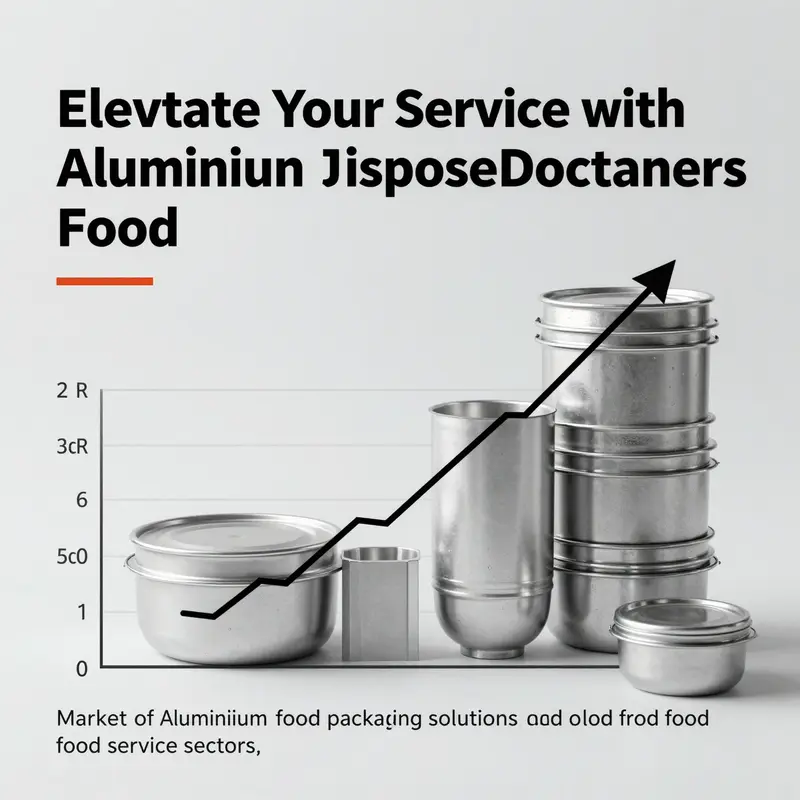
The market dynamics surrounding aluminium disposable food containers reflect a maturation process in which design, reliability, and regulatory compliance become as important as price. Global market analyses show a substantial expansion in value over the next decade, moving from a 2024 valuation around USD 3.5 billion to a projected USD 6.2 billion by the mid-2030s, underscored by a steady compound annual growth rate near six percent. This trajectory is not random; it tracks the evolution of consumer behavior and business models in the foodservice and retail sectors. At the heart of this growth are practical features tailored to real-world use. Single containers remain indispensable for portion-controlled takeout and quick-service settings. But the appeal of more sophisticated configurations—such as multi-compartment designs that keep soups separate from bread, or sides from mains—has broadened the appeal of aluminium for complete meals in a single package. The ability to adapt to different meal formats while preserving taste and texture makes these containers attractive to a wide range of operators, from casual eateries to corporate cafeterias and beyond.
Emerging markets are a particularly important part of this story. As economies grow and disposable incomes rise, more consumers seek convenient, hygienic, and safe packaging solutions for on-the-go meals. In these contexts, the appeal of ready-to-eat formats grows in step with rising urbanization and changing work patterns. The value proposition is not just about convenience; it’s also about trust. Packaging that reliably protects food during transit, remains stable under varying temperatures, and can be processed through established waste streams earns credibility with both foodservice operators and regulators. While aluminium is not the only option in the packaging ecosystem, its recyclingability and proven performance give it a long runway in markets where waste management infrastructure is improving and where consumer expectations for safety and cleanliness are high.
From a manufacturing perspective, the pricing landscape for aluminium containers is shaped by the scale and efficiency of supply chains. Large-scale production capabilities in major manufacturing hubs offer cost advantages that can translate into competitive unit prices, especially for bulk orders. While the per-piece cost can vary widely depending on size, design, and order volume, commodity-like dynamics—where higher volumes drive lower unit costs—remain a defining feature. Operators are increasingly sophisticated in their sourcing strategies, evaluating suppliers not only on price but also on delivery reliability, customization support, and after-sales service. Compliance with food-contact safety standards—such as those aligned with international regulatory frameworks—becomes a critical criterion in supplier selection. In practice, this means buyers look for a credible track record of consistent quality, predictable lead times, and clear communication channels. The result is a procurement landscape that values reliability as much as price, reinforcing the idea that the most successful packaging partnerships are built on performance and trust rather than on cost alone. The discourse around sourcing often references low-cost manufacturing regions, yet the best outcomes arise where cost is balanced with consistent quality, regulatory compliance, and the ability to respond quickly to changing demand.
Design innovation continues to push aluminium containers beyond their traditional role. While the metal’s raw advantages remain the foundation—barrier properties, heat tolerance, and recyclability—manufacturers experiment with forms that improve user experience and handling safety. Fluted edges, for instance, can improve grip and reduce tearing during transport and opening. Double-tier and two-compartment configurations illustrate a trend toward more complete, meal-ready solutions in a single package, enabling a portioned soup or stew to accompany bread, crackers, or condiments without compromising the integrity of the main dish. The integration of features such as secure lids, easy-pour rims, and compatibility with standard reheating methods broadens the appeal for airlines, caterers, and mass-service environments. Sustainability narratives also influence design, as suppliers and buyers increasingly frame aluminium packaging within a circular economy. The 100% recyclability of aluminium, coupled with the potential for indefinite recycling without deterioration, resonates with initiatives to minimize waste and extend the value chain. Cleaned and sorted containers can re-enter the production loop an untold number of times, reducing the environmental footprint of packaging choices when properly managed. In practice, this circular potential matters because it aligns with consumer expectations for responsible packaging, and it complements broader corporate commitments to sustainability and waste reduction.
The interplay between demand drivers and supply capabilities shapes how businesses approach packaging decisions. In foodservice and delivery, the growth of takeout and at-home consumption reinforces the appeal of sturdy, leak-resistant containers that can hold liquids and semi-liquids without compromising taste or texture. The capacity to maintain quality during transit translates directly into higher customer satisfaction, lower complaint rates, and fewer product returns. In commercial settings, the flexibility to offer multi-meal solutions in a single container reduces the number of packaging components operators must manage, simplifies inventory, and can improve order accuracy. For consumers, the convenience of a structurally dependable, oven- and microwave-safe option lowers the barrier to reheating meals at home, which in turn supports meal planning and reduces reliance on secondary containers during transit. The environmental claim—“recyclable indefinitely” when properly managed—adds a second dimension to decision-making, especially for buyers who must balance up-front costs with long-term waste handling and disposal considerations.
Despite aluminium’s strengths, buyers and designers continue to weigh the alternatives within the broader packaging mix. The market discussion is not a dichotomy of metal versus plastic or paper; instead, it is an ecosystem where each format occupies a niche based on cost, performance, and the specific demands of a use case. This reality matters for anyone looking to understand the trajectory of aluminium packages: they are best viewed as one option in a spectrum that includes multiple materials, each with distinct advantages and trade-offs. In this context, the importance of supplier reliability becomes more pronounced. As demand grows, ensuring a steady supply, stable pricing, and responsive customization support becomes essential to maintaining service levels and protecting margins. The regulatory backdrop adds another layer of complexity, with requirements for food-contact materials guiding not only product design but also the traceability and stewardship practices that accompany procurement.
From a strategic perspective, the aluminium packaging segment benefits from a clear alignment with consumer preferences for convenience, safety, and environmental responsibility. The evolving market landscape suggests that, for many operators, aluminium containers will continue to play a central role in takeout and catering, while also potentially expanding into new uses such as meal-prep preparation, retail-ready bundles, and specialty dining experiences where durability and heat tolerance are valued. The future of packaging design in this space will likely emphasize modularity, recyclability, and ease of end-of-life processing, ensuring that the material’s advantages are not transient but integrated into a durable, value-driven supply chain. In this sense, aluminium disposable food containers are less a passing trend and more a long-term component of efficient, responsible food systems.
For readers seeking a concrete sense of how packaging formats compete and complement one another, consider how a broader set of disposable solutions coexists in the market, including convenient, heat-tolerant formats designed for ready-to-eat meals. While aluminium’s barrier properties and recyclability put it at an advantage for liquids and semi liquids, other formats remain important for different contexts—each choice shaping how meals are presented, heated, and disposed of. This nuanced view helps explain why the market continues to grow and why operators in diverse regions are keen to incorporate aluminium containers into their menus and distribution models. The commercial takeaway is straightforward: as the foodservice landscape becomes more dynamic and consumer expectations rise, packaging choices that combine performance, safety, and sustainability endure as core assets in the supply chain. When a business can reliably deliver hot, fresh-tasting meals in a sealed, recyclable vessel, it builds trust with customers while laying the groundwork for efficient waste management and responsible consumption.
null

null
Final thoughts
Aluminium disposable food containers present an excellent opportunity for businesses within the food service industry. Their lightweight, versatile, and eco-friendly nature not only enhances operational efficiency but also aligns with growing consumer demands for sustainable practices. Whether you’re a bubble tea shop, restaurant, or catering service, embracing aluminium containers can elevate your brand image and contribute positively to the environment. By understanding the types, environmental impact, market trends, and finding trustworthy suppliers, you can confidently make the transition or enhancement within your food packaging strategies.