

In an era where eco-conscious choices significantly influence consumer behavior, orange plastic food packaging containers are emerging as a popular option within various sectors in France. From bubble tea shops to catering services, the appeal of these containers goes beyond aesthetics. They symbolize a commitment to food safety while also offering vibrant branding opportunities. This article explores the availability and customization options for these containers, the market relevance in the French context, and supplier information crucial for businesses aiming to source high-quality food packaging solutions.
Orange on the Shelf: Availability, Customization, and Regulatory Pathways for Plastic Food Containers in France
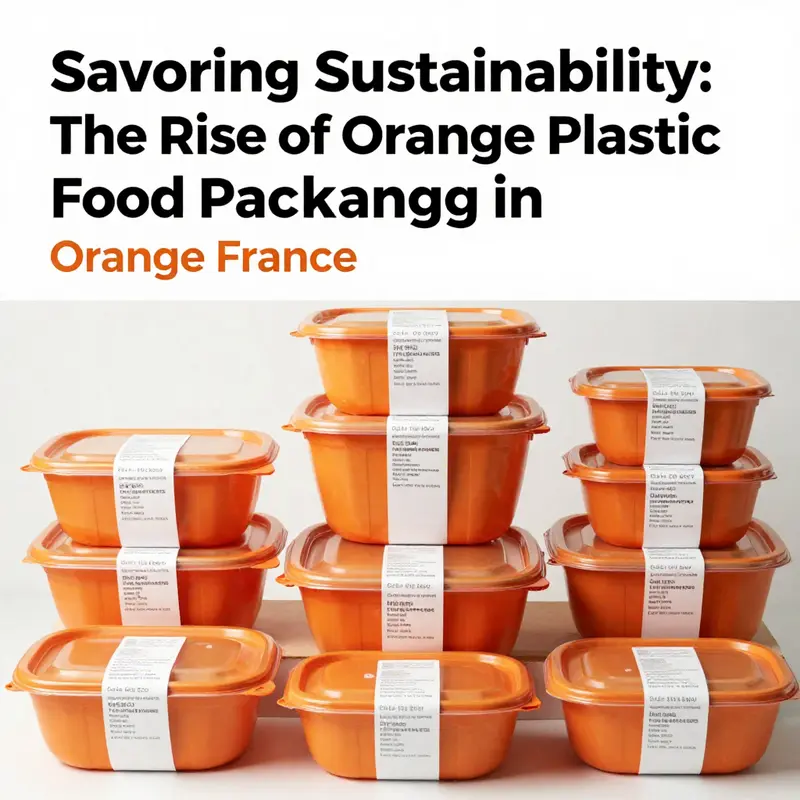
Color is often the first storyteller on a grocery shelf. In the case of plastic food containers, the vivid orange hue can be more than a branding choice; it is a signal that a product may be fresh, bold, or convenient, and in many French retail contexts that signal resonates with consumers scanning crowded aisles for quick, trustworthy storage options. The palette of orange, in particular, has a way of standing out without shouting. It can imply fruitiness for ready-to-eat meals, warmth for family-size portions, or a bright cue for single-serve portions that need easy identification in a busy kitchen. Yet behind this perceptual appeal lies a complex web of availability and customization that must synchronize with the strict regulatory standards, environmental expectations, and evolving consumer preferences that define the French packaging market today. In such a context, orange plastic food containers are not simply a color choice; they are part of a broader strategy to align visibility, protection, safety, and sustainability within a highly regulated and culturally attuned marketplace. To understand how orange containers can be sourced and tailored for France, one must trace the supply chains that enable color customization, examine the materials known to be safe for contact with food, and consider how packaging regulations shape design decisions over the life of a product—from production line to disposal at the end of a shelf life. This chapter weaves together those strands into a coherent picture of what availability looks like in practice and how customization can be leveraged to meet market needs without compromising compliance or environmental integrity.
Availability begins with the recognition that, in today’s globalized packaging industry, color is often a controllable variable. Manufacturers and suppliers serving European markets frequently offer orange as a standard option among a spectrum of colors, with the possibility of precise color matching when a client requires a specific shade to align with branding guidelines or store-level merchandising. Across the supply chain, the most common materials for food-grade plastic containers are polypropylene (PP) and polystyrene (PS). Both materials have long-standing acceptance for food contact in many jurisdictions, provided they meet the relevant safety standards and are free from substances of concern. For France, this means adherence to European Union rules governing food-contact materials, along with country-specific expectations about recyclability, labeling, and end-of-life responsibility. In practice, manufacturers emphasize color stability, heat resistance where applicable, and the ability to withstand short-term temperature variations that occur during storage and display. They also stress the importance of inert fillers and safe processing methods to minimize any potential migration of additives into stored foods. The consequence for buyers in France is a clear promise: orange containers can be produced in a form that is both safe for food and compatible with existing warehouse and retail systems, while also fitting into the country’s environmental objectives.
A central feature of availability is the capacity for customization. Customization covers a broad range of variables, from the fundamental color of the container to the surface decoration, branding, and even architectural details of the container’s shape and lid. In the current European procurement environment, producers emphasize color as a native characteristic of the base plastic, rather than as an after-market coating that could complicate recycling. This approach supports easier end-of-life processing—an important consideration for France’s packaging waste management framework. Beyond color, customization often includes the ability to select different shapes—from rectangular to square and beyond—and sizes suited to diverse food formats, from compact single-serve portions to larger meal-sets. The ability to tailor lid closures, wall thickness, and even the mechanical features of stacking and nesting can yield real advantages for food service operations and retail displays alike. For brands intent on French markets, the option to customize branding through internal graphics or external labeling adds another layer of value. Screen printing or direct printing on the container’s surface allows a brand to communicate product origin, storage instructions, and allergen information in a manner that is legible at the point of purchase. In this context, orange becomes a workhorse color that carries branding leverage while remaining compatible with the practical constraints of packaging design and European regulatory expectations.
The European and French regulatory environment is a critical determinant of what customization can be pursued and how quickly it can reach store shelves. France participates in the broader EU regime aimed at ensuring that materials in contact with food are safe, properly labeled, and recyclable. The path to market typically involves demonstrating compliance with EU food-contact regulations, assuring that materials used in the containers do not release harmful substances into food under typical conditions of use. In addition to safety, many suppliers highlight recyclability and the absence of bisphenol A (BPA) as value propositions. BPA-free status is particularly salient given consumer awareness and regulatory scrutiny around endocrine-disrupting compounds. Recyclability, in turn, aligns with France’s extended producer responsibility (EPR) framework, which places a responsibility on producers to contribute to the collection, recycling, and overall environmental performance of packaging waste. For products destined for the French market, producers also point to certifications that signal compliance with EU-wide and national standards for packaging materials, including traceability, labeling accuracy, and proper documentation for import and distribution. In practice, this means a chain of assurances—from raw material suppliers to processing facilities and finally to packaging manufacturers—that the orange containers meet the stringent expectations of regulators, retailers, and consumers.
An important aspect of the French context is the attention to microplastics and their potential ingress into food through packaging pathways. A growing body of research highlights concerns about microplastic leaching and the life-cycle impacts of plastic packaging. In France and across Europe, this has accelerated demand for safer alternatives and for packaging made from materials that can be reliably recycled and recycled again without compromising food safety. The discussion around microplastics informs both policy and procurement choices: buyers increasingly seek evidence of compliance with safe-material standards, clearly defined migration limits, and robust environmental claims backed by credible testing. The macro implication for availability and customization is that orange containers are not merely a cosmetic choice; they must be backed by a lifecycle narrative that demonstrates how a given solution minimizes risk, supports recycling streams, and reduces the environmental footprint of food storage. This is not only about meeting current regulations but about anticipating evolving norms around circularity, waste reduction, and consumer trust in packaging systems.
From the supply-side perspective, the export of orange plastic food containers to Europe—including France—has become a well-trodden path for manufacturers in Asia that specialize in high-volume production and customization. The capability to deliver in bulk, with consistent color and material quality, is a key driver of supply. The production processes typically support a broad range of color-matching services, enabling buyers to specify Pantone matches or equivalent color standards for orange that align with corporate branding. Material options focus on PP and PS as baseline choices, with some facilities offering PET or other food-grade materials for particular applications. A central element of the buyer-supplier relationship in this space is transparency about certifications, quality control, and production capacity. Buyers in France expect not only the technical fit of the container for their food products but also credible documentation that the supplier adheres to food-safety standards, environmental compliance, and export-ready traceability. When these expectations are met, the path to market becomes smoother, enabling retailers and food-service providers to offer orange packaging that is both visually compelling and confidently compliant.
Within this ecosystem, an accessible route to understanding the breadth of options is to consider the broader landscape of plastic packaging categories—from standard food-grade trays to more specialized containers designed for meal-prep, produce storage, or ready-to-heat meals. The information ecosystem around these products often points to centralized catalogs and supplier pages that emphasize color options, material variants, and customization capabilities. For French importers, such sources can provide a baseline understanding of what is feasible, what compliance entails, and how branding and design can be integrated into the packaging. An important navigational consideration in this context is the availability of a single channel that can coordinate design, color matching, and regulatory documentation to streamline procurement. In many cases, buyers can secure not only the containers themselves but also label printing services, branding considerations, and packaging artwork alignment to ensure a coherent shelf presence in French supermarkets and food-service outlets. In this sense, orange becomes a practical asset that can be leveraged across multiple product families, whether the objective is to differentiate products on shelf, signal a specific category such as ready-to-eat or meal-prep, or simply convey a sense of warmth and approachability in a crowded market.
From a practical standpoint, procurement teams often seek to anchor their decisions in a balance between design flexibility and regulatory certainty. The customization options described—color, branding, shape, size, and material selection—are part of a broader risk management approach that considers food safety, packaging waste, and regulatory compliance. The emphasis on food-grade materials, BPA-free claims, and recyclability reflects a mature understanding of the French market’s expectations. At the same time, the ability to align orange containers with branding strategies and store-level merchandising provides a tangible competitive advantage. This alignment is particularly important in France, where consumer expectations around sustainability are intertwined with health and safety concerns. When designing or selecting orange plastic containers for French applications, teams weigh the ease of integration into existing cold- and room-temperature storage environments, the practicality of stacking and flow in food-service operations, and the readability of labeling, including allergen information. They also consider whether the chosen solution supports a circular economy narrative—one that can justify the use of recyclable PP or PS materials and contribute to measurable outcomes in waste reduction and resource conservation.
The inward focus on customization also brings attention to the practical realities of production lead times, minimum order quantities, and supply reliability. While large-volume manufacturers can offer broad customization, this often comes with longer lead times and higher minimums. For smaller brands or for trials in French markets, it may be necessary to negotiate more flexible terms, including smaller run sizes or phased rollouts. The ability to source orange containers that meet precise color specifications and branding requirements while maintaining a predictable delivery schedule is a critical capability for market entrants and established players alike. In this sense, availability is not merely about having orange containers in stock; it is about the reliability of the supply chain to deliver the exact shade, the exact dimensions, and the exact regulatory assurances that a French retailer or restaurant chain requires. Customization, therefore, becomes a differentiator that cannot be separated from compliance and supply chain discipline.
To support the reader who may wish to explore the broader context of packaging options, consider how a general category like plastic packaging is organized and how it connects to the specifics of orange containers. An internal reference to the broader plastic packaging category can illuminate how color choices are integrated within a larger system of packaging solutions, ensuring consistency across product families and channels. For deeper exploration of related packaging categories and to see how color-focused packaging fits into a wider portfolio, you can browse the plastic packaging category. This link can serve as a practical gateway to understanding how orange containers are positioned among other color options and packaging formats, and how producers synchronize color, material, and design for a cohesive brand experience across markets. plastic packaging category
Beyond the conversation about availability and customization, the French market’s reception of orange plastic food containers is shaped by the growing consumer emphasis on sustainability. Consumers increasingly scrutinize the life cycle of packaging, want assurance that the packaging has been produced using safe materials, and expect end-of-life options that align with a circular economy. For manufacturers and suppliers, this translates into a triad of commitments: first, confirm the safety and stability of materials in contact with food; second, provide clear communication about recyclability and recycling streams in place in France and Europe; and third, support traceability and documentation that can withstand regulatory scrutiny. In this light, orange packaging offers an opportunity to meet functional needs while signaling a commitment to responsible practices. The shade can be used to draw attention to environmentally friendly attributes, such as recyclability or the absence of certain hazardous substances, while the container’s design ensures that these messages are legible, durable, and faithful to the product’s intended use.
The chapter would be incomplete without acknowledging the knowledge base that informs these design and procurement decisions. The broader body of research on microplastics and their potential impact on human health through food contact informs both policy and consumer expectations. The MDPI article on microplastics from food packaging provides a scientific context for why European markets, including France, increasingly seek transparent information about material safety, migration limits, and lifecycle considerations. While the specifics of microplastic risk are evolving, the overarching takeaway for orange containers is clear: packaging choices are not neutral. They carry implications for safety, consumer trust, environmental stewardship, and regulatory compliance. This awareness shapes both how orange containers are manufactured and how they are marketed, ensuring that they perform as intended in real-world conditions while aligning with broader societal goals around sustainability and health.
In sum, orange plastic food containers entering the French market represent a binding intersection of availability, customization, safety, and environmental responsibility. Availability is driven by global manufacturing capacity and color-matching capabilities that can deliver consistent, food-grade PP or PS containers in orange. Customization extends beyond color to branding, shape, and size, enabling products to stand out on a French shelf while remaining compatible with store logistics and consumer usage patterns. Regulatory certainty, including EU food-contact compliance, BPA-free signaling, and recyclability, anchors these choices in a framework that values safety and environmental stewardship. Finally, the ongoing discourse around microplastics pushes brands to communicate clearly about material safety and end-of-life options, reinforcing the need for robust documentation and transparent claims that can withstand scrutiny from regulators, retailers, and consumers alike. Taken together, these elements create a dynamic landscape in which orange containers are not merely a tool for storage but a strategic instrument for market fit, brand differentiation, and sustainable packaging practice in France. For practitioners and researchers alike, this integrated view helps explain why availability and customization remain central to the successful deployment of orange plastic packaging in a market that prizes safety, clarity, and responsibility as much as color and convenience. External references to the scientific discourse on microplastics can provide additional context for readers seeking to connect packaging choices with health and environmental considerations: https://www.mdpi.com/2077-0472/14/1/12.
Orange Signals: The Strategic Role of Plastic Packaging Containers in France’s Food Landscape
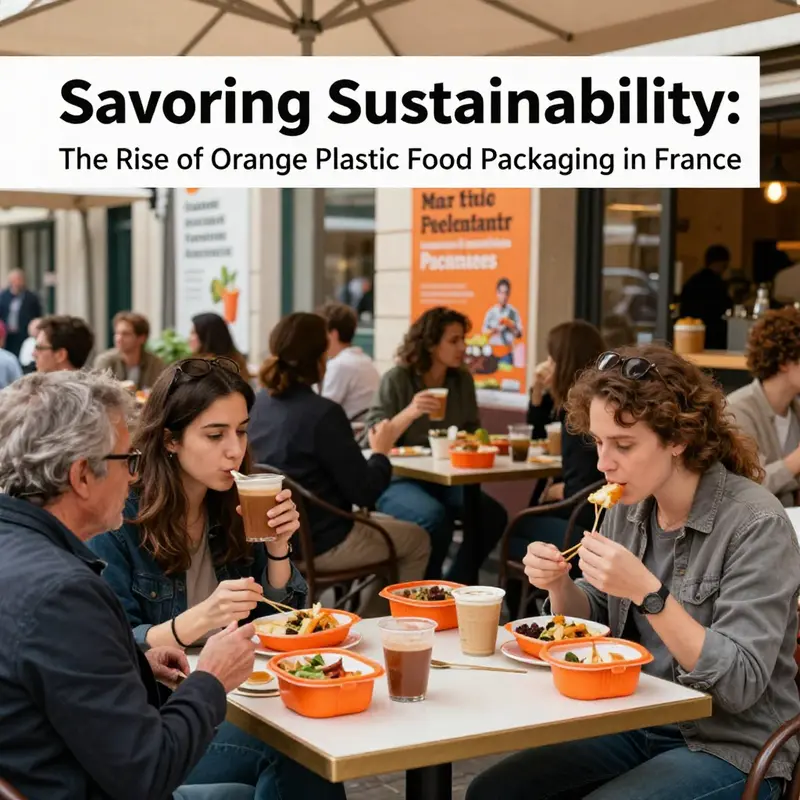
Color serves as a communication tool in French retail. Orange containers can signal warmth and accessibility, while delivering practical benefits in storage, handling, and brand differentiation. In France, packaging regulations for food contact materials, recyclability requirements, and safety standards shape the use of PP and PS containers and influence color choices. The orange hue, when used thoughtfully, supports visibility on crowded shelves and aligns with sustainability goals through design choices that favor recyclability and single-material constructions.
From Factory Floors to French Shelves: Navigating Supplier Networks and Export Readiness for Orange Plastic Food Containers
The journey of orange plastic food containers from a manufacturing floor in Asia to the clean, organized shelves of French retailers is a study in logistics, compliance, and market savvy. It is not enough to design a container that holds a carrot or a citrus segment with a cheerful hue; the path to the point of sale in France demands a careful alignment of material performance, regulatory compatibility, sustainability commitments, and reliable export capabilities. In this chapter, we trace how supplier networks are structured to serve European demand for orange packaging, what export readiness looks like in a market with stringent food contact standards, and how importers can navigate the checks and assurances that turn a prospective order into a dependable supply line on the ground in France. The narrative that follows binds technical realities with market expectations, painting a picture in which color is not merely cosmetic but a signal of a supplier having the means to meet the strict realities of food safety, waste management, and traceability demanded by European authorities and French consumers alike.
The French and broader EU market imposes a set of rigorous checks for any plastic packaging destined for contact with food. The regulatory backbone is built around the fundamental EU framework that governs materials in contact with food, with specific provisions that evolve as new scientific insights about microplastics and chemical migration emerge. In practice, this means that orange plastic food containers must be manufactured from food-grade polymers such as polypropylene and polystyrene that can meet the EU food contact regulations. Beyond the base material, the supply chain must demonstrate that the product is BPA-free or free of other restricted substances, that it is compatible with the intended food contact use, and that the packaging can be recycled or disposed of in a manner that aligns with French waste management policies. The emphasis on recyclability in the French context is not cosmetic. It is a genuine expectation shaped by deepening concerns about environmental impact and a policy environment that pushes for extended producer responsibility and transparent end-of-life stewardship.
In the core supplier landscape that serves European markets, the export capability of manufacturers plays a decisive role. A large, export-oriented producer with extensive capacity is better positioned to meet the continuous demand of a market like France, where retailers and industrial users alike require consistent delivery schedules, clear documentation, and scalable production runs. A credible supplier profile to consider would emphasize a few key dimensions: robust production capacity, a diversified materials base including PP and PS, and a proven track record of supplying to overseas markets with documented compliance. In practice, this translates into production facilities that can sustain several lines running in parallel, with daily output that could approach the tens of tons, and weekly output that can meet bulk orders without compromising on lead times. Importantly, such a supplier would maintain strict process control, enabling uniform color consistency throughout runs—an essential consideration for orange containers that need to harmonize across shipments and product lines.
Materials stand at the heart of equivalence between performance and safety. PP and PS are among the most common food-grade plastics used in packaging due to their chemical resistance, clarity or opacity, and favorable heat and moisture barrier properties. A supplier that can alternate or blend these materials to meet evolving regulatory expectations demonstrates resilience. In the European context, the ability to supply with certifications that confirm food-grade status, compatibility with EU standards, and alignment with local environmental expectations is critical. When orange color is introduced through pigments or master batches, the supplier must ensure that the colorant itself does not introduce migration risks or regulatory concerns. In many cases, suppliers can offer orange packaging as a customization option within a portfolio that already includes standard tray and container formats. They may advertise a color palette that includes the option for orange on request, backed by the capability to adjust thickness, lid design, and cavity structure to suit particular food products, whether fruit, prepared meals, or bakery items.
From an export readiness standpoint, the functional puzzle becomes twofold: the product must be ready for safe transit and it must be defensible in a French market that asks for transparency. Certifications matter. While the EU framework governs general compliance through EC No 1935/2004, France extends the responsibility through its own channels that often stress end-of-life management, reuse, and recyclability. A supplier with an export orientation is typically well versed in presenting appropriate documentation at the border, such as conformity declarations, material safety data sheets, and evidence of compliance with EU and national regulations. This is where the EPR—extended producer responsibility—emerges as a practical passport for market entry. France and other European markets increasingly require proof that packaging producers participate in recycling schemes and can demonstrate that their products are traceable through the value chain and properly labeled for recycling streams. An exporter with EPR qualification signals that the packaging is designed with end-of-life management in mind, a crucial consideration for buyers who must align their own sustainability commitments with supplier capabilities.
Capacity is the practical heartbeat of export readiness. In the most credible supply propositions, the factory floor and the logistics network behind it reveal a picture of stability and scalability. A typical export-focused operation might report production capacity on a daily basis that translates into tens of tons per day and a weekly cycle capable of delivering hundreds of thousands to millions of units, depending on the target sizes and thicknesses. The production architecture behind these numbers is multi-faceted: several raw material lines for resin preparation, multiple thermoforming lines to shape the trays and containers, and a well-orchestrated packaging and palletizing operation to ready goods for international shipping. An order-to-delivery timeline that accommodates a range of lead times—from simple replenishment orders to larger, project-based runs—becomes a critical factor for importers who must synchronize production with the forecasted demand of French distributors or food service operators. In short, the exporter must prove an ability to maintain a steady cadence of output, while also delivering the quality control signals that French buyers rely on to avoid recalls or noncompliance issues.
The path from factory floor to French shelf is also defined by the culture of documentation and communication that surrounds a credible supplier. Importers should expect a chain of evidence that includes color customization capabilities, the ability to meet specific dimensional tolerances for trays and containers, and documented performance data for the materials in contact with food. The ability to reproduce orange color across different batches becomes a practical test of manufacturing discipline. Color consistency is not merely aesthetic; it is the kind of predictable performance that the food industry depends on to maintain uniform branding and reliable product presentation. Buyers may request samples that verify color, opacity, heat tolerance, and stiffness, along with elemental analyses that confirm the absence of restricted substances. Documentation such as COAs (certificate of analysis), batch records, and material safety data sheets should be readily available and clearly aligned with the stated materials—PP or PS—used in manufacturing.
Beyond the technical and regulatory dimensions, practical questions define the day-to-day reality of sourcing orange packaging for France. MOQs, or minimum order quantities, are a powerful lever in supply chain negotiations. The most reliable exporters often publish MOQs that reflect their production realities while still offering a pathway to smaller, trial runs for new customers in Europe. Delivery terms, whether governed by incoterms such as FOB or CIF, shape the cash flow and risk profile for the importer. Lead times must be transparent and realistic, especially for color customization that may require pigment matching, batch scheduling, and quality checks before shipment. Payment terms, too, matter; many exporters balance lower upfront costs with longer payment cycles, or vice versa, but both sides should aspire to predictability and a shared understanding of penalties for delays or nonconformities. The supply chain must also accommodate logistics constraints, including packaging for air or sea freight, container optimization, and the regulatory hoops that accompany cross-border shipments of plastic materials.
From the framing of supplier capabilities to the concrete steps of due diligence, one guiding principle holds true for any French importer seeking orange plastic food containers: demand for compliance and traceability cannot be decoupled from demand for color and form. The industry has learned that a bright orange container is only as valuable as the confidence that its production is controlled, its materials are safe for food contact, and its end-of-life handling fits into a sustainable system that satisfies regulators and consumers alike. In practice, this means that the best supplier candidates present three pillars in balance: a robust production footprint with scalable capacity, a clear and proven compliance posture that covers EU and national rules, and a credible export track record that demonstrates the ability to deliver consistently to European markets.
For the importer’s due diligence, the questions are specific yet straightforward. Can the supplier confirm the food-contact status of the materials used, and can they provide test results or certificates that document migration limits and safety performance? Are there records showing that the packaging has been used for similar food categories in Europe, with explicit notes on compatibility and recyclability? Does the supplier hold an EPR certification that covers the French market, and can they provide validation of this certification from a recognized body or the regulatory authority? Will the orange color be achievable across the full range of sizes and thicknesses required by customers in France, and can the supplier guarantee color stability across shipments? What are the MOQs and the typical lead times for custom color runs, and how flexible is the supplier in accommodating smaller initial orders versus large-scale allocations? These are not mere administrative questions; they are the testing points that separate a supplier who can service France from one who can only talk about it.
The integration of such supplier capabilities into a broader procurement strategy requires a willingness to engage in a structured dialogue. Importers should not wait for a single offer to decide. Instead, they should request a catalog of available sizes, materials, and finishes, along with a clear mapping of which sizes correspond to which product families. They should seek to understand how color customization is implemented, whether through master batch systems or pre-colored resins, and how this impacts the final product properties such as rigidity, heat tolerance, and stacking strength. They should also ask for the expected lifecycles of the packaging in typical usage scenarios; for instance, how the tray behaves under refrigeration or freezing conditions, how it performs when heated in microwave or conventional ovens, and whether the containers retain their structural integrity during repeated reuse or washing cycles. The goal is to create a decision framework that balances price, performance, compliance, and sustainability.
Sustainability considerations have moved well beyond the realm of corporate rhetoric. The French market, like many EU markets, increasingly treats packaging as a signal of environmental responsibility. This translates into demand for clarity on recyclability, the presence of recyclates in the packaging, and the existence of evidence that the supplier actively participates in end-of-life management programs. A supplier who can show a coherent waste management profile—such as a documented recyclability claim, an EPR program alignment, and traceable supply chain reporting—will be better positioned to win the confidence of French buyers who must reconcile their own sustainability targets with practical supply realities. In the longer arc of market development, orange packaging in France will likely accumulate preference not only for functional performance but also for a credible environmental narrative. This narrative naturally reinforces the business case for selecting suppliers who operate with transparent governance around material selection, design for recycling, and consistent compliance with food safety standards.
The export-ready proposition also intersects with the political and logistical realities of European trade. The supplier must show resilience to shifting regulatory expectations, currency fluctuations, and the evolving requirements of European customs and safety regimes. An essentially robust export model includes contingency planning for supply interruptions, diversified shipping routes, and clear documentation that accompanies each shipment. In addition, the supplier should be able to provide a transparent bill of materials that documents the resin types, colorants, additives, and any coatings used in the packaging. Such transparency reduces risk for the importer in terms of compliance audits, recalls, or unexpected regulatory requests.
As a practical takeaway for readers who are considering orange plastic food containers for the French market, the central message is that color alone cannot guarantee market access. The color is a beacon that signals the supplier is aligned with customization and branding, but the true value lies in a package that can withstand the scrutiny of European food safety authorities, the expectations of French waste systems, and the realities of international logistics. The strongest supplier propositions are those that combine a scalable production engine with a well documented compliance framework, a credible sustainability story, and a practical export track record. For importers, the path to a reliable supply becomes a disciplined process of verification and engagement: request evidence of food contact compliance, verify EPR certification status, evaluate lead times and MOQs against forecast demand, and confirm the feasibility of orange color customization across the full range of sizes. When these elements align, the result is not merely a container in orange; it is a dependable supply relationship that can support the evolving needs of French retailers, food service operators, and consumers who seek safety, speed, and color in equal measure.
For readers seeking a broader view of the packaging category while these supplier and export dynamics are explored, the Plastic Packaging section provides a curated overview of how packaging formats are evolving in response to regulatory and consumer expectations. See the Plastic Packaging category for a more comprehensive look at the landscape for plastic packaging materials and containers.
External resource for further reading: Microplastics from food packaging: An overview of human consumption, health threats, and alternative solutions, which discusses the broader implications of packaging choices on consumer health and environmental safety. https://www.mdpi.com/2077-0472/14/1/12
Internal reference for deeper exploration: Plastic Packaging. For broader context on packaging formats and standards, you can navigate to the Plastic Packaging category here: Plastic Packaging. https://cupbowlpack.com/product-category/plastic-packaging/
Final thoughts
The vibrant hues of orange plastic food packaging containers not only serve as a standout choice for enhancing your brand’s visibility but also reflect a vital commitment to safety and sustainability. As the market continues to evolve, adapting to consumer preferences and regulatory standards, sourcing high-quality packaging is more essential than ever for success. By choosing orange containers, businesses can elevate their brand presence, ensuring both practicality and aesthetic appeal in the competitive food service landscape.