
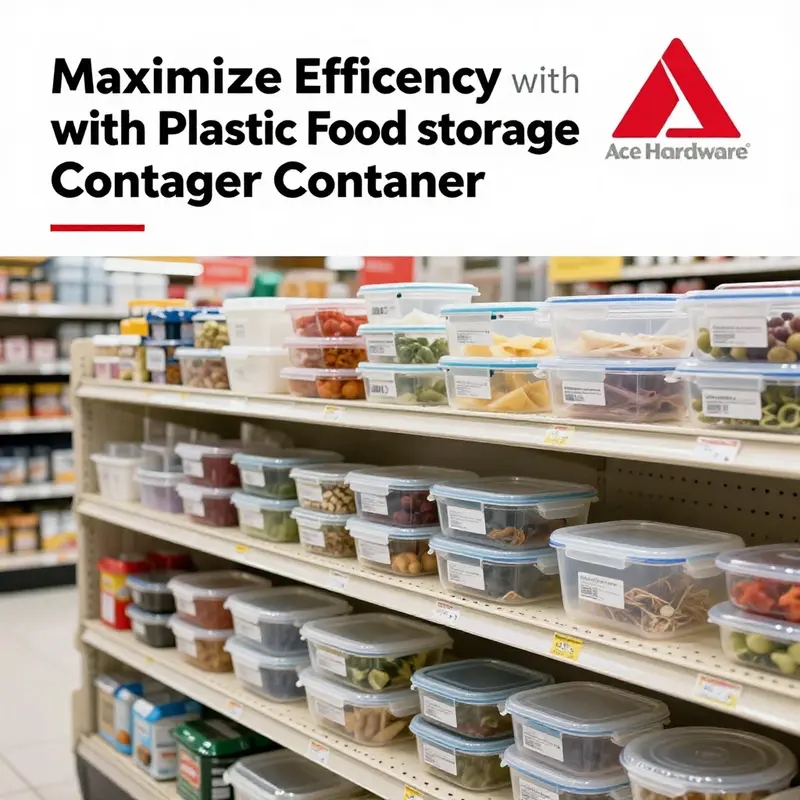
In the competitive world of food service, businesses must prioritize organizational efficiency and food safety. Plastic food storage containers are essential tools for bubble tea shops, restaurants, food trucks, catering services, event planners, and corporate procurement teams. Understanding the material standards and safety of these containers, alongside eco-friendly alternatives and industrial applications, equips businesses with the knowledge to make informed choices. Each chapter delves deeper into these critical aspects, ensuring you’re well-equipped to select the best storage solutions for your needs.
Beyond the Label: Material Standards and Everyday Safety of Plastic Food Storage Containers at Ace Hardware
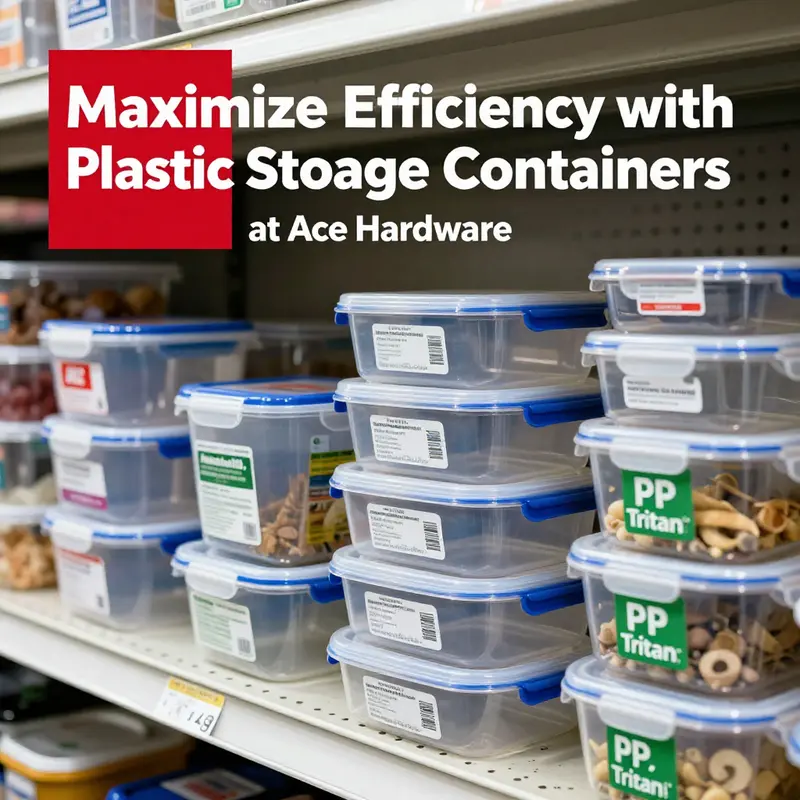
Every household has a story about storage. A cupboard that bursts at the hinge when the cookie tin is lifted, a pantry that sighs as lids are stacked, a fridge door that groans under the weight of mismatched containers. In that quiet drama, plastic food storage containers play supporting roles that often go unspoken. They must withstand heat and cold, survive the tumble of a busy kitchen, resist odors, and still be clear enough to let us peek at yesterday’s leftovers. When a shopper wanders into Ace Hardware or its online storefront, the questions they bring to the aisle are less about color or size and more about safety, durability, and how a container will perform over time. The materials chosen for these containers are not mere inputs; they are commitments to health, to waste reduction, and to everyday reliability.
From a materials science perspective, two polymers stand out in the typical lineup advertised for food contact: polypropylene and Tritan™, a newer copolyester. Both are widely recognized as BPA-free, addressing one of the long-standing concerns about plastic food storage. The emphasis on BPA-free is not just a marketing cue; it reflects a broader regulatory and consumer demand that has shaped what goes on the shelf and what gets sold in hardware stores that want to project safety alongside convenience. In practical terms, polypropylene, with its excellent heat resistance, is a favorite for containers that might encounter hot foods or repeated reheating. It resists cracking when dropped, tolerates frequent washing, and maintains its shape in the dishwasher. Tritan™, meanwhile, is prized for its clarity and impact resistance. It offers a glass-like look without the fragility, making it an appealing option for transparent storage that still stands up to daily wear. Both materials are compatible with food contact under standard guidelines, and both are marketed as BPA-free and BPA-related concerns explicitly mitigated. The durability you feel when you grip a lid that won’t warp after a thousand cycles or a container that remains crystal clear after countless runs through the dishwasher is the real-world payoff of these material choices, and it matters a lot to the typical Ace Hardware shopper.
Reading a label in the aisle becomes more than a quick habit; it becomes a literacy in safety and practical use. For many households, the labels tell a story of how the container should be used. Microwave-safe claims, when present, are not universal across all closure types or all sizes. A product may be marked microwave-safe with a caveat: remove the lid or vent before reheating. Dishwasher safety is another axis of variation. Some containers tolerate the highest heat in the top rack; others require hand washing to prolong the life of the seal and the clarity of the plastic. The interlocking lids that seem almost engineered to stop spills and preserve freshness perform best when used as intended. In real kitchen life, a lid left ajar or a container misaligned can invite leaks, odors, or a misapplied expectation about how long leftovers will stay usable. The careful shopper learns to read not just what the material is but how a given design uses that material to counter common challenges: leaks, odors, color transfer from sauces, and the dreaded flavor carryover from last week’s curry.
Durability and performance hinge on how a container handles chemical exposure as well. Food storage is, at its core, a conversation between the container and the foods it holds. Acids, oils, and even the salt in sauces are agents that can influence odor retention and staining over time. A well-designed polypropylene or Tritan™ container resists such effects better than aging plastics that might start to absorb odors or weaken under repeated exposure to hot or acidic foods. This resistance contributes to the longer service life of a container, a factor that hardware retailers like Ace emphasize because it aligns with responsible consumption and reduced waste. It also matters for the consumer wallet: a longer-lasting container means fewer replacements and less strain on storage space. The capacity to keep pantry and fridge organized is itself a form of efficiency. Stackable designs, a common feature in many bags and boxes in Ace’s lineups, maximize space by allowing containers to nest when not in use and to align like a well-organized set when in use. A simple, elegant consequence of good design is that fewer containers are needed to create an orderly, accessible system. The predictability of the design—how the lids fit, how they click, how the bases nest—reduces the cognitive load of daily kitchen routines and makes it easier for families to store, locate, and reuse what they already own.
All of these properties—heat resistance, chemical compatibility, optical clarity, and interlocking sealing—are not merely abstract features; they are linked to how a family imagines the daily practice of feeding, reheating, and storing leftovers. When Ace Hardware curates its selection, it is striking how closely the choices reflect the core aim: safe contact with food, durability in busy homes, and compatibility with popular kitchen routines. The conversation about safety often circles back to regulatory alignment. In the United States, materials intended for contact with food are governed by federal guidelines that address what is permissible and how labeling should inform consumer choices. The intention is not to trap shoppers in legal language, but to ensure that a container marketed as food-grade will not introduce harmful substances into meals. The clear, modern expectation is that a BPA-free designation is a meaningful indicator of safety, and that the absence of BPA is part of a broader pattern of safety features, including non-odor-imbuing materials and resistance to leaching under typical use conditions. In many Ace Hardware stores, the messaging on packaging and digital product pages mirrors that standard by emphasizing BPA-free construction, heat tolerance, and dishwasher safety, while also recommending careful adherence to label directions.
Beyond the raw materials and the lab-tested safety claims, there is a mindfulness about how these containers participate in the broader lifecycle of kitchen waste. Recyclability matters, and many household-grade containers bear codes that mark their recyclability, commonly indicating polypropylene as code #5. While the code alone does not guarantee easy recycling in every community, it provides a practical signal for consumers who want to recycle properly. The broader story here is one of responsibility: manufacturers must design for reuse, and retailers must present that design with honest labeling so that customers know when a container is suitable for long-term reuse or when it is time to divert it into the recycling stream. In practice, this translates to a simple but meaningful guideline: read the material code, follow the care instructions, and dispose of containers in accordance with local recycling programs. The combination of material understanding and mindful disposal helps close the loop on plastic usage in everyday kitchens.
Caring for plastic food containers also means respecting their glass-like coexistence with food. Tritan™, with its clear, glass-like appearance, invites the eye to inspect contents without opening the seal, which can encourage better meal planning and portion control. But clarity can be deceptive if users assume all plastics are indestructible or that they can disregard the care instructions. Clarity should be paired with respect for heat limits, dishwasher cycles, and lid integrity. The design intent behind an interlocking lid is straightforward: a secure seal that minimizes spills and preserves flavor and texture. In real-world kitchens, this translates to fewer unexpected leaks when a lunch bag bounces around the car or when a sauce jar is jostled in the fridge. The user experience, shaped by these design decisions, becomes a practical form of kitchen literacy: a shopper learns to choose a container that matches their typical meals, its lid aligning without forcing the hand, its walls resisting faint stains, and its gasket remaining pliable after repeated cycles.
From a consumer behavior lens, the Ace Hardware shopping path often weaves together a practical calculus: will this container keep leftovers fresh, will it withstand a hot noodle day as well as a cold salad day, and will the lid stay put when the pantry shelf slides open and closed? The calculus extends into the realm of environmental impact, where the growing availability of reusable and recyclable options matters. The market has shifted in favor of durable, reusable containers made from PP and Tritan™ as opposed to single-use alternatives. This shift aligns with a broader push across households to reduce waste and to invest in products that last beyond a single season. The slow, steady return of durable, repairable storage solutions in home improvement retailers signals a cultural shift toward more deliberate consumption: less waste, more reuse, and a greater awareness of what it means to keep food safe while also protecting the planet.
While the precise product mix varies by store and region, the underlying principles remain consistent. Ace Hardware’s offerings typically reflect standard material practices for safe food contact, with attention to BPA-free construction, temperature tolerance, and cleanability. The result is a shelf that accommodates busy families and professional kitchens alike. For shoppers who want to picture themselves using a container on a daily basis, the practical features—microwave and dishwasher compatibility, interlocking lids, and a stackable footprint—form a reliable mental model of what makes a container worth keeping. The choice becomes less about flamboyance and more about continuity: a container that reliably protects, preserves, and returns to duty after every cycle of use. And for those who seek options beyond hard plastic, the aisle itself offers a range of complimentary packaging solutions that balance convenience with environmental stewardship. A kraft-paper take on food storage, for example, can illustrate an alternative approach to meal planning and portioning, reinforcing that plastic is not the only path to organized kitchens. For readers exploring this angle, a practical example is available here: senang-kraft-paper-octagonal-bowl-1200ml-waterproof-eco-friendly-disposable-salad-bowl-for-snack-cookie-warm-cold-food-pet-lid. It serves as a reminder that design choices in packaging, even when they involve alternatives to plastic, reflect a shared desire for safety, efficiency, and care in daily life.
In sum, the story of plastic food storage containers at Ace Hardware unfolds as a careful argument for materials that balance safety, usability, and longevity. PP and Tritan™ appear as workhorses of home storage, offering heat resistance, chemical stability, and a reassuring absence of BPA and related concerns. The design details—interlocking lids, stackable shapes, and clear visibility—translate into everyday habits that help households manage food more effectively. And the broader conversation about recycling and environmental impact remains an ongoing dial that hardware retailers, manufacturers, and consumers tune together. The result is a practical ecosystem in which the container is not merely a receptacle for food but a reliable ally in the daily rituals of cooking, storing, and reheating. External considerations—from local recycling programs to everyday care instructions—shape how long a container stays in service and how its materials contribute to or reduce waste. The goal is simple and far-reaching: enable safe food storage that fits into real-life rhythms, while offering the clarity to understand what a given container can endure and how it should be cared for.
External resource: https://www.acehardware.com/products/plastic-food-storage-containers
Plastic Food Storage and the Ace Hardware Gap: Navigating Eco-Friendly Alternatives
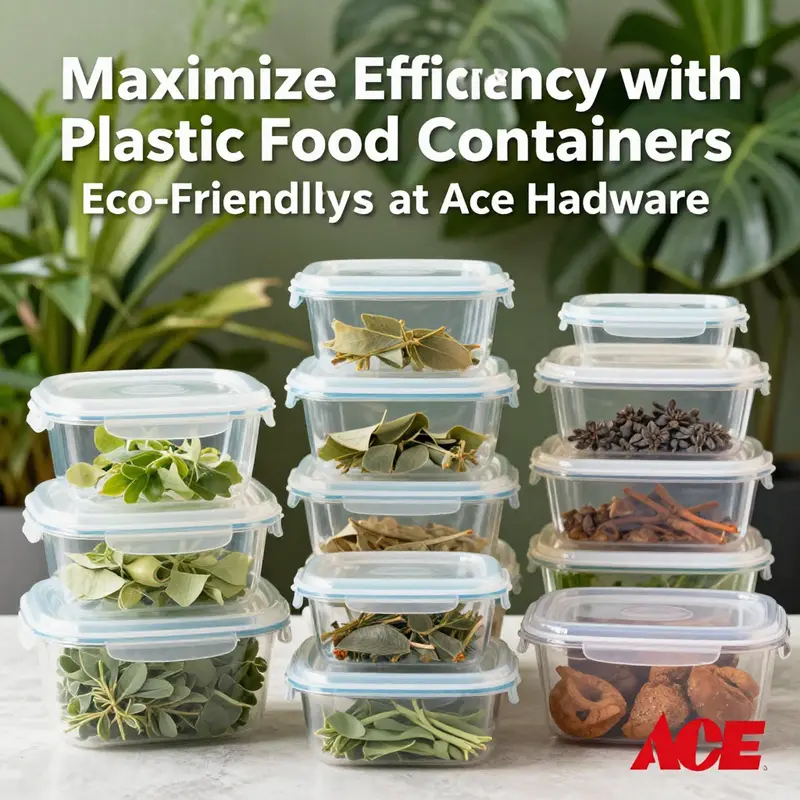
In the aisles where hammers rest beside cookie jars and shelving systems, the question of plastic food storage containers often arrives not as a single product impulse but as part of a broader conversation about how households store, reuse, and ultimately steward what they eat. The topic at hand—whether a national hardware retailer stocks a dedicated line of plastic food storage containers under its own brand—reveals more about retail strategy and consumer expectations than about any single shelf. What the evidence shows is that a major hardware chain, while carrying a wide range of kitchen and home organization solutions, does not currently maintain a branded line of plastic food storage containers. The core emphasis of such retailers tends to circle hardware, home improvement, and general storage solutions rather than a focused catalog of reusable plastic containers designed specifically for food. This gap—between the broad world of kitchen organization and a branded plastic storage line—becomes a natural pivot point for considering how shoppers navigate eco-friendly choices when what they are really seeking is reliable, safe, and durable storage for everyday foods.
Eco-conscious consumers have long sought alternatives that reduce single-use plastics. The conversation then expands beyond the mere presence of a plastic container on a shelf to the broader ecology of materials that perform as well in real kitchens as they do in the mind’s eye of sustainability. Glass containers stand out as a classic option because they are non-porous, inert, and durable for long-term use. When glass is paired with tight-sealing lids—whether metal, plastic, or silicone—the container often remains reusable for years, resisting staining and odor transfer that can plague some plastics. Stainless steel, another long-standing option, carries its own set of strengths: exceptional durability, a non-reactive profile, and a lightweight practicality when designed for everyday use. Bamboo and other natural materials enter the conversation as a more radical shift toward renewable resources and end-of-life practicality. While bamboo containers may not always match the airtight performance of glass or metal in every scenario, they symbolize a broader willingness to diversify storage choices and to lean into materials with lower environmental footprints across their entire lifecycle.
For many households, the lure of compostable and biodegradable packaging has grown as well. Plant-based plastics, often derived from polylactic acid (PLA) or similar polymers, now appear in shelves and online shopping carts as a way to reduce the persistence of plastics in landfills. Yet these materials are not without trade-offs. PLA and related bio-based polymers can offer lower environmental impact in certain end-of-life scenarios, but they may not perform as reliably in terms of heat resistance, microwaving tolerance, or long-term durability when used for frequent storage. The practical reality is that not all eco-friendly options yield equivalent results in every kitchen task. The conversation thus turns from “is there a branded plastic container in this store?” to “which material best aligns with how we store, heat, clean, and reuse food over time?”
Policy and safety frameworks reinforce the careful consideration of any material that comes into contact with food. In the United States, consumer safety in this arena is anchored by the Food and Drug Administration guidelines for food-contact materials. These guidelines help ensure that whatever materials are used, they meet standards designed to prevent harmful substances from leaching into food, especially under conditions of heating, acidity, or fatty content. The FDA emphasizes that materials intended for food contact must be evaluated not only for initial safety but also for performance during real-world use, including dishwasher cycles, microwaving, and repeated washing. This framework supports a practical approach: shoppers should balance material choice with how they actually cook, store, and re-use food containers over time. In this sense, the conversation shifts from brand inventories to responsibilities—choosing containers that respect safety standards while delivering the durability and practicality modern households demand.
Among the materials commonly discussed in consumer storage conversations are polypropylene and other durable polymers that can withstand typical kitchen temperatures, as well as copolyesters that resist staining and retain clarity over repeated uses. Polypropylene, in particular, is often favored for its combination of heat resistance, chemical inertness, and affordability. A durable copolyester—sometimes marketed under certain trade names in the broader market—can offer the advantage of clearer visibility and impact resistance. When these plastics are designed with food safety in mind, they can become reliable weekly workhorses in the kitchen. Yet the broader narrative remains that the modern consumer has more options than a single branded plastic container. The interplay between materials science, consumer behavior, and retail strategy means shoppers are increasingly evaluating glass, steel, bamboo, and even compostable packaging alongside plastics as part of a holistic approach to storage.
In practical terms, many shoppers who want to minimize plastic use start by looking for non-plastic alternatives. A simple and effective strategy is to reframe storage not as a single category of container but as a set of interchangeable tools for different tasks. For bulky, dry pantry staples, a glass jar with a tight lid can replace a plastic tub and offer a visually clean, fragrance-free storage solution. For bulk refrigeration or cold storage, stainless steel or tempered glass containers with secure lids can handle frequent use and dishwasher cycles with less risk of odors or staining. When it comes to on-the-go meals or children’s lunch boxes, silicone-sealed glass or steel containers provide portability without sacrificing safety or durability. And for those who still wish to minimize plastic entirely, bamboo or other sustainable fiber-based containers, where appropriate, can be part of a broader, multi-material approach to storage that acknowledges the practical realities of modern kitchens.
The eco-friendly alternatives above are not merely abstract ideals; they reflect a shift in consumer expectations and in the way retailers curate their shelves. Retailers who do not carry a branded line of plastic storage still serve a critical role by stocking a spectrum of options that enable households to choose what best suits their values and their daily routines. In this sense, the absence of a dedicated Ace Hardware plastic storage line does not signify a dead end but rather a prompt to consider how to assemble a storage ecosystem that prioritizes safety, durability, and reduced environmental impact. Readers may discover that the store’s existing sections—be it glassware, metal kitchen tools, or even organization-related accessories—provide the foundational pieces for assembling such an ecosystem. Importantly, the choice of material should align with the household’s cooking habits, cleaning practices, and long-term reuse plans. A container that is sturdy, easy to clean, and resistant to cracking or warping will likely outlast cheaper options, reducing waste even if it costs a little more upfront.
In this context, consider the practical implications of heat tolerance and cleaning guidelines. Glass, for instance, is non-porous and resistant to staining, and many varieties are microwave-safe or oven-safe when the design warrants. Stainless steel containers, while not microwave-safe, offer remarkable durability and resilience for cold storage or dry goods that you plan to transport or repackage. When a store emphasizes safety and environmental responsibility, the emphasis naturally shifts toward materials that support reuse, resist degradation, and offer a straightforward path to recycling or responsible disposal at the end of life. The consumer’s task then becomes matching the storage needs with the material’s strengths—an idea that aligns with broader sustainability goals rather than with any single product or brand on the shelf.
This is where the metaphor of a store’s inventory becomes telling. If a retailer lacks a branded plastic storage line, it does not mean shoppers are left without options. It means they have the chance to reframe storage choices around lifecycle thinking. A shopper who prioritizes eco-friendly decisions may combine a glass set for home daily use with a stainless steel option for transport and a bamboo or plant-based alternative for occasional, lower-impact storage. The result is a layered approach to storage that honors both health and the environment. The store environment itself can support this approach through clear labeling of material types, care instructions, and lifetime expectations—elements that help customers weigh the true cost of ownership over time rather than simply the upfront price.
The conversation about material choice inevitably circles back to safety and compliance. When heat and acidity come into play, the stability of a material under culinary conditions becomes central. The FDA’s guidance on food-contact materials serves as a compass, reinforcing that safe storage depends on more than the absence of a single chemical. It requires that containers be used within the conditions they are designed to withstand, including temperature limits, dishwasher cycles, and exposure to fatty foods or acidic sauces. For shoppers who want to be precise about the science behind their choices, this framework offers a solid foundation for decision-making. It is not a mandate to abandon plastics altogether but rather a reminder to respect material limits and to consider alternatives that might better align with a given storage task.
In talking about the practical landscape, an example from the broader market can illuminate how shoppers translate principles into everyday choices. Consider a durable, eco-conscious packaging option that emphasizes recyclability and compostability at the end of life. While such packaging may not be a home storage container in the traditional sense, it serves as a reminder that sustainability is a spectrum. It invites shoppers to weigh trade-offs between reusability, durability, heat resistance, and end-of-life outcomes. The takeaway for readers navigating a store like Ace Hardware is not to force every storage need into a single mold but to recognize that a well-rounded approach often involves multiple materials, each chosen for its particular advantages in a given context. In the end, this multi-material stance protects the home from waste while preserving the practicalities of daily living.
For readers who want a concrete connection to the broader world of eco-friendly packaging and storage, a representative example from related product lines demonstrates how alternative materials can be presented and evaluated in a retail setting. This option illustrates how a non-plastic container—crafted from kraft paper and designed for durability and portability—can stand alongside glass and metal options as part of a balanced, environmentally minded storage strategy. The link below points to a product catalog that captures the spirit of this approach: a sturdy kraft-paper take-away container with a lid designed to be leak-resistant and reusable in appropriate contexts. While this specific option is not a direct home storage solution, it embodies the principle that sustainable storage can be modular, adaptable, and capable of reducing overall plastic use in the broader packaging ecosystem. It also highlights how retailers can broaden customer perception of storage beyond the plastic paradigm and toward a lifecycle-oriented mindset. For readers who want to explore this concept in practice, the link offers a tangible example of how eco-friendly materials are being developed and marketed in related spaces, reinforcing the idea that responsible storage involves thoughtful material choices and durable design. senang-kraft-paper-octagonal-bowl-pet-lid-waterproof-eco-friendly-disposable-snack-pet-food-salad-containers-1l
Ultimately, the path forward for shoppers at Ace Hardware or similar retailers is not a single destination but a trajectory toward informed, durable, and low-waste storage habits. By recognizing that the absence of a branded plastic storage line does not equate to a storage crisis, consumers can actively curate a set of containers that plays to each material’s strengths. A glass set for pantry organization, a stainless steel option for lunch and transport, and a bamboo or plant-based system for shorter-term storage can work in concert to reduce reliance on one-size-fits-all plastics. This approach is not merely about choosing a healthier option; it is about designing a storage system that stands up to daily use, cleans easily, and returns to the recycling stream when appropriate. The result is a household that stores foods with confidence, respects safety standards, and minimizes waste—an outcome that aligns with how retailers like Ace Hardware frame their role in everyday life: as facilitators of practical, responsible, and enduring home solutions.
For readers who want to deepen their understanding of the safety and material science behind food-contact products, the following external resource provides authoritative guidelines on how plastics and other materials interact with food under various conditions. https://www.fda.gov/food/food-contact-materials
Industrial-Grade Plastic Food Storage: Materials, Performance, and What Ace Hardware Shoppers Need to Know
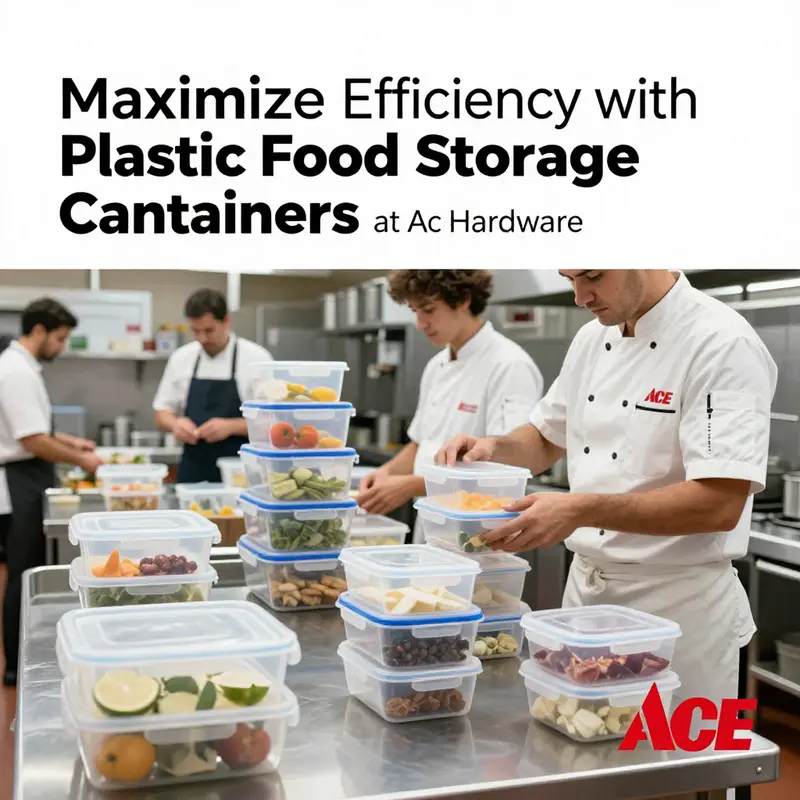
Plastic food storage containers often read like simple, transparent boxes in the hands of home cooks and professional chefs alike. Yet behind their clear walls lies a nuanced field of material science, safety considerations, and practical design choices that affect how well a container performs in real kitchens—whether in a home pantry, a bustling restaurant, or a hotel banquet operation. For readers focused on Ace Hardware and similar retailers, the question extends beyond aesthetics or price: which materials truly suit the demands of food storage, how do those materials fare under temperature swings and heavy use, and what does that mean for the average shopper who visits the store with a plan to streamline meal prep, portion control, or pantry organization? The available information on Ace Hardware’s specific inventory suggests that the retailer’s catalog may not feature the full spectrum of industrial-grade plastic food storage containers. Instead, Ace Hardware’s offerings in this category often align more with home-use solutions and everyday storage needs. This reality is not a limitation of the science itself, but rather a reflection of the store’s traditional emphasis and the scale of demand it serves. That context makes it worthwhile to explore the central material options—polycarbonate, polypropylene, and Tritan—and to consider how each aligns with the kinds of use cases that define both home and commercial kitchens. It also invites a broader reflection on how retailers, including hardware chains, approach packaging and storage beyond their doors, and how customers can make informed choices in light of safety, durability, and environmental considerations.
Material choice drives nearly every performance attribute a user cares about: clarity, impact resistance, heat tolerance, chemical resistance, and the ease with which a container can be cleaned and reused. Polycarbonate (PC) has long been prized for its glass-like clarity and exceptional toughness. In the most demanding environments—where containers must survive heavy handling, frequent drops, and rapid cycling through cold storage and hot lines—PC can deliver a reliable, hard-wearing option. The flip side of PC’s strengths is a history of safety scrutiny. In the past, BPA was a concern linked to PC in some markets, which has led manufacturers to explore BPA-free variants. Those BPA-free PC options blur the lines between traditional PC and newer thermally stable resins, but for a shopper focused on the storage box in a home kitchen or in a low-volume commercial setting, the most important takeaway is to read the label for food contact safety and to verify any temperature or dishwasher-use claims. In practice, PC containers can offer exceptional durability and optical clarity, which helps staff and households identify contents quickly and manage inventory with confidence. They are particularly suited to applications where you want to see the contents clearly at a glance, such as prepped ingredients and clearly labeled portions, and where a container needs to tolerate the occasional cold-to-hot transition in a controlled manner.
Polypropylene, or PP, is a different kind of workhorse—the stalwart of many home storage solutions and a staple in smaller commercial kitchens for years. PP containers typically deliver a strong balance of cost, resilience, and versatility. They handle freezer temperatures well, and many PP variants are rated for re-heating in microwaves, depending on the product’s specific certifications and accompanying lids. The material’s light weight, lower cost, and chemical inertness for common kitchen acids and bases make PP a practical choice for routine, daily storage tasks. While PP may not match PC in terms of crystal clarity, it compensates with reliability, easier color-coding, and a broad ecosystem of compatible lids and sealing mechanisms. For shoppers who routinely portion meals, organize bulk ingredients, or manage a rotating prep line, PP containers offer a predictable lifecycle and straightforward cleaning routines. The trade-offs often revolve around translucence and long-term scratch resistance; in a high-volume setting, a scratched surface can degrade the ability to inspect contents, which in turn can affect food safety and efficiency, but these concerns can be mitigated with appropriate handling, stacking, and replacement policies.
Tritan, a modern copolyester, sits at the intersection of clarity, toughness, and consumer safety expectations. Tritan is built to be BPA-free and designed to withstand repeated dishwashing cycles while preserving its optical clarity and resisting odors and staining more effectively than some other plastics. In environments where staff repeatedly washes containers at high temperatures, or where the visibility of contents matters for quick service, Tritan frequently earns a place in the lineup. It tends to be more expensive than standard PP but offers a compelling combination of durability, transparency, and ease of maintenance. That combination makes Tritan attractive for restaurants and hospitality operations that routinely reuse containers, prepare and portion ingredients in advance, and seek to minimize replacement frequency due to wear. The choice to invest in Tritan is often a balance between upfront cost and long-term savings from fewer replacements and less frequent discoloration or clouding that can complicate inventory control.
The practical implications of these material differences extend far beyond the material sheet. In commercial kitchens, containers are not merely receptacles; they are part of a high-velocity workflow. They must stack securely to maximize shelving density, nest compactly for efficient transport, and withstand the rigors of cold storage, heat exposure, and aggressive cleaning regimens. Temperature tolerance is a decisive factor because many operations move containers from the freezer to a hot line or to a prep station that requires quick reheating. A typical specification cited in industry catalogs—often quoted to reflect suitability across a broad range of settings—encompasses a spectrum from deep-freeze capabilities to near-boiling conditions. Real-world performance must also account for how lids interact with the body of the container: gasket integrity, hinge durability, and a seal that resists aging in a busy kitchen where jars and boxes are opened hundreds of times every shift. In this regard, the design details—whether the lid closes with a solid snap, whether a gasket remains flexible after repeated cycles, and whether the container resists odors and staining—are as important as the material itself.
In any discussion of where a retailer like Ace Hardware fits in, it is useful to distinguish between home-use and professional-grade applications. The current information suggests that Ace Hardware’s catalog in this category does not reliably feature the same breadth of industrial-grade, large-volume containers that one might find in a dedicated culinary supply house or a major hospitality supplier. This is not a judgment on quality; rather, it reflects market segmentation and the different expectations of customers who walk into a hardware store versus those who purchase through a restaurant supply channel. For the individual shopper, the store remains a convenient entry point to durable, high-quality plastic storage options that fit into a home kitchen, a catering setup, or a satellite operation that runs on a smaller scale. The takeaway for shoppers is simple: verify the label, confirm the intended use, and match the recommended temperature and cleaning guidelines to your own routine. If you need containers that will survive regular freezer use and frequent dishwashing, look for explicit statements about freezer and dishwasher compatibility, and consider a material such as Tritan or a BPA-free PC variant if clarity and long-term durability are prioritized.
A practical consideration in the aisle is the lid design itself. The lid’s performance is often the deciding factor in how well a container protects contents and how well it integrates with a kitchen’s workflow. In busy environments, a secure seal prevents cross-contamination and helps prevent spills during transport. In personal kitchens, a simple snap-on design can translate into easier daily use, less fiddling with straps or clasps, and a more intuitive system for organizing leftovers. The balance between rigidity and flexibility in the lid also affects how the container stacks when empty. A design that allows secure nesting reduces clutter in pantry shelves and makes it practical to store multiple containers in a compact footprint. Conversely, a lid with a fragile hinge or a gasket prone to pinching can lead to mis-seating or leaks, especially when containers are stacked and moved on carts or into a refrigerator drawer. These details matter when translating the science of materials into everyday reliability in a store that serves a broad audience of DIY enthusiasts and small-business operators alike.
The environmental dimension of plastic container selection is increasingly prominent in consumer decision-making. Reusability, the ability to clean thoroughly in standard household or commercial dishwashers, and the container’s end-of-life path all inform choices. In the light of sustainability trends, some customers weigh the option of upgrading from single-use plastic to durable, reusable containers that promise a longer service life and lower replacement frequency. This is where conversations extend to recycling options, the presence of recycled-content options, and the overall lifecycle impact of a given material. The decision calculus becomes personal as well as logistical: a home kitchen might prioritize flexibility and budget, while a small café or catering business might seek a long-term savings profile that justifies higher upfront costs for materials known to stand up to repeated use.
In terms of shopping strategy, the Ace Hardware visitor who wants plastic food storage containers should approach with a clear set of criteria. Confirm that the product is approved for contact with food, read the temperature guidance, and verify cleaning instructions. Consider whether a flexible or rigid lid is preferable for your workflow, and weigh the benefits of a transparent body for quick content identification against a more opaque option that reduces staining visibility. If you are balancing home use with occasional small-batch catering or meal-prep planning, you may prefer a mixed approach: a few high-clarity PC or Tritan containers for visible contents and a set of PP containers for routine storage tasks that require reliable heat tolerance and economy.
For readers who want to explore packaging options beyond rigid plastic containers, the broader packaging ecosystem offers alternatives that emphasize sustainability and versatility. For a sense of how packaging ecosystems are evolving toward renewables and recyclables, see this example of eco-friendly kraft-paper takeout bowls. The emphasis here is not to replace plastic storage in every circumstance but to illustrate that retail environments increasingly present a spectrum of options designed to reduce environmental impact while maintaining convenience and safety. This broader view can inform a shopper’s decisions at Ace Hardware or any retailer, encouraging a thoughtful comparison between long-term durability, lifecycle costs, and environmental considerations. Accessing product labels and confirming the material type remains essential, but the bigger picture now includes how a store’s assortment can serve as a bridge between everyday home needs and longer-term sustainability goals.
In summary, while the exact catalog at Ace Hardware may not mirror the full range of industrial-grade plastic containers found in large restaurant supply channels, understanding the core material families—PC for clarity and strength, PP for affordability and heat tolerance, and Tritan for durability and BPA-free performance—empowers shoppers to evaluate options across all stores. The decision hinges on intended use, expected lifecycle, and the environment in which the containers will operate. The same principles apply whether you’re organizing a pantry, preparing meals for a week, or outfitting a modest kitchen in a small business that values reliability, safety, and consistent service. By prioritizing clear labeling, appropriate temperature ratings, and thoughtful lid design, consumers can maximize the value of their purchase, even within the constraints of a retailer’s standard catalog. And when the choice is between a hard plastic option and a more sustainable packaging approach, buyers can weigh the trade-offs with confidence, knowing that the container’s material cousin—how it handles heat, cleans up, and returns to the shelves after each use—will define the practical life of the investment more than any single feature description ever could.
External resource: https://www.fda.gov/food/packaging-food-contact-substances
Final thoughts
Choosing the right plastic food storage containers is critical for any food service operation. At Ace Hardware, you’ll find a range of options that meet material safety standards, help reduce environmental impact, and cater to the specific needs of your business. Whether you’re running a bubble tea shop, restaurant, food truck, or planning an event, investing in quality storage solutions will enhance your operational efficiency and food safety standards.