

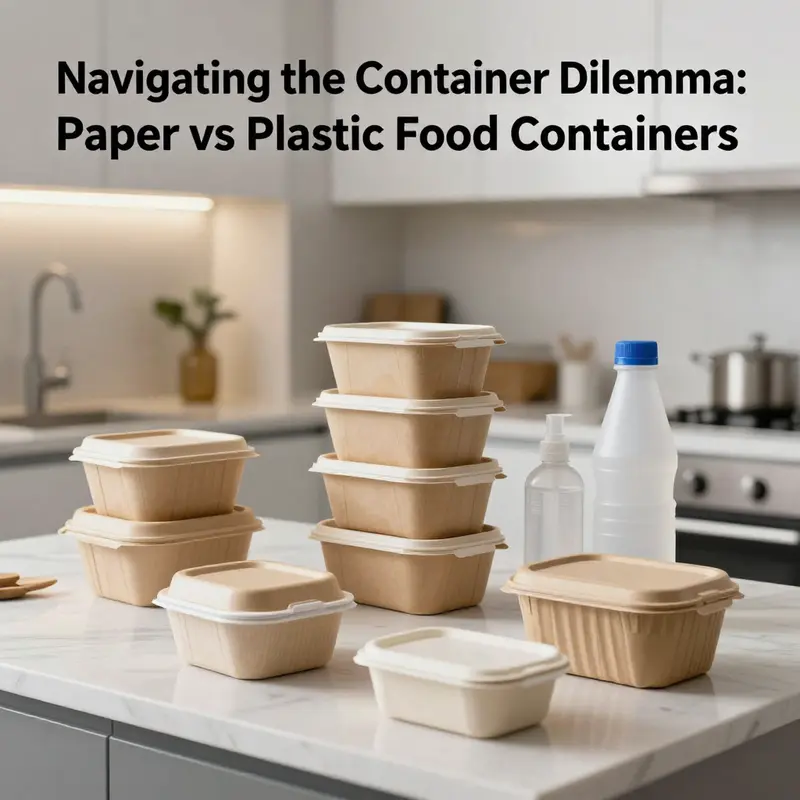
The choice between paper and plastic food containers presents challenges for bubble tea shops, restaurants, and catering services. Balancing environmental concerns, health risks, economic factors, and operational needs is critical for making informed decisions. This article dives into each aspect of this dilemma, unraveling the environmental impact, health implications, economic considerations, practical applications, and future innovations in food container solutions. By examining these topics, businesses can make choices that align with their values and the expectations of their customers.
Beyond the Box: Navigating Environmental Trade-offs in Paper, Plastic, and Glass Food Containers
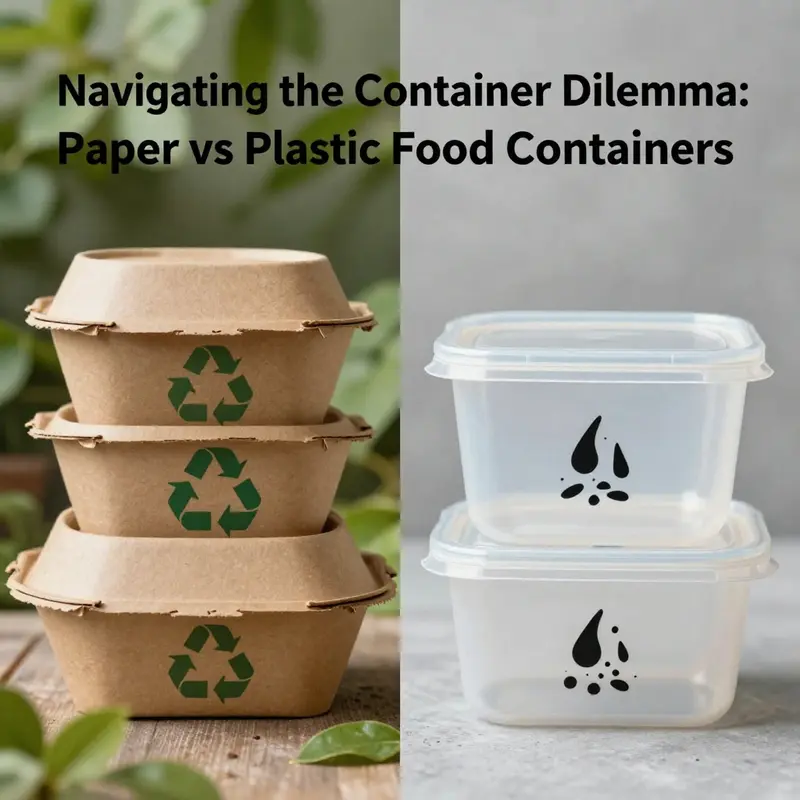
Choosing a container is rarely just about holding a sandwich or a scoop of soup. It invites a broader reckoning with waste, resource use, and human health. Across households and institutions, the decision to favor paper, plastic, or glass hinges on three intertwined questions: what will it protect, how will it be disposed of, and what are the implications for long-term well-being. When we scale this from a single meal to a lifetime of storage and take-out, the energy, emissions, and exposure embedded in each material begin to look less like a simple trade-off and more like a web of design choices, infrastructure, and personal habits. The resulting chapter of choices is not about finding a perfect material, but about aligning context, capability, and values in a way that reduces risk and waste without sacrificing practical needs.
Paper containers occupy a scent of eco-friendliness in many cultures, and they often carry a narrative of renewability. In practice, paper packaging is typically made from wood pulp or recycled fibers and is designed to be composted under the right conditions. When coated with films such as polylactic acid (PLA) or with wax for moisture resistance, these packages can perform better for certain foods, especially drier and less greasy items. The potential environmental advantage of such coated papers lies in lower greenhouse gas emissions during production and the possibility of end-of-life pathways that divert waste from landfills. Yet this advantage is highly contingent on the system that handles them after use. If a PLA-coated paper container is sent to a conventional landfill or ends up in an improper recycling stream, much of the benefit is negated. The industrial infrastructure needed to achieve composting or proper recycling for coated papers is unevenly distributed, which means the same material can be a climate win in one city and a climate-neutral or even negative outcome in another.
The coating decision matters deeply. On the one hand, a PLA coating makes a paper container more resistant to moisture and grease, enabling it to hold soups or wet foods without collapsing. On the other hand, PLA is a compostable film only in industrial facilities with controlled temperatures and microbial activity. This means that in the absence of such facilities, a PLA-coated box may behave no differently in a landfill than other plastics, prolonging its presence in the environment. A simple, uncoated paper cup, beloved for its lightness and renewability, fails quickly with humid foods or high-fat sauces unless it is strengthened by a safe and compatible coating. The balance between performance and end-of-life clarity is a design challenge that continues to shape how often paper wins in real-world settings. For paper, the lifecycle is as important as the raw material. If a container is produced with low-impact processes and sourced from responsibly managed fiber, its early-stage footprint can be smaller. But the benefits can evaporate if the end-of-life system is weak or inconsistent, turning a seemingly circular solution into a one-way path to waste.
Plastic containers tell a different story, one that is often misunderstood. Thermoplastic polymers such as polypropylene (PP), polystyrene (PS), and polyethylene terephthalate (PET) offer durability, heat resistance, and the promise of reuse. Reusable PP containers, for example, can withstand repeated use, washing, and microwaving, which appeals to households seeking longevity. Yet the safety questions linger. Even when labeled as microwave-safe or suitable for reuse, plastics are subject to subtle degradation with repeated heating, exposure to acidic foods, and aggressive cleaning. Over time, the polymers can shed additives and, more worryingly, permit migration of endocrine-disrupting compounds such as BPA, BPS, or BPF into food. While many manufacturers have reformulated their materials to reduce these risks, exposure potential persists, particularly for young children and during early development. The concern is not only about the chemical itself but about how small, cumulative exposures interact with diet, metabolism, and the microbiome over years or decades.
Another layer of complexity comes from the environmental persistence of plastics. Even when plastics are recycled, the process is energy-intensive and not universally efficient. Contamination, the economics of recycling, and the reality of downcycling mean that a portion of plastic waste ends up in landfills or the environment. Microplastics, tiny fragments that can pervade soils and waterways, have emerged as a global concern for ecosystems and, potentially, for human health through the food chain. This risk intensifies when plastics are heated, scratched, or abraded, as these conditions can increase the leaching of additives or the release of micro and nano-plastics.
Glass, in contrast, stands out for its inertness, durability, and non-porous surface. Borosilicate or tempered glass can tolerate hundreds of cycles in microwaves, ovens, and dishwashers without leaching flavors or absorbing odors. Its sturdiness makes it an excellent long-term storage option. Glass does not degrade in the same way plastics do, and its non-toxicity is a meaningful health advantage for certain applications. However, glass is heavy, breakable, and energy-intensive to transport in large quantities. The environmental calculus for glass is not simple: while the material itself is benign, the emissions from heavier shipments and the need for robust handling infrastructure can offset some of its advantages. For households that can manage the care required to prevent breakage, glass offers a compelling balance of safety and longevity.
The decision matrix for choosing among paper, plastic, and glass expands when we consider usage patterns. A single-use, on-the-go meal that is disposed of responsibly in a robust composting stream may tilt the balance toward paper. In places with strong municipal composting and high consumer participation, PLA-coated or waxed paper containers can be a viable middle ground, combining low-dose environmental impact with adequate performance for many foods. The same scenario, however, can shift toward plastic if there is little chance of composting and recycling where the container ends up. For day-to-day household storage and repeated use, glass often offers the highest assurance of safety and a long lifecycle, provided it is handled with care and transported in protective packaging to reduce breakage risk. The ultimate choice, then, becomes a function of local waste systems, dietary habits, and enough space to store reusable options safely.
From a design perspective, the sustainability of any container hinges on three drivers: material choice, end-of-life pathways, and consumer behavior. The coating decisions for paper, and the additive profiles for plastics, determine what happens after use. Are coatings compostable in a municipal facility, or do they complicate recycling streams? Do recycled plastic streams yield high-value materials, or do contaminants derail the process? And for glass, can households and institutions accept the energy costs and handling requirements of a sturdier, heavier product? These questions underscore a central truth: the most sustainable option is the one that aligns with the available waste infrastructure and the daily realities of use.
In everyday life, this alignment often points toward a layered approach. Favor glass for home storage and long-term reuse where feasible. When choices are tied to take-out or single-use scenarios with strong composting or recycling support, paper containers with proven compostable coatings can reduce harm, provided they are properly disposed of. Curbing overall packaging materials, embracing reusable containers where possible, and supporting communities with better waste systems are crucial steps that extend beyond a single meal. The pace of innovation continues to shape coatings, recycling compatibility, and composting networks, gradually narrowing the environmental gaps between these materials. But the core guidance remains stable: understand the food you store, know how waste is managed locally, and choose the container that harmonizes safety, practicality, and responsible disposal.
For readers seeking a deeper dive into this topic, consider how a paper option with moisture-resistant coatings functions in practice, and how its end-of-life outcomes differ from traditional plastics. The decision point is not only about the material’s upfront footprint but about how the entire lifecycle interacts with your city’s infrastructure and your own daily habits. A broader conversation about packaging design, waste management, and consumer choices can illuminate paths to lower environmental impact while keeping food safe and convenient. For authoritative insights into these materials and their environmental implications, see the external resource at https://www.greenbiz.com/articles/eco-friendly-food-packaging-papers-vs-plastics. To explore concrete packaging designs that emphasize compostable, paper-based options, you can also examine practical examples such as disposable eco-friendly kraft boxes with PLA coatings that illustrate how coating and end-of-life planning come together in real-world use, referenced here for context: disposable-eco-friendly-kraft-box-boat-shape-pla-coated-custom-packaging-for-fast-food-cookie-sugar-tray.
Hidden Risks and Practical Choices: Health and Safety When Choosing Paper or Plastic Food Containers
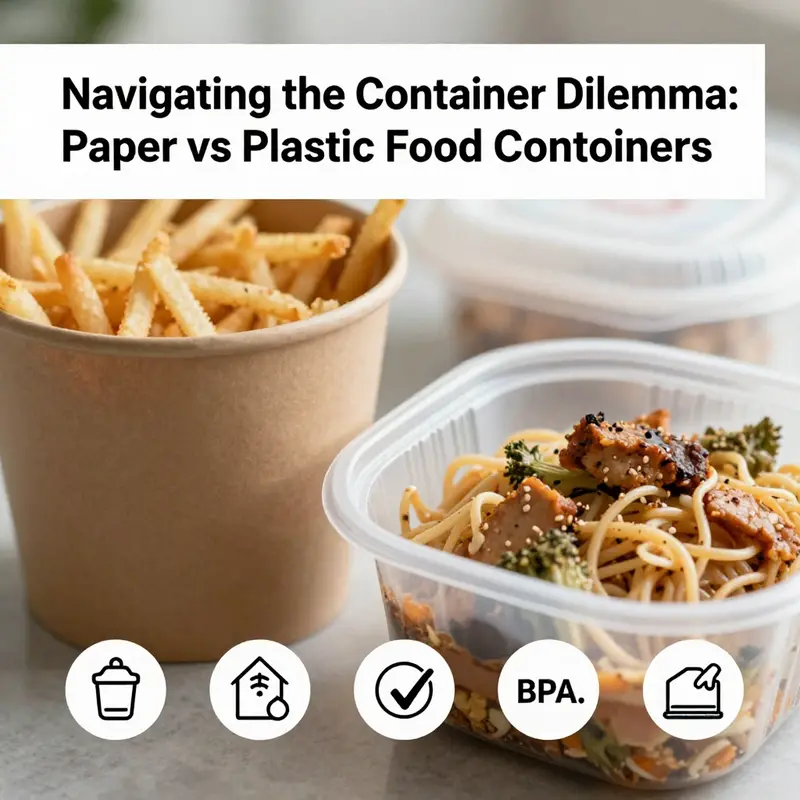
Health and Safety at the Crossroads of Paper and Plastic
When choosing between paper and plastic food containers, health and safety considerations are rarely straightforward. Materials behave differently under heat, moisture and time. Additives and coatings can change performance, recyclability and chemical exposure. Vulnerable groups—pregnant people, infants and children—face higher risks from endocrine-disrupting chemicals, so decisions should be intentional rather than habitual.
Paper containers often start with an advantage: the base material is cellulose, a naturally derived fiber with low inherent chemical risk. Untreated paper is breathable and can be composted easily. But for most modern food uses, untreated paper needs help. To hold liquids, oils or heavier foods, manufacturers add coatings or laminates: polyethylene (PE), wax, or bio-based films such as polylactic acid (PLA). These coatings improve performance but change the safety equation. PE-laminated paper resists grease and prevents leaks, yet that lamination can block recycling and anchor residual plastics to the paper. Wax coatings can soften with heat and leach minor residues. PLA is compostable under industrial conditions but loses integrity with high heat and is not a fit for long reheating cycles.
These trade-offs matter in everyday scenarios. A grease-heavy takeout meal left in a simple paper box will often saturate the fibers, creating pockets where bacteria can grow and accelerating breakdown. A PLA-coated bowl may hold a cold salad fine, but repeated microwaving or hot soup will soften the lining and degrade function. Even when paper containers claim compostability, the real-world outcome depends on access to industrial composting facilities; without proper processing, biodegradable claims do not guarantee safe disposal or lower contamination.
Plastic containers present a different set of strengths and risks. Modern polymers such as polypropylene (PP) and polyethylene terephthalate (PET) are lightweight, durable and often microwave-tolerant. They form secure seals, resist grease and can be reused many times. Yet plastics frequently include additives—plasticizers, stabilizers, colorants—that can migrate into food under certain conditions. The issues of greatest concern are substances that disrupt hormone systems: bisphenols (BPA, BPS, BPF) and phthalates. These compounds can leach when containers are heated, scratched, cleaned aggressively, or used with acidic or fatty foods.
Heat accelerates chemical migration. Microwaving food in plastic, repeatedly sterilizing containers in hot water, or storing oil-rich foods in plastic for long periods raises the chance that chemicals will migrate into the food. Cutting, scraping or dishwashing with abrasive tools wears polymer surfaces and creates micro-cracks. Those micro-damages increase the surface area and the pathways for small molecules to escape. Labels such as microwave-safe or BPA-free are helpful but not definitive. A BPA-free polymer may still contain other bisphenols, or substituted additives, that carry similar biological effects. Long-term, low-dose exposure to endocrine disruptors is linked to reproductive disorders, metabolic effects and development concerns in children—so risk management favors limiting exposure wherever practical.
Paper and plastic also differ in microbial and chemical behavior. Paper is more prone to mechanical breakdown and can retain moisture, creating niches for microbes if not designed for wet use. Plastics are non-porous and easier to sanitize, but they may trap residues, oils and odors over time, and repeated use increases chemical leaching risk. For storage of leftovers intended for later reheating, a non-reactive, durable container is preferable. For single-use, compostable or recyclable options reduce waste footprint but must match the food type: oily, acidic, or very hot foods need containers rated for those uses.
Practical guidance flows from understanding these material realities. For reheating and long-term storage, choose non-reactive materials that do not degrade with heat. For single-use takeout or delivery, prefer certified compostable paper containers when they are suitable for the food type and when industrial composting is available. When paper is needed for soups or oily dishes, verify the coating type: some coatings perform better than others and will be specified on technical sheets or labeling.
Care and handling reduce risk. Avoid microwaving damaged or scratched plastic containers. Do not use plastic labeled only for room-temperature storage with hot or fatty meals. Limit prolonged storage of acidic or greasy foods in plastic. Rinse and replace single-use items rather than repeatedly wash and reuse them when they are not designed for repeated cycles. When you do choose reusable plastic, replace it periodically and avoid abrasive cleaners that accelerate surface wear.
For households prioritizing health, certain rules of thumb apply. Use glass or stainless steel for repeated reheating and long-term storage when practical. Reserve coated paper bowls for short-term, single-use situations where composting is available and where the container is rated for the food. Treat plastic as a functional compromise—handy, light and often necessary—but manage exposure by limiting heating and contact with fatty or acidic foods.
Regulatory labels and certifications matter but require scrutiny. Food-grade markings, migration test certifications and compostability standards are meaningful when clearly documented. Certified industrial compostability indicates a product will break down under high-temperature composting; that does not imply breakdown in home compost piles or landfills. Similarly, BPA-free indicates the absence of a specific compound, not the absence of all potentially harmful substitutes. Look for clear, verifiable claims and, when in doubt, opt for materials with fewer additives.
Finally, context changes the right choice. A busy cafe serving hot soups in disposable containers needs durable, leak-resistant vessels that meet safety standards and can be disposed of responsibly. A family storing baby food benefits from inert, long-lasting containers that avoid repeated exposure to plastics. A food business seeking lower environmental impact must consider the full lifecycle: how containers are manufactured, how they are used, and how they are processed after use.
For a practical example of a paper solution designed for hot liquids and single-use service, see the product page for a microwavable kraft paper soup cup, which illustrates how coatings and designs are tailored for real-world needs: kraft paper soup cup product page.
For authoritative evidence on the health risks posed by plastic additives and food-contact materials, consult the NIH review on plastic packaging safety and migration studies: https://www.ncbi.nlm.nih.gov/pmc/articles/PMC7184239/.
null
null
Fit for the Meal: Real-World Performance and Uses of Paper vs. Plastic Food Containers
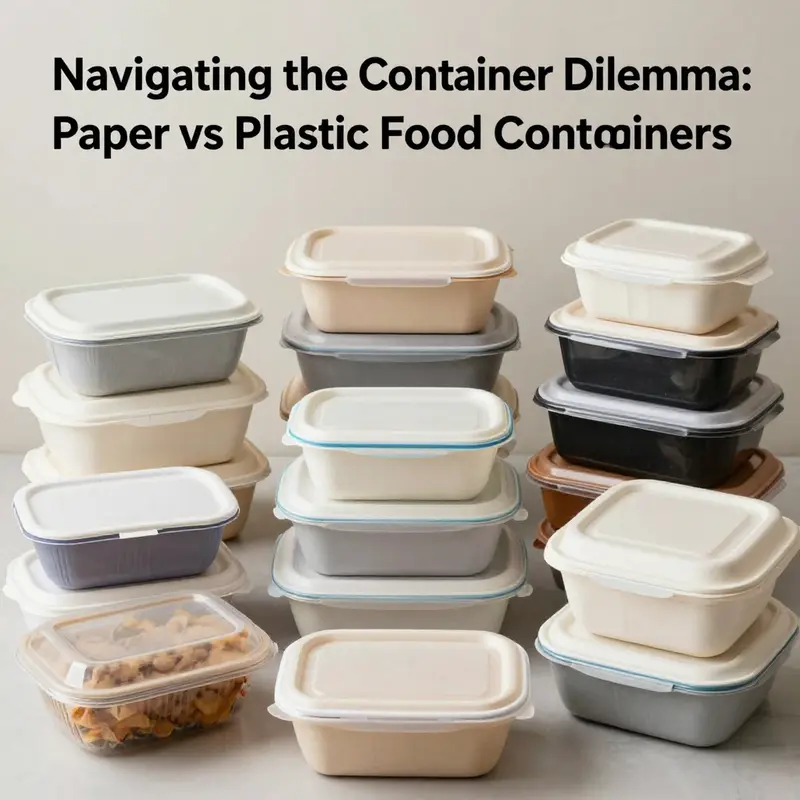
Performance and Real-World Applications
Choosing between paper and plastic food containers comes down to how each material performs with real foods, real temperatures, and real handling. Paper containers bring a renewable, compostable profile that appeals to eco-minded operations. They excel when heat retention and presentation matter, making them a natural choice for baked goods, sandwiches, and many dry or hot takeout items. Their fiber structure insulates well, and a single-wall or double-wall design can affect heat retention and user comfort. But paper’s natural limits appear quickly when liquids, fats, or extended holding times are involved. Uncoated paper soaks and softens. Coated paper resists moisture, but coating choice changes the container’s end-of-life pathway.
Plastic containers answer many of paper’s weaknesses. Their polymer matrices create durable, lightweight shells that resist leaks. For cold salads, soups in sealed tubs, and foods requiring robust barrier protection, plastics perform consistently. They tolerate repeated use, dishwasher cycles, and many are microwave-friendly. Plastics also allow thin walls with high mechanical strength, which reduces bulk and sometimes weight. These features make plastic the practical choice where tight seals, long shelf life, or stackable durability matter.
Yet performance is not only about immediate function. It includes how containers interact with food chemistry. Acidic dressings, oily sauces, or repeated heating can change polymer properties. Common plastics can leach additives over time as they break down. Studies have linked chronic exposure to certain plastic-derived compounds with metabolic and developmental effects. That risk profile shifts how plastic should be used: limit repeated reheating, avoid storing highly acidic or fatty foods long-term, and replace containers showing scratches or clouding. In contrast, paper containers do not leach the same synthetic additives. Still, the coatings added to improve moisture resistance—whether polyethylene (PE) or polylactic acid (PLA)—alter biodegradability and composting requirements. A paper cup with PLA coating composts differently than uncoated kraft board.
Temperature matters. Hot-run food service favors paper’s insulating and tactile qualities. Double-walled paper cups or bowls feel safer to hold and keep food warm without metal or thick plastic. However, very hot liquids can accelerate coating breakdown if the coating is not matched to the application. Plastic, especially higher-temperature polymers, can handle ovenless reheating and high-temperature microwaving in many cases. But repeated thermal cycling leads to microstructural fatigue. Over many cycles, microcracks allow migration of additives and can compromise seals. Glass and stainless steel outperform both materials at extreme temperatures and repeated cycles, but they weigh more and may not fit every operational model.
Moisture and grease resistance often decide the choice. Paper containers succeed when engineered with the right coating and board weight. A PLA-coated kraft bowl holds noodle soup for moderate times and still composts in industrial facilities. PE-coated paper gives excellent short-term grease resistance but requires different recycling or disposal streams. Plastic containers naturally offer higher immediate barrier performance, and lids and seals made from plastic create leak-resistant assemblies for transport. That makes plastic dominant in delivery platforms and retail packaged salads. But those same barriers that preserve food also impede biodegradation, creating long-term environmental costs when end-of-life systems fail.
Operational context shifts the trade-offs. A quick-serve restaurant focused on eco-branding may prefer certified compostable paper bowls. The trade-off is training staff to pair those bowls with correct lids and to avoid menu items that exceed the bowl’s intended holding time. A cloud-kitchen or meal-prep service needing long refrigerated shelf lives will often select plastic tubs with secure seals to reduce spoilage and product claims. Institutional catering, where repeated cleaning and reuse is feasible, benefits from rigid reusable plastic or glass systems to lower per-use impact. In every scenario, supply-chain realities and waste infrastructure matter; compostable paper only yields environmental benefits where industrial or municipal composting exists.
From a lifecycle angle, the production footprints differ. Paper uses renewable fibers and can store carbon during growth, but pulping and coating add energy and water demands. Plastic production is energy-intensive and fossil-fuel dependent, but thin walls and reuse cycles can amortize that input over many uses. End-of-life pathways can flip the balance. A paper container landfilled with a PE liner does not biodegrade as intended. A plastic container properly collected and mechanically recycled becomes another useful product, reducing virgin plastic demand. Real-world waste systems are imperfect, so specifiers should choose materials that align with local recycling and composting capabilities.
Practical selection rules emerge from these performance differences. Match container to food type and holding time. Use paper for hot, short-hold items and when composting infrastructure exists. Use plastic for long hold, wet, or highly mobile deliveries where leakage would cause loss. Avoid repeated heating of low-grade plastics and replace containers that show wear. Train staff and consumers about disposal: rinse and recycle rigid plastics where accepted, and separate certified compostables from regular trash.
For businesses balancing brand, cost, and performance, product sourcing matters. Look for paper containers that specify the coating and the certified compostability standard. For plastic, check resin identification and reuse recommendations. If your operation relies on compostable paper, ensure your service model routes those items to appropriate composting facilities. If you require the durability of plastic, consider thicker reusable options and clear replacement intervals to minimize health risks tied to material degradation.
Choosing between paper and plastic is not a single decision. It is a set of choices across menu design, logistics, health considerations, and waste systems. Paper shines when sustainability messaging aligns with short-term food holding and available composting. Plastic shines when barrier protection, durability, and reuse dominate operational goals. When in doubt, pilot options, track food temperature and hold times, and monitor customer feedback for leaks or sogginess. For operations wanting examples of commercially available paper bowls suitable for soups and salads, review a representative kraft paper disposable serving bowl (1000 ml) for design ideas and specifications: https://cupbowlpack.com/product/senang05-eco-friendly-1000ml-noodle-soup-salad-bowl-kraft-paper-disposable-serving-bowl-with-lid-best-selling-product/.
For a deeper technical look at paper options, coatings, and lifecycle considerations, consult a practical guide to food paper containers and their performance characteristics: https://www.foodpackaginginsights.com/food-paper-containers-specifications-performance-common-uses/.
null
null
Final thoughts
In conclusion, the decision between paper and plastic food containers extends far beyond mere functionality; it encompasses significant environmental, health, economic, and performance factors. For bubble tea shops, catering services, and other food businesses, selecting the right container can enhance their brand reputation while meeting the rising consumer demands for sustainability. By understanding the implications of each type, businesses can make strategic choices that align with their operational goals and consumer expectations. Embracing sustainable options fosters not only a better environment but also a healthier future for the industry.