
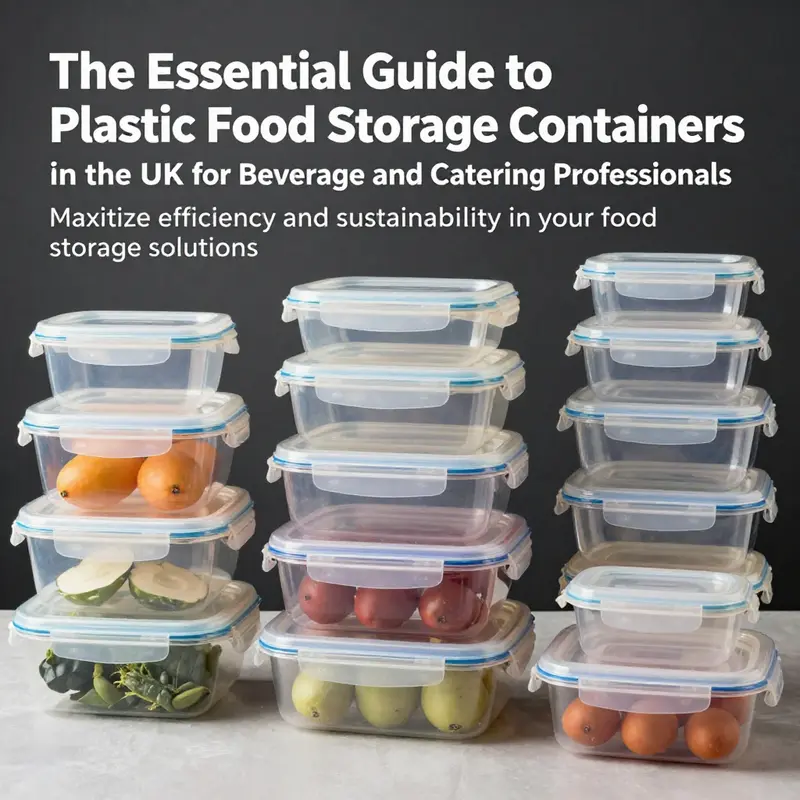
Plastic food storage containers have become an indispensable asset for businesses like bubble tea shops, restaurants, and catering services in the UK. As consumer demands for efficiency, safety, and sustainability rise, these containers offer a versatile solution to meet a variety of food storage needs. In this exploration, we will delve into the benefits these containers bring to your business operations, analyze current market trends shaping the landscape, and consider vital sustainability and health features that reflect modern consumer values. The insights gained here will not only inform your purchasing decisions but also enhance your service offerings in catering and food service sectors.
The Quiet Efficiency of Plastic Food Storage in the UK: Keeping Food Fresh, Safe, and Everyday-Ready
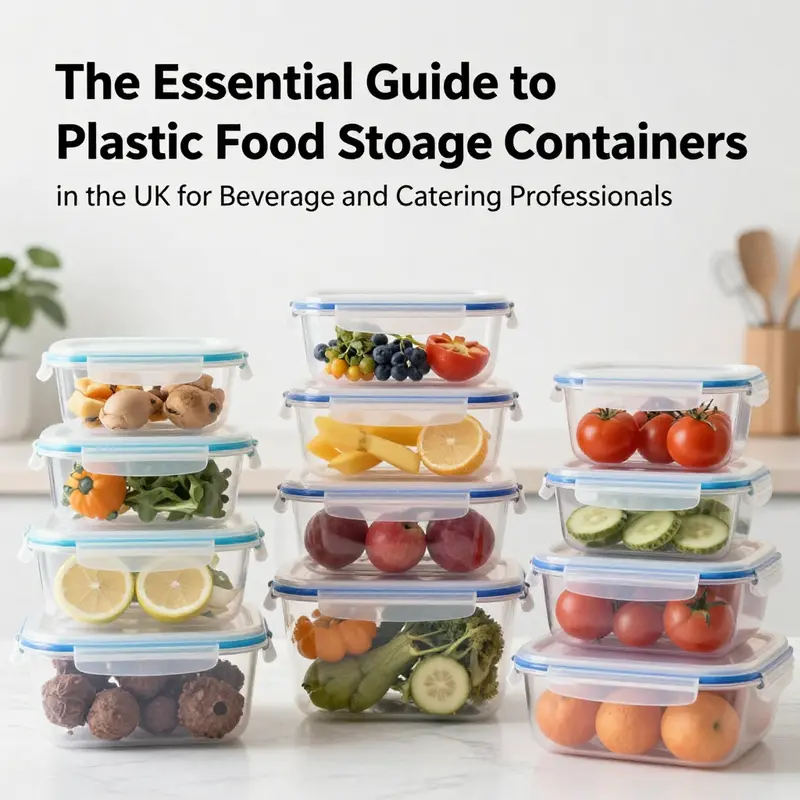
In kitchens across the United Kingdom, plastic food storage containers have become the unsung workhorses of daily life. They sit invisibly in cupboards and fridges, awaiting the next batch of leftovers, the prepped week of lunches, or the dry goods that keep dorms and shared houses organized. The appeal is plain enough: a lightweight, affordable, adaptable system for preserving freshness, organizing ingredients, and simplifying both cooking routines and later mealtimes. Yet beneath that everyday practicality lies a richer story about how materials, design choices, consumer habits, and environmental realities interact in a modern UK kitchen. Reading that story requires moving beyond the shelves and lids to understand what makes these containers work, what risks we should manage, and where continuous improvement is steering households toward safer, more sustainable options.
First, the core materials and their inherent advantages shape how plastic storage fits into UK kitchens. The most common plastics used for containers are high-density polyethylene (HDPE) and polypropylene (PP). HDPE contributes strength and moisture resistance without adding excessive weight, making large or medium containers easy to handle in busy households. PP, meanwhile, stays relatively rigid at a wide range of temperatures, which is valuable for stackable designs and for items that move between freezer, fridge, and microwave with minimal fuss. The practical benefits of these materials are clear: they are lightweight, durable, and resistant to moisture, which helps protect the contents from drying out or absorbing odors. Their clarity is another practical asset; transparent or translucent bodies let you see what’s inside at a glance, cutting down on rummaging and waste. And because many are designed to be microwave-safe, freezer-safe, and dishwasher-safe, they can serve as a single, repeat-use system from prep to reheating to cleaning, reducing the need for a mishmash of cookware and containers.
But safety and suitability hinge on more than the raw material. A common selling point in consumer marketing has been “BPA-free” plastics, designed to reassure shoppers that harmful substances won’t leach into food. In practice, this is a good starting point, but it’s not the whole story. The capacity for any plastic to leach chemicals can be influenced by heat, time, acidic or fatty contents, and the container’s age or condition. Even BPA-free plastics can degrade or shed trace additives when subjected to repeated heating, scratching, or high temperatures. For anyone who has overheated a takeaway container or noticed a plastic container becoming cloudy or stiff after years of use, the risk asset is not simply a single chemical but the cumulative effect of temperature cycles and material fatigue. Given the UK’s broad range of culinary cultures and dietary habits, it’s also worth recognizing that acidity from tomato sauces or citrus marinades can intensify leaching risks in older or poorly manufactured plastics. The practical takeaway is not to vilify plastic but to temper its use with thoughtful handling: avoid heating in containers that aren’t explicitly labeled as microwave-safe, replace containers that show wear or cracks, and be mindful of how long they’re in contact with acidic foods when heated.
Alongside safety, durability and usability play a major role in the appeal of plastic containers in the UK. The sheer variety of sizes and shapes—rectangular for efficient stacking in roomy fridges, round for regrouping leftovers, compact 200ml options for dips or dressings—means there’s likely a container to match almost any storage need. The transparent design remains a highlight; when you’re juggling groceries, meal preps, and weekly planning, being able to identify contents at a glance is the difference between a quick lunch and a forgotten ingredient that spoils. In households focused on portion control or meal prep, the ease of grouping meals into uniform portions in matched containers becomes a practical time-saver. In busy family homes, the ability to microwave, freeze, and then wash in a single container reduces the number of dishes needed, which translates into less washing up and more time for other tasks.
The dashboard of features—airtight seals, leakproof lids, and stackability—often determines how a container performs in real life. Airtight and leakproof seals aren’t just about preventing spills; they’re about preserving texture and moisture. A well-sealed container can keep a crisp salad from wilting, a cooked grain from absorbing fridge odors, and a sauce from drifting into other foods. The seal quality matters more in small portions or in items stored in the freezer, where the risk of freezer burn or flavor mingling is higher. Stackability is another crucial design element. In small UK kitchens where storage space is at a premium, the ability to nest and stack containers without them toppling or slipping is not a luxury but a necessity. The right combination of lid design and container geometry can transform what seems like a minor detail into real-world convenience, especially when you’re packing lunches for school or work and want containers that sit neatly in lunch bags or compact kitchen drawers.
These functional considerations are not just about home use. The chapter in the broader UK market also covers how plastic containers serve commercial and organizational needs. Businesses, including caterers, meal-prep services, and retailers, often purchase containers wholesale to doggedly meet seasonal demand and avoid stockouts during promotions, events, or spikes in customer interest. In such contexts, the durability and uniform sizing become a strategic advantage. Large-volume options—designed to keep hot foods hot or cold items chilled for hours—support delivery services or outdoor events where the temperature performance matters as much as the container’s tidy appearance. Smaller, compact containers—think 200ml or so—support portioning for dips, dressings, or ready-made meals, enabling consistent packaging that’s easy to transport and easy for customers to handle. The upshot in commercial settings is that plastic containers are not just kitchen tools; they are logistical elements that support efficiency, predictability, and scale.
Of course, the environmental and health dimensions of plastic storage cannot be ignored in any sober analysis of UK consumer behavior. Recycling rates and end-of-life outcomes loom large in public discourse. The broader context, highlighted by national and international researchers, underscores that while plastic packaging remains integral to modern food systems, its fate beyond use is a global concern. The statistics on recycling are sobering: globally, a relatively small share of plastic ever produced is recycled, with much of the rest ending up in landfills or the environment. In the UK, as in many regions, the question of what happens after a container is emptied becomes a measure of both household habits and municipal recycling infrastructure. The take-home point for consumers is pragmatic: reduce reliance on single-use plastics where feasible, and invest in durable, reusable containers that you can keep in circulation for years. Replacing a handful of worn containers with a small set of high-quality, microwave-safe, reusable options can cut waste and lower the long-term cost per use.
To this end, many households find value in considering the life cycle of plastic containers. A well-used container can last for years if cared for properly—hand-washing rather than aggressive dishwashing cycles, avoiding aggressive heat when not warranted, and inspecting seals and lids for wear. By comparing the cost and energy use of frequent replacements against the energy and water saved by reusing containers, households can make informed choices about how to manage their kitchen inventory. Yet even with careful use, there is a growing consensus that plastic, while convenient, cannot be the sole path forward. Experts emphasizing sustainable living argue that non-plastic alternatives—such as glass or stainless steel—offer chemical inertness, durability, and infinite recyclability or reuse potential. Glass, for example, is chemically inert, does not leach non-volatile contaminants, and can be reused indefinitely without a loss of quality, making it a compelling long-term option for storage that requires long-term preservation, like sauces or leftovers that you want to keep pristine.
In the UK, the appeal of such alternatives has grown as consumers seek to align everyday practicality with broader health and environmental considerations. The shift is not a binary replacement but a nuanced balance: plastic remains deeply embedded in the affordability and accessibility of modern households, particularly for bulk storage, meal prep, and quick re-heating. Yet for those with concerns about chemical exposure, environmental impact, or the desire for long-term durability, glass and steel present viable, durable paths that can be integrated with plastic storage where it makes the most sense—such as for portion-controlled meals or for non-acidic foods where the risk of leaching is lower and the advantages of a non-plastic option are pronounced. In this sense, the UK market is moving toward a mixed ecosystem of containers, with plastic acting as the versatile backbone for everyday use while alternative materials provide taller options for health-conscious or sustainability-minded households.
Practically speaking, the consumer’s decision-making process is shaped by daily realities: family size, cooking frequency, kitchen space, and the rhythm of shopping cycles. A family that meal-preps every Sunday will likely prefer a cohesive set of containers with uniform lids that create reliable stacks in a modest fridge or freezer. A commuter household might value compact, leakproof options that fit neatly into lunch boxes or small bags. A university student living in a shared house may seek affordable, high-volume packs of containers for leftovers, snacks, or simple meals between lectures. In all cases, the emphasis remains on a straightforward, repeatable system that preserves food quality, reduces waste, and simplifies cleanup. It is this synthesis of practicality, safety, and adaptability that makes plastic storage a durable component of UK kitchen life.
From a consumer education perspective, there is value in fostering informed usage patterns. For instance, when heating food, it’s wise to remove the lid or switch to a microwave-safe cover designed for venting. When freezing, allowing the liquid contents room to expand can prevent cracking and distortion of the container. Regular inspection of seals and lids helps prevent leaks and maintains freshness. When cleaning, avoiding harsh scrubbing with abrasive pads can preserve the clarity of the plastic and the integrity of the seal. And while many containers claim dishwasher safety, placing trays on the top rack and using gentle cycles can extend the life of the seal and prevent warping, especially for designs that incorporate silicone gaskets or integrated seals. These care practices translate into tangible benefits: fewer leaks, longer-lasting containers, and more reliable performance during busy weeks.
All of these practical considerations intersect with the broader question of sustainability. The narrative around plastic storage is not simply about choosing between plastic and glass; it’s about choosing the right tool for the right job and using it responsibly. A practical approach for UK households is to map out how containers are used throughout the week, then tailor a combination of sizes and materials to those routines. This might mean using plastic for quick, everyday prep and for items that will be reheated, while reserving glass for foods that are stored for longer periods or that benefit from an inert, non-leaching environment. Such an approach acknowledges both the convenience plastic offers and the legitimate concerns about health and the environment. It also aligns with a broader cultural shift toward more thoughtful consumption in the UK, a shift that recognizes the importance of buying less, reusing often, and choosing durable options whenever feasible.
To illustrate how these ideas translate into everyday practice, imagine a typical weekly cycle. On Sunday, you prepare several meals for the week. You portion stews, grains, and roasted vegetables into uniform containers, lining them up in the fridge so that each day’s lunch or dinner is a matter of grabbing a box and reheating. The transparency of the containers helps you avoid the “mighy guess” of what is inside, reducing food waste and saving time. For snacks or sauces, you opt for smaller portions that fit neatly into a lunch bag. And for bulk staples like oats or rice, sturdy, stackable containers help you keep pantry shelves organized and efficient. If you’re buying new goods to refresh or expand your set, you focus on combinations that maximize compatibility: airtight lids, reliable seals, dishwasher safety, and, where possible, containers that can transition into glass or stainless steel options for longer-term storage of specific items.
Within this context, the market’s accessibility is a point worth noting. Retail channels in the UK offer a broad spectrum of plastic containers in a range of pack sizes and configurations, from multipacks that cover school lunches to larger, heavy-duty options designed for meal-prep businesses. The convenience of online shopping—where you can compare sizes, seals, and temperature tolerance at a glance—affords UK households the opportunity to curate a set that precisely matches their routines. Yet with convenience comes a responsibility to choose wisely. A thoughtful purchasing approach considers the frequency of use, the types of foods stored, the temperatures involved, and the likely lifespan of the containers. It also invites a broader conversation about how to balance immediate needs with long-term environmental considerations, recognizing that small daily choices—how you wash, store, heat, and dispose of containers—contribute to a larger saving in energy, water, and waste.
As a practical synthesis, the UK consumer is well-served by a current market that foregrounds safety, durability, and versatility while gradually embracing sustainable alternatives. Plastic storage remains a cost-effective, widely available option that can address many everyday needs, particularly for households seeking ease of use and compatibility with common kitchen routines. The overarching message for readers is not to abandon plastic storage but to use it more intentionally. Choose containers with robust seals and clear lids, select sizes that align with your typical meals, and replace aging pieces that show signs of wear. When possible, pair plastic storage with non-plastic options for items that require long-term preservation or exposure to heat, and always stay mindful of heat exposure and acidic foods that may affect plastic over time. In doing so, you can maintain the practical advantages of plastic storage while reducing risk and supporting a transition toward more sustainable kitchen practices in the UK.
For readers seeking a tangible example of how such choices manifest in real layouts, consider the small but telling detail of how a well-organized fridge looks with a complete set of matched containers. The shelves present a clean, tidy rhythm; the transparent bodies reveal a quick inventory of what’s inside, making it easier to plan meals and minimize waste. There is a sensory ease to this arrangement—the cold air circulates, the lids click shut with a reassuring seal, and the containers stack neatly when not in use. It is in those moments of routine that the practical benefits of plastic storage become most apparent: they reduce decision fatigue, they help prevent food spoilage, and they turn planning into action with minimal friction. Yet this ease also invites ongoing reflection about how the products we use affect health and the environment, nudging more households toward considering safer and more sustainable options when the time is right. In this ongoing dialogue between convenience and responsibility, plastic storage remains a central and evolving chapter of modern UK kitchen life.
To bring a concrete, serviceable example into the narrative without naming particular brands, many households reserve a compact, leakproof option for daily lunches and snacks. This kind of container is ideal for school or work routines, where meals must travel safely and neatly. If you’re seeking a practical choice that illustrates the balance between portability and performance, you’ll find value in a food-grade, take-away style container with lids that can move from the fridge to the microwave and then to the dishwasher, if your cycle accommodates it. The specific design that works for you will depend on your meals, but the principle remains the same: a reliable, easy-to-clean, well-sealed container can make a meaningful difference in how you plan, store, and enjoy food throughout the week. For those exploring options that blend convenience with compact storage, there is a practical illustration in a compact, food-grade take-away bowl with lids, which you can learn more about through a dedicated product page that highlights capacity, safety, and reuse potential. food-grade 500-750-1000ml take-away bowl with lids.
In closing this chapter’s exploration, the overarching takeaway is nuanced and constructive. Plastic storage containers in the UK remain a practical, widely used solution that supports meal prep, portion control, and long-term storage for a wide range of foods. Their material properties—HDPE and PP—provide a compelling mix of durability, lightness, and moisture resistance, while transparency and seal design boost efficiency in everyday cooking and planning. Safety considerations remind us to use containers appropriately, avoid prolonged exposure to heat when not labeled as microwave-safe, and replace aging pieces to maintain performance. Environmental concerns do not demand an abrupt rejection of plastic but rather a strategic, informed approach: reuse where possible, integrate non-plastic options when beneficial, and stay aware of recycling pathways and waste reduction opportunities.
The UK market reflects these dynamics, offering flexible choices that accommodate diverse cooking styles and space constraints. It is a space in which consumer habits, municipal recycling policies, and evolving industry standards intersect to shape ongoing improvements in product design and materials science. As households navigate this landscape, the underlying logic remains clear: well-chosen containers, cared for properly, can simplify daily routines, protect food quality, and align with a broader commitment to health and sustainability. The story of plastic storage in the UK, then, is not a simple tale of convenience or caution. It is a continuous practice of balancing safety, practicality, and responsibility, a balancing act that has become a routine part of modern life for countless kitchens across the country.
External resource: For a broader perspective on plastic recycling rates and environmental impact, see the U.S. Environmental Protection Agency (EPA) resource at https://www.epa.gov.
How the UK Market for Plastic Food Storage Containers Is Evolving: Growth, Innovation and Sustainability

The market for plastic food storage containers in the UK sits at the intersection of practical everyday needs and fast-moving industrial change. Demand remains strong because plastic answers core shopper priorities: lightweight durability, low cost, and flexibility across storage, reheating and transport. At the same time, the sector is reshaping itself under pressure from environmental policy, new materials science, and shifting consumer expectations. This chapter traces the forces that are shaping supply and demand, shows how design and material innovation are responding, and highlights what those shifts mean for retailers, manufacturers and UK households.
The overall picture is one of steady growth coupled with rapid transformation. Recent industry estimates point to sustained expansion in global demand for food containers, with plastic retaining a leading role. That growth reflects both an expanding base of consumers who prepare and store food at home and massive growth in meals sold outside the home. Meal-kit, takeaway and grocery delivery channels all create continuous demand for containers that are light, secure and inexpensive. A large and growing market provides manufacturers with scale economies and retailers with broad product assortments. For the UK in particular, the convenience-driven habits of many households and the rise of food delivery services feed directly into demand for reliable plastic solutions. For context on global market projections, see a summary from Market Research Intellect: https://www.marketresearchintellect.com/.
Several interlocking drivers explain why plastic remains dominant. Plastic materials offer an unusually favourable balance of properties. They are impact-resistant, inexpensive to produce and simple to shape into a wide range of forms. That versatility supports everything from compact 300ml containers for small portions to larger multi-compartment boxes for meal prep. Transparent variants allow quick content checks, while engineered lids deliver airtight and leakproof performance. For manufacturers, the economics are compelling: plastics lend themselves to high-speed production and predictable quality control. For consumers, the result is a wide choice of formats and price points.
Yet the dominance of plastic does not mean the category is static. Two broad tensions drive innovation: the need to satisfy convenience and functional expectations, and the imperative to reduce environmental cost. On one hand, shoppers want containers that stack neatly, seal reliably and survive microwaves and freezers. On the other, they are increasingly concerned about recyclability, the provenance of materials and single-use waste. These twin priorities require technical solutions that preserve plastic’s functional benefits while improving lifecycle performance.
Material innovation is the most visible response. The industry is accelerating work on recycled-content plastics and alternative polymers that lower carbon footprint and improve end-of-life options. Recycled high-density polyethylene (HDPE), polypropylene (PP) blends and post-consumer PET are showing up in more containers. At the same time, research into bio-based and biodegradable polymers is moving from lab to product development. These materials aim to reduce reliance on fossil feedstocks and to enable more circular disposal options. Progress is not uniform. Recycled plastics can suffer from supply volatility and contamination challenges. Bioplastics can require specific waste streams to realize environmental benefits. But investment is increasing, and product ranges are beginning to reflect these choices.
Product design responds in parallel. The market has moved past basic boxes and lids to containers designed for real-world use. Improved sealing systems reduce leaks and preserve freshness. Modular geometries allow stacking and space optimisation in cupboards and fridges. Heat-resistant formulations permit microwave reheating without warping or health concerns. Some products incorporate features that support meal planning, like portion markings or compartments sized for balanced portions. Even simple improvements, such as flatter lids or interlocking bases, make a big difference in daily convenience. These user-focused innovations keep plastic containers relevant in households where practical demands are high.
Retail channels shape trends as well. Supermarkets and discount stores remain the dominant outlets for mainstream containers, offering value packs tailored for families. Online marketplaces broaden the range, enabling specialist brands to reach customers with niche needs—heavy-duty containers for batch cooking, compact sets for single-serve meals, or high-transparency ranges for food photography. The coexistence of mass-market and specialist channels encourages both low-cost standardisation and premium functional differentiation. For smaller retailers and foodservice providers, bulk purchasing and custom packaging options remain important, as they balance cost with branding and operational efficiency.
Sustainability considerations are now central to both purchasing decisions and regulatory planning. Public concern about plastic pollution and greenhouse gas emissions has pushed brands and policymakers to reassess production and waste systems. In the UK, extended producer responsibility schemes and municipal recycling targets are adding cost pressures. Producers must now think more carefully about material choices, recyclability and packaging design. That means prioritising mono-material constructions, clear labelling for recycling, and the use of recycled feedstocks where possible. It also means rethinking single-use applications and designing containers intended for long-term reuse.
These pressures have consequences at multiple levels. At the product level, suppliers are redesigning lids and seals to be separable, adding recycling marks and choosing resins that are widely accepted in existing municipal streams. At the supply chain level, manufacturers are investing in traceability and sourcing systems to verify recycled content. At the retail level, buyers are favouring lines that meet sustainability criteria and carry transparent material claims. For consumers, the shift means clearer information on labels and a growing array of greener options that do not compromise utility.
Innovation is not only material. The market is exploring new value propositions that combine physical containers with digital services. Basic examples include QR codes on lids that link to recipe ideas or food storage guidance. More advanced concepts imagine reusable containers tracked through deposit-return schemes or integrated into meal delivery logistics. These approaches aim to reduce single-use packaging while maintaining convenience for consumers. They require investments in logistics and collaboration across the value chain, but they also promise to align retail convenience with circularity goals.
Beyond materials and design, cost and economics remain central to market choices. Plastic’s cost advantage over alternatives like glass or metal keeps it attractive for low-margin applications. For households, price sensitivity is real; many buyers choose economy multi-packs even when premium alternatives exist. That reality constrains how rapidly the market can embrace higher-cost sustainable materials. However, economies of scale for recycled plastics and falling prices for certain bio-based resins could narrow the gap. In the medium term, regulatory measures that internalise environmental costs will further shift cost comparisons in favour of more sustainable choices.
The foodservice segment exerts a separate but related influence. Takeaway and delivery demand containers that are leakproof and maintain temperature during transit. For vendors, the container is both a functional item and a brand touchpoint. That dual role creates demand for customisable designs and reliable supply. In many cases, foodservice buyers are starting to prioritise containers that balance operational needs with sustainability, such as recyclable or compostable options. This drive has encouraged more hybrid solutions—containers that combine a recyclable plastic base with minimal secondary materials to ease sorting at end-of-life.
Consumer behaviour nuances are crucial. Many households now think about reuse and lifecycle performance when choosing containers, but habits vary. Some users prioritise microwave-safe and stackable features. Others focus on portion control and meal prep. Younger shoppers display higher sensitivity to sustainability claims, while older households may prioritise durability. These differences create opportunities for segmented product lines and targeted marketing. For retailers, success depends on matching product messaging to shopper priorities and making sustainable options accessible at a range of price points.
An often-overlooked dimension is third-party quality assurance and labelling. Trust matters when products claim to be food-safe, BPA-free, microwave-safe or recyclable. Clear, verifiable labelling reduces uncertainty for consumers. Independent certifications for material safety and recycled content build confidence. Over time, consistent labelling practices will help consumers differentiate genuine improvements from superficial marketing.
Another trend to follow is the growth of multifunctional and hybrid designs. Customers increasingly expect a single container to serve multiple roles: storage, reheating and transport. That expectation drives demand for heat-resistant plastics, lids that lock securely, and containers that nest compactly when not in use. The ability to move a container from freezer to microwave without changing packaging simplifies routine use and reduces the appeal of single-use alternatives.
Looking ahead, the interplay between regulation, consumer demand and material science will determine the pace and shape of change. Stricter rules on single-use plastics or mandates for recycled content would accelerate transitions. Conversely, improvements in recycling infrastructure and better collection systems would make recycled-content plastics more attractive and economical. Policymakers and industry players both have roles to play in creating the systems that translate technical possibilities into widespread commercial practice.
For UK shoppers, the near-term horizon means more choice and clearer differentiation. Expect to see more containers that explicitly advertise recycled content or biodegradable components. Expect improved labelling to indicate microwave and freezer compatibility. Expect options that prioritise stackability and workplace-friendly sizes. Retailers will continue to stock standard budget packs, but their assortments will increasingly include mid-range and premium options that claim lower environmental impact. For those who want to reduce single-use waste, deposit-return initiatives and reusable-container schemes for delivery channels may become more visible.
Manufacturers should focus on three priorities. First, invest in durable design that extends product life and reduces the need to replace containers frequently. Second, adopt material choices that balance performance with circularity, such as high-quality recycled polymers. Third, support transparent labelling and certification to build trust. For retailers, the challenge is to curate assortments that present sustainable choices at accessible prices and to communicate clearly about disposal pathways.
Practically, shoppers can navigate the changing market by focusing on a few simple criteria. Check for clear labelling about microwave and freezer safety. Look for mono-material designs that simplify recycling. Prioritise lids and seals that lock tightly and resist warping. Consider the container’s likely lifespan; higher-quality constructions can reduce long-term waste by lasting longer. And where available, choose products with verified recycled content or credible material claims.
The sector’s evolution will also prompt innovations in adjacent areas. Better recycling systems will enable new feedstock supplies. Deposit and return logistics for reusable containers will create circular urban networks. And digital tools that provide storage guidance, recipe pairing or return tracking will deepen the integration between physical goods and consumer behaviour.
In short, plastic food storage containers in the UK are not being displaced so much as reinvented. The materials remain central because they satisfy core functional needs, but the industry is adding environmental performance and smarter design to maintain relevance. This dual focus yields immediate benefits for consumers who value convenience and for communities seeking lower-waste solutions. The path ahead will be iterative, marked by incremental material improvements and new service models that reduce single-use waste while keeping the practical advantages of plastic alive.
If you want to explore complementary packaging approaches that emphasise eco-friendly disposable options, consider reusable square salad bowls with PP lids for modular serving and convenience.
Overall, the market is mature but far from settled. Companies that integrate circular material strategies, robust design and clear consumer communication will be best positioned to lead. Shoppers will reward products that balance performance with environmental credentials. In that balance lies the future of plastic food storage containers in the UK—practical, durable, and increasingly responsible.
Practical Health and Sustainability Choices for Plastic Food Storage in the UK
Balancing safety, durability and environmental impact when choosing plastic food storage in the UK
Plastic food storage containers are a practical fixture in many UK kitchens. They are lightweight, affordable and versatile. Yet these benefits bring trade-offs for both human health and the planet. This chapter explains the science behind those trade-offs. It also sets out clear, practical steps you can take when buying, using and disposing of plastic containers. The aim is to help you keep food safe while reducing environmental harm.
Plastic types matter. Food-grade polypropylene (PP) and high-density polyethylene (HDPE) are widely used for storage. They are more chemically stable than some other plastics and often carry recycling codes that indicate easier recycling. Other common plastics, such as polyethylene terephthalate (PET) or polystyrene, have different properties and limits. The simple act of choosing the right polymer, and following sensible use rules, reduces the risk of chemical transfer into food.
Health risks associated with plastics are linked mostly to chemical migration and contamination. Bisphenol A (BPA) made headlines for its endocrine-disrupting properties, and that led manufacturers to label many containers “BPA-free.” However, BPA-free does not guarantee safety. Replacement chemicals may also interact with hormones. Heat makes materials more mobile: microwaving food in unlabeled containers, leaving hot meals in plastic, or washing at high temperatures increases the chance of chemicals moving into food. Acidic and fatty foods encourage migration too, so repeated storage of tomato sauce, curry or oily dressings in plastic jars is best avoided.
Microplastics are another concern. Rubbing, scrubbing and general wear can release tiny plastic particles into food. While the health effects of ingesting microplastics are still being studied, reducing exposure where simple changes suffice is sensible. Using sturdier materials for long-term storage and replacing containers that show wear will reduce microplastic transfer.
Proper labelling matters and a cautious approach to use is essential. Always check for clear markings: microwave-safe, freezer-safe, dishwasher-safe, and manufacturer guidance on temperature limits. If a container lacks these marks, treat it as unsuitable for heating. The UK regulator offers practical advice on food contact materials. Adopting simple rules cuts most risk: do not heat unlabelled plastic, avoid prolonged storage of acidic or fatty foods in plastic, and replace containers with visible cracks or stains.
Sustainability challenges with plastic containers run deep. Reusable plastic items occupy resources in production, and at end of life they often join a stream that is hard to recycle. Mixed-material designs, adhesive labels and contamination from food residues reduce recovery rates. In the UK, recycling performance is improving, but large proportions of plastic remain unrecovered. This is partly due to the complexity of packaging formats. A single container that combines different plastics and lids complicates sorting and lowers its chance of being recycled.
Reducing the environmental footprint of food storage requires a lifecycle perspective. Think about the container from manufacture to disposal. A durable, long-lived container will often out-perform a frequently replaced cheaper option. Raw material choice matters too. Containers made with post-consumer recycled (PCR) plastic reduce demand for virgin polymers. Manufacturers that design for repairability, reuse and easier recycling should be favoured. Brands participating in take-back schemes or offering clear recycling guidance help close the loop.
Alternative materials deserve attention. Glass and stainless steel are inert and almost endlessly recyclable. They resist staining and do not leach chemicals, making them preferred choices for many uses. Paper-based and plant-fibre disposables, such as bagasse from sugarcane, can serve as single-use alternatives where reuse is impractical. These alternatives are useful for on-the-go meals or events, and some are microwave-safe and compostable. If you want a disposable option for takeaway or convenience, consider reusable or compostable paper bowls such as a reputable natural sugarcane bagasse food container that lists microwave compatibility and compostability.
When choosing containers, consider these practical criteria. First, prioritise food-grade PP or HDPE if you opt for plastic. These plastics often carry recycling codes 5 and 2 respectively. Second, seek clear safety marks for microwave and freezer use. Third, choose opaque or translucent designs if sunlight or light might affect the food. Fourth, buy thicker-walled containers for reuse. Thin, flimsy plastics degrade quickly and shed more particles. Fifth, prefer simple constructions that separate easily into components for recycling: lids that are a single polymer are better than complex multi-material seals.
Cleaning and care extend a container’s safe life. Warm soapy water removes residues that encourage bacterial growth. Avoid abrasive scourers on plastic; they create microscopic cuts that trap food and release particles. Use lower-temperature dishwasher cycles unless the container is rated for high heat. Periodically replace any container that holds odors, shows permanent stains, or displays visible warping. For stain-prone foods, line the container with parchment or store in glass to prevent long-term discoloration.
Avoid common mistakes that increase health or environmental costs. Do not use plastic meant for cold storage in the microwave. Do not assume BPA-free equals harmless. Be wary of coloured or decorative plastics that may include pigments or plasticisers. Avoid single-use plastics when a reusable alternative will do. When using reusable plastics for transport or meal prep, wash promptly to avoid odors and bacterial growth. If freezing in plastic, allow foods to cool before sealing. Hot food can create pressure and stress seals, and sudden temperature changes can increase leaching.
Recycling advice requires local knowledge. UK household recycling services vary by council. The same item may be recyclable in one area and not in another. Clean items are more likely to be recycled. Remove food, rinse residue and separate different materials. If a container contains a foam insert, metallic decoration or glued-on label, that item may be rejected. Look for products that carry clear instructions for end-of-life processing. Joining or supporting local reuse schemes, community fridges, or bulk-buy cooperatives reduces waste and fosters circular practices.
For buyers, product transparency is important. Look for plain labelling on polymer type and for claims backed by credible certification. Some schemes verify recycled content or assess recyclability. While labels can be confusing, a product that states PCR content and explains how to recycle it usually indicates stronger environmental thinking. Avoid vague claims such as “eco” or “green” without evidence. If a manufacturer offers a take-back scheme, sign up. Returning worn containers to the maker ensures they can be recycled or remanufactured responsibly.
When shopping, think in terms of use-case. For long-term pantry storage of dry goods, sturdy HDPE bins or glass jars are best. For freezer storage, materials rated for low-temperature performance reduce brittle fractures. For reheating, prefer glass or stainless steel. For packed lunches, lightweight plastic containers with tight seals can be fine when used properly. For picnics and events, single-use compostable plant-fibre items can cut plastic waste without creating recycling confusion.
Budget is often a deciding factor. High-quality non-plastic alternatives may cost more upfront but last longer. A durable glass or stainless-steel set can outlive several generations of cheap plastic. For those who must use plastic, investing in thicker reusable containers and replacing them less often reduces both waste and long-term cost. Buying multi-packs can reduce unit cost while still allowing investment in better-quality items.
Small behavioural changes yield meaningful gains. Reduce reliance on plastic wraps by using lids and reusable covers. Portion food into reusable containers before storing. Label containers with dates to avoid overlong storage. Store acidic sauces or oily leftovers in glass. If you must microwave in plastic, transfer to a microwave-safe glass or ceramic bowl first. These small practices reduce the frequency of risky use and lengthen the useful life of containers.
At the policy level, targets to reduce virgin plastic use and broaden recycling infrastructure are driving change. Manufacturers and retailers in the UK are under increasing pressure to design products for circularity. Consumers can support those changes by favouring sellers that disclose materials, use recycled content and provide end-of-life options. Collective demand for better design nudges supply chains toward more sustainable choices.
Community-level solutions also help. Bulk food stores reduce the need for multiple storage containers by allowing you to refill existing jars. Repair cafes and community workshops teach how to repurpose damaged containers rather than discard them immediately. Local swap events let households exchange mismatched lids and sets. These initiatives lower the volume of single-use and poorly designed plastics in circulation.
When assessing risk and sustainability together, context matters. If your priority is avoiding chemical exposure, switch to inert materials for food contact. If your priority is cutting waste, favour reusable products and materials designed for recycling. Often the best compromise is a mix: use glass or metal for long-term storage and heating, and keep a small set of high-quality plastic containers for transport and ad-hoc meals.
Finally, keep informed. Scientific understanding of microplastics and low-dose chemical effects is evolving. Regulatory guidance can change as evidence grows. Look for clear, trustworthy sources when you need to update practices. For up-to-date guidance on safe food storage and food contact materials in the UK, see official advice from the Food Standards Agency: https://www.food.gov.uk/
The choices you make in purchasing, using and disposing of plastic food storage containers affect both household health and the wider environment. Practical shifts—selecting stable polymers, avoiding heat exposure, choosing durable items, favouring reusable alternatives and following recycling guidance—reduce risk and environmental impact. Those decisions, multiplied across millions of households, will determine how responsibly the UK manages food storage and plastic waste in the years to come.
Final thoughts
Incorporating plastic food storage containers into your business not only optimizes food storage but also aligns with consumer demands for safety and sustainability. Understanding the distinct benefits, current market trends, and health considerations ensures you make informed choices that can enhance your service offerings. This investment in quality storage solutions can lead to greater efficiency and customer satisfaction in your operations. As you consider options for your business, prioritize containers that meet rigorous standards while also serving your unique operational needs, thereby elevating the experience for your customers.