
The demand for effective and environmentally-friendly disposable food containers has surged in recent years, particularly among businesses such as bubble tea shops, restaurants, food trucks, and catering services. B&M, known for its affordable pricing, plays a key role in this market, providing various options tailored to different sectors. This article delves into current market trends in disposable food containers, examines technical standards and applications in Japan—known for its innovative designs—and explores customization and industrial applications, giving your business the insights needed to thrive.
Eco-Driven Aisles: How B&M Is Redefining Disposable Food Containers for a Changing Market
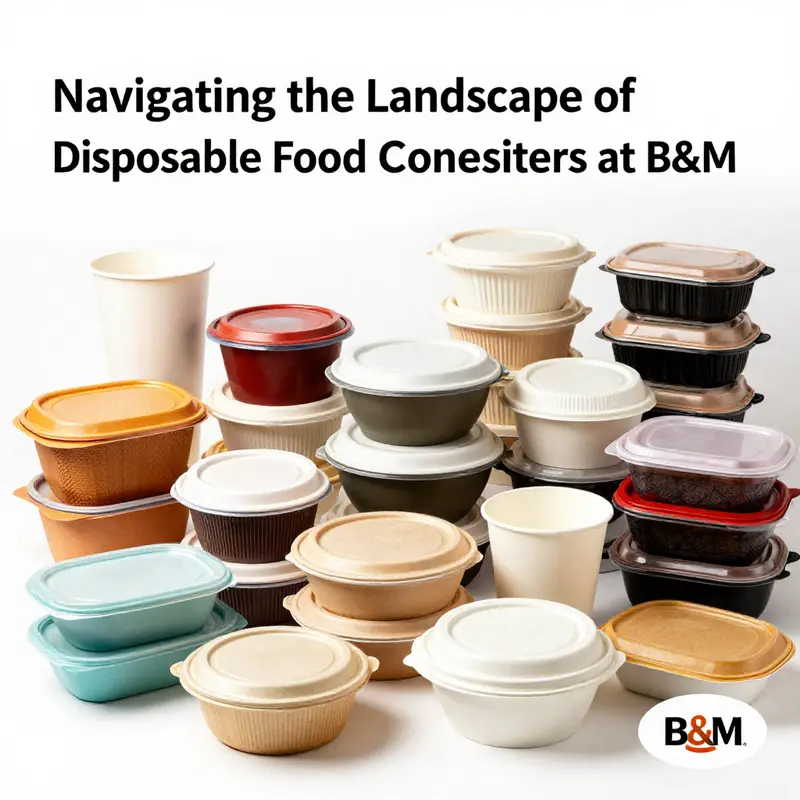
Disposable containers in a large discount retailer in the United Kingdom tell a story about convenience, value and responsibility. The B&M style assortment shows how a mass market can blend takeout friendly design with materials that are easier to recycle or compost. Consumers see options that fit everyday use without forcing premium prices.
Across the market the shift is away from traditional plastics toward bagasse, kraft paper and plant based plastics such as PLA. These materials offer strong performance for hot and cold foods while providing a clearer end of life path. The result is a packaging menu that supports daily use with a lighter environmental footprint.
Design priorities focus on reliability and ease of use. Containers must resist leaks, maintain temperature, and be compatible with home microwaves and simple dishwashers where relevant. Lids, seals and stackability are balanced with price in mind, and multi compartment options help with meal prep and portion control.
The bamboo narrative adds a premium feel while keeping costs reasonable when bought in bulk. Bamboo items convey durability and a natural aesthetic that fits everyday kitchen routines, storage and gift surfaces. The trend helps broaden appeal without sacrificing value for families on a budget.
Regulatory and safety considerations remain central. Clear labeling for food contact, microwave compatibility and compostability claims builds consumer trust and reduces uncertainty during decision making.
Pricing strategies emphasize bulk packs and private label options. Spreading fixed costs across many units makes sustainable materials affordable for daily use, from school lunches to family meals.
In this evolving ecosystem the retailer guides choices through practical design, dependable performance and transparent messaging. By balancing materials, price and usability, B&M helps normalize sustainable containers as standard everyday gear rather than a premium add on.
From Safety to Sustainability: How Japan’s Food-Contact Standards Shape the Path of Disposable Containers, and What It Means for Discount Retailers
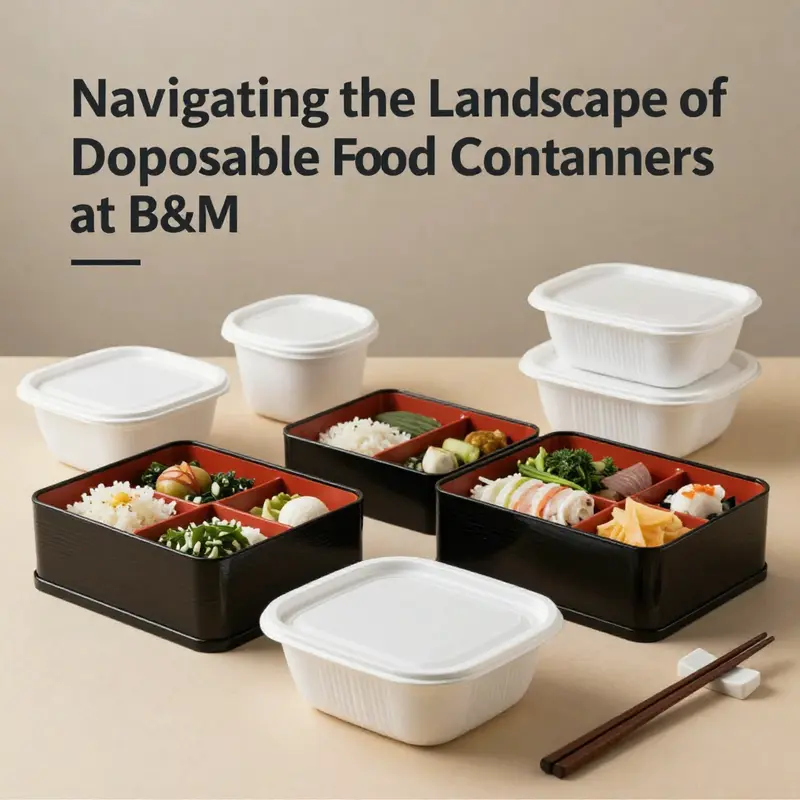
The market for disposable food containers sits at a critical intersection of safety, performance, and environmental responsibility. For a discount retailer operating on thin margins and high-volume turnover, the challenge is not merely to stock a catalog of convenient packaging, but to curate a line that earns consumer trust, complies with stringent regulations, and aligns with evolving expectations around waste and reuse. In this context, Japan’s sophisticated approach to food-contact materials—anchored by the Food Sanitation Law and a narrowly defined positive list system—offers a blueprint for understanding what makes a container reliable in the eyes of both regulators and customers. While the specifics of any single retailer’s assortment will vary by region and supplier, the underlying logic is broadly transferable: safety first, performance second, and sustainability a steady, value-adding third pillar that can differentiate a retailer in a crowded field.
At the heart of Japan’s framework is a clear commitment to human health and environmental stewardship. The Food Sanitation Law imposes a safety standard that all materials intended for contact with food must meet. This is not a generic assurance; it is a legally enforceable mandate that translates into concrete testing and documentation. A notable development in 2020, the positive list system, tightened the gatekeeping: only substances explicitly listed as safe may be used in food packaging. The list comprises 21 base materials and more than 425 additives. Any substance not listed is deemed unsafe if it migrates into food above a very conservative threshold of 0.01 mg per kilogram of food. For a retailer, this is a reminder that sourcing cannot be a matter of faith in a supplier’s claims alone. It requires traceable compliance, clear migration data, and confidence that packaging materials will not compromise the safety of the food they enclose.
Within this regulatory mosaic, the detailed standards for individual materials—captured in the MHLW’s Notification No. 370—provide a granular map for what is permissible in different packaging formats. Plastic containers, for instance, face migration limits for single monomers that can be quite low; vinyl chloride from PVC, for example, is capped at or below 0.01 mg/kg in some contexts. Paper-based containers—often the preferred option for eco-conscious consumers—must be biodegradable and compostable, while avoiding harmful dyes or inks that could migrate into the food or leach chemicals into the environment. Aluminum foil containers, which dominate certain segments of the convenience and takeout market, are subject to special standards when used in heated applications, reflecting a cautious approach to thermal stress and potential changes in material behavior under hot conditions.
These material-specific rules might seem abstract, but they translate directly into the available options that a discount retailer can stock with confidence. For example, paper-based containers, many crafted from natural cellulose pulp, now occupy a broad spectrum of formats—from single-serve bentos to larger takeout boxes. In parallel, plastic alternatives like HDPE and PP are still common, particularly for soups, stews, or sauces that demand leak-proof rigidity and reliable lids. Aluminum foil trays continue to be preferred for certain ready-to-heat or grilled-item offerings, especially in settings that prioritize quick-service throughput and easy disposal. What matters is not just the raw material but its proven performance under real-world conditions: how well a container holds heat, how cleanly it preserves the shape of a bento-like arrangement, and how confidently a consumer can transport a meal without spillage.
Two related strands of standardization shape how these containers are tested and validated: migration testing and food simulation testing. Migration testing looks to quantify how much substance could migrate from the packaging into the food during typical use. The migration metrics are material-specific and context-specific; criteria are tuned for the product family—whether a thin plastic lid, a high-barrier aluminum tray, or a rigid paperboard box. Food simulation testing goes a step further by using controlled liquids that approximate real foods. Water serves as a general probe, but more specialized simulants are used for dairy, alcohol, fatty foods, or acidic sauces. The outcomes guide not only safety but practical aspects such as shelf life, odor preservation, and the consumer experience of heat retention. In 2024, regulatory discussions in Japan also spotlighted a shift toward total extractables testing, replacing older permanganate consumption tests. This reflects a broader trend toward a more holistic chemical safety assessment that can capture a wider range of potential interactions between packaging and food. For a retailer, these shifts emphasize the importance of partnering with suppliers who can provide robust testing documentation, clear batch-level data, and consistent performance across product families.
On a practical level, these standards interact with how packaging is designed and marketed. The emphasis on safety and sustainability does not preclude performance; in fact, it often reinforces it. Paper-based containers designed for bento-style meals emphasize aesthetics as well as function: clean lines, a warm, natural look, and a tactile sense of quality that resonates with customers who associate paper with freshness. The material’s natural origin supports a narrative around eco-friendliness, which matters in consumer decision-making, particularly when alternatives are available at similar price points. Yet paper must meet the regulatory bar: it must be designed to minimize colorfast dye migration, avoid inks that could transfer a taste or odor, and be compatible with the microwave or oven if that use-case is anticipated. When a retailer can point to compliant paper boxes with clear compostability or recyclability, they not only reduce risk but also align with sustainability claims that customers increasingly expect from value-focused stores.
From a design and procurement perspective, the interplay between standards and consumer demand translates into a few practical priorities for discount retailers. First, there is a clear preference for sizes that cover common meal portions—ranging from roughly 300 to 1300 milliliters for everyday meals, with larger capacities for family-size or multi-item combinations. The initial market overview notes a spectrum of standard sizes, including medium to large formats that fit bulk offerings and multi-item promotions. This variety must be balanced with cost, as bulk procurement for a chain often hinges on minimum order quantities and price-per-unit that keeps the total cost within tight margins. The same data set also highlights an important fact: the market supports highly scalable production, with suppliers offering mass customization and large lots—orders that can reach tens of thousands of pieces—at prices that still satisfy the economics of discount retail channels. The challenge is to translate this capacity into a reliable supply pipeline that minimizes stockouts, reduces waste, and preserves the perceived value of the retailer’s seasonal or promotional campaigns.
A crucial consideration is the ongoing demand for sustainability without sacrificing affordability. The materials story—bagasse from sugarcane, molded pulp, and kraft-based solutions—reflects a broader shift toward compostable and recyclable packaging that aligns with growing consumer expectations and regulatory directions outside of Japan as well. Bagasse, in particular, has emerged as a preferred material for hot-food containers because of its heat resistance, stiffness, and ability to withstand short thermal excursions without degrading. For a discount retailer, bagasse-based containers can offer a compelling balance of performance and eco-credibility at scale, especially when coupled with customization options that enable in-store promotions or loyalty campaigns. Kraft paper solutions, especially those with a natural finish and a robust lid, provide a similarly attractive combination of cost efficiency and consumer appeal. The key, again, is certification and documentation. When customers demand proof of compostability or degradability, stores must be able to point to standards conformance and third-party validation so that claims remain credible and defensible.
Beyond materials and size, the chapter’s practical takeaway for discount retailers centers on supplier relationships and risk management. The transition toward eco-friendly packaging requires a stable network of suppliers who can deliver consistent quality, maintain traceability across batches, and respond quickly to demand shifts driven by promotions or seasonal changes. Retail buyers should look for suppliers with clear migration and extractables data, transparent testing reports, and a willingness to share materials declarations and compliance certificates. In a market where private-label options compete with a growing range of third-party sustainable packaging lines, the ability to demonstrate reliability at scale becomes a decisive differentiator. Customization is not a luxury; it is a strategic tool that can help a retailer connect with customers, reinforce brand messaging, and drive repeat purchases. And when customization is combined with rigorous safety testing, it creates a compelling value proposition: a packaging solution that looks good, performs well, and aligns with a responsible shopping ethos.
The design implications extend into seasonal and promotional planning as well. Eco-friendly containers enable points of difference during campaigns, but they also require careful forecasting because some eco-materials, while increasingly common, still come with longer lead times or slightly higher unit costs than conventional plastics. Retailers must balance the desire to offer greener options with the need to maintain consistent in-stock levels, especially during peak periods. A robust procurement strategy will often include a mix of base-line, high-volume container types and a contingent lineup of premium or specialty packaging that can be deployed during holidays, regional promotions, or limited-time menus. This approach ensures customers experience a stable, affordable core offering while still being able to access standout packaging that communicates the retailer’s commitment to sustainability.
The journey from regulatory insight to retail execution is not merely a supply-chain exercise. It is a storytelling opportunity. Packaging is the first physical touchpoint a customer has with a meal bought in a discount store. The material’s look, its feel, and the way it communicates safety and responsibility all contribute to a perception of value. A consumer who sees a container that clearly signals compostability, that demonstrates robust temperature performance, and that feels sturdy enough to carry from checkout to car—this is a consumer who associates the retailer with reliability and ethics. The storytelling can be reinforced through in-store messaging, labeling that explains the compostable claim, and QR-enabled notes that direct customers to more detailed information about end-of-life options. In a landscape where easy disposal is a practical necessity for many households, packaging that communicates clear end-of-life guidance reduces confusion and waste, supporting a healthier shopping ecosystem overall.
In this sense, the chapter intersects with a broader global trend: the move toward more sustainable, test-driven packaging solutions that can support mass-market distribution without sacrificing safety. The materials and regulatory standards discussed here are not an exclusive domain of Japan; they reflect a global discipline that brands and retailers can adopt. For discount retailers, translating this discipline into a practical, profitable assortment means choosing supplier partners who can provide verifiable safety data, a clear roadmap for compliance, and flexible production capabilities. It means balancing the allure of eco-friendly materials with the economic realities of high-frequency stocking, discounted pricing models, and the need to maintain consistent shelf availability. It also means embracing the potential of customization—whether through private-label branding or limited-time packaging that leverages green materials to underscore a store’s commitment to sustainability.
The landscape is not static. Regulatory revisions continue to refine testing protocols and expand the set of materials considered safe for food contact. The aim is to improve consumer protection while supporting innovation in packaging design. For a retailer, staying current means establishing a robust compliance workflow, maintaining an up-to-date library of material declarations, and cultivating an agile sourcing network. The payoff is a packaging ecosystem that can respond quickly to consumer expectations and regulatory shifts, reducing the risk of recalls, supply interruptions, or consumer complaints about safety or performance. In short, the road from standards to storefront is navigable when a retailer treats packaging as a strategic asset rather than a mere purchasing detail.
For further context on regulatory specifics and testing frameworks, readers may consult official resources detailing the Food Sanitation Law and related migration testing standards. As a practical takeaway for buyers and category managers in discount retail, the following point stands out: align your assortment with rigorous safety data and adopt a communications approach that helps customers understand why certain containers are chosen for particular meals. When customers see a package that feels both trustworthy and environmentally considerate, their satisfaction extends beyond the meal itself and into the broader shopping experience.
Internal reference for applied packaging considerations and a real-world example of eco-friendly kraft packaging is available here: eco-friendly disposable kraft paper soup bowl with lid.
External resource for regulatory detail and testing standards can be found in the official documentation published by the Japanese Ministry of Health, Labour and Welfare. This source provides the foundational framework that informs the migration limits, the positive list system, and recent revisions to testing protocols. See the official MHLW notification for deeper insight into the standards that govern modern food-contact materials at scale: https://www.mhlw.go.jp/stf/shingi/2r9852000000o8bq-att/2r9852000000o8bq.pdf.
Custom Fit: Customization and Industrial Deployment of Disposable Food Containers in a Modern Retail Landscape
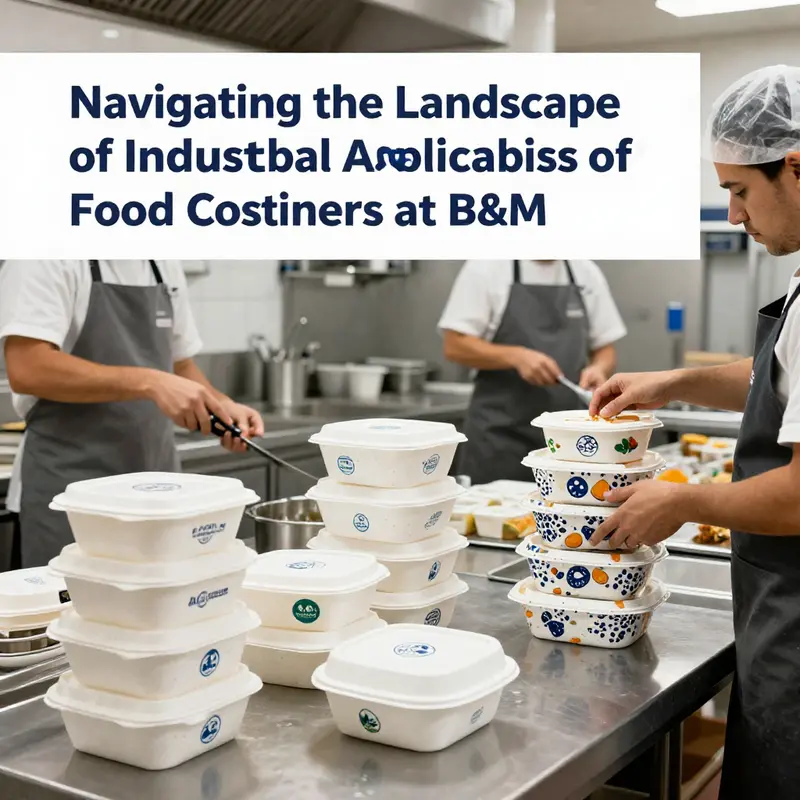
Disposable food containers have grown from simple wrappers into sophisticated, customizable platforms that support operational efficiency, brand storytelling, and sustainability across diverse supply chains. In the context of large discount retailers and their food-service ecosystems, these containers are not mere vessels; they are strategic touchpoints that shape the customer experience, influence logistics costs, and reflect a retailer’s commitments to environmental stewardship. The evolution of these packaging systems is driven by three intertwined forces: material innovation, engineered design, and scalable manufacturing that can meet the demands of high-volume foodservice, take-away, and on-site dining without sacrificing safety, practicality, or brand clarity. When a retailer like a value-focused chain contemplates its disposable food container program, it is not simply choosing a tray, bowl, or box. It is deciding how to balance cost-per-use, performance under heat and moisture, user-friendliness for delivery drivers and customers, and the narrative the packaging conveys about the retailer’s values and ambitions. In this sense, customization becomes the bridge between the operational realities of fast turnover kitchens and the aspirational objectives of a responsible, recognizable brand ecosystem. The market signals are clear: consumers want options that perform, look consistent with a store’s image, and align with broader commitments to sustainability. The supplier ecosystem responds by offering a spectrum of materials, configurations, and branding capabilities that can be tailored to precise needs. The promise of customization lies in translating generic packaging into dependable workstreams for kitchens and efficient, dignified experiences for customers who expect their meals to arrive intact, appetizing, and on brand with the retailer’s value proposition. As such, the choice of container material becomes a decision point that ripples through procurement, packaging design, and even in-store or online marketing strategies. In this broader landscape, the B&M model—where affordability meets everyday practicality—finds a natural partner in disposables that can be adapted to dozens of menu formats, from hearty bowls to casual wraps, while maintaining predictable performance at scale. This is not about a single product category but about an integrated approach to packaging that supports a retailer’s operating model and its promise to customers.
The landscape of disposable containers is anchored in material versatility. Biodegradable pulps, such as those derived from sugarcane bagasse or bamboo, represent a class of solutions that speak directly to the sustainability expectations increasingly held by regulators, brands, and diners. These materials offer compostability and a reduced plastic footprint, while still delivering the necessary barrier properties to keep foods fresh and prevent leaks during transport. They also align with regulatory frameworks that guide food-contact safety and environmental performance, making them suitable for large-scale kitchens and busy takeaway channels. Yet material choice is only one axis of customization. For many operators, shaping the container to support portion control, heat management, and visual consistency matters just as much. Enter the world of engineered design: multi-compartment layouts, secure lid systems, and leak-resistant coatings that together create a packaging solution capable of withstanding the rigors of delivery routes, stacked storage, and varied serving formats. A compartmentalized design, for instance, helps keep proteins separate from starches, vegetables, and sauces. It minimizes cross-contamination and supports portion control—an essential consideration for corporate cafeterias, school meal programs, and hospital kitchens alike. A robust lid system, meanwhile, reduces spill risk during transit, which is critical for drivers negotiating traffic and for customers who expect their meals to arrive in pristine condition. Leak resistance is achieved not only through the choice of material but also through coatings and interior finishes that resist oil and moisture migration, preserving the structural integrity and presentation of the food.
In practice, the spectrum of materials used for disposable containers reflects a balancing act among sustainability, performance, and cost. Biodegradable pulps, including those derived from plant fibers, are favored for their environmental credentials and compostability. They tend to perform well for wet and layered foods when paired with appropriate coatings that prevent seepage. Polypropylene (PP) plastics offer durability, microwave safety, and clarity, making them ideal for meal-prep services and catering operations that require reusability in a limited sense or reliable protection during quick turnover. Kraft paper with a clay interior can provide a premium, natural aesthetic while offering practical leak resistance and odor containment, making it attractive for cafés and quick-service formats that want a rustic yet polished look. Each material brings its own set of advantages and constraints, and the optimal choice often depends on the specific use case, whether it is a hot entré, a salad, a pasta dish with sauce, or a delicate dessert that must travel intact. The best programs embrace a portfolio approach—mixing several materials and formats to cover the full range of offerings while preserving a coherent brand story across the packaging suite.
Branding and functional design then become the glue that binds material strategy to market impact. Modern disposable containers can accommodate full-color printing on exterior surfaces, embossed branding elements, and color-matching that reinforces a store’s identity. Packaging becomes a moving advertisement that sits in front of the customer well after the food is consumed, shaping recall and repeat purchases. But branding is not just about aesthetics. It also supports operational efficiency. Custom shapes, lid configurations, and multi-compartment layouts can be engineered to fit specific portion sizes, reduce plate waste, and streamline assembly lines in high-volume kitchens. A well-designed container can simplify stacking, reduce space requirements in storage and transit, and enable faster pick-and-pack for delivery orders. In a retail ecosystem, this translates into tangible savings: lower handling costs, fewer packaging-related complaints, and a stronger correlation between the brand experience and customer satisfaction. The elegance of a well-branded, well-structured container lies in how naturally it integrates into the consumer’s perception of the retailer. It is not simply “food packaging” but a part of the shopping experience that communicates quality, responsibility, and consistency.
The industrial applications of these customized containers stretch across several domains, each presenting distinct demands that packaging must meet. In the food service and restaurant sector, containers must support temperature stability, maintain mouthfeel and presentation, and resist leaks and odors. In catering and event operations, the emphasis shifts toward durability, stackability, and reliability under large-scale, time-sensitive workflows. For logistics and delivery services, lightweight yet sturdy designs lower fuel costs and minimize damage during long journeys, while still maintaining the food’s integrity. In healthcare and institutional settings, packaging standards emphasize hygiene, containment, and compliance with strict food-contact regulations. Outdoor and recreational contexts value portability, spill resistance, and eco-friendliness. Across these sectors, the ability to customize through materials, geometry, and branding means retailers can offer tailored solutions that align with specific menu formats or promotional campaigns without sacrificing efficiency or safety. The interplay between customization and industrial deployment is a delicate balance: meet the throughput of busy kitchens, satisfy regulatory demands, and deliver a packaging system that customers view as an extension of the retailer’s brand promise.
From a compliance and certification standpoint, mass-produced disposable containers operate within a framework of standards designed to protect consumers and the environment. The EC 1935/2004 regulation, which governs materials intended for food contact within the European Union, sets baseline expectations for safety and performance. This is complemented by ISO certifications that validate manufacturing processes and environmental management systems. For materials advertised as compostable or biodegradable, third-party certifications such as OK Compost or TÜV Austria provide assurance that the product behaves as claimed in appropriate industrial composting facilities. These standards are not mere checklists; they influence procurement decisions, supplier audits, and the ease with which a retailer can import packaging across borders. When a retailer plans a large-scale roll-out of new packaging, these certifications help minimize regulatory risk and support consumer trust. They also guide the design and testing process for new container formats, ensuring that innovations can scale across thousands or millions of units and across multiple markets with consistent performance.
Procurement at scale introduces another layer of consideration. In highly centralized retail models, the ability to source containers in large quantities—often with minimum order quantities in the tens or hundreds of thousands—drives pricing and supply reliability. This is where the economics of material choice and manufacturing efficiency come to the fore. A simple reduction in per-unit cost, achieved through optimized tooling or bulk material sourcing, can have a meaningful impact on the total cost of ownership for a retailer’s packaging program. Equally important is the ability to customize on a mass scale. Techniques such as roll-to-roll printing for exterior artwork, and standardized multi-compartment templates, enable retailers to offer regionally customized packaging while preserving a unified global brand presence. The logistics of supply chains, with their exposure to raw material volatility and transportation costs, further shape container selection. Containers that are light yet sturdy, that stack compactly, and that resist moisture and heat, reduce the total weight and volume shipped, lowering carbon footprint and distribution expenses. In this context, a diversified container portfolio—balancing pulps, plastics, and paper-based composites—can provide resilience. Retailers can adapt to demand shifts between dine-in, takeaway, and home delivery by adjusting kit configurations and substituting materials with minimal disruption, all while maintaining consistent safety and branding standards.
The consumer-facing implications of customization cannot be understated. Packaging that communicates sustainability through material choices, recyclability, and clear labeling reinforces a retailer’s environmental narrative. It helps customers perceive value not just in the meal but in the responsible packaging that accompanies it. In a crowded marketplace, a consistent brand language across containers fosters recognition and trust. The design should also anticipate user behavior: lids that are easy to open but secure during transit, compartments that prevent spillage, and interior finishes that resist staining from sauces or oils. These features improve the customer’s on-the-go experience and reduce the likelihood of negative interactions with packaging, such as leaks or breakage.
One practical implication for retailers exploring these options is to curate a packaging portfolio that can be logically integrated with both store-level operations and centralized procurement. A portfolio approach allows a retailer to assign specific container families to particular menu formats or channels. For example, a single family of multi-compartment pulp containers could serve both hot meals and salads, as long as the interior coatings and lids are matched to the expected thermal and moisture exposure. A separate line of PP-based containers could be allocated for cold or mildly warm dishes where clarity or premium presentation matters. A third line, perhaps featuring kraft paper with a clay interior, could be used for premium grab-and-go items or for stores aiming to convey a rustic, eco-friendly aesthetic. The key is to ensure that these choices are not arbitrary but cohesive, with clear guidelines on where each format fits, how it performs under real-world conditions, and how it aligns with the retailer’s sustainability and brand goals. The segmentation should be driven by data from pilot programs, which measure leakage rates, temperature retention, user satisfaction, and waste diversion performance.
The integration of internal links to practical resources can support buyers and category managers as they navigate these decisions. For instance, a case study on eco-friendly kraft paper takeaway packaging illustrates how interior coatings and exterior finishes can combine to deliver leak resistance and odor management while preserving an attractive, recyclable exterior. It also highlights the importance of branding opportunities, as logos and color schemes can be applied to exterior surfaces without compromising material integrity. This kind of reference point helps translate abstract sustainability promises into concrete, verifiable packaging attributes. Following such guidance, retailers can map their own packaging specifications to supplier capabilities, ensuring that every SKU in the portfolio meets shared performance benchmarks and branding standards. The result is a coherent packaging strategy that supports the retailer’s efficiency goals and reinforces its environmental commitments in the eyes of customers. For readers seeking a concrete example of customization in practice, consider the broader supply ecosystem where factory-level configurations enable mass production of tailored containers. The ability to adjust size ranges, introduce localized branding, and maintain ISO-compliant processes is what makes large-scale deployment feasible and reliable. In this sense, customization is not a luxury; it is a necessary capability for retailers aiming to balance cost efficiency with differentiation and responsibility.
From a practical standpoint, the decision to embrace customization at scale also invites considerations about supplier collaboration and risk management. Close partnerships with certified manufacturers who can provide samples, conduct rigorous testing, and offer transparent documentation become essential. It is through such collaborations that a retailer can validate performance claims, ensure food-contact safety, and verify that compostability or recyclability claims hold in expected facilities. Supplier diversity also matters—having access to multiple manufacturing partners can mitigate supply disruptions, respond to regional regulatory variations, and accommodate diverse store formats. The most effective packaging programs emerge when retailers and suppliers co-create solutions, sharing data on temperature profiles, shelf life, and user feedback to iteratively refine container designs. In this collaborative spirit, a retailer can pursue ongoing improvements—reducing plastic usage, optimizing lid designs for ease of use, and enhancing print quality to reinforce the brand message without compromising functionality.
For readers who want to explore real-world examples of the principles outlined here, a useful reference center exists in industry resources that discuss customization of disposable containers for mass production, including material selection, branding options, and regulatory alignment. Such resources illustrate how buyers can articulate specifications that balance performance with cost, and how suppliers translate those specs into scalable, certifiable production runs. While the specifics of any one supplier’s catalog cannot capture every possible use case, the underlying framework remains universal: select materials that meet sustainability and performance criteria; design containers for efficient handling, secure transport, and clear branding; obtain necessary certifications; and pursue scalable manufacturing partnerships that can deliver consistent quality across thousands of units.
In sum, the customization and industrial deployment of disposable food containers is a strategic, multi-faceted effort. It requires a clear understanding of material science, engineering design, branding psychology, and regulatory navigation. When executed well, it yields containers that perform reliably in fast-paced food-service environments, reinforce a retailer’s value proposition through consistent visuals, and contribute to a lower environmental footprint. The modern packaging landscape rewards practitioners who approach container design as a system—one that aligns supplier capabilities with store operations, validates claims through certifications, and communicates responsible stewardship to a broad base of customers. For retailers operating in a competitive market, this alignment makes packaging not an afterthought but a core component of the business model, capable of driving loyalty, reducing waste, and enhancing the overall dining experience. And as consumer expectations continue to evolve toward greater sustainability and customization, the role of disposable containers as adaptable, design-aware, and regulation-ready platforms will only become more central to retail success.
Internal resource reference: eco-friendly kraft paper takeaway packaging provides practical insight into aligning interior coatings, exterior branding, and practical use cases for multi-format packaging. This reference illustrates how a well-constructed container family can support both branding coherence and functional performance across a variety of dishes and service styles. (Internal link: eco-friendly kraft paper takeaway packaging)
External reference: for a broader perspective on manufacturing capabilities, certifications, and the economics of customized disposable containers at scale, see the following industry listing that showcases ISO-certified, food-contact-safe, and customizable options. (External link: https://www.alibaba.com/product-detail/Custom-made-700ml-1000ml-Disposable_1600685488428.html?spm=a2700.1.recommended.1.6d2b3f5aXoZyJw)
Final thoughts
As the disposable food container market continues to evolve, understanding the trends and standards becomes paramount for businesses like yours. Whether focusing on sustainable materials or the technical specifications favored in different cultures, adapting your container choices can elevate your brand presence and meet customer expectations. Embracing customization also enables you to create a unique offering that stands out in a crowded market. Keep B&M in mind as your partner for affordable, diverse options that align with these insights and help your business flourish.