

In the world of food service, maintaining the quality of ingredients is key, particularly for items like cereals that require protection from moisture and pests. Plastic food containers designed for cereal storage not only offer convenience but also ensure that your product remains fresh and appealing. These containers cater to a variety of business needs, from Bubble Tea Shops to large catering services. Throughout this article, we will delve into crucial aspects, including material safety, sealing mechanisms, sizing options, durability, and the retail landscape of plastic cereal containers, offering a comprehensive understanding tailored to your enterprise’s requirements.
Guardians of Freshness: Material Safety and the Cereal Container You Can Trust
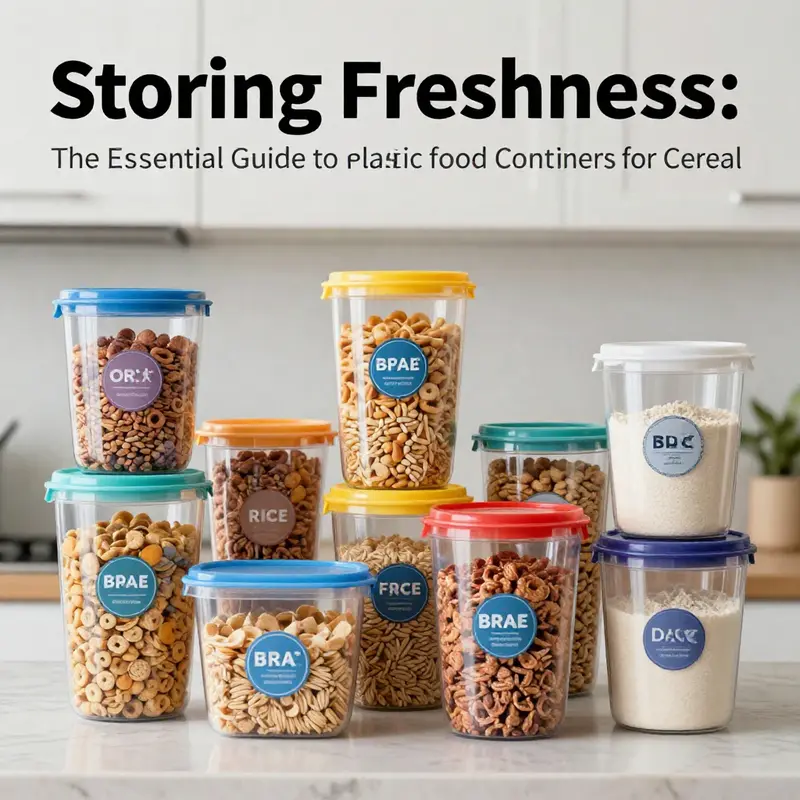
The morning ritual of pouring cornflakes, oats, or morgho into a bowl hinges not just on taste but on the quiet, unseen choice of storage. A cereal container sits on the shelf like a sentinel, guarding aroma, texture, and crunch against the twin forces of moisture and air. Yet this guardian must be made of materials that do not become a risk with time. The chapter that follows traces the path from resin codes and safety testing to everyday practice in the kitchen. It is a narrative about material safety that remains practical, tangible, and relevant to how we actually store breakfast staples.
At the heart of safe cereal storage lies the material itself. The most widely recognized and trusted plastics for food contact come from resin identification codes #2, #4, and #5. Each of these resins has a track record for durability and low migratory behavior under typical domestic conditions. HDPE, or resin #2, is prized for its barrier properties against moisture and gases. It is the same family of plastic that fills many durable milk jugs and dry-food containers, where the goal is to keep cereals dry over weeks or even months. Its chemical resistance is part of what makes it a safe choice for long-term storage. PP, or resin #5, brings its own strengths to the table: heat resistance and a degree of clarity that can help in identifying what lies inside the container without opening it. PP is a workhorse in the kitchen, valued for its resilience to repeated opening and closing while retaining structural integrity. LDPE, resin #4, adds flexibility and often serves in liners, lids, or flexible packaging that still needs to be food-grade safe. In household storage, these resins are commonly associated with safety profiles that food scientists and regulators have evaluated for decades when used properly and labeled as food-grade.
Safety testing underpins all of this, and the term food-grade is not a mere marketing claim. A container that carries a food-grade designation has passed standardized evaluations that assess not only the base plastic but also the additives, colorants, and surface finishes. The emphasis is on preventing chemical migration into food, particularly during contact with dry goods like cereals, where the absence of moisture should not be mistaken for absence of chemical exchange. When a product advertises BPA-free construction, it is addressing a specific subset of potential concerns. BPA was once common in some polycarbonate formulations, but heightened consumer awareness and regulatory scrutiny shifted practice toward BPA-free alternatives for consumer-grade food storage. The larger truth is more nuanced: BPA-free does not automatically guarantee universal safety, because other additives or processing residues can also influence risk. To this point, many manufacturers rely on HDPE or PP with tightly controlled formulations and tested additives that have established safety credentials for dry foods. The overarching message is that resin choice and clear labeling—food-grade, BPA-free, and tested for migration under anticipated conditions—together define a container that can reliably guard your cereals without introducing unwanted substances.
Within this framework, the everyday decision of which container to choose becomes less about a single feature and more about alignment of several factors. Airtight seals, for example, play a crucial role in preserving freshness. An airtight lid minimizes moisture intrusion and reduces exposure to environmental contaminants, helping to keep the cereal’s aroma intact and its texture crisp. A good seal is often achieved through a combination of the lid’s geometry and a gasket material that remains durable over repeated uses. The container body should also be robust enough to resist scratching and scuffing, which can harbor micro-scratches where residues accumulate. The visibility of the contents, while not a safety attribute in itself, can influence how quickly one notices signs of moisture or spoilage. Some high-clarity plastics provide this visibility without sacrificing the core safety and structural integrity required for long-term storage.
Size and configuration matter as well. A single large bin might suit households that purchase cereal in bulk and prefer to scoop by weight, while multi-piece sets designed for different cereals or dry ingredients help prevent cross-contamination and mix-ups. The guidance here is practical: buy based on how much you actually store and how often you replenish your supply. A well-chosen system should minimize waste by keeping cereals in conditions that preserve moisture barriers and protect against pests. The combination of a sturdy body, an airtight lid, and a material that is proven safe for food contact creates a container that not only looks neat on the shelf but also behaves as an effective guardian of freshness over time.
Another layer of consideration centers on the environmental and regulatory landscape that envelops food packaging. While individual consumer decisions cannot remove all risk, choosing containers made from resin #2, #4, or #5 and ensuring they meet recognized food-safety standards can significantly reduce the likelihood of unwanted substances migrating into food. In discussions of safety, attention to materials extends beyond the base resin to include the entire lifespan of the product—from production to disposal. Many manufacturers emphasize the use of food-grade materials and care in the production process to minimize migration and contamination. The broader context includes ongoing assessments by regulatory bodies and research institutions that examine how packaging materials behave under typical kitchen conditions. For example, studies conducted by food-safety authorities have clarified that polypropylene and polystyrene can be safe when used appropriately, while certain materials, such as PVC, have raised concerns due to chemical leaching and degradation under UV exposure. These nuanced findings remind us that safety is not a single checkbox but a continuum of material science, manufacturing rigor, and proper use.
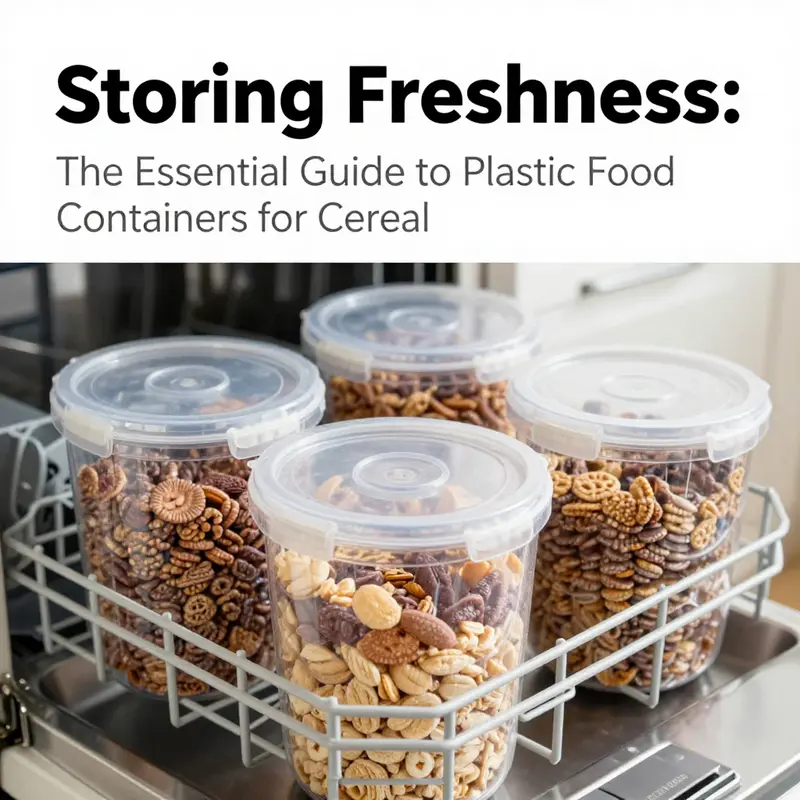
Practical storage decisions often intersect with questions about cleaning and maintenance. A cereal container that is easy to clean reduces the chance of residue buildup, which, in turn, can compromise both flavor and safety. For many households, dishwasher-safe materials are a practical aid, provided the end-use guidelines from the manufacturer are followed. It is prudent to avoid high heat or aggressive detergents that might degrade gaskets or cause surface micro-scratches, especially on translucent or clear plastics where surface imperfections can become more visible. Even when a container appears to be in pristine condition, it is wise to inspect for cracks or warping that could harbor moisture or pests. The goal is a sustainable balance: a container that can withstand daily use, be cleaned with reasonable ease, and maintain its barrier properties across months of cereal storage.
A core part of making informed choices lies in understanding what terms and certifications actually signal safety. The idea of a container being BPA-free, food-grade, and derived from resin #2, #4, or #5 should be interpreted as a consolidated assurance: the product uses a resin known for reliability in food contact, avoids a high-risk additive, and has undergone migration testing relevant to typical household use. In practice, this means reading labels with a careful eye for terms such as “food-grade,” “BPA-free,” and “suitable for contact with dry foods.” It also means recognizing that not all plastics labeled for food use are equally suited for every purpose. A container designed for dry goods may not tolerate microwaving or repeated high-heat cycles; a lid with a silicone gasket may seal effectively but require gentle cleaning to preserve its elasticity. The consumer becomes a co-investigator in a shared responsibility: select a material family with a proven safety profile, ensure the product carries appropriate testing and labeling, and apply everyday care that preserves its safety features over time.
To anchor these reflections in real-world practice, consider a practical example that aligns with the general principles of safe cereal storage. An airtight container with a lightweight yet sturdy body built from a resin #2 or #5 polymer can deliver reliable moisture resistance and ease of use. The lid, designed to form a tight seal, protects the contents during routine opening and closing. A transparent or high-clarity body helps you see when the cereal needs replenishing, while the absence of any harsh additives or colorants in the formulation reduces the likelihood of migrating substances. When you combine these features—proved safe resin, airtight sealing, and thoughtful design for cleaning and durability—you arrive at a rationale for choosing among the common options without overreliance on marketing claims. It is a practical framework that translates the science of safety into everyday kitchen habits, ensuring that your breakfast remains crisp and your family remains shielded from potential contaminants.
For readers seeking a concrete example of how such considerations appear in the marketplace, you can explore a product page that showcases a compact, lid-inclusive storage solution designed for dry foods and snacks. The page offers a snapshot of size options, lid design, and material considerations that mirror the safety priorities discussed here. You can view it here: senang-kraft-paper-octagonal-bowl-pet-lid-waterproof-eco-friendly-disposable-customizable-snack-pet-food-salad-containers-1l. While it reflects a different material family from the most common cereal-storage plastics, the link serves as a reminder that the marketplace offers a spectrum of packaging options, each with unique safety and usability profiles. The central takeaway remains: prioritize resin #2, #4, or #5 when selecting plastic storage for cereals, confirm the labeling indicates food-grade status and BPA-free construction, and consider how the design supports ongoing cleanliness and barrier integrity.
In the end, the cereal container is more than a container. It is a statement about how we manage risk, preserve freshness, and sustain a simple morning ritual that nourishes a family. The science of material safety provides the backbone, but daily choice and mindful use bring the chapter to life in the kitchen. This fusion of chemistry, regulation, and practical handling ensures that the bowl in the corner of the kitchen continues to deliver both taste and trust—an ongoing collaboration between consumer awareness and material science that starts each day with a crisp crunch.
External resource for further reading: the NIH review on plastic food container safety provides an evidence-based overview of the considerations described here. https://www.ncbi.nlm.nih.gov/pmc/articles/PMC10876593/
Locking in Crunch: The Science and Craft of Airtight Seals in Cereal Storage Plastic Containers
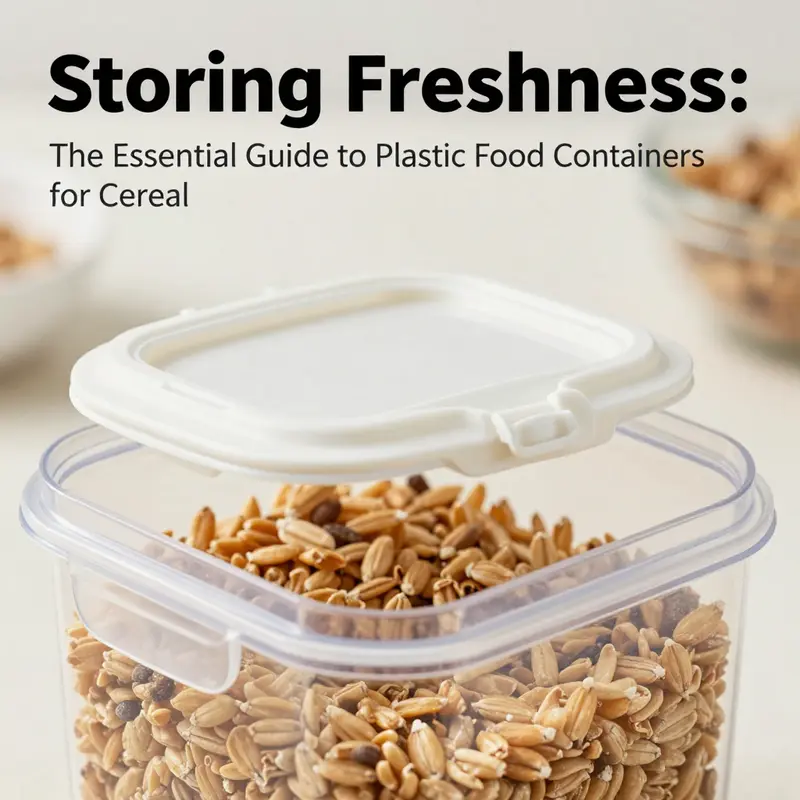
A bowl of cereal on a morning scan can seem almost mundane, but the container that holds it is performing quiet, stubborn labor. The airtight seal is not a cosmetic feature; it is a defensive line against oxygen and moisture that would otherwise creep into the grains, dulling texture, masking aromas, and nudging nutrition toward a slow, unglamorous decline. In households around the world, the act of closing a lid becomes a deliberate step in preserving freshness. The cereal inside may be immune to a few hours of kitchen chaos, but when exposed to air, even the best dry goods begin a slow march toward staleness. The container, with its sealing system, becomes a small, practical guardian of crunch, flavor, and shelf life. Understanding how this mechanism works helps explain why some containers outperform others, why some lids feel sturdier, and how a simple flip of the top can extend the window of enjoyment for breakfast staples.
A closer look at airtight sealing reveals three intertwined factors: how the lid meets the body of the container, the gasket or seal material that fills the tiny gaps, and the tolerances that keep the system from leaking at the hinges, threads, or snap points. The most effective designs hinge on a precise interplay between geometry and elasticity. The lid is not just a flat cover; it is a compression interface that compresses a resilient seal into a continuous ring. If you picture the edge of the lid pressing down onto a pliable ring, you can imagine how minute deformations—micro-waves of pressure when the lid is closed—create a barrier impenetrable to air. The seal material itself is chosen for chemical inertness, low moisture permeability, and resilience after repeated openings. In practice, the gasket material is typically a food-grade elastomer or silicone that maintains pliancy across a range of temperatures while resisting the swelling or shrinking that could occur with condensation.
The science behind these seals is also a craft of tolerances. A cereal container must balance being easy enough to close with a lid that resists creeping open on its own. If the seal is too loose, air can seep in, and if it is too tight, it can bind during use or wear unevenly after multiple cycles. Manufacturers tune the geometry of the sealing lip, the depth of the groove for the gasket, and the number of engagement points around the lid. Some designs rely on a continuous gasket that sits in a shallow channel, while others use a channel-and-groove pairing to channel moisture away from the contact surface. The result is a near-impermeable barrier that can withstand typical kitchen handling, from the slug of steam that escapes when you scoop out a portion to the occasional bump when a cabinet door closes a bit too hard.
Material choice is central to this reliability. The common plastic families used for dry-food storage, such as high-density polyethylene (HDPE) and certain PET formulations, are selected not only for safety but for how they react with gasket materials and the plastics themselves. HDPE, for instance, offers robust chemical resistance and a generally low water absorption rate, which helps maintain the seal’s integrity over time. It is widely regarded as one of the safer plastics for food contact, a practical factor for households that want long-term storage without repeated replacement of containers. In many systems, HDPE bodies pair with BPA-free sealants and lids to further reduce concerns about potential leachables. The balance between a stiff body and a forgiving gasket creates a system that can be opened, cleaned, and re-sealed countless times without losing its protective edge.
From a user’s perspective, the seal should feel dependable yet approachable. A well-designed container rewards you with a crisp, decisive click when you close the lid, a tactile cue that the seal is engaged. The audible cue matters because the mind often translates sound into confidence: a solid seal implies the contents are safe from ambient humidity and pests, even if you are rushing to prepare breakfast or stock a pantry for a busy week. The best sealing mechanisms also integrate with practical features such as flip-top lids or snap-on closures that are comfortable to operate with wet or flour-dusted hands. The lid’s hinge or strap should resist fatigue, so the user does not worry about long-term performance after months of daily use.
But the seal is only as good as the way you maintain it. The most well-engineered cereal container can lose its edge if you neglect routine care. Residue from cereals, oils, or sweet fillings can accumulate in crevices, becoming a magnet for moisture and odor. Regular cleaning—avoiding harsh abrasives that could scratch the sealing lip, ensuring the gasket remains intact, and inspecting for tiny cracks that might form over time—extends the life of the closure. It is also wise to store containers in environments that do not expose them to extremes of heat or humidity. A cool, dry cabinet preserves the elasticity of gaskets far better than a sunlit shelf that bakes under a kitchen lamp. The chain of causality is clear: clean seals stay pliant; pliant seals keep air out; air stays out; cereal stays fresh and crunchy.
This design philosophy—robust yet approachable, durable yet maintainable—also informs how households choose between single-storage options and multi-container sets. If you keep multiple cereals in the same pantry, a set with consistent sealing performance becomes a quiet cornerstone of organization. When different grains have different storage needs—some more susceptible to moisture, others to pests—having a predictable, uniform sealing system makes rotation simpler and reduces the mental load of kitchen management. The visual cue of uniform lids and uniform seals can contribute to a sense of order in the kitchen, but the real value lies beneath the surface: dependable freshness, predictable texture, and a straightforward routine for keeping breakfast staples at their best.
The choice of lid and seal is also shaped by how the container is used in daily life. For many households, a flip-top lid with an embedded gasket offers a balance of speed and reliability. It closes with a familiar, confident snap, and it is quick to reseal after a handful of cornflakes are poured. In environments where a thorough drain-and-dry is feasible, a two-piece or wrap-around seal can provide even tighter closure, as the gasket sits in a groove that accommodates more surface area and reduces the risk of air pockets along the rim. For those who store cereals in more humid climates or who want to maximize shelf life for longer-term storage, the emphasis shifts toward seal integrity and water permeability control. In those contexts, the added benefit of a locking mechanism that resists accidental openings becomes a practical feature, especially when kids reach for a bowl mid-morning or when the container is moved during a busy morning routine.
It is also important to connect this sealing knowledge to broader standards and safety considerations. The materials used must be food-grade and compatible with everyday kitchen conditions. The seal should not contain substances that could migrate into food, and the entire system should tolerate routine washing, including dishwasher cycles or hand washing. The broader literature on food container plastics highlights HDPE and PET as common, well-regarded materials for dry storage. These choices reflect a combination of safety, mechanical performance, and recyclability, a triad that matters in modern kitchens where sustainability and long-term usability are increasingly prioritized. For readers who want to dive deeper into material safety and the standards that govern these products, a concise guide to understanding food container plastics provides a solid foundation for evaluating different options without getting lost in jargon. In practical terms, knowing that certain polymers are both resistant to moisture and safe for repeated contact with foods helps explain why some lids feel firmer and more dependable after years of use.
Within the practice of selecting and using these containers, one can also learn to recognize the subtle cues that distinguish a well-sealed system from a merely functional one. The edge of a properly sealed lid should sit flush with the body, with no visible gaps and no easy way for air to flow around the seam. The gasket should not be deformed or cracked, and it should return to its original shape after pressing, rather than staying pinched or flattened. When this is the case, the seal acts as a true barrier, keeping humidity at bay and preserving the cereal’s texture. The difference between a stale, cardboard-like bite and a crisp, freshly opened spoonful can hinge on the small, almost invisible details of the sealing system.
For readers seeking a tangible illustration of how lid design translates into real-world performance, consider exploring products built around a robust lid-and-seal concept. These examples demonstrate how a kitchen-grade sealing system can be reliable, easy to use, and compatible with daily routines, all while maintaining the integrity of dry foods in varying conditions. Sénang05 food-grade take-away bowls with lids offers an accessible glimpse into how a lid design paired with an effective gasket can deliver dependable closure and practical convenience. This reference is not an endorsement but a useful touchpoint for understanding how the principles described here translate into consumer-ready products. The ease of operation, the confidence of the seal, and the durability across repeated use illuminate why airtight sealing remains a central consideration in cereal storage design.
Ultimately, airtight sealing in plastic cereal containers embodies a simple equation: keep the air out, keep the moisture out, and keep the cereal inside in a form that remains true to its original texture and aroma. The container becomes more than a receptacle; it becomes a partner in the daily ritual of breakfast. The best designs acknowledge that sealing is both a physical mechanism and a habit—an invitation to approach meal preparation with a little more care and attention. When you close the lid with the same care you would give to resealing a favorite jar, you encode a promise to the next morning: a bowl of cereal that stays crisper, smells more inviting, and tastes closer to its initial, pantry-fresh self. It is a small engineering feat made intimate by the everyday rhythms of kitchen life. And in a world where packaging is constantly evolving, the principle endures: a trustworthy seal is a quiet guardian of freshness, a practical ally in reducing waste, and a reminder that good design often operates in the spaces between moments rather than in the loud, headline-grabbing innovations.
External resource for further reading on standards and material properties in cereal storage: https://www.example.com/plastic-cereal-storage-standards
Cereal in Clear View: Navigating Size, Shape, and Safety in Plastic Cereal Containers
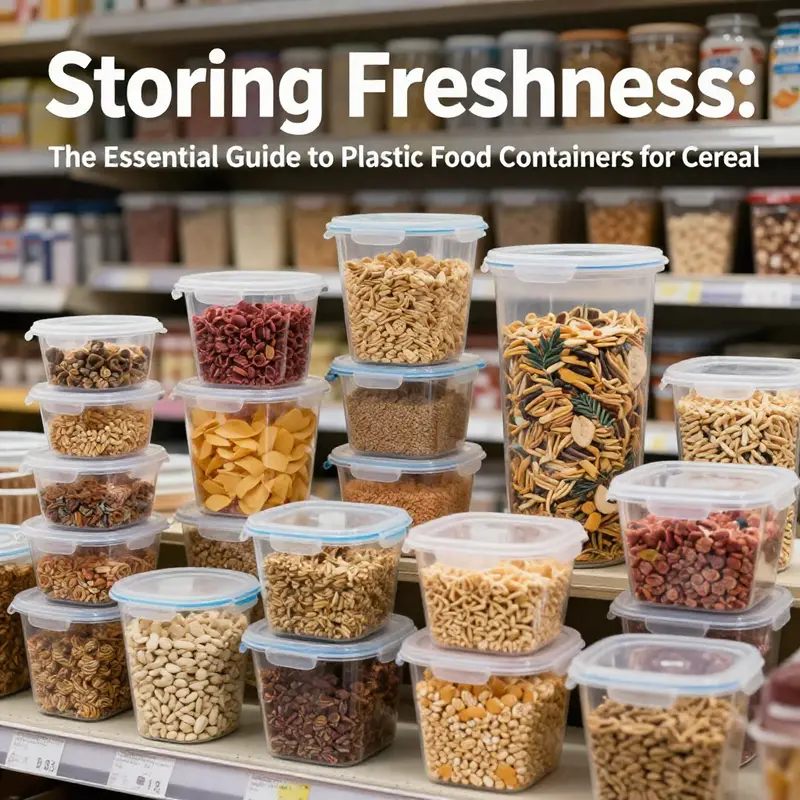
The moment you pour your morning bowl, the hidden work of a storage solution begins. Cereal lovers know that freshness is as much about airflow and light exposure as it is about the first bite. In the market, plastic food containers for cereal present a striking range of sizes, shapes, and features, each designed to protect flavor, guard against moisture, and keep the pantry looking neat. From compact 8-ounce jars that hold a single serving to large 64-ounce jugs that stock up for weeks, the spectrum mirrors the diversity of cereals themselves. The practical truth is simple: the right container can dramatically extend the life of a dry staple, reduce waste, and simplify morning routines. The challenge for shoppers is not just finding something that fits a shelf, but choosing a design that matches how they buy, store, and scoop the grains they reach for first each day.
In the market, size is more than a number. Small 8-ounce options are ideal for portion control, travel-friendly setups, or a quick test of a new cereal without committing to a bigger container. They slot easily into lower cabinet shelves, pull-out organizers, or compact apartment kitchens. Moving up, 16-ounce and 32-ounce jars strike a balance between capacity and handling. These mid-sized vessels become a staple for families who purchase cereals in moderate bulk, offering enough storage to minimize trips to the store while staying light enough to lift without effort. For households that prefer bulk purchasing or host a large breakfast crew, 64-ounce or larger containers become the centerpiece of the pantry. These larger jars, when kept dry and sealed, help minimize spoilage by limiting exposure to air and pests, a practical benefit that resonates with health-conscious shoppers who want to stretch every purchase. The market responds with a variety of configurations to suit different kitchen layouts and lifestyles, reinforcing the idea that there is no one-size-fits-all solution for dry goods.
The shape and design of these containers further influence their usefulness. Clear jars with airtight lids are among the most sought after because visibility aids quick meal planning and portion awareness. A wide mouth improves pouring and scooping, reducing spills and making it easier to clean the interior after a steady stream of breakfast scoops. On the other hand, taller, narrow jars can be space-efficient on crowded shelves, though they may require careful handling to prevent tipping. Some vessels emphasize a square or rectangular silhouette, a design choice that maximizes cabinet real estate and creates a clean, modular look when multiple containers are lined up in a row. In practice, many families assemble a small set of different sizes that can be mixed and matched for various cereals or dry ingredients such as rice, flour, or sugar. The result is a flexible system that can grow with shopping habits, from single servings to bulk storage, without sacrificing organization or aesthetics.
Functionality is where the full value of these containers shines. Airtight lids are not just a convenience; they are a stewardship of freshness. The most reliable seals employ gaskets made from food-grade materials that maintain a tight barrier against air, humidity, and tiny pantry invaders. Some designs incorporate leak-resistant flipping lids, measuring scoops, or pour spouts that guard against spills during daily use. A well-sealed container makes it possible to maintain crisp textures long after purchase, especially for cereals with delicate flakes that crave a dry, cool environment. Durability matters too. Containers built to endure repeated opening and closing, frequent washing, and occasional stacking tend to be made from sturdy plastics like HDPE or PP, materials chosen for their chemical resistance and longer lifespans. They are commonly labeled as food-grade and, in many jurisdictions, BPA-free to reassure households that the plastic touchpoints are safe for regular food contact.
The material choices available in the market reflect both safety concerns and practical considerations about care and upkeep. HDPE, widely used for dry-food containers, offers chemical resistance and toughness, with a track record of safe food contact. PET, another common option, is lightweight and clear, but may be more suited to short-term storage or items where durability and condensation are steady concerns. PP, known for heat resistance relative to some other plastics, can support dishwasher-safe designs and, in some cases, freezer compatibility, depending on the exact formulation and lid design. The emphasis on safety is amplified by the ongoing conversation about materials in food packaging. The modern consumer expects BPA-free options and appreciates recyclability, which aligns with a broader move toward more sustainable, reusable packaging. Recyclability codes and a manufacturer’s commitment to long usability are practical signals that a container is designed for repeated use, ease of cleaning, and minimal environmental impact.
Beyond the numeric and material details, the market showcases a thoughtful spread of styles and configurations that address diverse storage realities. For those who value visibility and quick inventory checks, clear jars in a multi-pack offer an intuitive window into contents. In contrast, some households prioritize a cohesive kitchen aesthetic—sleek, uniform jars that align with cabinet fronts or a color scheme. Even within the same family, variety matters. A seven-size or multi-size set can adapt to different cereals’ packaging sizes or to keep separate grains, snacks, and baking ingredients neatly organized in one place. The arrangement goes beyond mere tidiness; it supports efficient meal prep and reduces the cognitive load of rummaging through a cluttered pantry. A practical arrangement might place the 64-ounce bulk jar at the back with mid-sized 32-ounce and 16-ounce jars in front for easy access during busy mornings. Such configurations demonstrate how container selection is not merely about containment but about reducing waste, saving time, and preserving the sensory quality of breakfast staples.
In pursuing this balance of size, shape, and safety, many shoppers gravitate toward models that pair strong sealing with ease of cleaning and flexibility of use. The ability to dismantle components for thorough washing is as important as the seal’s performance during daily use. Some designs feature lids with integrated pour spouts or scoops that simplify serving and keep hands clean, a small but meaningful enhancement in a kitchen that moves quickly from alarm-clock dawn to school-day rush. The choice between a broad, scoop-friendly mouth and a taller, space-saving form is often influenced by storage space and the user’s pouring preferences. For families with children, container designs that are easy to open yet secure enough to prevent accidental spills become especially valuable. In homes where breakfast cereals are served across multiple people, a durable, easy-to-clean product line—with consistent lid action and simple maintenance—translates into fewer frayed nerves and more consistent mornings.
The market’s breadth also reflects a shift toward sustainability and reusability. As households seek to minimize waste, the appeal of containers that can endure years of use, resist staining from breakfast spills, and withstand frequent washing grows stronger. Reusability is not only an environmental consideration but a practical one, as the cost per meal decreases when a container lasts longer and remains in good condition. Recyclability is a complementary advantage, ensuring that materials can re-enter the supply chain responsibly at the end of their life. In this vein, many containers advertise their BPA-free status, emphasize the safety of their food-contact materials, and highlight adherence to standard plastics classifications like HDPE (#2) or PP, which often align with widely accepted safety criteria in food storage.
Shopping for cereal containers is, at its core, a balancing act. Consumers weigh capacity against cabinet fit, visibility against design, and price against durability. The market’s breadth invites experimentation: a shopper might start with a single 32-ounce jar for a favorite bulk purchase, then add a set of smaller jars for variety or a second cereal. The ability to customize storage with multiple sizes and lids, while keeping the system cohesive, is a powerful value proposition. It helps maintain freshness, reduces waste through better portioning, and supports a more organized kitchen workflow. For households that value a modular approach to pantry organization, the appeal of stackable, interchangeable containers becomes clear. The result is a pantry that tells a practical story of how we eat and how we store what we eat, with an emphasis on simplicity, safety, and sustainable choices.
In short, the size and variety of plastic cereal containers in the market are not just about keeping cereal dry. They are about enabling a daily ritual that begins with a clear view of what’s inside, proceeds with predictable performance from reliable seals, and ends with a storage system that respects both people and planet. The best choices are those that align with how much cereal is bought, how many different cereals are kept on hand, and how much effort a household is willing to invest in maintenance. And because the pantry is a living space—constantly reorganized as seasons change and new cereals arrive—the ability to adapt is what makes a container truly valuable. For the curious shopper who wants to test the limits of practicality, a multi-pack of airtight containers with wide mouths can offer a flexible, durable foundation. A simple step toward optimization is to begin with a few well-chosen sizes and observe how they change daily routines, ease of access, and the duration of freshness in your own kitchen ecology. If you want to explore a concrete example of a practical purchase that embodies these principles, you can review a representative take-away container option that emphasizes food-grade safety and lid reliability: senang05-food-grade-500-750-1000ml-take-away-bowl-with-lids-packing-food-single-wall-fast-food-salad-bowls. senang05-food-grade-500-750-1000ml-take-away-bowl-with-lids-packing-food-single-wall-fast-food-salad-bowls. This link serves as a practical touchstone for a lab-tested approach to everyday storage needs while illustrating how a textured landscape of containers can translate into calmer countertops and fresher breakfasts.
For readers who want to delve deeper into the science behind plastic materials and safety standards, an external resource offers a thorough overview of the classifications, properties, and industrial considerations that underlie everyday food storage products. External reference: https://www.amazon.com/dp/B0CZ7WJXK5
null
null
Shelf by Shelf: Navigating the Global Market for Plastic Cereal Storage Solutions
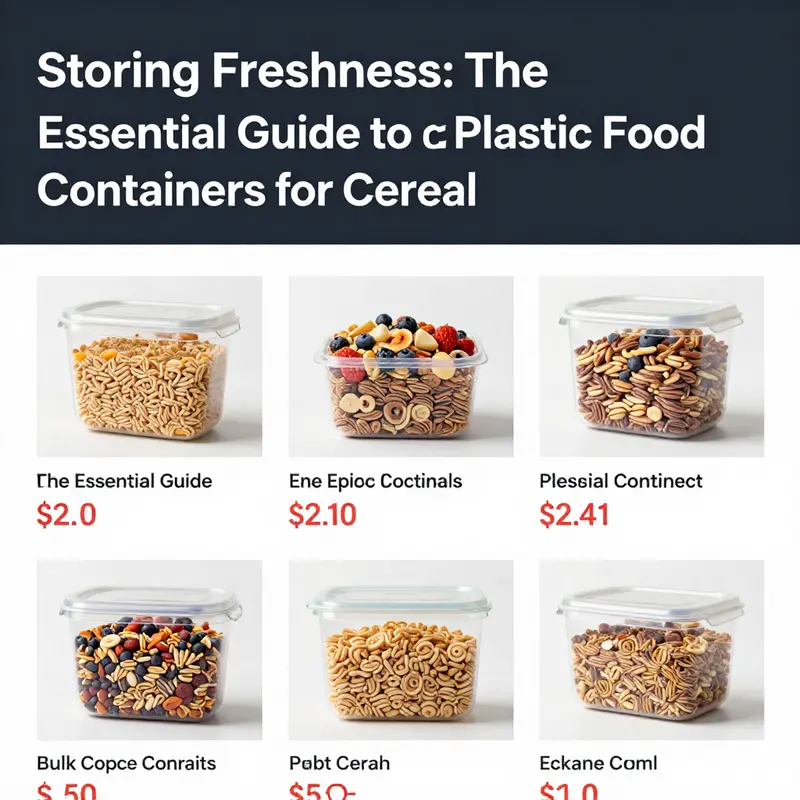
Cereal storage is more than a utility choice; it is a daily ritual that blends food safety, organization, and kitchen ergonomics. The way a pantry keeps breakfast grains fresh, free from moisture, and protected from pests speaks volumes about how households approach habit formation and healthful routines. Plastic containers designed for cereal occupy a surprisingly wide swath of the market, available through street vendors, big-box stores, and online emporiums that promise quick delivery. The range here is not simply about color or size; it is about how a vessel can support a morning routine, reduce mess, and extend the life of a dry staple that becomes breakfast for millions.
At the core of these choices is material safety. The most trusted candidates come in safe plastics like high-density polyethylene and PET, materials recognized for chemical resistance and food compatibility. These plastics are frequently marketed as BPA-free, a label that resonates with shoppers worried about long-term health effects. The codes associated with these plastics—HDPE and PET—also carry a message about end-of-life disposal and recyclability. In practice, this translates to containers that can be washed repeatedly, resist staining from oils or cereals, and tolerate the handling that comes with daily meal prep. The lids, too, are pivotal. A tight seal with a gasket that remains pliable over years prevents air from creeping in, preserving crispness and scent. Some designs go further with pour spouts or integrated measuring cups, features that reduce mess and waste when portioning servings. The combination of clear bodies and precise seals gives users a visual cue of contents while maintaining confidence that the cereal will stay fresh from the first scoop to the last.
When shoppers turn to online marketplaces, the search expands from a handful of models to an entire ecosystem of options. In this space, sizes commonly range from compact 16-ounce vessels to larger 64-ounce or even bigger capacities. The transparency of the containers allows quick content identification, a practical advantage when multiple cereals and dry ingredients share a kitchen. Durability is a recurring selling point—containers are portrayed as shatterproof or highly resistant to everyday bumps, particularly in households with children or busy mornings. Dishwasher-safe scores add another layer of practicality, especially for families who juggle quick breakfasts with other chores. The presence of air-tight lids, sturdy handles or grip-friendly textures, and modular stacking features all contribute to a sense that these products are designed for real-life use, not merely for display on a shelf. The online market also accommodates a spectrum of buyers, from those seeking simple storage for a few cereals to others who want a robust system that can organize rice, flour, sugar, or other dry goods in a single, cohesive lineup. The result is a marketplace where functionality and convenience cohabit with affordability and accessibility, allowing households to tailor their pantry storage to the rhythms of their daily lives.
Beyond the family kitchen, these containers extend into spaces that demand scale. Alibaba and similar platforms offer bulk purchasing options suited to restaurants, cafes, convenience stores, and bulk food markets. In commercial settings, durability, consistent seal performance, and easy cleaning take center stage. Large capacities and compatibility with bulk storage bins make these containers attractive for presentation as well as storage. The capacity to standardize multiple units across locations helps streamline inventory and reduces waste by keeping cereals and dry ingredients bounded and visible. This cross-channel availability illustrates a market that accommodates both the needs of a young couple building a pantry and the demands of a mid-sized operation seeking reliable dry storage solutions. It also points to a broader principle: when storage items are accessible across retail and wholesale channels, they support a wide spectrum of eating occasions, from quick breakfasts at home to professional service contexts where efficiency matters as much as freshness.
For consumers who prioritize value and practicality, basic retail sets continue to hold widespread appeal. A typical bundle often includes several containers with lids that fit standard pantry shelves, designed to nest or stack with ease to maximize kitchen real estate. The appeal of these sets lies in the simplicity of assembly and the flexibility to allocate different cereals to different containers, or to reserve space for other dry goods. Even at lower price points, many of these options deliver dependable seals and straightforward cleaning processes. The ability to mix and match within a cohesive system translates into an organized aesthetic—clear bodies, uniform lids, and a tidy row of containers that makes morning routines more predictable and less chaotic. This practical approach helps households move beyond a cluttered pantry toward a curated, predictable breakfast routine that reduces the time spent searching for ingredients and increases the likelihood of finishing a healthy portion before the day accelerates.
Choosing the right storage solution is a matter of aligning safety, performance, and scale. Material safety remains foundational: consumers should seek food-grade plastics that are explicitly labeled as BPA-free, and they should favor HDPE or PET for reliability in food contact. The seal is equally critical; a robust gasket and a lid that closes with confidence prevent air infiltration, moisture intrusion, and accidental spills. The size should reflect both current needs and future flexibility; a family may want a mix of medium and large containers to accommodate different cereals and other dry goods, while a single person might opt for a compact, space-saving arrangement. Durability matters: containers that resist cracking, staining, and odor absorption tend to endure longer, reducing the need for replacement and waste. Maintenance also enters the equation—dishwasher-safe designs offer real convenience, though some lids may require hand washing to preserve gasket integrity. Above all, the value of a good storage system lies in its ability to fit a kitchen’s architecture—its shelves, drawers, and doors—so that cereals remain visible and accessible without creating clutter or hazards for curious hands.
The market’s breadth also reflects a broader lifestyle shift toward mindful pantry management. A well-organized cereal station can encourage healthier routines by making it easier to choose whole-grain options and keep portion sizes in check. Clear containers with transparent lids allow family members to monitor stock levels at a glance, reducing the mental load of guessing whether a jar is full or nearly empty. The design language—clean lines, simple closures, and a sense of order—also contributes to the kitchen’s aesthetic, turning storage from a perfunctory necessity into a deliberate design choice. In this sense, plastic cereal containers function as an invisible backbone of daily life, supporting routines without demanding attention, while still offering enough variety to adapt to changing preferences and diets over time. The market’s ongoing evolution—with improved gasket materials, smarter pour designs, and more sustainable manufacturing practices—promises to further align practical needs with environmental considerations, a trend that resonates with households seeking both convenience and responsibility in equal measure.
For readers who want a concrete example of how these products meet real-world needs, consider a compact, food-grade storage option designed for easy use and easy upkeep. senang05-food-grade-500-750-1000ml-take-away-bowl-with-lids-packing-food-single-wall-fast-food-salad-bowls. This reference illustrates how a single, well-designed unit can fit neatly into a pantry, offering a balance of capacity, reliability, and ease of cleaning that many households seek when expanding their cereal storage repertoire. It also demonstrates how product pages on specialized catalogs can complement mainstream shopping by providing a more granular sense of design features, materials, and intended use. The combination of accessible consumer options and more targeted product pages helps readers imagine a pantry where choice is both abundant and coherent, a space where tradition and innovation coexist in service of everyday meals and long-term storage goals.
External resource: Understanding Food Container Plastics: Complete Guide to Standards, Properties, and Industrial Applications. This guide from a trusted food safety authority offers a broader perspective on the properties and safety standards that inform the design and selection of plastic food storage containers, including those used for cereals.
Final thoughts
Choosing the right plastic food containers for cereal is crucial for maintaining freshness and safety in your business. By understanding material safety, the importance of airtight seals, a range of sizes, and durability, along with knowing where to purchase these containers, businesses can enhance their operational efficiency. Investing in quality storage solutions not only preserves your ingredients but can also reflect your commitment to food safety and quality within your brand.