
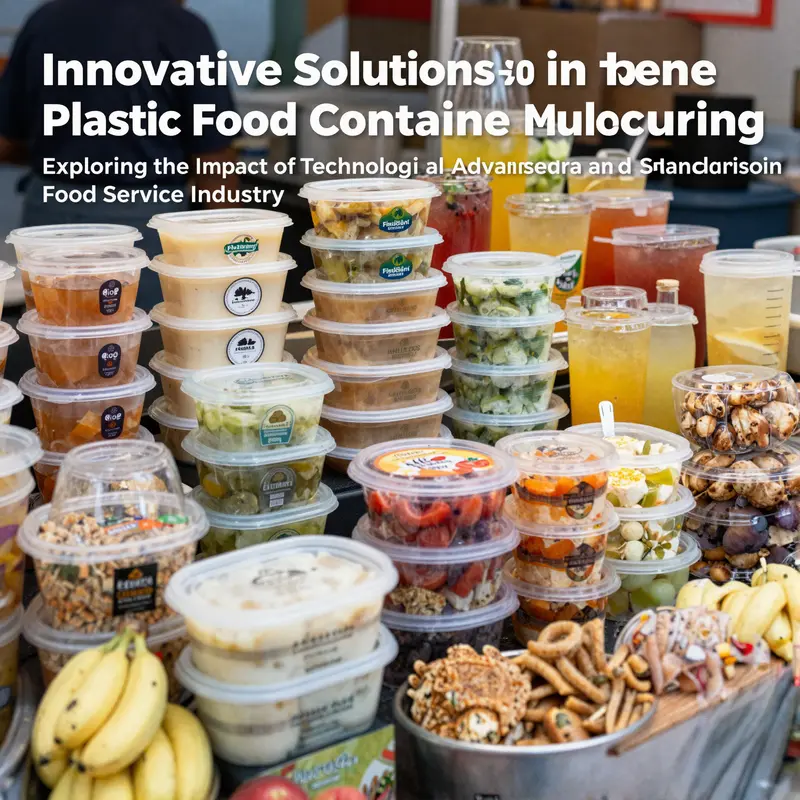
The food service industry thrives on efficiency and safety, and plastic containers play a pivotal role in this dynamic. From bubble tea shops to catering services, the demand for quality packaging solutions has surged, necessitating a keen understanding of manufacturing advancements and compliance with global standards. This article delves into the latest technological innovations adopted by plastic food container factories, the economic implications for businesses engaging with these suppliers, and the importance of adhering to international regulations. Each chapter builds upon the last, providing a comprehensive overview for businesses aiming to enhance their operational efficiency and product safety.
Molded for the Market: Technology-Driven Transformation in Plastic Food Container Factories
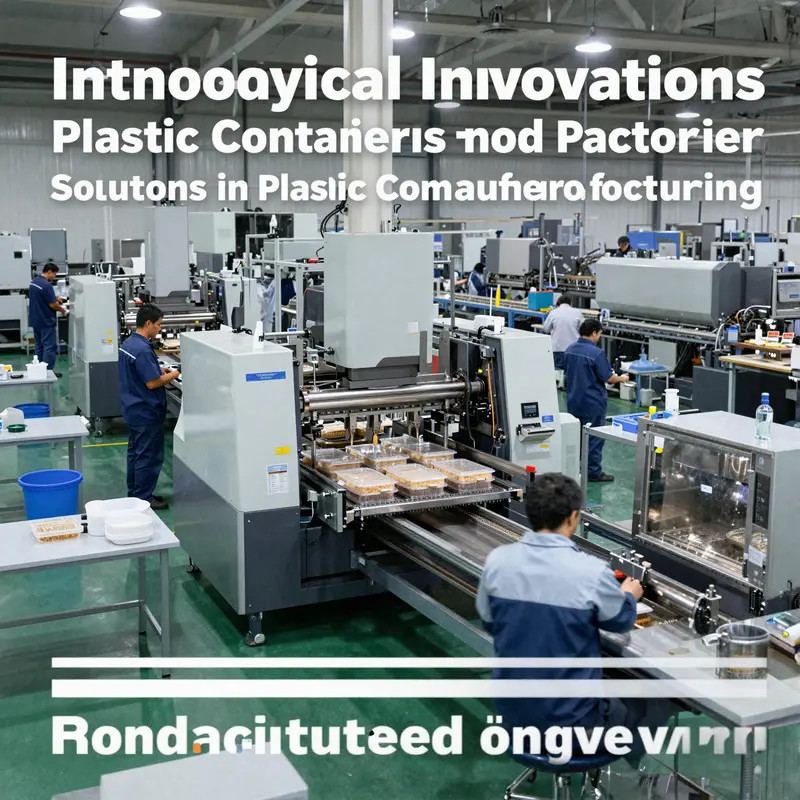
Across the busy landscape of global food trade, plastic containers are more than just packaging; they are the quiet infrastructure that keeps fresh foods safe, shipments efficient, and brands consistent from factory floor to consumer table. In China, the story of these containers unfolds through tightly clustered industrial ecosystems that have become the backbone of a globally sourced, scalable packaging supply. The most mature clusters—anchored by cities such as Foshan and Dongguan in the Pearl River Delta and Ningbo in the Yangtze River Delta—have earned a reputation for breadth and reliability. They host a dense constellation of producers who specialize in food-grade plastic containers that meet international standards and can be delivered in quantities ranging from small scale pilot runs to tens of millions for mass distribution. This concentration is not happenstance. It is the result of layered advantages: long-running supplier networks, sophisticated manufacturing ecosystems, and the logistics gravity that links upstream plastic resin suppliers with downstream brands, food service chains, and retailers across continents. For buyers, the implication is clear: sourcing directly from these hubs can shorten lead times, reduce overall risk, and enable a level of customization that is hard to match in more dispersed supply models. The factories in these regions commonly hold certifications that reassure customers far beyond national borders. FDA compliance, EU 10/2011 regulations for food contact materials, and LFGB standards are often documented as standard offerings rather than exceptions. In practice, this means products that leave the factory are designed, tested, and documented to meet the stringent expectations of food safety regimes across multiple jurisdictions. That alignment is not simply about ticking regulatory boxes; it translates into real-market advantages. When a restaurant chain or a large-scale delivery service sources a container line from a compliant, certed factory, it reduces the risk of recalls, ensures consistency in shelf life, and preserves the sensory attributes of foods from bake goods to frozen meals. The presence of these standards is reinforced by the broad capacity spectrum of the factories themselves. They often run high-volume operations capable of producing household, commercial, and institutional packaging with equal facility. This capacity aligns well with the needs of a market that moves from pilot packaging to large-scale distribution within short cycles, while also accommodating more specialized runs such as containers with unique shapes, high or low temperature resistance, or leak-proof structures. In practice, the factory is equipped with advanced production lines that combine the well-established art of injection molding with the more specialist technique of blow molding, enabling both rigid and semi-rigid containers. The same site can produce a standard beverage cup, a lunch bowl, or a novel, non-standard container designed to fit a client’s bespoke logistics or branding requirements. The flexibility is not merely about shape. It extends to printing options, labeling, and even integration with digital or smart features that track usage, freshness, and traceability across the supply chain. The modern factory floor in these hubs rarely looks like a single-commodity operation. It is a modular, iterative system where mold sets are swapped with minimal downtime, where new materials are introduced alongside established resins, and where process control analytics map every stage from resin melt to finished container. This is the environment where sustainability, functionality, and safety converge. In addition to the core competency of producing high-quality plastic containers, many factories are expanding their service envelopes to include non-standard containers and value-added features. The production teams work closely with customers to translate a concept into a physical part that can endure microwave heating, refrigeration, or freezing without losing form, leak resistance, or clarity. They also integrate features that support efficient inventory management inside consumer-facing settings. Transparent walls, for instance, are not just about marketing aesthetics; they provide quick visual identification of contents, a feature that supports warehouse operations and point-of-sale efficiency in both industrial and consumer contexts. The ability to deliver such visibility often pairs with durability, as clear containers must resist scratches, maintain clarity under repeated washing cycles, and withstand the micro-embrittlement associated with cold-chain storage. The interplay of design and material science here is driven by continuous improvement, and the factories are adept at balancing performance with costs. They work within a spectrum of materials that align with global expectations for food-contact safety while also exploring innovations that push the envelope on barrier properties, recyclability, and end-of-life scenarios. A recurring theme is the use of multilayer structures and high-barrier coatings to safeguard product quality. In the simplest terms, high-barrier packaging reduces the exchange of gases and moisture with the surrounding environment, a function that is particularly valuable for dry goods such as cereals, flours, sugars, and nuts. The scientific rationale is straightforward: by curbing oxygen ingress and moisture transfer, the product stays fresher longer, with reduced risk of rancidity, staling, or pest infestation during distribution. PET and HDPE remain among the most widely used base polymers, but the magic lies in the way they are layered and treated. Multilayer systems often combine sacrificial layers that block or absorb moisture and oxygen with inner seal layers that preserve rigidity and clarity. Transparent structures, an increasingly common design attribute, play a dual role. They meet consumer expectations for content identification while enabling efficient stock management in busy kitchens, delivery centers, and retail shelves. Yet these capabilities do not exist in isolation. They are supported by a suite of processing technologies that enable efficiency without compromising precision. Injection molding, which shapes the main bodies of containers with high-dimensional consistency, is paired with blow molding to sculpt the walls of delicate, thin-walled items. This combination supports a broad range of product geometries—from compact cups to larger take-away bowls—while maintaining tight tolerances and reproducible performance. The factories’ mastery of these techniques enables them to meet demand patterns that can oscillate between experimental trials and mass production, a dynamic that is essential for innovation-driven food brands and for suppliers that need to respond quickly to new food formats, seasonal menus, or evolving consumer preferences. The engineering mind-set extends beyond mechanics to the realm of sensor technology and traceability. Smart packaging concepts—though still emerging in many contexts—are increasingly visible in product development roadmaps. Basic sensor capabilities can monitor temperature excursions, track time-temperature histories during transit, and alert operators when a container has fallen out of specification. More advanced iterations embed antimicrobial agents or active elements that can retard microbial growth, enhancing safety without compromising recyclability. The literature and ongoing research highlight that antimicrobial compounds can be introduced via biopolymers and integrated into plastic matrices while preserving the recyclability of the final product. This direction speaks to a broader sustainability narrative that is actively shaping factory practices and product portfolios. Digital printing on plastic films has likewise gained traction as a practical tool for brands seeking dynamic labeling, customization, and on-demand updates to product information. Digital label printing reduces waste by eliminating the need for large minimum runs and enables rapid changes in branding, nutritional information, or batch codes. For supply chains, the benefit is clear: traceability improves as dynamic data can be encoded directly onto packaging components, opening possibilities for enhanced recall management and more accurate provenance records. In the same breath, the shift toward smarter, kinder packaging aligns with a more disciplined sustainability agenda. The industry is moving decisively toward using recycled-content plastics, including PCR PET and HDPE, and exploring bio-based polymers where feasible without compromising barrier performance or mechanical integrity. Such shifts are not merely about reducing the carbon footprint of the containers themselves; they are part of a broader strategy to embed circularity deeper into production ecosystems. The post-consumer streams feeding PCR content exemplify this approach, as does the exploration of edible packaging concepts that, while still niche in many markets, illustrate a broader ambition to close the loop between consumption and disposal. Edible packaging—made from carbohydrates, proteins, or lipids—offers zero-waste potential for select applications and signals a shift toward circular economy models that some Chinese factories are testing as pilot programs or collaboration projects with research partners. The idea is not to replace conventional packaging outright but to diversify the material palette so brands can choose solutions that fit specific product requirements, regulatory constraints, and consumer expectations. In practical terms, these developments push factories to maintain versatility across a portfolio of offerings. Schematics are adjusted to accommodate thin-wall efficiency, barrier integrity, and compatibility with high-temperature processing while preserving the ability to print, label, and seal reliably. The manufacturing workflow thus becomes a tapestry of interlocking disciplines: polymer science informs barrier design, mechanical engineering ensures process stability, and quality assurance reinforces compliance with food safety standards. The result is a production environment where a single site can transition from producing a standard beverage cup to manufacturing a high-barrier take-away container, then retool for a customized line that might feature special shapes, leak-proof closure systems, or integrated smart labels. The implications for buyers are profound. A sourcing decision anchored in these clusters offers a combination of scale, technical depth, and regulatory alignment that can be difficult to replicate elsewhere. Buyers can expect robust supplier qualification processes, including a capacity to provide third-party testing reports from recognized laboratories such as SGS or BV, which confirm conformance to safety requirements for food contact materials. Companies in the Pearl River Delta and Yangtze River Delta corridors are accustomed to maintaining documentation that demonstrates compliance across multiple regulatory regimes, a factor that reduces the friction of entering new markets and supports product launches with shorter timelines. In addition to formal certifications, buyers often assess a supplier’s export experience and the visibility of factory operations through actual photos and transparent communication practices. The recommendations commonly offered to prospective purchasers are practical and programmatic. Filter criteria typically include food-grade certifications, documented export experience, and the availability of factory photos or virtual tours that verify production capabilities. Third-party test reports, particularly from SGS or BV, act as independent validators of product safety, and buyers increasingly request these before committing to large-scale orders. The operational reality is that many of these factories run at multiple scales, from pilot line runs to full-scale production lines capable of saturating demand for major retail channels. The flexibility to escalate or de-escalate volume in response to seasonal cycles, promotional campaigns, or shifting consumer preferences is a decisive competitive advantage. The physical proximity of these factories to efficient logistics networks further enhances the value proposition. Being close to ports, rail hubs, and major distribution nodes shortens transport cycles, reduces lead times, and improves the predictability of delivery schedules. For international buyers, this translates to faster replenishment, better inventory management, and the capacity to run trials and scale up quickly without incurring prohibitive freight delays. The net effect is a packaging ecosystem that blends mass production discipline with customization capabilities and a forward-looking commitment to sustainability and safety. It is a place where a brand can pilot a novel container concept, verify performance in real-world conditions, and then scale to millions of units with confidence. The practical realities of this ecosystem also carry implications for procurement strategy. When sourcing directly from source factories, buyers should consider not only price and capacity but also the ability to accommodate non-standard shapes, customized prints, and features such as tight leak-proof closures and high-temperature resistance. These are not merely design preferences; they are functional demands that affect shelf life, transport safety, and consumer satisfaction. The capacity to integrate smart labeling or traceability features, even if on a pilot basis, signals a supplier’s readiness to participate in advanced supply chain architectures that rely on data transparency and real-time visibility. For teams navigating the complexities of food packaging procurement, the Chinese factory clusters offer a unique blend of depth and breadth. They deliver a set of capabilities that enable brands to experiment with new packaging formats, validate performance in controlled trials, and ramp up production with a level of certainty that is rarely possible with more limited suppliers. The broader narrative of these factories is a story about convergence: convergence of process engineering with material science, convergence of traditional packaging craft with digital tooling, and convergence of global markets with local production ecosystems that are increasingly attuned to the language of food safety, sustainability, and supply reliability. As buyers look ahead, the evolution of these factories shows a clear trajectory toward greater integration of sustainability with performance. The move toward PCR content and bio-based polymers signals not just compliance with environmental goals but a strategic alignment with consumer expectations for responsible packaging. At the same time, the expansion of high-barrier multilayer structures and smart packaging suggests that containers will increasingly carry a narrative of safety, freshness, and traceability embedded in the packaging itself. The outcome is a packaging economy that can respond with agility to a diverse range of foods, from shelf-stable dry goods to temperature-sensitive perishables, while maintaining a robust standard of safety that aligns with global food laws. The reader seeking a tangible sense of how these advances translate into real-world packaging solutions might explore the practical applications in sustainable packaging through specific product examples that illustrate the blend of form, function, and compliance. For instance, consider the disposable kraft paper soup cup with paper lid, a solution that embodies the trade-off between sustainability and performance, while also offering a canvas for branding and consumer experience. This and similar formats underscore how modern factories translate research-driven innovations into accessible, scalable products that help brands differentiate themselves in crowded marketplaces. To better understand the spectrum of available packaging options and to glimpse how these innovations are executed on the factory floor, one can consult industry-forward resources that document ongoing material science breakthroughs and case studies in food packaging. The referenced research in the Innovations in Food Packaging domain provides a comprehensive lens on the evolving landscape and the ways in which material choices, process technologies, and regulatory considerations intersect to shape what ends up in consumers’ hands. External resources such as this offer deeper context for how high-barrier coatings, smart active packaging, digital printing, and sustainable material strategies converge in practical product lines. External resource: https://link.springer.com/book/10.1007/978-3-030-85468-2
null
null
Standards as the Backbone: Navigating Global Compliance in Plastic Food Container Factories
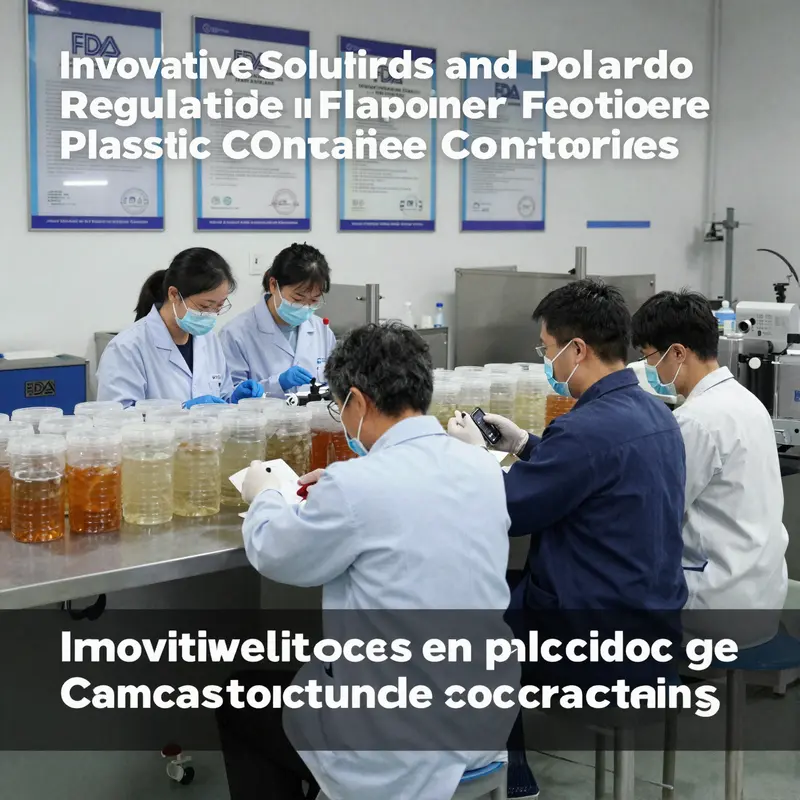
Compliance is not a checkbox in modern plastic food container manufacturing; it is the organizing principle that links safety, market access, and long-term resilience. In factory floors across major industrial clusters, the push toward internationally recognized standards has moved from a prudent practice to a strategic mandate. The chapter that follows treats standards not as abstract rules but as living performance criteria that shape every decision—from material selection and processing methods to supply chain governance and environmental stewardship. As the global market for food-contact plastics has grown more complex, the factories that succeed are those that align their capabilities with a tapestry of regulations, certifications, and best practices that together form a reliable, auditable system. In such a system, the trust of buyers, regulators, and end users rests on the visible evidence of compliance: traceable materials, clean-room controls, documented testing, and transparent reporting that travels from supplier to consumer with predictable reliability.
To begin, it is essential to anchor the discussion in the most widely recognized international standards that govern plastic containers intended for contact with food. The U.S. FDA requirements set the baseline for safety and performance in many markets, emphasizing that materials used in manufacturing must not migrate harmful substances into food under the conditions of intended use. This is not merely about avoiding toxins; it is about ensuring that the architecture of a container—its resin choice, additives, and adhesives—will behave consistently from freezer to microwave and back, even as temperatures, acidity, or storage times vary. In parallel, the EU framework, particularly the provisions codified as Regulation 10/2011, imposes a rigorous regime for materials and articles that come into contact with food. It asks manufacturers to demonstrate that substances migrate within safe limits, that process boundaries are controlled, and that the overall lifecycle of a product, from resin procurement to end-of-life disposal, remains aligned with consumer safety expectations. LFGB, the German risk assessment framework, adds another layer of scrutiny, emphasizing robust hazard analysis and the need for comprehensive documentation when products enter markets with high consumer protection norms. Together, these standards function as a universal grammar of food-contact plastics, ensuring that a container made in one region can meet the safety expectations of buyers worldwide, provided its production is properly engineered and verified.
Behind the appearance of a sealed certificate lies a sophisticated system of quality management that extends well beyond material safety. ISO 9001, the bedrock for quality management systems, shapes how factories plan, document, monitor, and optimize every facet of production. It is not a mere label; it is the daily discipline of traceability, corrective action, data-driven decision making, and continual improvement. In practice, achieving ISO 9001 means that a factory has established consistent operating procedures that reduce variability in injection molding or blow molding, standardize testing protocols, and ensure that changes in supplier materials or processing parameters are captured, reviewed, and validated before they affect product safety or performance. When a factory demonstrates ISO 9001 compliance, it signals to buyers that its processes have the systemic reliability necessary to support large-scale orders—hundreds of thousands, or even tens of millions, of units—without sacrificing safety, performance, or regulatory alignment.
The practical manifestation of these standards in manufacturing facilities is visible in the evidence trail that accompanies every container. Clean-room environments, where applicable, are maintained to specified cleanliness levels to minimize particulates and microbial contamination during critical stages of production or assembly. The possibility of microbial ingress, particularly in devices that touch ready-to-eat foods or are used in high-hygiene contexts, places a premium on environmental controls and regular surface testing. The integration of traceability systems is equally important. Modern factories implement batch-level traceability that tracks resin lots, additives, and colorants, as well as process parameters for each production run. When a problem arises—or when a regulatory body requires verification—this traceability enables rapid root-cause analysis, containment, and recall planning if needed. Third-party testing becomes a cornerstone of verification, with laboratories such as SGS or BV often engaged to provide independent confirmation that the final containers meet the migration limits, temperature resistance, chemical resistance, and other safety criteria defined by the relevant jurisdictions. These attestations do more than satisfy buyers; they provide the public assurance that the packaging has been evaluated by impartial experts.
The regulatory landscape extends beyond the borders of individual markets and into the realm of environmental responsibility. Global conventions such as Basel, Rotterdam, and Stockholm influence how producers think about chemical risk, waste management, and the lifecycle impacts of packaging materials. While much attention has historically focused on recycling rates and post-consumer disposal, the modern compliance mindset recognizes that the design phase itself can mitigate environmental risk. For instance, selecting materials with lower hazard profiles, designing for recyclability, and reducing the use of multi-layer laminates that complicate recycling are all decisions embedded in the earliest stages of product development. A factory that integrates circular economy principles into its design criteria will be better positioned to meet evolving regulatory expectations, satisfy increasingly eco-conscious customers, and participate actively in markets that reward sustainable packaging solutions.
From a buyer’s perspective, the path to supplier selection is inseparable from the question of compliance history. Reputable factories routinely present a dossier that demonstrates not only the presence of certifications but the ongoing performance data that underpins them. Third-party test reports, conducted by accredited laboratories, verify that materials meet the specific food-contact requirements for the intended use, whether the containers are intended for microwaving, freezing, or everyday storage. This documentation is more than a certificate; it is a dynamic record of performance across product families and material suppliers. It also signals robust supplier management, as successful compliance depends on aligning with verified upstream practices—proper resin procurement, controlled additive use, and reliable color consistency that does not compromise food safety. The best factories cultivate a system of supplier qualification that includes on-site assessments, documentation review, and periodic re-evaluation in response to changes in regulatory expectations, supplier performance, or new scientific findings about material safety. In regions with mature manufacturing ecosystems, such as the coastal hubs and river deltas, this approach benefits from dense networks of certified materials suppliers, logistic efficiency, and a culture that prizes predictable, auditable outcomes.
A crucial dimension of compliance that often intersects with production efficiency is the capacity to support non-standardized requests without compromising safety. Buyers frequently seek customized solutions—special container shapes, leak-proof structures, or heat resistance profiles tailored to specific food categories and service models. In this area, the combination of advanced processing technologies, such as high-precision injection molding and precise blow molding, with rigorous process control, yields products that meet unique customer needs while still conforming to the standards that govern food contact materials. A factory that can demonstrate both engineering excellence and regulatory compliance offers a compelling value proposition: faster time-to-market for customized lines, reduced risk for the buyer, and the confidence that even bespoke designs have been validated for safety and regulatory alignment.
Beyond the technical and procedural aspects, the cultural dimension of compliance deserves attention. Factories that cultivate a compliance-minded culture tend to invest in continuous training for staff, from raw material handlers to quality control engineers, and they maintain open channels of communication with regulators and industry associations. This cultural fabric helps ensure that new regulatory developments—whether changes in permissible migration limits or updates to environmental reporting requirements—are understood and translated into timely process adjustments. It also supports a transparent relationship with buyers, one based on honesty about capabilities, limitations, and ongoing improvement. When buyers partner with such factories, the collaboration becomes a shared discipline: a joint commitment to safety, to environmental stewardship, and to the integrity of the supply chain. The long-term benefit is not merely compliance on paper but a palpable reduction in risk, smoother audits, and steadier supply, even in the face of supply chain disruptions or regulatory shifts.
The regional geography of manufacturing clusters offers particular advantages for achieving and sustaining compliance. Hubs in jurisdictions with well-developed regulatory infrastructures tend to attract a higher density of certified suppliers, analytical laboratories, and logistics partners adept at handling controlled materials. The concentration of capabilities lowers the barriers to maintaining rigorous testing, performing supplier audits, and integrating regulatory changes into production planning. An integrated ecosystem—comprising resin suppliers, additive manufacturers, process equipment vendors, contract laboratories, and logistics providers—creates a feedback loop that accelerates the adoption of best practices. It also fosters innovation in compliance-oriented product development, such as designing packaging with safer migration profiles or with features that facilitate end-of-life separation and recycling. In practice, this means that a factory in a mature cluster can invest more confidently in automation and smart manufacturing, knowing that the compliance framework supports scalable, auditable growth rather than restricting it.
The reader might wonder how this confluence of safety standards, quality systems, and environmental considerations translates into the day-to-day realities of producing plastic containers for food. The answer lies in the explicit alignment of process capabilities with regulatory expectations. Raw material control begins with supplier qualification that requires full material declarations, appetite for low-toxicity formulations, and traceable batch records. During manufacturing, process controls monitor temperature, pressure, residence times, and surface finishes to ensure that finished products remain within defined specification windows. In the realm of testing, migration studies and performance assessments confirm that containers retain their protective properties under intended use scenarios, including exposure to microwaves or cold storage. Documentation accompanies every stage—batch records, calibration certificates for equipment, test results, inspection logs, and audit reports—creating a complete store of evidence that regulators, customers, and internal stakeholders can review on demand. The overall effect is to reduce ambiguity, build confidence, and create a platform for scalable growth that remains sensitive to the evolving demands of global markets.
To illustrate how these principles translate into tangible outcomes, consider the way a factory integrates traceability from resin procurement through to finished packaging. Each resin lot is tagged with a unique identifier that travels across the production line and into the final container. If a change is made to the resin supplier or a processing parameter, the system requires a documented validation that the new configuration preserves safety and performance. Similarly, colorants and adhesives used in certifications must not introduce substances that could migrate into food, particularly under repetitive cycling between freezer and microwave conditions. In many cases, third-party laboratories will re-test batches after any significant change to formulation or manufacturing equipment. This disciplined approach not only supports compliance with FDA, EU, and LFGB standards but also enables smoother interactions with customers who demand evidence of rigorous quality governance and proactive risk management.
From a strategic standpoint, the emphasis on global standards and regulatory compliance positions plastic food container factories to participate effectively in modern, cross-border value chains. Buyers are more likely to engage suppliers who demonstrate a robust compliance posture, because this posture reduces cost of compliance for the buyer and lowers the likelihood of product recalls or regulatory fines. For manufacturers, the payoff is measurable: reduced risk, improved brand trust, and the potential to command premium pricing based on demonstrated safety and sustainability credentials. The emphasis on sustainability also aligns with European regulatory trends that increasingly reward circular packaging designs and transparent environmental reporting. In practice, this means that engineers and product developers must consider end-of-life scenarios as part of the design brief, selecting materials and constructions that enable easier recycling or composting where feasible and ensuring that any biodegradable or bio-based components do not compromise safety or regulatory acceptance.
As we reflect on the interplay between global standards and factory realities, it is clear that compliance is not a static requirement but a dynamic capability. It requires ongoing investment in people, processes, and partnerships. It demands that factories maintain a living map of regulatory changes and translate those changes into practical improvements. It invites dialogue with buyers and regulators alike, so that evolving expectations can be anticipated rather than reacted to. And it rewards those who build an integrated system where materials, processing, testing, and documentation reinforce one another. In such a system, the chain of trust extends beyond the plant gates to global markets, enabling safe, reliable packaging that protects food, supports efficient logistics, and respects the planet.
For readers seeking a concrete example of the practical side of this discussion, one can examine how a supplier profile that emphasizes food-grade certification and export experience communicates its readiness to collaborate. The profile may include third-party testing reports, clean-room production capabilities, and a clear traceability framework that maps raw materials to finished containers. While the specific platforms vary, the underlying signal remains consistent: a supplier that demonstrates regulatory alignment, technical competence, and a disciplined quality culture is a partner capable of delivering safe, compliant packaging at scale. This is the kind of collaboration that turns regulatory compliance from a hurdle into a strategic advantage, enabling factories to grow their international reach while maintaining the highest standards of food safety and environmental responsibility.
In closing, the standards and regulatory landscape for plastic containers used in food contexts is intricate but coherent. The best factories understand that safety, quality, and sustainability are not siloed concerns but a connected ecosystem of practices, documents, and performances. They invest in the systems that ensure migration limits are respected, temperatures are managed, and materials are traceable from source to shelf. They adopt environmental practices that anticipate policy shifts toward circularity, guiding product design toward recyclability and responsible disposal. And they foster a culture of transparency that invites buyers to see the evidence behind every claim. When such a culture takes root in a factory, compliance becomes a competitive advantage—one that sustains trust, accelerates innovation, and keeps the global supply chain resilient in the face of ongoing change.
To learn more about the broader resource landscape of packaging standards and their practical implementation, see ISO standard documentation for standardized quality and safety frameworks. This external reference offers a standardized language for quality systems and process controls that underpin the kind of rigorous compliance described here: https://www.iso.org/standard/78345.html. For readers seeking an internal perspective on food-grade packaging and the kind of market-tested manufacturing capacity discussed in this chapter, a representative example of the supplier communication style can be explored through practical product listings that emphasize food-grade safety and service readiness, such as the following example, which demonstrates the emphasis on food-grade materials and customization readiness in disposable packaging: hot-sale customized disposable single-wall paper ice cream cups with lid. This link provides a window into how packaging suppliers convey safety credentials while highlighting the flexibility to meet diverse client needs, a balance that epitomizes the modern compliance-driven approach to plastic and alternative-material packaging in food applications.
Final thoughts
Understanding the technological innovations, economic benefits, and regulatory compliance surrounding plastic food containers is essential for businesses in the food service industry. These elements not only contribute to operational success but also enhance customer satisfaction through safe, reliable packaging solutions. By tapping into the potential of advanced manufacturing and adhering to global standards, businesses can position themselves for growth and efficiency in a competitive market.