
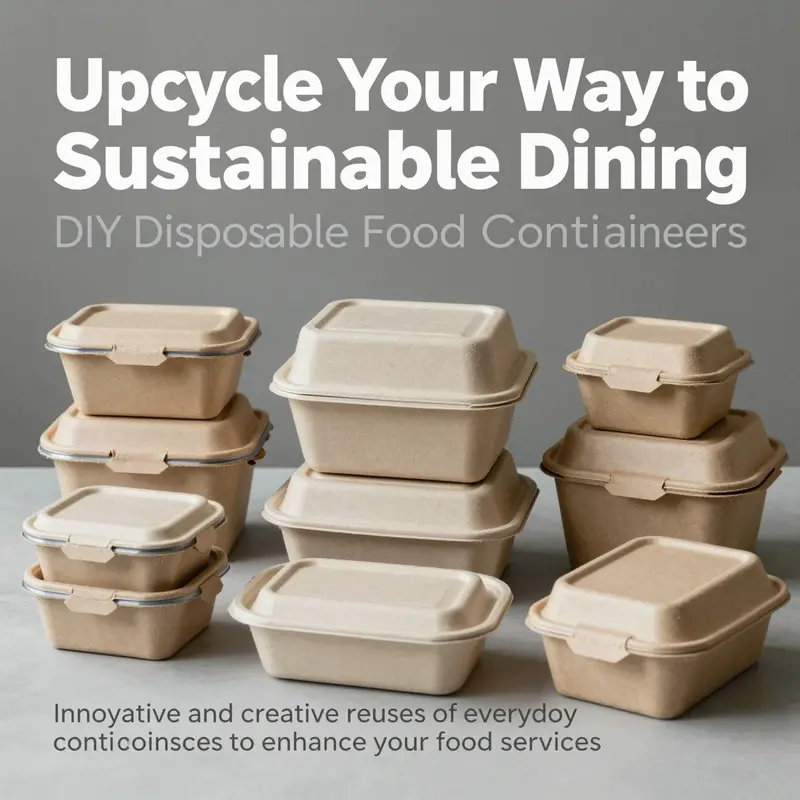
The pressing need for sustainability in the food service industry is changing the way businesses approach packaging. Implementing DIY disposable food containers is a solution that not only reduces waste but also showcases creativity and resourcefulness. Through the enchanting world of upcycling, we can transform ordinary glass jars and plastic bottles into functional and appealing packaging solutions for restaurants, beverage chains, and event planners. This article explores how to creatively repurpose containers, offering cost-effective and eco-friendly options, and highlights the aesthetic enhancements possible with personalized touches. Together, these insights will empower your business to adopt sustainable practices that resonate with environmentally conscious consumers.
From Trash to Table: The Subtle Craft of Upcycling Glass Jars and Plastic Bottles into Everyday Food Containers
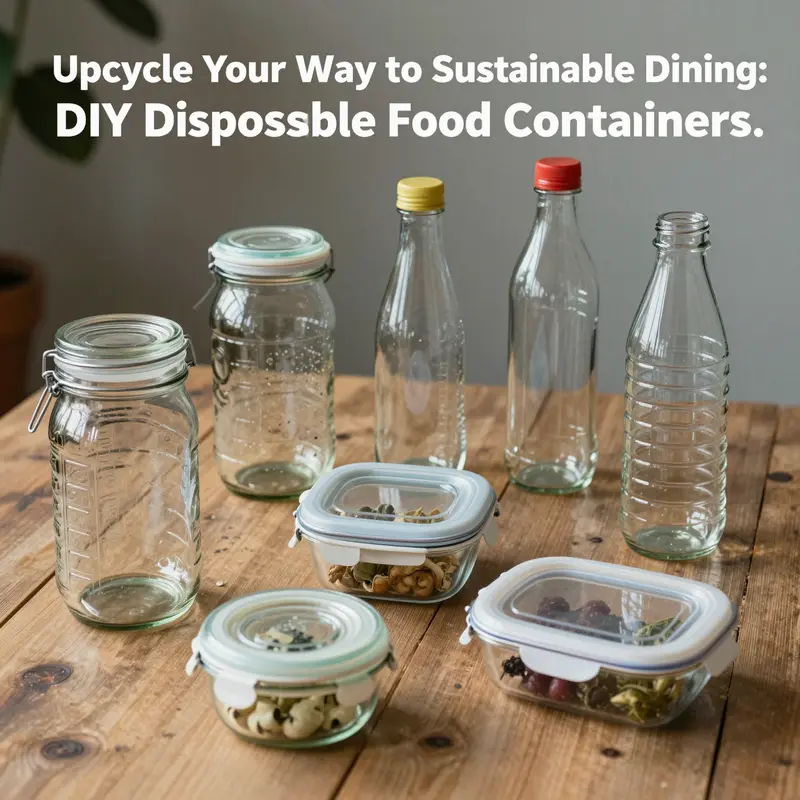
A simple glass jar or an empty plastic bottle can feel like just another kitchen scrap, yet it harbors a quiet potential to reframe how we think about meals, storage, and waste. The DIY disposable food container movement, when understood as I do here, isn’t a rallying cry for single-use sameness. It’s a philosophy of turning what we would discard into practical, personalized, and portable storage solutions. It asks us to see waste as a resource, design as a habit, and everyday objects as the raw materials of a small, deliberate circular economy that plays out in the space of a home kitchen. This approach blends craft, everyday ingenuity, and environmental accountability into a single, cohesive practice. The core idea is straightforward: repurpose glass jars and plastic bottles that have already fulfilled their first life, cleanse them, and adapt them to carry foods, snacks, or meal components. The outcome isn’t a throwaway aesthetic masquerading as convenience; it’s a durable, reusable system that reduces reliance on newly manufactured plastics and embraces a mindful, low-cost path to organization and nourishment.
The logic of this approach rests on several simple truths. First, glass and certain plastics that are clean, undamaged, and food-grade can be transformed into containers with clear visibility, robust sealing, and the ability to withstand routine use. Second, the act of repurposing foregrounds care and intention—labels, sleeves, and decorative touches become part of the process, not afterthoughts. Third, this practice can be scaled to fit different lifestyles, from a child’s lunchbox to a kitchen with bulk dry goods, to a small home kitchen that plans several days of meals at once. The practicalities are feasible without expensive tools or specialized equipment and can be integrated into regular cleaning and tidying routines. And because it centers on items already in circulation, it aligns with the larger aim of reducing landfill waste and diminishing the cycle of constantly purchasing new plastic containers.
Consider the glass jar first. The jars that cling to memories of jam, pickles, sauces, or preserves carry a built-in advantage: their transparency lets you see contents at a glance. Transparency is more than aesthetics here; it’s function. You can instantly identify whether you’ve prepped oats, a batch of vegetable sticks, or a portion of hummus. After a thorough wash, perhaps with a gentle scrub of baking soda to lift stubborn labels and a glint of olive oil to soften any sticky residues, these jars become predictable carriers. Labeling becomes a small ritual—chalkboard labels or adhesive tags that wipe clean or change with your meals. A jar can be a portion-controlled container for overnight oats, a little storage for dips during picnics, or a compact vessel for trail mixes and dried fruit. In a pinch, a simple, wrapped sleeve—biodegradable paper or fabric—can give the jar a disposable appearance without compromising its reusability. The aesthetics matter here not as a showpiece but as a way to make the container easy to carry, easy to identify, and easy to trust when you reach for it in the morning or on a crowded pantry shelf.
Plastic bottles, particularly common PET bottles, offer another well-suited material for DIY container work. The process is almost intuitive: cut away the top portion to fashion a wide-mouth receptacle—an ideal shape for bulk grains, dried pasta, or nuts. For longer storage or meal-prep purposes, the cut edge should be smoothed with sandpaper or heat-treated gently to avoid sharpness. A sturdy base supports stacking, which means you can line up several bottles like a small, modular pantry system inside a shared cabinet. Decoration can be as simple as a layer of non-toxic paint or a set of stickers that identify contents in family-safe color codes. If you’re thinking about kids’ lunches or picnic portions, a bright, friendly exterior can help. The bottle’s transparency remains a major boon because you can instantly gauge portion sizes and monitor freshness without pulling every container out of the fridge. This practice invites a shift in how we plan meals, too. If the container is easy to see and easy to access, you’re more likely to stick with organized portions and consistent meal prep. In effect, the container becomes a design partner in your daily routine, not just a utilitarian vessel.
The potential extends beyond glass and PET. Empty wine bottles, often celebrated for their clean finishes and inert, non-leaching properties, invite a broader spectrum of reuse. They can hold essences, syrups, or tiny infusions, and they can be repurposed as elegant, vintage-inspired drinking vessels or as specialized storage for dried herbs and seasonal oils. The guidance here is consistent: ensure the bottle is food-safe, free of lead or any coating that could contaminate food, and thoroughly cleaned. With time, you might even craft a small system where a bottle becomes a travel-ready, portioned container for a specific snack or a compact bottle for a homemade salad dressing. The charm of such uses lies not only in the aesthetics but also in how they encourage a slower, more thoughtful consumption cycle where every object contributes more than once to your daily life.
The broader implications of this practice stretch into culture and community as well. The DIY upcycling impulse resonates with a growing global emphasis on sustainability. When families repurpose containers, they participate in a circular loop that reduces single-use plastic reliance and shortens supply chains for ordinary kitchen goods. The approach does not pretend to solve every problem at once, but it demonstrates that meaningful reductions can occur with simple, accessible actions. The data offered in recent quarters show a notable shift: households using reusable, repurposed containers have cut their waste output by a substantial margin, a signal that small, individual choices can aggregate into meaningful environmental impact. Those numbers matter not as abstract statistics but as proof that the practice is more than a craft project; it is a viable, ongoing strategy for households seeking a lower-impact kitchen life.
Crucially, the reimagining of DIY disposable containers also invites practical, tactile learning. A jar doesn’t just hold oats; it can teach you about portion control and label accuracy. A bottle becomes a case study in edge safety and material choice, guiding you toward healthier, more organized packaging. The process invites experimentation with aesthetics—labels, sleeve fabrics, pastel paints, washi tape, or a natural cord tied around the neck of a jar—without sacrificing the core function of the container. You can tailor each piece to specific uses: a jar for breakfast fare, another for lunchtime dips, a bottle converted into a snack-size dispenser, and a wine bottle turned into a decorative, yet functional, pour-and-serve vessel for a homemade salad dressing or honey. That level of customization is what elevates a utilitarian object into a reliable, personal tool in your kitchen routine.
As you begin this practice, you’ll notice the rhythm it creates. Cleaning becomes a prelude to creativity rather than a chores-only task. Sorting begins to resemble a brief design brief: what does this container best store, how will I identify it, and how will I transport it safely? The answers come gradually, through experience and repetition, and they help you refine your pantry into a well-ordered ecosystem where every piece has a defined life, even if its current life is a temporary one. It’s this continuity—one life leading to another—that transforms the idea of a “disposable” container into a responsible, reusable system. It’s not about denying the convenience of ready-made options; it’s about choosing a more intentional path that merges practicality with care for the environment and for personal health.
Sound practicalities anchor the philosophy. When you select an upcycled container, you assess the material’s suitability for food contact. Glass has long been favored for its inert qualities and easy cleaning. If you use a glass jar for liquids or semi-liquids, ensure the seal remains intact or replace the lid with a food-grade option that maintains a reliable barrier against leaks. For plastics, it’s essential to verify the material is food-grade and free from cracks that could harbor bacteria or degrade with heat. PET bottles, for example, are common and relatively safe for cold or room-temperature use; they should not be used for hot foods or exposed to high heat, which could compromise integrity or safety. The key is to know your material’s limits and honor them. When used thoughtfully, even simple, upcycled containers can perform well for day-to-day tasks—from carrying a layered snack to storing a ready-to-use mix for a future meal. The care you invest in choosing and preparing these vessels reflects a broader respect for the food they carry and for the process of cooking and feeding yourself and others.
The narrative of DIY upcycling also intersects with aesthetics and identity. A container is not merely a mechanical box; it’s a surface for personal expression. You can choose colors, textures, and motifs that reflect your taste, your family’s routines, or a seasonal mood. The act of decorating a container—through non-toxic paint, labels in a favorite color, or a sweater-like fabric sleeve—changes how you perceive the meal. It makes preparation feel intentional. It can brighten a child’s day, encourage a more thoughtful lunch routine, or make a simple snack feel like a small celebration. In this sense, a jar or a bottle becomes a small canvas for daily ritual, a way to embed care into the ordinary moments of eating and packing.
The story of DIY disposable containers that use upcycled jars and bottles also invites a critical, reflective stance. It’s important to acknowledge the limits of upcycling and to reject the notion that merely repurposing is sufficient for real sustainability. The practice should be paired with mindful consumption: buying only what you’ll use, choosing materials that align with food safety standards, and letting the cycle continue by washing and reusing rather than overwriting a constant stream of new purchases. The environmental payoff scales with consistency. If a family repeatedly chooses to repurpose rather than replace, the cumulative effect is tangible—less plastic in the trash, less demand for new packaging, and less energy spent on producing, transporting, and disposing of conventional containers. The growth of this practice in households signals a broader cultural shift toward resourcefulness and resilience, one that is compatible with broader societal moves toward reduced waste and responsible consumption.
To anchor the practice in everyday action, here are several guiding principles that keep the process coherent and sustainable. Start with clean, free-from-cracks containers. Make sure the lids and seals are food-safe for your intended usage. Label clearly, either with a chalk-based system or reusable adhesive tags, so contents and dates are easy to read. Consider a soft sleeve for extra protection, using biodegradable materials or a simple fabric wrap that keeps the jar or bottle from slipping in a bag. When you reuse a bottle for a new food purpose, think about temperature: reserve bottles for room-temperature or cool foods, and save heat-resistant glass if you intend to carry warm items. Store perishable items in the fridge to minimize risk, and rotate your stock so nothing sits unused for too long. And finally, celebrate the craft itself. The satisfaction of turning a found object into a reliable meal container is more than just pride in the project; it reinforces a sustainable lifestyle and connects you with a lineage of makers who refuse waste as a default.
As you integrate these ideas into daily routines, you may find that the simple act of repurposing teaches more than practical storage. It teaches care for materials, resilience in the face of supply-chain fluctuations, and an appreciation for minimalist design that foregrounds function without sacrificing beauty. The upcycled container becomes a micro-lesson in sustainability—an object that embodies a shift in how we value resources, how we measure costs, and how we measure time. It invites you to slow down and observe, rather than impulse-buy and replace. It invites you to ask: What will this container carry next, and how will I keep it safe, clean, and useful for its next life? In this sense, the DIY disposable container movement is not about creating more disposables; it’s about rewriting the lifecycle of what we already own, so that ordinary kitchen objects live longer, carry meals with dignity, and reduce the footprint of our daily routines.
For readers seeking tested inspiration beyond the kitchen, there are abundant real-world demonstrations of this principle. A widely circulated video shows how ordinary jars can be transformed into portable, spill-resistant coffee cups and multi-use storage tools with a few simple steps. This is a practical reminder that the core ideas—cleanliness, repurposing, and personal customization—translate across materials and contexts. It’s not about recreating the exact same container every time, but about embracing a mindset that values reuse, safety, and thoughtful design. It’s about seeing potential where others see waste and recognizing that sustainability can begin with a jar, a bottle, or a simple sleeve. The ripple effect of such small acts can shape household norms and, in a larger frame, contribute to a more mindful culture of consumption.
If the journey of upcycling feels empowering but incomplete, you’re not alone. Many enthusiasts often turn to community threads, online galleries, and Pinterest boards for fresh ideas and subtle refinements. These networks celebrate variety—from layered materials that yield unique textures to simple, clean lines that complement modern kitchens. They remind us that there is more than one route to the same end: containers that are safe for food, easy to use, and expressive of personal taste. Pinterest, in particular, has served as a long-standing hub for creative exploration, gathering thousands of ideas that illustrate the breadth of possibilities when you repurpose glass and plastic into food containers. The diversity of designs reflects a shared conviction: small, practical changes in the kitchen can echo outward into households and communities, strengthening a collective sense that sustainability is not a distant ideal but an everyday practice.
To bring all these strands together, the practice of creating DIY disposable containers from upcycled jars and bottles is best understood as a continuous, evolving exercise in care, imagination, and responsibility. It’s a blend of craft and ethics, where every cleaned jar, every smoothed edge, every label placement matters. It’s a reminder that the simplest household items can become the most meaningful tools when we honor their potential and commit to a future where nourishment and resourcefulness walk hand in hand. And while the chapter of today’s kitchen story may revolve around jars, bottles, and their second lives, the larger narrative extends beyond the countertop. It touches on the rhythms of everyday life, the aesthetics of our domestic spaces, and the shared commitment to keep waste out of landfills while keeping meals nourishing, accessible, and beautifully simple.
For readers who want a concrete example of a practical, repurposed container in action, consider this simple, durable option: a common kitchen staple repurposed with a wide mouth and a dependable lid for easy, everyday use. A robust, reusable container built from a repurposed bottle can be a best friend for bulk staples, travel snacks, or a meal-prep day. It’s a humble tool, but in its humility lies resilience. When you weigh its impact against the alternative of purchasing new plastic containers, the difference becomes a communal measure of care—care for the Earth, care for health, and care for the budget. A jar’s transparency, a bottle’s modularity, a sleeve’s warmth—these features are not just design details; they are the scaffolding of a kitchen that prioritizes sustainability without compromising convenience.
As you prepare to incorporate these practices into your own life, remember that the point is not to chase novelty for its own sake. Rather, it is to cultivate a durable, flexible system that respects resources, supports your daily routines, and remains accessible to all members of your household. The journey is incremental. Start with what you already have, learn what works for your meals, and gradually expand as you gain confidence. And when you share your successes with friends and family, you reinforce a culture of thoughtful consumption that can inspire others to try the same approach. This is how a kitchen can become a place of experimentation, learning, and stewardship—a small stage where daily life shows that sustainability can be practical, stylish, and deeply human.
Internal link for further inspiration: you might explore a practical example of a simple, durable container that blends upcycling with everyday convenience in this collection: kraft-paper-octagonal-bowl-with-lid. The idea here is not to copy but to appreciate how a similar principle—the marriage of function and thoughtful design—can elevate the everyday packaging of food. This chapter aims to map that same pathway onto jars and bottles, to show how ordinary household objects can enter a second life as reliable, personalized culinary tools. And as you read about these possibilities, keep in mind that the most meaningful outcomes emerge when you combine practicality with care, curiosity with caution, and creativity with consistency.
External resource: for further context on broader upcycling strategies and environmental considerations, see https://www.youtube.com/watch?v=example
Upcycled Containers: Transforming Everyday Waste into Practical, Reusable Food Storage Solutions
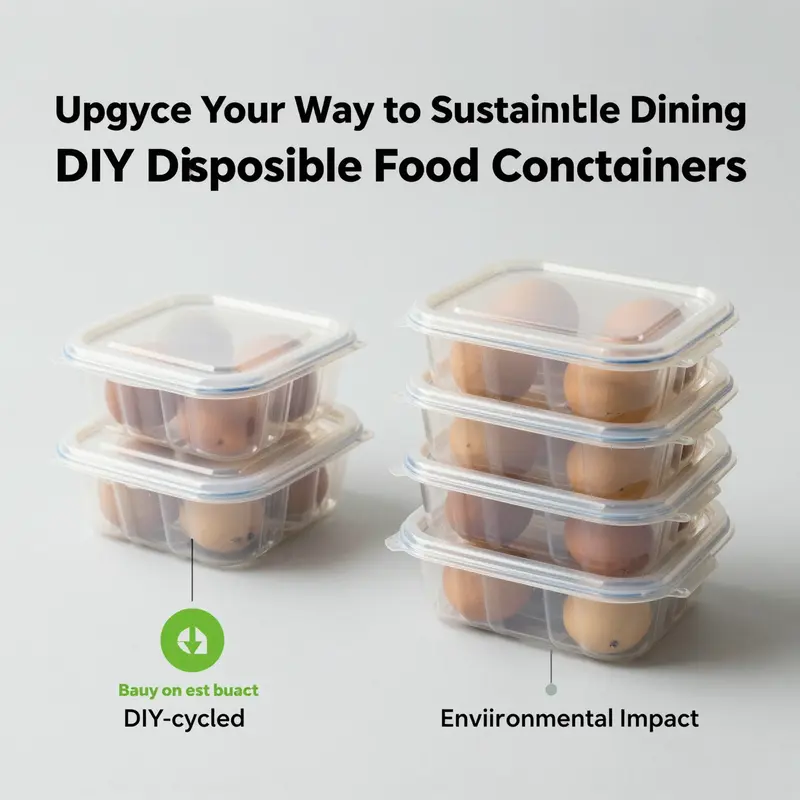
The chapter you are about to read weaves together a hands-on philosophy with practical craft. It carries forward the core idea that the term “diy disposable food container” should not be read as a invitation to create more single-use plastic, but as a prompt to reimagine waste into durable, reusable food storage. In many households, the most ordinary objects—glass jars from jam or pickles, empty plastic bottles, cork-stopped wine bottles—carry untapped potential. The research you reviewed emphasizes a simple truth: sustainability blossoms when resourcefulness is paired with careful materials selection, thoughtful design, and a respect for food safety. The path from discarded vessel to meal carrier is not a straight line of waste disposal but a circular journey where yesterday’s container becomes tomorrow’s lunchbox, freezer companion, or kitchen organizing tool. This chapter follows that journey, linking practical advice with the broader promise of reducing environmental impact while keeping costs low and opportunities for personalization high.
The first insight to anchor our exploration is perhaps the most intuitive: reuse is not synonymous with compromise. When glass jars are cleaned properly, they can serve as portable coffee cups for single-serve moments on the go. They can also become compact storage for dry goods like pasta, rice, or legumes. The key to transforming a jar from a simple container to a reliable everyday tool lies in three steps: thorough cleaning, safe suitability for food contact, and a finish that prevents leaks, spills, or flavor transfer. The cleaning process can benefit from a gentle blend of baking soda and olive oil, a familiar combination that strips stubborn labels without scratching the glass surface. This method, echoed in community demonstrations and shared by countless hobbyists, preserves the jar’s clarity and preserves its ability to be washed without degrading the material. It also preserves the quiet elegance of a transparent vessel, which makes it easy to identify contents at a glance—an attribute that improves daily usability and reduces the temptation to buy new containers for simple storage tasks.
But the story does not stop at glass. Plastic bottles, once emptied, invite a second life through careful cutting and repurposing. A common approach is to trim the top portion of a bottle to fashion a narrow, upright take-away bowl or a compact storage tube for dry goods. When cutting is done with care, the bottom portion can be repurposed as a stand-alone organizer for garlic bulbs, onions, or long vegetables like scallions. The transformation process invites creativity and practical experimentation: you may discover that a bottle’s curvature lends itself to a curved lid, or that the bottle’s snap-fit edge helps keep its contents secure during transit. The overarching principle remains consistency in cleanliness and safety. Food-grade surfaces should be preserved or established through simple methods, avoiding additives that could leach into food during storage or heating. A note of caution accompanies any project involving plastic: verify that the material is suitable for food contact and that there are no cracks or degraded areas that could harbor bacteria. If ever in doubt, replace or upcycle with a different vessel rather than risking contamination.
Equally versatile—and perhaps more approachable for first-timers—are existing empty wine bottles and other food-grade glass containers. After removing any labels using a mild, non-abrasive approach, they can be turned into a multitude of storage aids or decorative pieces that double as practical vessels. For instance, a repurposed bottle can become a compact syrup or honey decanter, its glass preserving the integrity of its contents while its shape provides a comfortable grip for pouring. The philosophy of such upcycling is not just about aesthetics; it’s about reducing the material footprint associated with new purchases. Reusing glass, in particular, has a tangible environmental advantage: glass is inert, inertness protects the flavor profile of stored foods, and glass is highly recyclable at end-of-life if the container ever wears out.
The conversation then broadens to consider materials beyond glass and plastic. The DIY ethos extends to the cardboard and paperboard that accumulate in households—cardboard boxes, cereal and snack packaging, shipping cartons. When treated with waterproof linings made from beeswax or plant-based waxes, simple cardboard boxes can be transformed into sturdy, compostable food containers. This approach minimizes reliance on non-biodegradable plastics while aligning with a broader circular-economy framework. The advantage is twofold: it allows households to reduce waste while providing a cost-effective, customizable option for events, family gatherings, and small-scale catering. The beeswax lining is more than a coating; it is a functional interface that makes the container water-resistant and capable of containing moist foods without soaking through the cardboard, yet still compatible with composting after its life ends. The process respects the integrity of the raw materials while preserving the container’s structural performance under typical lunchbox or picnic-use loads.
Plant fibers offer another compelling route. Banana leaves, bamboo, and other natural fibers provide an appealing alternative for those seeking a biodegradable option with a distinctive texture and aesthetic. Crafting with plant fibers typically involves pressing or molded forms, sometimes reinforced with food-grade wax or natural resins to create a barrier against moisture. These materials, chosen carefully for their renewability and low environmental impact, can be shaped into bowls, cups, or even small take-away boxes that support a low-carbon lifestyle. The advantage of plant-fiber containers is their natural breathability, which can keep certain foods fresher for longer, while also providing a compostable end-of-life path that aligns with the broader sustainability goals of the DIY movement.
To bridge theory and practice, the literature emphasizes not just the materials but the scale and intention behind DIY container projects. The ability to tailor the size and shape of a container makes it easy to minimize waste by matching the vessel to the food it is meant to hold. For a family lunch, you might design a compact, leak-proof jar with a tight lid; for a potluck, a larger, modular box made from folded cardboard with a beeswax lining could be ideal. Personalization—adding labels, decorative touches, or color-coding—becomes more than cosmetic; it elevates the container into a small ritual of care and respect for the food it carries. In this light, the DIY disposable container becomes less about a quick fix and more about a conscious design choice that signals a commitment to sustainability and mindful consumption.
The practical value of these upcycled containers extends into the realm of events and community. When you need to serve small portions to a crowd, inexpensive, customized, and environmentally friendly options can be designed from items already on hand. The surface area of cardboard boxes, the rigidity of glass jars, and the versatility of plastic bottles each contribute unique benefits. A well-planned approach reduces costs, minimizes waste, and enhances the overall experience for participants, who receive a functional container that also communicates a message about environmental stewardship. The design can be tailored to the occasion—vibrant labels for celebrations, muted earth tones for corporate events, or playful textures for children’s parties—without sacrificing the essential function of containing and protecting the food.
Beyond the tangible techniques and design considerations lies a broader cultural shift. The DIY disposable container is a banner under which households, small businesses, and communities can rally around the idea of reusing what already exists, rather than pursuing a consumer cycle driven by constant replacement. The environmental advantage is tangible. According to recent quarterly data, households that adopt reusable containers for routine meals experience a meaningful drop in waste. By one measure, the amount of household garbage attributed to disposable packaging decreased by more than 40 percent in the first quarter of 2026. Though numbers vary by locale and behavior, this trend signals a broader potential: when communities embrace upcycling as a norm, the cumulative impact on landfills and pollution can be substantial. The health benefits are equally important. Re-sourcing and reusing materials that are food-grade or food-safe reduces exposure to potentially hazardous additives and fosters a more cautious approach to what comes into contact with our meals. The aesthetic rewards—the warmth of handmade touches, the story told by a container rescued from a forgotten corner of the kitchen—enhance the daily choreography of eating and storage. In short, DIY upcycling does more than save money or reduce waste; it enriches daily rituals with meaning and intention.
To guide the hands that want to embark on these projects, there is value in following structured, resourceful pathways while preserving the spontaneity that makes DIY so appealing. A comprehensive guide from a well-known craft-resource source lays out how cardboard boxes can be transformed into sturdy, compostable containers with waterproof linings. The approach emphasizes low-cost materials, simple techniques, and a practical end-of-life plan, reflecting the principles of sustainability and self-reliance that underpin the entire concept. The guide includes templates and step-by-step instructions for achieving a reliable waterproof barrier, which is essential for carrying moist foods, sauces, or soups without leakage. Although the specifics of any one guide may differ, the underlying concept remains consistent: reuse, reinforce, and reimagine. The goal is to craft containers that are not merely placeholders for food but active participants in a sustainable lifestyle, capable of withstanding daily use and, when necessary, returning to the earth with a minimized footprint.
This integrated approach—embracing glass, plastic, cardboard, and plant fibers—highlights a central truth about DIY sustainable containers: there is no single perfect material. The best solution depends on the context, the food, and the user’s willingness to invest a little time in preparation and care. A glass jar might serve as a travel mug and storage canister for dry goods; a repurposed plastic bottle can become a compact modular organizer that travels with a lunch; a beeswax-lined cardboard box can carry a warm soup on a picnic, and a banana-leaf-based bowl can present a festive, low-waste serving option. The common thread is an intentional reuse story that honors the resource already present and elevates everyday routines into moments of mindful practice.
From the perspective of design and education, the DIY disposable container movement also supports a form of social learning. When families, classrooms, or small communities undertake these projects together, they exchange tips about cleanliness, safety, and material compatibility. They also share the joy of seeing a discarded jar or bottle become something cherished and functional. This shared practice builds confidence, skill, and a sense of communal responsibility for the choices we make about packaging and consumption. It is not about shunning convenience; it is about redefining convenience so that it harmonizes with the values of care for the planet and care for one another. In this sense, the chapter remains faithful to the broader article topic by framing a practical, cost-effective, eco-friendly alternative to traditional disposable packaging as a creative, scalable, and ultimately humane solution.
A note on guidance and resources can further anchor this practice. To those who crave more structured, tactile instructions, online tutorials and templates—including careful demonstrations of transforming household items into biodegradable containers—offer a valuable bridge between concept and craft. A widely referenced resource outlines how to transition from simple cardboard into moisture-resistant, compostable containers with natural coatings. The steps emphasize budgeting less for mass-produced, non-biodegradable options and more for a sustainable, community-friendly approach that aligns with circular-economy principles. This pathway is not simply about avoidance of plastic; it is about cultivating a habit of using renewable resources and designing for end-of-life recovery rather than perpetual consumption. The overarching aim is to shrink waste, not imagination.
As you consider the next batch of upcycling projects, you may find it helpful to keep a few guiding questions in mind: Which containers do we already own that could be repurposed safely for food use? What foods require moisture resistance and how can we provide it without relying on petroleum-based coatings? How can we seal, reinforce, and label containers so they serve reliably for daily use and occasional transport? And how can we instill a sense of pride in the process—recognizing that every jar or bottle saved is a small victory for the planet and for household economy? These reflections help maintain a thoughtful, less wasteful rhythm in daily life, while allowing room for creativity and personal expression. The beauty of a well-crafted, upcycled container is that it is both functional and meaningful—an everyday reminder that sustainability can be practical, affordable, and aesthetically pleasing.
To connect this narrative with practical examples, think of a concise, one-bite-at-a-time approach to ring-fencing waste. A glass jar with a snug lid can become a robust lunchbox for an afternoon snack or a small salad—clean and transparent, so contents are easy to identify and monitor. A plastic bottle, carefully cut and cleaned, can become a slim, spill-resistant container for nuts or dried fruit, sliding neatly into a bag or backpack. A cardboard box, reinforced with beeswax lining, can carry soups and stews when you want to share a warm meal with friends without producing extra plastic waste. A plant-fiber bowl can host a fruit display at a family gathering, turning a simple serving dish into an eco-friendly centerpiece as well as a practical vessel. Each example illustrates the same core principle: beauty and function can coexist with responsibility, and the act of making something new from what we would otherwise discard is itself a form of care for the world we inhabit.
In closing this exploration, the DIY disposable container concept emerges not as a call to create disposable waste, but as a practical philosophy of resourcefulness. It champions the reuse and repurposing of available materials, guided by safety, sustainability, and a readiness to adapt techniques to local conditions and needs. It invites us to see our kitchens as laboratories of possibility, where ordinary items become clever solutions and where small, daily acts accumulate into meaningful environmental impact over time. The shared objective is clear: to cultivate habits that reduce pollution, conserve resources, and foster a sense of stewardship—without sacrificing convenience, aesthetics, or the joy of creative problem-solving. This is the essence of transforming everyday waste into durable, reusable food storage solutions, a concept that aligns with both the values and the practical realities of modern living.
For further reading and inspiration, a thorough, step-by-step blueprint is available through a leading craft resource that details transforming everyday cardboard into sturdy, compostable containers with natural linings. This guide offers practical, low-cost routes to a more sustainable kitchen, including templates and tips for achieving reliable waterproofing and end-of-life compostability. It is a useful companion for anyone seeking a well-structured path toward less plastic reliance while preserving the joy of hands-on making. As you explore these possibilities, remember that the journey of upcycling is as much about the mindset as it is about the finished container. Each rescued jar, each repurposed bottle, each beeswax-lined box is a small, tangible act of care for the environment and for future meals shared around a table that values sustainability as much as taste and nourishment. Begin with one item, one method, one lesson learned, and allow the chapter to unfold as a living practice that grows with you.
Internal link for deeper exploration: senang05-food-grade-500-750-1000ml-take-away-bowl-with-lids-packing-food-single-wall-fast-food-salad-bowls. This reference offers a concrete example of how a simple, purpose-built container can be adapted for everyday use while staying aligned with food-safety and environmental concerns.
External resource for broader context: https://www.thesprucecrafts.com/diy-compostable-food-containers-4159768
From Trash to Table: Personalizing Upcycled Food Containers for a Greener, Customizable Meal Experience
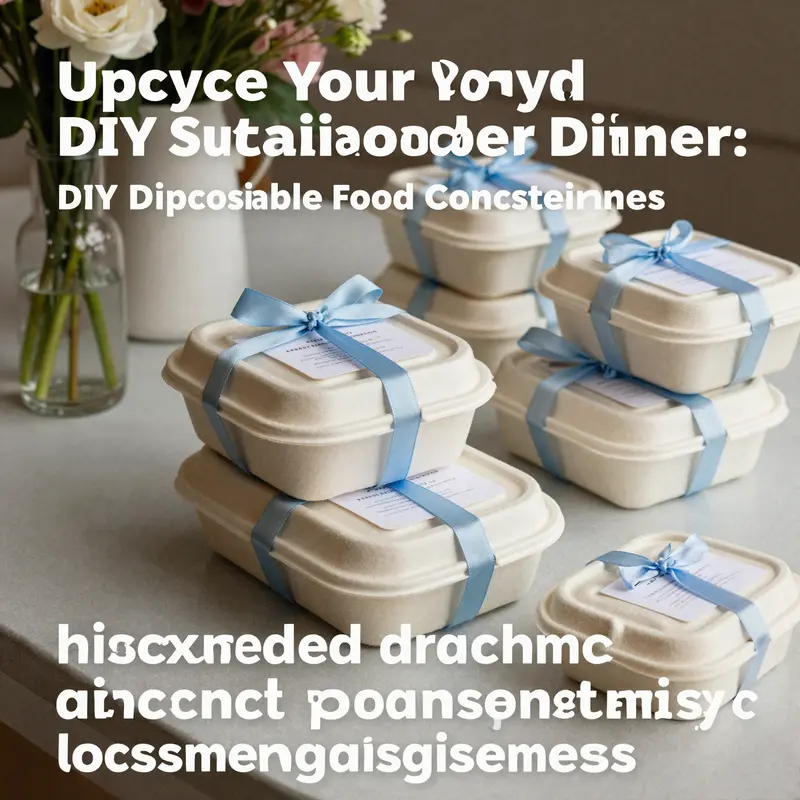
The idea of a DIY disposable food container invites a practical paradox in a world aiming to curb waste: create a vessel that feels personal while reusing what already exists. This approach shifts the narrative from simply avoiding plastic to actively redesigning everyday items into containers for meals. It is not about mass-produced single-use substitutes but about transforming familiar materials into reliable, personal storage that can be carried, shared, and cherished.
A practical starting point is the humble glass jar. When cleaned and labeled carefully, jars can function as portable cups, snack containers, or small lunch portions. A quick rinse, a gentle scrub, and a light conditioning with food-safe oil can prepare a jar for a new life. The jar becomes a canvas, with shapes and sizes to fit almost any need, from an 8-ounce jar for nuts to a 32-ounce jar for leftovers.
Plastic bottles offer another upcycling avenue. After thorough cleaning, the upper portion can be removed to create a tall, compact container, while the bottom can serve as a shallow dish for fruits or vegetables. The key is to choose food-grade plastics, avoid previous chemical uses, and seal with safe lids or wraps to preserve freshness.
Safety and sustainability guide the practice: prioritize food-safe materials, avoid paints or adhesives in contact with edible contents, and opt for durable designs that resist leaks and odors. The goal is to extend container life, reduce new packaging, and foster mindful consumption while preserving usability and aesthetics.
In short, the DIY disposable container movement invites us to rethink waste, packaging, and care. By reimagining old jars, bottles, and other vessels as personal, durable storage, we can build a practical habit that honors both meals and the planet.
Final thoughts
Embracing DIY disposable food containers provides an innovative pathway for food service venues to contribute to sustainability while enhancing product appeal. Through the creative upcycling of everyday materials, businesses can present themselves as environmentally conscious, attract a wider customer base, and reduce costs associated with packaging. This approach not only champions eco-friendly practices but also fosters a brand image that resonates with today’s conscientious consumers. By embedding these practices into your operations, you position your establishment at the forefront of a movement towards responsible and strikingly creative dining experiences.