
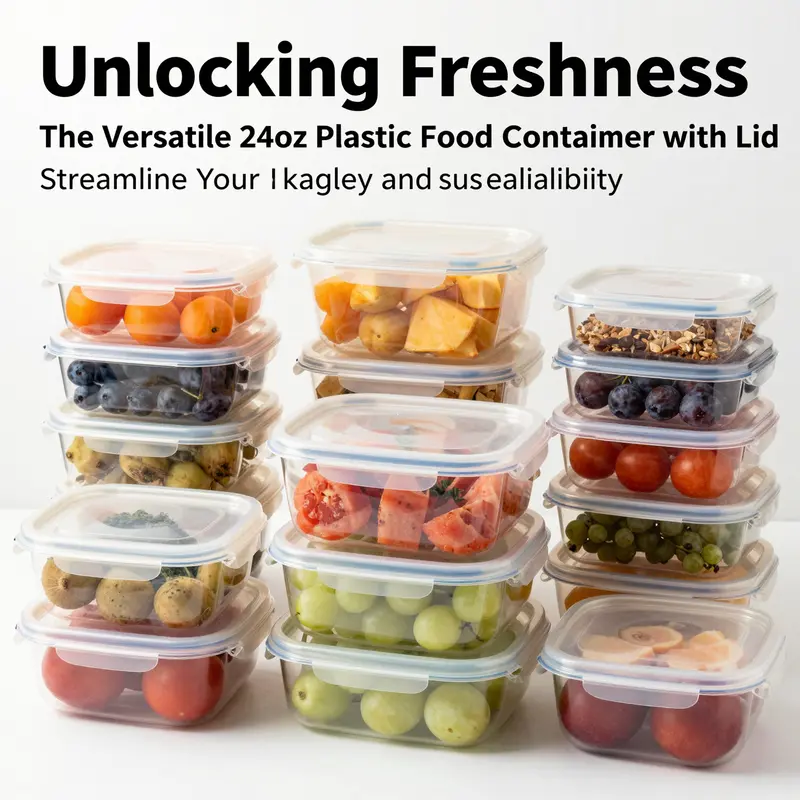
The 24oz plastic food container with lid is more than just a storage option; it’s a necessity for foodservice businesses aiming to maintain freshness and safety in their offerings. As the market evolves, so too do the materials and design characteristics of these containers, making them indispensable for a wide range of applications across the food and beverage industry. In this exploration, we delve into the specific product types and materials, highlight key features and design characteristics, and examine the diverse applications of these containers in various sectors, providing insights that cater specifically to bubble tea shops, restaurants, food trucks, catering services, event planners, and corporate procurement teams.
Material Matters: How Form, Function, and Footprint Converge in the 24oz Plastic Food Container with Lid
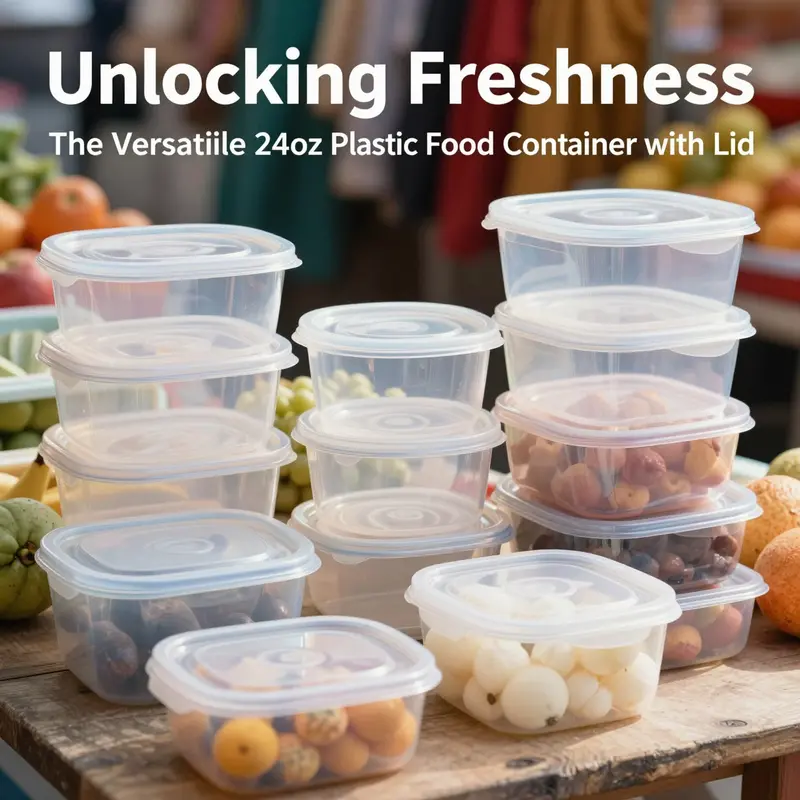
The 24-ounce plastic food container with a lid sits at a pivotal junction where material science, practical design, and sustainability intersect. In the busy world of food service, takeout, meal prep, and home storage, this size strikes a balance between capacity and manageability. Yet the choice of material and the shape of the container do more than determine whether your food stays put during transit. They shape heat transfer, aroma retention, shelf life, consumer safety, and even end-of-life outcomes. To understand why 24oz containers perform as they do, it helps to trace the thread from resin to ready-to-use package, from lid seal to stackable footprint, and from the kitchen bench to the recycling stream.
At the core of any 24oz container with lid are a few predictable material families: polypropylene (PP), polyethylene terephthalate (PET), and, less commonly in everyday takeaway contexts, polystyrene (PS). Each material brings a distinct blend of strengths and tradeoffs that align with different food types, service models, and consumer expectations. The choices are not merely about clarity or price. They are about how a package behaves when hot spaghetti meets a travel mug of coffee, or when a salad sits in a refrigerator overnight and then travels across town with a bevy of other deliveries. The interplay between material properties and lid design determines whether the container is microwave-safe, whether it resists leaking during a bumpy ride, and whether it can be recycled or composted at the end of its life.
Polypropylene, among the most widely used options, earns its reputation through toughness, chemical inertia, and remarkable heat tolerance. A PP container is generally able to withstand temperatures near boiling without warping and can be used for both hot and cold applications. This makes it a natural choice for meal boxes and deli portions that must perform reliably under a range of service conditions. The engineering behind PP is not simply about making the plastic rigid; it is about balancing stiffness with impact resistance, ensuring the lid forms a near airtight seal, and preserving the integrity of the container during repeated microwaving or freezing. When a standard 24oz PP injection-molded round deli container reaches a lid that mirrors the same tightness, the result is a package that travels securely through the supply chain while keeping contents protected from dust and moisture.
The PET option, by contrast, is prized for its clarity and lightweight strength. PET’s transparency serves as a visual invitation to the consumer, letting the freshness of a salad or fruit show through the walls. In many contexts, clear PET containers are used when presentation matters, especially for grab-and-go meals that rely on visual appeal to drive purchase decisions. PET is food-grade and durable for transport, but its heat resistance is more limited than PP’s. This makes PET a strong candidate for cold or room-temperature foods, where shelf life depends on visibility and barrier properties rather than high-temperature exposure. The choice between PP and PET thus often reflects a practical calculus: demand for heat resilience and reusability versus the consumer emphasis on transparency and lightweight handling.
A third material often discussed in the literature is PS. Polystyrene can offer excellent clarity and a cost-effective profile, which historically made it popular for disposable containers. However, PS can be less versatile when high heat is involved, and environmental concerns around PS production and end-of-life disposal have led many operators to favor PP and PET instead. While PS remains relevant in certain segments—especially where transparency and thin wall construction dominate—its role in the 24oz container market has been tempered by evolving safety and sustainability standards.
Moving beyond conventional plastics, a growing narrative in the industry centers on compostable and bio-based alternatives. The appeal is clear: a packaging solution that aligns with waste diversion goals without compromising performance. Bagasse, a byproduct of sugarcane processing, stands out as a notable example of a compostable option. 24oz containers made from bagasse fibers and paper blends demonstrate the potential to replace or offset traditional plastics in specific settings—think of environmentally conscious events, catering, or restaurants prioritizing end-of-life stewardship. These compostable designs are frequently certified to meet environmental and safety regulations, reflecting a broader trend toward transparency about materials and life cycles. The challenge, however, lies in balancing end-of-life benefits with the functional requirements of food containment: moisture control, heat tolerance, durability during transport, and the need for a user-friendly lid that provides reliable sealing and ease of use.
In practice, the material decision also shapes the lid geometry and the sealing mechanism. A robust airtight design is not a mere afterthought; it is a core performance criterion. Airtight lids reduce leakage and protect contents against contamination and moisture ingress during transit. They also contribute to shelf stability by minimizing exposure to air that can alter texture and aroma. The method of closure—whether a simple snap-fit, a gasket-equipped seal, or a multi-point locking system—must harmonize with the underlying material’s resilience. The combination of material stiffness, tear strength, and lid geometry ultimately determines how well a container can be stacked, transported, and reused across multiple service cycles.
From a design perspective, the 24oz form factor has evolved to accommodate both practical logistics and consumer convenience. The cylindrical or rounded shapes are favored for their efficient use of space and predictable stacking behavior. Some designs also integrate features that enhance user experience, such as vented lids or cross-patterns for straw insertion, which speak to the evolving expectations around on-the-go consumption. The shape and lid configuration can influence not only usability but also the perceived freshness and value of the food inside. When a lid seals tightly around a smooth rim, it sends a signal of reliability to the customer and reduces the likelihood of accidental spills during delivery, which is essential for maintaining brand integrity in a crowded market.
The material story is inseparable from performance. Heat resistance, for example, is a central criterion for containers intended to accompany hot meals. PP’s endurance in high-temperature environments makes it a dependable option for hot foods that might be microwaved after purchase. Yet this characteristic also raises questions about recyclability and resource efficiency. Recyclability is not simply about the material being recyclable; it is about the availability of collection programs, the purity of feedstock streams, and the economics of processing. PET, celebrated for its clarity, can present challenges in recycling when contaminated with food residues or when used in very hot applications that straddle the line between consumer convenience and material degradation. The end-of-life narrative for each material is shaped by local infrastructure, regulatory frameworks, and consumer behavior as much as by the resin’s intrinsic properties.
Sustainability discussions increasingly invite a more layered examination of life cycles. A bagasse-based option illustrates how compostable packaging seeks to align with waste management systems that favor organic degradation. But such choices are not universally better in every context. Compostable containers require appropriate facilities and a consumer base that participates in composting programs. In some cases, the energy and water inputs required for composting can offset perceived benefits when measured against the full life cycle. As a result, many operators approach packaging decisions through a nuanced lens, weighing heat performance, barrier properties, reusability, recyclability, and end-of-life possibilities in concert rather than in isolation.
Material choices also interact with market dynamics. The 24oz container with lid is often sold in bulk to foodservice operators, with minimum order quantities that reflect manufacturing realities rather than consumer convenience alone. The economics of material selection—upfront cost, per-unit price, and the downstream value of recycling or composting—play out in procurement decisions that affect menu pricing, operational efficiency, and sustainability commitments. When a facility aims to standardize its packaging across multiple products, choosing a common material with predictable performance can simplify logistics, reduce training needs, and improve waste diversion outcomes. Conversely, a more diverse material strategy may offer tailored solutions for different food types and service channels but can complicate waste streams if not paired with clear labeling and consumer guidance.
In this context, the design of a 24oz container with lid cannot be divorced from its transport reality. The container’s walls must resist compression during stacking; the lid must seal without excessive force that could degrade the gasket or deform the rim; and the entire system must maintain its integrity when shaken or cooled during transit. These functional demands shape material selection and inspire innovations in wall thickness, ribbing patterns, and surface finishes that reduce slip, improve grip, or enhance heat distribution. The final package, while simple in appearance, encapsulates a convergence of engineering choices, regulatory expectations, and consumer preferences. It is no accident that the 24oz size endures across the foodservice landscape; it is the result of careful harmonization of materials, geometry, and sealing strategies that together create a reliable, safe, and increasingly responsible packaging option.
To acknowledge the broader palette of packaging options, many operators now consider hybrid strategies that blend plastics with renewable or compostable substrates. A hybrid approach can preserve the favorable barrier and mechanical properties of plastics while offering a path toward reduced environmental impact. For instance, containers may incorporate compostable components in lids or inserts while maintaining a recyclable body, or they might adopt a fully compostable wall while providing a separate recycling stream for non-compostable components. Such designs reflect a pragmatic response to the realities of consumer behavior, infrastructure readiness, and policy incentives.
The story of the 24oz container with lid, then, is not simply about what is inside the wall material. It is about how the container performs under pressure, how it preserves flavor and texture, how it communicates safety through consistent closure, and how it aligns with evolving expectations around waste and resource use. It is about the chain of decisions—from resin formulation and molding methods to lid geometry, packaging aesthetics, and end-of-life pathways—that define the everyday value of a package that travels with meals from kitchen to customer. In a marketplace increasingly attentive to environmental stewardship, the material choice is no longer a minor line item. It is a signal of intent, a predictor of performance, and a lever for achieving broader sustainability and safety goals without sacrificing the essential conveniences that define modern food service.
In this light, the 24oz plastic container with lid emerges as a narrative about balance. Balance between durability and disposability, transparency and privacy of contents, heat tolerance and cold-chain compatibility, and immediate service needs and long-term environmental responsibilities. It is a product type whose success depends on how well its materials and design communicate reliability to users—from the kitchen crew loading boxes for delivery to the consumer who opens a lid at the table. The choices made in material and lid construction translate into a chain of consequences that extend beyond a single meal. They influence waste streams, energy use, and the capacity of businesses to meet evolving standards and consumer expectations. And because the packaging ecosystem continues to evolve, the conversation around 24oz containers with lids remains a living dialogue, with innovations in materials science and product design continually refining what is possible in everyday food storage and transport.
For practitioners seeking practical guidance, the takeaway is clear: align container material choices with the intended use case, the expected handling conditions, and the end-of-life infrastructure available to your customers. If a menu emphasizes hot meals with frequent microwaving, polypropylene’s temperature resilience can be a decisive advantage. If a primary goal is visual appeal and content transparency at the point of sale, PET’s clarity can drive engagement. If environmental goals dominate, compostable alternatives can be considered where appropriate, paired with consumer education and supportive waste programs. In all cases, the lid’s sealing performance, the container’s stacking geometry, and the overall footprint in terms of space and weight matter just as much as the chemical composition of the walls themselves.
In closing this material-minded exploration, it is useful to revisit the practical consequence of these choices in everyday practice. A well-chosen 24oz container with lid should feel predictable in use: predictable heat tolerance, predictable sealing, predictable durability through multiple shipments, and a predictable lifecycle path that fits the buyer’s sustainability roadmap. The more that design and materials teams collaborate with foodservice operators to anticipate these needs, the more consistently the packaging will deliver value—from first use to final disposal. In this sense, material choice is not an abstract engineering concern but a driver of real-world outcomes: safety, quality, efficiency, and responsibility packaged together in a single, transportable unit.
For those who seek a tangible sense of the packaging landscape beyond plastics, consider that there are sustainable packaging options that echo the functional virtues of conventional plastics while offering end-of-life advantages. An eco-friendly kraft-paper takeaway box with a clear lid, for example, demonstrates how packaging can fulfill a similar role in protecting, presenting, and transporting food while catering to composting or recycling streams in specific settings. Such alternatives remind us that the conversation about 24oz containers with lids is bigger than material labels alone; it is a discussion about how to design packaging that respects safety, performance, and the planet in equal measure. To explore practical examples of these alternatives, you can refer to related packaging resources that discuss kraft-based solutions and how they fit into modern foodservice operations.
External reference for further reading on end-of-life options and compostable packaging trends: https://www.alibaba.com/product-detail/ZX-PB024-24oz-Compostable-Food-Container_1600687391578.html?spm=a2700.159079.0.0.5f6e1c7dQHJZqR
Internal resources for alternative packaging formats include a catalog of kraft-paper food packaging options that explore take-away boxes with clear lids and customizable branding. For instance, one relevant resource examines disposable kraft paper take-away boxes with clear lids suitable for sushi and salad applications, offering insights into how a non-plastic container can deliver comparable performance for certain menu items while aligning with sustainability goals. You can learn more through this internal reference: kraft-paper take-away box with clear lid. This example highlights how design choices—material, lid, and finishing—can harmonize to meet practical needs without compromising presentation or function.
From Shelf to Takeout: The Practical and Environmental Journey of the 24oz Plastic Food Container with Lid
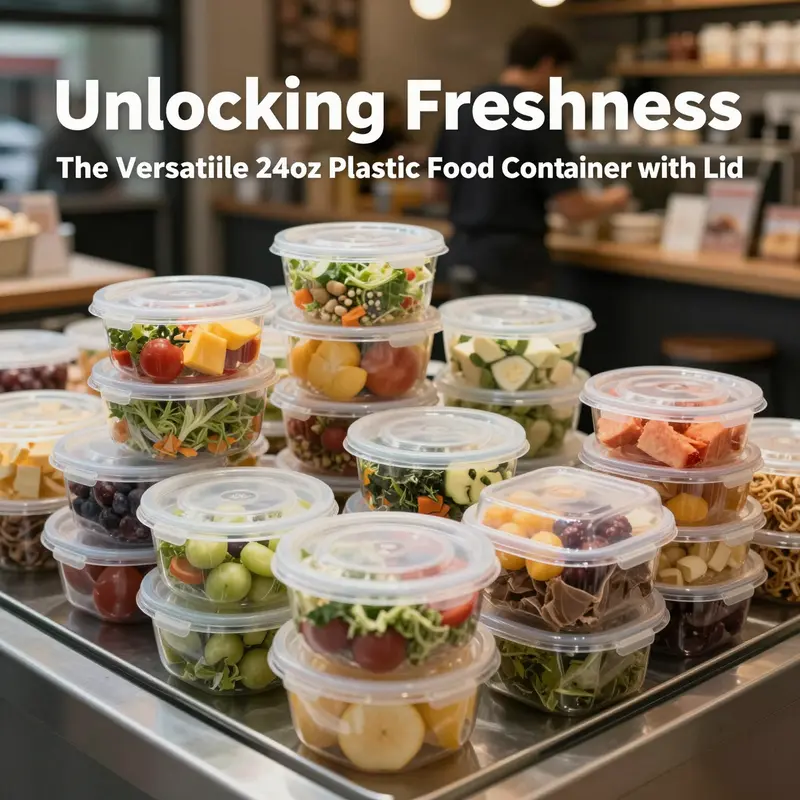
The 24-ounce plastic food container with a lid occupies a quiet but highly consequential place in the modern food system. It is not merely a vessel for holding leftovers or a portion of salad; it is a carefully engineered interface between food safety, user convenience, and the logistics of moving meals from kitchen to consumer. In many ways, this container embodies the tension and balance that characterize contemporary packaging: a desire for durable, reliable performance on the one hand, and a demand for sustainability and responsible resource use on the other. When we unpack what goes into a typical 24-ounce container, the choices become visible in the form, performance, and life cycle of the package. Capacity, shape, material, sealing method, and even the branding surface all matter because they influence how food is stored, transported, reheated, and disposed of. Each of these aspects also reflects broader market truths—the preference for parting with less waste, the push toward recycling and composting, and the realities of mass production and global distribution.
At the most fundamental level, the 24-ounce capacity rests on a practical sweet spot. Roughly seven hundred milliliters, this size is large enough to accommodate a substantial serving of a deli salad, a noodle dish, a fruit medley, or a hearty portion of soup, yet compact enough to be stacked and stored efficiently in kitchen racks, prep lines, or refrigerated display cases. The common form factors gravitate toward round and rectangular geometries. The round shape supports a simple, robust lid seal and uniform heat distribution, while the rectangular variant aligns with stackable shelving and efficient packing in bulk shipments. Dimensions in typical designs hover around a diameter in the neighborhood of 115 millimeters and a height that can range from the mid-80s to just over 100 millimeters. These measurements are not arbitrary; they reflect a need to harmonize with standard servingware, retail display grids, and refrigerated or frozen storage systems. A well-considered form factor reduces wasted space, lowers transport costs, and improves the end-user experience when grabbing a ready-to-eat meal.
Material choice is the second axis of design that shapes how these containers behave in real-world conditions. The two most common plastics used for 24-ounce containers with lids are polypropylene (PP) and polyethylene terephthalate (PET). Each material brings distinct properties that influence performance, safety, and end-of-life considerations. PP is prized for its heat tolerance and chemical stability. It commonly withstands temperatures approaching or at 100°C, which means these containers can be used for hot foods and, in many cases, are safe for short-term reheating in consumer microwave environments. The ability to tolerate heat translates to convenience for households and food-service operations alike. PP is also relatively inert with respect to many common food ingredients, reducing the risk of flavor or odor transfer. In addition, because PP can be designed for repeated use in some contexts, it sits at an important transitional space between single-use practicality and longer-term reuse strategies in many kitchens.
PET, by contrast, is often chosen for its clarity and lightweight properties. Transparent PET containers showcase the contents, a feature that is particularly valuable in takeout and deli contexts where visibility can influence shopper decisions. PET’s shatter resistance and lower weight compared with glass offer a compelling combination of durability and transport efficiency. For cold-storage applications, PET provides reliable performance with good barrier properties that help maintain product quality during storage and transit. Recyclability is another critical attribute; PET can be part of a circular material system if local recycling streams and consumer participation align. Both PP and PET meet food-grade safety standards in many markets, but the choice between them comes down to specific use cases—whether the priority is heat resilience and potential reheating (PP) or visibility and weight reduction (PET).
The lid is not an afterthought but a central element of the container’s functionality. A reliable lid design is what keeps foods fresh, prevents leaks during transport, and supports a stable stack in storage and display. Lids may be flat or slightly domed, and the sealing mechanism can be a simple snap-fit, a more robust gasketed seal, or an airtight configuration designed to resist moisture ingress and leakage. In high-demand settings such as takeout services, the ability to seal tightly reduces the risk of spillage in transit and helps preserve texture and moisture balance. Some lids are designed for venting to accommodate steam release when hot foods are packed, balancing the need to prevent suction and pressure buildup with the objective of maintaining a hygienic, leak-resistant seal. The success of a lid, in other words, hinges on how well it complements the container body and the expectations of the user, whether they are taking a meal to-go, refrigerating leftovers, or reheating in a kitchen microwave.
Beyond the immediate mechanics of containment, these containers are designed with stacking and storage in mind. The ability to nest or stack without wedging or cracking is essential for both manufacturers and end users. Stacking efficiency translates into lower warehousing costs, easier onsite organization in busy kitchens, and cleaner, more organized consumer-shelf experiences in retail or grocery settings. A thoughtful layout supports quick retrieval, reduces breakages, and contributes to a smoother flow in food-preparation environments where speed and reliability matter. The dual emphasis on stable stacking and secure sealing creates a packaging system that can perform across diverse use cases—from the exacting demands of a busy catering kitchen to the everyday practice of storing last night’s leftovers in a cold box.
Material interplay with performance is also evident in how these containers respond to temperature swings and moisture exposure. PP’s relative tolerance to heat means that hot foods can be placed in the container without immediate risk of deformation or leakage, a property that is particularly valued by catering operations and meals designed to be reheated or consumed shortly after preparation. PET’s strength, clarity, and lighter weight render it well suited to cold dishes, salads, and fruit-based preparations. In all cases, a well-executed barrier design helps resist moisture migration, oil penetration, and aroma transfer, preserving the sensory qualities of food and reducing the likelihood of cross-contamination through the packaging interface.
In practice, the design is rarely single-threaded. A container’s performance is the product of attention to the interplay among material properties, lid integrity, and the way the package is intended to be used. For instance, a leak-resistant, airtight lid paired with a round, stackable body can deliver a compact, reliable solution for short- to medium-length transport, whether for restaurant-to-home delivery, or for meal-prep services in a bustling kitchen. The choice of whether to favor PP or PET, as well as decisions about lid construction, are driven by practical considerations such as expected service temperature, duration of storage, and whether the package will be reused or disposed of after a single use.
The conversation about 24-ounce containers does not exist in a vacuum. It sits within broader market dynamics and evolving consumer expectations about safety, convenience, and environmental impact. In many markets, consumers are more mindful of the materials that come into contact with their food and of how packaging is disposed of after use. The industry has responded with a spectrum of developments—from improvements in barrier properties and seal technologies to new materials designed to reduce environmental footprints. Even as traditional plastics continue to play a dominant role in the current packaging mix, there is growing interest in alternatives that can align better with sustainability goals. For example, compostable and biodegradable options, often based on natural fibers or sugarcane byproducts, are being explored as part of a broader strategy to reduce reliance on fossil-fuel-derived plastics. While such materials may present different performance characteristics and end-of-life considerations, they reflect a market-wide shift toward circular packaging concepts that seek to balance user needs with ecological responsibility.
If one looks at the design through the lens of usage scenarios, the 24-ounce container with lid emerges as a versatile workhorse. In the foodservice sector, it supports takeout and delivery operations by providing a consistent, predictable package that can be integrated into standard operating procedures. In retail or consumer settings, it can serve as a convenient home-storage option for leftovers or prepared ingredients, where the lid’s seal helps maintain freshness during refrigeration. In event contexts, these containers provide a straightforward, scalable solution for buffet lines, salad bars, or snack stations, where ease of handling and visibility of contents are advantageous.
Even as these practical advantages accumulate, the packaging world is increasingly shaped by sustainability considerations. The conversation is no longer merely about whether a container can hold hot soup or keep a salad crisp; it also concerns how the container fits into broader materials systems and disposal streams. The idea of a fully circular packaging model entails more than recycling alone. It encompasses design for recyclability, reduction of material weight without compromising performance, and the possibility of compostable or renewable-material alternatives where feasible. In this context, certain innovations emphasize the use of alternate feedstocks, such as bagasse or other plant-based fibers, to provide compostable options that align with regulatory frameworks and consumer expectations for greener choices. These developments create a dialogue about trade-offs—between performance and end-of-life outcomes, between clarity and compostability, between cost and environmental responsibility.
From a procurement perspective, retailers and food-service operators weigh several practical considerations when selecting a 24-ounce container with lid. The minimum order quantities (MOQ) and the breadth of size offerings influence how easily the packaging can scale with business needs. The industry standard often sees a demand for a mix of sizes, including 8-ounce, 12-ounce, 16-ounce, 24-ounce, and larger options. This range enables catering to different meal formats and customer preferences, while also enabling a uniform packaging system across menus and services. Supplier capabilities—such as customization options for branding, color choices, and packaging design—play a substantive role in enabling a cohesive brand presentation even in a takeout context. Custom printing on the container or lid can enhance recognition and create a consistent visual identity that travels with the product from kitchen to consumer’s hands.
The sustainability conversation also informs the discussion of materials choice and end-of-life handling. While standard PP and PET containers are recyclable in many municipal streams, the reality of recycling varies by geography and system maturity. In regions with robust recycling infrastructure, clearer, more uniform labeling and easy separation can improve recycling rates for PET, while PP products often find a home in recycling streams that support rigid plastics. Yet in other markets, recycling rates may lag or be complicated by mixed materials, closures, or contamination. The packaging industry, therefore, risks being pulled by both technology and policy—to continuously improve recyclability, to explore compostable or biodegradable alternatives, and to design products that minimize environmental impact throughout their life cycle. These pressures spur both material science advances and policy measures that encourage better stewardship of packaging waste, often under frameworks known as Extended Producer Responsibility (EPR) or REACH-compliance in various jurisdictions. In practice, this means that a simple, everyday container becomes a focal point for debates about sustainability, manufacturing responsibility, and consumer behavior.
In the context of research and market observation, the development path for the 24-ounce container with lid shows a pattern of incremental improvements rather than sudden revolutions. Incremental gains arise from better heat resistance, improved lid seals, and lighter yet stronger materials. The capacity to resist moisture migration and maintain structural integrity under typical handling conditions has strong implications for shelf life, waste reduction, and user satisfaction. At the same time, the industry experiments with alternate materials and production processes that could lower the environmental footprint without sacrificing performance. This is where the conversation intersects with compostable packaging and biobased materials, which promise faster degradation under appropriate circumstances and align with regulatory and consumer expectations that plastics alone cannot meet. When these options become viable at scale, they may redefine the role of plastic containers in the wider packaging ecosystem, offering complementary pathways rather than outright replacements for traditional plastics.
In sum, the 24-ounce plastic food container with lid represents a pragmatic, multi-faceted solution for contemporary food service and consumer storage needs. Its enduring appeal lies in a balanced combination of capacity, form, material choice, and lid integrity, all designed to deliver reliable performance across hot and cold foods, in transit, and within household storage routines. Yet the same package also reveals the broader challenges and opportunities of modern packaging: how to maintain function while reducing environmental impact, how to support brands with appealing visuals and practical features, and how to integrate packaging decisions into the circular economy narrative that now guides much of industry thinking. The container’s evolution—carried forward by improvements in heat resistance, seal technology, and material science—mirrors a broader industry shift toward smarter, more responsible packaging. It is a story of careful engineering and pragmatic trade-offs, where the goal remains simple on the surface—keep food safe, fresh, and accessible—but complex in practice as markets, policies, and consumer expectations evolve in tandem.
For readers seeking a broader view on sustainable packaging alternatives that complement or diverge from plastic-based solutions, exploring related packaging formats—such as heavy-duty, eco-friendly paper bowls with lids—can illuminate how different materials meet distinct needs in the marketplace. This related context helps illustrate how brands may navigate a landscape that increasingly prizes both performance and responsibility. heavy-duty eco-friendly paper bowls with lid. As the packaging ecosystem continues to evolve, the 24-ounce container with lid stands as a touchstone, illustrating how a simple, structured design can support a wide range of food experiences while inviting ongoing improvements that align with broader sustainability goals.
External resource: https://www.alibaba.com/product-detail/ZX-PB024-24oz-Compostable-Food-Container_1601399111171.html
null
null
Final thoughts
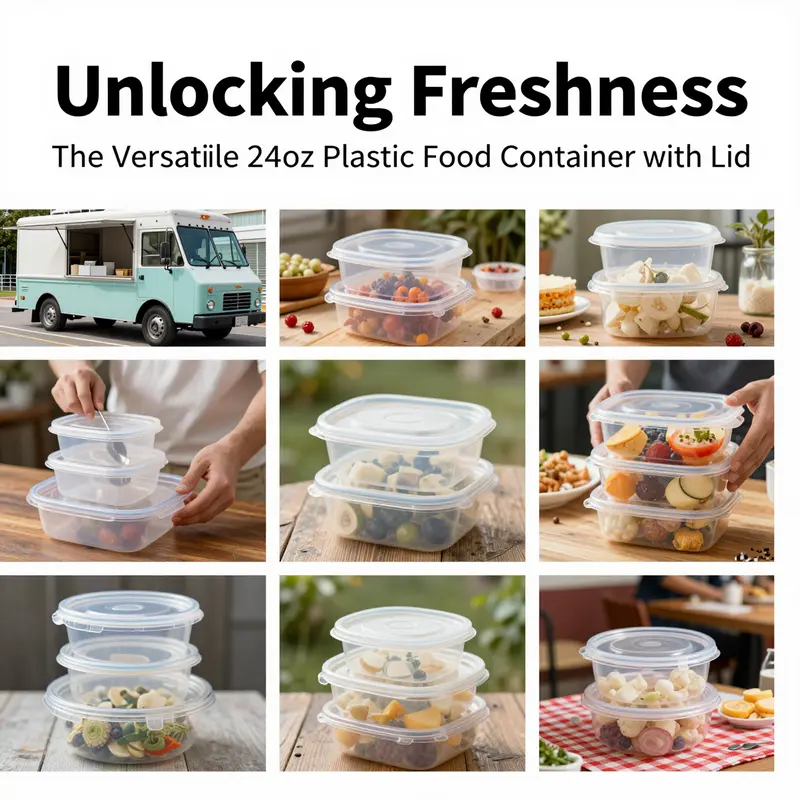
In summary, the 24oz plastic food container with lid stands out as a versatile solution for foodservice needs, providing excellent functionality and safety across various applications. From restaurants and food trucks to corporate events and catering services, these containers help to maintain the integrity of food items while contributing to operational efficiency. As you consider your packaging options, embracing these modern containers can greatly enhance the way you serve your customers, ensuring freshness and reliability every time.