

In the bustling culinary scene of Miami, the use of disposable food containers has become essential for diverse businesses, from bubble tea shops to catering services. As the demand for convenient and reliable packaging rises, understanding the landscape of disposable food containers is crucial. This article delves into the current status of disposable food container companies in Miami, the intricacies of their supply chains, the environmental implications of their products, economic factors at play, and emerging trends shaping the industry’s future. This comprehensive exploration is tailored for food service professionals aiming to enhance their service while remaining mindful of the ongoing trends in disposable packaging.
From Global Factories to South Beach: Mapping the Real Landscape of Disposable Food Containers in Miami, FL
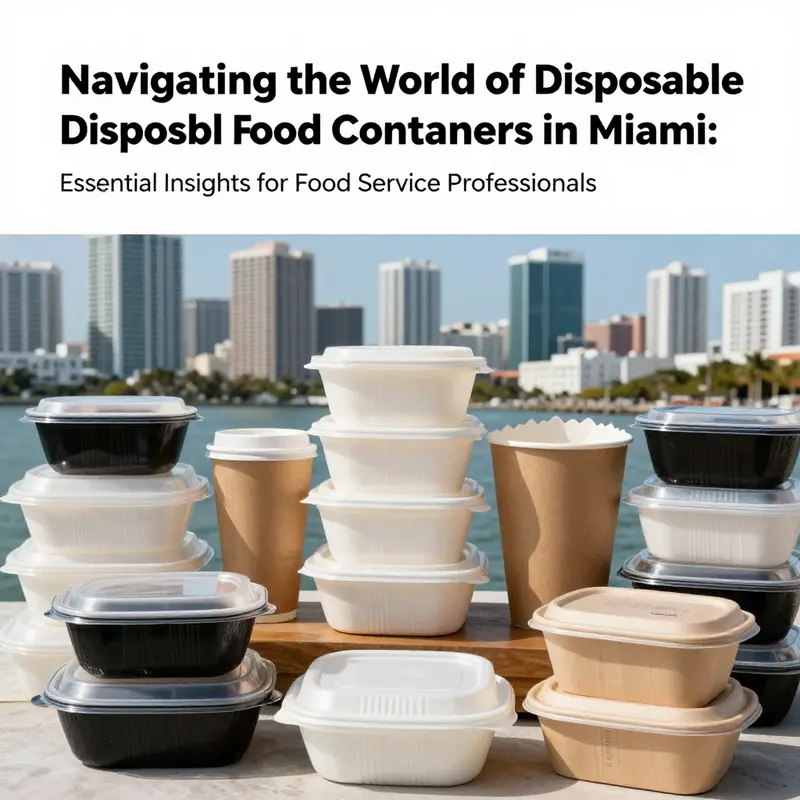
Miami’s food service ecosystem operates at the intersection of culinary diversity and complex logistics. The city’s vibrant mix—from pop-up concepts and food halls to fine dining and catering for large events—creates a persistent demand for packaging that is reliable, safe, and affordable. The story of disposable food containers in Miami is less about a single local producer than about a carefully choreographed network that stretches from distant factories to bustling kitchens, warehouses, and delivery apps. In practice, local operators rarely encounter a manufacturing plant within the city limits; instead, they engage with a global supply chain that can deliver consistent performance, competitive pricing, and clear compliance signals. This dynamic is not a sideshow to Miami’s culture; it is a fundamental driver of how food concepts scale and how quickly restaurants can respond to changing demand. The containers themselves are more than vessels. They are operating systems that influence menu design, service style, and the pace of service during lunch rushes, brunches, and late-night takeout waves. A single well-chosen container can preserve the temperature of a hot dish, resist oil and moisture, survive the rigors of transit on a bike courier or a rideshare driver, and stack efficiently on a crowded prep line. The technology embedded in these disposables matters as much as the shape and capacity. In districts like Wynwood, the Design District, and along the beaches, operators constantly balance aesthetics with practicality. A café wants a cup that keeps its coffee hot without sweating through a sleeve; a beachfront concession needs a tray that won’t warp when kissed by salt air or drenched by rain. These quality expectations push suppliers to optimize material science as much as to optimize logistics. The result is a supply chain that reads like a panoramic map, where local needs are met not by one domestic factory but by a spectrum of producers far from Florida’s coast. The most consequential pattern is the strong reliance on international manufacturers that have built scale and expertise around food contact safety, regulatory compliance, and export efficiency. In particular, the Guangdong region of China and the Shandong province have emerged in sourcing guides as major hubs. Guangdong’s clusters are known for a blend of plastic and paper packaging capabilities, often incorporating advanced manufacturing practices and efficient export channels. Shandong, on the other hand, is characterized by large-scale production of a broad range of disposable packaging, including options designed to meet high-volume procurement needs. For Miami buyers, this means a practical pathway: identifying credible manufacturers that can deliver consistent quality, frame a reliable lead time, and offer documentation that supports food safety programs in the United States. The choice is rarely about a single product line, but about a portfolio of packaging options, with attention to performance in oil resistance, heat tolerance, and moisture barriers. In parallel, the local demand is increasingly shaped by a broader environmental conversation. Restaurants and caterers in Miami are under rising pressure to adopt sustainable packaging solutions that align with consumer expectations and municipal waste management realities. The market has responded with bio-based and compostable alternatives that aim to outperform traditional plastics in end-of-life scenarios. Yet the trade-offs are real. Some plant-based options exhibit slightly different performance characteristics in heat retention or moisture resistance, and their industrial compostability depends on the availability of appropriate facilities. The conversation, therefore, moves beyond price and lead time to include life-cycle considerations, certification regimes, and end-of-life logistics. A practical approach in this environment is to treat packaging selection as a multi-criteria decision process. Food service operators in Miami evaluate performance metrics such as heat and oil resistance, microwave safety, moisture barrier strength, and stacking density. They weigh regulatory factors—FDA conformity for food-contact materials, compliant labeling, and traceability—against cost and supply stability. The sourcing narrative, in other words, becomes a balancing act between performance and reliability, especially for businesses with tight margins and high volumes. In this balancing act, the value of supplier collaboration rises. A seasoned buyer works with manufacturers to tailor solutions to a restaurant’s specific service model. For example, a high-volume takeout operation might require a line of packaging with standardized dimensions to fit both bags and sublimated branding materials, alongside a predictable delivery cadence. A concept-focused restaurant, by contrast, needs packaging that communicates a particular aesthetic while remaining practical for rapid service. Both scenarios benefit from suppliers who can provide documentation that attests to food safety, environmental attributes, and compliance with relevant standards. The sourcing journey also involves an awareness of the broader ecosystem that supports Miami’s growth. Local distributors, freight forwarders, and import specialists play critical roles in aligning production schedules with restaurant needs. They help translate a manufacturer’s capabilities into actionable procurement plans, translating lead times into weekly production buckets and translating batch sizes into inventory strategies that keep kitchens stocked without overbuying. This is where the knowledge base’s guidance matters: for Miami operators exploring offshore origins, it is prudent to contact manufacturers through established channels, request catalogs, and evaluate performance, cost, and compliance. The ethical and practical implications of international sourcing should be acknowledged as well. When a city’s culinary scene thrives on variety and experimentation, packaging choices can either accelerate or hinder a business model. The environmental footprint of disposable containers is not merely a footnote. It reaches into the anger of a consumer who sees a cleverly plated dish in a beautifully wrapped package, only to learn that the packaging cannot be recycled locally or that it undermines a restaurant’s sustainability narrative. Operators respond by embracing more sustainable options, by requesting clearer labeling for recycling streams, and by partnering with suppliers who offer compostable or recyclable alternatives. In this evolving landscape, a pragmatic Miami operator can rely on a stepwise approach. First, identify a few credible sources in major producing regions that align with the restaurant’s safety and regulatory standards. Second, establish a set of evaluation criteria that covers not just price and lead time, but performance under heat and moisture, compatibility with microwaves, and the robustness of documentation. Third, pilot with a small batch to validate performance in real-world conditions before committing to a large order. This cautious but proactive method turns the packaging decision into a strategic lever rather than a routine purchase. For those seeking a tangible point of reference in the broader sourcing conversation, one can explore catalog-style collections that organize disposable tableware under a single umbrella. The notion of a single catalog that combines disposable dinnerware and tableware helps frame expectations around compatibility, branding opportunities, and ecology. It is not a marketing gimmick, but a practical outline of what a cohesive service experience can look like when every component—from the lid to the liner to the bottom of a container—works in harmony. This approach also acknowledges the role of digital marketplaces and trade platforms that connect Miami buyers with overseas manufacturers while providing a layer of due diligence, such as certificates of conformity and traceability records. As Miami’s operators navigate these choices, the real anchor remains the customer’s experience: a warm meal delivered hot and intact, presented in packaging that is dignified, functional, and respectful of the city’s environmental aspirations. The connection to the broader market is reinforced by a steady stream of information and guidance from reputable resources that outline how small and medium enterprises can do business across oceans, while staying compliant with U.S. regulations and quality standards. For readers seeking a more practical primer on domestic support networks, the U.S. Small Business Administration offers directories and resources that can aid in identifying reputable suppliers, verifying registrations, and understanding the regulatory landscape. This external context helps frame the Miami sourcing challenge within a national system designed to support small and mid-sized businesses as they grow their footprint in food service packaging. For more on these resources, visit the SBA’s official site. If you want to see how product families in this space are organized and described from an industry catalog perspective, you can explore related collections that categorize disposable ware and packaging in ways that reflect both functionality and sustainability. These resources, combined with a strategic approach to sourcing, provide a practical pathway for Miami operators to balance cost, performance, and compliance while delivering memorable dining experiences to a city that expects nothing less than excellence. External resource: https://www.sba.gov.
Navigating the Gateway: Supply Chain Dynamics for Disposable Food Containers in Miami, FL

Miami is more than a culinary stage for tourism and flavor; it is a living conduit where global manufacturing, international trade, and local demand fuse to shape the fate of disposable food containers in real time. The city’s significance as a gateway—bridging Latin America, the Caribbean, and Asia with the continental United States—creates a unique pressure and opportunity profile. On one hand, Miami anchors a flow of containers that travels across oceans and continents, arriving via the deep harbors, then dispersing through an extensive network of distributors and wholesale partners. On the other hand, local operators must synchronize this inflow with the fast pace of urban dining, delivery platforms, and retail channels that characterize a city where culinary choices are as diverse as its neighborhoods. In this context, the supply chain dynamics for disposable food containers in Miami unfold as a story of speed, scale, and adaptability, underpinned by strategic links to manufacturing hubs abroad, sophisticated distribution networks, and a growing emphasis on sustainability and safety.
The import logistics that undergird Miami’s container economy are intricate and highly efficient. The city functions as a critical access point for containers sourced from Asia, with the manufacturing heartlands in China concentrated in industrial clusters that benefit from automated production lines and robust export channels. While the flow includes multiple ports and routes, the proximity of Guangdong Province to major shipping lanes translates into lower unit costs and shorter lead times for container-based packaging. This regional manufacturing strength translates into real advantages for Miami-based buyers who must balance large-volume orders with responsive replenishment. The streamlined transfer from factory floor to ocean carrier and then to PortMiami hinges on coordinated scheduling, reliable trucking, and the ability to track shipments across the supply chain in near real time. The result is a nervous equilibrium between demand surges—driven by tourism highs, seasonal events, and shifting consumer preferences—and the steady cadence of procurement cycles that large hospitality operations demand.
Within this landscape, the role of distributors becomes paramount. Buyers in Miami often rely on a dense network of intermediaries who can translate global supply into local availability. A national distributor infrastructure, with widespread warehousing and a capability for real-time inbound tracking, serves as the nerve center that connects foreign factories to Miami restaurants, caterers, and retailers. Real-time track-and-trace systems improve visibility, enabling operators to monitor inventory, anticipate shortages, and manage replenishments with confidence. These capabilities are especially valuable in a market that experiences rapid demand fluctuations and where margins can tighten quickly if stockouts occur or if delivery times slip. The integration of advanced logistics technology across the distribution network supports fast turnaround, accurate invoicing, and improved reliability, which are essential for a city that blends high-volume dining with just-in-time catering needs.
Sustainability and compliance have become central threads in Miami’s disposable container story. Local expectations and regulatory pressures are pushing suppliers to offer greener options without sacrificing performance. Biodegradable materials, such as those derived from corn starch or sugarcane, are increasingly present in the market and are designed to withstand oil and moisture while remaining microwave-safe and food-contact compliant. This transition aligns with broader industry research showing how reusable and disposable packaging can be designed in tandem to minimize environmental impact without compromising cost or service levels. In practice, this means that a typical Miami operator might balance a portfolio of container choices that includes environmentally friendly options alongside conventional products to meet both budgetary constraints and sustainability goals. The strategic models explored in academic and industry studies—such as bi-objective designs for fresh food supply chains that balance the costs of disposables with the benefits of reusables—offer a framework for thinking about how to optimize packaging across a metropolitan network while reducing waste and improving lifecycle performance.
Regulatory compliance remains a non-negotiable aspect of doing business in this space. Suppliers must provide documentation confirming adherence to food-contact safety standards. In the United States, that means FDA 21 CFR compliance, while in other markets it can involve EU Regulation No 10/2011 or equivalent standards for food-contact materials. This compliance is particularly important for containers used in hot food packaging or in applications where oil migration could affect taste, safety, or shelf life. For Miami operators, the assurance of compliance translates into a lower risk profile, smoother audits, and clearer assurances for customers who expect consistent safety and quality. The local supply chain’s emphasis on traceability, combined with robust supplier qualification processes, helps ensure that every batch of containers meets the exacting standards required for both hospitality and retail environments.
The contemporary Miami container narrative is inseparable from the global manufacturing footprint that feeds it. China’s Guangdong region, with its deep integration into port infrastructure and export logistics, remains a pivotal source. The scale of production, the speed of turnover, and the breadth of packaging solutions available from this region enable Miami buyers to source at a level of efficiency that would be difficult to match elsewhere. Even when local manufacturers are sparse or absent, a well-structured import program that leverages established overseas partners can deliver a steady stream of containers that perform at scale. In practical terms, this means that Miami’s local operators can access a broad spectrum of packaging formats, from paper-based options to plastic and sustainable alternatives, without compromising reliability or lead times. The strategic choice becomes less about whether to source globally and more about how to optimize that global sourcing for local objectives—cost containment, regulatory compliance, and sustainability alignment.
For operators seeking to navigate the array of available options, the broader catalog of disposable tableware and related packaging can be a valuable reference. A convenient starting point is to explore the range of disposable tableware options through our catalog, which presents a curated view of the kinds of containers and accessories that are commonly deployed across foodservice operations in metropolitan markets like Miami. This resource helps frame decisions around size, strength, moisture resistance, and compatibility with reheating processes, all of which matter in a city where cuisine is varied and service models range from fast-casual to full-service catering. To view these options, consider the disposable tableware categories available online, which provide practical context for what buyers evaluate during sourcing cycles. Such a resource serves as a practical bridge between high-level supply chain dynamics and the concrete, day-to-day choices faced by Miami operators.
A crucial thread in this narrative is the bridging of supply chain strategy with sustainability ambitions. The shift toward more sustainable packaging has a cascading effect on procurement planning, supplier selection, and capital budgeting. If a business wants to increase the share of biodegradable or compostable containers, it must consider compatibility with existing equipment and processes—such as microwaving, cold-holding, or oil-based menu items—while also weighing the cost implications. In practice, this often means negotiating with suppliers who can provide clear material specifications, performance data, and end-of-life options. The ability to source compliant materials at scale is essential, particularly in a market like Miami where large volumes of events, festivals, and daily operations demand predictable supply. The supply chain cannot sacrifice reliability for sustainability; instead, it seeks a balanced approach that delivers both environmental benefits and operational certainty.
In this light, the Miami container ecosystem is not a single silo but a network that blends international manufacturing strength, sophisticated distribution, and a local appetite for responsible packaging. The interplay among these elements creates a dynamic where lead times, pricing, and product performance are continually negotiated by buyers and suppliers. The city’s status as a high-velocity market for foodservice demand means that even small improvements in supply chain visibility or supplier collaboration can yield meaningful gains in service levels and cost management. Distributors act as the custodians of this flow, translating the complexity of offshore production schedules, regulatory changes, and material availability into a workable plan for kitchens, catering teams, and retailers. They enable Miami operators to keep shelves stocked, menus varied, and experiences consistent across neighborhoods, all while maintaining a focus on safety and environmental stewardship.
Ultimately, the trajectory of disposable food containers in Miami will be shaped by how smoothly the global manufacturing web connects to local needs. The city’s leaders and operators recognize that reliability, speed, and sustainability are not mutually exclusive; they are three facets of a single, evolving capability. As demand grows and tastes continue to evolve, the most successful players will be those who cultivate robust supplier relationships, invest in traceability and data-driven planning, and embrace greener options without compromising quality or service. The result is a supply chain that can support Miami’s culinary vibrancy today and well into the future, with a transparent, accountable, and resilient pathway from factory floor to restaurant table.
External resource: https://www.bunzldistribution.com/about-us/
Rethinking Miami’s Disposable Food Containers: Environmental Realities, Reusables, and the Path to a Greener Port City

Miami is a city defined by movement: people, meals, and ideas flow through its neighborhoods with a rhythm as varied as the shoreline. The same vitality that makes the dining scene so vibrant also makes the topic of disposable food containers in Miami, FL exceptionally consequential. In a port city where tourism, air travel, and a dense courier network converge, takeout and delivery have become daily routines for many residents and businesses. This reality amplifies two intertwined pressures: waste management systems that struggle to keep pace with demand, and the fragile balance of coastal ecosystems that shoulder the burdens of litter and pollution when containers escape the curbside stream. The material choices that household and commercial kitchens lean on—mostly single-use options—are not trivial. They are a chain of impacts that begins in distant factories and ends in local parks, waterways, and the stomachs of marine life if mismanaged. The most common utensils and clamshells—types of containers made from polypropylene and polystyrene—are durable enough to withstand the rush of a busy service, yet stubborn once discarded. Their life stories continue beyond the moment of use, traveling through collection trucks, sorting facilities, and recycling streams that in practice capture only a portion of the total volume, especially in regions where recycling infrastructure is uneven or under-resourced. In a city that hosts a steady stream of visitors and a large resident population reliant on takeout, the cumulative footprint of these containers becomes a civic issue as much as an environmental one. The life cycle realities of these materials, as summarized by a comprehensive assessment from the global research literature, reveal a troubling pattern. Across several environmental impact categories, single-use plastic containers contribute notably to climate-related burdens and human toxicity concerns. In particular, the global warming potential associated with their production, use, and end-of-life phases underscores the carbon cost embedded in convenience. The narrative is not merely about climate alone; it embraces health considerations tied to chemical exposures that can occur when food contacts plastics under heat or oil-rich conditions more common in Miami’s tropical climate. The coastal setting intensifies the stakes, because litter rarely stays contained. When containers escape the urban waste stream, they can become marine debris, breaking down into smaller fragments that persist in the environment and pose hazards to aquatic life. This is not a theoretical risk; it is a visible reality in coastal climates where sun and salt accelerate material degradation. The climate context matters here too. Higher temperatures can influence the rate at which certain additives migrate from containers into foods, particularly when the foods are hot or fatty. The result is a confluence of health, environmental, and aesthetic consequences that local authorities and communities are increasingly grappling with. How, then, should a city known for its culinary diversity and its oceanfront character approach this challenge? A pragmatic path acknowledges the limits of our current infrastructure while embracing feasible, near-term steps toward reduction, reuse, and responsible end-of-life management. While some businesses in Miami have experimented with compostable options made from bagasse or recycled paperboard, the effectiveness of these solutions hinges on an industrial composting network that can handle the volumes generated by a city of this size. Without that infrastructure, compostable containers risk ending up in landfills or, worse, in places where composting facilities cannot process them efficiently. In contrast, reusable container programs promise substantial waste reductions, but their success hinges on systems for cleaning, redistribution, and consumer participation that are not yet widely established in the region. A large-scale shift toward reusables must be supported by practical logistics: centralized cleaning facilities or partnerships with service providers, standardized return mechanisms, and incentives strong enough to alter habitual behaviors. A study conducted at a national level in recent years has shown that reusable designs can outperform single-use options in several environmental metrics, but only if the reuse cycle is frequent enough. The number of times a container must be used to achieve a demonstrable advantage depends on which environmental impact category is measured. This nuance matters in Miami, where hospitality volumes and consumer expectations converge to push systems toward efficiency rather than reform. In parallel with reuse strategies, policy levers can accelerate change. Local advances like Miami-Dade County’s Zero Waste Plan aim to elevate recycling rates and encourage sustainable packaging, but the path from policy to practice is never automatic. Real transformation requires policy incentives that stimulate the adoption of reusable programs, expanded access to composting infrastructure, and regulatory measures that gradually curb the most problematic single-use plastics. These elements do not operate in isolation; they require alignment with the city’s unique logistics, including how waste is collected, sorted, and processed, as well as how packaging affords food safety and consumer convenience under the state’s climate conditions. When a disposable food containers company based in Miami contemplates its role in this evolving landscape, it becomes clear that the business’s core function extends beyond supplying a product. It becomes a bridge between global manufacturing capabilities and local realities. Although the immediate production of many disposable packaging items occurs in China’s major manufacturing hubs, the Miami market remains highly dependent on timely, cost-effective imports that meet stringent food-contact standards. The trade-offs involved in sourcing—cost, lead time, and regulatory compliance—shape the sustainability profile of the final product in the hands of a Miami restaurant, a caterer, or a regional retailer. For the region, there is a practical pathway to balance demand with responsibility. A company operating in this space can emphasize products that align with consumer demand for safer materials, while leveraging supply chains that emphasize traceability and compliance. A practical avenue is exploring options in the broader category of disposable dinnerware and tableware, which can be found in dedicated product collections. This approach enables a business to offer versions that optimize performance for hot and oily foods, and to compare liners and coatings that minimize leakage and maintain integrity during delivery. For practitioners seeking practical, compliant options, see the disposable-dinnerware-tableware category. The choice of materials matters not only for cost but for the user experience in a humid, salty climate where leakage and sogginess can undermine confidence in a brand. The ability to demonstrate compliance with food safety standards across export markets—especially for containers designed to hold hot items—gives a Miami-based supplier a competitive edge. It also reassures customers that the packaging will not compromise product quality through unexpected thermal or chemical interactions. Yet packaging choices must always be weighed against broader social and environmental costs. In this light, the conversation around Miami’s disposable containers invites a holistic view: reduce waste generation where possible, optimize end-of-life pathways, and align with consumer preferences for safer, more sustainable options. Reusables, when implemented thoughtfully, can transform waste streams but require careful attention to systems design, cleaning capacity, and reliable return loops. The adoption of reusable programs depends on a critical mass of participants and a robust logistical backbone that keeps the cycle intact without creating new bottlenecks for restaurants and delivery services. The barriers are not only technical but behavioral. Consumer habits, which sway toward convenience, must be nudged toward participation in returns or near-site cleaning arrangements. Businesses must consider how to incentivize customers to bring containers back or to reuse a given packaging within an established ecosystem. Moreover, the supply chain for Miami’s packaging needs to integrate with local waste facilities, municipal recycling streams, and potential partnerships with industrial composting facilities that can handle fiber-based and certain biodegradable materials. This integrated approach helps ensure that the environmental benefits claimed by newer packaging technologies translate into real-world outcomes. In practice, the path forward involves a combination of smarter material choices, improved recycling and composting infrastructure, and targeted incentives that reflect the city’s climate and lifestyle realities. For a disposable food containers company looking to serve Miami effectively, this means designing products with a clear understanding of local waste-management capabilities, while maintaining flexibility to adapt to evolving regulatory frameworks. It also means investing in education and collaboration with food-service operators to articulate the trade-offs between convenience, cost, and environmental impact. The narrative is not about abandoning disposables altogether but about advancing toward packaging choices that are safer, more recyclable, or more readily compostable in the context of the region’s infrastructure. It is about pairing a global supply chain’s efficiency with a local system’s accountability. And it is about recognizing that meaningful improvement occurs when business strategies, civic policy, and consumer behavior move in concert. For researchers and practitioners, the Miami context offers a testing ground for scalable solutions: selective use of recycled-content plastics, better labeling that informs users about heat and oil interactions, and closer alignment between restaurants’ ordering patterns and the capacity of local waste streams. The city’s ongoing policy experiments, combined with industry innovations, could yield a model that others in coastal zones may follow. External reference: https://www.sciencedirect.com/science/article/pii/S0956053X18304723
Economic Currents Under the Palms: Navigating Costs, Compliance, and Demand for a Miami-Based Disposable Food Containers Venture
Miami sits at a crossroads of commerce, cuisine, and culture, where a disposable food containers enterprise must dance between cost pressures, regulatory currents, and a demand endlessly reinforced by tourism and international flavors. The city’s distinctive market reality—where quick-service throughput meets a palate for sustainable choices—means every strategic decision about materials, production, and supply chain reverberates through the bottom line. In this light, cost is not merely a number on a balance sheet but a compass that points toward the most resilient path for growth. A Miami-focused company cannot assume its economics will mirror those of cold, centralized manufacturing hubs; instead, it must map a network of tradeoffs that align with local demand, regional regulations, and global sourcing opportunities. The chapter that follows stitches together the material economics, the production logic, and the market’s regulatory climate into a cohesive narrative about building a competitive, sustainable disposable food containers business in South Florida.
Material costs anchor the entire economic equation, and the choice of feedstock reverberates through price, performance, and consumer acceptance. Polypropylene (PP) containers illustrate a classic tradeoff. They offer durability, moisture resistance, and a pathway toward reduced landfill burden when managed through appropriate end-of-life strategies. In a city where packaging choices increasingly matter to diners and operators alike, PP can position a company as a responsible option within a broader waste-management framework. Yet the higher upfront production costs of PP compared to traditional plastics cannot be ignored. The chapter’s nuanced view notes that while PP may confer environmental advantages, it also imposes challenges in storage and moisture sensitivity, potentially requiring advanced logistics and sometimes industrial-scale processing for optimal decomposition and recycling outcomes. The pricing implications of PP—driven by resin costs, energy intensity, and the volatility of global plastic markets—can ripple outward, shaping procurement negotiations with large operators and influencing the price points offered to restaurants, caterers, and delivery platforms in Miami’s competitive foodservice ecosystem.
Equally important are recycled paperboard and molded fiber options. These materials align with a growing emphasis on compostable and recyclable packaging, appealing to restaurateurs and retailers who aim to meet local sustainability goals and appeal to environmentally conscious consumers. In a city with strong environmental awareness and a tourism economy that often rewards responsible practices, such eco-friendly options can create a premium value proposition, particularly for higher-end venues and events that emphasize zero-waste or circular economy narratives. However, the cost structure of molded fiber and bagasse-based containers tends to be less forgiving than that of conventional plastics. Sourcing bagasse or other post-consumer fibers, achieving consistent quality, and maintaining a reliable supply chain can drive up unit costs. This is especially true when Miami’s proximity to Caribbean and Latin American markets intensifies demand for a broad range of sizes and forms. The balance, then, is to segment the portfolio so that a portion targets price-sensitive takeout and delivery channels with robust margins, while another portion supports premium segments where sustainability resonates with brand storytelling and guest experience.
Beyond the immediate cost of materials, production efficiency acts as a multiplier across the lifecycle of a disposable container business. Modern, automated lines offer the potential to reduce per-unit costs as volume scales up. Yet the upfront capital outlay for high-speed equipment must be weighed against anticipated sales volumes, distribution reach, and the ability to maintain consistent quality across a diverse product family. The Miami market, with its dense network of quick-service restaurants, food trucks, and event catering, can support high-volume runs if the supplier can deliver on both speed and reliability. In practice, this means structuring a production plan that blends flexibility with efficiency: modular lines that can switch between plastic and paper-based formats, lean manufacturing practices to minimize waste, and predictive maintenance to prevent costly unplanned downtime. The resulting cost curve is not a straight line; it bends with throughput, downtime, energy prices, and the efficiency of logistics partners who shoulder a meaningful share of the total landed cost.
Regulatory compliance threads through every layer of the economic fabric in Miami. Florida’s regulatory landscape around single-use plastics and packaging materials shapes both operating costs and strategic choices. Municipal and state initiatives aimed at reducing plastic waste can alter the preferred mix of materials, influence labeling and certification requirements, and affect eligibility for public-sector contracts or preferred vendor programs. For a Miami-based supplier, staying aligned with these policies is not merely a legal obligation; it is a business differentiator. Firms that anticipate changes—by diversifying material options, investing in compliant labeling, and adopting traceable supply chains—position themselves to win contracts with institutions and large food-service providers that prioritize compliance and risk management. In parallel, the market’s demand dynamics—driven by tourism, international commerce, and a vibrant hospitality ecosystem—produce a steady appetite for both affordable, functional packaging and premium, sustainable options that support brand stories and guest satisfaction. This dual demand pattern calls for a portfolio strategy that can flex between low-cost, high-volume formats and higher-margin, eco-conscious solutions.
The Miami market’s distinctive mix of demand and regulation also intersects with global sourcing realities. The research landscape in this area points to significant production hubs in Asia, particularly regions known for large-scale manufacturing of disposable packaging. For a Miami operation, the practical implication is a strategic sourcing approach that blends local service elements with global supply advantages. While local manufacturing might be limited or absent, reputable suppliers in major production bases can deliver economies of scale, cost competitiveness, and product diversity that are difficult to replicate domestically. This is especially relevant for operators seeking turnkey packaging solutions that come with consistent quality, standardized certifications, and predictable lead times. An important consideration here is the total landed cost, which encapsulates material price, freight, import duties, currency risk, and the reliability of the supply chain. A well-constructed procurement strategy may involve multi-sourcing to mitigate risk, combined with supplier audits that verify food-contact compliance, environmental standards, and production capacity.
To illustrate a practical path through these complex decisions, consider the role of a diversified material mix that aligns with Miami’s demand landscape. A core plastics-focused line can serve high-volume, price-sensitive channels—think fast-casual, delivery, and event catering—where reliability and price are the primary levers. A complementary line built around recycled paperboard or molded fiber can address segments where brands emphasize sustainability as a differentiator, enabling premium pricing and enhanced customer perception. The economics of such a mix hinge on stabilizing resin and pulp costs, maintaining high acceptance of the packaging by foodservice operators, and ensuring that the environmental claims are substantiated and verifiable. In practice, this means investing in quality assurance programs that demonstrate compliance with food-contact standards and providing transparent lifecycle information to reassure customers about end-of-life options. The outcome is a product strategy that cushions the business against material volatility while capturing growth opportunities across the price spectrum.
A practical touchpoint for readers seeking actionable avenues is the material family that can be explored through a focused supply channel dedicated to paper packaging. This category is a natural anchor for the sustainability narrative while offering a clear route to cost optimization through scalable production and streamlined logistics. For example, if you want to explore the broader portfolio and understand how paper packaging can fit into a Miami operation, you can examine our dedicated page on paper packaging options here: paper packaging. This linkage provides a lens into the kinds of packaging alternatives that integrate environmental considerations with economic pragmatism, helping businesses compare specifications, certifications, and form factors in one place.
The conversation about economics would be incomplete without acknowledging the environmental and societal context that shapes both cost and opportunity. The packaging ecosystem is increasingly governed by policies and incentives that reward waste reduction, recyclability, and compostability. The EPA’s guidance on food packaging and its environmental impact offers a broader frame of reference for these considerations, highlighting how packaging design, material choice, and waste management intersect with sustainability goals. For readers seeking a deeper, external perspective on this larger frame, the following resource provides a rigorous, policy-oriented discussion of packaging waste and its environmental footprint: https://www.epa.gov/sustainable-management-food-waste/food-packaging-and-its-environmental-impact. This resource complements the Miami-specific economics by connecting daily business decisions to long-term environmental outcomes and societal benefits.
From a strategic vantage point, the economic narrative for a disposable food containers company in Miami is not confined to price-setting or production schedules. It also encompasses how you tell the story of value to customers who must justify packaging choices within tight margins and evolving regulatory constraints. In practice, this translates into designing products with clear, traceable performance metrics—such as moisture resistance, heat tolerance, and microwave safety—paired with transparent claims about recyclability or compostability. The practical implication is that customers will reward packaging that reduces waste, lowers lifecycle costs, and aligns with their sustainability commitments. Yet the path to such alignment requires robust supplier relationships, a readiness to adapt material choices as policy and technology evolve, and a logistics network capable of ensuring timely delivery across Miami’s varied markets.
Ultimately, the economic viability of a disposable food containers company in Miami rests on a delicate balance: controlling material costs while offering a differentiated suite of options that meet the needs of price-conscious operators and sustainability-minded brands alike; investing in production capability that can scale with demand without compromising quality or reliability; and navigating a regulatory regime that rewards responsible packaging choices without unduly constraining innovation. This balance is not static. It shifts with currency movements, freight rates, and the evolving expectations of diners who want to see packaging that is not only affordable but also aligned with a cleaner, more circular economy. As the city continues to attract visitors from around the globe and as its dining scene grows ever more diverse, the most resilient ventures will be those that view cost, compliance, and demand as an integrated system rather than as isolated levers to pull. In that integrated sense, Miami offers both a testing ground and a proving ground for ideas about how to deliver value through packaging in a way that respects the environment, satisfies customers, and supports long-term profitability.
Shaping a Sustainable Plate: Miami’s Compostable and Circular Packaging Future
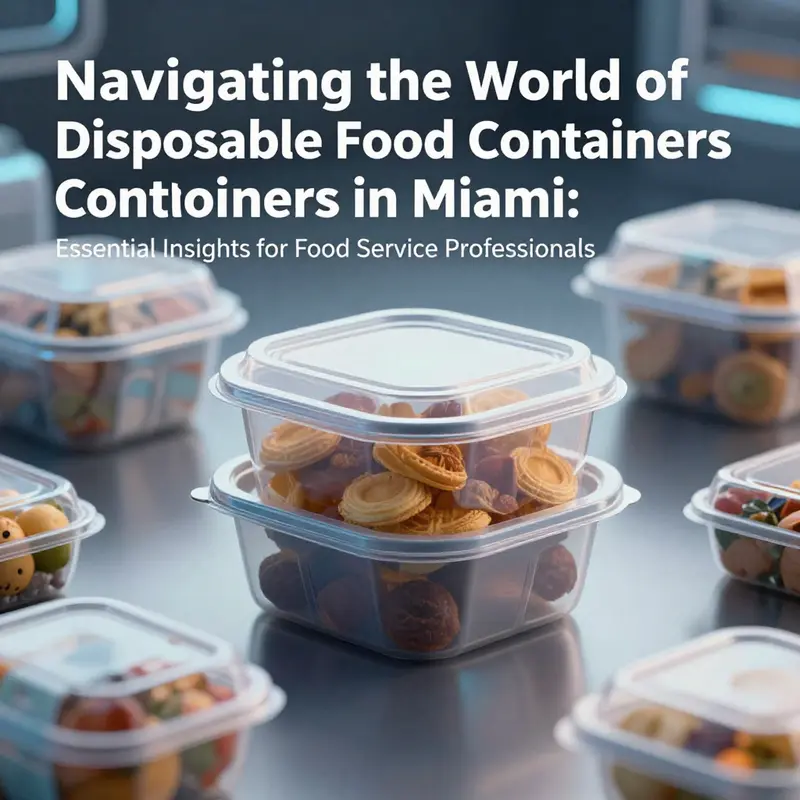
Miami’s dining scene is a living lab for sustainable packaging, where operators balance performance, cost, and responsibility. This chapter surveys three interwoven trends shaping disposable containers: compostable materials, smart packaging, and circular models rooted in reuse and responsible end of life.
The first trend centers on materials sourced from plants and fibers that can be industrially composted. Products made from bagasse, PLA, and other certified biobased options are increasingly common in takeout and delivery. The emphasis is on reliability under heat and moisture, and on clear certification that helps waste streams stay aligned with local and municipal programs.
Second, digital touches are making packaging more than a container. QR codes and NFC chips connect customers to provenance, allergen information, and loyalty programs, while giving operators better visibility into supply chains and waste streams.
Third, circular approaches are moving from pilots to practice. Programs that reward customers for returning containers or bringing them back for cleaning and refurbishment are showing how reuse can scale within a busy urban ecosystem.
The practical takeaway for Miami is that a successful packaging strategy blends material choice, technology enabled transparency, and a commitment to end of life that reduces waste and supports the local economy.
Final thoughts
The disposable food container industry in Miami is poised for growth, especially as businesses adapt to evolving consumer needs and environmental challenges. By understanding the current landscape, supply chain dynamics, environmental impacts, and economic considerations, food service professionals can make informed decisions that not only elevate their offerings but also contribute positively to sustainability goals. As the market continues to shift towards eco-friendliness, staying ahead of future trends will be critical. Embracing these changes is not just about compliance but can also foster lasting relationships with customers who value responsibility in their purchases.