
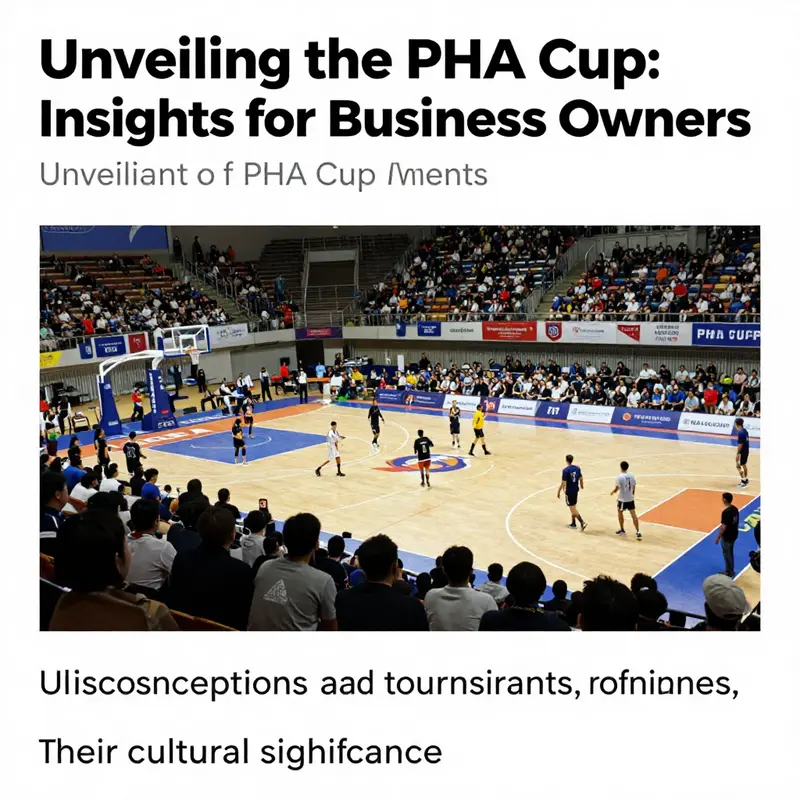
The PHA Cup, while not widely recognized in major international sports, evokes interest in local sporting events and community engagement. As business owners, understanding the nuances of local tournaments like the PHA Cup can provide insights into community dynamics, marketing opportunities, and brand enhancement through sponsorship or participation. This article will clarify the definition of the PHA Cup, explore its relationship to local sports, delve into its historical context, and differentiate it from other prominent tournaments, ensuring that businesses can navigate this niche effectively.
Navigating the Landscape of PHA: Insights into Biodegradable Innovations

In an era marked by growing environmental concerns, sustainable practices have surged to the forefront of public awareness and corporate responsibility. One promising material gaining traction is polyhydroxyalkanoates (PHA), a class of biodegradable polymers that highlight a significant shift in how we approach manufacturing and waste management. Unlike traditional plastic derived from fossil fuels, PHAs offer an ecologically responsible alternative, synthesized by microorganisms through the fermentation of renewable resources such as sugars and lipids. This chapter explores the nuances of PHA, dispelling common misconceptions while elucidating its unique properties and applications, particularly as a viable material for single-use products like cups.
Many mistakenly categorize all bioplastics as interchangeable, but this misunderstanding overlooks the distinct nature of PHA. Its production process is inherently different from that of other bioplastics, such as polylactic acid (PLA), known for its requirement of industrial composting facilities to break down efficiently. In contrast, one of the most remarkable attributes of PHA is its ability to degrade naturally in a variety of environments, including marine, soil, and freshwater ecosystems. Studies have demonstrated that PHA can decompose within one to three years under these natural conditions, thereby addressing a critical challenge posed by traditional plastics, which often contribute to extensive pollution and environmental degradation.
Furthermore, the question of whether PHA qualifies as a plastic is often raised. Yes, it is indeed a polymer with plastic-like characteristics, capable of being molded into forms such as cups, bottles, and films. However, what sets PHA apart is its sustainable origin and degradation pathway. A PHA cup, for example, transcends being a mere biodegradable substitute; it represents a circular product that, once disposed of, returns to nature without harmful residues. This lifecycle offers compelling implications for industries striving to reduce their environmental footprint. The use of PHA in the 2026 “Sci-Tech & Liuyehu” Synthetic Biomanufacturing Innovation and Entrepreneurship Competition in China, where the award trophy was crafted from this material, underscores its advanced performance and significantly lower carbon footprint—up to 90% less than that of conventional petrochemical plastics.
Yet, despite its many advantages, the broader adoption of PHA has faced hurdles, primarily attributed to production costs. At present, the cost of creating PHA remains higher than that of traditional plastics, largely due to the complexities involved in fermentation feedstock and purification processes. This economic factor has sparked innovative approaches to reduce production expenses. Recent advancements, including the development of genetically modified plants and utilizing salt-tolerant microbes, have shown promise in optimizing energy usage and scaling production capabilities. Consequently, production lines capable of generating thousands of tons of PHA have initiated operations in places like China, positioning the PHA industry to ascend to global leadership in sustainable materials.
The transition towards PHA signifies more than just a shift in raw materials; it represents a crucial step towards a comprehensive circular economy that emphasizes sustainability at every phase—production, usage, and disposal. PHA holds the potential to revolutionize sectors prone to single-use products, particularly in packaging and food service, where its ability to degrade safely in various environments can markedly reduce ecological footprints. For consumers, the emergence of PHA products like cups and containers presents tangible choices, enabling a lifestyle aligned with ecological values without compromising convenience or functionality.
As industries continue to explore and validate PHA’s capabilities, we may anticipate expanded applications across multiple realms beyond disposable cups. Its remarkable properties could find uses in fields ranging from agriculture to medicine, where the requirement for biodegradable solutions is increasingly critical. The ongoing research into PHA applications indicates strong potential not just for product innovation but also for tackling food waste—a significant contributor to global greenhouse gas emissions. With its natural biodegradability, PHA often serves to optimize product sustainability while reducing landfill accumulation.
However, what will determine the trajectory of PHA is a collective commitment from manufacturers, consumers, and policy-makers towards prioritizing sustainable choices. Industry standards and regulatory frameworks are critical to facilitating PHA’s acceptance in mass markets. Education plays a vital role in dispelling misconceptions about bioplastics and guiding stakeholders toward informed decisions that harmonize commercial interests with ecological responsibilities.
Ultimately, the conversation around PHA extends beyond its composition and properties to encapsulate broader themes of environmental stewardship and sustainable innovation. The discourse continues to evolve as we uncover more about PHA and its applications in real-world contexts. The increasing visibility of PHA products in retail settings reflects a palpable change, encouraging larger questions about material ethics and the lifecycle impact of consumer goods.
In summary, understanding PHA encompasses a wide array of discussions—from fundamental chemistry to practical applications in everyday life. As research and manufacturing techniques advance, PHA is poised to emerge as a leader in the quest to find a sustainable alternative to conventional plastics. Moving forward, it is imperative that we remain mindful of the opportunities presented by such innovations while critically assessing their implications within the larger scope of sustainable development. As stakeholders across the supply chain embrace these revelations about PHA, a distinctive narrative about the future of materials begins to take shape, framing our relationship with plastic, consumption, and the environment in a new light.
Exploring the PHA Cup: A Deep Dive into Local Sports Tournaments

The concept of a “cup” in the realm of sports carries with it a rich history and a vibrant culture. As various leagues, associations, and clubs across the globe organize knockout-style competitions, the term resonates beyond mere phrases, encapsulating the essence of competition, community, and, often, camaraderie. When discussing less-known terms such as the “PHA Cup,” we enter a realm where local tournaments and community engagement take center stage, enriching the tapestry of sports at a grassroots level.
While the term “PHA Cup” finds little documentation in major sports databases, it raises intriguing possibilities primarily linked to local or informal sports events. These tournaments, much like the celebrated FA Cup or the Davis Cup, embody a structure of competition that fuels both rivalry and fellowship among participating teams. Whether in schools, local clubs, or specific regions, the dynamics of such competitions offer a rich narrative deserving of exploration.
In localized contexts, the nomenclature like “PHA Cup” often signifies an event born out of necessity—a way for community members to engage in recreational activities while promoting sportsmanship. For instance, one might envision a small gathering of teams from local schools or community centers competing for a modest trophy or an amateur league title, fostering relationships that extend beyond the competitive sphere. These events provide foundational experiences that cultivate not just athletic skills, but the core values of discipline, determination, and teamwork among participants.
Imagine a weekend where various teams gather at a local pitch, each adorned with their unique colors and emblematic spirit. The air buzzing with excitement and anticipation gives way to matches that, while intense, are filled with laughter and learning moments. In this light, the PHA Cup could represent an opportunity for local youth to engage in physical activity, develop their skills, and enjoy a shared passion for sports. It transcends just being a series of games; it represents a community coming together.
The significance of such cups in local sports ecosystems cannot be overstated. They serve as entry points into higher levels of competition for many athletes. Consider how a standout player in a neighborhood cup may catch the eye of a scout or local academy coach, thus advancing their athletic career. Local tournaments like the supposed “PHA Cup” can sometimes be the stepping stone on a pathway to collegiate sports or even professional leagues in diverse sports. Such narratives showcase how these competitions can profoundly impact lives, igniting dreams and aspirations.
Furthermore, there is an interesting parallel between these local cups and more prominent tournaments. Established competitions are typically organized with a structured format involving multiple rounds leading to a decisive finale. However, local cups like those that might be termed as “PHA Cups” are not bound by such rigid structures, allowing for flexibility based on community needs—the number of participating teams, available venues, and even local interests can shape the format and rules of engagement.
This adaptability serves as a double-edged sword. On one hand, it enables the swift establishment of competitions that resonate with local culture and dynamics, fostering enthusiasm and participation. On the other hand, the lack of standardization may lead to discrepancies in the quality of competition and the overall experience. However, this very diversity is what adds a unique flavor to local sports culture, where every tournament tells its own story.
As we further investigate what the PHA Cup could embody, the opportunity arises to strategize on creating events that capture the community’s imagination. This involves thinking about how local sporting leagues can innovate to attract more participants and spectators alike. Perhaps it means incorporating digital platforms for registration and promotion, or establishing partnerships with local businesses for better sponsorship opportunities. Such initiatives not only enhance community engagement but also uplift local brands and foster a vibrant economy around sporting events.
Moreover, organizing tournaments under monikers like the “PHA Cup” pushes for greater inclusivity in sports. Engaging diverse groups, including underrepresented communities, women’s teams, and varying age categories, allows for a broader representation in athletics. Inclusive tournaments foster an environment where everyone feels valued and has an opportunity to play, reinforcing the idea that sports belong to all.
As much as the allure of competition excites, the memories formed at these local events can often eclipse the actual results. Personal achievements, from scoring that crucial goal to achieving a personal best, become intertwined with collective memories shared among supportive friends, families, and fans. Every match provides a canvas upon which stories of perseverance and teamwork are painted, producing a rich legacy for future athletes to appreciate.
Thus, the essence of the PHA Cup, if it exists in any form, encapsulates the spirit of local tournaments—an engaging blend between competition and community. The lack of information surrounding the term might even contribute to its charm, leaving audiences to imagine all the possibilities it encompasses, akin to legendary cups that have become pillars of their communities.
In conclusion, while the PHA Cup may not stand as a notable figure in the lexicon of global sports tournaments, it invites fertile discussions about the vitality of grassroots sports. These local events are more than just games; they are platforms for nurturing talent, fostering community, and forging connections that resonate deeply within local cultures. The true measure of any sporting event lies not purely in the outcomes displayed on scoreboards but in the memories, friendships, and ideals it cultivates, which remind us all why we engage in sports to begin with. Through continued support and innovation, local tournaments can thrive, creating lasting legacies that inspire generations to come.
For further details on how sports cups and tournaments function, you can refer to the Cambridge Dictionary here.
The PHA Cup: Unravelling Myths and Local Legends in Sports

In exploring the cultural tapestry of sports, events and tournaments serve as crucial threads that weave communities together, conjuring a sense of shared identity and rivalry. However, when we delve into the concept of the ‘PHA Cup,’ a perplexing silence emerges. This term appears to tread the realms of myth and local legend rather than formalized sporting canon. Unlike the storied history of competitions such as the FA Cup or the Stanley Cup, the PHA Cup remains veiled in obscurity, provoking intrigue about its origins and significance.
Etymologically, ‘PHA’ could present varying interpretations. Some speculate that it may evoke the essence of sporting associations or leagues, yet an examination of known professional organizations indicates a lack of official reference to a ‘PHA’ within the landscape of global sports. One might wonder whether ‘PHA’ is a misnomer, a typographical whimsy that inadvertently muddied the waters, leading enthusiasts to conflate it with more storied counterparts like the FA Cup in football or the Davis Cup in tennis.
The FA Cup, for instance, stands as a paragon in football history, exemplifying knockout style competition and culminates in a highly anticipated final at Wembley. With a legacy spanning over 140 years, its resilience amidst evolving footballity speaks volumes about tradition and national pride. In stark contrast, invoking the notion of a ‘PHA Cup’ raises questions. Is it a reflection of an undercurrent of amateur enthusiasm, perhaps an unrecorded local tournament nestled within a community sporting landscape, where schools or clubs perpetuate age-old rivalries with little documentation?
This concept of localized sporting events is not novel; throughout the world, countless games unfold under the radar of official recognition—these games often serve as a vital source of community bonding, celebrating local athletes and cultivating homegrown legends. However, without formal accounts, these matches might slip through the cracks into the depths of sports historical archives, ripe for anecdotal retrieval rather than authoritative recognition.
Furthermore, the invocation of ‘PHA’ could embody individual narratives—stories whispered among local supporters. One can envision gatherings in pubs or community halls where tales of ‘PHA Cup’ encounters are recounted, reflecting fervor not found on international platforms. Here, the essence of the community culminates in this metaphorical cup, representing aspirations and dreams nurtured in local pitches and rinks. In these contexts, the terms ‘PHA Cup’ may encapsulate victories decidedly personal, yet infinitely potent for those involved.
To reconcile the absence of formal recognition, we could entertain the possibility that within certain enclaves, ‘PHA’ credibly refers to a prestigious or jovial local contest. Such tournaments often repeat annually, fostering local rivalries and yielding richly textured histories—akin to the fabric of community life itself. While these events may not garner the acclaim of their more illustrious counterparts, their impact reverberates through stories exchanged from generation to generation, underpinning social connections vital for community cohesion.
In fact, many amateur tournaments and leagues pride themselves on cultivating grassroots enthusiasm, enabling young athletes to showcase their skills and develop a love for their chosen sport. The rise of social media has further amplified these endeavors, showcasing highlights from local competitions and celebrating participants. Therefore, the PHA Cup could very well represent an amalgamation of local contests thriving outside the spotlight of formal leagues—unrecognized but robust in spirit.
Confronted with the ambiguity surrounding the ‘PHA Cup,’ the imminent inquiry must challenge our perception of sports culture. Perhaps sporting identities are defined not solely by high stakes and international allure but by local competitions serving as breeding grounds for talent and community engagement. These grassroots events can offer the same fervor for glory, celebration, and narrative. As we unfold the layers of community sports, the essence of a PHA Cup can be discerned as a metaphorical bridge connecting individual narratives, underscored by a shared passion for sport.
Additionally, engaging with the broader context of sports culture illuminates the potential impact of informal tournaments. From bar leagues to school championships, participation nurtures camaraderie and a sense of belonging. Therefore, even in the absence of a formal ‘PHA Cup,’ one might embrace the spirit of competition in local fixtures that dot the sporting landscape.
This exploration doesn’t just dwell on the void left by the PHA Cup; rather, it beckons us to acknowledge the richness found in less heralded venues—the backyards, school fields, and small-town arenas that have cradled competitive spirit. It is in celebrating these informal gatherings that we also embrace the heart of sport—its ability to inspire, unite, and create lasting memories.
Ultimately, while the PHA Cup eludes conventional documentation, it symbolizes an exploration of localized sporting authenticity with roots embedded in community pride. It prompts enthusiasts to champion local rivalries and recognize the potential of unrecorded tournaments as important components in the larger sporting narrative. Through this lens, the PHA Cup may be less about a definitive tournament and more about the enduring spirit of competition that unites us, rendering exhilarating moments shared over local rivalries irrespective of platform or recognition.
In conclusion, in the grand tapestry of sporting events, amidst celebrated championships and local contests alike, the ‘PHA Cup’ remains a testament to the power of sports culture. As we elevate the unacknowledged narratives that infuse local sporting landscapes with energy and passion, we pave the way for future exploration—inviting further investigation into forgotten arenas, local heroes, and the generational tales that continue to inspire us.
For further insights and detailed information about one historically acknowledged tournament, visit the official FA Cup website at FA Cup Official Website.
From Acronyms to Identity: The Mysterious Case of the PHA Cup

The world of sports is filled with tournaments that evoke passion, camaraderie, and competition. While some of these events become household names, like the Super Bowl or the UEFA Champions League, others remain more obscure, often lost to the annals of local legends and community gatherings. One such enigma that has surfaced in discussions is the so-called “PHA Cup.” A term that seems to elude definition in major sporting discourse, it raises the question: What exactly is the PHA Cup, and how does it compare to other notable tournaments? Despite extensive searches in reputable dictionaries and sports archives, the term “PHA Cup” does not appear to refer to any recognized athletic competition. Instead, this acronym is often mistakenly associated with a variety of contexts, ranging from advanced technologies to environmental sustainability efforts. For instance, “PHA” can refer to polyhydroxyalkanoates, biodegradable materials that are gaining traction in discussions about eco-friendly practices. However, when it comes to recognizing an established sports tournament, the database falls silent. A closer examination of the potential meanings behind the PHA acronym reveals that its usage in the sports realm is likely anecdotal or localized, perhaps relating to lesser-known regional tournaments, youth leagues, or informal competitions. For instance, one might consider community-centric events, where local teams squabble over a trophy often labeled with a non-standard nomenclature. Such scenarios could indeed lead to the emergence of what some may call a PHA Cup, though it exists outside the mainstream sports narrative, making it difficult to track its lineage and significance. This ambiguity around the PHA Cup opens up a dialogue about how names and acronyms evolve in the cultural fabric of sports. Misunderstandings frequently arise in terminology, resulting in organizations or events being conflated with others of greater notoriety. Examples abound: many may inadvertently refer to the legendary FA Cup—the prestigious knockout football tournament in England—when prompted with shorter acrostics. Others might confuse the PHA Cup with the heralded Stanley Cup of ice hockey, or even the international tennis competition known as the Davis Cup. To further dissect these nuances, it is essential to contrast the supposed PHA Cup against its more well-known counterparts. Each prominent tournament carries its branding, history, and cultural significance that resonates well beyond the boundaries of the sport itself—an aspect that the PHA Cup appears to lack in definitive form. For example, the FA Cup stands as a cornerstone of English football—dating back to 1871 and steeped in tradition, celebrated for its fairy-tale moments where underdogs often rise to face league giants. Similarly, the Stanley Cup has a mythos surrounding it, from its storied history of intense rivalry to its familiar constellation of famous players who have hoisted it in triumph. The glaring contrast of the well-defined tournaments against the vague PHA Cup reveals a deeper inquiry into the nature of memory and identity within sports. As competitive events arise and eventually become discontinued or forgotten, only the stories of triumph and anguish—they nourish the legacy. The competitions rightfully recognized in regional folklore may not secure a permanent spot in athletic annals, yet they play a pivotal role in fostering community spirit. Locally organized cups often feature charming tales: families cheer for their young ones at a neighborhood soccer match, friendships are formed over hours of practice, and bonds solidified during spirited contests. In these intimate scenarios, even a simple trophy handed to a youthful champion becomes a monumental symbol of achievement. These memories may never make it into grand sports encyclopedias, rendering them even more valuable as they provide clarity to define local sporting culture—a factor that perhaps influences the origin of the PHA Cup. Moreover, to understand the resonance the PHA Cup might have, one should consider the societal trends of sports engagement today. As spectators increasingly gravitate towards community-driven engagement in various sports, local tournaments are seeing a resurgence. Smaller matches may not get the spotlight, but they foster an environment where participants live for the moment; the grueling contests over the PHA Cups directly lend themselves to a lively spirit, making findings on these events sound immensely richer than purely competitive aspects. Thus, for those yearning to nurture a deeper connection with local traditions and events, delving into the histories behind nearby races or cups—even those with uncertain reputations like the PHA Cup—becomes a study in love for the game. The significance of such competitions can arguably fare better than any corporate-sponsored tournament, as they are steeped in genuine investment from community members, from volunteers to local businesses supporting their surrounding sporting events. In essence, though the PHA Cup may not elicit recognition among the major sporting entities, it reflects a complex narrative echoing the spirit of local competition. The search for such an event may unlock unexpected dialogues around the way societies curate sportsmanship, identity, and legacy through creative titles and engaged players. As crafting cups and community recognition of victory grow ever more present, we are reminded that beyond standardized competitions lies a colorful tapestry of individual and collective achievement. Similar to the legendary cups that grace the shelves of champions worldwide, the value of local endeavors should not be undervalued with the staid practice of relegating some events merely due to their perceived insignificance. In drawing comparisons, if one wishes to channel the energy of the PHA Cup’s unfulfilled promise, one could do well to explore the realm of local and informal leagues, where every small triumph matters and tales of heroism are told. It is through local narratives and enthusiastic participation that we may unearth the rich diversity of competition echoes that encapsulate the core essence of sporting events. While the PHA Cup may remain shrouded in mystery, it inspires a renewed appreciation for the grassroots level of sports, where true stories reside and players compete to win more than just a trophy. Understanding local cups like the PHA Cup in relation to the grand spectacle of defined tournaments allows us not only to appreciate the historical significance of famed competitions like the FA Cup, Davis Cup, and Stanley Cup, but also to celebrate the unsung heroes of sports: the local leagues and community gatherings that shape the heart of sporting culture.
Final thoughts
Understanding the PHA Cup expands the horizon for business owners looking to capitalize on local sports culture. By recognizing its significance, misconceptions, and context within the community, businesses can foster engagement, enhance their brand, and explore new marketing avenues. Whether through sponsorship, participation, or community collaboration, the PHA Cup provides a platform for businesses to ignite local interest and loyalty, reinforcing the importance of being integrated within the community.
Choose our reliable disposable tableware and packaging solutions for your business. We offer quality products that meet safety standards, with fast delivery and flexible options. Partner with us today to elevate your service – contact our team now for a tailored quote!
About us
We specialize in manufacturing and supplying disposable tableware, packaging paper, and boxes. With years of experience, we prioritize safety, durability, and eco-friendly practices. Our goal is to provide businesses with trusted, cost-effective solutions backed by responsive customer support.