
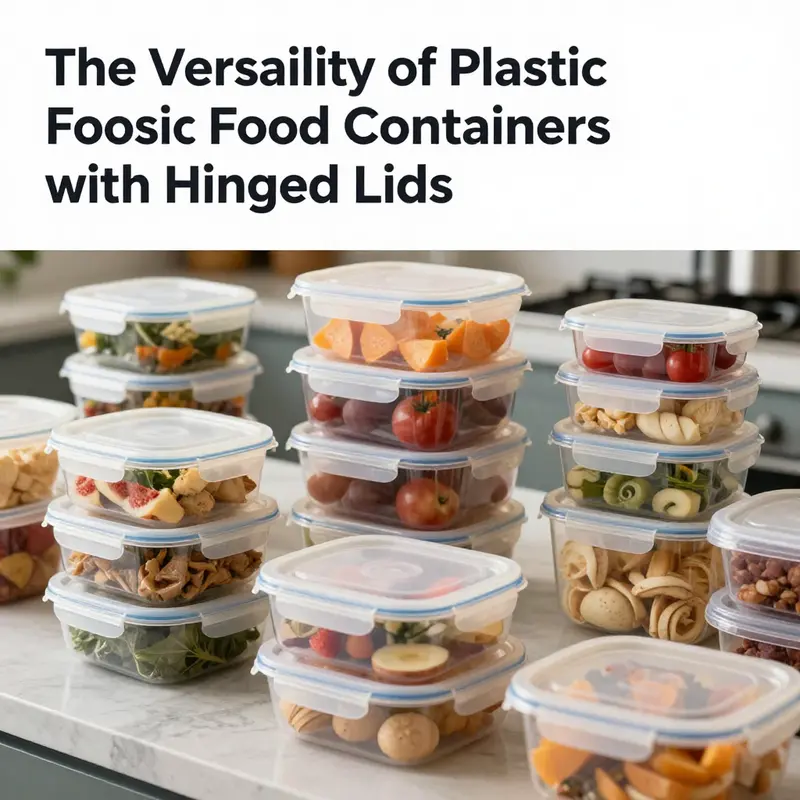
Plastic food containers with hinged lids have become essential for various food service operations, including bubble tea shops, restaurants, and catering services. Their innovative design offers convenience, safety, and functionality, making them a popular choice. This article delves into the materials used in these containers, specifically PET and PP, examines their environmental impact, explores current market trends, and highlights the wide range of applications in the food industry. Through this comprehensive exploration, you will see how hinged lid containers can enhance your business and meet the evolving demands of consumers.
Clarity, Convenience, and Compliance: How PET and PP Shape Hinged-Lid Plastic Food Containers
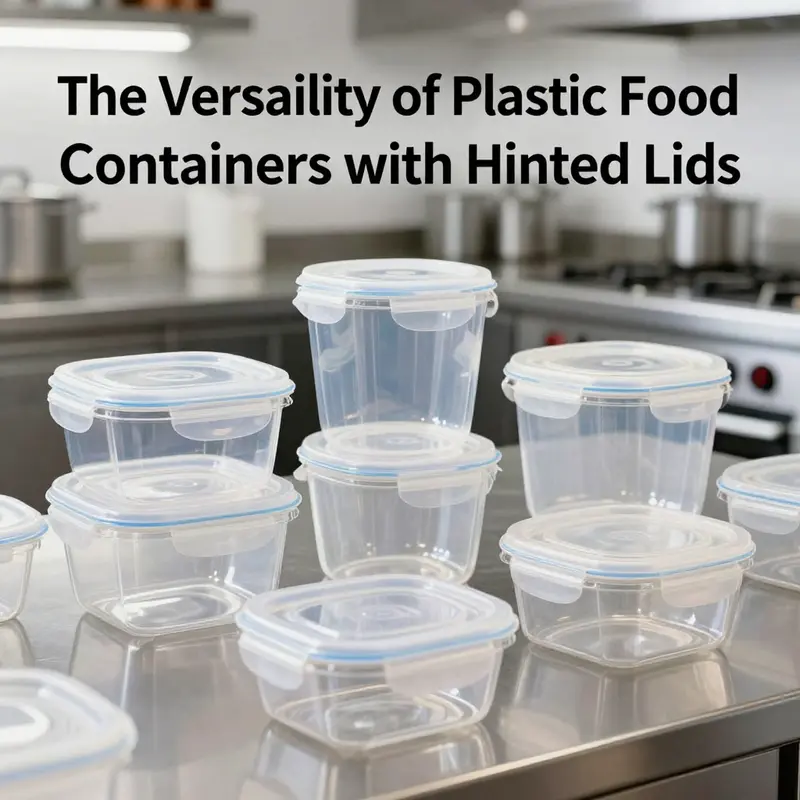
Plastic food containers with hinged lids occupy a distinctive place in the modern food system. Their design marries practicality with safety, providing a self-contained, easy-to-use vessel that travels from kitchen to consumer with minimal risk of spills, contamination, or loss of content. The lid, fused to the container in a single piece, becomes more than a closing device; it is a functional hinge that supports one-handed operation, rapid access to the food inside, and a storage solution that keeps items organized in transit. At the core of this dependable format are two polymers that dominate the market: PET and PP. Each brings its own blend of properties, advantages, and limitations, and together they shape the way retailers, food-service operations, and households think about freshness, convenience, and sustainability. To understand why hinged-lid containers lean so heavily on PET and PP is to recognize how material science translates into everyday practicality, regulatory compliance, and evolving consumer expectations.
When we consider PET, or poly(ethylene terephthalate), we are looking at a material whose value proposition revolves around visibility, rigidity, and a robust barrier. The clarity of PET makes it a powerful tool for showcasing the contents of a container. In the world of fresh produce, salads, and ready-to-eat meals, that glass-like transparency invites consumer trust by allowing a quick visual assessment of freshness and quality. Beyond beauty, PET provides a meaningful barrier to gases and moisture relative to many other plastics, helping to preserve texture, color, and moisture content during transport and short-term storage. In a market that prizes freshness, that barrier performance matters as much as the lid’s ability to seal. PET’s rigidity also contributes to a confident stacking and handling experience in both retail displays and kitchen backrooms, which reduces the risk of crushing during loading and unloading and supports efficient cold-chain management.
PET’s suitability for food contact is reinforced by regulatory endorsements that span major regulatory regimes. In many regions, PET containers for food contact are cleared by agencies that oversee safety thresholds and migration limits, aligning with standards such as FDA guidelines and EFSA evaluations. These approvals are not merely ceremonial; they translate into real-world assurances about what can be stored and for how long, under what temperature ranges, and with what kinds of foods. In practice, PET is often deployed for cold or room-temperature applications where the product is meant to be eaten within a few days of packaging, including chilled salads, fruit bowls, and light ready-to-eat meals. Its temperature range, while suitable for cold and some cool-to-warm scenarios, does not place it in the category of high-heat containers, where other polymers may perform more reliably. This distinction is not merely academic; it guides practical decisions in menu planning, kitchen workflows, and distribution strategies.
The other side of the coin is polypropylene, or PP. PP is the workhorse of hot, cold, and in-between packaging use cases, prized for its heat resistance and resilience. This polymer can withstand higher temperatures without permanent deformation, which makes it a natural choice for microwave-safe containers, hot meals, and portions that may be reheated in consumer kitchens or on-site in catering settings. The ability to tolerate heat without collapsing or becoming misshapen is a characteristic feature of PP that translates into tangible benefits: shorter wait times for customers who reheat, fewer concerns about leakage from sauces or soups, and a broader range of food items that can be packaged in one container without compromising performance.
In practice, PP containers with hinged lids often occupy the sweet spot for food-service operations that require both durability and reheating capability. Light in weight, stiff enough to resist impact, and cost-effective, PP-based hinged-lid containers excel in environments with high throughput and frequent handling. For many operators, the material’s heat resistance is not just a convenience; it is a requirement that supports a streamlined workflow—from the fry station or prep line to the pickup counter and, finally, into the consumer’s hands. The hinge, always attached, adds a layer of reliability that is particularly valuable in busy settings where lids can be misplaced or left unsecured. The result is a packaging solution that reduces incidents of leaks, protects the food’s integrity, and enhances user experience through predictable, one-handed operation.
The choice between PET and PP is rarely about one material displacing the other entirely. Rather, it is about aligning the container’s intended use with the right material’s strengths. PET’s clarity and barrier properties make it well-suited to visually dependent applications where freshness is a selling point, and where the product’s primary value lies in its unaltered appearance and perceived quality. PP’s heat resistance and mechanical durability, on the other hand, render it preferable for hot foods, sauces with higher viscosities, and scenarios where reheating is common. The hinged lid in both cases is designed to deliver an airtight seal that minimizes leakage and helps preserve aroma and taste, a feature that is particularly important for items that travel, sell on impulse, or are portioned for meal-prep services.
Beyond these core properties, the materials’ performance is shaped by how they interact with the lid mechanism and the overall structure. The hinge must withstand repeated use, resist fatigue, and maintain a tight seal under typical temperatures experienced from production line to consumer. In PET systems, the lid often contributes to a complete, transparent package that appeals to display aesthetics while delivering the necessary barrier performance. In PP configurations, the lid can be engineered to tolerate higher heat and still deliver a reliable seal, which is essential for containers designed to go from fridge to microwave. The synergy between polymer choice and lid design is what makes hinged-lid containers resilient across a wide range of foods—from delicate berries and leafy greens to denser fare like pasta with sauce.
The regulatory context is essential in shaping how these materials are implemented. While PET and PP are widely accepted for food contact, the specifics of compliance matter to manufacturers, retailers, and food-service operators. Regulatory approvals, such as those provided by the U.S. FDA for food-contact use and EFSA’s European assessments, outline permissible substances, migration limits, and usage conditions. In many cases, these approvals arrive with practical guidance on which types of food contact are appropriate, what temperatures are allowed, and how long products can be stored before consumption. This framework informs procurement decisions, product labeling, and quality-control protocols in production facilities. It also underscores the importance of using virgin resin in some applications to avoid contaminants that could alter taste, odor, or safety profiles, a caution that resonates with operators seeking consistency and reliability in supply chains.
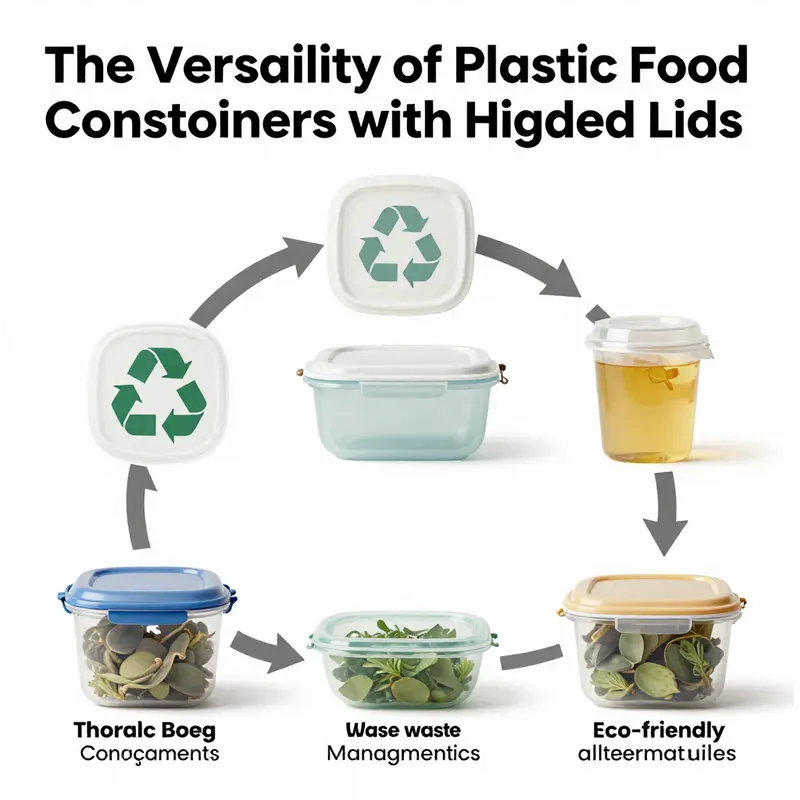
Despite the favorable properties of PET and PP, no internet of packaging story is complete without acknowledging environmental considerations. Traditional plastic containers, including some PET and PP variants, contribute to plastic waste streams and, in certain regions, to microplastic pollution if mismanaged. The industry has responded with a spectrum of approaches, from improving recycling rates to designing for recyclability and exploring bio-based or biodegradable alternatives. Recyclability is a central pillar of the sustainability narrative around PET and PP, but it is not a panacea. It depends on post-consumer collection, sorting, and processing infrastructure, as well as the compatibility of these materials with existing recycling streams. Consumers, brands, and retailers increasingly scrutinize end-of-life outcomes, prompting ongoing innovation in resin formulations, labeling, and take-back programs. Some newer models of PP and related materials emphasize compostability or bio-based feedstocks; these options promise reduced carbon footprints but often come with trade-offs in barrier performance, heat tolerance, or cost. The trade-off calculus becomes part of the decision-making process for product developers who must balance performance with environmental responsibility.
At the most practical level, the decision between PET and PP hinges on the intended use and the product’s lifecycle within the supply chain. PET’s strength lies in presentation and cold-chain fidelity, making it ideal for visually appealing, ready-to-eat meals and delicate produce that benefit from a transparent, airtight environment. PP’s strength lies in resilience and versatility, supporting hot-fill, reheating, and tough handling in fast-paced environments. The hinged lid’s role is to bridge these two material personas, delivering a secure seal that protects flavor, aroma, and texture during transport while enabling consumer-friendly operation at the point of consumption. For businesses navigating sourcing, customization, and branding, the choice between PET and PP becomes a matter of aligning packaging performance with product performance.
In the broader context of packaging strategy, the hinge-lid container is not just about material selection. It is part of a complete packaging ecosystem that includes printability, stacking efficiency, seal integrity, and compatibility with branding goals. The aesthetic of a container—whether it remains crystal-clear to maximize visibility or adopts a more opaque, heat-tolerant profile—contributes to shelf appeal and consumer perception. The lid’s design, often integrated into the body through a living hinge or a robust locking mechanism, affects not only usability but also how brands communicate safety and freshness to shoppers. The integration of material science with ergonomic design yields a product that can endure the rigors of a bustling food-service operation while delivering a simple, reliable user experience to the consumer.
To illustrate a practical design consideration, imagine a take-away scenario where a container must preserve a delicate balance between moisture retention and visual appeal. In such cases, PET can deliver the transparency that showcases the food while maintaining sufficient barrier properties for the expected shelf life. For meals intended to be reheated, a PP-based solution can provide a more forgiving thermal profile, reducing the risk of lid warping or seal failure during microwaving. The hinge in either case plays a decisive role: it is not merely a hinge but a seal, a life-line that keeps sauces contained and textures intact from the moment the product is sealed at the point of production to the moment it is enjoyed by the customer. This functional continuum—visibility and protection on the one hand, heat tolerance and durability on the other—embodies why PET and PP remain central to hinged-lid packaging strategies.
From a procurement perspective, this decision is also about risk management and supply resilience. Suppliers that offer food-grade PET and PP resins compatible with hygienic manufacturing processes provide the foundation for consistent, scalable packaging programs. The opportunity to customize container geometry, lid closure geometry, and branding elements through OEM/ODM partnerships further strengthens a brand’s ability to differentiate on shelf and at the point of sale. In addition to meeting regulatory requirements, these partnerships help ensure that the packaging performs as required in real-world usage—from cold-case storage to hot-delivery routes—without compromising safety or quality. The net effect is a packaging solution that supports a reliable cold chain, minimizes waste from leaks, and reinforces consumer confidence through visible, tactile cues of freshness.
The literature that underpins these choices also points to the importance of informed consumer communication. Clear labeling that communicates safe reheating instructions, temperature tolerance, and recyclability can enhance trust and promote proper disposal. While the hinge-lid design supports functional performance, it is the combination of material properties, regulatory clarity, and environmental stewardship that ultimately defines a package’s success in busy retail and food-service ecosystems. As markets evolve, the conversation around PET and PP will continue to expand to include more sophisticated recycling technologies, more precise regulatory guidance, and, increasingly, innovations in material science that push the boundaries of what the lid and body can do together without compromising safety or sustainability. The hinge, in this sense, becomes a symbol of packaging ingenuity—a small mechanism with a large footprint in how people experience, trust, and reuse packaging in daily life.
For readers who want to anchor these insights in practical procurement and design, one can look to supplier catalogs and technical resources that discuss the range of container sizes, lid stiffness, and compatibility with various foods. A representative approach is to explore bulk options that provide room for customization while maintaining strict food-grade standards and consistent performance. This is where the dialogue between material choice and container design becomes most tangible: the material informs the seal’s reliability and temperature tolerance, while the lid’s engineering determines how easily a consumer can access the contents without compromising the seal when the lid is closed again. In this way, PET and PP do more than define material performance; they frame the entire user experience around convenience, safety, and trust.
Another layer of consideration emerges when looking at the end-of-life pathway. Recyclability and waste management infrastructure influence not only environmental outcomes but also regulatory and consumer expectations. In regions with robust recycling streams, PET’s recyclability is a significant selling point, attracting brands that aim to minimize their environmental footprint. PP is frequently highlighted for its own recyclability and its compatibility with a wide array of recycled-content applications, from food-grade resins to consumer goods. Yet the practical reality is that recycling rates depend on local systems, consumer participation, and the quality of the recycled material stream. This means that even with high intrinsic recyclability, the container’s ultimate sustainability rests on the full chain—from production to post-consumer recovery. In this light, the hinged-lid container becomes a focal point for sustainability discourse: a sturdy, recyclable package that also invites ongoing improvement in collection, sorting, and processing. The result is a packaging narrative that is as much about system-level optimization as it is about the properties of PET and PP alone.
The discussion above weaves together material science, regulatory oversight, performance considerations, and sustainability imperatives. It reveals why PET and PP remain central to hinged-lid plastic food containers and why those two resins will continue to dominate product development in this space. The hinge is not a mere feature; it is a critical interface that ties together the release of flavor with the precision of a seal, the visibility of fresh content with the protection of its integrity, and the expectations of a consumer who seeks reliability in a product that is both convenient and safe to eat. As designers and buyers navigate changing consumer preferences and evolving regulatory landscapes, PET and PP provide a stable core around which future innovations—such as advanced barrier systems, improved recyclability, and even smarter packaging concepts—are likely to evolve. In this ongoing evolution, the hinged-lid container remains a practical embodiment of how materials science translates into everyday utility, environmental accountability, and continued trust in packaged foods.
Internal link reference: For a practical example of a take-away packaging option that leverages lid design and material choices in bulk supply, see the catalog entry described as PP paper lid take-away salad bowl. This resource illustrates how lid integration, material selection, and scalable customization come together in real-world packaging systems. PP paper lid take-away salad bowl.
External resource for deeper regulatory context: https://www.fda.gov/food/food-contact-materials
null
null
null

null
Sealed Access, Visible Freshness: Hinged-Lid Plastic Containers in Food Service and Retail
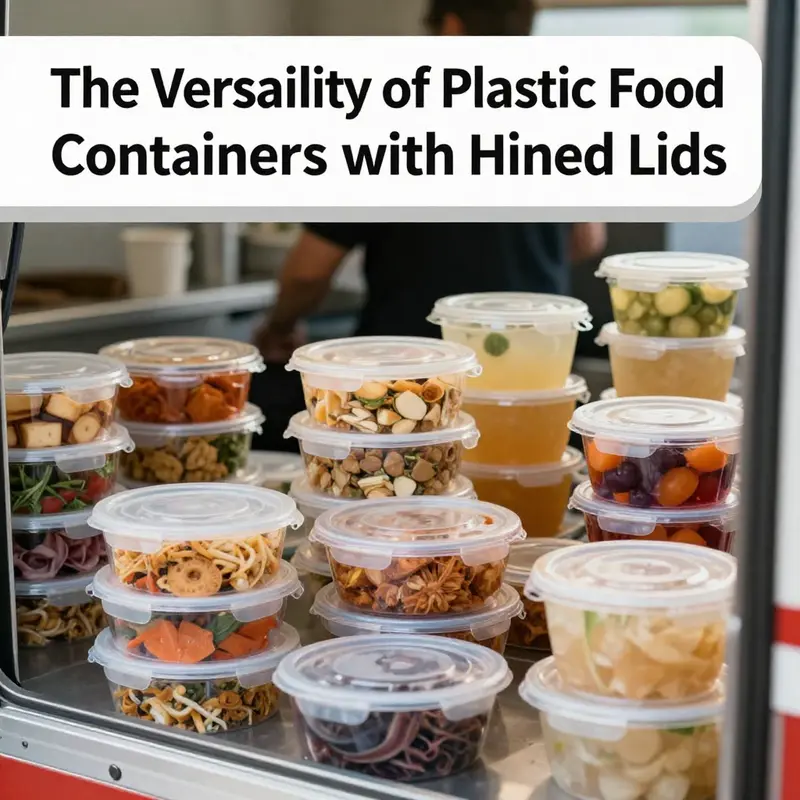
Hinged-lid plastic food containers have become a quiet workhorse of modern food service and retail. Their value rests not in flashy innovation but in a disciplined blend of practicality, hygiene, and simplicity. The design keeps the lid attached to the base, enabling one-handed operation, which translates into faster service, fewer dropped lids, and less waste from mislaid packaging. Material choices like polypropylene (PP) and polyethylene (PE) are more than mere ingredients; they determine how contents stay fresh, how heat or cold is managed, and how easily the container can be recycled or repurposed after use. The hinge mechanism—small in appearance but substantial in effect—allows staff to access the contents quickly, check portion sizes, and reseal securely for transport or storage. In a landscape where grab-and-go is the norm, such containers offer a dependable, low-friction experience that aligns with the pace of service and the expectations of today’s shoppers. The transparency typical of many PP and PE designs further strengthens this alignment by letting customers see the product without opening the package, a feature that supports trust and appeal on busy shelves or in busy kitchens.
In practice, the appeal of hinged-lid containers in food service extends beyond speed. The secure seal they provide protects portions during transit, whether a hot entrée travels across a dining room or a cold salad moves through a delivery window. The sealed environment reduces the risk of leaks—especially important for dishes with sauces, dressings, or gravies—and helps maintain the intended texture and aroma. For staff, the one-piece design reduces handling steps, which can translate into lower contamination risk and a smaller footprint on the prep line. For customers, a trustworthy seal offers reassurance about freshness and tamper-evidence, a consideration that weighs heavily in both takeout and store-based purchases.
The materials that underpin these advantages—chiefly PP and PE—also carry implications for safety and shelf life. PP is valued for its heat resistance, making it compatible with reheating in some cases and suitable for items that might require brief warming before consumption. PET, when used, provides clarity and rigidity that support product visibility, making it a favorite for ready-to-eat meals, fruit cups, or salads where appearance matters as much as content. Each material brings its own regulatory and environmental considerations. For instance, food-contact plastics must meet safety standards that limit chemical migration under typical use conditions and temperatures. When temperatures rise, even well-behaved plastics can become more permeable to certain compounds, which is why guidelines emphasize appropriate temperature ranges and careful selection of materials for hot foods.
Retail settings benefit particularly from the combination of transparency and durability. A clear hinged-lid container on a supermarket shelf invites inspection without removing the lid, letting shoppers gauge freshness and portion size at a glance. This visibility is powerful in categories like pre-packaged produce, yogurt, fruit cups, and ready-made meals, where consumer confidence is closely tied to apparent quality. In many stores, shoppers value the ability to reseal a container if they don’t finish a product in one sitting. The curtailment of waste is not merely a consumer virtue but also a business one, as reusable or easily sealable containers encourage reuse or longer storage, and they reduce the frequency of product returns or replacements due to perceived spoilage. The practical benefits of a hinged lid thus echo in the economics of inventory management, shelf life, and customer satisfaction.
The broader packaging ecosystem often frames these hinged-lid solutions in terms of the interplay between performance, cost, and sustainability. In the short term, many operators prioritize reliable sealing and predictable supply chains. The hinge mechanism, while appearing simple, adds a dimension of reliability; it minimizes the risk of lids detaching during transport and reduces the likelihood of misplacing components during busy shifts. From a cost perspective, the levers are straightforward: standard sizes enable economies of scale, while customization—such as specific lid geometries or branded impressions—offers a route to differentiation without sacrificing core functionality. Custom branding, when pursued, becomes a value-add rather than a mere adornment, reinforcing brand presence on the consumer’s table and in the driver’s hands during delivery. A well-chosen hinged-lid system can thus become a strategic asset that harmonizes operational efficiency with brand storytelling.
On the regulatory front, the safety and suitability of hinged-lid packaging are framed by a mosaic of standards across jurisdictions. In many markets, the focus is on safe migration of chemicals from plastic into food, especially under elevated temperatures or when contact is prolonged. Standards scrutinize the materials used, the compatibility with certain food types, and the integrity of the seal under typical handling conditions. In some regions, specific guidance addresses the migration of compounds from plastic into acidic or fatty foods, while other bodies emphasize the overall performance of the packaging in preventing contamination and leakage. A key aspect of compliance is ensuring that the chosen material adheres to food-grade classifications and that the product is certified for use with the intended food categories. These rules are not mere bureaucratic formalities; they reflect a shared understanding that packaging must protect consumers while preserving the sensory qualities of the food they purchase. At the same time, environmental and sustainability expectations increasingly intersect with safety standards. Consumers and regulators alike are asking how such containers can be recycled, how they can be designed for compostability where feasible, and how their production and end-of-life impacts can be reduced through material choices and process optimization.
The sustainability narrative around hinged-lid containers is nuanced. Critics rightly point to the environmental footprint of conventional plastics, including non-recyclability, microplastic risk, and reliance on fossil fuels. The industry’s response has been multi-faceted and pragmatic. Some designs employ recyclable PP or PET, with clear pathways for recycling streams that can accept these materials. Others explore biodegradable or compostable variants, especially for single-use contexts like takeout or deli cases, where the volume of waste is high and a composting option could mitigate environmental impact. Yet the transition is not automatic. Real-world sustainability must account for waste infrastructure, consumer behavior, and the practicality of recycling or composting programs in a given locale. In parallel, some manufacturers pursue design-for-recycling initiatives: minimizing colors, coatings, and lamination, or using monomaterial constructs that ease the separation and processing in recycling facilities. The tension between performance and environmental stewardship remains central to product development and procurement decisions.
For businesses, the decision to adopt hinged-lid containers is not merely about finding a container that works; it is about selecting a system that aligns with service models, customer expectations, and regulatory obligations. When a restaurant shifts toward a hinged-lid system for its ready-to-eat and delivery offerings, it redefines how staff approach service, how inventory is managed, and how the brand appears in consumer hands. The practical benefits—one-handed opening, quick access to contents, reduced spill risk, and the visual appeal of a transparent base—translate into tangible outcomes: faster throughput on busy lines, higher customer satisfaction, and a more cohesive takeout experience. In retail, the same logic applies but on a shelf, where the container itself becomes a visible ambassador for freshness and quality. The consumer’s eye is drawn to the promise of a neatly sealed, clearly displayed product, and the packaging carries both the product and the brand into the consumer’s daily routine.
From a supply-chain perspective, hinged-lid solutions encourage standardization. A range of sizes and configurations allows operators to stock a relatively small family of formats that can handle multiple product categories, from fruits and vegetables to salads, ready-to-eat meals, and desserts. This simplification reduces obsolete stock and simplifies training for kitchen staff and retail associates. It also supports a more efficient packaging pipeline: machines and operators alike benefit from predictable geometries and consistent closure mechanisms. In settings where customization is important, vendors often offer OEM/ODM services that enable brands to tailor lid shapes, locking mechanisms, and branding motifs without sacrificing core performance. While these customization options introduce an additional layer of planning, they can yield a stronger market position, particularly for retailers seeking to differentiate in a crowded aisle or for food-service operators looking to reinforce a specific aesthetic or thematic identity.
The consumer experience, finally, is the compass that guides how hinged-lid containers are used and perceived. A shopper walking down a supermarket aisle expects to see packaging that communicates freshness through clarity and cleanliness. The ability to inspect contents through a transparent base, together with a dependable seal that preserves texture and moisture, contributes to confidence at the moment of choice. For meals and side dishes that people may store for later, the resealability of the container offers practical value: leftovers can be safely stored and transported, with the lid returning to a secure position without requiring a separate piece. This combination of visibility, security, and convenience reinforces the broader narrative of modern food packaging, in which form and function converge to support consistent quality from the shelf to the consumer’s table.
Within this landscape, the path forward for hinged-lid containers is not simply about improving a well-established design. It is about balancing performance with responsibility, ensuring that the most efficient system for one business context does not become a burden in another. It means continuing to push for materials that deliver safety and appearance while expanding opportunities for recycling, composting, and responsible end-of-life management. It means embracing consistent standards that support safe usage across temperatures and food types, while recognizing that customers increasingly expect packaging that aligns with their values. The hinge, though a small mechanism, becomes a hinge point for a broader conversation about how food is packaged, transported, and enjoyed—whether in a sunlit grocery aisle, a fast-paced kitchen, or a door-delivery experience that begins and ends with trust.
In a sense, hinged-lid containers are not just packaging. They are the hands that grip a meal, the shield that preserves freshness, and the frame that presents a product to a consumer who is making fast, value-driven choices. Their success lies in staying faithful to their core strengths: secure sealing, intuitive operation, and clear visibility. They must also adapt to the evolving priorities of sustainability, safety, and regulatory compliance. When done well, these containers become a quiet backbone of the food service and retail ecosystems, supporting speed, hygiene, and satisfaction without demanding the limelight. They enable cooks to focus on craft, retailers to present products with confidence, and customers to trust what they take home or eat on the go. And because they are designed to perform reliably, they can peacefully coexist with other packaging formats in a diversified retail environment, where different needs require different tools.
To illustrate how these containers function in real-world settings without naming specific products, consider the kinds of packaging options that are commonly seen in the take-out and self-serve sections of stores and eateries. In many retail and food-service environments, the choice often centers on a take-away bowl with lids that balances visibility, protection, and convenience. This approach—an entry point for standardization—allows menus to evolve without sacrificing performance. Operators can scale up or down, depending on demand, while still delivering a consistent customer experience. It is a practical reminder that the most effective packaging solutions are often a blend of simple mechanisms and robust material science, rather than the latest novelty in design.
As this chapter has traced, the applications of hinged-lid plastic containers in food service and retail stretch across temperature ranges, product types, and consumer behaviors. They support rapid service, preserve product integrity, and present food in an appealing way. They align with regulatory expectations by providing a safety framework that protects consumers and a pathway toward responsible waste management, even as markets push for greater sustainability. The hinge is more than a feature; it is a conduit for efficiency, hygiene, and trust—essential elements in a packaging ecosystem that must satisfy cooks, retailers, and customers alike as they navigate the complex demands of modern food culture.
External resource: https://ec.europa.eu/environment/policy/strategy/sup/directive_en.htm
Final thoughts
Plastic food containers with hinged lids are more than just packaging; they represent a practical solution for a variety of food service needs. Understanding the materials, environmental concerns, shifting market dynamics, and practical applications can empower businesses to make informed decisions. By opting for high-quality, food-safe containers, brands can enhance their offerings, comply with safety standards, and respond to consumers’ growing environmental consciousness. Embrace these innovative solutions to elevate your food service experience and align with modern expectations.