
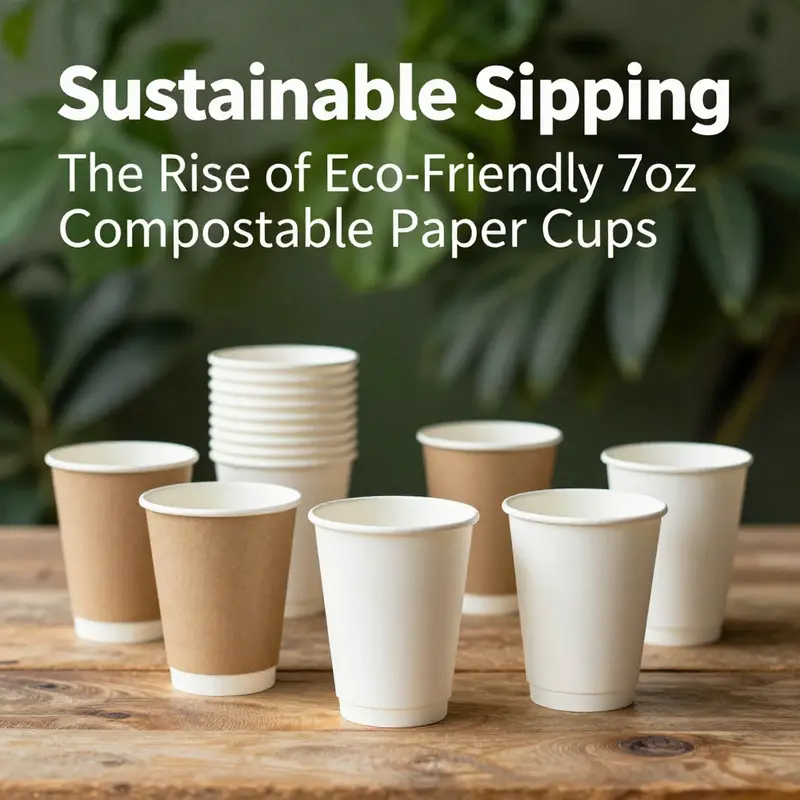
In an era where sustainability takes precedence, eco-friendly 7oz compostable paper cups are revolutionizing the beverage industry. These cups, made from renewable materials, cater to businesses that prioritize environmental responsibility while delivering excellent customer experiences. The intricate details of the materials composed in these cups not only ensure functionality but also align with biodegradable standards. This article will explore the material composition, environmental impact, market demand, and various real-world scenarios for utilizing these eco-friendly cups, ultimately showcasing how they can meet the growing consumer demand for sustainable solutions.
Rooted in Renewal: The Material Architecture of 7oz Eco-Friendly Compostable Cups
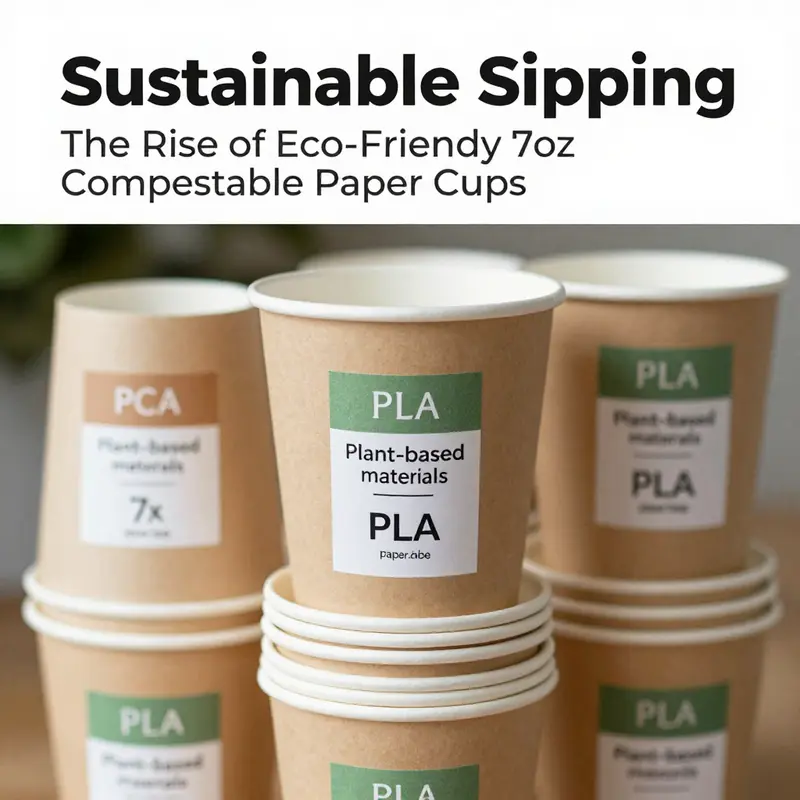
Material choice sits at the heart of any sustainability claim about single-use cups. When a consumer reaches for a 7oz cup, the decision is not only about a beverage and a brand; it is a small bet on how the planet will fare after the last sip. In the most widely adopted designs, the cup is built around recycled paper as the primary body. This choice—to use recycled paper as the base structure—does more than simply reuse waste. It reduces the demand for virgin wood pulp, which translates into fewer trees harvested, less energy spent on pulping, and a downstream reduction in water and chemical use associated with virgin fiber production. The result is a cup that begins its life with a lower ecological footprint than conventional single-use containers. Yet the story does not end with the recycling bin. The real challenge lies in making the cup function reliably through a hot or cold beverage, while still being able to meet end-of-life expectations in compost facilities. To achieve this, manufacturers typically introduce a plant-based biopolymer lining. Polylactic acid, or PLA, has become a common option in this space. Derived from renewable resources such as corn starch or sugarcane, PLA serves as a barrier between the liquid and the paper substrate. It is designed to be compostable under industrial conditions, where temperatures, moisture, and microbial activity meet specific thresholds. In practice, this means the inner lining can prevent leaks and preserve heat or freshness, while also aligning with a compostability trajectory rather than a fossil-based plastic end-of-life. The shift away from petroleum-based linings toward PLA marks an important transition in how the industry frames responsibility for waste streams. While PLA is not a universal solution, its presence in 7oz cups meaningfully reduces the potential for microplastic contamination that can occur when traditional liners degrade. The material choice communicates a broader commitment to circular thinking: the cup can be broken down in a controlled composting facility, ideally returning its organic matter to the soil, rather than lingering for centuries in a landfill.
Beyond PLA, there are other material strategies that advance the same end goal. Some cups incorporate natural wax coatings, such as candelilla or soy wax, to bolster moisture resistance. These waxes can act as protective barriers without introducing non-renewable plastics into the product’s lifecycle. In parallel, cellulose-based films or thin biopolymer layers may be used to further enhance the cup’s barrier properties. The combined effect of a recycled paper core with plant-based coatings is a product that can withstand the rigors of daily use—handling hot beverages, long carries, and occasional condensation—without relying on conventional plastic linings. The result is a cup that not only carries a drink but also carries a story about resource stewardship. To emphasize the compatibility of custom branding with sustainable materials, many suppliers offer customization options that preserve the eco-friendly profile. For example, one widely accessible option centers on printed branding that adheres to the same compostability standards as the cup itself. This combination of branding and bio-based materials can be found in campaigns that showcase a cup with a printed logo while maintaining the integrity of the compostable lining. In practical terms, this often means a sleeve-free, clean surface where inks and finishes are chosen for low migration and compostability. A related pattern in the market is the use of natural coatings or inks that avoid heavy metals and problematic additives. When brands align these design choices with established compostability criteria, the cup becomes a credible vessel for sustainability messaging without compromising the end-of-life outcome. For readers who want to explore an example of branding that remains faithful to eco-friendly principles, a representative option exists in online catalogs featuring eco-friendly-printed-logo-paper-cup-take-away-coffee-cup-8-oz-12-oz-paper-cup, which demonstrates how branding can be embedded into a compostable package without compromising the material integrity. eco-friendly-printed-logo-paper-cup-take-away-coffee-cup-8-oz-12-oz-paper-cup
At the same time, there is nuance in how these materials are perceived across different regions and facilities. The term compostable, carefully used, implies more than a purely biodegradable disposition. These cups are designed to break down within a defined period when placed in an appropriate composting environment—typically an industrial facility that maintains controlled temperature, humidity, and microbial activity. Standards such as ASTM D6400 in the United States and EN 13432 in Europe establish the framework for what constitutes commercially compostable. They specify that a material must disintegrate under composting conditions, that it should not leave behind toxic residues, and that a certain fraction of the material must convert into biomass within a set timeframe. While these criteria are reassuring for facility operators and certifying bodies, they also set expectations for consumers and retailers about the pathways for disposal. The presence of a PLA lining, for instance, is not a universal invitation to recycle in the same feedstock as other plastics. In many municipal programs, compostable cups are diverted from standard recycling streams because the recycling infrastructure is not designed to handle PLA-laminated paper. In other jurisdictions, dedicated composting streams may be limited or uneven in coverage, which means a cup’s end-of-life outcome is heavily dependent on local waste-management realities. These realities underscore an important truth: the sustainability of a 7oz compostable cup is not solely a product attribute but a system attribute. The material design must be accompanied by clear consumer guidance and robust collection infrastructure if the lifecycle benefits are to be realized fully. This is why manufacturers and retailers increasingly emphasize messaging that links product design with disposal options available in the target market. They also invest in education around consumer behavior, so that a cup is placed in a compost stream rather than in a general waste bin. The goal is to minimize contamination and to maximize the chances that the cup will perform as intended in the circular economy. In that sense, the material choices—recycled paper, plant-based coatings, and careful barrier layers—are a formal expression of a broader philosophy: that sustainability must be embedded at every stage, from sourcing to disposal, and not merely proclaimed at the product label.
The life-cycle implications of these choices extend into the supply chain as well. Recycled paper reduces virgin wood fiber demand, but it also brings attention to the origins and quality of the recovered material. Recycled content can vary widely in terms of cleanliness, resin content, and fiber length, all of which influence processing energy, de-inking requirements, and the need for pretreatment before forming cups. The adoption of PLA or similar biopolymers introduces its own set of supply-chain considerations. The production of PLA relies on agricultural feedstocks, often corn or sugarcane, which brings questions about land use, irrigation, fertilizer application, and competition with food crops in some regions. While biopolymers reduce reliance on fossil resources, they are not carbon-free; energy inputs, emissions from farming operations, and processing energy all contribute to the product’s environmental footprint. The critical point is balance. The industry is moving toward designs that optimize resource use across the entire system: selecting high-quality recycled paper, applying biopolymer coatings that enable compostability, and maintaining barrier properties to preserve beverage quality without sacrificing end-of-life outcomes. The outcome is a 7oz cup that performs as needed in service environments while offering a more favorable profile in waste-stream analyses than traditional single-use plastics.
This balance is not free of tradeoffs, and it invites ongoing refinement. The use of PLA, for example, makes sense from a compostability perspective but can complicate recycling if streams are not carefully separated. Some facilities can process PLA without issue, but mixed streams may contaminate other recyclables, reducing efficiency and increasing processing costs. Wax coatings provide an alternative that can facilitate compostability, yet they may require careful handling to ensure they do not hinder disintegration or promote premature degradation within non-preferred environments. Likewise, cellulose-based films add another layer of barrier performance, but their availability, cost, and compatibility with printing processes can shape product design decisions. In all cases, the emphasis remains on maintaining product integrity during use while enabling the most favorable fate at end of life. The presence of end-of-life considerations in the initial design process signals a mature approach to packaging: one that seeks to minimize downstream environmental impact while preserving the consumer experience and the business practicality of mass production.
The broader market pattern supports this evolution. Consumer demand for sustainable products is growing, fueled by increased awareness of plastic pollution and the visible impacts of packaging on ecosystems. In response, many companies are redirecting research and development toward compostable solutions, seeking materials that are either derived from renewable resources or highly recyclable within a properly equipped system. Certifications and standards provide a framework to communicate reliability to customers and partners. When a cup bears a recognized compostability certificate, retailers gain a clearer signal that the product aligns with a defined disposal pathway. In practice, this creates a portfolio story that can be told to consumers who want to align their everyday purchases with their environmental values, while still receiving a reliable and convenient product at the point of purchase.
The role of customization in this context is more than cosmetic. It can be a lever for communicating the material story—how the cup is made, what it is made from, and how it should be disposed of. The industry increasingly treats branding as part of the sustainability promise, not a separate add-on. This is why the example of branding on a compostable cup is not merely about aesthetics; it signals a commitment to transparency and responsible packaging. The same holds for labeling that clarifies the disposal path and highlights any consumer actions that can improve end-of-life outcomes. In the same spirit, the cup’s surface may feature inks and coatings designed to maintain ink adhesion and color clarity without compromising compostability. The careful selection of finishes ensures that branding remains vibrant and durable during service, while the underlying material design remains compatible with compostable processing. The dynamic intersection of material science, waste management, and consumer behavior makes the 7oz compostable cup a microcosm of circular economy thinking. As markets continue to evolve, the layering of recycled fiber, bio-based barriers, and responsible finishing becomes less of a niche and more of a standard part of coffee culture and event hospitality. This ongoing evolution sets the stage for a broader conversation about how production methods and certification regimes translate into real-world outcomes, including how facilities interpret, accept, and process these innovations as they strive toward cleaner waste streams and higher recycling and composting performance.
For readers seeking practical examples of how this design approach translates into real-world choices, one can explore suppliers that emphasize the balance between compostability and branding on cups intended for take-away scenarios. This line of inquiry helps illuminate how a seemingly simple item—a 7oz cup—embodies a sophisticated design philosophy that integrates material science, environmental policy, and consumer engagement. The narrative shifts from a focus on individual components to an integrated system where every material decision—recycled paper, plant-based coating, and potential barrier enhancements—serves a shared objective: to reduce ecological footprints without compromising usability. In this light, the cup becomes a statement about how products can be both functional in daily life and responsible within the wider ecological system. And as researchers, policymakers, and industry practitioners continue to refine standards, the conversation will increasingly center on optimizing the full lifecycle—from fiber sourcing and manufacturing efficiency to end-of-life outcomes in both industrial and community-scale composting programs. The continued alignment of material choices with real-world disposal options remains essential to realizing the full environmental promise of eco-friendly 7oz compostable paper cups.
External reference and further context on industrial composting standards can be found in established global guidance, which helps frame how the compostability narrative translates into practical outcomes for facilities and households alike. For a broader context on industrial composting standards and material performance, see the external resource linked at the end of this chapter.
Beyond the Cup: The Environmental Footprint and Promise of 7oz Compostable Paper Cups in a Circular Economy
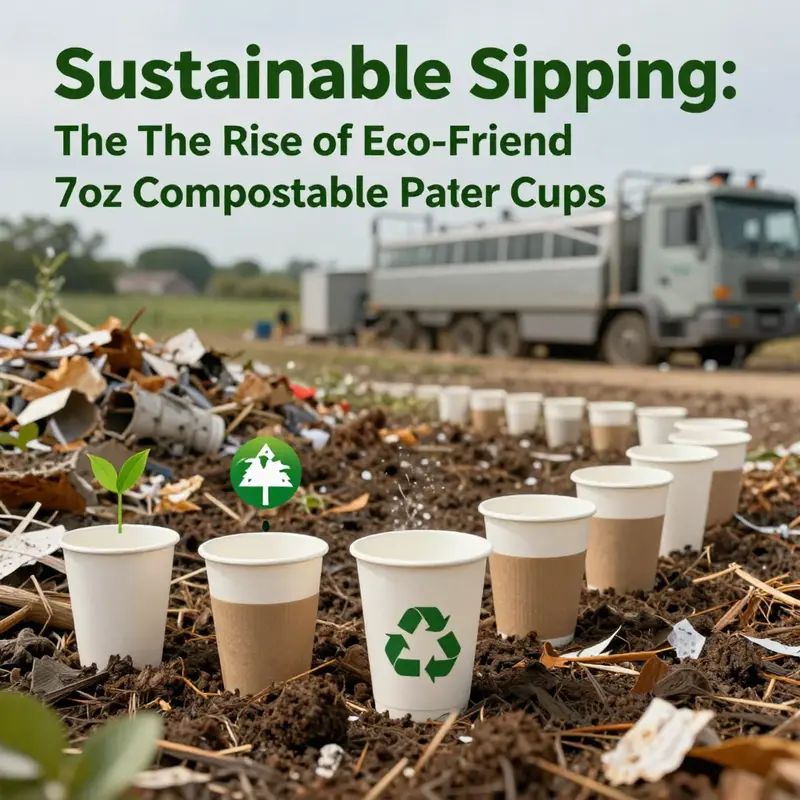
When a consumer lifts a cup of coffee or tea in a café that proudly proclaims sustainability, the act may seem simple. Yet the choice of container matters in a larger, intricate system where raw materials, production methods, end-of-life pathways, and consumer habits all intersect. Eco-friendly 7oz compostable paper cups sit at a critical nexus in this system. They are designed to replace the plastic-lined disposables that have long dominated hot beverage service, offering a pathway toward a lower fossil fuel footprint, more responsible sourcing, and a potential for true waste diversion when disposal is managed correctly. Their appeal rests not only in the idea of being compostable but in the concrete mechanisms that enable composting facilities to process them efficiently and safely. These cups are predominantly made from renewable resources, drawing on sustainably sourced wood pulp or recycled paper as the base material. Rather than relying on petroleum-derived plastics for moisture barriers, many of these cups use plant-based coatings such as polylactic acid, or PLA, which originates from corn starch or other bio-based sources. The shift from fossil-based plastics to plant-based coatings signals more than a material swap; it embodies a philosophy of cradle-to-cradle thinking. If the materials can be responsibly grown, transformed, and then reintegrated into organic matter in the right facilities, the overall life cycle can tilt toward circularity rather than linear discard. The result is a durable early step in a broader transition that includes renovations to supply chains, changes in consumer behavior, and investment in composting infrastructure.
Yet the narrative cannot stop at material choice. End-of-life disposal is the most visible and, paradoxically, often the most challenging piece of the puzzle. When these 7oz cups are deposited in a system equipped with industrial composting capabilities, the high temperatures, controlled moisture, and specific aeration conditions accelerate disintegration and biodegradation. In such environments, these cups can break down into organic matter within roughly 90 to 180 days. This timeframe contrasts sharply with traditional plastic-lined paper cups, which can persist for centuries and contribute to microplastic pollution in soils and waterways. Certification bodies, such as the Biodegradable Products Institute (BPI), lay out rigorous criteria for disintegration, biodegradation, and the absence of toxic residues. These standards are not cosmetic labels; they signal a tested performance in controlled facilities and help ensure that what is marketed as compostable actually composts in practice.
Despite the promise, end-of-life success is contingent on more than the product itself. The value of compostable cups rises only when waste management infrastructure supports the intended pathway. In regions where industrial composting is scarce or unevenly distributed, cups may end up in landfills where decomposition rates are slow and oxygen limitations hinder microbial activity. In such settings, the ecological advantage may be minimized or erased. Even more subtly, the presence of compostable materials in recycling streams can pose contamination risks if sorting facilities are not aligned to separate compostables from conventional recyclables. Clear labeling, consumer education, and well-defined collection streams become essential complements to the product’s design. Without them, the best-case scenario—rapid composting—remains an unmet potential rather than a realized gain.
From a lifecycle perspective, the overall environmental profile of compostable paper cups shows meaningful benefits when compared with virgin plastic options and even with some recycled-content plastic cups. Life cycle assessments indicate that the production phase—driven by renewable feedstocks and plant-based coatings—tends to incur energy and water use. Still, the greenhouse gas emissions associated with compostable cups are often lower than those of plastic-lined alternatives over the entire cradle-to-grave process. A 2025 report from a leading packaging industry analysis group highlights that when compostable paper cups are evaluated alongside rPET cups containing post-consumer recycled content, the combination of the two—one favoring renewable materials, the other prioritizing recycled content—can reduce CO₂ emissions by as much as 40 percent compared to virgin plastic options. This figure underscores a broader point: the environmental advantage of compostable cups is not tied to a single metric but to a portfolio of improvements across materials, energy use, and end-of-life outcomes. Plant-based coatings, while sometimes the subject of debate about agricultural inputs, also stimulate agricultural innovation and support a circular economy by linking bio-based feedstocks with waste management infrastructure that can return organic matter to the soil in a controlled, beneficial way.
Even with compelling data, the real-world impact hinges on consumer behavior. Cafés, event organizers, and offices increasingly frame sustainability not as a single purchase decision but as a systems choice. In practice, this means offering clearly labeled compost receptacles, providing straightforward disposal instructions, and partnering with local composting programs that can accommodate a steady stream of beverage cups. It also means recognizing that compostability is not a universal property across all environments. In communities without industrial composting, the cups may not perform as intended. This reality invites a broader conversation about municipal investment in green waste infrastructure, public-private partnerships with compost facilities, and the design of packaging that aligns with available end-of-life options. In parallel, education campaigns can help consumers distinguish between items that are truly compostable in industrial facilities and those labeled as home-compostable, which require different conditions and timeframes.
Design considerations further influence environmental performance. The barrier properties of a paper cup—its resistance to moisture and heat—must be maintained to provide a reliable drinking experience while still allowing for compostability. The choice and thickness of the PLA coating, the degree of liner separation, and the paper grade all affect not only performance but also the rate and completeness of composting. Optimizing these attributes involves a delicate balance: reducing petroleum dependence without compromising the structural integrity that makes hot beverages practical. Advances in bio-based coatings, along with improvements in papermaking and barrier engineering, offer pathways to lighter, more efficient cups that still perform under the demanding conditions of day-long events or busy cafe counters. The outcome is a product designed for reuse in the sense that it can be processed through a closed-loop system, returning nutrients to soil instead of lingering as waste.
The market response to these cups has grown as consumer willingness to pay a premium for sustainability increases. The demand signals reach beyond the café door and into the broader event economy, hospitality, and workplace sectors. Businesses adopting compostable 7oz cups often cite not only environmental goals but also branding benefits. The opportunity to showcase a commitment to sustainable practices—through labeling, certifications, and even optional customization—appeals to a growing segment of eco-conscious customers. In turn, suppliers have expanded offerings to meet this demand, combining compliance with user experience. A practical example can be seen in platforms that provide eco-friendly, printed, logo-bearing options for coffee cups, enabling brands to communicate stewardship while delivering reliable product performance. For readers curious about how such products are positioned in the market, one relevant supplier page demonstrates how eco-friendly branding and compostable packaging can align with corporate sustainability goals. eco-friendly-printed-logo-buy-paper-cup-take-away-coffee-cup. This kind of offering highlights how sustainability considerations intersect with design, marketing, and customer experience, turning a disposable item into a tangible signal of responsibility.
Against this backdrop, the conversation about compostable cups inevitably circles back to policy and standards. International guidelines for compostability, such as those embodied in ASTM D6400 and EN 13432, provide a framework within which products can be evaluated for performance under industrial composting conditions. These standards specify disintegration, biodegradation, and the absence of toxic residues, helping ensure that the product performs as claimed and that end-of-life streams remain safe for workers and ecosystems. Consumers benefit when retailers and institutions present clear statements about which standards their cups meet and where certified facilities operate. The result is a more transparent marketplace where environmental attributes are testable, comparable, and traceable. The confluence of material science, waste management infrastructure, and consumer awareness creates a pathway toward genuine sustainability rather than a mere trend.
In sum, the environmental impact of eco-friendly 7oz compostable paper cups rests on a triad of successful inputs: responsible material choices and production methods, robust end-of-life infrastructure, and informed consumer behavior. Each element strengthens the others. When a community, a business, and a waste facility align around compostability, the cups move from a disposable habit into a component of a functioning circular economy. The scientific literature and industry analyses support a cautious optimism: the emissions reductions and resource efficiencies embedded in these cups are real, and they compound as the system matures. The key is not a solitary miracle of a single product but a coordinated effort to build closed-loop pathways that maximize composting outcomes while minimizing contamination and leakage into landfills. As the market evolves, so too must the education, labeling, and logistics that help people place these cups in the correct stream. Only then can the environmental promises articulated in research and marketing translate into tangible improvements for soil health, urban cleanliness, and climate resilience.
Looking ahead, small but meaningful improvements can multiply over time. Continued refinement of bio-based barriers can reduce energy intensity in production, while standardized labeling can simplify sorting for households and organizations alike. Investment in municipal composting capacity remains essential, particularly in regions where waste streams lack dedicated compostable-item collection. In such places, expanding the reach of composting facilities and improving access to guidance on how to participate in these programs will determine how much of the potential benefit translates into real-world environmental gains. The conversation about eco-friendly 7oz compostable paper cups is therefore not a single checkbox on a sustainability report; it is a continuous, collective work to align product design, waste management, and consumer practice with the goal of reducing pollution, conserving resources, and closing the loop on organic materials. As more stakeholders recognize the value of a coherent, shared system, the cups that once symbolized a simple convenience can become emblematic of a more responsible, circular future.
External resource for standards and certification details: For authoritative information on compostability certifications and performance criteria, consult the Biodegradable Products Institute at https://www.bpiworld.org.
Small Cup, Big Footprint: Economic Viability of 7oz Compostable Cups in a Circular Beverage Future
The conversation around sustainability often centers on grand gestures and high-profile campaigns, yet a quiet, constant shift is taking place in the everyday ritual of coffee breaks and tea breaks. The 7oz compostable paper cup sits at a crossroads where consumer expectation, regulatory pressure, and manufacturing ingenuity intersect. It is small in size but large in potential, functioning as a practical entry point for the broader transition from conventional single-use plastics to packaging that can re-enter the material cycle. These cups are designed for the realities of modern service environments: they need to be reliable enough to hold hot beverages, lightweight enough to be carried by a busy customer, and compatible with composting infrastructures that can honestly offset their production footprint. As a result, the narrative around these cups expands beyond the simple act of drinking. It becomes a case study in how material choices, governance, and consumer behavior converge to shape a more sustainable economy of packaging.
The materials science behind 7oz compostable cups is telling of a broader industry trend. Many of these cups rely on plant-based polymers or fiber composites that can be broken down in commercial composting facilities. The goal is to reduce dependence on petroleum-based plastics and to create products that fit within established composting standards so that the end-of-life outcome aligns with the initial environmental intention. Certifications that set clear criteria for compostability, such as those aligned with recognized standards, help ensure that a cup labeled as compostable behaves as promised when it reaches the right kind of facility. In practical terms, the aspiration is to engineer a cup that can decompose within a defined timeframe and under specific conditions, without leaving behind harmful residues. The consequence is a packaging solution that can be integrated into waste streams in a way that supports a circular economy rather than contributing to long-term accumulation of waste in landfills. Yet achieving this requires more than a shiny certification. It requires a chain of custody across sourcing, manufacturing, distribution, use, and end-of-life processing, with clear signals to consumers about how to dispose of the cup responsibly.
When these cups are deployed in cafés, food courts, and event settings, the appeal extends beyond the environmental rhetoric. In a market where consumers increasingly associate sustainable choices with quality and responsibility, 7oz compostable cups serve a dual purpose: they meet practical needs and signal a brand’s commitment to the environment. The size itself—sufficient for a standard espresso or a small tea—fits many daily routines, making the cups a convenient conduit for sustainable habits. In this sense, the economic value of the cup is inseparable from its environmental rationale. A café that adopts compostable cups can leverage that choice as part of its overall storytelling—an authentic alignment of operations and values that resonates with guests who are more discerning about where their money goes. The impact is not merely symbolic; it translates into loyalty and willingness to pay a premium for offerings that respect the planet as much as they respect the customer.
Market dynamics reflect this alignment between environmental intent and commercial viability. The global packaging market for compostable products has gained momentum as governments tighten restrictions on single-use plastics and as consumers push for transparency about where products come from and what happens after use. In the case of 7oz cups, demand is particularly pronounced in sectors where beverage service is fast-paced and deadline-driven, such as coffee chains, grab-and-go outlets, and festival environments. These are places where the speed of service matters and where the aesthetics of packaging can reinforce a premium impression. A growing share of consumers is willing to cover a modest price increase to support sustainable packaging, especially when the packaging is designed to be composted efficiently and when the brand communicates a clear end-of-life pathway. This creates a virtuous circle: higher perceived value supports stronger margins, which, in turn, funds further investment in better materials, improved manufacturing processes, and more robust certification programs.
From an industry perspective, the economics of producing compostable cups have improved significantly in recent years. Technological advances in plant-based materials, coupled with more sophisticated forming and shaping processes, have helped close the cost gap with conventional plastics. For example, innovations in pressing and forming plant-fiber composites yield durable cups that resist collapse and leakage while maintaining a light, cost-competitive profile. The durability question that once haunted early iterations of sustainable cups—concern about heat resistance, lid compatibility, and stiffness under practical use—is increasingly answered through material science and smarter design. In a crowded market, the performance characteristics of a 7oz cup can determine long-term adoption by major operators. A reliable cup that delivers a satisfying grip, maintains temperature, and retains shape during transport reduces the risk of spills and customer dissatisfaction, which in turn lowers waste and improves the overall customer experience.
Supplier responses to market demand have evolved accordingly. Manufacturers emphasize both the functional performance of the cup and the ability to customize without sacrificing environmental integrity. Brand-conscious businesses want the option to imprint logos and messaging, reinforcing corporate identity while signaling environmental stewardship. Customization is increasingly offered in a way that preserves compostability, so the branding does not undermine the end-of-life plan. In this context, the economics of customization become a strategic decision rather than a mere add-on. Even with branding, scale matters. Large orders bring unit costs down and enable producers to invest in more efficient machinery, better quality control, and tighter supply chains. In terms of price signals, markets often describe a base price range that acknowledges both the material and production costs and the premium associated with certified compostability. For large-volume buyers, economies of scale translate into competitive pricing, with the flexibility to tailor features such as lid compatibility, printing, and packaging configuration.
In evaluating the financial viability of 7oz compostable cups, several levers come into play. The most obvious is raw material cost, which is shaped by feedstock availability, harvest cycles, and feedstock diversification. A second lever is manufacturing efficiency. Modern forming lines, automated quality checks, and reduced energy consumption contribute to lower per-unit costs. A third lever is logistics. Because these cups are relatively light and compact, shipping efficiency can influence overall cost even when the unit price remains stable. Finally, the end-of-life narrative matters. When customers and municipalities recognize and reward composting, the economic case for compostable cups strengthens. Producers and buyers can plan around dependable composting facilities, ensuring that disposal pathways align with the material’s intended fate. In regions where regulatory frameworks incentivize or require compostable alternatives, the financial equations shift further in favor of sustainable options. The combination of policy drivers and consumer expectations creates an environment in which compostable 7oz cups are not simply a niche product but a mainstream option that can harmonize with broader sustainability programs.
The geographic dimension of market demand adds further nuance. In places with stringent plastic-reduction policies, such as certain states or provinces, the shift toward compostable cups is more urgent. The California example, cited in market analyses, highlights how regulatory clarity and ambitious waste diversion goals accelerate adoption. The regional dynamics matter for producers and buyers alike: it guides where capacity should grow, how supply chains should be structured, and how to tailor certifications to local waste-management realities. This is not merely a matter of compliance; it is about aligning product design with the realities of municipal facilities and substrate-specific composting streams. As regions push for more robust recycling and composting infrastructure, the 7oz cup becomes both an instrument of policy and a vehicle for brand differentiation in a crowded marketplace.
Against this backdrop, the goal is not to present compostable cups as a flawless solution but to position them as a practical component of a broader sustainability strategy. There are conditions that will determine success. First, clear communication about compostability and disposal is essential. Consumers must understand that the cup’s compostability depends on the availability of appropriate facilities and on proper disposal practices. Without that alignment, the best intentions can be undermined by mismanaged waste streams. Second, ongoing performance validation matters. Cafés and event organizers need consistent product behavior, from heat resistance to lid compatibility, across thousands of cycles. These operational assurances help sustain customer trust and brand reputation. Third, governance and standards enforcement play a critical role. Certifications must be credible and verifiable, and supply chains should be auditable so that end users can rely on what they are buying. The more transparent the journey from cradle to composting facility, the stronger the case for long-term adoption.
In this larger narrative, the environmental advantages of compostable cups extend beyond a single lifecycle. They create opportunities for closed-loop thinking where packaging is designed to re-enter the materials economy rather than accumulate as waste. The economic viability, driven by efficiency gains and economies of scale, supports broader access to sustainable options for small businesses and large enterprises alike. It becomes feasible for a café to choose a compostable 7oz option and pair it with a branding narrative that emphasizes community impact, waste reduction, and responsible sourcing. The practicality of the cup must harmonize with its purpose: to serve a quick, comforting beverage while keeping the planet’s priorities in view. When each cup is a tangible link in a longer chain of stewardship, the look and feel of the product become an expression of a larger commitment to the circular economy.
To anchor the discussion in real-world dynamics, consider how a single piece of packaging interacts with supply chain choices, consumer behavior, and public policy. The path from raw material to customer hand is not linear; it involves upstream farm or fiber supply decisions, midstream processing and manufacturing, downstream distribution to shops and events, and finally the end-of-life system. Each link offers the chance to improve efficiency, reduce emissions, and reinforce sustainability claims with measurable outcomes. The more these links are optimized, the more robust the business case becomes for investing in compostable cups, even in competitive markets where margins are narrow and consumer expectations are high. The result is a packaging option that can contribute meaningfully to a company’s environmental, social, and governance (ESG) goals while maintaining the reliability and experience customers expect from a beverage service.
As the sector continues to evolve, it is crucial to keep sight of the larger market signal: consumer demand for sustainable packaging is not a passing trend but a lasting shift in how products are designed, sold, and disposed of. The 7oz cup is a microcosm of that shift—compact, efficient, and adaptable enough to fit a variety of service contexts while carrying a message of responsibility. In a marketplace where every purchase signals a value judgment, choosing compostable packaging becomes a way to align daily operations with a longer-term vision of environmental stewardship, economic resilience, and social accountability. The combination of consumer willingness to pay a premium for sustainable options, manufacturing innovations that reduce costs, and regulatory frameworks that reward responsible waste management positions the 7oz compostable cup not as a corner solution but as a backbone of a more sustainable beverage economy.
For readers seeking a concrete example of how such packaging choices can be integrated with branding and service design, consider exploring a page that showcases eco-friendly, printed-logo paper cups designed for takeaway coffee. The page demonstrates how branding can be retained without compromising compostability or end-of-life outcomes, illustrating the practical balance that modern operators seek. This integration of design, function, and sustainability reinforces the argument that the economic viability of compostable cups is not dependent on a single factor but on a holistic approach that treats packaging as a strategic asset rather than a passive cost.
In sum, the market for 7oz compostable paper cups is expanding, and the economics of production are increasingly favorable. The path to wider adoption is paved by advances in material science, improvements in manufacturing efficiency, and a regulatory environment that rewards responsible waste management. The result is a packaging option that serves the immediate needs of beverage service while contributing to a longer-term transition toward a circular economy. This is not merely about replacing plastic with a green alternative; it is about rethinking the lifecycle of packaging in ways that reduce environmental impact, create business value, and foster trust with customers who care about the planet as much as their daily beverage. As regions around the world continue to refine composting capacity and standards, the potential for 7oz compostable cups to attain even broader reach grows, reinforcing the idea that small cups can have a disproportionately large role in shaping a sustainable future.
Internal link for deeper product context: eco-friendly printed-logo paper coffee cup (8 oz)
External resource: https://www.linkedin.com/pulse/biodegradable-paper-cups-market-2026-2033-trends-analysis-2026/
Brewing a Greener Standard: The Everyday Reach of Eco-Friendly 7oz Compostable Paper Cups
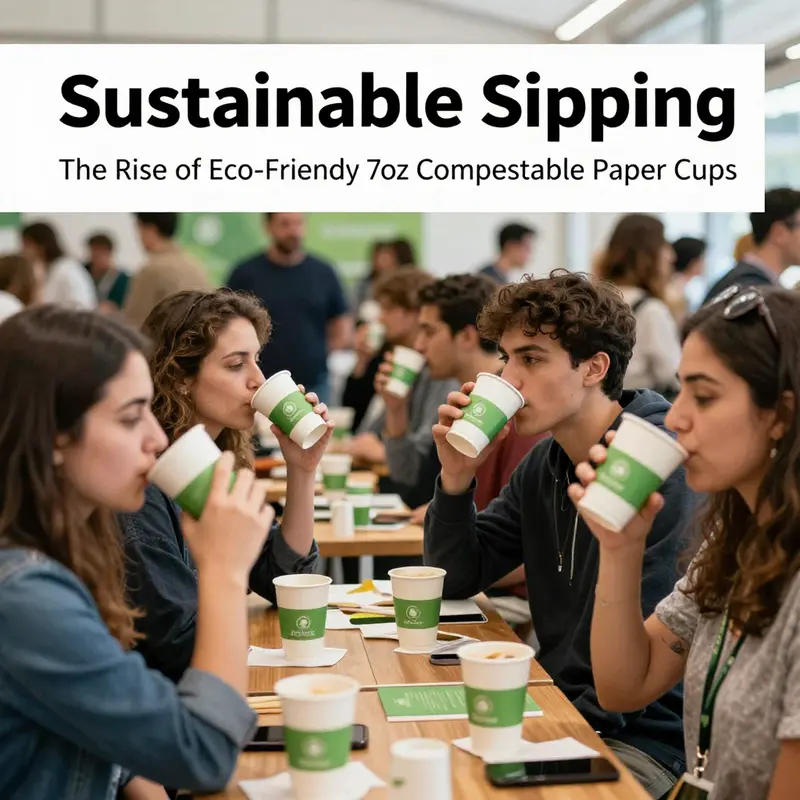
In the evolving landscape of sustainable consumption, the 7oz compostable paper cup has moved beyond novelty to become a practical, everyday standard. These cups are designed to hold beverages such as coffee and tea without sacrificing performance, while their materials and coatings are chosen to minimize environmental impact. They often rely on renewable resources, using paper derived from responsibly managed forests and plant-based coatings that enable compostability in appropriate facilities. The use of such coatings, commonly derived from polylactic acid and other biodegradable polymers, is intended to provide a barrier that keeps contents secure and prevents leakage, while still allowing the cup to break down within a defined period when subjected to commercial composting conditions. Certification plays a crucial role in this equation. Standards such as ASTM D6400 and EN 13432 specify how quickly and under what conditions a product must break down, ensuring that compostable cups won’t linger in landfills or contaminate compost streams. This certification framework helps both buyers and waste managers align expectations, making the cups a credible option for institutions and businesses that aim to minimize the waste they generate and to contribute to circular economy goals rather than to a linear take-make-dispose model. The expansion of composting infrastructure, along with growing consumer awareness, has reinforced the appeal of these cups beyond niche sustainability programs, turning them into a practical choice for any operation aiming to reduce plastic use and to communicate environmental responsibility through packaging choices.
As the story of sustainability unfolds in everyday spaces, the 7oz compostable cup finds itself embedded in a broad spectrum of usage scenarios. Its compact size makes it especially well suited for serving smaller or more controlled portions of hot beverages, where a customer might appreciate a cup that is easy to handle, light to carry, and straightforward to dispose of with other compostable waste. In cafés and casual eateries, the cup offers a reliable option for single-serve drinks, particularly for shots of espresso, macchiatos, or small hot beverages that customers prefer to take away. The tiered expectations of modern customers—speed, cleanliness, and minimal environmental impact—align well with the 7oz format. The cup’s performance is not solely about containment; it is about the broader narrative of how a visitor interacts with a brand’s sustainability promise. When a customer receives a cup that is clearly labeled as compostable and supported by local composting infrastructure, the moment reinforces trust in the establishment’s commitment to responsible practices. This dynamic helps transform a simple takeaway experience into an opportunity for education and engagement, where branding and packaging become ambassadors for environmental stewardship.
In the realm of workplace culture, offices increasingly treat coffee break rituals as moments for reinforcing corporate social responsibility. A lightweight, disposable cup that can be disposed of in a composting stream without guilt is more than a convenience; it signals a workplace’s alignment with broader environmental goals. Break rooms and coffee stations are often the first touchpoints for employees to observe how a company translates intent into practice. When compostable options are readily available and clearly integrated into waste sorting, it reduces uncertainty about disposal and encourages participation in recycling and composting programs. The 7oz cup, with its balance between portability and function, fits naturally into daily routines: a quick morning pick-me-up before a project kickoff, a late-afternoon interlude during collaborative work, or a brief meeting with a partner or client. The cups become quiet actors in a culture that values accountability, not just toward people but toward the planet as well. The narrative extends beyond the cup itself to the waste stream it feeds; the better the system is at turning these cups into compost, the more tangible the environmental dividend becomes for the organization and the community that surrounds it.
Event and hospitality settings reveal another compelling facet of the 7oz compostable cup’s utility. In conferences, workshops, or outdoor festivals, organizers are tasked with managing large volumes of disposable tableware while minimizing waste. The 7oz size is particularly advantageous for hot beverage service during morning sessions or mid-day networking breaks, where rapid throughput and predictable portions help streamline operations. Post-event cleanup can be simplified when waste is clearly separated into compostable streams, supporting a smoother transition from event logistics to waste processing. The broader impact is not merely about reducing plastic waste; it is about demonstrating that sustainability can coexist with hospitality, convenience, and scale. In these contexts, compostable cups become a tangible signal of a planner’s commitment to responsible hosting and to the idea that memorable experiences can be delivered with a lighter environmental footprint.
Educational institutions and public spaces also resonate with the 7oz cup’s potential. Universities, libraries, and city parks often serve diverse populations—students, staff, visitors, and daily commuters—who benefit from accessible, low-friction options for hydrating or caffeinating during a busy day. In campuses and public venues, the cups can function as practical teaching tools, too. They embody a living example of sustainable behavior, inviting discussions about waste management, composting, and the role individuals play in circular economies. Where municipal or campus-wide green infrastructure is present, these cups can be integrated into larger sustainability campaigns that align procurement, waste collection, and education. The fit extends to urban spaces such as public kiosks or transit hubs where compact, compostable solutions reduce the clutter and environmental impact of on-the-go consumption. In such environments, the cup is not only a container but a message—an every-day artifact that reinforces the possibility of sustainable choices becoming ordinary rather than exceptional.
The growth of e-commerce and meal delivery services has further expanded the relevance of 7oz compostable cups. As more households order beverages alongside meals, packaging decisions increasingly reflect the demand for greener options. Compostable cups in these contexts can be paired with other compostable packaging to form a coherent, end-to-end sustainability story for the consumer. The challenge lies in ensuring that the cups reach appropriate composting facilities rather than ending up in landfills. This requires clear consumer guidance, accessible disposal options, and reliable partnerships with waste-management providers. When these conditions are met, the use of compostable cups within home-delivery ecosystems contributes to reduced waste footprints and demonstrates that the convenience of online shopping can harmonize with environmental responsibility.
Beyond the immediate advantages of a lower ecological footprint, the broader societal impact of adopting 7oz compostable cups lies in how these choices circulate through markets and cultures. Consumer awareness continues to rise, and with it the willingness to support products that align with personal values of stewardship. Market demand, in turn, motivates suppliers to refine materials, optimize production processes, and pursue certifications that guarantee performance under real-world conditions. The investments in feedstock quality, barrier properties, and compostability do not occur in a vacuum; they ripple through supply chains, encouraging better sourcing practices, more transparent labeling, and stronger collaboration with waste facilities. As more venues and individuals adopt compostable cups, the cumulative effect is a shift in social norms around disposability, moving away from a default of convenience toward a more deliberate consideration of how our everyday choices impact soil, air, and water.
From a procurement perspective, the decision to adopt compostable cups involves balancing practicality with ecological ambition. The material composition—renewable paper stock with plant-based coatings—offers a credible pathway to composting in facilities equipped to handle such streams. Certification schemes provide a fallback assurance that the product can break down within a defined window, reducing the risk that compostable cups become contaminants in recycling or waste streams. Moreover, the appearance and branding potential of these cups should not be overlooked. For buyers seeking branding opportunities on sustainable packaging, there is a tangible option to customize cups with printed designs that communicate environmental commitments. For example, one avenue involves eco-friendly printed-logo paper cups designed for take-away coffee and tea, which can be purchased in 8-ounce to 12-ounce sizes. This option marries branding with sustainability in a way that is easy to operationalize for many cafés and workplaces. eco-friendly printed-logo buy paper cup (8 oz–12 oz) This link points to a supplier offering such branding-enabled options and illustrates how the market is responding to the desire for both practical functionality and visible environmental responsibility.
The conversation about green packaging is not complete without acknowledging the strategic role of waste infrastructure. Compostability is meaningful only when there is a path for the material to return to the soil in a controlled, industrial setting. In many regions, municipal facilities or private composting partners are expanding capacity, while consumer education about proper disposal helps ensure that these cups do not end up in regular landfills. When these pieces align—choice of material, certification, consumer guidance, and accessible composting facilities—the 7oz cup can contribute to a circular flow where resources are diverted from waste streams toward productive ends. The result is a packaging option that not only serves a utility function but also reinforces a broader narrative: everyday routines can be sustainable without sacrificing convenience, quality, or taste. In this light, the cup becomes more than a container; it is a symbol of a more intentional and resilient mode of consumption.
To tie these threads together, the adoption of 7oz compostable cups is best imagined as part of a larger system rather than as a single product decision. It involves aligning procurement practices with brand values, investing in staff training for proper disposal, and cultivating partnerships with waste-management providers that can ensure compost streams stay clean and effective. It also invites ongoing evaluation of supplier performance, including the consistency of coating performance, the reputation of compostability certifications, and the reliability of supply chains to meet demand during peak periods. In the end, what makes these cups compelling is not only their technical ability to function under real-world use but also their capacity to symbolize a collective commitment to reducing single-use plastic dependency and to nurturing a circular economy mindset across diverse spaces—from intimate café corners to bustling conference centers and beyond. This is the practical, humane dimension of sustainability: everyday choices that accumulate into meaningful environmental benefits over time.
For organizations considering procurement and branding together, the intersection of sustainability and visibility can be especially powerful. By selecting cup solutions that are both compostable and customizable, a business can communicate its environmental values clearly while maintaining the convenience that customers and employees expect. The ecosystem surrounding these cups—material science, certification, waste management, consumer behavior, and branding—works in concert to turn a simple beverage vessel into a lever for broader change. As more stakeholders recognize the compatibility of ecological responsibility with operational efficiency, the 7oz compostable cup stands as a clear reminder that sustainable packaging can be ordinary, reliable, and attractive all at once. Moving forward, continued collaboration among suppliers, waste facilities, regulators, and end users will further normalize compostable options, reduce confusion in disposal practices, and expand the pipeline of opportunities to integrate sustainability into daily rituals without compromising on taste, convenience, or community impact.
External reference and further reading can provide deeper context on the materials, certifications, and market dynamics discussed here. External source: https://www.alibaba.com/product-detail/Eco-Friendly-Disposable-Paper-Cup-7oz-Compostable_1600538921688.html
Final thoughts
Eco-friendly 7oz compostable paper cups represent a significant shift towards sustainable beverage service. By understanding their material composition, acknowledging their positive environmental impact, recognizing the rising market demand, and exploring their practical applications in varied scenarios, businesses can contribute to a more sustainable future while satisfying their customers’ increasing eco-conscious needs. As consumers gravitate towards environmentally friendly options, adopting these cups can enhance a brand’s image and commitment to sustainability.