
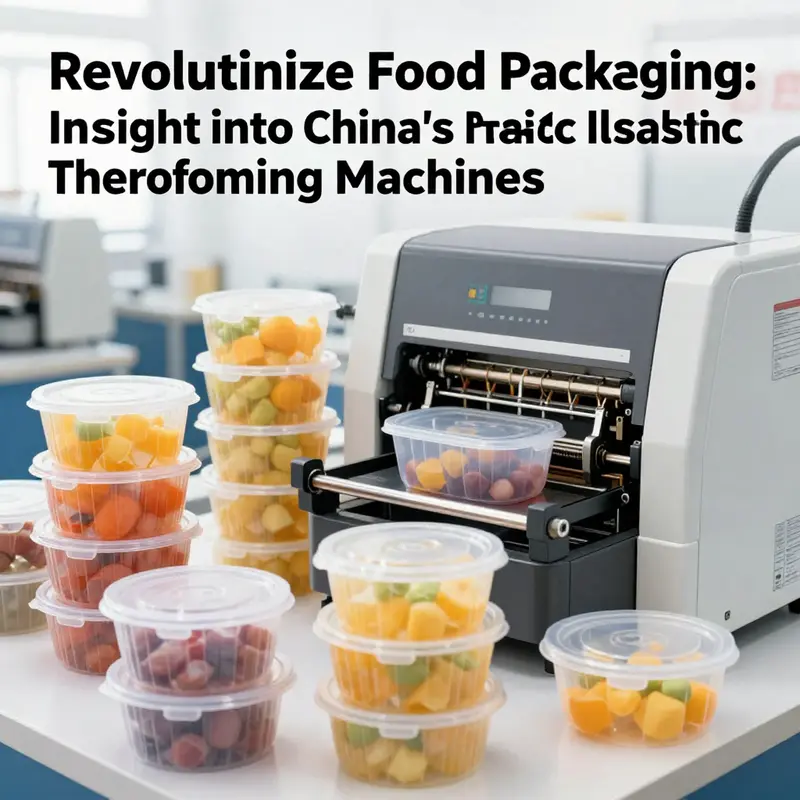
The food service industry is evolving rapidly, with businesses like bubble tea shops, restaurants, and catering services seeking innovative solutions for their packaging needs. China’s plastic food container thermoforming machines stand at the forefront of this evolution, combining advanced technology with practical applications. This article explores the technological advancements that make these machines a game changer in the food packaging industry, analyzes their economic impact, and delves into the sustainability considerations that are increasingly vital in today’s market. Each chapter provides a comprehensive understanding of how these machines can enhance operations and reduce environmental footprints in various food-related businesses.
Precision, Agility, and Sustainability: The Technological Frontier of China’s Plastic Food Container Thermoforming Machines
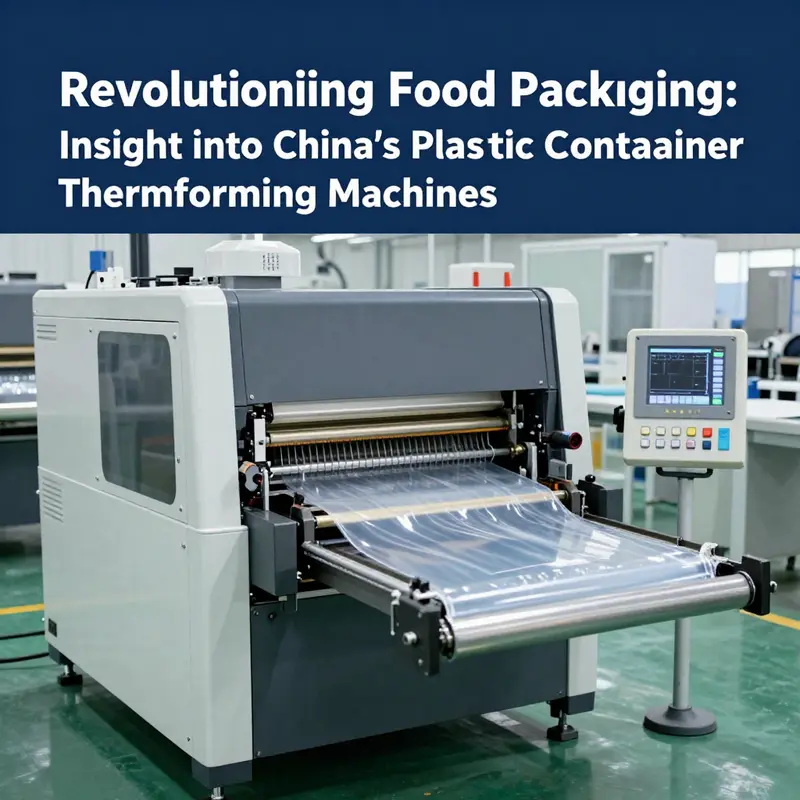
Across modern packaging, China’s plastic food container thermoforming machines have become a backbone of scalable, hygienic production. This chapter traces how the sector blends precision engineering, intelligent control, and material stewardship to deliver fast, flexible lines that reduce waste and energy use while expanding material options. The result is equipment that is not only automated but responsive to changing brand needs and regulatory demands. The following sections outline the levers that drive performance: servo-driven sheet handling, rapid mold changes, multi-station architectures, robotic handling, and robust hydraulic systems. Each element reinforces product quality, uptime, and total cost of ownership, enabling factories to switch products quickly without sacrificing throughput.
Servo-driven systems have dramatically improved repeatability in forming and trimming. With programmable recipes, changeovers between cup sizes or container shapes become routine and error-proof. The speed-to-change is matched by improvements in wall-thickness control and edge quality, yielding consistent products across shifts and sites. Beyond accuracy, servos support faster setups and memory recalls that minimize manual intervention during transitions from one family to another.
Multi-station configurations enable parallel or near-parallel operations, allowing forming, trimming, and handling to occur within the same platform or adjacent cycles. This flexibility supports mixed production lines, reducing idle time and enabling shorter lead times for promotions.
Rapid mold-changing and memory systems shrink downtime during product-family transitions. Operators rely on stored mold configurations, automated checks, and controlled reconstitutions of forming environment, yielding higher OEE and a more dynamic capacity plan.
Robotics and automated handling deliver hygienic product transfer, reliable stacking, and consistent pallet patterns. Clean-room–compatible designs reduce contamination risk and align with food-safety standards while addressing labor-market volatility.
The hydraulic backbone provides stable forming pressure and quiet operation, coupling deterministic cycle times with long-term machine longevity. Even as electronics proliferate, robust hydraulics remain essential for repeatability and reliability.
In-mold cutting closes the loop by delivering precise trim lines with minimal waste. The technique enables tighter tolerances and cleaner edges, supporting premium materials and sustainable packaging goals.
Energy efficiency and material versatility are now design imperatives. Lines optimize heat transfer, cooling, and air/water use, while accommodating a wide spectrum of polymers—from common PP and PET to eco-friendly options like PLA. This flexibility expands the addressable market and supports regulatory and consumer demands for safer, more sustainable packaging.
Finally, the ecosystem around these machines—control architectures, service networks, and supplier clusters in Zhejiang and Guangdong—delivers a compelling value proposition: high-speed, reliable lines that can be deployed globally with standardized parts, skilled service, and local availability of spare components. The result is not a single breakthrough but a convergent system where each component reinforces the others, advancing a competitive, sustainable, and scalable packaging future.
null
null
Greener Molds, Cleaner Futures: Sustainability, Energy, and Circularity in China’s Plastic Food Container Thermoforming Machines
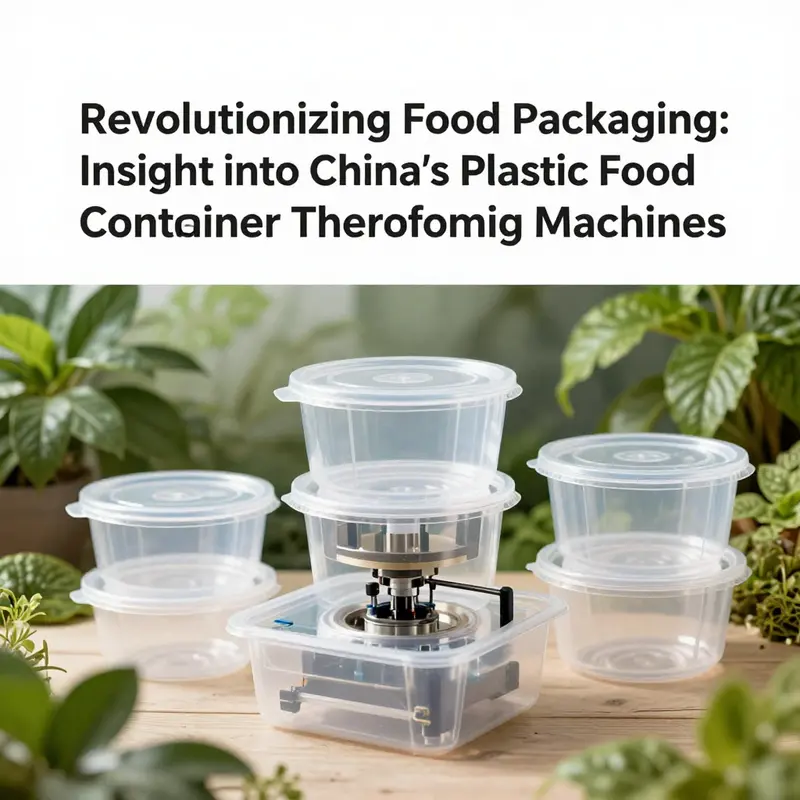
This chapter explores how plastic food container thermoforming machines in China balance automation, production scale, and environmental responsibility. It covers energy efficiency through improved heating control and faster, more precise cycles; material strategies including higher recycled-content resins, scrap reprocessing, and the potential use of bio-based polymers; regulatory influences such as carbon targets and ISO 14001 alignment; and the role of modular automation in enabling recycling integrations and data-driven energy management. The discussion emphasizes how equipment design, process integration, and supply-chain governance together shape greener thermoforming practices in the Chinese packaging sector.
Final thoughts
In conclusion, China’s plastic food container thermoforming machines represent a convergence of technology, market opportunity, and ecological responsibility. For bubble tea shops, restaurants, food trucks, and event planners, understanding the advancements and economic dynamics of these machines can lead to improved operational efficiency and a more sustainable business model. Embracing these innovations not only enhances the quality of packaging but also aligns with growing consumer demand for environmentally conscious practices. By leveraging these insights, businesses can position themselves as leaders in a competitive landscape, all while ensuring a greener future for the packaging industry.