
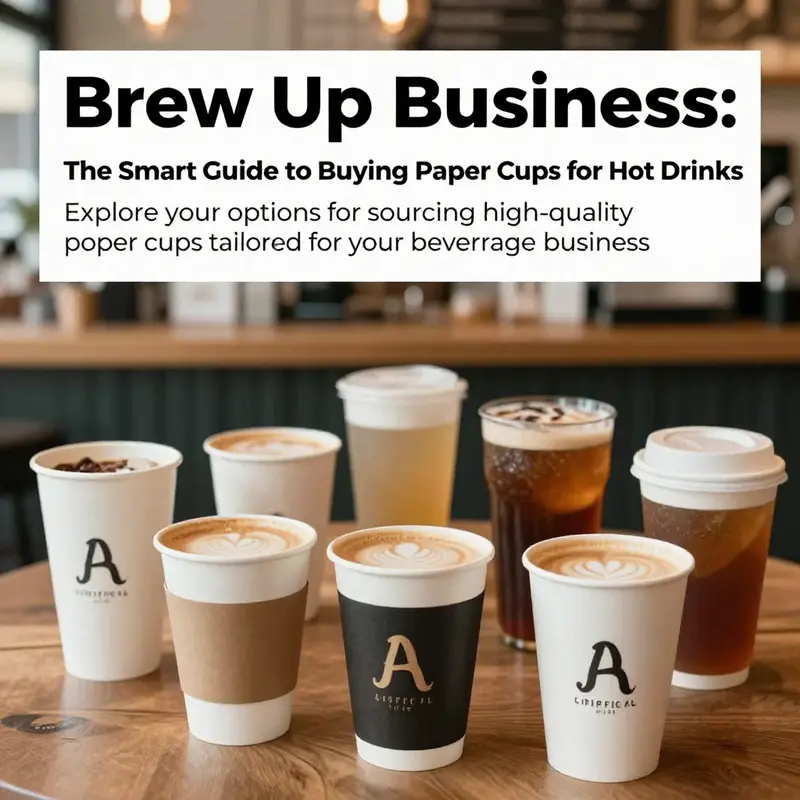
As a bubble tea shop, restaurant, or catering service, finding the right paper cups for hot drinks is essential for enhancing customer experience. Quality matters, especially when serving steaming beverages. Thankfully, whether you’re looking for bulk options or unique branding, plenty of suppliers and retailers can meet your demands. In this guide, we’ll cover various online suppliers, delve into the materials that define quality, and explore local options for your paper cup needs. From starting your search online to evaluating quality and identifying dependable local retailers, we’ll ensure you’re equipped with everything needed to make the best choice for your business.
Where to Buy Paper Cups for Hot Drinks Online: Navigating Global Suppliers and Smart Sourcing
Sourcing paper cups for hot drinks has evolved from a straightforward purchase to a careful art of balancing cost, quality, speed, and sustainability. In a market fractured by regional producers, global marketplaces, private-label offerings, and fast-turnaround retailers, the question shifts from where to click to how to choose the right supplier for the specific hot beverage you serve. This chapter unfolds as a steady, interconnected exploration of online sourcing—where you buy, what you buy, and how you buy it—so the decision you make for your café, office, or event aligns with your standards for safety, performance, and responsibility. The landscape of online procurement for hot-drink cups is shaped by two broad streams: the expansive, catalog-driven world of large marketplaces that connect buyers to a network of manufacturers, and the more targeted channels that cater to individuals and small businesses seeking immediate, small-quantity orders. The first stream offers scale, customization, and negotiation power. A major global business-to-business platform acts as a conduit to dozens of factories across different regions, allowing buyers to filter by capacity, material, and design features. The second stream—consumer-facing platforms and regional online retailers—delivers speed and convenience. It provides branded options, single-family, and small-volume orders with dependable delivery timelines. Readers should understand that both streams are valid, but they serve different operational needs. The decision to use one over the other should hinge on the volume you anticipate, the degree of customization you require, and how quickly you must respond to a seasonal surge in demand. The practical reality is that hot-drink cups must perform under heat and pressure. They come in single-wall and double-wall configurations, each with distinct heat-retention profiles and tactile experiences. The double-wall design is celebrated for its insulating properties, keeping hands cooler when a hot beverage is poured and reducing the risk of burns for customers and staff. The single-wall option, when properly coated and sealed, can still offer reliable performance at a lower cost per cup. Coatings themselves are more than a detail; they define the cup’s environmental footprint and its compliance with safety standards. A growing emphasis on sustainability has pushed many manufacturers toward compostable coatings derived from plant-based materials, such as corn starch, which can degrade significantly over a defined period under composting conditions. In practice, this means shops can offer cups that align with recycling and composting goals while maintaining the integrity of the beverage and the cup’s structural performance. In discussions with suppliers, you’ll encounter a spectrum of capabilities: from high-precision heat-resistant cups designed for large beverages to compact formats suited for tea or specialty drinks. The typical production line for hot-drink cups now often includes features that speak to branding and consumer engagement. For example, cups may incorporate anti-slip textures on the exterior to improve grip, or they may be printed with vibrant logos and QR codes that unlock promotions or loyalty programs. The capacity to customize with branding—without sacrificing performance—has become a differentiator in a crowded market. A practical takeaway for buyers is to balance customization with reliability. If you are offering a loyalty program or a limited-time promotion, a cup printed with your logo or a QR code can transform a simple take-away experience into a direct customer engagement channel. In the supplier landscape, a notable trend is the willingness of manufacturers to support lower minimum order quantities while still maintaining quality assurance. Some producers expressly market a low minimum order quantity—often around a few thousand units—which makes it feasible for a growing business to test new markets or trial a campaign without committing to a high upfront inventory. This flexibility is particularly valuable for coffee shops or corporate offices experimenting with seasonal beverages, or for event organizers who need a reliable supply for a one-off conference, festival, or training session. Quality control remains a central pillar of reliable sourcing. A robust three-tier inspection framework is common among reputable suppliers: first, a materials screening to ensure the absence of contaminants; second, the printing stage where color fidelity and image accuracy are monitored in real time; and third, a leak test of finished cups to verify that the seal against hot liquids remains secure. Some producers also conduct microbial testing on raw materials to confirm suitability for food-contact applications, underscoring a broader commitment to safety. While these processes are more common among larger manufacturers, even mid-sized suppliers frequently publish test data or certifications to reassure buyers about their capabilities. The question of sustainability intersects with performance. Compostable cups coated with cornstarch-based coatings are gaining ground as a practical option for brands seeking to reduce post-consumer waste. The key is not simply to pick a compostable cup, but to verify the coating’s compatibility with local composting capabilities and the product’s overall lifecycle. In some cases, cups may break down significantly within months when exposed to appropriate composting conditions, while others may require industrial facilities to reach the same end. Buyers should therefore consider their geographic context, the facilities available to their customers, and the end-of-life options for the packaging they choose. The ability to customize with advertising content on cups has proven to be a powerful driver for several beverage programs. One example often cited in supplier discussions involves QR code-driven campaigns that redirect consumers to sign-up pages or promotional offers. The upshot is that cups can become a marketing channel in their own right, extending the reach of a brand beyond the storefront. When evaluating suppliers, consider not only the cup’s functional performance but also the potential to leverage packaging as a vehicle for engagement. In the broader market, it’s useful to think of options as a spectrum. On one end are ultra-cost-focused producers that optimize volume at the expense of customization and often rely on generic templates. They present an attractive choice for large-volume, low-margin scenarios where price is the primary driver. On the other end are premium manufacturers who emphasize advanced printing, sophisticated coatings, and rigorous testing, but their minimum orders and lead times can be higher. The sweet spot lies in identifying a supplier who can deliver the required performance at an acceptable cost, with reliable lead times and a clear path to scale if demand grows. It is also wise to consider logistics and risk management. International procurement introduces complexity around shipping terms, incoterms, duties, and packaging integrity. Buyers should clarify lead times, packaging configurations, and the ability to sample before committing to larger purchases. Small, fast-moving orders often favor suppliers with domestic stock or regional distribution networks, whereas larger operations may benefit from the cost advantages of longer production runs from offshore factories. Regardless of channel, a practical approach to selection follows a simple sequence: define the essential performance requirements, specify the desired customization level, estimate the annual volume, and set a tolerance for variance in price and lead time. Then, request samples, compare performance under realistic conditions, and validate safety certifications and material declarations. In this context, the online catalog of one supplier demonstrates the kind of option you may encounter: an eco-friendly, printed-logo cup intended for take-away coffee usage. This catalog entry showcases how brands can blend sustainability with marketing, offering not only a functional cup but also a tangible medium for engagement. For readers who want a concrete example of how a catalog item can translate into real-world value, consider this entry as a reference point in conversations with suppliers. One should note that the catalog entry itself is part of a broader ecosystem of options, and you will want to compare multiple entries to gauge whether the product line aligns with your technical and strategic needs. A helpful way to navigate this landscape is to document a comparison sheet that tracks key attributes across several potential suppliers: material type, wall configuration, heat tolerance, coating type, leak resistance, minimum order quantity, customization options, lead time, and price per unit. In practice, such a sheet helps teams avoid last-minute decisions when a campaign demands a rapid ramp-up. It also clarifies where you can compromise and where you must maintain strict standards. If your operation values branding, you will want to scrutinize the printing capabilities and the durability of decorations under heat and humidity. If your focus is sustainability, you’ll want to verify the breakdown characteristics of coatings, the availability of certified compostable options, and the compatibility of packaging with local waste management infrastructure. In parallel, consider the broader ecosystem in which your cups will circulate. For example, a coffee program at a hospital or university campus often relies on consistent, predictable delivery timelines and a strong emphasis on safety and hygiene. The ability to guarantee stock for peak service periods—such as exam weeks or holiday seasons—becomes a critical criterion. A business that provides robust stock management, quick re-orders, and accurate invoicing will reduce the friction of recurring purchases. The journey of choosing an online supplier then becomes not merely a transaction but a collaboration. It is about finding a partner who can align with your product specifications, your sustainability targets, and your marketing ambitions. In this sense, the online supplier landscape is not just a marketplace; it is a network of potential relationships that can support your beverage program over time. For readers who want a tangible lead into the supplier landscape while keeping a cautious eye on authenticity and quality, there is a catalog entry worth noting. This particular entry highlights eco-friendly, printed-logo paper cups designed for take-away coffee use and demonstrates how customization can be integrated with a sustainable design ethos. To explore a representative option, you can reference this entry here: senang07-eco-friendly-printed-logo-buy-paper-cup-take-away-coffee-cup-8-oz-12-oz-paper-cup. senang07-eco-friendly-printed-logo-buy-paper-cup-take-away-coffee-cup. This serves as a practical example of how a supplier communicates capabilities, customization features, and sustainability commitments in a single product listing, and it invites buyers to consider how similar options might fit their particular program.
As you map your sourcing strategy, remember that real-world procurement rarely follows a linear path. You may start with a broad search to understand the market, then narrow to a couple of candidates for samples, then expand to a larger pool of options to compare pricing and lead times. The goal is to arrive at a supplier relationship that can deliver reliability once you scale. For those who need speed, local or regional stock options can provide immediate relief for a sudden demand spike, such as a promotional event or corporate onboarding drive. For those with longer horizons and a focus on innovation, the global marketplace route offers access to a wider range of materials and coatings, including more sustainable options or enhanced branding opportunities that might not be available in a smaller market. It is also important to recognize that not all online options are created equal. The presence of a robust quality-control framework, transparent material declarations, and accessible documentation should be non-negotiable in any serious procurement. Buyers should request certifications or third-party test results when possible and avoid any supplier that cannot provide credible assurances about food contact safety, heat resistance, and leakage performance. In the realm of branding and consumer engagement, the ability to carry marketing messages on cups is a powerful tool—but it requires careful consideration of color-fastness, print durability, and legibility under typical beverage conditions. The online catalog approach that emphasizes customization shows how brands can blend practicality with the opportunity to build recognition and loyalty. The purchasing decision, therefore, is a balance: you want a cup that stands up to heat, looks professional, aligns with your sustainability values, and fits within your budget and lead times. The good news is that modern suppliers are increasingly attuned to these trade-offs, and the online ecosystem reflects this shift by offering a spectrum of options that can be tailored to different business realities. To close, the practical path forward is to start with a clear specification brief. Define your required cup size, wall thickness, and heat tolerance. Identify whether you need a double-wall design and which coating you prefer for environmental reasons. Decide how many units you will order in a year and what your minimum acceptable lead time is. Finally, decide how much customization you will pursue—logos, QR codes, or promotional artwork—and how this affects your cost structure and delivery schedule. By anchoring your decision to concrete requirements rather than generic assumptions, you can navigate the online supplier landscape with greater confidence and arrive at a choice that serves your beverage program well over time. For readers exploring a concrete example among online suppliers, this entry illustrates the kind of option that blends sustainability with branding and is representative of a broader category of offerings: senang07-eco-friendly-printed-logo-buy-paper-cup-take-away-coffee-cup-8-oz-12-oz-paper-cup. senang07-eco-friendly-printed-logo-buy-paper-cup-take-away-coffee-cup.
External resource for further reading and context on current product varieties and general options can be found here: https://www.alibaba.com/product-detail/Hot-Drink-Paper-Cups-Double-Wall-Coffee_1600347389739.html?spm=a2700.19220907.0.0
Where to Buy Paper Cups for Hot Drinks: A Practical Procurement Guide
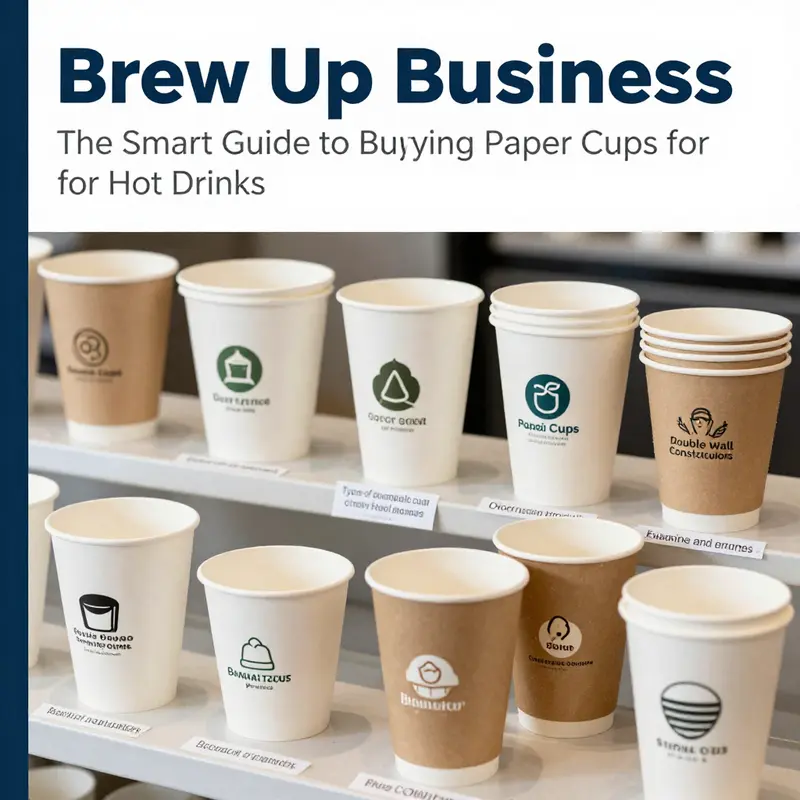
When you set out to provision hot beverages, the question of where to buy paper cups quickly becomes a broader procurement decision about safety, performance, and reliability. The goal is to find cups that resist heat, keep hands comfortable, and support branding or consistent service. The options span global marketplaces, local retailers, and dedicated packaging suppliers. Understanding how these sources differ helps you pick a path that fits your needs—whether you run a small cafe, an office program, or a large event.\n\nA core distinction in hot‑drink cups is the inner coating. For hot liquids, a heat‑resistant lining is essential. Most widely used cups have a polymer‑based inner coating, typically a polyethylene (PE) layer on the inner surface. This coating acts as a barrier to prevent leakage and preserve cup integrity under heat. Wax‑coated cups, common in some cold‑drink applications, are not suitable for hot beverages because wax can soften or melt. The practical implication is simple: prioritize cups with a PE‑based inner lining and avoid wax coatings for hot drinks.\n\nBeyond the coating, thickness and wall strength matter. A sturdy cup should resist softening or collapse when filled with hot liquid and should not leak at the seam. Wall construction matters: single‑wall cups rely on paper rigidity, while double‑wall designs insert an extra layer or air gap to improve insulation. Double walls can offer a cooler hand feel, but the inner PE coating remains the critical determinant of performance. Ensure the inner coating is uniform, intact, and the outer structure supports handling and disposal.\n\nSafety certifications and labeling are practical signals of quality. Look for clear information about the manufacturer, production date, batch, and adherence to relevant safety standards. Certifications or third‑party tests can indicate stronger quality control, though no single label guarantees perfection. When possible, ask suppliers for test results, leakage demonstrations, and heat‑resistance data.\n\nThe route to procurement varies by need. For immediate, small orders, consumer platforms and local stores can suffice. For larger or customized runs—branding, consistent supply, or controlled lead times—B2B marketplaces and direct manufacturer channels are more appropriate. You may combine sources, using a local supplier for quick replenishment and a manufacturer or distributor for branded or bulk orders. Align your sourcing with your service model and demand patterns.\n\nCapacity and lid compatibility are practical considerations. Common hot‑drink sizes range from 8 to 12 oz (roughly 230–350 ml) for everyday beverages, with larger options (16–20 oz) for bigger servings. Evaluate how the cup size pairs with lids, service speed, and comfort for customers handling a full cup. A good lid should seal securely and stay in place during transport.\n\nTo reduce risk, anchor your decision to a simple set of quality criteria: coating heat resistance, wall strength, safety documentation, customization options and MOQ, and delivery reliability. Use this rubric to screen options quickly and avoid overpromising listings. In addition, consider sustainability claims: recycled content and end‑of‑life disposal. If compostability is important, confirm that the cup’s materials and coatings are compatible with your local composting facilities and regulations.\n\nFinally, a practical approach to sourcing is to begin with broad market scans and then narrow to trusted partners. Start with reputable platforms for rapid replenishment and move toward direct engagement with manufacturers or authorized distributors for branded runs and predictable lead times. If you want to explore design options or test batches, discuss minimum order quantities, lead times, and sample programs with potential suppliers. A simple test order can verify coating integrity, rigidity, and any off‑smell or taste in the cup interior.\n\nExternal references can supplement your evaluation, but rely on current, verifiable information from your chosen suppliers. When possible, review published test data and quality claims aligned with your regional safety standards.
From Aisle to Event: A Practical Guide to Finding Paper Cups for Hot Drinks
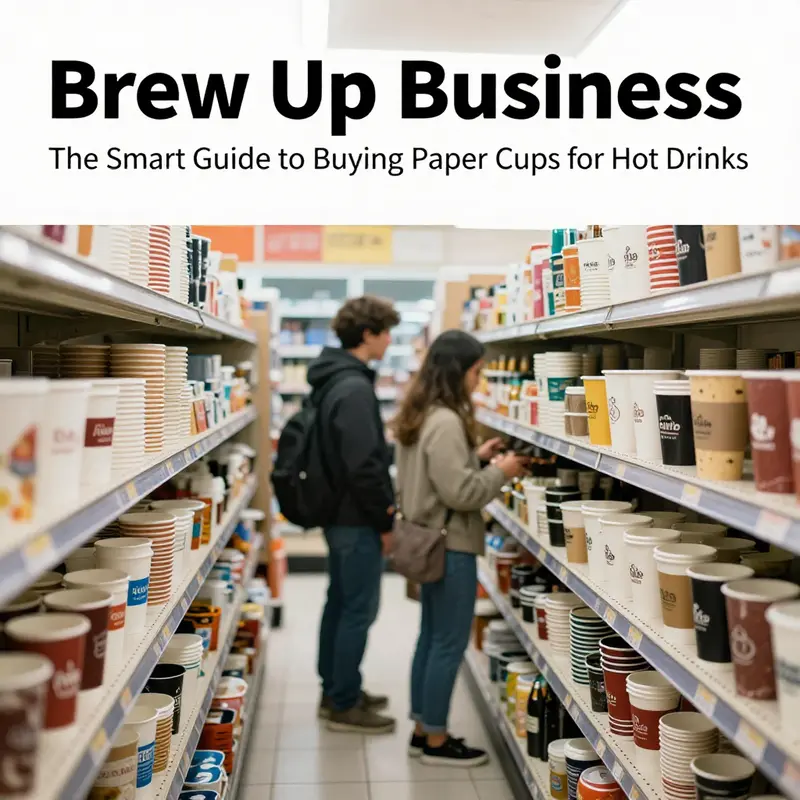
When you set out to buy paper cups for hot drinks, you quickly discover that the journey from shelf to service counter is more nuanced than it first appears. The cups you choose shape hand feel, heat management, and the overall customer experience in a single sip. In most communities, the most immediate options live in familiar places: the local grocery aisle, the corner convenience store, or the nearby warehouse club. These outlets typically stock a range of standard disposable cups designed for hot beverages such as coffee, tea, and hot chocolate. You will often find sizes that fit common serving needs—small portions for a quick morning fix, medium sizes for standard take away, and larger cups for longer, hotter drinks. The cups are usually positioned in the kitchenware aisle or the party supply zone near disposable plates and cutlery. The exact placement can vary by store, but the pattern is consistent: affordable, readily available, and good enough for everyday service.
Beyond speed, durability and insulation matter when demand grows. For small businesses, events, or cafes with busy periods, consider double wall constructions, which keep the outer surface cooler to the touch and reduce heat transfer. Look for leak resistance and a solid lid that seals well. If you plan branding, check whether the supplier offers printed cups or printed lids, and whether the color matches your brand. Sustainability options include recycled content and compostable coatings, but be mindful of local disposal practices and whether composting is available in your area.
To navigate the market, map your needs and test options. Start with typical beverage profiles, the temperatures, and the rate of consumption in your context. Gather lead time, budget, and branding requirements. Request samples, test lid compatibility, and inspect packaging integrity. Consider a hybrid approach: rely on a local supplier for everyday needs and keep a standing order with a bulk supplier for peak periods. When you test, run a small pilot and compare options across channels using a simple scoring rubric.
Local suppliers offer speed and personal service, wholesale platforms offer scale and consistency, and online marketplaces provide breadth and customization. The right mix depends on volume, service pattern, and tolerance for complexity. The result should be a cup that protects hands, preserves warmth, minimizes spills, and aligns with your brand and budget.
Final thoughts
Selecting the right paper cups for hot drinks is not just about functionality; it’s also about enhancing the service you provide. By sourcing from reliable online suppliers, understanding the quality of materials, and exploring local retail options, your business can effectively meet customer needs while ensuring brand presentation. Empowered with this knowledge, you can confidently choose the perfect paper cups that not only cater to practicality but also resonate with your brand ethos. Remember, the right cup can elevate the entire drinking experience for your customers.